Leonardo Helicopters Leader of the Turkish Commercial Helicopter Market
I had the opportunity to visit Leonardo Helicopters' Training Academy located in Sesto Calende in Northern Italy and its facilities in Vergiate and Cascina Costa for the first time during the press tour held between May 26-28, 2014. With this latest visit, I observed firsthand how the company has undergone a technological transformation over the past decade and to what extent it has incorporated digital and virtual reality technologies into the design, production, and user technical support infrastructure, as well as the training system.
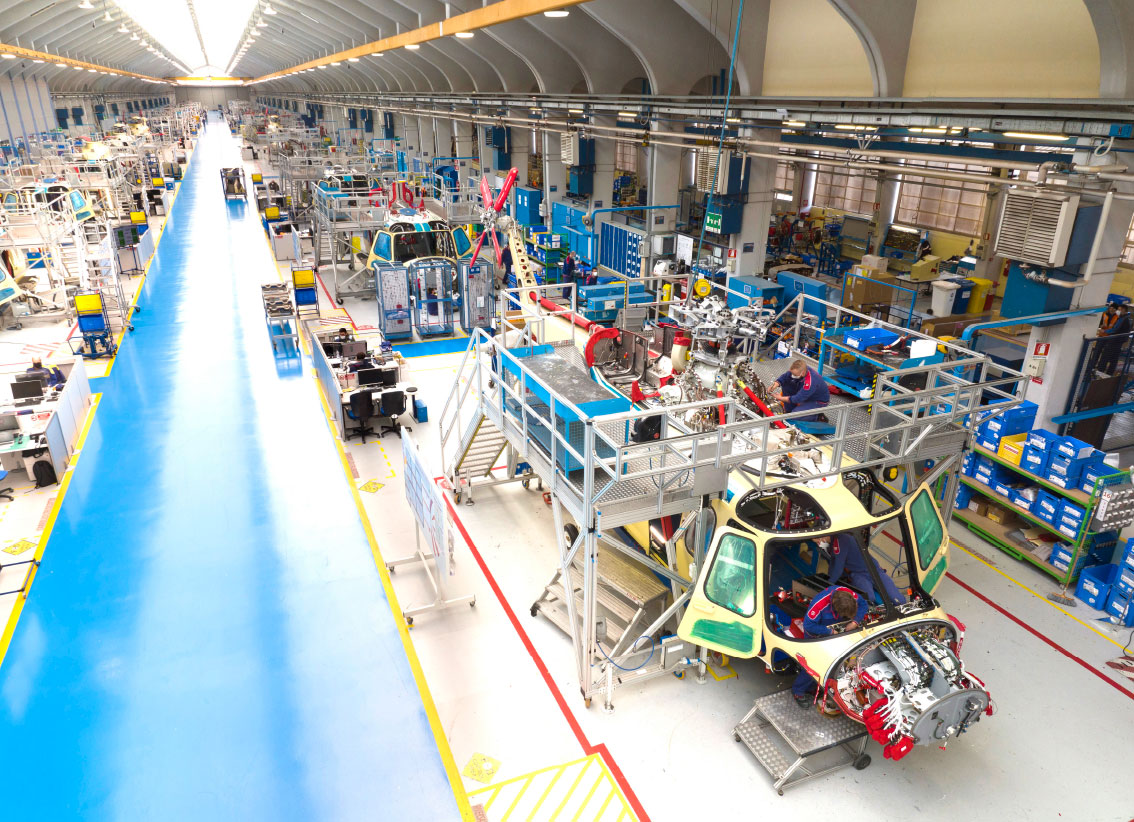
As part of the event, on the morning of January 29, 2024, we visited the Leonardo Training Academy (Alessandro Marchetti Training Academy) located in Sesto Calende and received information from Paolo PETROSSO, VP of Simulation and Training Services at Leonardo Helicopters, regarding the Customer Support and Training Services provided by the company. Additionally, we were informed about the training simulators (new Virtual and Extended Reality Simulator [VxR] with motion system and representing AW119Kx IFR variant and MITHOS [Modular Interactive Trainer for Helicopter Operators]) used at the Academy and the new engineering support services called 'Digital Customer Experience,' which are provided by Leonardo Helicopters within a historical building, on a 24/7 basis, to the customers upon request. We toured the Final Assembly and Flight Lines of Leonardo Helicopters in Vergiate in the afternoon. Leonardo utilizes digital manufacturing technologies at Final Assembly line in Vergiate. Due to confidentiality, we weren't allowed to take photographs at the facility, where tests are conducted for the production, assembly, and acceptance of military and civilian helicopters. We also saw the last batch of AW119Kx Next Generation Basic Training Helicopters of the Turkish Army Aviation School Command at the Final Assembly and Flight Lines. Deliveries of these three AW119Kx Helicopters are expected to be completed in April 2024. In Vergiate, as Defence Turkey Magazine, we also had the opportunity to experience an exclusive 30-minute flight over the picturesque city of Vergiate, renowned for its natural beauty, and the breathtaking Swiss Alps, accompanied by the stunning lake view, aboard the AW189 Helicopter offered by Leonardo Helicopters for both the VIP/Utility and Energy sectors in Türkiye’s civil helicopter market.
The first production model of the AW189 made its first flight in October 2013 at the Vergiate plant. The AW189 is designed for multiple roles, including offshore transport, passenger transport, search and rescue (SAR) and parapublic missions. The AW189 has an 11.2m3 spacious main cabin that provides for a choice in configuration. It can accommodate up to 18 seats. The cabin has large sliding doors and a single or dual rescue hoist above the door. Two external life rafts are provided in the cabin. The helicopter has a standard auxiliary power unit (APU) that allows air conditioning in both the cabin and the cockpit even when the main engines are not running. The AW189, in which we, registered in October 2014 with the tail number I-LCIH, is powered by a pair of GE CT7-2E1 Turboshaft Engines and is one of the first production helicopters of its kind. Since the AW189 we flew in was one of the early production models, it did not feature an Active Vibration Control System in its avionics equipment. Nevertheless, the cabin, which accommodates 16 seats for passengers and features large windows (a total of 8) that can slide open sideways, was remarkably quiet during the flight, with a very low vibration level. This is because the rotor blades used in the AW189 are designed to dampen their own vibrations by utilizing inertial forces to overcome aerodynamic oscillations. In recent years, the AW189 Helicopter has seen significant demand from the offshore Energy Sector and Search and Rescue (SAR) operators due to its rugged construction, long range, and high performance.
As of January 2024, more than 140 firm orders have been received for the AW189 Helicopter, excluding options, with 90 of these already delivered to users in
10 countries worldwide. According to Leonardo Helicopters data, as of January 2024, there are 46 AW189 helicopters operating in the parapublic market, accumulating over 52,000 flight hours in total with these helicopters.
At the Vergiate facilities, we also received information about the interior designs of helicopters produced for the VIP and corporate transport market. Additionally, we attended a comprehensive presentation given by Leonardo's Spokesman/Press Officer, Roberto CAPRARELLA, which covered the company's past and present, product range, market position, future goals and strategies, and ongoing research into new aircraft technologies.
On the second day of our visit, we first toured the facilities in Cascina Costa, which also serves as the headquarters of Leonardo Helicopters. Here, we learned about the Digital Simulation Laboratory and the AW609 Tiltrotor Digital Development Simulator, which form the core of Leonardo Helicopters' Digital Twin design capability. These facilities were established approximately 1.5 years ago. Additionally, we received information from officials about the AW609 Tiltrotor Aircraft Program, which is currently undergoing flight testing as part of its civil certification process. Launch customer Bristow Group’s first AW609 was assembled in AW609 Final Assembly Line in Philadelphia, USA.
Directorate of Security Aviation Department and the Turkish Coast Guard Command's SAR
It is also being considered for both the General Helicopter requirements. Both institutions have held discussions with Leonardo Helicopters regarding the AW189 Helicopter.
The event concluded with a briefing on Leonardo Helicopters' position in the civilian and military helicopter markets in Türkiye, as well as updates on the AW119Kx Next Generation Training Helicopter and T129 ATAK Helicopter Programs, along with their future goals.
Additionally, presentations were given on the AW119Kx and AW189 Helicopters.Leonardo Helicopters, formerly known as AgustaWestland, was established in 2001 as a joint venture between Finmeccanica SpA (%50, now Leonardo SpA) and British GKN-Westland (%50) under an agreement signed in July 2000 within the framework of the EH101 Project. With Finmeccanica's acquisition of Westland shares in December 2004, AgustaWestland became a wholly owned subsidiary of Finmeccanica. On January 1, 2016, the activities of Leonardo-
Finmeccanica subsidiaries (AgustaWestland, Alenia Aermacchi, DRS Technologies, Selex ES, Oto Melara, and Wass) were integrated under a single industrial company, transforming into Leonardo SpA Group. Consequently, under the Leonardo SpA Group, the Helicopter Division operates under the Leonardo Helicopters brand.
Leonardo Helicopters offers a diverse range of aircraft spanning from 0.5-ton AWHERO Rotary Wing Unmanned Aerial Systems (RUAS) suitable for civilian/commercial and military/parapublic use to 1.5-ton single-engine AW09 helicopters, 16-ton three-engine AW101 helicopters, and the Tiltrotor AW609 aircraft, covering the entire weight spectrum. Over 4.500 commercial and military helicopters from Leonardo Helicopters are utilized by more than 1.500 customers in approximately 150 countries worldwide. According to information shared during the press tour, Leonardo Helicopters currently operates a total of 13 production facilities in five different locations: Italy, the United Kingdom (Yeovil), Switzerland (Mollis), Poland (Swidnik), and the United States (Philadelphia). In 2022, the company achieved a turnover of €4.547 Billion, received €6.1 Billion in new orders (with the total value of helicopter orders as of December 31, 2022, amounting to €13.614 Billion), generated a profit of €415 Million, and made new investments totaling €253 Million. In 2022, a total of 149 helicopters were delivered. Currently, approximately 180 Leonardo Helicopters products are successfully operating in Türkiye, with 28 serving in civilian/commercial roles and 150 in military/parapublic service (including ongoing deliveries).
Leonardo Helicopters, a global rotary-wing manufacturer offering the widest range of rotary-wing capabilities to users worldwide, entered the Turkish helicopter market with the procurement of 20 AB-204B (UH-1B) helicopters in 1966, which formed the Turkish Army's first Helicopter Battalion on July 16, 1966. Additionally, in 1967, four AB-206A helicopters (which entered service in the Army Aviation inventory in 1968) were acquired. As a significant player in the Turkish helicopter market, Leonardo Helicopters opened its Ankara Office on April 30, 2008, to closely monitor and guide ongoing military and commercial helicopter projects and provide better service to its users.
Leonardo Helicopters: 52-Year Journey from Licensed Product to Indigenous Product in the Rotary Wing Market
In 1923, Giovanni AGUSTA, Count of Cascina Costa, founded Construzioni Aeronautiche Agusta Spa. He had designed and produced his first aircraft, the biplane AG-1, in 1907. Following Count AGUSTA's death in 1927 at the age of 48, the company was managed by his wife and eldest son, Count Domenico AGUSTA, and produced several models for military aviation between 1932 and 1945. After World War II, due to the prohibition on aircraft production in Italy stipulated in the Paris Peace Treaty and the subsequent contraction in the aviation sector, the company turned to motorcycle manufacturing to stay afloat. Operating under the name Meccanica Verghera Agusta (MV), the company initially produced a budget-friendly motorcycle with a two-stroke engine of 98cc capacity. In 1950, Italy's ban on aircraft production was lifted, and Agusta decided to venture into rotary-wing aircraft production in 1952. Initially, under license from American Bell Helicopter, they manufactured over 1.200 AB-47G helicopters, and later, in the 1960s, they produced helicopters under licenses from Sikorsky, Boeing, and McDonnell Douglas.
While continuing its helicopter manufacturing efforts under license, Agusta also conducted research to develop its own original products. In this context, Agusta manufactured helicopters such as the A101G (production ceased after obtaining the CH-47 production license), A102, A103, A104, A106, and A115, as well as aircraft engines like the GA70 and GA140. Making its entry into rotary-wing technologies with the AB-47G, Agusta achieved its first successful original product with the lightweight twin-engine AW109 Helicopter, which made its maiden flight in August 1971 and is currently in production with new models. In February 2014, the development of the new version, AW109 Trekker, featuring skid-type landing gear instead of wheeled landing gear, was announced (being the first twin-engine helicopter produced by the company to have this feature), and the EASA Certification process was completed in early 2018. Both civilian/commercial and military (AW109 LUH) versions of the helicopter have been in service with several countries.
In 1998, a joint venture company named Bell/Agusta Aerospace Company was established between Agusta and Bell Helicopter Textron to develop the 15-seat twin-engine AB139 Helicopter and the BA609 Tiltrotor aircraft. However, in November 2005, Bell Helicopter withdrew from the AB139 Program by selling its shares to AgustaWestland. Subsequently, the new helicopter was marketed under the name AW139 starting in February 2006 (from the 55th helicopter onwards). Leonardo Helicopters AW139, with civilian/commercial and military versions (such as AW139M and MH-139 Grey Wolf), made its maiden flight in February 2001. The standard gross weight of the helicopter is 6.4 tons, with a maximum gross weight of 6.8 tons (the maximum gross weight of the aircraft can be increased to 7 tons with the Increased Gross Weight Kit). As of February 2024, AW139 Helicopters have accumulated over 4 million flight hours. Leonardo Helicopters achieved in 1981, Leonardo Helicopters collaborated with the British GKN-Westland and the British andItalian Navies to develop the EH-101 Maritime Helicopter. Subsequently, in 1983, Leonardo Helicopters established the European Helicopters Industries (EHI) with Westland for the EH-101 helicopters. The design studies of the A129 Mangusta, which is considered the first attack helicopter developed in the Western world, began in 1978, and it conducted its maiden flight in
September 1983. In 1985, Agusta collaborated with French, German, and Dutch aerospace industry organizations for the NHI NH90 Medium Class Multi-Role Helicopter Program (Agusta's share in the NH90 Program is 32%). significant sales success with the AW139 Helicopter shortly after its introduction in 2003, thanks to its modern and superior technical features compared to other helicopters in the same class (designed to fly at approximately 12.000ft altitude with a single engine, capable of running for 30 minutes without oil in the main gearbox). As of February 2024, Leonardo Helicopters has delivered approximately 1.200 helicopters to around 290 commercial and military users worldwide.
Thanks to the AW139, Leonardo Helicopters achieved a faster growth rate in the commercial sector compared to its competitors from 2004 onwards. According to company data, while Leonardo Helicopters achieved a 16% increase in civilian/commercial helicopter deliveries between 2004 and 2012, Bell achieved 10%, Sikorsky 7%, and Airbus Helicopters 4% growth rates. Russian helicopter manufacturers were excluded from the evaluation. Designed and developed with market demands in mind, the AW139, which became the best-selling helicopter in its category, propelled Leonardo Helicopters to a higher level and positioned it as a global player in the helicopter market. As part of the AW139 Program, some of the AW139 fuselages needed by the Italian Leonardo Helicopters are manufactured and delivered at TUSAŞ facilities. AW139 Helicopter Fuselages and Tail Booms are also manufactured by PZL-Świdnik SA, a well-established aircraft and helicopter manufacturer based in Poland, which was acquired by Leonardo Helicopters in 2010.
On July 1, 2022, Leonardo Helicopters (PZL-Świdnik) and the Polish Ministry of Defense signed a contract worth €1.76 billion to deliver a total of 32 AW149 Utility Helicopters for the Polish Land Forces 25th Air Cavalry Brigade, along with logistical support, training services, and simulator packages. The final assembly and production will take place at the PZL-Świdnik facilities. The helicopters are planned to be delivered between 2023 and 2029, with the first 3 delivered by the end of 2023. Thus, Poland became the first NATO member to use the AW149 medium-lift utility helicopter. The AW149 Helicopter competed with Sikorsky Aircraft's S-70i International Black Hawk and Airbus Helicopters' EC725 Caracal solutions in the Polish Land Forces tender. Previously, the
AW149 helicopter was also proposed to Türkiye under the Turkish Utility Helicopter Program(TUHP), where the Sikorsky Aircraft T70 Helicopter was selected. Since 2010, Leonardo Helicopters has invested approximately €1 billion in PZL-Świdnik. Under a contract worth US$430 million signed in April 2019, Poland ordered 4 AW101 Merlin Anti-Submarine Warfare Helicopters from Leonardo Helicopters. The first helicopter was delivered to the Polish Navy's Naval Air Brigade in Darlowo for testing in August 2023, and the first 3 helicopters entered service in December 2023. Poland also plans to acquire 22 AW101 helicopters for the Land Forces. The 8-ton AW149 multi-role helicopter can carry 16 fully equipped soldiers and a two-person crew. The helicopter conducted its first test flight on November 13, 2009, at the Vergiate facilities.
The AW189 Helicopter, which shares a common airframe and, to some extent, shared components with the AW149, was configured to meet civil/commercial market needs and made its maiden flight on December 21, 2011. In the same year, Leonardo Helicopters acquired full ownership of the AW609 Tiltrotor aircraft from its partner, Bell. In 2012, the AW169 made its maiden flight, and Leonardo Helicopters introduced the Family Concept to the helicopter industry, comprising the AW169 (Light Medium Weight, 4.5 tons), AW139 (Medium Weight, 6.4/6.8 tons), and AW189 (Super Medium Weight, 8.3 tons) helicopters, all sharing common parts, avionics, and airframe design. Leonardo Helicopters is the first helicopter manufacturer globally to implement the Family Concept. Based on the shared design philosophy for multi-role helicopters of different sizes and weights, the Family Concept not only significantly reduces operational, maintenance, and training costs but also enhances the operational efficiency of the fleet. According to Leonardo Helicopters' data, the Family Concept enables using approximately 20% of common parts and around 30% of common maintenance equipment in helicopters while reducing training times for pilots and technicians by approximately 40%. The company's current Civil/Parapublic Product Range is classified into five categories, comprising commercial and public service helicopters: Light Single Engine (1.5-1.8 Tons, AW09, AW119 Ke/Kx, and SW-4), Light Twin Engine (3.2 Tons, AW109 Trekker and AW109 GrandNew), Light Medium (5 Tons, AW169), Medium (6.4-7 Tons, AW139), and Super Medium (8 Tons, AW189 and AW609 Tiltrotor).
Previously, helicopters could only fly during daylight and in good weather conditions. However, with the advancements in avionics, satellite-based navigation systems, and new main gearbox designs allowing 50-minute ‘dry run’ capability, helicopters can now safely fly in both day and night, as well as in adverse weather conditions. In March 2013 Leonardo Helicopters demonstrated to the EASA a 50-minute dry run capability for the AW189 main gearbox. The AW189 is the first helicopter ever to enter service with such a capability, which is 20-minutes more than any other currently certified helicopter. The need for dry run capability is vital for all helicopter operators but particularly for those operating in harsh environments such as the offshore sector where immediate landing is not always an option. These high-end technologies have enabled the use of helicopters in new roles such as Offshore (for offshore oil and gas platforms and offshore wind turbines), EMS (Emergency Medical Services/Air Ambulance), and SAR (Search and Rescue). The company's commercial helicopter product range is divided into five categories: Executive & Private Transport (Corporate/ VIP), Energy Services (for offshore oil and gas platforms and offshore wind turbines), Medical & Rescue Services (Air Ambulance/EMS and SAR), Security Services, and Utility (General Purpose). On the other hand, the military helicopter product range is divided into three categories: Dual Use (Military/Public Operations and Training), Naval (Maritime), and Battlefield (Utility and Combat Helicopters).
Leonardo Helicopters has entered the offshore market thanks to its reliable helicopter models like the AW139, which can carry more personnel and operate over longer ranges in all weather conditions compared to competing solutions. With the introduction of the next-generation AW169 and AW189 helicopters as part of the Family Concept, Leonardo Helicopters has further strengthened its position in the Offshore Helicopter Market. With over 450 helicopters worldwide, Leonardo Helicopters holds the largest share of the Offshore Helicopter Market and plays a significant role in the Energy Sector, including offshore wind energy farms. Leonardo Helicopters has developed Customer Proximity solutions that benefit the entire energy ecosystem, particularly in Norway and the North Sea. These solutions aim to improve existing equipment and provide advice and support to solve urgent issues, ensuring compliance with new standards wherever the customer needs.
Helicopters are extensively used to transport personnel and materials to offshore oil and gas platforms and offshore wind farms miles off the coast. Helicopters operating in these areas must withstand long flights over the sea, rapidly changing weather conditions and strong winds. They require high-performance, high-capacity, long-range/endurance, and powerful engines. These helicopters also serve as medical response vehicles in case of emergencies that may arise during operations.
Like many sectors, the Offshore Energy Sector was also affected by the COVID-19 pandemic, resulting in a significant contraction in the industry. During the COVID period, many helicopters previously operating in the offshore oil and gas market shifted to other roles. As a result, a notable demand for helicopters emerged in the sector, which started to recover in 2022, and by 2023, helicopter demand approached pre-COVID levels. However, due to ongoing supply chain issues, original equipment manufacturers (OEMs) faced challenges in ramping up production to meet the demand. Beginning in 2024, both helicopter manufacturers (OEMs) and critical subsystem suppliers have taken steps to increase production rates. For example, the engine manufacturer SAFRAN has decided to increase its engine delivery from 600 in 2023 to over 900 in 2024 and to 1.000+ in 2025 to meet the strong demand. The size of the Global Offshore Helicopter Services Market was $2.1 Billion in 2021, $2.89 Billion in 2022, and $2.98 Billion in 2023. It is expected to reach $4.47 Billion by 2030, exhibiting a Compound Annual Growth Rate (CAGR) of 6.0% until 2030.
According to Leonardo Helicopters data, more than 60% of new Oil and Gas Platforms will be installed between 100km and 250km+ offshore by 2027. This implies that at least 60% of new commercial helicopters sold by 2027 will have a range within 100km to 250km+. Based on this data, the AW169 is recommended for a mission radius of 25km-50km, the AW139 is recommended for a mission radius of 50km-200km, and the AW189 Helicopter is recommended for a mission radius of 200km-250km+. In addition, the AW609, which is currently undergoing certification testing, is also a suitable candidate for this long-range aircraft requirement with its extended range (over 700nm with external fuel tanks), high service ceiling (25.000ft), and high cruising speed (above 275 knots with pressurized cabin). The AW609 has already received its first order from the Bristow Group, which also serves this sector and is based in the United States. Furthermore, although 2023 has been difficult for some developers and turbine manufacturers due to factors such as inflation, supply chain problems, and lack of turbine standards, the offshore wind energy industry is also on a growth trend. It is estimated that there will be 460 gigawatts of offshore wind energy capacity worldwide by 2030. Türkiye has announced its total wind capacity target for 2035 as 29.6 gigawatts, with a target of 5 gigawatts for offshore wind energy installations.
The Leonardo SpA Group shared its 2023 financial performance figures with the global public on February 29, 2024. Accordingly, in 2023, Leonardo Group secured new orders worth €17.9 Billion (a 3.8% increase compared to 2022) while raising its total revenues to €15.3 Billion (a 3.9% increase compared to 2022). The earnings before interest, taxes, and amortization (EBITA) of Leonardo SpA Group in 2023 increased by 5.8% compared to 2022, reaching €1.29 Billion. The Industrial Plan of Leonardo SpA Group for 2024-2028 was announced on March 12th. According to this plan, the Group aims to achieve a total order intake of €105 Billion, total revenues of €95 Billion by 2028, a profitability ratio of 10% by 2026, 11.5% by 2028, and to increase Free Operating Cash Flow (FOCF) to €1 Billion by 2026 and €1.35 Billion by the end of 2028.
According to Leonardo SpA data, in 2023, Leonardo Helicopters, the Helicopter Division of the Group, achieved €4.725 Billion in turnover, €5.513 Billion in new orders (the value of the total helicopter orders as of December 31, 2023, amounted to €14.426 Billion), and €422 Million in earnings before interest, taxes, and amortization (EBITA). Although there was a decrease in the new order value in 2023 compared to 2022, Leonardo Helicopters saw a 3.9% increase in turnover, a 6% increase in order backlog, and a 1.7% increase in EBITA performance (a contract for 32 AW149 Utility Helicopters with the Polish Ministry of Defence was signed in 2022). Leonardo Helicopters contributed to the 4% increase in the 2023 revenue of Leonardo SpA Group. Despite lower sales volumes due to the higher unit costs of military helicopters compared to civilian/ commercial helicopters, the total revenue is higher. The global rotary-wing aircraft manufacturer Leonardo Helicopters delivered a total of 149 helicopters in 2022, with an increase of 36 units (a 24% increase) in the number of helicopters delivered in 2023, totaling 185 helicopter deliveries.
In 2024, both the number of new orders and the number of helicopters expected to be delivered are anticipated to be higher compared to 2023. The order quantity received during the HAI Heli- Expo 2024 Exhibition held in Anaheim, California, from February 27-29, 2024, also confirms this expectation. During the Heli-Expo 2023 Exhibition, Leonardo Helicopters secured definite orders for approximately €470 Million worth of 37 helicopters (AW139, AW169, AW109 GrandNew, and AW109 Trekker), to be delivered between 2023 and 2026 (25 of which are AW139, with a significant portion intended for the Global Offshore Helicopter Services Market), and also entered into a contract for optional orders of a total of 71 helicopters, including AW09 (50x), AW139 (20x), and AW169 (1x). At the Heli-Expo 2024 Exhibition, Leonardo Helicopters signed contracts for a total of 220 helicopters, with 80 being firm orders for delivery between 2025 and 2028 and 140 being part of a framework agreement for long-term supply. In this context, The Helicopter Company (THC), owned by Saudi Arabia’s Public Investment Fund, placed a firm order for 20 AW139 intermediate twins and inked a multi-year (expected to run by 2031) framework agreement for more than 130 Leonardo helicopters including AW109s, AW169s, AW139s and AW189Ks (with 2.500shp Safran Aneto-1K engines) for various applications. The US privately-owned HEMS (Helicopter Emergency Medical Service) operator and service provider Metro Aviation will take 30 AW09s, and Sloane Helicopters, a long-time Leonardo distributor for the UK and Ireland, has agreed to order 9 AW09s, along with 2 AW109 GrandNew and 2 AW109 Trekker light twin models. The Malaysian Maritime Enforcement Agency has ordered 4 Leonardo AW189 Super Medium Helicopters through Galaxy Aerospace to meet its long-range SAR mission requirement. LifeFlight Australia has committed to purchasing three more AW139s in addition to orders for two others announced in late 2023. During Heli-Expo 2024, Leonardo Helicopters and Bristow Group signed a framework agreement for the AW189 Super Medium Helicopters, which included 10 firm orders and options for another 10. Deliveries will run from 2025 to 2028. Currently operating 21 A198s, Bristow will take deliveries of a further 5 AW189s by the end of this year. Bristow deploys the AW189 in its offshore Energy Services business and its Government Services business, supporting SAR operations in the UK, the Netherlands, and, starting next year, Ireland.
Belonging to the AWFamily of products, the AW189 (8.3/8.6 tons) combines superior payload and range with advanced technologies to successfully operate a wide range of missions. The AW189 is the benchmark for long-range operations and can operate in all-weather conditions, day and night, delivering high speed and superior performance also in hover and Cat. A. The helicopter features all the equipment and avionics needed to successfully carry out offshore missions and a spacious cabin to ensure a comfortable journey for passengers. Unique features of the AW189 Helicopter include the main gearbox (transmission)’s capability to run without oil for 50 minutes, a built-in Auxiliary Power Unit (APU), optional automatic data transmission via satellite, 4G cell/Wi-Fi, and more than 200 available kits. Mostly preferred by the offshore Energy Services and SAR operations, the AW189 is powered by a pair of 2.000shp class General Electric CT7-2E1 Turboshaft Engines and 1 x Safran e-APU (60kW). Powered by a pair of Safran Aneto-1K Turboshaft Engines, each generating 2.500shp, and a Safran e-APU (60kW), the AW189K version is usually preferred for Executive & Private Transport services.
Leonardo Helicopters and Türkiye
Leonardo Helicopters entered the Turkish helicopter market with the procurement of 20 AB-204B (UH-1B) helicopters in 1966, which formed the Turkish Army's first Helicopter Battalion on July 16, 1966. Additionally, in 1967, four AB-206A helicopters (which entered service in the Army Aviation inventory in 1968) were acquired. Leonardo Helicopters also supplied the AB-205 (UH-1H) helicopters, which were the first true multi-role utility helicopters to enter service with the Turkish Armed Forces (TAF) and played important roles during the Cyprus Peace Operation. Over time, the relationship between Türkiye and Leonardo Helicopters expanded to meet the needs of the Turkish Land Forces (TLFC), Turkish Naval Forces (TNFC), Turkish Air Force (TurAF), Gendarmerie General Command, and Turkish Coast Guard. Especially in the last 15 years, the company has risen to a leadership position in the Turkish Civil/Commercial Helicopter Market through its sales. It is followed by Bell Helicopter Textron, Sikorsky, and Airbus.
A significant portion of civil/commercial helicopters in our country consists of twin-engine helicopters (which make up about 86% of the market). With the delivery of various types of 28 helicopters, Leonardo Helicopters holds a market share of approximately 48-50% in both the twin- engine and single-engine helicopter markets in Türkiye. Of these helicopters, 49% are VIP, 30% are EMS, 14% are Civil Utility, and 7% are used in the Energy Sector. The VIP helicopters used in our Türkiye are predominantly AW19SP and AW139 models. The AW139 holds a leading position in the civil/commercial helicopter market in Türkiye. Single-engine helicopters used in our country mostly consist of Leonardo Helicopters AW119 and Airbus H130 models. Kaan Air, Setair, and Redstar are the operators with the largest Leonardo Helicopters fleet in our country. Leonardo Helicopters has become a preferred actor in the Turkish Civil/Commercial Helicopter Market due to its ability to offer the most suitable and fastest helicopters in their classes (AW119Kx, AW109, AW139, AW169, and AW189) for the challenging operating conditions in Türkiye. Leonardo Helicopters collaborates with Kaan Air, the sole authorized distributor for the commercial sales and after-sales support services of their helicopters in Türkiye.
Between the 1970s and 1990s, a total of 154 AB-204, AB-205, and AB-206 helicopters were ordered from Agusta for the Turkish Land Forces Command (TLFC), Turkish Air Force (TurAF), and Turkish Gendarmerie. Additionally, the first of the three AB-204B/AS helicopters (TCB 31, TCB-32, TCB-33) ordered from Italy (Agusta) in 1971 entered service on October 4, 1972. Compared to the AB-204B/AS helicopters, the AB-212 ASW (Anti-Submarine Warfare) helicopters had superior range, speed, target detection/identification, and tracking capabilities. The first batch of AB-212 ASW helicopters (three helicopters: TCB-34, TCB-35, TCB-36) entered service in December 1977, while the second batch, equipped with more advanced weapons and radar (9 ASW and 3 EW versions), entered service in 1987-1988. Currently, four AB-212 helicopters (TCB-38, TCB-39,
TCB-46, and TCB-47) are actively serving in the Turkish Naval Air Command. Under the Martı Project initiated by the Secretariat of Defence Industries (SSB) to meet the Turkish Coast Guard Command's SAR helicopter requirement, Leonardo Helicopters won the tender with the AB-412EP solution. Under the Martı Project Phase-I contract, 9 AB-412EP helicopters were delivered with a total value of approximately US$90 million (excluding the US$5 million worth of GFE equipment), and five helicopters were delivered under the Phase-II contract signed in
December 2004, valued at US$63 million (including US$32 million worth of offset obligations).
Furthermore, after the accident of an AB-412EP helicopter (TCSG-503) in Antalya in July 2005, an additional AB-412EP was ordered under a new agreement signed in May 2006, entering service with the Coast Guard Air Command.
As the offset obligations of the Martı Project, which was initiated in 2004 with the coordination of the Secretariat of Defence Industries (SSB) to meet the SAR helicopter needs of the Turkish Coast Guard Command, Leonardo Helicopters signed a contract with TUSAŞ in March 2004 for the fuselage production of the twin-engine AW139 Helicopter, as a second source at TUSAŞ facilities.
Under the contract signed between the two companies in 2004, an initial order was placed for 250 units of AW139 Helicopter Fuselage and Canopy, and the number was further increased with subsequent orders. The first fuselage produced at TUSAŞ facilities was shipped to Italy in December 2006, and deliveries of helicopter fuselages in two separate configurations, Search and Rescue (SAR) and Offshore, began in 2012. The 250th AW139 Helicopter Fuselage produced at TUSAŞ facilities was delivered in a ceremony held in 2014 with the participation of representatives from Leonardo Helicopters, and in the same year, the two companies reached an agreement to extend the AW139 Helicopter Fuselage and Canopy Production Program for at least three more years. As of the end of 2020, TUSAŞ had delivered 368 units of AW139 Helicopter Fuselage and Canopy to Leonardo Helicopters and received orders for an additional 80 fuselages and canopies to be delivered by the end of 2021 under the renewed contract.
The most significant program that AgustaWestland/Leonardo Helicopters won in Türkiye is the T129 ATAK Project, valued at US$3.3 billion. The contract was signed in September 2007 and entered into force on July 2, 2008. Under the T129 ATAK Project, with a commitment of 50% local contribution, a total of 9 T129A Early Delivery Attack Helicopters and 50 T129B ATAK Helicopters will be delivered to TLFC. As of the end of 2023, TLFC received a total of 58 T129A/B ATAK Helicopters and also has an option for an additional 17 helicopters. The first flight of the T129A ATAK Light Attack and Tactical Reconnaissance Helicopters took place on August 17, 2011, and the first ATAK was delivered to TLFC on April 22, 2014. The first three T129A Helicopters officially
entered TLFC service in a ceremony held on June 10, 2014. Further orders have been placed for a total of 27 T129B ATAK Helicopters, including 24 definite and 3 optional ones, to meet the needs of the Ministry of Interior's Gendarmerie Aviation Command and the General Directorate of Security Aviation Department (9 helicopters). Additionally, orders have been placed for 6 T129B ATAK Helicopters for the Philippine Air Force and another 6 for the Nigerian Air Force. As of December 2023, TUSAŞ has delivered a total of 82 T129A/B ATAK Helicopters.
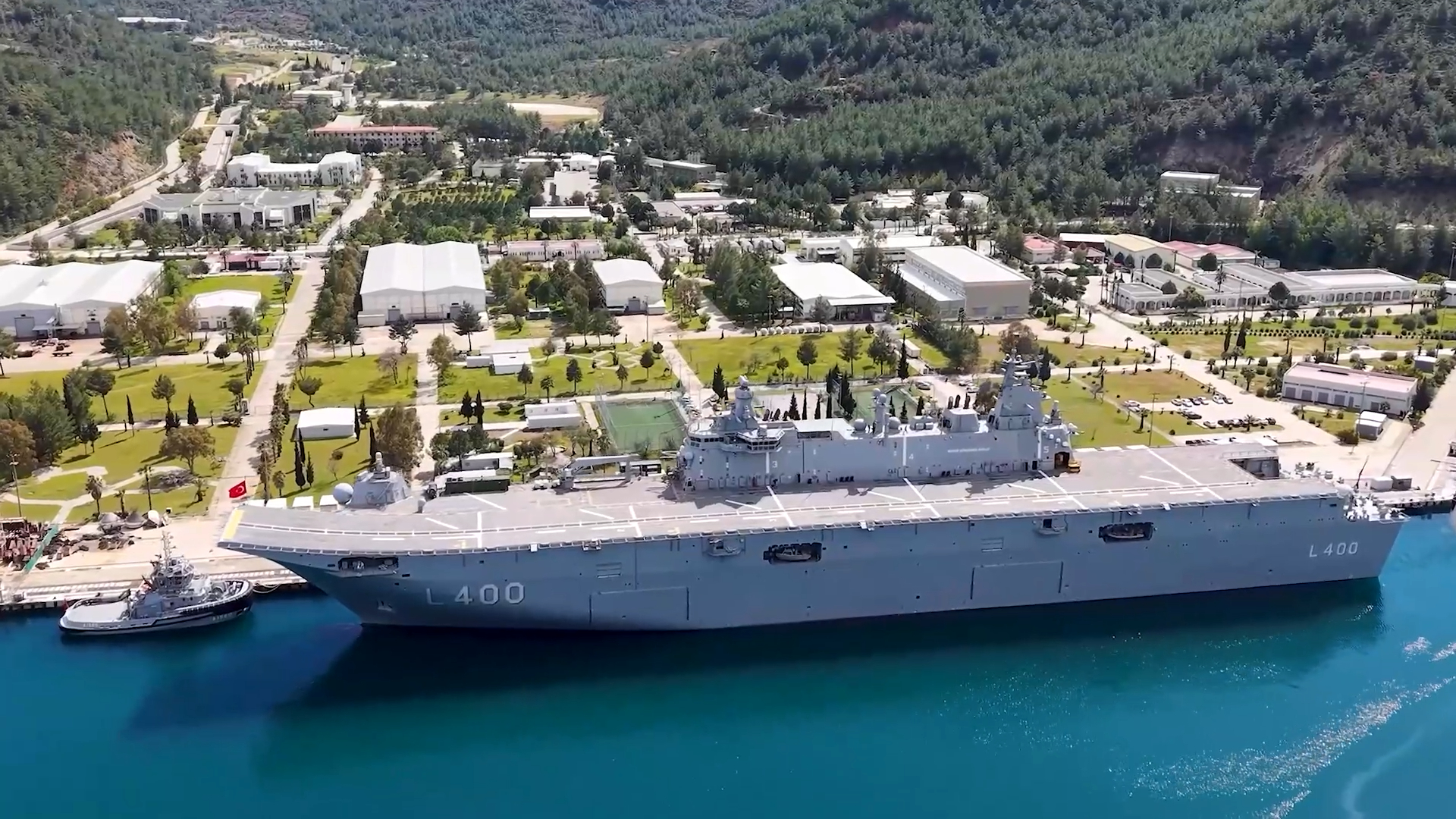
Leonardo Helicopters is also currently providing technical support to TUSAŞ for developing the Navalized version of the T129 ATAK Helicopter, compatible with maritime conditions. The two companies have been working on this version for some time, with the completion of the work expected within a few years. The Naval Air Command had previously planned to procure a total of 8 Navalized (reinforced against corrosive effects such as high humidity and salt in the marine environment) T129B ATAK Attack Helicopters in two batches (this information was released in our 107th Turkish Naval Air Command Special issue) for deployment on the TCG Anadolu Multipurpose Amphibious Assault Ship. By 2026, the goal was to increase the number of ATAK Helicopters to 16, including the T929 ATAK-II Heavy Attack Helicopters. However, this plan could not be realized due to the lack of technology in Türkiye at that time to make a Navalized version of the T129 ATAK. As an interim solution, 10 AH-1W Super Cobra Helicopters from the Army Aviation Command's inventory were transferred to the Naval Air Command.
The proposed AW189 Super Medium Helicopter for the civil/commercial helicopter market in our country is also being considered for the SAR Helicopter needs of both the General Directorate of Security Aviation Department and the Coast Guard Air Command. Both institutions have discussed with Leonardo Helicopters for more detailed information about the AW189 Helicopter. The AW119Kx Next Generation Training Helicopter, selected for the Army Aviation School Command and currently undergoing deliveries, is also expected to be evaluated for the Training Helicopter needs of the Naval Air Command and the Gendarmerie Aviation Command. EH-101Helicopter is also expected to be offered for the Medium Weight Transport Helicopter Project and Airborne Early Warning Helicopter (AEW) needs of the Naval Air Command. Within this scope, it is planned to procure 3 of the 26 helicopters needed by the Naval Air Command in the AEW configuration and deploy them on the TCG Anadolu Multipurpose Amphibious Assault Ship.
AW119Kx Next-Generation Military Training Helicopter
To meet the Next Generation Basic Training Helicopter requirement of the Turkish Army Aviation School Command, a tender was opened by the SSB, and on July 26, 1999, a Request for Proposal (RFP) was published. As part of the Next Generation Basic Training Helicopter requirement, the AW119Kx Next Generation Trainer of the Leonardo Helicopters was selected, and a contract was signed between the Secretariat of Defence Industries (SSB) and Leonardo Helicopters on April 5, 2021, for the procurement of 15 AW119Kx IFR variant Next Generation Basic Training Helicopters (with an option for +15 more).
The first batch (3 units) of AW119Kx IFR variant helicopters was delivered in March 2023 and was added to the Turkish Army Aviation School Command’s inventory in May 2023. The fourth batch of 3 helicopters was brought Türkiye in the last week of January 2024, and after necessary preparations were made, they were flown to the Army Aviation School Command in Isparta. The inspection and acceptance activities for these 3 AW119Kx Helicopters were completed during the first half of February 2024. As part of the AW119Kx IFR variant Next Generation Basic Training Helicopters Project, 2 Instructor Pilots and 2 Examiner Pilots from Turkish Army Aviation were sent to Leonardo Helicopters facilities in Italy. These pilots later participated in the training of other Instructor Pilots in Isparta. Subsequently, Instructor Pilots receive Examiner Pilot Training. HAVELSAN is also expected to produce and deliver two flight simulators under the Isparta KAHOSİM (Army Aviation School Simulator Center) Project specifically for AW119Kx Helicopters, which have the necessary avionics equipment for Instrument Flight Rules (IFR). In this context, the necessary software and source code for 2 simulators will be procured from Leonardo Helicopters.
During our visit to the Leonardo Training Academy in Sesto Calende, we had the opportunity to see the new Virtual and Extended Reality Simulator (VxR) developed for the AW119Kx Helicopter during the training. Compared to Level-D Full-Flight Simulators, the full-scale VxR Simulator, representing the AW119Kx IFR variant and featuring a cockpit, motion, and instructor console, has a much more compact structure and lower cost. After disassembly, the AW119Kx IFR variant VxR Simulator, with a total weight of approximately 1.5 tons, can be easily transported to another location in two separate wooden crates. Leonardo Helicopters showcased its AW119Kx IFR variant Virtual and Extended Reality Simulator (VxR) for the first-time during Heli-Expo 2024 in February 2024. The VxR features a compact footprint to support single-engine (VFR and IFR) and light-twin- engine helicopters, guaranteeing accurate pilot’s perception of the surroundings for single-pilot flight operation, improving training effectiveness and safety and allowing the crew to train on the same mission through interconnected simulators. The VxR also delivers outstanding cost/ effectiveness thanks to its reduced footprint and infrastructure requirement, allowing accessibility in those areas where simulation is primarily needed by reducing acquisition and training costs and enhancing operation safety for light helicopter models.
As of January 30, 2024, the Turkish Army Aviation School Command was conducting trainings only for Instructor Pilots, Examiner Pilots, and Technicians with the 9 AW119Kx Helicopters in its inventory and had plans to utilize a total of 12 AW119Kx Next Generation Training Helicopters, the deliveries of the fourth batch of 3 helicopters were completed in February, in the Basic Pilot Flight Course starting from March 2024. The fifth and the last batch of AW119Kx IFR variant Next Generation Basic Training Helicopters (3 units) are expected to be brought to Çeşme Port by ship from Italy by the end of March 2024, and to be inducted into Turkish Army Aviation School Command’s inventory during April 2024 following the completion of inspection and acceptance activities. Fitted with a modular fuel system the Turkish Army’s AW119Kx IFR variant Helicopters can stay in the air continuously for 4.5 hours with the 558kg (1.232lb) internal fuel carried in the 4- Cell Fuel System (four crash-resistant internal fuel tanks, they do not cause any reduction in cabin volume). The Turkish Army Aviation School Command also has plans to acquire the maintenance and repair capability for the blades of AW119Kx Helicopters (which have four blades) at the 5th Main Maintenance Factory Directorate facilities. As of March 2024, negotiations with Leonardo Helicopters were still ongoing.
The AW119Kx IFR variant Next Generation Basic Training Helicopter, with a maximum take-off weight (MTOW) of 2.850kg, will assist pilot candidates in demonstrating their piloting abilities through its Digital Cockpit architecture and 3-Axis Automatic Flight Control System (AFCF). The AW119Kx IFR variant delivered to the Turkish Army Aviation School Command features the Genesys Aerosystems IDU680-IFR glass cockpit, enabling IFR flight. Among the avionics equipment used in the helicopter are additional auxiliary systems such as the 3D Synthetic Vision System (SVS), Sky View, Helicopter Terrain Awareness and Warning System (HTAWS), and Highway In The Sky (HITS) Traffic Alert & Collision Avoidance System, which significantly reduce the pilot's workload and contribute to situational awareness. Helicopter Terrain Awareness Warning System (HTAWS) is designed to reduce the risk of Controlled Flight Into Terrain (CFIT) accidents for rotary-wing aircraft during cruise in Visual Meteorological Conditions (VMC) and Instrument Meteorological Conditions (IMC) by enhancing situational awareness of surrounding terrain and obstacles. AW119Kx’s state-of-the-art glass cockpit is similar to advanced helicopters (such as UH-60M/T-70) making pilots transition easier thus lowering risks. The AW119 IFR is the benchmark as New Generation Multirole Trainer.
Powered by a Pratt & Whitney PT6B-37A Turboshaft Engine, with a maximum continuous power of 872shp and a take-off power of 1.002shp, the AW119Kx is the largest single-engine light helicopter in its class. In the AW119Kx Helicopters, one Instructor Pilot and Student Pilot can sit in the front, and three Observer Student Pilots can sit in the back. This configuration allows for simultaneous training of a Student Pilot and an Instructor Pilot during a sortie, while the three Observer Student Pilots seated in the back can undergo observation-based training at the same time.
However, according to the information I acquired during our visit to the Turkish Army Aviation School Command, located at Isparta Kılıç Airport (next to Süleyman Demirel Airport) between November 27-29, 2023, the AW119Kx Helicopters, which are capable of comfortably accommodating five individuals (Instructor Pilot, Student Pilot, and 3 Personnel/Observer Student Pilots) will only have 1 Observer Student Pilot seated in the back. Whether the AB-206B Jet Ranger III Training Helicopters, also produced by all Leonardo Helicopters and inducted into the service during 1996, in the inventory will be completely phased out depends on how effectively the AW119Kx IFR variant Helicopters will be utilized. With the current fleet, the Army Aviation School attempts to keep 30 Training Helicopters (AB-206B, UH-1H, and AW119Kx) airborne simultaneously, so if the AW119Kx proves itself, placing a definite order for the additional 15 helicopters defined on the contract may become an option in the near future. Night vision goggle (NVG)-compatible (which is not available in AB-206Bs) AW119Kx Helicopters are also used for night training flights, and we had the opportunity to observe a night flight conducted by AW119Kx Helicopters on the evening of November 27, 2023.
You can read the second part of our article, which includes our impressions from the two- day Leonardo Helicopters Press Tour event and special information about the Leonardo Training Academy in Sesto Calende, the Final Assembly Lines and Flight Test Center in Vergiate, and the AW609 Tiltrotor Program, in our upcoming issue