Turkish Naval Forces Flex it Muscles with Denizkurdu- II/ 24 Naval Exercise
The Turkish Navy has conducted the Deniz Kurdu-II/24 naval exercise between 7 and 18 May in the Mediterranean Sea.
During the exercise 94 naval ships, 7 Unmanned surface vehicles, 8 submarines, 10 ASW patrol aircraft, 16 naval helicopters, 28 UCAVs of the Turkish Navy took part. Furthermore 26 fighter aircraft, 1 AWACS, 1 A-400M cargo aircraft and one target towing aircraft of the Turkish Air Force took part in the exercise too.
The exercise evaluated the effectiveness of command and management operations within the Naval Forces' Commands. It involved assessing headquarters personnel and participants in a highly challenging environment. The main objectives were to develop judgment, foresight, and decision-making skills, as well as to test interoperability procedures with other Force Commands.
The exercise was divided into the following phases:
"Operation Preparation Trainings" and "Actual Weapons Training" took place between May 7th and 8th, 2024.
"Logistics Integration" was scheduled for May 9th and 10th, 2024.
On May 11th, 2024, Distinguished Observer Day (SGG) activities of the Exercise were held in Aksaz/Marmaris.
"Actual Weapons Training" occurred between May 12th and 13th, 2024.
"Operation Training in a Multi-Threat Environment (ÇTOH)" was scheduled for May 14th to 16th, 2024.
Between May 17th and 18th, 2024, visits were made to 27 ports with 43 ships.
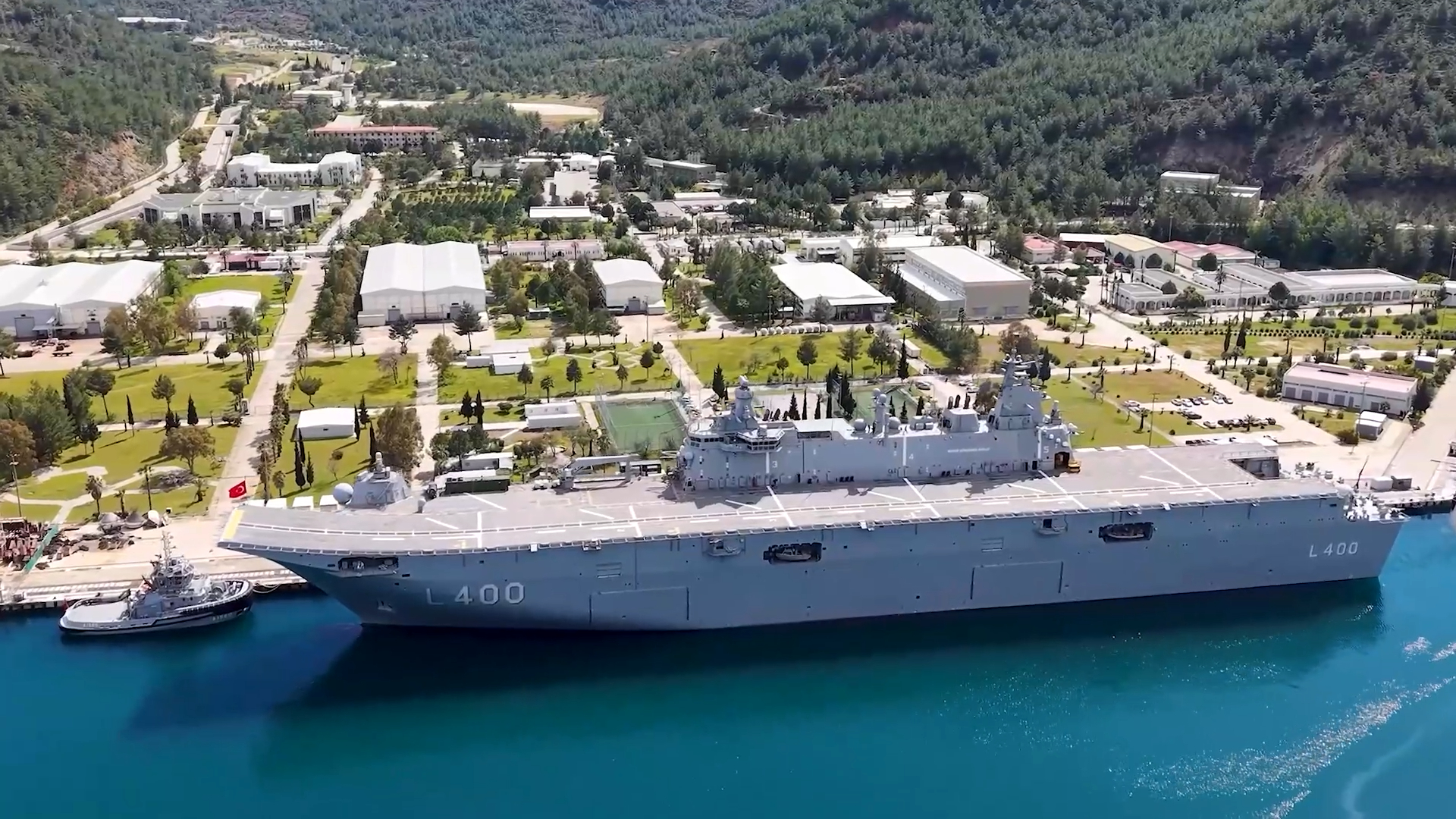
On May 11 for the Distinguished Observer Day, the Minister of National Defence Yaşar GÜLER, Chief of General Staff, General Metin GÜRAK, Naval Forces Commander Admiral Ercüment TATLIOĞLU, Commander of the Land Forces, General Selçuk BAYRAKTAROĞLU, Air Force Commander General Ziya Cemal KADIOĞLU, Navy Commander Vice Admiral Kadir YILDIZ and the Military attaches of Azerbaijan, Belgium, Bosnia and Herzegovina, Bulgaria, Finland, Georgia, Germany, Iraq, Japan, Jordan, Libya, Malaysia, Nigeria, Northern Cyprus (KKTC), Portugal, Sierra Leone, Yemen. the following nations were on board of the frigate TCG Salihreis to observe the exercise. On the same day the press was invited to the board of the amphibious large assault ship TCG Anadolu.
The first training of the day as the neuralization of one mine by naval EOD teams. The team jumped from the SH-70B Seahawk helicopter near the observed mine. They have attached an explosive charge on the mine and left the area before the explosion and successful neuralization of the mine.
The second training was the simulated insertion of naval special forces by helicopters and the landing of the naval infantry by ZAHA amphibious assault vehicles and mechanized landing craft to an island under enemy control. Two AH-1W super Cobra helicopters of the navy softened the beachhead area with gun fire and suppressed the enemy. Following their action two SH-70B Seahawk launched from TCG Anadolu arrived at the area and briefly hovered just to allow the naval special forces team to fast rope down to earth while 3 ZAHA amphibious assault vehicles and 3 mechanized landing craft loaded with naval infantry arrived at the beach securing the area.
Following the successful capturing of the island by the friendly forces the next raining was a simulated attack by 6 Aselsan Kamikaze-S unmanned surface vessels against the TUG A-1542 TCG Özgen. The newly commissioned USV Marlin TCB-1101 was also present. She was controlled from the portable control station on board of TCG Akın.
The subsequent activity was ASW operations. The SH-70B seahawk helicopters used dipping sonar and sonobuoys to locate the submarine trying to attack. According to the information supplied by the Turkish Navy one Aksungur UCAV was used to relay the contact information received form the sonobuoy to the other units. At the end of the training the submarine playing the aggressor role was forced to surface.
The next training was a living firing exercise. The target was decommissioned water tanker Pınar-4. She was built in 1964 in Camialtı Naval Shipyard in İstanbul and was commissioned in 1968. She was decommissioned on 4 May 2017 from the service. The target was hit first by a MAM- L lightweight smart micro munition fired from a TB-2 UCAV. Later the target was hit with a Temren missile fired from an SH-70B Seahawk helicopter. Both, ammunition is produced by Roketsan. Since it is not easy to sink and empty ship devoid of any kind of fuel, flammable and explosive materials and specially constructed to carry water there was still time left to for several fast attack craft to hone their skills by firing their 76mm main guns at the target before it sunk.
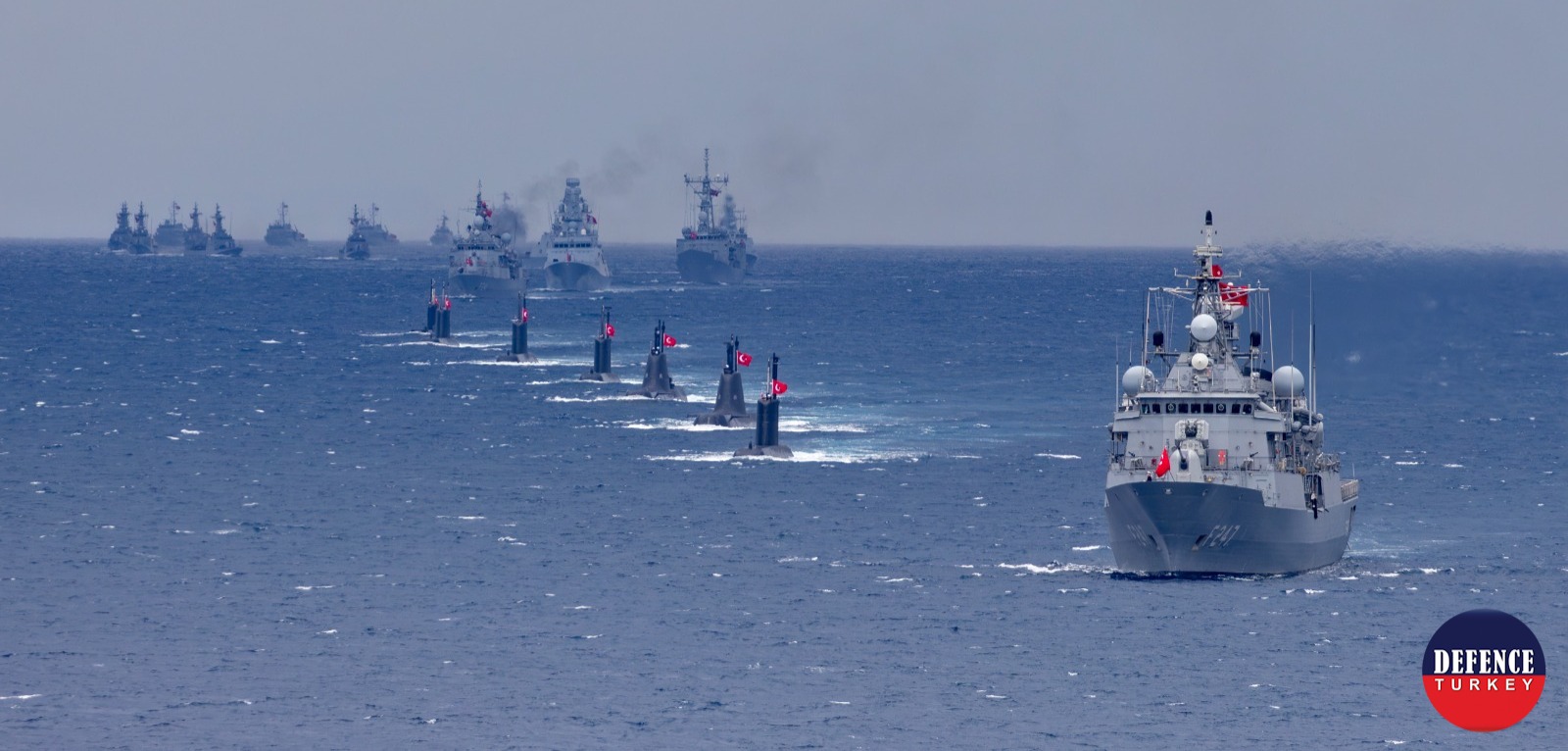
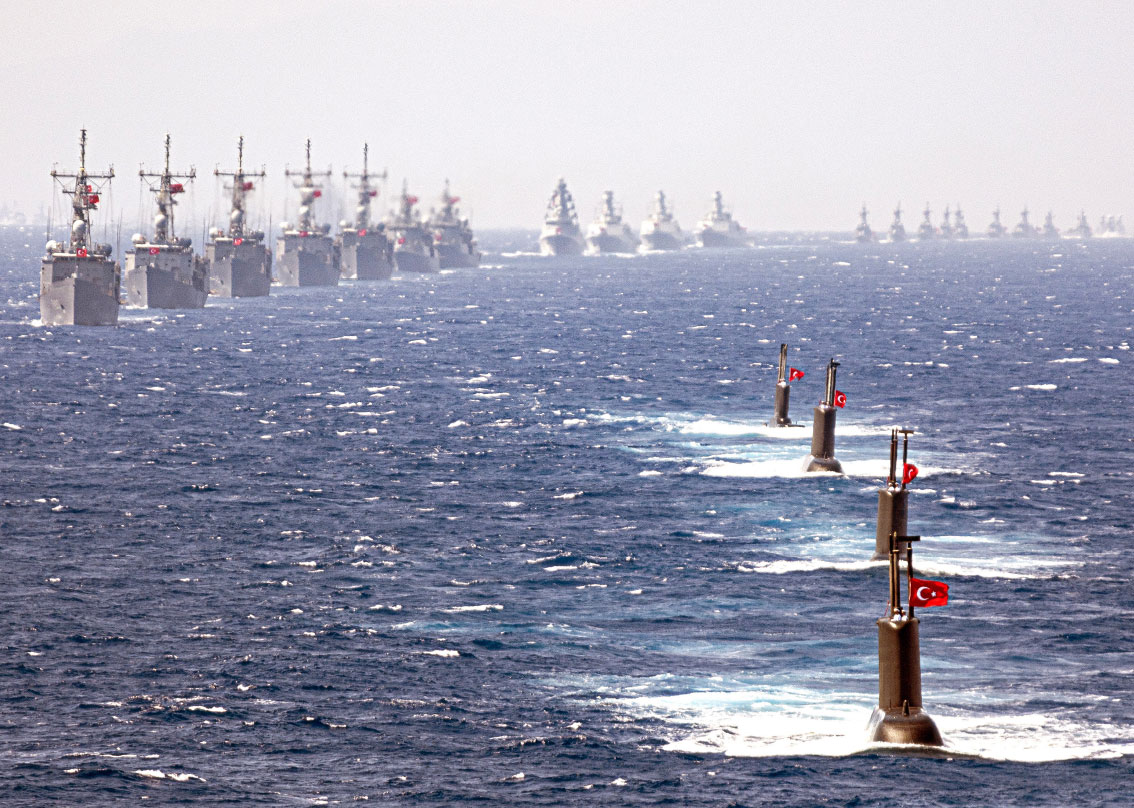
The last main activity of the day was the naval parade of the 5 submarines, 40 surface vessels 5 unmanned surface vessels, 3 ASW helicopters, 3 attack helicopters and 3 ASW aircraft. This was the very first time that unamend vessels took part in the same formation with their manned counter parts. I can tell that the military attaches were extremely interested in the unnamed systems.
An Impressions on Board of TCG Anadolu
The press was hosted on board of TCG Anadolu. The transfer from Dalaman Naval Air Base to the ship was performed by one CH-47F Chinook helicopter. TCG Anadolu can support not only helicopters from the naval forces but also a variety of helicopters of the Land Command Forces such as AS532 Cougar and the afore mentioned Chinook.
In order to prevent any foreign object damage to the aircraft and the engines during the air operations, only personnel who will interact with aircraft are allowed on the flight deck. This is a sound decision as the flight deck as it might seem large is just enough for the all the helicopters and the turning rotors make it a very dangerous area. The rules on the ship are strict regarding these operations and even crew members not part of the flight operations and being on other decks have to take special precautions during the flight operations.
The ship is large, and it is easy to get lost if you do not know your way around. On board of a frigate or corvette finding my way around was easier. They have usually one or two alleyways and it is easier to maintain orientation. In the worst case the portholes with a view to the outside provide some kind of reference. Once inside the bowels of TCG Anadolu, being unable to see any outside reference it is much easier to lose the orientation if you are not accustomed as there are many alleyways and much more decks compared to a frigate or corvette. Our guides kindly helped us to be on the correct place at the correct time.
The ship’s unique propulsion system provides a very good position keeping capacity almost similar to that of a nimble mine hunter. That is not an easy feature as the large size and the height of the ship acts as a permanent sail. TCG Anadolu stayed at the same location for most of the day despite the increasing wind and swell. It was interesting to observe this superb position keeping capability at first hand