NAVAL EXPANSION IN THE AEGEAN

The Aegean Sea has always been strategically significant due to its location and its historical importance and will remain a source of friction between Greece and Türkiye.
In recent years, both nations invested in their naval forces with the Greek Navy procurement of Belharra, the navy has undergone a significant expansion with an increase in its naval spending and procurement of new warships. This expansion has been driven by the need to enhance national defense, assert its presence in the Aegean Sea, and maintain a balance of power in the region. This article will explore the implications of this expansion on the balance of power in the region and examine the latest warship procurements of both Greece and Türkiye.
Greek Naval Expansion
Greece has embarked on a comprehensive modernization program for its navy, with a focus on the procurement of new warships.
Newest Major surface warships entered service are the four Hydra class frigates from late 90’ies. And the bulk of the Greek Naval Forces are the 9 Elli class frigates bought from the Netherlands. While some of these frigates have entered service after the commissioning of aforementioned Hydra class frigates the Elli class frigates rapidly nearing to the end of their useful life.
Between 2019-2022, the Greek Naval Forces introduced three former platform support vessels donated by a large shipping family, partially revitalising the aging logistic support to the Fleet, which had been relying on the sole Etna-class replenishment ship and two old Lüneburg-class ships, one of which was immediately retired.
Furthermore, the last two of the totally seven Super Vita / Roussen-classmissile attack craft joined the Hellenic Navy along with nine special operations craftand rigid inflatable boats were acquired. The first Greek indigenously designed and built special operations craft Agenor was also commissioned.
The most important naval program Greece has started is the procurement of Belharra frigates from France.
A Letter of Intention was signed on the 10th of October 2019 by the Greek Minister of Defence, Nicolaos Panagiotopoulos and the French Minister for Armed Forces, Florence Parly. This was in in line with the strategic cooperation between the two countries and regarded a step to sell FDI known as Belharra for international markets, to the Hellenic Navy. The Chief of the Hellenic Navy Nikolaos Tsounis was among the high-ranking guest during the first steel cutting ceremony on 24 September 2019.
After negotiations on 28 September 2021 almost two years after the construction of the first FDI class frigate has started, Greece announced that it would buy three Belharra class frigates. There is an option for the fourth ship.
When commissioned by Greek Naval Forces, these frigates will be the most advanced warships in their inventory.
The main offensive weapons of the Belharra class are 8 Exocet MM40 B3C anti-surface missiles. The MM40 B3 missile is the latest generation shipborne variant Exocet family. The missile all-weather capable missile has a 200km class operational range at very low altitude against all classes of warship. The active RF seeker enables the missile to have a high hit probability even against moving targets.
For defense against airborne threads the frigate can carry a total of 16 Aster 15 or Aster 30 missiles. Aster 15 is the short ranged of the two missiles with a range of more than 30 km where as Aster 30 has a range more than 120 km. Aster missiles provide ships with an all-round anti-missile and anti-air capability to ensure self-defense and consort protection. In addition, Aster 30 also provides long range interception capability for area defense.
According to the Naval Group, the FDI will be the first warship, natively protected against cyber threats, with a Data Centre accommodating a great part of the ship applications. The FDI introduces the concept of a dedicated system for asymmetric threats warfare, distinct from the operation room. Located behind the bridge, it will lead asymmetrical warfare against air and surface threats such as mini-UAVs or boats.
As a general-purpose frigate capable of combating surface, air and sub surface threats and asymmetrical threads, when commissioned into service the FDI class frigates will take over a number of missions from the older frigates in service thus rejuvenating the French Navy.
In March 2022 Greece signed a contract with French companies Naval Group, MBDA and Thales. The first frigate HS Kimon is expected to be delivered to Greek Naval Forces in 2025.
The Hellenic Navy's modernization program represents a significant investment in Greece's defense capabilities and is expected to boost its naval power in the Mediterranean region. The upgrades and new acquisitions will provide greater flexibility and enable the Navy to respond more effectively to a range of security challenges, including illegal immigration, human trafficking. The program is part of Greece's broader efforts to modernize its armed forces and enhance its national security in an increasingly uncertain geopolitical environment.
Turkish Naval Expansion
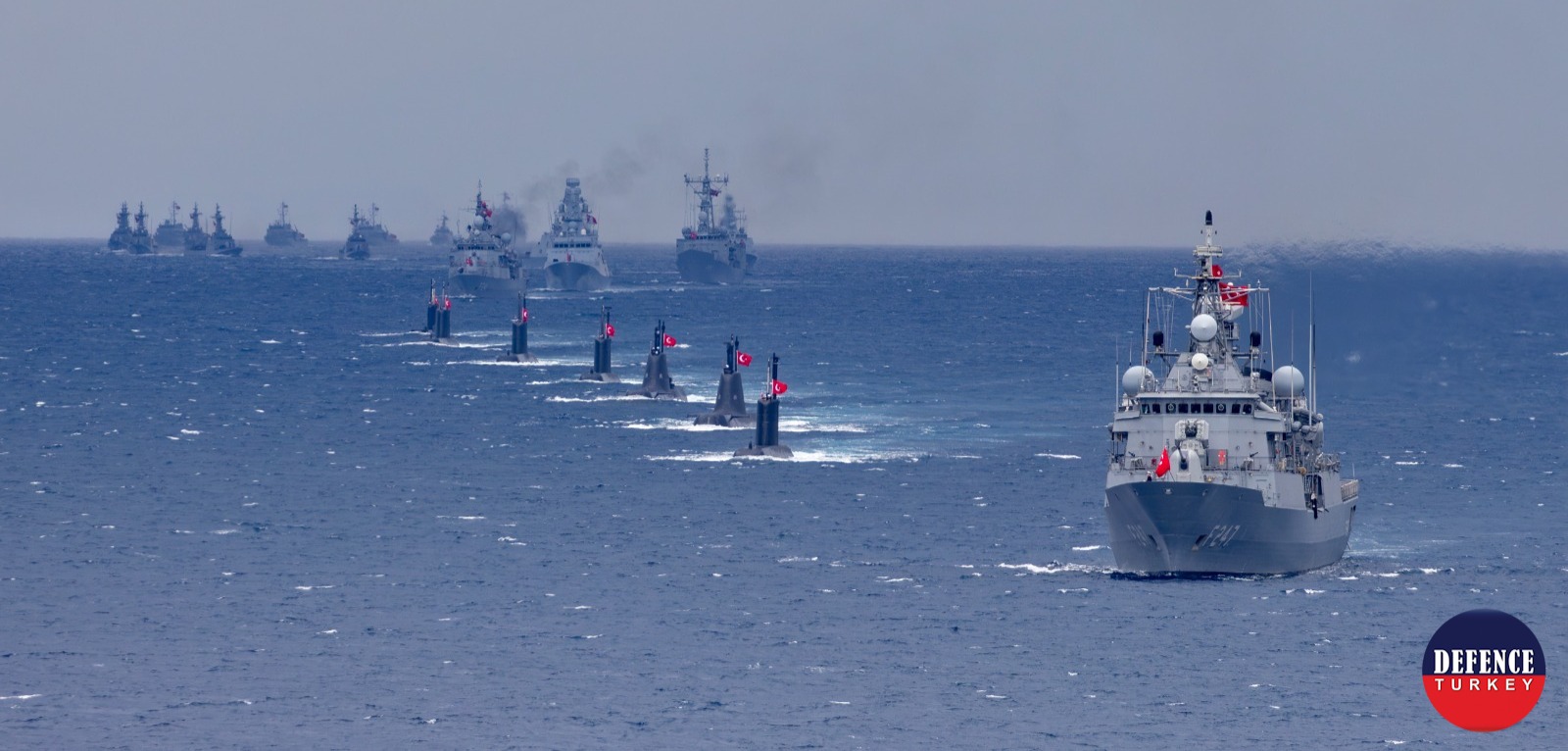
The Greek naval expansion can be seen as a countermeasure the Turkish naval expansion. Türkiye has also been expanding its naval capabilities in recent years. Türkiye has focused on developing indigenous naval capabilities and enhancing its naval power projection in the Mediterranean.
Türkiye has developed the ISTIF class frigates, which are designed to operate in a range of environments, including littoral and blue water operations. The first of the class TCG Istanbul was launched in January 2021.
TCG Istanbul, has a length of 113.2 meters, a width of 14.4 meters, a depth of 7.75 meters, a draught of 4.05 meters, and a displacement of 3,000 tons. The frigate's superstructure is similar to the Ada class corvettes, with the exception of a higher mainmast that includes space for different electronics. The ISTIF class frigates will carry a Cenk-S 3D search radar, two Scorpion fire control radars, and one navigation radar, as well as ARES 2N ESM and AREAS-2N ECM systems for electronic reconnaissance and warfare. Additionally, the Piri IRST system will provide infra-red search and tracking capabilities.
The ship's main offensive weapons will be 16 Atmaca anti-ship missiles developed in Türkiye. Since Türkiye has been unable to obtain Mk-41 VLS from the USA as in the previous projects, MIDLAS, a locally developed vertical launch system, and Hisar-D air defense missile will be used. The missile is a naval variant of Hisar-O initially developed for the Turkish Land Forces.
On December 3, 2022, Defense Industry President Prof. Dr. İsmail DEMİR and the Ministry of National Defense announced through their social media accounts that the first test firing of the MIDLAS was successfully carried out using a HISAR-D RF missile at the Aksaray Firing Test Area.
The naval missile has an RF seeker in place of the original IIR seeker. Hisar-D has a dual-stage rocket motor and thrust vector control system. With a range of over 20 kilometers, it can be used against rotary and fixed-wing aircraft, cruise missiles, air-to-ground missiles and unmanned aerial vehicles.
TCG Istanbul will also be fitted with a 76mm main gun, a 35mm Gökdeniz close-in weapon system, two remotely controlled gun platforms, two twin 324mm torpedo launchers for anti-submarine warfare, decoy launchers, and Hızır torpedo countermeasure system.
The steel for the next 3 ships TCG İzmir TCG İzmit and TCG İçel was cut in April 2023. These three frigates are being constructed simultaneously in 3 separate shipyards. They are expected to be delivered in 36 months.
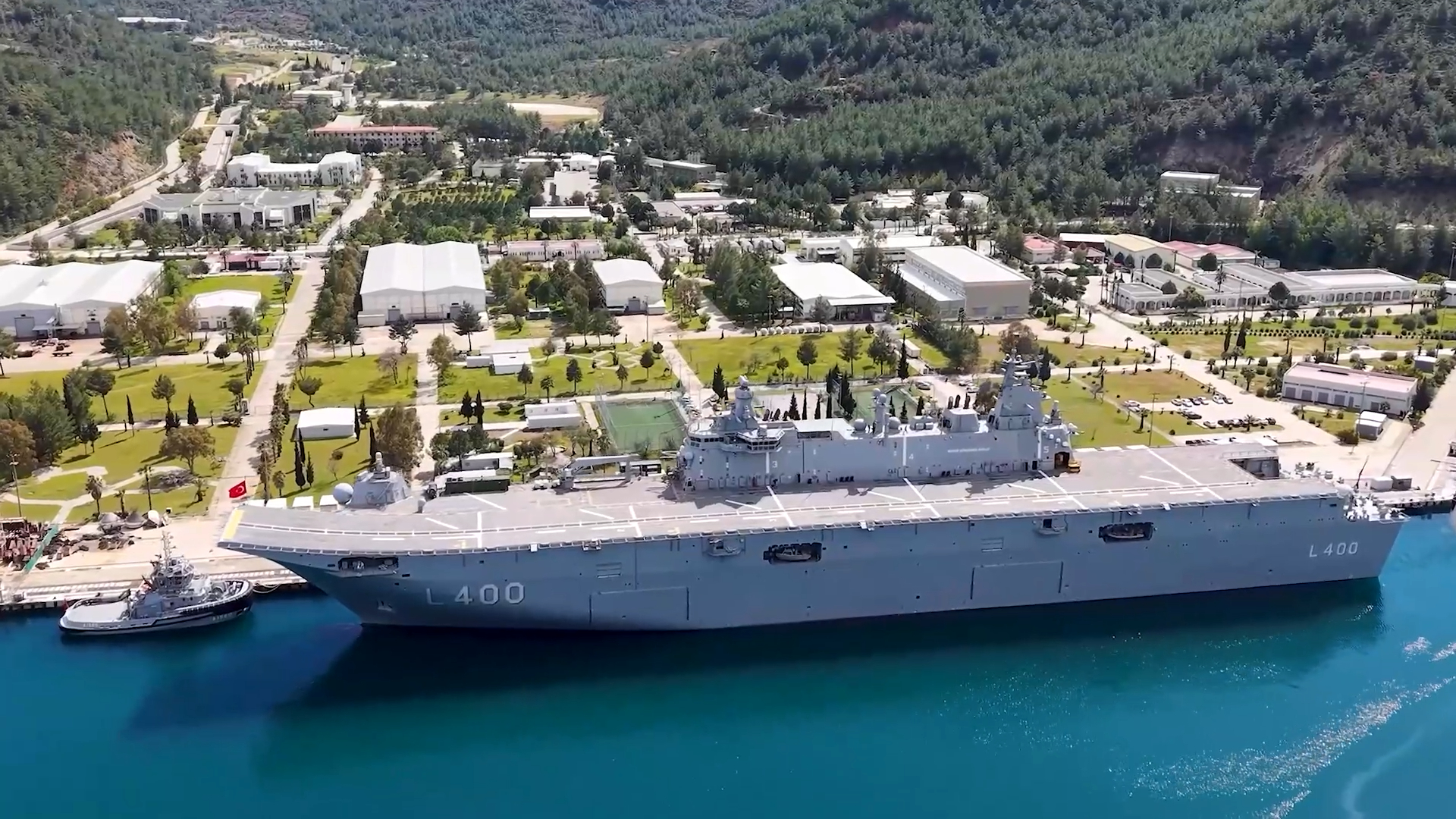
The new amphibious assault ship and the new flagship of the Turkish Navy TCG Anadolu was commissioned in April 2023. The TCG Anadolu is a highly capable amphibious assault ship that was designed to enhance the Turkish Navy’s operational capabilities both at sea and on land.
One of the primary capabilities of the TCG Anadolu is force projection. This ship can transport a large number of troops, vehicles, and equipment, and can deliver them directly to shore for combat operations. This makes it a valuable asset for any military operation that requires rapid deployment of forces.
Amphibious ships can also serve as command ships for a task force, providing a central location for naval commanders to coordinate their forces. Furthermore, they can act as logistical supply platforms during humanitarian crises or disasters, providing necessary supplies and aid to affected areas.
Additionally, these ships can be used to evacuate combatants and non-combatants from a conflict zone, providing a safe and secure means of transport. The Turkish Naval Forces have much experience in this area as they conducted a very large non-combatants evacuation from Libya in 2011. A ship such as TCG Anadolu would have solved many tactical problems with ease.
Another potential use of amphibious ships is as a mothership for small boat operations and air vehicles both manned and unmanned. It is expected that TCG Anadolu will host a number of unmanned UCAVs on board such as TB-3 and Kızılelma as well as some unmanned surface vessels.
Comparison of Greek and Turkish Naval Procurements
Türkiye and Greece are following different procurement strategies for their naval projects. While Greece can enjoy free and easy access to the European and American projects and systems, Türkiye has had to develop indigenous warship capabilities. This allows the country to become more self-sufficient and less dependent on foreign suppliers. This can potentially reduce costs over the long term, as Türkiye can produce its own ships and weapons systems domestically without having to rely on foreign manufacturers. Additionally, developing indigenous capabilities can lead to technological advancements and innovation, as well as create jobs and boost the local economy.
However, developing indigenous capabilities can also be time-consuming and require significant investment in research and development.
The delays in the TF-2000 air defense frigate project is a good example that developing indigenous capabilities may take years or even decades to develop a new warship or weapons system.
Moreover, the costs of developing and producing new ships and weapons systems domestically may be higher than simply purchasing them from foreign suppliers, at least in the short term.
On the other hand, Greece's approach of buying warships from abroad allows the country to quickly acquire the ships it needs without having to invest significant time and resources in research and development. This approach can potentially save money in the short term, as foreign suppliers may offer competitive pricing and already have the necessary infrastructure and expertise in place to produce high-quality ships and weapons systems.
However, relying on foreign suppliers also comes with risks, such as supply chain disruptions, changes in geopolitical relations that may affect the availability of certain weapons systems or spare parts, and potential restrictions on technology transfer or access to sensitive equipment. Additionally, buying ships from abroad may not necessarily lead to the same level of technological advancement or job creation as developing indigenous capabilities.
Conclusion
The expansion of naval capabilities by Greece and Türkiye has significant implications for the balance of power in the Aegean Sea and the wider Mediterranean region.
The Aegean Sea is a strategic location for energy exploration, and the recent discovery of significant natural gas reserves in the eastern Mediterranean has added to the importance of the region. The increased naval capabilities of Greece and Türkiye have the potential to affect energy exploration and transportation in the region, with both countries asserting their rights over the exploration and transportation of energy resources.
The acquisition of new warships by Greece and Türkiye has enabled both countries to assert their presence in the Aegean Sea, which has historically been a source of tension between the two nations. The increased naval capabilities of both countries have led to a more assertive posture, which could potentially escalate tensions and lead to further conflict.
The Hellenic Navy needs newer and modern warships, and the bulk of their existing surface fleet is nearing to the end of their useful lives, this is especially true for the Dutch frigates. The mid-life modernization project for the German frigates, approved in May 2020 is a welcomed action however it means that one of the most modern warships will not be able to serve until the modernization program is finished. And Greece must decide to buy new frigates or corvette siew warships to replace the Elli class.
The Turkish Navy faces a similar aging problem too. The first generation of MEKO 200 frigates the Yavuz class are almost 40 years old and need replacing. A few months ago, news about the possible procurement of Type-23 frigates from the UK has emerged as a party to replace the older frigates.
Both countries will benefit from the rejuvenation of their fleets.