Rebuilding the Navy: Post-War Naval Procurement in Syria
Introduction
The strategic degradation of the Syrian Navy as a viable military actor highlights one of the most pressing challenges facing Syria’s post-conflict recovery: the reestablishment of maritime sovereignty under economic, political, and security constraints. The collapse of naval capabilities did not occur suddenly with the December 2024 Israeli missile strikes, but rather it put an end to the decades-long neglected and systemically underfunded navy. Long before the physical destruction of key vessels and port infrastructure, the Syrian Navy had already considerably lost its operational relevance, being stuck on Soviet-era platforms and a shrinking, aging personnel pool. In a region with volatile maritime boundaries, asymmetric threats, and sensitive geopolitical balances, Syria’s inability to exercise even minimal maritime control leaves the state vulnerable—not only to external military pressure but also to the illicit flows of arms, narcotics, and fighters that undermine political stabilization efforts.
The prospect of naval reconstruction is therefore not simply a technical issue of platform acquisition, but rather an effort to revitalize strategic presence and overcome multidimensional policy challenges shaped by budgetary limitations, evolving threat environments, and the need to manage international sensitivities. Syria cannot afford a large-scale procurement of high-end surface combatants. Besides, it would not be strategically prudent, due to the likely diplomatic fallout and regional misinterpretations it might provoke. In that sense, what is required is a calibrated, capability-based procurement (CBP) strategy—a strategy that maximizes security outcomes with minimal political and economic cost. The emphasis, particularly in the early phases of reconstruction, must be on coastal defence, maritime policing, and sovereignty enforcement—crucial core tasks that can be fulfilled by smaller, faster, and more politically tolerable platforms.
Drawing on comparative post-conflict naval rebuilding experiences, such as those of Iraq and Lebanon, as well as doctrinal experiences in countries like Australia and Norway, this report outlines a framework for Syrian naval reconstruction centered on risk-cautious procurement, operational effectiveness, and international acceptability. In this regard, Turkish-origin naval platforms emerge as particularly viable: offering a balanced blend of affordability, technological adequacy, and diplomatic flexibility. Thanks to Türkiye’s experience in exporting to politically sensitive environments, coupled with its openness to technology transfer and co-production agreements, it ,s featured as a uniquely compatible partner for Syria’s immediate naval needs.
This report begins by analyzing the current status of the Syrian Navy and, consequently, outlining the systemic constraints facing any reconstruction effort and the rationale for prioritizing coastal security platforms over blue-water craft. The paper focuses on two major constraints Syria currently faces: International risk factors that can drive Syria into a diplomatic fallout and the crucial security gap in the maritime zone from which Syria suffer from. Afterward, the report provides a comparative analysis of Turkish naval platforms with rival suppliers, and in the last part, it details their technical specifications, political advantages, and operational relevance. In doing so, it offers a realistic and strategically grounded blueprint for rebuilding Syrian maritime power—not as a projection of offensive capability, but as a foundational pillar of state security, economic stability, and international reintegration.
Analysis
The Syrian Navy’s Post-War Status
While Syrian Naval Forces collapsed almost entirely in the aftermath of the Israeli strike on the main Syrian ports, their maritime capacity was already far from full-scale operability even prior to the attacks. Syrian naval maintenance and upgrades were hindered by several factors, both before and during the civil war, including economic downturn, the collapse of the Soviet Union—previously the main supplier of Syrian defensive needs— and the allocation of limited resources to other defence needs rather than naval build-up. These limitations are evidenced by a number of documented procurement failures and delays. Syria’s constrained budget was insufficient to satisfy naval requirements and procure new naval platforms for the forces. Syria’s $12 billion debt to Russia from previous procurements forced the country to cancel the acquisition of SU-27 fighters and Kilo submarines, even though the major portion, 73% of the debt was written off by the Russian government.
Besides financial restrictions, naval needs were not among the top priorities of Assad’s government in defensive procurement either. U.S. intelligence analysts believed that Syria had decided to focus on the key defensive areas, such as missile, rocket, anti-tank, aircraft, and air defence inventories.1
However, the Syrian Naval Forces were able to operate in their maritime territory, even though their capacity was considerably limited, with several units of surface vessels, coastal units, and auxiliaries. The Ossa II, which is significantly outdated and currently used only by Syria and North Korea, has played a central role in the Syrian Naval Force. The Petya III, primarily designed as an anti-submarine platform, was also utilized in both anti-submarine warfare and surface-to-surface naval conflicts, although its capacity in surface warfare was marginal. The Petya III’s combat capability deteriorated dramatically with the introduction of newer types of submarines by the Israeli Naval Force. Iranian TIR inshore missile boats were actively on duty, capable of engaging targets within a 120 km range. TIR II missile boats were the most recent platforms in the Syrian Navy, and they were received in 2006.2 3 Coastal security and in-shore interventions were ensured by a limited number of Zhuk-class patrol boats, which constituted the only type of inshore patrol boat in service. The K-300P, as a coastal defence system (CDS), stood out as the most recent system among other operating coastal defence systems such as the
P-35 and P-15M.
The navy approximately included 3200 active personnel, in addition to 2500 reserve units. The Marine Corps, comprising 1500 personnel as a part of a 3200-personnel naval infantry force, was organised as three detachments and was in charge of guarding the ports of Latakia, Tartus, and Mina-al-Bayda. The average age in naval force personnel was considerably higher compared to both the other Syrian forces and international standards. This age gap between the Navy and other forces was likely due to the fact that new recruitments were not directed to the Navy to support land forces, namely the National Defence Force and the Syrian Arab Army.4
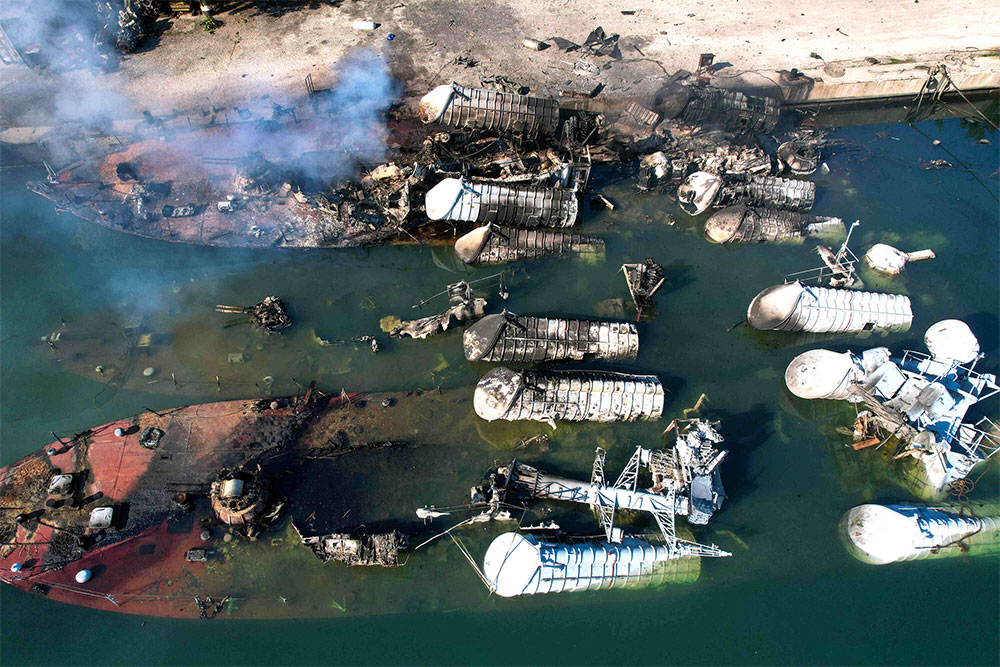
Even prior to Israel’s naval strike in December 2024, the Syrian Navy had been degraded to a symbolic force and was dysfunctional to a great extent. The navy, composed of early 1960s Soviet missile vessels and patrol boats, had lost its effectiveness due to years of underfunding, lack of maintenance, and inadequate training. Analysts refer to the Syrian navy as “full of rusty ships and a pissant, 4th-rate force, incapable of even slowing down any half-decent fleet.”5 Israel’s missile strike on 15 Syrian warships docked at two major naval bases— Latakia and Al-Bayda—resulted in the destruction of 80 percent of the country’s existing maritime forces, most of which were already non-operational.6Currently, Syrian Naval Forces require all classes of naval units, yet face significant structural constraints and a limited post-civil war budget. In this context, a systematic assessment of naval needs and prioritizing the procurement of specific units offers the most realistic approach to rebuilding Syria’s naval capacities.
Methodologically, this report proposes a Capability-Based Procurement strategy (CBP) focusing on governmental objectives that consider budget constraints and risk assessments of potential acquisitions, centered on security priorities. Compared to Threat-Based Procurement (TSP) strategies, CBP offers several advantages, particularly in contexts characterized by ambiguity and constrained security planning. In environments with multifaceted threats, high risk, and limited resources, CBP provides a rational foundation for procurement management.
In addition to CBP, as a procurement strategy adopted in this paper, a range of artificial intelligence tools and data mining models, such as newspaper3k, pandas, and Claude 3, were utilized to support analysis and data extraction throughout the paper. 7 8
When prioritizing specific naval units for procurement, selections should be guided by the dual objective of maximizing the impact of new units on naval security while minimizing the risk of triggering any international tension. Accordingly, the rebuilding plan should rest on two main rationales: first, strengthening maritime security and economic control, and second, managing international sensitivities. Since the Syrian rebuilding efforts aim to reconstruct maritime security from a near-collapsed naval capacity, procurements should be aligned with the core principles of naval security. In this regard, the initial focus should not be on developing an open-seas naval power, but on restoring control over coastal waters and border security. During the restoration of coastal security, attention must be paid to avoid any international tension that could provoke international backlash, ensuring the rebuilding process is sustainable.
Security Concerns
Syria’s procurement strategy should prioritize strengthening coastal security and border control by first investing in coastal defence vessels. Restoring littoral defensive capabilities would enable the maintenance of safe and predictable economic activity. Early investment in coastal security would enhance economic resilience by protecting markets from illegal trade and improving predictability. Furthermore, improved coastal security and border control are essential for ensuring political stability and domestic safety by preventing terrorist infiltration and the smuggling of illegal goods and arms. In this context, focused cooperation between Türkiye and Syria on coastal defence vessels—rather than on the full spectrum of Turkish naval platforms—would offer the most effective solution for Syria in the short term. Among Turkish-made naval systems, prioritizing coastal patrol boats, fast interceptors, and naval surveillance systems would significantly enhance Syrian maritime sovereignty. These assets would restore capabilities for routine border patrols, rapid response operations, maritime traffic monitoring, and anomaly detection. A detailed breakdown of Turkish naval platforms relevant to this strategy is presented in Table 2 below.
The idea of prioritizing near-shore security and focusing initially on the acquisition of patrol vessels first, rather than blue-water assets, is not a recently developed perspective. Analyses indicate that most of the U.S. naval missions involve a critical need for maritime border control and coastal security in the partner countries, and the Navy and Marine Corps often fall short-handed in delivering coastal security due to a lack of specialized skills and platform capability to ensure littoral security. The report suggests that, in order to strengthen coastal security and economic stability of the partner country, the U.S. Coast Guard should take the lead in the partner’s coastal security efforts rather than blue-water deployment.9 The Australian Defence Forces (ADF) have announced plans to take border control and coastal security as its primary objective after Indo-Pacific conflicts between the USA and China intensified, according to the 2020 Defence Strategic Update. ADF plans to address escalating strategic challenges in the Indo-Pacific coastline through acquiring patrol vessels and expanding the surveillance capacity of the Australian-made Jindalee Operational Radar Network to enhance situational awareness in the immediate region.10
In addition to considerations of maritime security and the balance between blue-water naval platforms and coastal craft, there are recent empirical examples of naval reconstruction that support the strategy proposed in this report. During the Gulf War, the Iraqi Navy suffered significant losses at the hands of Allied forces under Operation Desert Storm. All major Iraqi naval units that ventured into open seas were either severely damaged or sunk, while docked vessels were destroyed in port. Following the overthrow and execution of Saddam Hussein, the United States and its allies launched a comprehensive naval rebuilding program, establishing the Coalition Military Assistance Training Team (CMATT). As part of the initial effort to reestablish maritime security, a small coastal defence force was formed and tasked with securing ports and key waterways.11 Under the “26-15-4-2” program, a total of 26 fast response boats and 15 coastal patrol boats (each 35 meters in length) were procured. By the late 2000s, the program was completed with the delivery of four Italian Diciotti-class patrol vessels and two support ships.12
Similarly, the Lebanese Navy underwent reconstruction after the 2006 Israel-Hezbollah war, which highlighted the limitations of the Lebanese Navy’s platforms and equipment. Lebanon’s pursuit of naval modernization was driven by a clear goal and rationale. With a 225-kilometer coastline, Lebanon needed to monitor maritime traffic, intercept illegal arms shipments, drug trafficking, and smuggling. In the early stage of reconstruction, naval capabilities were primarily developed through Western donations. During this period, the main focus remained on coastal security and strengthening the coast guard. Over 15 years, French, German, British, and UAE navies donated several dozen fast interceptors, patrol boats, and inshore craft.13 After the mid-2010s, the Lebanese Navy sought to improve its blue-water capability via contracts with France and the United States, mainly. 14 15
In the aftermath of prolonged conflict and amid ongoing regional instability, Syria’s naval reconstruction must be guided by strategic caution, economic pragmatism, and diplomatic sensitivity. Rather than pursuing an expansive and high-risk procurement of blue-water platforms, Syrian decision-makers would be better served by prioritizing the restoration of littoral security through the acquisition of patrol boats, fast interceptors, and coastal surveillance systems. This phased, risk-conscious approach would help to reestablish basic maritime control, protect economic assets, and reinforce border security—without triggering international backlash.
Turkish-origin coastal security platforms represent a particularly viable avenue for cooperation, offering cost-effective and scalable capabilities that align closely with Syria’s immediate maritime needs. Global best practices reinforce this approach: both the United States and Australia have emphasized the critical role of coastal defence in sustaining economic stability and addressing non-traditional security threats. Furthermore, the experiences of Iraq and Lebanon illustrate that post-conflict naval reconstruction is most successful when it begins with patrol-oriented coast guard forces and gradually expands into broader naval capabilities.
Ultimately, by prioritizing coastal security, Syria can establish a credible maritime presence, foster regional stability, and rebuild its navy on solid political and operational foundations—without jeopardizing its reintegration into the international system.
International Sensitivity and Risk Management
Syrian decision-makers should take possible international responses into account when formulating military reconstruction policies, in addition to domestic factors such as economic constraints or security needs. Starting the procurement process with heavily armed, blue-water naval vessels could be interpreted by the international community, especially by Israel, as an aggressive military buildup. Syrian decision-makers should take possible international responses into account when formulating military reconstruction policies, in addition to domestic factors such as economic constraints or security needs. Starting the procurement process with heavily armed, blue-water naval crafts could be interpreted by the international community, especially by Israel, as an aggressive military buildup.
Mismanagement of the naval rebuilding image and the creation of an international perception of an aggressive militarization can trigger international sanctions, diplomatic isolation, or military interference. Retrospective examples will be covered later on to project possible outcomes of different procurement strategies.
Previous attempts by Syria and other regional actors to modernize military capacity have caused international disapproval, and sometimes direct military interventions. The most prominent example of such international sensitivity is Israel’s long-standing preemptive strike policy, which has resulted in numerous targeted military actions against Syrian military infrastructure, including ports, military convoys, and airbases.16 17 These actions underline Israel’s high sensitivity regarding to any perceived threat that could lead to a military balance shift in the region. Similarly, Syrian naval procurement efforts are being monitored closely by Western actors such as NATO and the United Nations, and Western counterparts remain firmly opposed to any attempts that could lead to human rights abuses and violations of international law, including the acquisition of heavily armed defensive platforms:
“UN agencies risk becoming themselves implicated in the abuses… if a supplier is at a sufficiently high risk of involvement in ongoing human rights abuses and violations of international law, UN agencies should not get involved or do business with such an actor even where no alternative is available.” 18
The historical patterns of tension escalation should signal the Syrian government to manage not only domestic needs and constraints, but also potential international reactions to avoid direct responses and diplomatic backlash. See Table 3 for an overview of naval platforms considered internationally tolerable.
Giving weight to the reconstruction of the coast guard units, particularly in the early stage, would not only address the most crucial gap in Syrian maritime security but also signal to the international community, demonstrating restrained intentions in military rebuilding. In contrast to conventional naval platforms, coast guard units offer a politically low-risk alternative to assert maritime sovereignty. Coast guard units are increasingly being used in international disputes as a foreign policy instrument to demonstrate a commitment to non-aggressive conflict resolution strategies. Recent cases involving China and Norway, as examples of coast guard unit employment as an instrument in easing international tension, provide textbook settings to display the strategy's effectiveness.
China in the Senkaku Island disputes, which is a group of islands strategically located northeast of Taiwan and south of the Japanese Islands, has actively deployed white-hulled coast guard units rather than marine forces for sovereignty assertion over the islands to avoid escalating international tension. By using coast guards instead of marine forces, China benefits from the legal ambiguity associated with the mixed civil-military status of coast guard units, while still signaling a strong position. This approach—referred to as a “gray zone” strategy—underscores how coast guard platforms can serve strategic purposes under the cover of civilian or administrative roles. For Syria, where diplomatic optics and regional tension are highly sensitive, adopting a similar doctrine of visible yet de-escalatory maritime presence through coast guard assets offers a path to reassert maritime sovereignty without inviting international backlash.19
Norway also provides a compelling example of how a coast guard-centric maritime force can be instrumental in managing geopolitical tensions with a militarily superior neighbor. In the Barents Sea, where Norway shares an extensive maritime boundary with Russia, the Norwegian Coast Guard has been the primary actor in enforcing fishing rights, environmental regulations, and sovereignty claims. Rather than relying on naval warships, Norway deliberately employs its coast guard under a dual civillian-military structure to patrol contested waters—thereby maintaining legal control while avoiding overt militarization. This approach has enabled Norway to confront illegal fishing activities by Russian vessels, arrest violators, and conduct boarding operations under international law without escalating to armed confrontation. Even during incidents involving resistance from Russian fishermen, Norway’s coast guard operated under strict proportionality rules, relying on legal authority and intergovernmental communication channels. The strategy has proven effective not only in deterring violations but also in preserving stability through routine cooperation with Russian counterparts. For post-conflict Syria, the Norwegian model demonstrates how coast guard vessels—rather than offensive naval platforms—can serve as credible, law-based tools of maritime sovereignty that minimize the risk of conflict escalation.20
In the context of Syria’s post-conflict military rebuilding, naval procurement strategies must be shaped not only by domestic priorities such as security needs and budget constraints, but also by the risk of provoking international backlash. A premature focus on heavily armed, blue-water naval platforms could be perceived—particularly by Israel and Western actors—as an aggressive militarization effort, potentially triggering diplomatic isolation, sanctions, or military interference. Historical precedents, such as Israel’s preemptive strikes on Syrian infrastructure, underscore the importance of adopting a cautious and calibrated approach.
To mitigate these risks, Syria should prioritize the restoration and expansion of its coast guard capabilities in the early phase of naval reconstruction. Coast guard units offer a politically low-risk alternative for asserting maritime sovereignty, with precedents from global actors such as China and Norway demonstrating how such forces can fulfill security roles without escalating regional tensions. China’s use of coast guard vessels in the Senkaku Islands dispute, and Norway’s deployment of coast guard assets in managing Barents Sea tensions with Russia, both exemplify how maritime authority can be enforced within a framework of legal legitimacy and strategic restraint. For Syria, adopting a similar strategy would enable it to rebuild essential maritime capacity while maintaining international credibility and avoiding the perception of aggressive rearmament.
Although Syria’s maritime reconstruction strategy and platform prioritization have been addressed and references to Turkish platforms’ compatibility with Syrian Naval requirements have been outlined in the previous section, a comprehensive comparison of the most suitable suppliers under the country’s political and economic constraints remains undone. Given that the platforms most urgently needed during the early procurement phase are relatively simple in terms of technological requirements, multiple supplier options exist across each platform category. Therefore, among the wide range of available suppliers and platform models—each offering different features, conditions, and limitations—Syrian decision-makers must identify those best suited to the country’s strategic and operational needs. This section presents a comparison of selected models and suppliers aligned with previously identified platform types across three key criteria: flexibility of export policies, diplomatic neutrality, and technology transfer policies.
Political Restrictions
Western arms exporters, Türkiye, and emerging defence industries such as China and South Korea offer diversified arms trade approaches and criteria. While factors such as the exporter’s willingness to deal, level of risk tolerance, and political constraints they impose are relevant for client states, these considerations carry heightened significance for Syria, as a post-conflict country striving to rebuild its military capacity amid geopolitical complexities.
Türkiye, with its flexible arms export agenda and relatively fewer restrictions on the usage of exported platforms, distinguishes itself from its Western counterparts. Driven by the ambition to grow its export share in the global arms trade and to expand its footprint in neighboring countries, as a key objective of its broader foreign policy, Türkiye has demonstrated a higher willingness to take risks by engaging financially and politically with unstable countries. For instance, Dearsan, one of the major naval platform exporters in Türkiye, agreed to a contract with the Nigerian Navy in November 2021 for the delivery of two offshore patrol vessels, while the country was considered financially highly unstable by financial rating institutions such as Fitch or Moody’s. 21 22 In the Libya case, as another example of the assertiveness of the Turkish defence industry and decision-makers, Türkiye emerged as the sole arms exporter to Libya while the civil war was continuing and the country was banned as a trade partner. 23 24 25
On the other hand, Western defence exporters pursue restrictive and selective trade policies because of strict foreign policy goals, human rights considerations, and alliance-based limitations. In the aftermath of the military coup that took place in Egypt and the subsequent killing of more than 1000 protestors by the military-backed government, Germany, Italy, the Netherlands, and the UK banned arms exports collectively, along with the suspension of economic aid.26 27 As a similar stance was taken towards Saudi Arabia: Germany extended the suspension of all arms transfers to Saudi Arabia after the assassination of Jamal Khashoggi, which was already in place because of the Yemen War. 28 While Western arms suppliers are highly selective and constrictive, as demonstrated above, China pursues an arms export policy similar to Türkiye’s, prioritizing expanding its zone of influence through establishing strong ties with client countries and increasing its geopolitical footprint. However, China's negative reputation in international diplomacy could come with a cost for its strategic partners. That’s why the current Syrian foreign policy— aiming to reestablish international reputation and recognition in the post-civil war era— would not match what a strategic partnership with China via arms trade can offer, regardless of the platform's technical capacity or economic affordability.
Diplomatic Neutrality
Arms imports are widely recognized as fundamentally distinct from ordinary forms of international trade. Partnerships in the arms trade often signals to international rivals and observers the likelihood of a potential strategic partnership in the long run with the supplier country, since the maintenance of imported platforms requires constant technical support, personnel training, and possible joint military exercises. For this reason, Syria— currently striving to restore political stability and regain diplomatic recognition— should strictly avoid sending highly visible signals that might be interpreted as a foreign policy shift toward an individual strategic alliance.
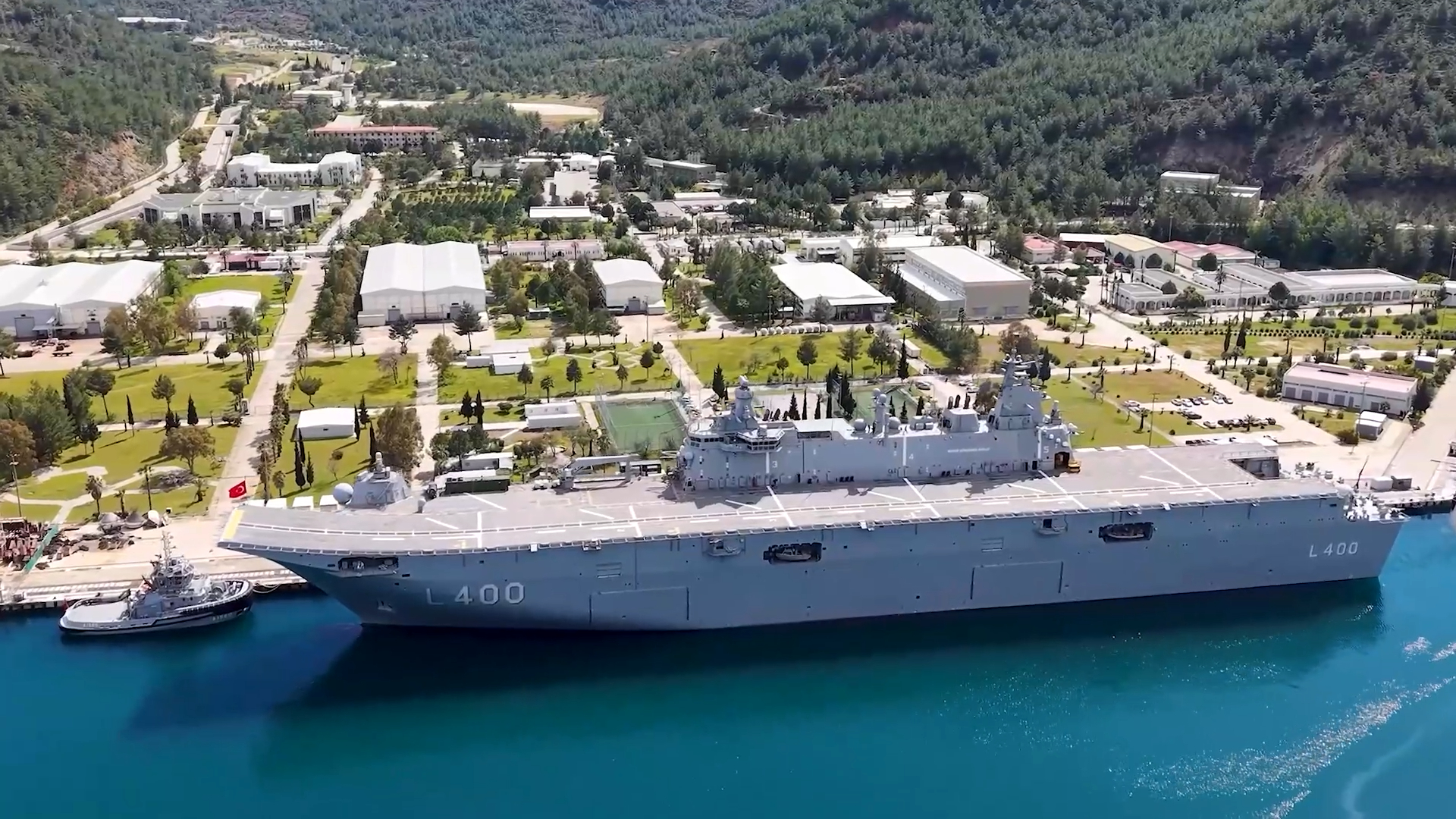
At this point, adopting a procurement strategy based on Turkish-originated platforms offers an ideal and balanced image to the international community, due to the multidimensional foreign policy Türkiye pursues. Over the last two decades, Türkiye has followed a strategy to balance rival political blocs and is widely recognized as an international mediator, rather than being a member state of any strategic partnership. Though it is possible to find various cases that illustrate the mediator role Türkiye plays in international conflicts, one of the most vivid examples addressing potential concerns over Turkish neutrality is the negotiatorship Türkiye conducted between Syrian and Israeli talks in 2008.29 This mediation is widely interpreted as a clear proof of Turkish neutrality, which various political camps agree on. In addition, its successful mediation efforts in the Russia-Ukraine conflict, along with pursuing BRICS membership while maintaining its stance as a core member of NATO, stand as another recent example of Turkish multilateral foreign policy accomplishments. In that sense, keeping Türkiye as a main contractor while reconstructing the naval capacity provides a unique approach for Syria to maintain a balanced and neutral international appearance.
Conversely, aligning too closely with any strategic bloc could result in undesirable outcomes for both national security and the country’s international image. Extensive defensive cooperation with Western suppliers might be seen as a signal of potential partnership with NATO members and possibly restrain relations with Russia and Iran, leading to negative strategic consequences in the long run. Likewise, deepening defence ties with Eastern countries, particularly with Russia and China, could provoke diplomatic turmoil with Western countries and Israel, undermining strategic neutrality and risking both military action and diplomatic backlash.
Technology Transfer
For post-conflict Syria, regaining military sovereignty, including technological know-how and arms production ability, would be one of the most critical stepping stones to ensure complete security in the region. The importance of independent military production capacity derives from various reasons, like re-establishing military independence, reducing long-term reliance on external powers, and building local defence industry know-how.
Due to its aggressive arms export policy, Türkiye is considerably more willing to share technological know-how partially and offer local co-production with client countries. For instance, within the scope of the Pakistan-MILGEM project, two corvettes were constructed in Pakistan with Turkish technical support, including system integration and personnel training. The first steel for locally produced corvettes was cut in Karachi in 2020 within the technology transfer agreement between the two parties and they entered service by late 2024. 30 Similarly, in ANKA UAV orders from Kazakhstan, the trade agreement between the two countries was made in a way that allowed Kazakhstan to participate in the production process, which was crucial for the country to acquire partial know-how in production technology, local assembly, and platform maintenance. 31
On the other hand, Western arms suppliers follow a much stricter policy in sharing know-how and offering local production. One of the recent examples of the strict no-joint production policy took place in the Indian procurement of Rafael fighters, France’s fourth-generation aircraft. In this recent example, India requested the source code and technological information of the Rafale aircraft to overcome operational limitations, and it was rejected by France. 32Another example is the United States’ recent restrictions imposed on Türkiye over its F-35 Fighter Jets purchase. Similar to other examples, Türkiye was seeking a joint partnership to improve its technological capacity in aircraft construction. In 2019, the U.S. ejected Türkiye from the F-35 program over the S-400 missile deal, despite Türkiye investing over $1.4 billion and producing 937 parts for the jet. Upon the ejection, no transfer of production rights or technology was granted to Türkiye, even though it was a full industrial partner. 33 While limitations imposed on Türkiye in technology transfer and joint production were the most obvious instances for recent programs, Tier-1 partner nations, such as the United Kingdom, have also faced restrictions on access to key software and source codes. 34
In light of Syria’s complex geopolitical positioning and fragile post-conflict recovery, arms procurement decisions must balance strategic necessity with political prudence. As outlined, the flexibility of export policies, cost-effectiveness, and the potential for maintaining diplomatic neutrality are central to identifying appropriate suppliers. Türkiye’s unique position—marked by its multilateral foreign policy stance, regional engagement, and willingness to cooperate with politically and financially unstable partners—makes it a particularly viable candidate for Syria’s early-stage naval reconstruction. While China offers a similarly flexible export model, its unfavorable international reputation could undermine Syria’s efforts to regain legitimacy, especially among its Western counterparts. Conversely, Western exporters, though technologically advanced, impose significant political and legal constraints that may not align with Syria’s current priorities. Ultimately, a well-calibrated procurement strategy that prioritizes political neutrality while avoiding overt alignment and ensuring practical feasibility will be critical to Syria’s success in rebuilding its naval capacity without exacerbating existing international tensions.
Platforms
Patrol Boats
Patrol platforms are widely produced in Türkiye, with varying functionalities and specializations. Among them, the MRTP-34 stands out as a suitable option to address Syria’s urgent naval security needs. Developed by Yonca Shipyard, the MRTP-34 patrol boat measures 36.8 meters in length and reaches speeds of up to 45 knots. The vessel can accommodate 6 to 20 personnel and has an operational range of approximately 750 nautical miles in eco speed, enabled by its lightweight, advanced composite hull design. The MRTP series can be equipped with 30–40 mm autocannons with ASELSAN stabilizer turrets, 25 to 30 mm heavy machine guns, or, in some configurations, Surface-to-surface or Surface-to-air missile systems. Optimized for coastal patrol missions, the platform is also well-suited for anti-smuggling operations and the deployment of special forces, leveraging its agility and high-speed performance. Its small crew requirement and high mobility make it a cost-effective solution for routine maritime operations.35
For a post-conflict country like Syria—seeking to secure its maritime sovereignty within a limited budget and a short timeframe—MRTP-class vessels offer a rapid and cost-effective solution for enhancing coastal security. The Turkish defence industry’s strong export orientation allows for more flexible procurement agreements, typically accompanied by fewer political constraints. This makes MRTPs among the most accessible modern patrol craft currently available.
Besides that, Syrian decision-makers’ and defence analysts’ attention to Turkish naval platforms, especially Turkish patrol boats, has not emerged recently. In 2015, before the civil war escalated, former president Bashar al-Assad and his Turkish counterpart, President Abdullah Gül, were seen on a Yonca MRTP patrol boat, having a first-hand experience testing the operational capacity of the boat. 36 Alternative Turkish platforms are listed in Table 4.
Fast Interceptors
Several shipyards actively produce fast interceptor-class boats in Türkiye, similar to patrol boats. The Yonca MRTP-16 Super Fast Interceptor (SFI), developed by Yonca Shipyard in Türkiye, is designed for Oman coastal defence and high-speed interceptions. Measuring 17.7 meters and constructed with advanced composite materials, the boat is able to reach speeds of up to 75 knots. It is typically armed with a stabilized 12.7 mm weapon station and optical sensors for night operations. The platform is specially developed for coastal defence missions, anti-smuggling, and anti-terrorism, thanks to its exceptional maneuverability and high deployment capacity.37
For Syria’s post-conflict naval rebuilding initiative, MRTP-16s and other Turkish platforms offer a highly efficient solution to regain short-range maritime security. Their affordability, political accessibility, and ease of maintenance make Turkish vessels more attractive compared to non-Turkish alternatives. Moreover, the MRTP-16 operational reliability is well-established, as it is actively employed by Turkish, Qatari, Egyptian, and Malaysian coast guards — countries that have extensively tested and fielded the platforms in real-world conditions.38 39 40 Complete Turkish fast-interceptor craft list can be seen in Table 5.
Radar Systems
In line with Syrian coastal security needs against non-traditional threats—particularly in countering smuggling and terrorism— border control and surveillance systems should be prioritized. The Coastal Surveillance System, developed by ASELSAN, is well-suited to meet Syrian naval monitoring requirements, offering field-tested reliability and designed to provide real-time situational awareness in littoral environments. Combining surface radar, Automatic Identification System (AIS), and command and control software, the system enables tracking, identifying naval vehicles, and coordinating maritime surface activity.41
For Syrian coastal security concerns— such as maritime infiltration and smuggling— the Aselsan’s survelliance solution represents a cost-effective and field-tested solution. The platform offers strategic advantages aligned with Syrian political-economic conditions compared to other surveillance systems, for two key reasons: Unlike battle-oriented surveillance platforms, its design focuses on monitoring naval traffic, which minimizes the risk of escalating international tension, particularly with Israel and Western stakeholders. Compared to complicated Western surveillance systems, the system is offering operational simplicity and strong regional awareness. The system’s technically straightforward structure makes it both affordable and easy to maintain, which are crucial factors for a post-conflict country with limited resources. Various Turkish surveillance systems can be viewed in Table 6.
Conclusion
In the aftermath of a near-total naval collapse, Syria faces a strategic challenge to rebuild its maritime capacity in a way that is realistic, cost-effective, and diplomatically prudent. Rather than pursuing an ambitious rearmament agenda centered on blue-water capabilities, Syria’s naval reconstruction must begin with a focus on restoring essential coastal security functions. This approach not only aligns with Syria’s immediate defence needs and economic limitations but also reduces the risk of provoking international alarm or retaliation, particularly from regional actors like Israel or Western security institutions.
The phased, capability-based procurement strategy proposed in this report offers a viable pathway toward rebuilding naval capacity while maintaining strategic caution. Emphasizing coastal patrol, fast interception, and maritime surveillance—supported by scalable and politically low-risk platforms—enables Syria to reassert sovereignty over its waters without signaling an aggressive posture. Turkish-origin platforms, in particular, stand out as practical options due to their operational relevance, export flexibility, and Türkiye’s balanced geopolitical position. Moreover, Türkiye’s willingness to engage in co-production and technology transfer aligns with Syria’s long-term objective of developing indigenous defence capabilities.
Ultimately, Syria’s success in naval reconstruction will depend not only on platform selection but also on its ability to navigate the complex intersection of security priorities, economic constraints, and diplomatic risk. By adopting a restrained and focused procurement model, Syria can establish credible maritime control, safeguard economic interests, and signal a commitment to regional stability. The lessons of post-conflict naval rebuilding efforts around the world point to a clear conclusion: sustainability, political foresight, and measured ambition are the cornerstones of effective military recovery. In this light, the rebuilding of the Syrian Navy offers not just a chance to restore military capacity, but also to recalibrate the country’s strategic direction in a highly sensitive geopolitical environment