Our 5th ABFM Visit and Our Impressions
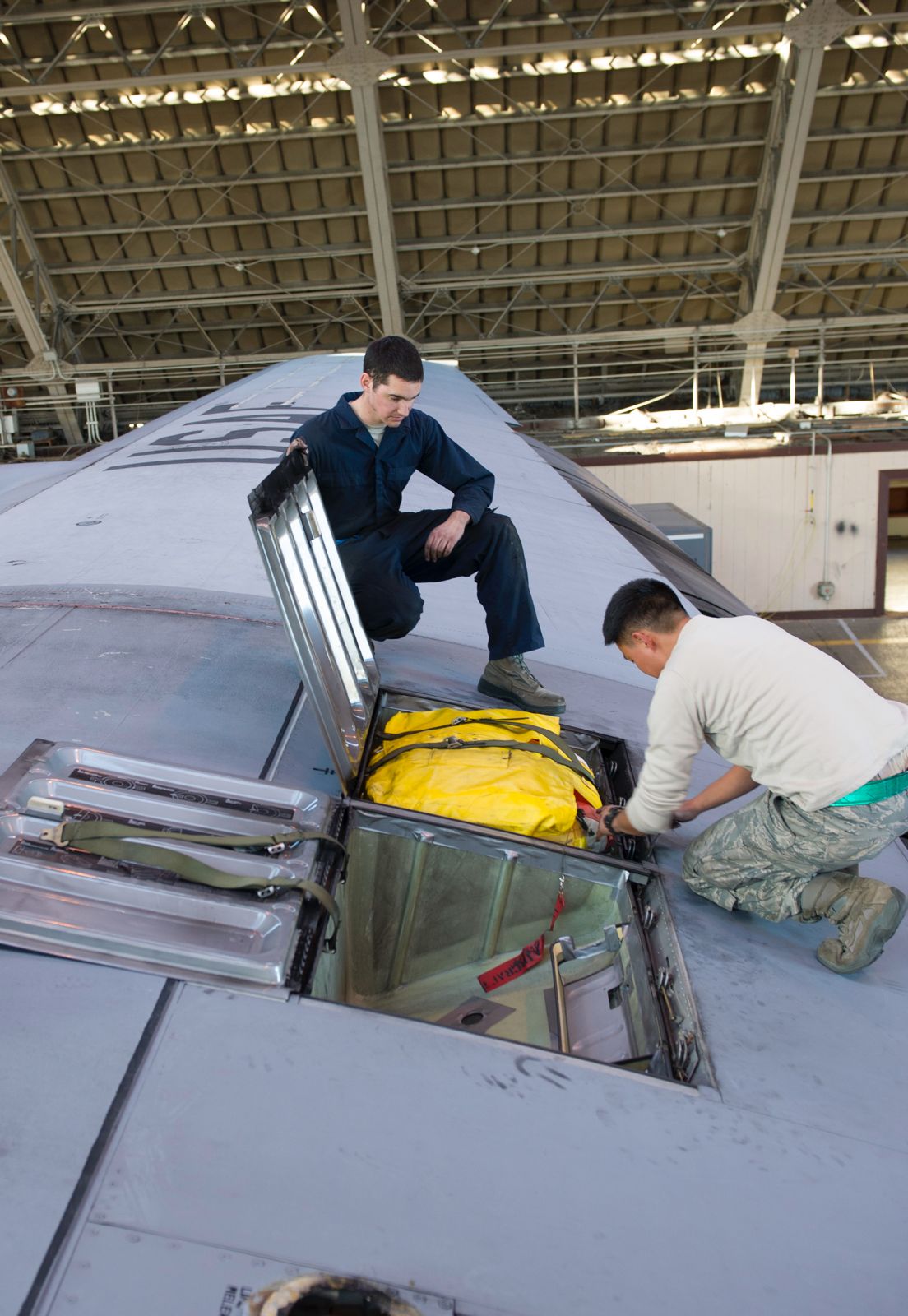
"Organizational-Level Maintenance," where the necessary maintenance and service services are provided to make the aircraft ready for flights, can be carried out by the maintenance teams working in the maintenance units in all military units affiliated with the relevant Force Command.
The "Intermediate-Level Maintenance" concept, in which repair/adjustment operations are carried out on aircraft devices/equipment using special ground support equipment and test sets, is carried out by expert maintenance personnel within the Base Maintenance Commands.
The "Depot-Level Maintenance" concept, which includes maintenance/repairs and fuselage/equipment overhaul processes outside the Organizational and Intermediate-Level, is generally carried out by factories under the General Directorate of Military Factories or by authorized companies. Depot-Level Maintenance requires you to have a technical structure, and within the scope of this structure, the Depot-Level Maintenance (DLM) activity of the aircraft is discussed in three basic sections: Structural, Engine and Power group, and Avionics.
It is a well-known fact that procurement, maintenance, and repairs, as well as keeping ready for duty, of defence tools and equipment for the Turkish Armed Forces (TAF), which gained its first rotary wing capability with 5 H-19B Helicopters that entered the Turkish Air Force inventory in January 1958 (Türkiye's first Helicopter Fleet was established with these helicopters on January 26, 1958), is highly sensitive. The reason for this sensitivity is directly related to the defence of the homeland.
Taking good care of all kinds of tools and equipment obtained from the funds created by the Turkish Nation's scarce resources, taxes, and donations from the poor to the rich constitutes a separate matter of sensitivity. For this purpose, a series of maintenance levels have been created in the Turkish Armed Forces in different classes, ranging from first-hand user to Depot-Level, and requiring human resources and technologies with very different expertise. In order to give an idea about the importance of the Depot-Level Maintenance capability, which is the highest level in this system where maintenance authorities at each level are determined, the opportunities it brings to our country, and the annual savings achieved thanks to the establishment of this capability domestically, we toured the 5th Main Maintenance Factory Directorate (ABFM) operating under the General Directorate of Military Factories of the Ministry of National Defence (AFGM) for you.
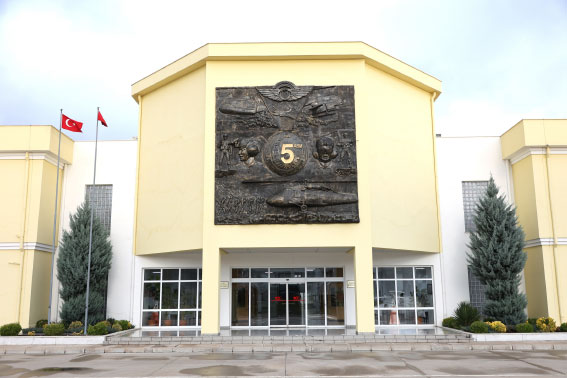
5th ABFM, which was established in Polatlı in 1948 as a maintenance unit at the third level together with the Army Aviation, was named "Aircraft Main Depot" and "5th Level Repair Shop Command" in 1960, was transferred to Ankara under the same name in 1962 and is currently located in its place in the Güvercinlik Barracks, and which has been carrying outs its activities as the "901st Aircraft Main Depot and Main Repair Factory Command" between 1973-1990, the "901st Aircraft Main Depot and Main Repair Factory Command" between 1990-2003, and the "5th Aircraft Main Depot and Factory Command" between 2003-2017 as a subordinate of the Maintenance Command, was transferred to the General Directorate of Military Factories (AFGM) within the scope of the restructuring works of the Ministry of National Defence on December 2, 2016. The 5th Maintenance Factory Directorate (ABFM) operates within a closed facility comprising workshops, hangars, storage areas, and service buildings. It provides Depot-Level Maintenance (DLM), Repair, Overhaul, and Modernization services for aircraft (Turkish Land Forces Beechcraft King Air B-200 and B-350 Manned ISR Aircraft and T-182T Training Aircraft) and helicopters in the inventory of the Turkish Armed Forces (Land, Naval, and Air Forces and Special Forces Command) in compliance with international aviation standards. Additionally, it offers Depot-Level Maintenance, Repair, Overhaul, and Modernization services (under a revolving fund) for helicopters belonging to the Ministry of Interior (Gendarmerie General Command and Coast Guard Command AB-412EP Helicopters) and the General Directorate of Security, as well as for the aerial platforms of other public and private sector organizations (General Directorate of Forestry and General Directorate of Land Registry and Cadastre). The first impression we got during our 5th ABFM facilities tour was that the Depot-Level Maintenance activities of aircraft are a more difficult and complex task than their manufacturing processes. We will present the reasons for this to you in our article. In fact, I was very pleased to find the 5th ABFM, which I last visited on March 26, 2010, some 14 years later, truly improved and with surprising new capabilities.
With the UH-1H Joint Production Project, the contract of which was signed in 1982, the Turkish Armed Forces has gained the ability to perform DLM for fixed and rotary wing aircraft in its inventory since the mid-90s and to carry out unique avionic modernization with national resources since the early 2000s, and with the T129 ATAK Tactical Reconnaissance and Attack Helicopters, which were first delivered in April 2014, CH-47F Chinook Heavy Lift Helicopters, which started to be delivered in July 2016, and T-70 Turkish Utility Helicopters, the first of which entered service in December 2022, it has become one of the most powerful rotating wing powers of our region. With the T625 GÖKBEY Light Utility Helicopter, T929 ATAK II Heavy Class Attack Helicopter (ASTH), and T925 10 Ton Utility Helicopter Projects, which are currently being developed with national resources and expected to be put into service in the near future, the Turkish Armed Forces will reach a much higher level in terms of rotary wing/air attack operation capability, both in quantity and quality.
Capabilities & Technologies
The 5th ABFM, which is an organization with significant technical capabilities that has been providing depot-level service to the helicopters and aircraft of the Turkish Armed Forces for 76 years and which has serious engineering power compared to other military factories with its experienced engineers, was appointed as the Technical Management Authority in 1995 for helicopters by the General Staff and currently serves as the main Depot-Level Maintenance center of the Army Aviation Branch. The appointment of the 5th ABFM as the TYS for rotary-wing aircraft means that it is the technically responsible institution for all activities to be carried out on a helicopter. In this way, certification of state-owned aircraft can be carried out by the 5th ABFM. Today, the 5th ABFM, which is one of the largest technology centers of the Ministry of National Defence, continues to serve as the Technical Management Authority of rotary-wing aircraft in the Turkish Armed Forces inventory and fixed-wing aircraft in the Turkish Land Forces Command (TLFC) inventory, with its innovative engineering approaches.
The 5th ABFM, which was authorized by Sikorsky Aircraft on June 25 2004 for Overhaul (a comprehensive overhaul to extend the life and restore performance) and Repair Capability for H-60/S-70 Helicopters and is now one of the world's leading helicopter maintenance centers, depot-level maintenance (DLM) capability of airframes, engines, engine accessories, avionics and other systems of UH-1H, AB-205, AB-206BIII, AB-212, S-70A/D/SAR, SH-70, AS-532, AH-1P and AH-1W model helicopters and Beechcraft King Air B -200 VIP/Liaison and B-350i Manned Reconnaissance Aircraft (IKU) and Cessna T-182T Trainer Aircraft that exist in Turkish Armed Forces and it serves these components in parallel with the warehouse level maintenance systems of the original manufacturers.
The basic cycle of the 5th ABFM, which carries out its basic activities on three cornerstones: Structural, Engine, and Power group and Avionics (which facilitates human, material, and quality management) related to overall are as follows: after the aircraft arrives to the 5th ABFM from its unit and if there is a structural overhaul need, the aircraft and its components are disassembled down to the smallest detail. After dismantling, it is checked whether the platform on it has any structural problems by destructive and non-destructive examination. We learned that the yellow platforms we saw in the Helicopter Assembly Hangar were platforms with no structural problems. Meanwhile, after being dismantled here, the engine and power group, avionics, electronic components, and weapon systems on the aircraft go to relevant workshops such as the Engine and Power Group Workshop and the Aircraft Electrical Accessory Workshop for the necessary maintenance, repair, and overhaul works. After being subjected to the necessary tests, measurement/evaluation, non-destructive testing, protective paint, and coating processes, these parts begin to be collected on the yellow platforms. Once the assembly is completed, the aircraft are first subjected to ground tests and operated on the ground. Then, flight tests are carried out, and if no problems are encountered, the aircraft, whose maintenance, repair, and overhaul (MRO) procedures are completed, is delivered to the supply unit to be sent to the relevant unit. Modern technologies are followed during these activities. Developments have been made, especially in repair, non-destructive inspection, and testing systems, that can serve the newly added helicopters to the inventory.
The 5th ABFM, which has designed its development plan with the logic of being a rotary-wing center of excellence rather than a military factory logic, has implemented a series of studies to improve university-industry cooperation for this purpose, and He worked with some of Türkiye's leading universities, such as Middle East Technical University, Gazi University, Bilkent University and Sabancı University, with whom it signed cooperation protocols to solve some problems it has encountered during its activities, and also provided internship opportunities to students studying at these universities at the 5th ABFM facilities. In addition, it has created its own ecosystem by signing Strategic Cooperation Agreements (SIA) with serious companies that really want to be in the aviation industry.
The 5th ABFM, which has started domestic production of Fire Extinguishing Kits since 2021 in cooperation with ASFAT, has produced around 50 of these kits with a capacity of 2.5 tons and 7.5 tons so far and has also exported them. The 5th Main Maintenance Factory Directorate (ABFM), which has adopted a philosophy of global outreach, recognizes that staying updated with technology and making new investments are essential for achieving this goal. Accordingly, it generates significant added value from its production and export activities of Firefighting Kits through ASFAT Inc. In this context, the 5th ABFM, which expanded to the world through ASFAT, changed the transmission systems of the UH-1H Helicopters in the inventory of the Armed Forces of Bosnia and Herzegovina in 2020. ASFAT has also proposed this capability to the Philippine Air Force in 2022. Likewise, the 5th ABFM/ASFAT continues its business development activities to obtain work on DLM services for AH-1P and AB-412 Helicopters. On the other hand, the 5th ABFM also has the opportunity and ability to supply military helicopters taken out of service by the Armed Forces of friendly and allied countries through ASFAT, in case of need, and offer them to the service of the Turkish Armed Forces after DLM, repair, overhaul and, if necessary, modernization processes. The 5th ABFM attaches great importance to cooperation with ASFAT, which uses a significant portion of the profits from its sales as investments in its own facilities. ASFAT, which aims to develop military factories, continues its business development activities in target markets abroad, with the awareness that in order to achieve this, it must bring business to the factories from abroad.
During our visit to the 5th ABFM facilities, which have sufficient business volume for the next 5 years, maintenance/repair/ overhaul and modernization operations were being carried out on a total of 40 helicopters of different types (Black Hawk, Sea Hawk, Super Cobra, Cobra, AB-206BIII, AB-212, T129, Cougar etc.) belonging to the Land, Naval and Air Forces and the Gendarmerie Aviation Command, 36 of which were in the Helicopter Assembly Hangar and 4 of which were pulled to the parking area in front of the Hangar for flight testing. Besides, we had the opportunity to see one of the 4 Beechcraft King Air B-200 Aircraft in the inventory of the Army Aviation Command Air Transport Group Command while being modernized under the B-200 Avionics Modernization Project and one of the Beechcraft King Air 350i Special Mission Aircraft in the inventory of the Aviation Department of the General Directorate of Security while being used during the ESEN System product SCOUT System Integration.
The operations carried out under the main headings are as follows:
Fuselage overhaul and structural repairs of AB-206BIII, AB-212, S-70A/D/SAR, SH-70, AS-532, AH-1P, and AH-1W model helicopters and Beechcraft King Air B-200 and B-350 Aircraft, as well as Cessna T-182T Training Aircraft in the Turkish Armed Forces.
DLM, repair, and overhaul of Honeywell T53-L13B, Rolls Royce 250-C20 and C30 Series Turboshaft Engines, O-Level maintenance and repair of O-540 Piston Engine from Lycoming Engines, General Electric T700 Series Turboshaft (3 Years/750 hours maintenance), Turbomeca Makila 1A1 Turboshaft, CTS800-4A and Pratt&Whitney PT6 Series Turboshaft/Turboprop engines (Including the 1,800shp capacity PT6T Twin-Pac model turboshaft used on AB-212s and the 750hp capacity PT6A-135A turboprop models on AKINCI SİHA)
Testing and overhaul of piston engines.
Maintenance and repair of Rotax 914 Series Engines.
Maintenance and repair of the O-540 Piston Engine propeller used in Cessna T-182T Training Aircraft.
Overhaul of dynamic, power transmission, and hydraulic components of helicopters such as main, intermediate, and tail rotor gearboxes, main rotor and tail rotor blades, shafts, rotor heads, hydraulic pumps, and servos.
Repair of helicopters' electrical and electronic components, avionics, panel indicators, self-protection equipment, control/warning devices, weapon electronic systems, and overhaul of rocket/missile launchers and gun turrets.
Every year, thousands of items of materials and spare parts are manufactured and calibrated.
Maintenance, repair, overhaul, and test capabilities are acquired for 100% of the electromechanical components in S-70 Helicopters and AS-532 Helicopters, and most of the components in B-200 Aircraft as well as the AB-412EP Helicopters in the inventory of the Coast Guard Command.
Periodic Maintenance of Quality Hangar & T129 ATAK Helicopters
The 5th ABFM, which improves its DLM capability day by day for the T129 ATAK Attack and Tactical Reconnaissance helicopters, which are currently being produced at TAI facilities, is currently able to carry out periodic maintenance of ATAK Helicopters, including O-Level and I-Level maintenance, in the Quality Hangar. The very costly T129 ATAK Helicopter Maintenance and Fuselage Repair Jig, which represents an important threshold in the DLM capability acquisition process for T129 ATAK Helicopters, was produced in the facilities from a solid model and put into service. Thanks to this jig, the 5th ABFM repaired the tails of 3 T129 ATAK Helicopters and made them reusable, thus making serious savings. For example, the T129 tail, which was said to have to be discarded even by the Leonardo Helicopters Company due to the damage of 7.62mm bullets to the three main bulkheads, was brought to the 5th ABFM facilities in March 2021 and was put into use again after being repaired with local facilities using the T129 ATAK Helicopter Maintenance and Repair Fixture.
Manufacturing Study Department, Wheel Shop and Machining (Part and Unit Manufacturing)
At the 5th ABFM, the section where machining is carried out using computer-controlled machines (there are 25 CNC machines) is called Çarkhane. At the 5th Main Maintenance Factory Directorate (ABFM), emphasis is placed on Depot-Level Maintenance (DLM) activities for both helicopters and propeller aircraft, as well as the production of specialized tools, equipment, and test devices for supported units. Each year, thousands of various spare parts, materials, specialized tools/equipment, and test devices are manufactured for aerial platforms. In the Manufacturing Studies Department, the production of some parts of the helicopter in the inventory, imported from abroad, is being tried with national resources through reverse engineering. The 5th ABFM has all the infrastructure and technical equipment required for reverse engineering activities. In this context, for example, the Spectro Analysis capability (used to visualize the chemical configuration), the necessary equipment for hardness measurement of aviation materials, and the Sample Preparation Area have been established in accordance with international standards. The 5th ABFM can do very successful work in reverse engineering, thanks to its status as a TYS and the incredible investments it has made in structural matters. The manufacturing of parts that are difficult to procure from abroad, using sheet metal, machining, and polyester methods, is carried out to the extent technological capabilities allow. In this context, virtual analyses of the relevant parts are made, technical drawings are prepared in the Drawing House, and information packages are created. The parts produced in the Manufacturing Research Department, where more than 10,000 such parts have been produced for different platforms so far, can be a part of the helicopter's skid or step or a part of the weapon system used in an important part of the helicopter. The 5th ABFM first disassembles a part that it considers it can produce with its own means and sends it for non-destructive examination, where the material structure of that part is determined. If the required material is available, it is analyzed, and then a technical drawing is created using a CAD drawing in the Painting Shop. The prepared technical drawing is then sent to Wheelhouse, where the masters look at it and process the filled material. Machining of the entire facility is done in Wheelhouse.
Blade Propeller Maintenance and Overhaul Section
Blade Propeller Maintenance and Overhaul Section of the 5th ABFM, Türkiye's Rotary Wing Center of Excellence, is responsible for the maintenance, repair, and overhaul of the main rotor and tail rotor blades, which are critical flight parts of helicopters such as S-70, SH-70, AS-532, UH-1H, AB-212, AH-1W and AH-1P in the inventory of Turkish Armed Forces. The blades used in T-70 and T625 helicopters are TAI products, and the aim is to gain maintenance and repair capability for the main rotor and tail rotor blades of these helicopters in the future. Negotiations with manufacturers for AW119Kx and CH-47F Chinook Helicopters continue. Blade Propeller Maintenance and Overhaul Department purchased new machines in order to respond to the increasing workload, and in this context, it procured the necessary benches from a local company, with whom a Strategic Cooperation Agreement (SİA) was signed.
A normal lifespan of 10,000 hours is expected for main rotor blades used in helicopters. After flying/operating for so many hours, those pallets are thrown away anyway. The US manufacturer says that I fly 1,000 hours a year, so I can fill these hours in 10 years. However, the average annual flight hours of a Black Hawk Helicopter in Türkiye do not exceed 100 hours (70-80 hours for the Gendarmerie and Turkish Land Forces). Therefore, the lifespan of the Black Hawk Helicopter main rotor blades used in Türkiye can be longer than 10 years, and in some cases, even 20 years. Blades in service come to the Blade Propeller Maintenance and Overhaul Department for certain periods of time, where they are subjected to routine checks, and it is observed whether they meet the criteria defined in the Technical Bulletins published by the manufacturer. For example, on the day we visited, two separate S-70 Helicopters were scrapped after blade checks. The reason behind this decision is it was stated by the producer company in 2019 that there was a problem with the adhesive used between the fabric and the honeycomb inside the blades with certain serial numbers, that is, produced on certain dates, and that it should be checked and if the adhesion force is below 5lb, that blade will no longer be used and therefore should be scrapped. The two blades in question, which were manufactured in 1993, did not pass the tests, so they were scrapped to prevent any accidents. According to the information we obtained, the Blade Propeller Maintenance and Overhaul Department had 6 of this series produced in 1993, and 2 of them were sent to scrap because they did not pass the test. Until that day (2018-2023), approximately 50 tests were carried out in the Blade Maintenance Department in the last 5 years, and while 36 of these tests were successful, 14 blades did not pass the test. These last two blades failed the test, and the number of blades sent to scrap was 16.
Airbus AS-532 Cougar Helicopters have an estimated lifespan of 20,000 hours for the main rotor blades. The life of the blade is actually related to its structure. The blade life given by Leonardo Helicopters for the T129 ATAK Helicopter main rotor blades, which consist entirely of fiber structure, is unlimited. Its carrier and backbone are made of inorganic materials, so they are more flexible. In fact, they have less strength than metal, but since they are more flexible, their fatigue life is slightly longer. The main rotor blades of the T129 ATAK Helicopter remain in the inventory as long as the helicopter remains in the inventory. The lifespan of the main rotor blades in Super Cobra and Cobra Helicopters is around 1,500-2,000 hours, depending on fatigue and torque.
TAI currently maintains and repairs the T129 ATAK helicopter blades in the service of the Turkish Armed Forces and the Ministry of Internal Affairs when needed. However, the 5th ABFM wishes to gain this capability as a maintenance center in the near future. The SSB is expected to make the final decision on this issue. TAI gained its helicopter blade production capability in 2012 with the 'know-how' provided by Leonardo Helicopters Company under the T129 ATAK Helicopter Program, and the first T129 ATAK Helicopter blade production was completed on November 10, 2014. In this context, while a lifespan of 1,000 hours was estimated for the first 50 blades, it is now possible to produce lifeless composite blades by eliminating the deficiencies seen in the production processes. Apart from T129, TAI also produces the tail rotor and main rotor blades for T929 ATAK II, T625 GÖKBEY, and T70 Helicopters.
Aircraft Electrical Accessory Workshop and Crash Resistant External Recording Unit (Black Box) Production
Domestic production Crash-Resistant External Recording Unit (Black Box), which contains a special chemical and has a case made of titanium, has been subjected to a series of tests in accordance with the ED-112 Accident Resistance Specification. The recording component of the External Recording Unit, which weighs 5kg, is inside the cylindrical section painted orange. The Crashproof External Recording Unit with 64GB memory can record voice (pilot conversations), Missile Warning Sensor, Navigation (INS/GPS), Engine, Air Speed, and Altitude information/data. In the Crash Resistant External Recording Unit, which is planned to be integrated into the aircraft in the inventory of the Land and Air Forces Command, integration works were completed for 179 out of 184 aircraft planned for Land Forces Command (S-70, AH-1W, UH-1H/AB-205 and AS-532), and 14 (AS-532 Cougar) our of 196 aircraft planned for Turkish Air Force (AS-532, Citation-II, CN-235, T-41D, T-38M and SF-260D) as of November 2023. In the Accident Resistant External Recording Unit Simulation Room, which we had the opportunity to see during our visit to the Aircraft Electrical Accessory Workshop, which carries out depot-level maintenance, repair, and overhaul activities of electromechanical systems in aircraft, flight records could be analyzed and what happened in the last half hour of the flight and at the time of the accident could be visualized. When an aircraft in the Turkish Armed Forces inventory has an accident, if it has a 5th ABFM product, Crash Resistant External Recording Unit, the required data evaluation service is provided by the 5th ABFM. The Crash Resistant External Recording Unit is installed at the tail of helicopters in order to minimize the risk of damage during impact (as it is far from the fuel tank and is usually the first piece to break off in case of damage). As of November 2023, serial integration work is expected to begin after the Aircraft Conformity Tests to be carried out through TAI under the coordination of SSB for the Crash Resistant External Recording Unit, which has been provisioned for T129 ATAK Helicopters. On the other hand, Gendarmerie Aviation Command and EGM Aviation Department are also interested in the 5th ABFM product Crash Resistant External Recording Unit. By the way, it should be underlined that the number of countries/Armed Forces in the world that install black boxes on helicopters is very small. There is also demand from abroad for the Crash Resistant External Recording Unit, which is produced to international standards. In this context, negotiations were continuing through ASFAT for sales to Azerbaijan.
The 5th Main Maintenance Factory Directorate (ABFM) has the capacity to perform Depot-Level Maintenance and Repairs annually on a significant number of helicopters, aircraft, turbine and piston engines, auxiliary components, and avionics systems with existing resources.
New Facilities and Infrastructure Gains of the Factory
In response to the developments and emerging needs in Army Aviation, especially in recent years, with the great support provided under the management of the Ministry of National Defence AFGM and under the coordination of ASFAT, facility modernization studies have been accelerated and significant progress has been made by starting a major breakthrough in terms of equipment, training, and personnel. As stated above, the 5th ABFM used the revenues obtained from the sale of Fire Extinguishing Kits, which it produced and exported through ASFAT, to finance its new investments.
The main new infrastructure and facilities gained by the 5th Main Maintenance Factory Directorate, which has adopted the vision of being "One of the World's Leading Helicopter Maintenance Centers" through cooperation with local companies with the aim of capturing the latest technology and using today's engineering technologies in the DLM, Repair, Overhaul, and Modernization needs of fixed and rotary wing aircraft, are as follows: Artificial Intelligence Laboratory, 3D Design Office, Virtual Reality Office, Green Room, Destructive Testing Laboratory and Crane Workshop.
In the 5th ABFM Artificial Intelligence Laboratory, one of the largest in Türkiye, training models are prepared using Artificial Intelligence and Virtual Reality (AI and VR), thus preserving and keeping corporate memory and culture alive. There are also two separate Virtual Reality (VR) Laboratories within the Laboratory, where both augmented reality and virtual reality technologies are used. With the 3D Scanner in the 3D Design Office, solid models of helicopters can be produced in the computer environment, and all kinds of reverse engineering activities can be carried out and rapid prototyping can be done using additive manufacturing methods. Supporting corporate memory with virtual reality technology, the 5th ABFM uses the virtual environment to mechanize education. Thanks to the corporate memory created in the Virtual Reality Office, both machine learning and staff technical development studies can be carried out professionally. The special VR training program developed for the T129 ATAK Helicopters in cooperation with a local company (its software infrastructure is based at the 5th ABFM) enables tasks and technician training for T129 ATAK Helicopters, which would normally be performed directly on the actual helicopter, to be conducted virtually on a computer. Additionally, the 5th ABFM receives training on the software it uses for all Virtual Reality (VR)-related operations from another local company. It was stated that the Green Room, where virtual reality recordings can be done, is the largest in its field in Türkiye. In the Green Room, where many more scenarios can be created compared to the simulator environment, the required scenario can be produced, and the simulators can be given work. For example, since it has solid models of both the helicopters and the Fire Fighting Kits it produces, the 5th ABFM can design the interaction of Fire Fighting Kit with the helicopter with the scenarios implemented in the Green Room and produce it as a mathematical model. All scenarios can be produced as mathematical models in the Green Room, such as when a 5-knot wind comes from the side, how Fire Fighting Kit will interact with the helicopter, how much water it can throw with the first press, how much it can throw with the second press, how all the water in the bucket can be thrown away, how much area can be irrigated depending on the helicopter speed if all of them are thrown at once. 3D Design Office, Virtual Reality Office, and Green Room, which was established with the logic of raising awareness about Artificial Intelligence and Virtual Reality (AI and VR) within a military structure, is almost an incubation center for ongoing projects. 5th ABFM, which developed the digital (virtual) twin of the T700 Turboshaft Engine in cooperation with TÜBİTAK with these capabilities, plans to do a similar study for the TS-1400 Turboshaft Engine on T625 GÖKBEY Helicopters in the future.
5th ABFM can define the technical specifications of existing or manufactured system materials thanks to its non-destructive testing capabilities and Destructive Testing Laboratory.
In addition, in the event of a possible accident in the future, a modern Electron Microscope, which is few in number even in very large universities in our country, was procured in order to establish the necessary infrastructure in order to accurately detect the technical problem that caused the accident, without relying on a foreign manufacturer. Apart from that, a modern X-ray laboratory was established. It was stated that the 5th ABFM currently has the largest X-ray studio in Türkiye.
Testing, repair, and overhaul services can be provided at the newly established Crane Workshop and Crane Test Center for electric and hydraulic-type helicopter search and rescue cranes. In the Crane Workshop and Crane Test Center, which provides crane testing, repair and overhaul services for search and rescue helicopters in the service of the Turkish Armed Forces and the Ministry of Internal Affairs (Gendarmerie and EGM Aviation), 30 to 40 electric and hydraulic type search and rescue cranes can be overhauled and tested to international standards per year for UH-1H, Mi-17, Sikorsky and AS-532AL/UL Cougar Helicopters. While foreign companies may charge 100,000 dollars for the overhaul of each crane, millions of dollars remain in our country thanks to the fact that 30-40 crane overhaul operations can be carried out annually in the Crane Workshop. Crane Workshop, which has testing, repair, and overhaul capabilities for hydraulic winches used on AS-532, AB-212, and SH-70 Helicopters and electric winches used on S-70A28DSAR Helicopters, has also overhauled the old generation hydraulic cranes previously supplied for UH-1H Helicopters (the inside comes from the user, the outer casing is manufactured and tested here) and made them reusable. These cranes are installed on S-70 Black Hawk Helicopters in the inventory of the Gendarmerie Aviation Command. There were also several Gendarmerie Black Hawk Helicopters in the Helicopter Assembly Hangar that came for crane integration. Hydraulic-type rescue winches lose performance due to the hydraulic pump on them heating up after a certain period of use, so they must wait for them to cool down. In addition, their capacities are lower than those of electric-driven cranes, which abolishes the need to worry about heating and, therefore, can perform unlimited casualty/injured pulling/rescue duties. Within the scope of crane integration into the helicopter, an arrangement and preliminary integration work must also be carried out in the cabin (such as making the fuel pipe assembly suitable).
In order to further increase their effectiveness in combating natural disasters, the Turkish Armed Forces and the Ministry of Internal Affairs have accelerated the purchase of new equipment for the aircraft in their inventory in recent years, and in this context, they have decided to include rescue cranes, which are an indispensable element for search and rescue activities, in most of the aircraft. Within the framework of this decision, crane supply efforts have accelerated in recent years. Thanks to the Crane Workshop, crane overhaul works can now be carried out at the 5th ABFM facilities with rescue ropes procured from domestic subcontractor companies. The overhauled cranes are subjected to a series of tests under the same conditions as on the helicopter, in accordance with international standards, in two Test Devices in the Crane Test Center, and are then delivered to the user. Without the Test Device, the cranes would have to be sent abroad for testing. In addition, thanks to the testing infrastructure established for wire control, wires and ropes previously supplied from the United States for use in cranes (manufactured from organic matrix composite woven material for Fire Fighting Kit) can now be manufactured domestically. 5th ABFM can also perform routine checks of the ropes and wires used in search and rescue cranes with the Mobile X-ray device it supplies. In this way, the lifespan of the wires can be checked and managed to prevent possible loss of life or injuries. Before purchasing the Mobile X-Ray Device, there was no infrastructure for wire life control in Türkiye (control of whether any superficial crack occurs), but now the 5th ABFM Crane Workshop has that infrastructure.
In the 5th ABFM facilities, the main board of the MEMS (Micro-Electro-Mechanical-System)-based Turret Gyro, which is used to provide turret stabilization in Leopard 2A4 AMTs, was also produced (prototype production was carried out in 2020, and more than 50 units were delivered to the Land Forces Command), and maintenance and repair operations can be carried out. In this context, old-generation gyros that cannot be obtained from Germany are being replaced with the domestic product Turret Gyro. The required MEMS were obtained from METU MEMS, and the required main board was designed and produced by 5th ABFM. In addition, thanks to the gyro maintenance, repair, and production capability, maintenance and repair operations of the Rate Gyros used in S-70A Helicopters can be carried out, and in this context, digital gyros produced by the 5th ABFM have started to be used instead of the gyros previously supplied by Honeywell Company.
5th ABFM continues its investments within the scope of new facility and infrastructure acquisition works. Recently, 5th ABFM acquired new benches. One of these is the Dynamic Test System, which was purchased to perform dynamic tests of the blades whose repair and overhaul work has been completed. While static tests of the blades can be done on the ground test bench, a real helicopter and its personnel have been used for dynamic tests until now. This required a helicopter and its pilots to be dedicated solely to this task, and as the helicopter was operated, it caused wear on the fuselage and engine. Thanks to the Dynamic Test System, which is expected to be installed and put into service in the summer of 2024, the 5th ABFM will now be able to provide blade repair and testing services to friendly and allied countries. Thanks to this capability, the 5th ABFM will be able to provide blade maintenance, repair, and overhaul services to friendly and allied countries in Europe, Asia, or Africa under the coordination of ASFAT. In the near future, due to the establishment of a laboratory for PT6 series engines (the personnel who will work here were sent to the USA by ASFAT for training) in 5th ABFM facilities, gaining more capabilities for the Makila 1A1 Turboshaft Engines that power the AS-532 Cougar Helicopters, and providing support to the Army Aviation School Command and the moving of Army Aviation School Command and some units of the Army Aviation Command (such as the 1st Army Aviation Regiment Command) from Güvercinlik Barracks to First Lieutenant Mehmet Şerif ŞUMNU Barracks stationed in Isparta and Isparta Kılıç Square (next to Süleyman Demirel Airport). It is planned that a total of 9 new hangars and new workshops related to composites will be put into service in the area opened in Güvercinlik Barracks, 4 of which will be built soon (2 existing old hangars will be demolished, and a new one will be built). For the newly established Composite Repair center, two separate autoclaves were supplied domestically. On the other hand, it is aimed to gain some capabilities for the CH-47F (T-55 Engine and airframe structural issues) and AW119 Helicopters, which are included in the Turkish Armed Forces inventory. Of course, growth in facilities also brings growth in manpower. In this context, the number of workers in the 5th ABFM facilities nearly doubled as of November 2023.
Contribution of the 5th ABFM to the National Economy
With its DLM, repair, overhaul, modification, and modernization work, which are the result of the joint work of Turkish engineers, workers, and technicians, the 5th ABFM ensures that the aircraft in the inventory of both the Turkish Armed Forces, the Ministry of Internal Affairs and other public institutions and organizations keep up with the developing technology and remain in use more efficiently and for a longer term. This is invaluable in terms of preserving and developing the Turkish Armed Forces' rotary wing operational capabilities. It supports the mission/operation readiness levels of rotary wing aircraft at the highest levels and provides significant financial and time savings to both the country's economy and end users, as it can provide the same services at much lower costs and in a much shorter time compared to foreign counterparts. The importance of this capability is better understood taking into account the COVID-19 Pandemic and the subsequent supply chain problems in the world military and civil aviation sectors (due to a slowdown in production speed due to raw material supply and lack of human resources), serious cost increases with extra turnaround time of up to 12 to 18 months.
Within the framework of Strategic Cooperation Agreements (SIA) signed between ASFAT and domestic companies in our country under the umbrella of AFGM, the foreign dependency ratio is greatly reduced thanks to the domestic and national systems developed by Turkish engineers in the fields of structural, engine, and power group and aviation electronics, and a serious contribution is made to the country's economy as the country's resources are prevented from going abroad. On the other hand, the test devices produced domestically by the 5th ABFM personnel and at a much lower price compared to their foreign counterparts also allow for serious savings. We will mention only a few of the works carried out with national resources and provided significant savings in the 5th ABFM, which provides millions of dollars worth of savings to our country every year with its aircraft, engine, blade, and avionic/electromechanical parts DLM, repair, and overhaul works carried out domestically with national resources.
For example, the Avionics Test System (SCATS), used for the maintenance, repair, and testing of Stabilization and Autopilot auxiliary systems of S-70 Helicopters, was developed domestically in collaboration with specialized engineering firms. This initiative not only achieved significant cost savings compared to international procurement but also added a critical capability. At the time (Strategic Cooperation Agreement signed on January 21, 2019), the international procurement cost for the Avionics Test System was approximately 17 million TL, whereas the domestic production cost was only about one-third to one-fourth of this amount. This achievement has enabled the repair and refurbishment of Stabilization and Autopilot systems for Sikorsky Helicopters in the Turkish Armed Forces inventory without relying on foreign sources.
At that time, the Aircraft Electrical Accessory Workshop modified the RDN-85 Doppler Radar devices used in the navigation system of AS-532UL/AL Cougar Helicopters from abroad and enabled them to be reused under the Cougar Avionics Modernization Project. Thus, it saved several million US dollars by preventing the purchase of new Doppler systems abroad. Again, with the improvement work that was carried out due to the difficulties experienced in the supply of materials and parts for 23 'Computer NADIR-10' used in the autopilot system of AS-532UL/AL Cougar Helicopters in the inventory of the Turkish Armed Forces and the Turkish Armed Forces, it was converted into the 'Computer NADIR-1000' and this work has resulted in significant savings.
The Multi-Function Test Device, developed by the personnel of the Aircraft Electrical Accessories Workshop at the 5th Main Maintenance Factory Directorate (ABFM), is used for the functional testing of all engine and transmission indicators used in S-70, AS532, AH-1P, and AH-1W helicopters. This device has achieved cost savings of approximately US$4 Million.
UH-1H Utility Helicopter Joint Production Program
Satisfied with the performance of the UH-1H Utility Helicopter, which first entered the inventory in the 1970s, the Land Forces Command deemed it appropriate to produce Bell product UH-1H Helicopters in the form of joint assembly/manufacturing at the 5th ABFM facilities and an agreement was signed with the Bell Helicopter Company in September 1982. The first UH-1H Helicopter, whose detailed assembly started on July 30, 1984, within the framework of Türkiye-US Defence Industry Cooperation, flew on November 22, 1984. Within the scope of the UH-1H Utility Helicopter Joint Production Program, which is financed through Foreign Military Sales (FMS) and handled in 4 phases, the level of detail parts (domestic contribution) has been increased significantly with each package, so much so that while production was carried out with 10,000 pieces in the first phase, this number was increased to 26,600 pieces in the last phase. A total of 77,600 parts were used within the scope of the program, resulting in savings of US$34 Million. Within the scope of the program, the common assembly of UH-1H Helicopters, as well as the fuselage, transmission, and gearboxes, was also carried out at the 5th ABFM facilities. The 5th ABFM, which gained a significant maintenance/repair and overhaul capability as a result of the program that was completed in 1992 and included parts production, assembly, and flight tests, brought the accident-destroyed UH-1H Helicopters back into the inventory with the experience it gained from this and successfully carried out helicopter overhaul works. During the helicopter DLM activities at the 5th ABFM, all the wirings on the helicopters are being overhauled at the Cable Installation Line. The 5th ABFM gained this capability during the UH-1H Utility Helicopter Joint Production Program.
T53-L-13B Engine Overhaul Project
Seventy-eight helicopters in good condition, selected from previously active-duty AB-205 and UH-1H Utility Helicopters, were modernized under the Engine Overhaul Project so that they can provide better performance in high altitude and high-temperature conditions. Within the scope of the Engine Overhaul Project, the preliminary works of which were initiated in May 1997, and serial assembly activities continued until 2015, the T53-L-13B Turboshaft Engine with a power capacity of 1,400shp in helicopters was replaced with the T53-L-703 Turboshaft Engine capable of producing 1,800shp power.
Within the scope of preliminary studies, three prototypes were first manufactured, and test flights were carried out at different temperatures and altitudes with prototype UH-1H Helicopters with T53-L-703 Engine mounted, and engine compatibility and performance tests, shake analysis, and travel cards were confirmed. In this context, summer flight tests were carried out at the Aegean Army Air Regiment Command in Gaziemir, Izmir, on 24-31 August 1998 and 17-25 June 1999. A total of approximately 50 hours of flight were made for the three helicopters, and the tests were carried out, especially at low altitudes. High altitude tests were carried out at the 3rd Army Air Regiment Command in Erzincan between 21-25 September 1998. Within the scope of these tests, a total of more than 200 hours of test flights were made with three prototype helicopters, and after no malfunctions were detected due to engine modification, work on other helicopters within the scope of the Project started.
However, after the accidents in Istanbul in November 2018 and February 2019 in helicopters equipped with the T53-L-703 Turboshaft Engine (two UH-1Hs affiliated with the 4th Army Aviation Regiment Command had an accident/crash and eight personnel on the helicopters were martyred), UH-1H and AB-205 Helicopters with engines were withdrawn from flight for 3 years and a comprehensive technical investigation was initiated into the causes of the accidents. Since both helicopters involved in the accident were powered by the T53-L-703 Turboshaft Engine, UH-1H, and AB-205 Helicopters with this engine were withdrawn from the flight and started to be used only in ground operation training. Subsequently, the Overhaul Program for T53-L-13B Model Engines was initiated, and in the first phase, one overhauled engine was delivered to the Land Forces Command and the Turkish Air Force in February 2020. A total of 18 overhauled T53-L-13B Turboshaft Engines were delivered to the Land Forces Command, Turkish Air Force, and Gendarmerie General Command in 2021, and 12 overhauled T53-L-13B Turboshaft Engines in 2022. Under the T53-L-13B Engine Overhaul Program, a total of 73 engines were planned to be overhauled, and as of mid-November 2023, the overhaul process of 37 engines had been completed and delivered to the relevant units.
As of November 2023, only 10 UH-1H/AB-205 Helicopters with T53-L-13B Turboshaft Engines with a power capacity of 1,400shp were continuing to serve as Basic Training Aircraft in the Helicopter Pilot Basic Course at the Army Aviation School Command. Gendarmerie Aviation School also uses AB-205 Helicopters with T53-L-13B Turboshaft Engine in training flights. We had the opportunity to see some of the UH-1H/AB-205 Utility Helicopters withdrawn from the flight and a few of the OH-58A Kiowa Training Helicopters (23 helicopters in total) while they were waiting for HEK operations in the parking area of the 5th Main Maintenance Factory Directorate, which we visited on November 16, 2023.
The veteran UH-1H Utility Helicopters are planned to be replaced with the T625 GÖKBEY Helicopter. Although the T625 GÖKBEY Light Utility Helicopter may not fully meet the needs of Army Aviation in southeastern regions, it will be introduced into service for other missions and regions. Its status as an indigenous and original platform supports domestic production and serves as a stepping stone for Türkiye to produce even more advanced systems in the future. In the initial phase, a total of 20 T625 GÖKBEY Helicopters have been ordered to meet the needs of the Turkish Land Forces Command (TLFC), Turkish Air Force Command (TurAF), Gendarmerie General Command, Coast Guard Command, and the General Directorate of Security under the Ministry of Interior and the Turkish Armed Forces.
HELIMOD-I/II Projects
Between 2000 and 2004, under the Turkish Armed Forces Helicopter Avionics System Modernization (HELİMOD-I) Project, which was implemented with an agreement signed between the Ministry of National Defence (MSB) Internal Supply Department and ASELSAN in 2001, 13 S-70A-28, 9 AH-1W Super Cobra and 27 AH-1P Cobra Helicopters were subjected to avionic modernization and AselFLIR-200T integration was carried out on 5 Black Hawks. In this context, S-70A-28 Helicopters have been equipped with the MFD-268E Multi-Function Display, CDU-900 Control Display Unit, LN-100G INS/GPS, AselFLIR-200 E/O System, and the MXF-484 Have Quick frequency-hopping encrypted VHF/UHF radio, along with MIL-STD-1553 and ARINC-429 data buses. Super Cobra Helicopters have been outfitted with the LN-100G INS/GPS, CDU-900, MXF-484 Have Quick radio, and MIL-STD-1553 and ARINC-429 data buses, while Cobra Helicopters have been upgraded with the MXF-484 Have Quick radio, providing uninterrupted communication capabilities. Within the scope of the project, while the main contractor, ASELSAN, carried out the avionic modernization and necessary software development works on the prototype helicopters, the 5th ABFM engineers and technicians carried out the avionics and structural modernization of all platforms except the prototypes.
Within the scope of the HELİMOD-II Project signed on December 14, 2005, 18 AS-532UL Cougar (Phoenix-I) and 92 UH-1H/AB-205 Helicopters were subjected to avionic modernization. In this framework, AS-532UL Cougar MkI and UH-1H/AB-205 Helicopters we equipped with new equipment such as CP-255H Display Control Unit, Active VHF/UHF Antenna, Antenna Logic Unit, Air Data Computer, DTU-7000 Internal Data Transfer Device, Flux Valve Magnetic Locator, ARN-147 VOR/ILS and ARN-149 LF/ADF avionic systems in addition to ASELSAN product MFD-268E3 Multi-Purpose Displays, CDU-900Z, LN-100G INS/GPS Inertial Navigation System, MXF-484 VHF/UHF Air Platform Radio Systems. In addition, new avionic systems such as IDM Data Terminal, HF-9071 Radio, Weather Radar, and ARN-153 TACAN have been integrated into AS-532UL Cougar Helicopters. In addition, data bus infrastructure has been added to helicopters to enable the integration of these systems.
Within the scope of Phoenix-I Project with a value of 252 Million US Dollars, Land Forces Command acquired in its inventory a total of 10 AS-532UL Mkl+ Helicopters, comprising 20 AS-532UL Cougar MkI (March 1995-May 1996) purchased from Eurocopter (now Airbus) Company, and within the scope of the Phoenix-II Project worth 430 Million US Dollars, the contract of which was signed on February 13 1997, 4 in Search and Rescue configuration, 6 in Utility configuration. The Turkish Armed Forces, another AS-532 Cougar helicopter user, met its Search and Rescue (AK/SAR) and Combat Search and Rescue (MAK/CSAR) Helicopter needs through the domestically manufactured AS-532AL Cougar MkI+ Helicopter within the scope of the Phoenix-II Project. The assembly and testing of Turbomeca product Makila engines used in helicopters were carried out domestically in TEI facilities.
Meanwhile, it is planned that the 20 AS-532AL MkI+ Cougar Helicopters in the Air Force inventory will be subjected to a comprehensive avionics modernization in cooperation with ASELSAN, ASFAT, and the 5th ABFM and equipped with advanced navigation and communication systems and in this context, a Memorandum of Understanding (MoU) was signed between ASELSAN, ASFAT and AIRBUS within the framework of Cougar Modernization at the stand of the Ministry of National Defence within the scope of the 16th International Defence Industry Fair IDEF 2023 in July 2023.
Helicopter Electronic Warfare Suite (HEWS) Project
The Helicopter Electronic Warfare Suite (HEWS) Project was initiated to increase the survivability of aircraft on the battlefield by detecting heat, radar, and laser-guided missile threats against helicopters of the Turkish Armed Forces and the Ministry of Internal Affairs. By applying appropriate countermeasures, S-70A-28, S-70A-28D, and S-70A-28D/SAR Black Hawk and AS-532UL MkI/UL MkI+/AL Cougar Helicopters were equipped with AN/ALQ-144 IRCM, IR Suppressor, ÖZIŞIK Countermeasure Dispensing System (CMDS) and AN/AAR-60 MILDS Block I based MWS-TU Missile Warning System, with a total weight of approximately 100kg.
In the second Phase, which is still ongoing and also called HEHSIS, helicopters will be equipped with the Radar Warning Receiver System (RIAS/RWR), Laser Warning Receiver System (LIAS/LWR), and RF Jammer System (RFKS) and Central Management Unit (SCPU) against the radar and laser-guided missile threat together with all relevant equipment. Within the scope of HEHSIS integration and test activities for AS-532UL Cougar MkI+ AK/SAR Helicopters, which entered the inventory under the Phoenix-II Project, the integration and test acceptance activities of the prototype helicopter were completed in 2023. During our visit to the 5th ABFM facilities on November 16, 2023, serial modernization works of the HEHSIS EW Suite on different types of helicopters belonging to different users were continuing. The number of helicopters with HEHSIS integration completed is given as 40 in the November 2023 issue of the ASELSAN Bulletin.
On the other hand, the Phase-II version of the T129A Mk-I Light Class Attack and Tactical Reconnaissance Helicopter, named T129B, was equipped with ASELSAN's new avionics (such as the National IFF Mod-5 Friend/Enemy Recognition/Identification System and the new generation Integrated Mission Computer) and communication systems (such as the 9681 V/UHF radio set), as well as Helicopter Electronic Warfare Self-Defence System (HEHSİS), Radar Warning Receiver (RWR), Laser Warning Receiver (LWR), RF Jammer, EH Pod and 6th MWS-TU sensor (located facing upwards, right behind the ASELFLIR-300T FLIR gimbal) Land Forces Command started to take T129B ATAK Helicopters in Phase-II configuration into its inventory with the 52nd T129 delivery (43 T129A+9 T129A EDH).
In addition to the Phase-I configuration, the T129B Phase-II Helicopters have additional equipment, including:
RWR (Radar Warning Receiver), which has a digital receiver and can detect the signals of radars operating in C-J Bands using Pulse, Continuous Wave (CW), and their combination,
I-J Band RFJ (Radio Frequency Jammer), which uses many advanced technologies such as Active Electronically Scanned Antenna (AESA), Solid State Power Amplifier, and Digital RF Memory (DRFM),
Electronic Warfare (EW) Pod,
LWR (Laser Warning Receiver)
UV Missile Warning System (MWS-T/AN/AAR-60 MILDS) with five sensors (two at each wing tip and one under the fuselage just behind the landing gear).
Along with the Land Forces Command's 57th T129 Helicopter, the 6th UVFIS/MWS-TU sensor was installed on the helicopter. The MWS-TU sensor is located directly behind the ASELFLIR-300T FLIR gimbal, facing upwards. In addition, unlike the Phase-I configuration, reinforcement was made at the fuselage connection point of the main landing gear to compensate for the increased takeoff weight, while RFKS (RF Jammer System) antennas were placed on both wing tips, RWR Upper Band Antenna Units were placed on the right and left of the nose, RWR Lower Band Blade Antenna units (three black antennas, narrow band) were placed under the fuselage, and RWR Spiral Antennas (wide band) were placed in the tail. No antenna replacement was made for the National IFF Mod-5/S System. In this context, the same blade antennas (narrow band) as in previous helicopters are used, and in this context, the upper antenna has a common structure with the V/UHF radio antenna, while the lower blade antenna is placed under the tail boom. The Army Aviators I had the opportunity to meet underlined that HEWS/HEHSIS works and is beneficial, even though it causes additional weight on helicopters.
As a reminder, under the contract signed with ASELSAN in 2002, the MWS-TU Missile Warning System, which is based on the AN/AAR-60 MILDS Block-I and utilizing Ultraviolet (UV) technology under a license from EADS Cassidian (now HENSOLDT), was procured to be installed on various helicopter platforms and a few CN235 aircraft in the inventories of the Turkish Land Forces Command (TLFC), Turkish Naval Forces Command (TNFC), Turkish Air Force Command (TurAF), Gendarmerie General Command, and the Special Forces Command. While some systems were delivered directly by EADS, the majority were manufactured at ASELSAN facilities. The integration work was completed by the end of 2015. A contract was signed between ASELSAN and HENSOLDT in 2017 for the production of additional MILDS Block I, but due to the embargo initiated by the German Government in 2017, the critical elements within the AN/AAR-60 MILDS Block I MWS Sensor Unit, the photo-detector and six different optical filters, which are critical elements in the AN/AAR-60 MILDS Block I MWS Sensor Unit, could not be obtained from Germany, so MWS production and delivery were stopped. Within the scope of the localization studies initiated by ASELSAN, the nationalization of optical filters was completed in November 2020, and prototype deliveries were made by the end of 2021. As of February 2022, the difference qualification tests of the national photo-detector team were completed, and flight tests were carried out with helicopter integration during the year. The NEFİS Project aims to completely eliminate the export restriction with the 100% domestic design of the UV Missile Warning System. With the NEFİS Project, a new sensor (MWS), new control system, and new MKE product Chaff ammunition, cut in different thicknesses and lengths, are being installed on Army Aviation helicopters against different RF threats.
CH-47F Chinook Heavy Load Helicopters, which are in the inventory of the Army Aviation Command, started to be equipped with the ASELSAN product EH Suite at the 5th ABFM under the KARTACA Project. Integration work on the prototype helicopter with the MWS and ÖZIŞIK CMDS Launchers and the KARETTA Anti-Jam GNSS System, which started on August 29, 2023, was continuing as of November 2023.
SH-70 Sea Hawk Overhaul Program
24 SH-70 Sea Hawk Naval Helicopters, which were put into service between November 2002 and December 2015 in the inventory of the Naval Air Command and whose airframe flight hours ranged from 715 hours to 3,998 hours, were modernized at the 5th ABFM facilities under the SH-70 Sea Hawk Overhaul Program (maintenance, repair and overhaul operations). In this context, a total of 401 parts, including 6 blades, 16 gearboxes, 3 engines, 9 dynamic systems, 165 fuselage accessories, 73 electronic, and 36 navigation equipment, were subjected to maintenance, repair, and overhaul activities in different workshops in the 5th ABFM facilities. Within the scope of the program, the overhaul of the first helicopter was completed, and the helicopter was delivered to the Naval Air Command, where it started its duty. Work on the second helicopter was continuing as of November 2023. According to the information we have obtained, the special corrosion-resistant paint needed for the SH-70 Sea Hawk Marine Helicopter is produced at the 4th Main Maintenance Factory Directorate in Etimesgut.
DLM Capability Gain for Black Hawk and Cougar Helicopters
In order to keep the mission readiness rates of over 100 S-70 Black Hawk Helicopters in the Turkish Armed Forces inventory at the highest level possible, on January 14, 1999, a contract was signed with the helicopter's manufacturer, Sikorsky Aircraft, to provide S-70A-28, S-70A-28D and S-70A-28D/SAR Black Hawk DLM capability to the 5th ABFM, which is responsible for the Depot-Level Maintenance (DLM) of helicopters. Within the scope of the contract, spare parts, ground support equipment, documents, and necessary training for DLM capability were received from Sikorsky Company. Deliveries within the scope of the project, which aims to acquire DLM capability of 194 repair units consisting of helicopter fuselages, hydraulics, pneumatics, moving parts, and avionics, were completed at the end of 2004. According to the agreement, DLMs of the Black Hawk Helicopters of the United States (USA) in the region can be made at the 5th ABFM for a fee. With the capabilities gained in this project, a crash-destroyed S-70 Helicopter belonging to JGnK was made flying again and put into service. The jig used in the assembly and fuselage repair activities of Sikorsky UH-60/S-70 Black Hawk Helicopters was previously produced by TUSAŞ and given to the 5th ABFM. Thanks to this jig, Black Hawk Helicopters that have suffered accidents can be repaired and made flyable again.
During our visit to the 5th ABFM facilities on November 16, 2023, Maintenance, Repair, Overhaul and Modernization processes were performed on a total of 40 helicopters of different types (Black Hawk, Sea Hawk, Super Cobra, Cobra, AB-212, Cougar etc.) belonging to Land, Navy and Air Forces and Gendarmerie Aviation Command, of which 36 were inside the Helicopter Assembly Hangar and four were parked in front of the Hangar for flight test. The most notable aircraft was the Black Hawk Helicopter belonging to the Gendarmerie Aviation Command, which was destroyed in 2019 and brought to the 5th ABFM for repairs in 2021. The tail and cabin section of the helicopter, which was heavily damaged after the accident, were replaced with the tail and cabin produced for the T-70 Helicopter. Following the completion of repair activities, the Black Hawk Helicopter is expected to be brought back into inventory in 2024.
In order to bring the DLM capability of the AS-532UL/AL Cougar Helicopter into the inventory to the 5th ABFM, as a result of the work initiated in February 2002 to supply the relevant sets and equipment, training and technical documentation, a contract was signed with Gate Electronic/EADS Partnership for the DLM needs of avionic systems and the contract entered into force on July 30, 2004. Regarding the DLM and repair capability of structural and dynamic systems in helicopters, a contract was signed between the SSB and Eurocopter (now Airbus Helicopters) Company on December 3, 2004. Negotiations were made with Turbomeca and Eurocopter regarding the DLM and repair ability of the Turbomeca product Makila 1A1 type Turboshaft Engines used in the AS-532UL/AL Cougar Helicopters, and as a result, TEI was authorized as the Main Contractor by the Presidency of Defence Industries (SSB) for the 3,000-hour or 15-year Depot-Level Maintenance and unplanned engine and module maintenance operations of the Makila 1A1 Engines in the inventory of the Turkish Armed Forces. In this context, the Logistics Support Project Agreement for Cougar Makila 1A1 Engines was signed between SSB and TEI on December 26, 2011. This Project was the first project in which Depot-Level Maintenance (DLM) activities for TAF engines were carried out outside the Supply Maintenance Centers. Under the Makila 1A1 Logistics Support Project, TEI and the 1st Air Maintenance Factory Directorate (HBFM) have gained the necessary capabilities to carry out DLM, repair, modernization, and overhaul works of AS-532UL/AL Cougar Helicopter Makila 1A1 Engines in the country. During our 5th ABFM visit, we learned that the maintenance and repair capability of Cougar Helicopters has reached an 80% level. The installation of the Universal Transmission Test Stand, which will be used in the tests of transmission and gearboxes of Sikorsky and Cougar Helicopters, was completed and put into operation at the 5th ABFM facilities in 2002.
AH-1W Super Cobra Helicopter DLM Capabilities
SDLM (Standard Depot-Level Maintenance) service has started to be provided to AH-1W Super Cobra Helicopters at the 5th ABFM since 2000. In this context, overhauling helicopter fuselages and accessories and repairing accident-damage are carried out. Under the protocol established between the Turkish Land Forces Command (TLFC) and the Turkish Naval Forces Command (TNFC), the AH-1W Super Cobra Attack Helicopters, which had been in use by the Army Aviation since 1990, were removed from the TLFC inventory and transferred to the TNFC starting in February 2022. On February 21, 2022, during a ceremony held at Gölcük Naval Base, the first four AH-1W Super Cobra helicopters from the Army Aviation Command inventory were delivered to the Naval Aviation Command. Nine of the helicopters joined the Naval Air Command Fleet, and the DLM activities of the last Super Cobra Helicopter with were continuing in the 5th ABFM Helicopter Assembly Hangar as of November 2023. During our 5th ABFM Helicopter Assembly Hangar visit, we also had the opportunity to see the Fuselage Repair Jigs, which allow the structural operations to be carried out in the fuselage section of the AH-1W Super Cobra and AH-1P/S Cobra Helicopters. If the repair costs of a crash-destroyed aircraft exceed 75% of the cost of that vehicle, the repair and rescue attempt of that vehicle is given up because it is too costly. During our facility tour, the AH-1P Helicopters, which were undergoing maintenance, repair, and overhaul work in the Helicopter Assembly Hangar, caught our attention. According to the information we have obtained, a decision has been made to keep some AH-1P helicopters airworthy for a possible export/transfer, even though they have been decommissioned by the Land Forces Command.
B-200 Aircraft Avionics Modernization Project
'B-200 Aircraft Avionics Modernization Project' was initiated by the Ministry of National Defence to eliminate the maintenance and repair problems of the 4 B-200 Aircraft in the inventory of the Army Aviation Command and to equip them with GARMIN product avionics and advanced navigation and communication systems, and A contract was signed on December 19, 2022, with ASFAT A.Ş. Within the scope of the project, the modernization of the first aircraft is carried out at the 5th ABFM facilities (for which a contract was signed between ASFAT and AFGM) with the technical support provided by the French company, while the modernization of the other three aircraft is carried out entirely by Turkish engineers and technicians. During our visit in November 2023, we had the opportunity to view the first aircraft of the project while the modernization processes were continuing. The assembly and integration work of the aircraft in question have been completed within the scope of the modernization processes, and ASFAT announced that the aircraft was delivered to the Land Forces Command on March 1, 2024.
Project to Acquire DLM Capability for PT6 Series Engines
Within the scope of the Project initiated by the Ministry of National Defence, actions are ongoing to provide DLM capability for PT6 Series engines used in KT-1T, B-200, and B-350 Aircraft and AKINCI SİHA and AB-212 and AB-412EP Helicopters in the inventory for the 5th Main Maintenance Factory Directorate and 1st Air Maintenance Factory Directorate.
Aerial Fire Fighting with CH-47F Chinook and Domestic Production Fire Extinguishing Kit
Army Aviation CH-47F Chinook Heavy Lift Helicopters, which significantly increase the Turkish Armed Forces' ability to transfer air force from one point to another, can also be used in Forest Fire Fighting Missions. Training has been received for this task, and a 7.5-ton capacity Fire Fighting Kit has been developed with national resources in cooperation with ASFAT and the 5th Main Maintenance Factory Directorate for aerial firefighting with the CH-47F.
As Defence Türkiye Magazine, we had the opportunity to follow the training flight from beginning to end during our visit by boarding a CH-47F Chinook helicopter equipped with a Fire Fighting Kit After taking off from Güvercinlik Square, we first went to Temelli Training Auxiliary Square (Martyr Black Pilot First Lieutenant Gurcan ULUCAN), and here, we watched the Fire Fighting Kit, carried in its special enclosure in the cabin being opened by the technicians on the helicopter and the soldiers on duty in the Square and tied with a rope to the main load hook under the fuselage. Then, the Chinook we were in took off in a controlled manner and went to a nearby water source. The Fire Fighting Bucket was filled with water. Subsequently, we traveled to the representative fire region, where water was thrown. After the successfully completed mission, we returned to the Basic Training Auxiliary Square, and the Fire Extinguishing Kit was placed back into its special enclosure and moved back into the cabin. The training flight ended with the CH-47F Chinook, which took off from Temelli Training Auxiliary Square, landing again at Güvercinlik Square.
The Fire Fighting Kit consisted of the Power Supply (a small box painted in orange weighing 150kg), the Battery, the Fire Fighting Bucket, the Rope (its length varies between 160-200 feet), and the Control Handle, which provides the connection between these two and the opening and closing of the valve. When reaching the fire zone, both mechanical and electrical equipment must be ready in case of emergency while taking water from the water source. Upon the pilot's warning, the Fire Extinguishing Bucket is immersed in water and begins to receive water. After the desired amount of water is taken, the helicopter begins to rise vertically and becomes ready for flight. Meanwhile, the fire zone is described to the flight technician in the cabin either by the pilots or by the Command-and-Control Center via radio. Once the fire zone is detected and visually confirmed, a flight pattern begins toward that area. When the flight pattern is entered, the first pilot informs the flight technician how far the fire zone is from the ejection point, such as 150 m to 100 m. The flight technician flying in the cabin also confirms that he sees the fire zone and describes it. When he arrives at that area, the flight technician directs the other technician who controls and commands the Fire Fighting Bucket countdown is made in the application region in the form of the last 10 seconds, 9 seconds, and finally one second for the application site, when the second technical opens the valve by pressing the control at this time, the valve opens and the water in the Fire Fighting Bucket begins to be discharged to the fire zone. After a complete water evacuation to the fire zone, the flight technician in front informed the first pilot that the drop had been successful and that the fire extinguishing bucket had been emptied. After that, an evasive maneuver is applied.
The technician controlling and commanding the Fire Fighting Bucket can instantly monitor the height of the helicopter from the ground by looking at the Radar Altimeter screen located right next to the underbody main load hook (middle hook, 26,000lb/11,800kg carrying capacity). While flying over the fire zone, there may be electrical wires or sudden elevations in the terrain, so the technician puts a safety margin in addition to the length of the rope to which the Fire Extinguishing Bucket is attached and constantly observes both the bucket and the height of the helicopter from the ground with the help of the Radar Altimeter.
The CH-47F Chinook carries 3 to 4 technicians in the cabin on an Aerial Fire Fighting Mission. The number of personnel can be increased or decreased depending on the nature of the flight. In order to ensure maximum safety during flight with the Fire Fighting Bucket suspended under the fuselage, it is flown with at least three technicians, one of whom is an observer technician, one is a control and command technician, and another technician flies in the area called the left gunner on the left side of the helicopter. However, since there is a lot of air traffic in the fire zone, a fourth technician joins the team for environmental and air traffic surveillance and description of the fire zone.
When all the materials needed for production are ready, the production of each Fire Fighting Kit can be completed in 3 or 4 days. The 5th ABFM, which carries out the serial production process, had planned to finish the order of 11 units within 1.5 months during our visit. While the materials used in the 7.5-ton Fire Fighting Kits used in Chinooks are also supplied from abroad, the need for foreign-sourced materials has been minimized for the 2.5-ton Fire Fighting Kits which can be used in other utility helicopters in the inventory. Fire Fighting Kits which gain great value during the fire season, are used effectively, especially from May until the end of October.
During our visit, 5th ABFM engineers were continuing their work to provide the necessary integration so that the Fire Fighting Kit which works with the power it receives from the Power Supply, which is a small box weighing 150kg, can receive the electrical power it needs directly from the power system in Chinook. If this is achieved, there will be no need to carry the 150kg Power Supply box in the cabin. In this way, for example, 150kg more water can be carried in the Fire Extinguishing Bucket. Although the capacity of the Fire Fighting Bucket is 7.5 tons, it is usually filled with 5-5.5 tons of water in order not to risk the Chinook taking off with full fuel. As the internal fuel in the helicopter decreases, the amount of water taken into the Fire Fighting Bucket can be increased. The closer the fire zone and the water intake point are to each other, the more sorties can be made. There are some points that are so far away from each other that the helicopter can run out of fuel after five water drops