``The Structure we Call Factory is Actually the Technology Production Directorate``
Defence Turkey: Can we start our interview by getting information about the brief history of the 2nd HBFM and its current organizational structure?
Technical Management Director: We have a rich history. We were established in 1926 under the name of 'Aircraft Factory' as Turkey's first aircraft factory, in partnership with the Turkish Aircraft Association and the German Junkers company. At first, 5 engineers and 120 German and 240 Turkish workers worked there. Over a period of approximately 10 years, a total of 134 aircraft and 50 gliders of 5 different types were manufactured by making license agreements with companies in Germany, the United States of America (USA), England, and Poland. However, over time, aircraft manufacturing was transitioned to aircraft maintenance. We have served under the name of the 2nd Air Supply and Maintenance Center Command since 1986. In 2017, we made another change and became the 2nd Air Maintenance Factory Directorate. If we take a look at our organization, we are affiliated with the General Directorate of Military Factories (AFGM). There are three air factories affiliated with AFGM: 1st Air Maintenance Factory Directorate Eskisehir, 2nd Air Maintenance Factory Directorate Kayseri, and 3rd Air Maintenance Factory Directorate Ankara.
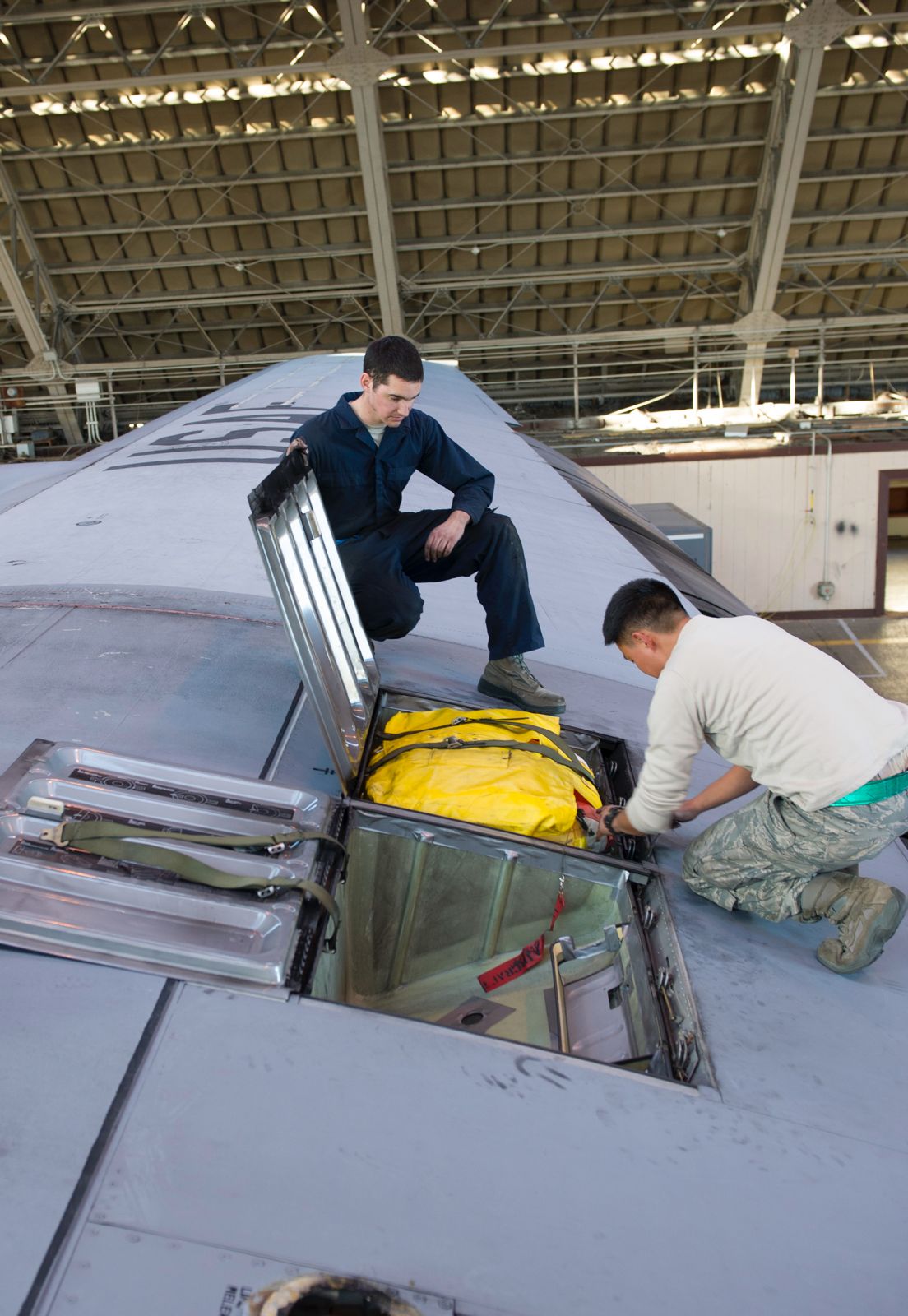
The structure we call the factory is actually the Technology Production Directorate. The purpose of the establishment of this Factory is to carry out the maintenance, repairs, and Depot-Level repairs of light, medium, and heavy class propeller-driven transport aircraft and propeller-driven training aircraft in the Turkish Air Force inventory, as well as the ground propulsion equipment, and ground support systems of all aircraft in the inventory, together with the Aircraft FASBAT Directorate, and the Ground Systems Directorate, namely with the Production Workshops Directorate. If we briefly talk about this ground support equipment, it consists of fuel tankers, aircraft trailers, runway sweepers, aircraft fire extinguishers, aircraft arresting systems, generators, ground radar radomes, bomb-loading vehicles, and light and heavy weapons. The Manufacturing Directorate, where the materials needed in this context are produced, is also within this structure. The facilities, capabilities, and capacity of the Manufacturing Directorate are growing, and they are now able to serve other units of the Air Force and Armed Forces. This Presidency is the backbone of the factory. The Production Workshops Directorate manages and organizes this activity with the Technical Management Directorate and the Plan Program Directorate, and this Directorate ensures the operation of the factory on behalf of the Factory Manager.
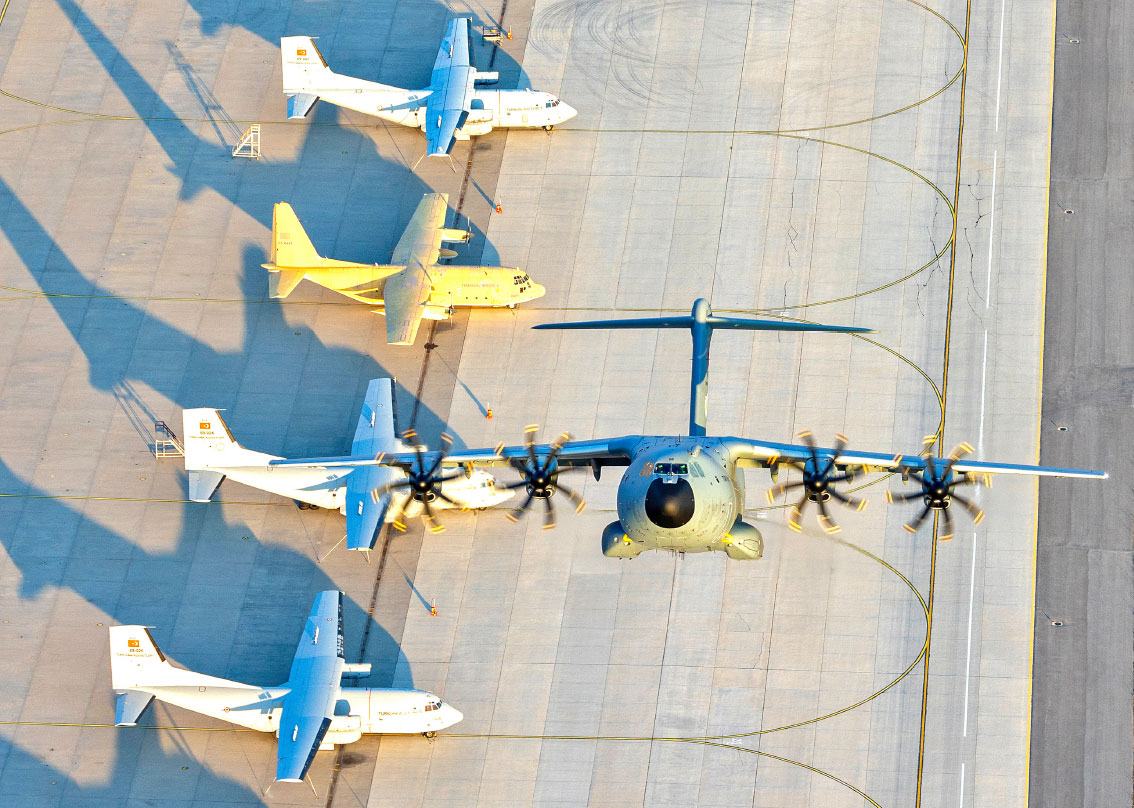
We divide our responsibilities for light, medium, and heavy class propeller transport aircraft and propeller training aircraft in the Turkish Air Force inventory into Technical Management Authority, D-Level Maintenance or Technology Repair Center categories. Aircraft under our responsibility consist of KC-135R Tanker Aircraft, A400M Aircraft, C-130 and C-160 Medium Transport, CN-235 Light Transport Aircraft, and SF-260 and T-41D Trainer Aircraft.
Defence Turkey: Delivery of Super Mushshak Training Aircraft to the Air Force has started. Will they also come here for maintenance/repair?
Technical Management Director: Yes, we are currently their Technical Management Authority. In time, we will also become the Technology Repair Center for Super Mushshak. Currently, there is a specified warranty period, and training activities are ongoing. We will handle the Depot-Level Maintenance requirements. Over time, the SF-260 and T-41 aircraft will be retired. Moreover, the aircraft for which we serve as the Technical Management Authority are not limited to these models. We are also the Technical Management Authority for Cessna Citation and Gulfstream aircraft, stepping in when they face structural issues. Additionally, the 2nd Air Maintenance Factory Directorate (HBFM), which is the Technical Management Authority for the Armed UAVs (AKINCI, AKSUNGUR, ANKA, and BAYRAKTAR TB2) in service with the Turkish Armed Forces, will soon acquire Technology Repair Center capabilities for these platforms as their warranty periods come to an end. We are also the TYS for the E-7T HİK aircraft in the Turkish Air Force inventory. However, we do not perform their maintenance (Technology Repair Center or DLM). Since their numbers are limited, we have not invested in their maintenance capabilities. Therefore, while we are responsible for their Technical Management, we do not carry out their maintenance.
Defence Turkey: Do you still provide maintenance services for Heron/GÖZCÜ UAVs?
Technical Management Director: Of course, we oversee this process. As part of the Technical Management work, we conduct for these UAVs, we extended the flight hours of certain engines whose operational limits had been reached. Similarly, we extended the flight hours of some expired components. After a certain number of flight hours, these UAVs came to the 2nd Air Maintenance Factory Directorate (HBFM) due to structural defects and delamination that had formed in their fuselages. For these composite-intensive aircraft, we extended their fuselage service life by either repairing the parts on-site through our Composite Workshop or manufacturing and installing new components. Unlike training aircraft, engine overhauls are not performed for UAVs. Once the engines reach the end of their service life, they are discarded. However, once the fuselage lifespan is extended, a new engine can be procured and installed. For instance, if the service life of these UAVs is originally 20 years, we can extend it by an additional 10 years and keep them operational, thanks to these facilities.
Defence Turkey: Can we get information about the annual production and repair capability of the 2nd HBFM?
Technical Management Director: When performing aircraft maintenance, we also handle the maintenance of aircraft units. These Line-Replaceable Units (LRUs) include hydraulic systems, propellers, landing gear, electronics, engines, and other components. Within this scope, we possess the capability to repair a total of 6,055 different items. Non-operational units are removed from the aircraft and stored in a depot. Then, according to a predefined plan, the units are sent from the depot to the relevant workshop, where they are restored to operational status. Once repaired, they are placed back in the active inventory to be installed in another aircraft as needed. This is a critical capability for the logistics system. Our annual repair capacity is approximately 10,000 units. Our total production capability spans around 18,000 items, with an annual total production output reaching approximately 400,000 items. However, the requirements are determined by the General Directorate of Military Factories (AFGM). AFGM centrally calculates the required quantities based on demand.
Defence Turkey: So, you can produce 400,000 items from 18,000 items?
Technical Management Director: Not exactly. AFGM determines the requirements on a quarterly basis. Annually, we receive orders for about 3,000 different items, but our overall capability covers approximately 18,000 items. From these 3,000 annual items, we produce around 400,000 units per year, of which approximately 250,000 are seals and gaskets. Since the third quarter coincides with our annual leave period, we produce about 80,000 units during that time, while in the other three quarters, production averages around 105,000 units each.
The 2nd HBFM is set to become the Turkish Armed Forces’ central hub for gasket production following AFGM’s decision. A new building is being constructed for gasket manufacturing. Necessary new machinery and equipment have already been procured, and the recipes for the rubber compounds to be used are currently being prepared. We also have a Calibration Workshop. All measurement instruments used in aviation must be calibrated. Accordingly, our Calibration Laboratory is sufficiently equipped to meet our needs.
Let’s move on to Ground Systems. Among the ground system units for which we act as both the Technical Management Authority and the Technology Repair Center or Depot-Level Maintenance Center, there are ARFF vehicles (Aircraft Rescue Fire Fighting), the RAHVAN Aircraft Towing Vehicle, the SEYİT ONBAŞI (KOCA YUSUF-2) Bomb Loading Vehicle, and aircraft arresting systems. ARFF trucks are specially designed vehicles that are more advanced than the fire trucks used by municipalities. They are capable of responding to metal fires and fuel fires, including jet fuel fires. Similarly, we also serve as the Technology Repair Center and Technical Management Authority for some aircraft fire trucks operated by the Turkish Land Forces Command (TLFC). The RAHVAN Aircraft Towing Vehicle was entirely designed and manufactured by our engineers based on user feedback. Previously, we used two foreign-origin towing vehicles named Sellick and Coleman. RAHVAN incorporates the best features of both. With four steerable wheels, RAHVAN can move sideways like a crab. It can also operate like a car, where only the front two wheels steer or turn all four wheels in the same direction for tight-radius maneuvers. It is versatile and able to transport both personnel and necessary materials. Ground support equipment required to address an aircraft malfunction can be attached to RAHVAN and brought directly to the aircraft. We have been maintaining bomb-loading vehicles for years. Our predecessors had designed a hydraulically powered bomb-loading vehicle. Earlier bomb-loading vehicles operated entirely with mechanical engines and transmission systems. The new design still includes a diesel engine, but it drives a hydraulic pump. The hydraulic pressure generated by this pump is used for both movement and lifting functions. Consequently, all operations rely on the pressure produced by the hydraulic pump. Since the SEYİT ONBAŞI Bomb Loading Vehicle is hydraulically powered, its movements are smoother and more precise. Unlike mechanical bomb-loading vehicles, it does not produce sudden or jerky motions, offering a significant advantage in operational precision.
Aircraft Arresting Systems (AAS) are also among the ground systems for which we serve as both the Technical Management Authority and Technology Repair Center or Depot-Level Maintenance Center. These systems are critical for pilot safety and aircraft security, enabling the safe capture and controlled stopping of aircraft during emergencies, such as aborted takeoffs or emergency landings at airbases. There are three types of Aircraft Arresting Systems: Fixed Hook AAS, Net-Type AAS, and Mobile AAS. They can stop various aircraft configurations with speeds of up to 190 knots and weights ranging from 10,000 lbs to 100,000 lbs. A hook-based system is installed at the runway’s starting point, while a net-type barrier is positioned at the runway's end. Together, these two systems form a set. During an emergency, the aircraft lowers its tail hook, which engages with the Fixed Hook AAS, bringing the aircraft to a stop in a short distance. If the hook fails to engage, the net-type barrier at the end of the runway deploys, gently stopping the aircraft, albeit with minor damage. Both barriers utilize the same arresting mechanism. These AAS systems are designed to be compatible with advanced aircraft, including the KAAN National Combat Aircraft and the F-35 JSF Aircraft, ensuring they can handle future operational requirements effectively.
Defence Turkey: Could you give us information about the textile capabilities of the 2nd ABFM and your parachute, as well as winter tent production capabilities, which were very useful after the earthquake?
Technical Management Director: In our Textile Workshop, we produce 19 different products. These include various types of parachutes, such as personnel parachutes, aircraft seat parachutes, drag parachutes for slowing down aircraft, cargo parachutes, cargo drop parachutes, mine-laying parachutes, and torpedo parachutes. Additionally, we manufacture pilot vests, parachute bags, specialized bags, and more. We host Türkiye's only Parachute Sewing Workshop, where we also produce some static line troop parachutes for the Land Forces. Furthermore, we sew mine-laying parachutes and have even produced F-16 sunshade covers in this workshop.
The Textile Workshop also produces nets used in Aircraft Arresting Systems (AAS) and Ballistic Protective Vests. While the Kevlar material is supplied by the Land Forces, the vests are sewn and tested in-house by our team. In our Composite Workshop, we manufacture pilot helmets, paratrooper helmets, and maintenance personnel helmets.
Five days after the earthquake, we repurposed the Parachute Workshop entirely for tent production, focusing on winter tents. These tents are designed for efficient heating—when a small electric heater is used inside, the interior warms up quickly. The winter tents feature double-layered coverings with thermal insulation material between the layers, ensuring excellent heat retention.
Defence Turkey: What can you tell us about the 2nd ABFM's radome production capability?
Technical Management Director: As you know, the covering placed over ground radars is called a radome. Inside the radome, the radar rotates. The radome protects the radar from environmental factors such as rain, snow, and wind while allowing the RF waves emitted by the radar to pass through. The components that make up the radome are referred to as panels. Currently, we have the capability to produce some of the panels used in the radomes for ground radars operated by the Turkish Air Force (TurAF). We have developed samples, and these are currently in the testing phase on two different radomes. For some other panels, we have collaborated with domestic companies. One local company worked on panel prototypes for a 62-ft diameter radome while we focused on prototypes for a 45-ft diameter radome. Two panels produced by us were installed on radomes and have been operating successfully for over a year. An additional 15 panels are planned for production. Furthermore, the paint for ground radar radomes, previously procured from abroad, is now being manufactured in the 2nd Air Maintenance Factory Directorate (HBFM) Paint Workshop.
Defence Turkey: ASELSAN started the delivery of ERALP EİRS Radars under the EİRS and T-EİRS Projects. Do you plan to carry out a Radome study for these radars?
Technical Management Director: When portable and fixed early warning radar systems become operational, we will also assume their radomes' Technical Management. The EİRS (Early Warning Radar System) will be tested without a radome for a period of five years. However, depending on the deployment location, the need for a radome for the EİRS may arise in the future.
Defence Turkey: Sir, we thank you for taking the time to do this interview and wish you success in your work