Role of Maritime Law in Managing Unmanned Maritime Systems
It is a great privilege to address you today on the pivotal topic of Unmanned Maritime Systems and the evolving legal frameworks that govern their operation. However, before getting into my topic I would like to thank Pakistan Navy and National Institute of Maritime Affairs (NIMA) for their great hospitality. Esteemed guests, militaries worldwide are increasingly deploying autonomous or semi-autonomous platforms for missions ranging from surveillance to strike operations. Unsurprisingly, the intersection of these technologies with established concepts in maritime law has generated pressing legal and operational questions. I wish to highlight how international maritime law—particularly the United Nations Convention on the Law of the Sea (UNCLOS)—addresses the notion of having a crew physically on board a vessel.
Let’s have a quick look into the technological and military background of the developments from Traditional Naval Operations to Unmanned Platforms. Initially, unmanned maritime systems were mostly relegated to non-complex tasks such as target training or basic exploration activities. However, with rapid technological progress, these platforms now undertake anti-surface warfare, mine countermeasures, area denial, and even limited strike missions. Key advantages of unmanned systems include Risk Reduction and Cost-Effectiveness.
Unmanned platforms are not only Remove or reduce onboard personnel but also lowers the danger to human life. Additionally, these platforms can remain at sea for longer durations than crewed vessels. Moreover, operating and sustaining an unmanned system can be less expensive in the long term.
Unmanned systems undertake Intelligence, Surveillance, Reconnaissance (ISR) which are necessitates prolonged presence in contested or remote areas. For the Mine Countermeasures, these systems significantly reduce the risk to human operators. Modern unmanned platforms can also detect, classify, and potentially engage submarines.
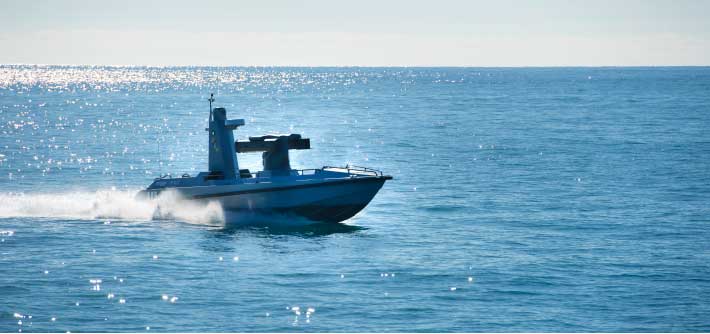
Armed Unmanned Maritime Systems can also carry missiles, light weapons, and electronic warfare systems for quick response. Unmanned Maritime Systems can also be used as an Asymmetric Threat Mitigation instrument as they could challenge larger, conventionally crewed naval assets with “Swarm” tactics. Besides extensive area of use for the Unmanned Maritime Systems, they also have some emerging risks such as Cyber Vulnerabilities and Ambiguous Accountability. Reliance on remote links increases exposure to hacking, jamming, or spoofing. Also, Absence of an onboard crew complicates commandand-control and legal liability in case of collisions or engagements.
Ship Status Under International Law
It is a great privilege to address you today on the pivotal topic of Unmanned Maritime Systems and the evolving legal frameworks that govern their operation. However, before getting into my topic I would like to thank Pakistan Navy and National Institute of Maritime Affairs (NIMA) for their great hospitality. Esteemed guests, militaries worldwide are increasingly deploying autonomous or semi-autonomous platforms for missions ranging from surveillance to strike operations. Unsurprisingly, the intersection of these technologies with established concepts in maritime law has generated pressing legal and operational questions. I wish to highlight how international maritime law—particularly the United Nations Convention on the Law of the Sea (UNCLOS)—addresses the notion of having a crew physically on board a vessel.
Let’s have a quick look into the technological and military background of the developments from Traditional Naval Operations to Unmanned Platforms. Initially, unmanned maritime systems were mostly relegated to non-complex tasks such as target training or basic exploration activities. However, with rapid technological progress, these platforms now undertake anti-surface warfare, mine countermeasures, area denial, and even limited strike missions. Key advantages of unmanned systems include Risk Reduction and Cost-Effectiveness.
Unmanned platforms are not only Remove or reduce onboard personnel but also lowers the danger to human life. Additionally, these platforms can remain at sea for longer durations than crewed vessels. Moreover, operating and sustaining an unmanned system can be less expensive in the long term.
Unmanned systems undertake Intelligence, Surveillance, Reconnaissance (ISR) which are necessitates prolonged presence in contested or remote areas. For the Mine Countermeasures, these systems significantly reduce the risk to human operators. Modern unmanned platforms can also detect, classify, and potentially engage submarines.
Armed Unmanned Maritime Systems can also carry missiles, light weapons, and electronic warfare systems for quick response. Unmanned Maritime Systems can also be used as an Asymmetric Threat Mitigation instrument as they could challenge larger, conventionally crewed naval assets with “Swarm” tactics. Besides extensive area of use for the Unmanned Maritime Systems, they also have some emerging risks such as Cyber Vulnerabilities and Ambiguous Accountability. Reliance on remote links increases exposure to hacking, jamming, or spoofing. Also, Absence of an onboard crew complicates commandand-control and legal liability in case of collisions or engagements.
Vienna Convention on the Law of Treaties (1969): Article 31 calls for interpreting treaties “in good faith” and in light of the treaty’s object and purpose. A narrow reading—excluding unmanned vessels—could undermine the effectiveness of UNCLOS in addressing maritime security and safety, its primary aims.
Domestic Law Example (Türkiye): The Turkish Commercial Code (Article 931) defines a “ship” as any vehicle that has buoyancy, moves on water, and is not too small—without referencing the presence of humans on board. Thus, from a Turkish legal standpoint, there is no direct obstacle to classifying an unmanned platform as a ship, provided it meets certain size and navigational criteria.
Some articles of the UNCLOS assume the existence of on-board personnel— particularly for rescue obligations (Article 98) or for setting out the responsibilities of the flag State regarding “captain and crew” qualifications (Article 94). These concepts might be extended to remote or shore-based operators who fulfil the role of “captain” or “navigator” from a distance.
For example, requiring an unmanned surface vessel to assist people in distress at sea raises practical questions: How would it embark survivors if there is no physical crew? How would an Artificial Intelligence system judge the seriousness of a rescue situation? Such complexities suggest that supplementary rules or guidelines are needed—but they do not negate the possibility that the unmanned vehicle is legally a “ship.”
According to the second view that doesn’t accepts Unmanned Maritime Systems as ships, it is argued that ships have historically served to transport people or goods. However unmanned military vehicles are often designed for surveillance, combat, or similar missions. According to this view, an unmanned platform cannot benefit from UNCLOS navigation rights, such as innocent passage, because of coastal states’ security interests. Moreover, these vehicles may not enjoy sovereign immunity or state immunity traditionally granted to warships or other government vessels.
According to the last view on the legal status of Unmanned Maritime Systems, a Case-by-Case Analysis is necessary under each Different Convention. This more nuanced position suggests that whether or not an unmanned platform qualifies as a “ship” must be examined under each applicable international instrument such as, SOLAS, COLREGs, rather than relying merely on UNCLOS.
Most such conventions do not insist on an onboard human element for an entity to be considered a ship; thus, a consistent trend is emerging that unmanned platforms could be classified as ships, subject to certain technical and legal adjustments.
Despite divergent opinions, the majority approach in the legal literature—and one that appears most aligned with evolving state practices—supports the classification of unmanned maritime vehicles as “ships,” provided that they meet core functional criteria. However, for this view to gain universal acceptance, states must develop consistent practices and clarify how existing provisions will be interpreted or adapted for remote or autonomous operations.
Warship Status and the Obligation to Display Emblems
Now, I would like to examine the warship status and the obligation to display emblems. A literal reading of Article 29 of UNCLOS highlights the requirement for an “officer” in command and a “crew” under military discipline. Advocates of this view argue that an unmanned system—especially one operated by remote control or Artificial Intelligence- lacks the onboard human element, thereby failing to satisfy the Article 29 definition.
However, a growing minority asserts that the historical context of Article 29 did not anticipate modern unmanned technology. What truly matters is whether the vessel:
Belongs to a state’s Armed Forces
Under the authority of a duly commissioned officer (who could be stationed on land or on another platform)
Subject to military discipline
This perspective maintains that if these conditions are functionally met then an unmanned naval platform may be deemed a warshipPractical Parallels
The International Federation of Shipmasters’ Associations (IFSMA) and similar bodies emphasize that even autonomous or remotely controlled vessels require a “master” figure with overall responsibility. The same logic can apply to military vessels: a remote or shore-based operator could be commissioned as the commanding officer.
Regulatory Examples
The UK’s Maritime & Coastguard Agency (MCA) has taken initial steps (e.g., Workboat Code Edition 3, Annex 2) to define requirements for remotely operated vessels, including the possibility that the “remote operator” essentially fulfils the role of a captain.
Emblems and Identification for Warships UNCLOS also stipulates that a warship must bear the external marks that distinguish it as belonging to a particular state’s navy. Although physically smaller or autonomous, an unmanned warship could display such markings in a manner consistent with its size and operational profile.
Warships enjoy immunity from the jurisdiction of any state other than the flag state, among other privileges. Recognizing an unmanned vehicle as a warship might extend these privileges. Conversely, misusing “warship” status for unmanned vehicles without clear insignia and command structures could raise major compliance concerns.
In the event of a collision or environmental damage caused by an unmanned vessel, who bears responsibility? Possible liable parties include the remote operator, software and Artificial Intelligence developers, the flag state’s naval command, or some combination thereof.
Under UNCLOS, the flag state must ensure the vessel complies with international standards, including safe navigation and prevention of pollution. Registering an unmanned vessel in a national ship registry implies the flag state must adapt its legal and administrative framework to cover remote or autonomous operations.
Securing data links, communication channels, and onboard AI systems against hacking or jamming is a growing concern. States must invest in robust cybersecurity protocols from the design phase onward.
Proposed Solutions & Best Practices
Unified Doctrine Development: Navies and international organizations like NATO and IMO should establish standard guidelines on autonomy levels, control systems, and InterOperability.
Refined Command and Control Models: A clear command hierarchy is essential for unmanned assets. Each system should have an identifiable “remote captain” or “commanding officer” with the authority to make real-time decisions.
Training and Education: Naval academies and staff colleges must integrate curricula that cover unmanned platform operations, AI-driven mission planning, and the relevant legal frameworks.
Legal Harmonization: The IMO’s MASS (Maritime Autonomous Surface Ships) initiative predominantly focuses on commercial applications. Parallel or complementary work might be needed to address military-specific concerns, particularly regarding rules of engagement, warship immunity, and operational constraints.
Cybersecurity Frameworks: Mandating robust encryption, fail-safe controls, and constant monitoring of remote communication lines will be critical to ensure system reliability and mission continuity.
Conclusion
In conclusion, unmanned maritime systems—both armed and unarmed— represent a transformative shift in naval operations. They offer expanded strategic and tactical capabilities, but also compel us to reevaluate established legal norms regarding what constitutes a “ship” or a “warship.”
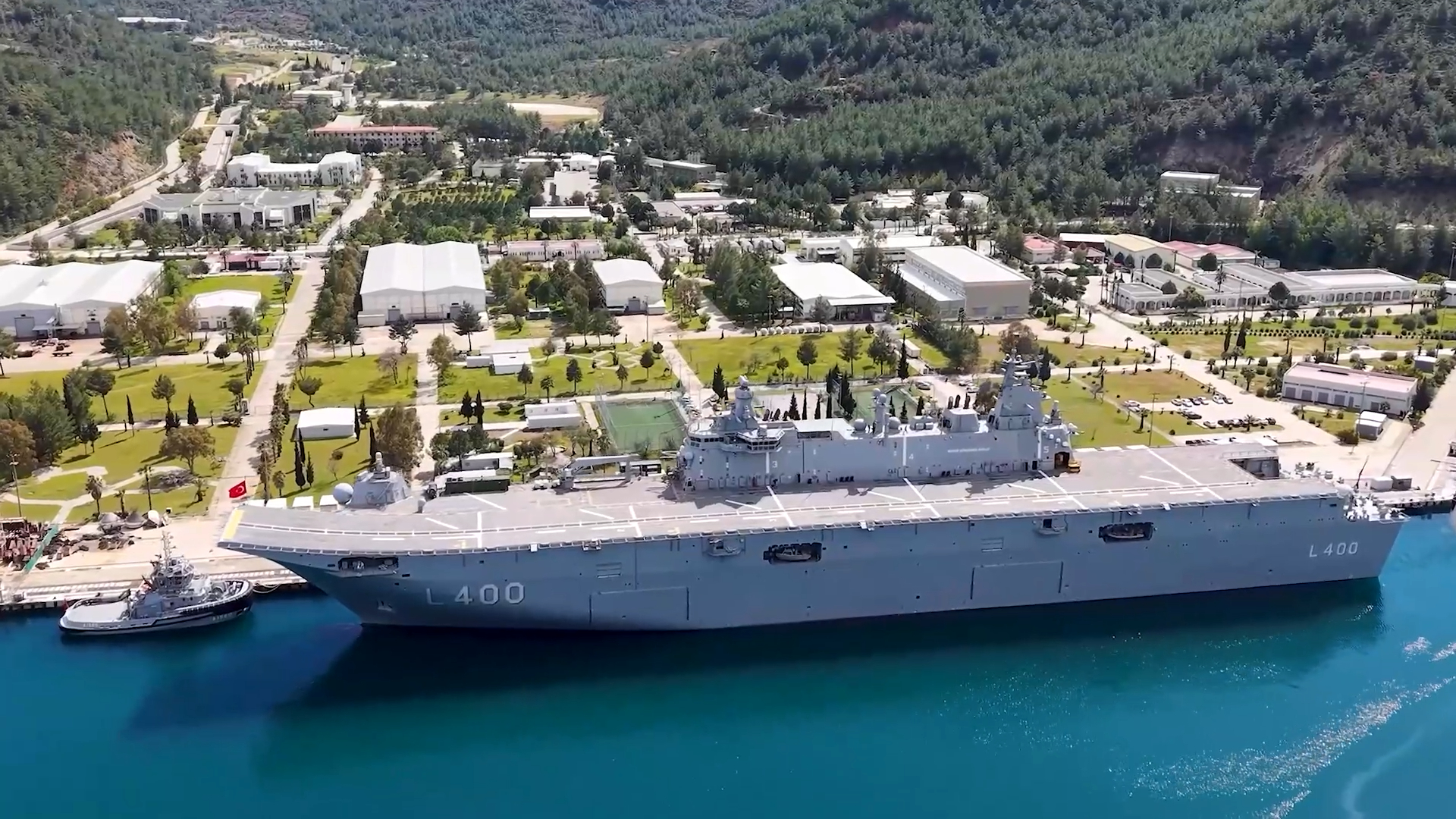
Türkiye’s experience in conceptualizing, designing, and operationalizing various armed unmanned maritime projects demonstrates how a defense-oriented industry and forward-thinking naval strategy can converge to produce cutting- edge platforms.
As these technologies mature, close collaboration among navies, policymakers, and international legal bodies will be essential to develop norms that ensure safety, accountability, and seamless integration of unmanned vessels into broader defence architectures.
By acknowledging the legal complexities, embracing necessary reforms, and maintaining high standards of operational and cyber integrity, we can harness the full potential of unmanned maritime technology to enhance maritime security. Thank you for your attention, and I look forward to our discussion
A Cooperation Protocol on Sea and Maritime Law Signed Between DEHUKAM and NIMA
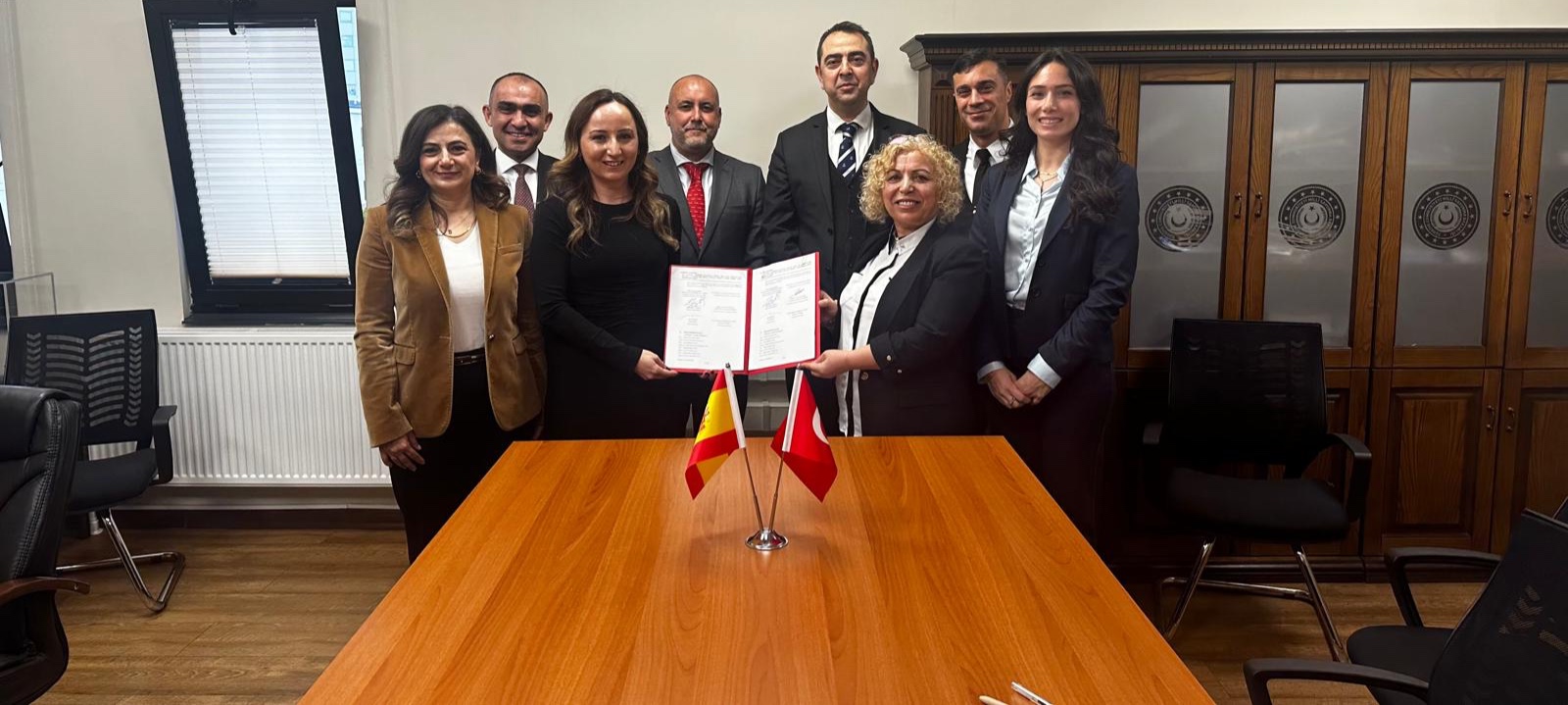
Türkiye and Pakistan have taken a significant step to strengthen their cooperation in the maritime domain. In this context, a cooperation protocol was signed between the Ankara University National Center for the Sea and Maritime Law (DEHUKAM) and Pakistan’s National Institute of Maritime Affairs (NIMA). The protocol was formalized on February 10, 2025, in Karachi, Pakistan, during the AMAN Dialogue 2025 Conference, just before the official visit of President Recep Tayyip ERDOĞAN to Pakistan. The signing ceremony was attended by DEHUKAM CEO Dr. Mustafa Başkara, NIMA President Retired Admiral Ahmed Saeed, as well as numerous academics and high-ranking officials from various countries.
The AMAN Dialogue 2025 Conference, organized by the Pakistan Navy and NIMA, was held as part of the AMAN Exercise, which takes place in Karachi from February 7-11, 2025, with the participation of 60 countries.
Through this cooperation, Türkiye and Pakistan aim to strengthen their academic and scientific ties in the maritime field, collaborate on issues such as marine environmental protection, maritime security, and the blue economy. DEHUKAM and NIMA plan to enhance this partnership by developing joint research projects, organizing academic events, conducting expert exchange programs, and increasing mutual knowledge sharing.
This cooperation is expected to contribute to Türkiye’s strategic influence in maritime affairs in the Indian Ocean, in line with its "Asia Anew Initiative" announced in 2019. Joint studies on maritime jurisdiction areas, maritime security, and the sustainable management of marine resources are anticipated to provide valuable insights for policymakers in both countries.
During the signing ceremony, DEHUKAM CEO Dr. Mustafa BAŞKARA stated, “This protocol will further strengthen the historical friendship and strategic partnership between Türkiye and Pakistan in the field of maritime law, advancing academic and scientific collaborations. The conferences, symposiums, and workshops to be organized under this protocol will provide significant contributions not only to the academic community but also to decision makers.”
NIMA President Retired Admiral Ahmed SAEED remarked, “Pakistan and Türkiye, as two friendly nations with deep-rooted ties in the maritime field, will further enhance their maritime law studies through this cooperation. This protocol presents a great opportunity for ensuring maritime security in our region, preserving marine resources, and developing solutions based on international law.”
The initiative led by DEHUKAM and NIMA is expected to contribute to shaping regional maritime policies. Both parties have agreed to collaborate on more extensive projects in the future, emphasizing that this cooperation will strengthen the maritime vision of both countries. In the long term, the projects to be developed are intended to set an example for regional maritime security and international maritime cooperation