Rolls-Royce MT30 – Proven in the air to Excel at Sea
The Rolls-Royce MT30 gas turbine chosen for the Republic of Korea Navy’s FFXII frigate last year, and already installed with the US Navy and UK Royal Navy, is the world’s most powerful marine gas turbine. It owes this impressive tag to the Rolls-Royce aero engine from which it is derived – the Boeing 777’s Trent 800 power plant, which has the largest core of the company’s renowned Trent engine family.
“This provides the MT30 with a superior power to weight ratio, generating up to 40MW from a 30-tonne packaged unit. As the world’s most power-dense marine engine, the MT30 gives navies more power for volume and machinery space than any other marine gas turbine. The MT30 also provides maximum power at higher operating temperatures and has been tested to US Navy Day rules at 38 degrees Celsius. This offers ship designers much more flexibility in designing the naval vessels of tomorrow and the operator the power required in harsh environments,” says David Kemp, Rolls-Royce, Vice President Naval Sales.
More of today’s naval vessels are becoming ‘more electric’ designs that rely on such versatile power systems – utilising gas turbines to drive alternators and generators – to perform not only the traditional propulsion duties but also the increasing electrical power loads required for weapon and communication systems and domestic services.
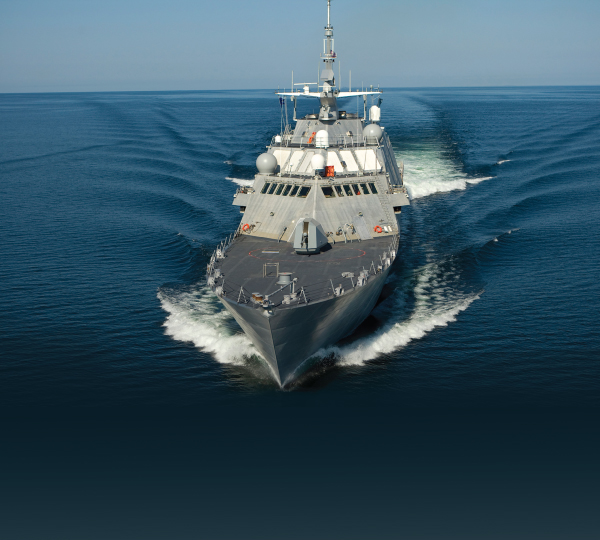
Already powering the US Navy’s Freedom class littoral combat ship, the MT30 will also power the Royal Navy’s Queen Elizabeth class aircraft carrier and the US Navy’s DDG-1000 destroyer, and earlier this year was selected to power the first of the Republic of Korea Navy’s second batch of FFX frigates.
This latest order represents its first frigate application, and also the first use of a single MT30, demonstrating its broad scope for vessels of various sizes and roles, from smaller corvettes and frigates to large aircraft carriers. In the FFXII frigate, it will be combined with diesel engines in a hybrid configuration that can switch quickly between cruise and boost conditions for optimum operational flexibility.
Considering all the superlatives attached to it, the MT30 is in technology terms relatively low-risk as it shares 80 per cent commonality with its aero counterpart. The aero Trent family has accumulated more than 45 million flying hours, and now powers the airliners of over 130 customers.
With such in-service experience and its high degree of commonality, the MT30 has a powerful engineering pedigree built-in, providing an excellent foundation for the levels of reliability demanded by modern navies.
‘Invent once and use many times’ is an engineering philosophy that has stood Rolls-Royce in good stead as it strengthens and broadens its technology base. Furthermore, Rolls-Royce has a long heritage in the field of aero-derived gas turbines for use both on land – to generate electricity or pump oil and gas – or at sea, powering a diverse range of surface vessels.
“The MT30 differs from the Trent 800 in a number of ways,” adds Mr Kemp. “Its architecture is based on the core of the aero engine, with the same compressor, combustion system and turbines. It does, though, lose the large fan and fan casing required for thrust by its aero cousin, while its central shaft is extended rearwards to drive other machinery such as a gearbox or electric motor.
“Further changes include the engine gearbox which is from the Trent 500, and a modified combustor to run on a special grade of diesel with its inherently higher sulphur content rather than aviation-standard kerosene. Variable vanes used to optimise air flow in an aero engine are straightened up in the MT30, and the salt-laden marine environment calls for many components to be treated with anti-corrosion coatings for long life.”
The marine gas turbine is housed in a packaged enclosure that also accommodates air inlets/exhausts together with a range of ancillary equipment for essential systems such as fire protection.
The sheer power of the MT30 is proving particularly popular where fast response boost power is required to augment cruise diesels, or for applications demanding a high power-to-weight ratio. In naval vessels, additional power is often required to provide energy for on-board weapons and communications systems.
The MT30 is effective in single and twin-engine configurations. In combination with diesel engines, providing power through electric motors, they are ideal for smaller vessels, such as nimble and swift frigates and corvettes utilised in anti-submarine warfare duties where quietness and stealth are vital attributes. Most of the world’s advanced navies have during the past decade adopted flexible configurations based on a single gas turbine with diesels.
“Our marine engineers have to be creative in building on the cutting-edge technologies developed for Rolls-Royce aero engines, and applying systems engineering skills to produce marine gas turbines that maximise the attractive operational combination of high power density and low through-life costs,”
The MT30 scores on all counts – ensuring reliability through the high degree of commonality with proven aero-engine technology, and operational effectiveness by packing a huge amount of power into a relatively small package where onboard machinery space is at a premium.
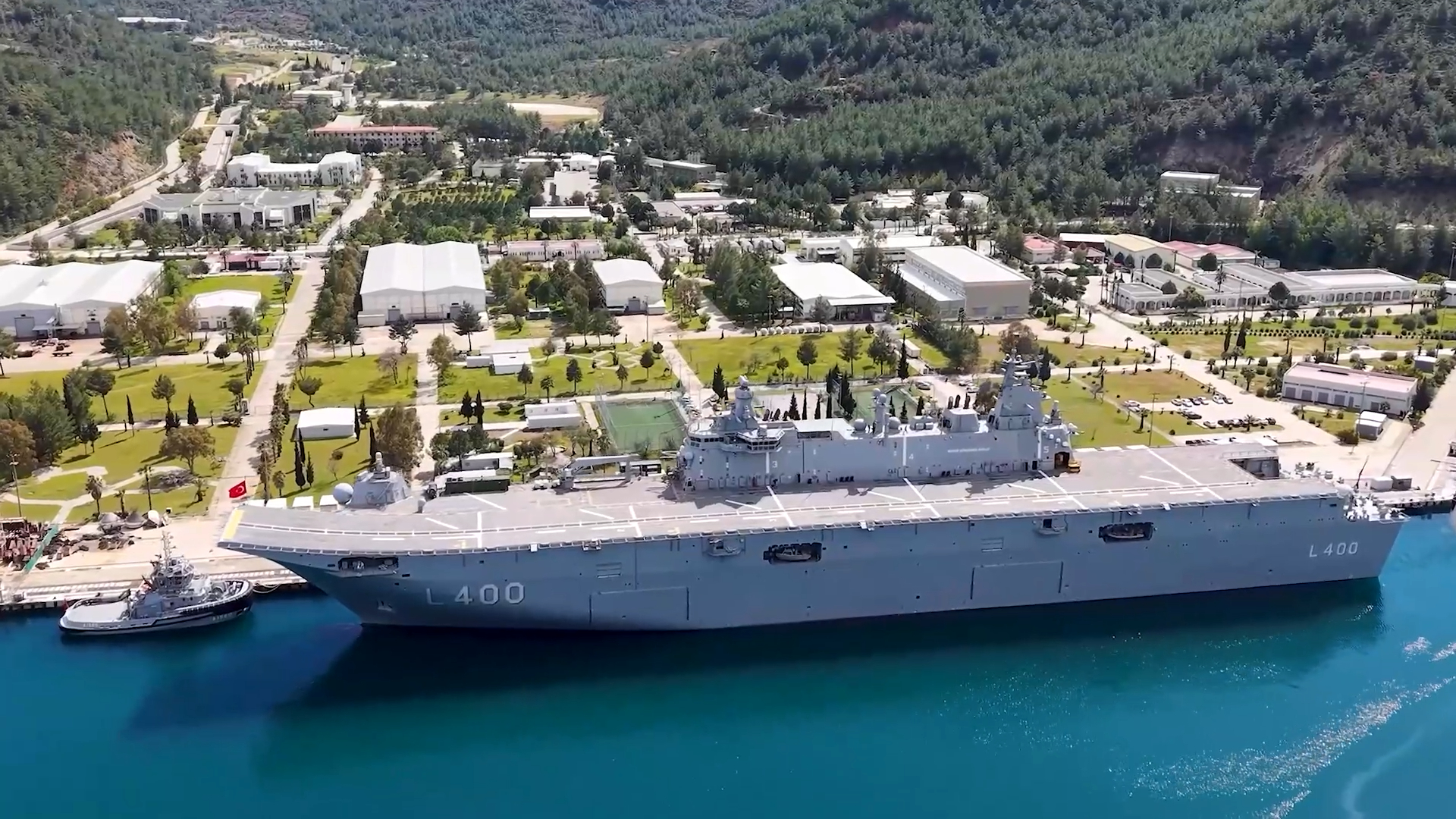
Mr Kemp believes the MT30 is ideally suited to a number of Turkish Navy programmes. He said: “We believe strongly that the MT30 will provide the perfect power solution for the Turkish Navy. Its unrivalled power output, power-to-weight-ratio, availability in a compact package and continuous power at high temperature, makes is suitable for a range of ships including combatants and logistics ships. It can be configured for both electrical and mechanical propulsion, and combined with high speed diesel engines for highly effective hybrid propulsion. At 12,500 hours hot section and 25,000 hours overhaul, a boost engine should have exceptionally low Life cycle costs.
“Since the last IDEF in 2011, we have built on our relationships with the Turkish Armed Forces, and the shipbuilding industry, securing significant orders for our advanced equipment on a number of programmes. We look forward to working building these relationships further both with the Turkish Armed forces and local industry as the Navy embarks on its ambitious and exciting ship build programme.”
Korea takes world’s first MT30 single-engine configuration
Rolls-Royce achieved its first MT30 sale in Asia when the Republic of Korea selected this 36-40MW marine gas turbine for the first of its FFX Batch II frigates.
The engine will be supplied to Hyundai Heavy Industries (HHI), which will then integrate it into a fully-contained steel enclosure also housing air inlets, exhausts and ancillary equipment for essential associated systems. HHI will dispatch the completed package to Daewoo Shipbuilding and Marine Engineering, which is building the FFXII frigate. The MT30 for this application will operate in conjunction with diesels in a hybrid configuration, driving ultra-quiet electric motors.
Ultimately, a class of eight FFXII vessels is envisaged.
From air to sea
Rolls-Royce has been bringing aero engines down to earth for more than half a century. The first aero-derived marine gas turbine was the Proteus used in a range of fast patrol craft, hovercraft and hydrofoils from 1958.
During the following decade, a marinised Olympus joined two marine Proteus in the combined machinery of Royal Navy frigate HMS Exmouth, the world’s first major all-gas turbine warship. Throughout the rest of the century, Rolls-Royce adapted a range of aero engines – including Tyne, Spey and RB211 – for applications ranging from the smallest corvette to large aircraft carriers.
Over a similar timeframe, industrial gas turbines were also adapted from their aerospace counterparts. These were developed for widespread use to generate electricity and to pump oil and gas – by connecting the engine shaft via a free power turbine to drive major industrial machinery such as generators, alternators, pumps or compressors.
The Rolls-Royce MT30 gas turbine chosen for the Republic of Korea Navy’s FFXII frigate last year, and already installed with the US Navy and UK Royal Navy, is the world’s most powerful marine gas turbine. It owes this impressive tag to the Rolls-Royce aero engine from which it is derived – the Boeing 777’s Trent 800 power plant, which has the largest core of the company’s renowned Trent engine family.
“This provides the MT30 with a superior power to weight ratio, generating up to 40MW from a 30-tonne packaged unit. As the world’s most power-dense marine engine, the MT30 gives navies more power for volume and machinery space than any other marine gas turbine. The MT30 also provides maximum power at higher operating temperatures and has been tested to US Navy Day rules at 38 degrees Celsius. This offers ship designers much more flexibility in designing the naval vessels of tomorrow and the operator the power required in harsh environments,” says David Kemp, Rolls-Royce, Vice President Naval Sales.
More of today’s naval vessels are becoming ‘more electric’ designs that rely on such versatile power systems – utilising gas turbines to drive alternators and generators – to perform not only the traditional propulsion duties but also the increasing electrical power loads required for weapon and communication systems and domestic services.
Already powering the US Navy’s Freedom class littoral combat ship, the MT30 will also power the Royal Navy’s Queen Elizabeth class aircraft carrier and the US Navy’s DDG-1000 destroyer, and earlier this year was selected to power the first of the Republic of Korea Navy’s second batch of FFX frigates.
This latest order represents its first frigate application, and also the first use of a single MT30, demonstrating its broad scope for vessels of various sizes and roles, from smaller corvettes and frigates to large aircraft carriers. In the FFXII frigate, it will be combined with diesel engines in a hybrid configuration that can switch quickly between cruise and boost conditions for optimum operational flexibility.
Considering all the superlatives attached to it, the MT30 is in technology terms relatively low-risk as it shares 80 per cent commonality with its aero counterpart. The aero Trent family has accumulated more than 45 million flying hours, and now powers the airliners of over 130 customers.
With such in-service experience and its high degree of commonality, the MT30 has a powerful engineering pedigree built-in, providing an excellent foundation for the levels of reliability demanded by modern navies.
‘Invent once and use many times’ is an engineering philosophy that has stood Rolls-Royce in good stead as it strengthens and broadens its technology base. Furthermore, Rolls-Royce has a long heritage in the field of aero-derived gas turbines for use both on land – to generate electricity or pump oil and gas – or at sea, powering a diverse range of surface vessels.
“The MT30 differs from the Trent 800 in a number of ways,” adds Mr Kemp. “Its architecture is based on the core of the aero engine, with the same compressor, combustion system and turbines. It does, though, lose the large fan and fan casing required for thrust by its aero cousin, while its central shaft is extended rearwards to drive other machinery such as a gearbox or electric motor.
“Further changes include the engine gearbox which is from the Trent 500, and a modified combustor to run on a special grade of diesel with its inherently higher sulphur content rather than aviation-standard kerosene. Variable vanes used to optimise air flow in an aero engine are straightened up in the MT30, and the salt-laden marine environment calls for many components to be treated with anti-corrosion coatings for long life.”
The marine gas turbine is housed in a packaged enclosure that also accommodates air inlets/exhausts together with a range of ancillary equipment for essential systems such as fire protection.
The sheer power of the MT30 is proving particularly popular where fast response boost power is required to augment cruise diesels, or for applications demanding a high power-to-weight ratio. In naval vessels, additional power is often required to provide energy for on-board weapons and communications systems.
The MT30 is effective in single and twin-engine configurations. In combination with diesel engines, providing power through electric motors, they are ideal for smaller vessels, such as nimble and swift frigates and corvettes utilised in anti-submarine warfare duties where quietness and stealth are vital attributes. Most of the world’s advanced navies have during the past decade adopted flexible configurations based on a single gas turbine with diesels.
“Our marine engineers have to be creative in building on the cutting-edge technologies developed for Rolls-Royce aero engines, and applying systems engineering skills to produce marine gas turbines that maximise the attractive operational combination of high power density and low through-life costs,”
The MT30 scores on all counts – ensuring reliability through the high degree of commonality with proven aero-engine technology, and operational effectiveness by packing a huge amount of power into a relatively small package where onboard machinery space is at a premium.
Mr Kemp believes the MT30 is ideally suited to a number of Turkish Navy programmes. He said: “We believe strongly that the MT30 will provide the perfect power solution for the Turkish Navy. Its unrivalled power output, power-to-weight-ratio, availability in a compact package and continuous power at high temperature, makes is suitable for a range of ships including combatants and logistics ships. It can be configured for both electrical and mechanical propulsion, and combined with high speed diesel engines for highly effective hybrid propulsion. At 12,500 hours hot section and 25,000 hours overhaul, a boost engine should have exceptionally low Life cycle costs.
“Since the last IDEF in 2011, we have built on our relationships with the Turkish Armed Forces, and the shipbuilding industry, securing significant orders for our advanced equipment on a number of programmes. We look forward to working building these relationships further both with the Turkish Armed forces and local industry as the Navy embarks on its ambitious and exciting ship build programme.”
Korea takes world’s first MT30 single-engine configuration
Rolls-Royce achieved its first MT30 sale in Asia when the Republic of Korea selected this 36-40MW marine gas turbine for the first of its FFX Batch II frigates.
The engine will be supplied to Hyundai Heavy Industries (HHI), which will then integrate it into a fully-contained steel enclosure also housing air inlets, exhausts and ancillary equipment for essential associated systems. HHI will dispatch the completed package to Daewoo Shipbuilding and Marine Engineering, which is building the FFXII frigate. The MT30 for this application will operate in conjunction with diesels in a hybrid configuration, driving ultra-quiet electric motors.
Ultimately, a class of eight FFXII vessels is envisaged.
From air to sea
Rolls-Royce has been bringing aero engines down to earth for more than half a century. The first aero-derived marine gas turbine was the Proteus used in a range of fast patrol craft, hovercraft and hydrofoils from 1958.
During the following decade, a marinised Olympus joined two marine Proteus in the combined machinery of Royal Navy frigate HMS Exmouth, the world’s first major all-gas turbine warship. Throughout the rest of the century, Rolls-Royce adapted a range of aero engines – including Tyne, Spey and RB211 – for applications ranging from the smallest corvette to large aircraft carriers.
Over a similar timeframe, industrial gas turbines were also adapted from their aerospace counterparts. These were developed for widespread use to generate electricity and to pump oil and gas – by connecting the engine shaft via a free power turbine to drive major industrial machinery such as generators, alternators, pumps or compressors.