Seen and Heard at the 10th Naval Systems Seminar
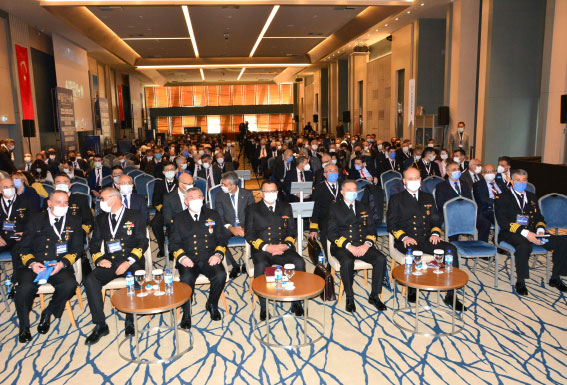
Naval Systems Seminars have become a traditional event for the Turkish Shipbuilding Industry. Previously they were held at the Middle East Technical University (METU) Culture and Congress Center in Ankara, but this year The Ankara (Gar) Hotel hosted the seminar for the first time.
ASELSAN, HAVELSAN and STM were the main sponsors of the 10th Naval Systems Seminar, while METEKSAN Defense, Navantia, Nova Power Solutions, ONUR Engineering, ROKETSAN and YALTES were the session sponsors.
The Naval Systems Seminar aims to bring together an ecosystem of procurement authorities, domestic and foreign manufacturers, R&D organizations, shipyardsand users for various naval platforms as well as weapons and sensors that are in the Naval Forces Command (DzKK) and Coast Guard Command (SGK) inventory or those to be added to the inventory. Activities for the organization of the Naval Systems Seminar are coordinated by Certified Senior Engineer, Senior Colonel (Ret.) A. Zafer BETONER.
Defence Turkey Magazine was one of this year's official media sponsors of the seminar, which was organized with the aim of expanding general knowledge regarding naval systems, developing cooperation, raising awareness about the capabilities of relevant universities/research institutions and companies, and sharing the roadmap and strategies set for the design and building of indigenous naval systems with the industry.
On Day 1 of the seminar, in which domestic and foreign participants from the industry and military attachés based in Ankara were interested and approximately 600 participants registered, presentations of the main sponsors were made after the opening remarks. In the afternoon, parallel sessions on different topics were held in three different halls, and the average number of attendees in the sessions was 200. Within the scope of the event, where a total of 40 presentations were made by domestic and foreign companies, 19 companies and institutions, including ASELSAN, BERKIN ENGINEERING, HAVELSAN, Nova Power Solutions, ROKETSAN, STM, TARGET Inc. and YALTES opened stands for product and service promotion.
High-level participation from the Naval Forces and Coast Guard Commands, especially Admiral Adnan ÖZBAL, Commander of the Naval Forces, and Rear Admiral Ahmet KENDİR, Commander of the Coast Guard, attended the 10th Naval Systems Seminar. Commander ÖZBAL and Commander KENDİR visited the company stands and received information from company officials about the products they exhibited and their ongoing activities.
At the opening session of the event, engineer and Senior Colonel (Ret.) A. Zafer BETONER, who made the opening speech on behalf of the organizing committee, explained the role of the seminar for the industry as follows: “We continue our goal of helping to examine the developments in the land, sea and air defense industry with our seminars. We are exerting efforts to contribute to our defense power and serve to create added value for our economy.”
TAİS Defense Programs Director Rear Admiral (Ret.) Ahmet ÇAKIR, the second speaker at the opening session of the seminar, made a presentation titled "Assessment for Increasing the Effectiveness of Our Military Ship Industry in the International Market.”
Rear Admiral (Ret.) ÇAKIR, noting that the surface warship market was forecasted to be US$ 155.16 billion over the next decade according to market research conducted in 2020, said that approximately US$ 65 billion was for the construction of Frigates, US$ 3.5 billion was for Corvettes, US$ 22 billion for Large Amphibious Ships, and added that the construction of 10 more ships is expected. He pointed out that the global naval ship and surface warship market size reached US$ 34.1 billion in 2021, representing a growth rate of 3.49% annually, and stated that the market is projected to reach US$ 48.1 billion by 2031. He also added that 207 frigates are expected to be built between 2021 and 2031 (34.8% for European countries, 31.3% for North America and 26.8% for Asia-Pacific countries). Defining the defense industry market, and especially the naval ship market, as a market where "the demand is limited in number, but the number of companies on the supply side is high and they are strong", ÇAKIR listed Turkey's competitors in the naval ship market as follows:
UK (BAE Systems)
Spain (Navantia)
China (China State Shipbuilding Corp./CSSC)
Italy (Fincantieri)
Germany (ThyssenKrupp Marine Systems)
Russia (RosoboronExport)
France (Naval Group)
The Netherlands (Damen)
South Korea (HHI and DSME)
ÇAKIR listed the common features of Turkey's rivals and international market players as follows:
Some of which are joint ventures, established by ambitious companies
A considerable portion of them is the sole supplier in their country
A substantial portion of them is state-owned enterprises, partially or wholly
They cooperate with shipyard owners or shipyards in market countries
They have the capacity to offer loans
ÇAKIR listed the following comments on what Turkey and the industry need to do:
Exhibiting state power that will organize and direct companies to participate in tenders as a sole company representing Turkey under a consortium
Provision of G2G agreement support by the state to this consortium
Research and implementation of state-guaranteed loan facilities
Adoption of the “Preferred Contractor Candidates” model for supply tenders within the country
Supporting overseas efforts of shipyards through offering competitive prices by domestic system manufacturer companies
Allowing the ADA Class Corvette and Class I Frigate to be marketed by private shipyards in international markets, thus increasing the number of "proven" products that private shipyards can offer to the international market
Developing a continuous contact between defense industry companies and the Ministry of National Defense, Ministry of Industry, Ministry of Foreign Affairs and the Presidency of Defense Industries, and shaping target markets together and being present in target markets as the Republic of Turkey
Afterwards, Coast Guard Command Technical Vice Director, Senior Colonel Talip KÖŞKER made a presentation on the development of floating elements of the Coast Guard Command, which is celebrating its 40th anniversary this year, from the date of its establishment to the present and highlighted future projects. In his presentation KÖŞKER briefly touched upon the 18 Class 80 Coast Guard Boats Construction Project, which was carried out by Taşkızak, Istanbul Shipyard Command (the first two packages consisting of 6 boats each) and Gölcük Shipyard Command (3rd package), the deliveries of which were started in 1996 and completed in 2012, the Coast Guard Boats (18 KAAN-15, 18 KAAN-19, 9 KAAN-29 and 13 KAAN-33 Classes) with a total of 58 composite structures built by YONCA-ONUK Shipyard between 1998-2016, 4 Coast Guard Search and Rescue Ships built by RMK Marine Shipyard and delivered between 2012-2014, and the Propulsion System Modernization Project carried out on 5 SAR-33 and 4 SAR-35 SG Boats at Istanbul Maritime Shipyard between 2008-2015.
In the second part of his presentation, Colonel KÖŞKER shared detailed information about the Control Boat Project, which was executed under the contract signed in 2019 between the Presidency of Defense Industries and the main contractor ARES Shipyard. Within the scope of Coast Guard Command's patrol structuring, approximately 170 35 FPB Control Boats with water jets are supplied (initially, the requirements were defined as 105 units for the Coast Guard Command and 17 units for the Turkish National Police, later Turkish National Police placed a follow-on order for 40 ARES 35 FPBs and further 3 boats were procured by the Cyprus Turkish Peace Force Command Security Forces) to be used for rapid intervention in territorial waters, coastal latitudes and in places where rivers flow into the sea. In the meantime, 3 ARES 35 FPB Coast Guard Boats procured by the Cyprus Turkish Peace Force Command Security Forces Command were delivered to the TRNC Coast Guard Command in early March 2022. KÖŞKER underlined that the ARES 35 Control Boats with a water jet propulsion system are aimed to feature the necessary high-strength structure for the harsh sea and weather conditions in which they will operate, in addition to the 3D high acceleration values that high-speed boats are subject to and continued, “In these boats, which are designed to maintain their structural integrity even in the most challenging scenarios according to detailed analysis and calculations, the fixed fenders and bulwarks of the boat were specially designed in order to minimize impact, carbon reinforced fiber was used as the construction material instead of standard fiber, and strength was increased with additional layers in many parts of the hull.” KÖŞKER underlined that within the scope of the Coast Guard Rescue Boat Project, several tests only for rescue equipment were applied for the first time to a boat of this class in order to verify the structural strength, and that the first boat built was subjected to strength tests consisting of three stages: lateral impact by a concrete block at a speed of 3.5m/s, free fall to the water surface from a height of 2m, and landing from the stem at 10% maximum speed. KÖŞKER said that after the successful completion of the strength tests, the Operational Boat Acceptance Tests, which started in Antalya as of October 4, 2021, with the prototype boat and were conducted in the Mediterranean, Aegean, Marmara and Black Sea, were completed with the boat’s arrival in Amasra on the week of November 8. KÖŞKER noted that the Turkish National Police, which has placed an order for 57 units, is also involved in the Control Boat Project, where the serial production process has started and the delivery of 6 boats is planned in 6-week periods. KÖŞKER also stated that the delivery of the boats built for the Coast Guard Command is planned to be delivered by the end of 2024.
Colonel KÖŞKER also gave information on future projects of the Coast Guard Command. “The Coast Guard Command, which will add approximately 120 Control Boats to its inventory by the end of 2024, currently has 112 floating elements, 108 of which are SG Boats and 4 are SG AK Ships, after decommissioning all the German Class, Turkish Type and Piket type SG Boats and 5 SAR-33 Class SG Boats that have completed their economic life. Propulsion System Modernization is planned to be implemented on 6 of the 80 Class and KAAN 15 Class SG Boats. In addition, the construction of 200-300 tons of SG Boats and, most importantly, the construction of the National Coast Guard Ship with completely domestic resources, including the propulsion system, are the projects we plan to carry out in the future.”
In the last part of his speech, Colonel KÖŞKER also touched upon the new boat construction/supply projects funded by European Union (EU) Funds. Accordingly, 10 aluminum-hulled SAGET Boats built at ARES Shipyard by the DEARSAN Shipyard as the main contractor under the project financed by EU Funds were included in the inventory in 2014, while under two separate phases financed by the EU Regional Trust Fund and implemented between 2017-2021, a total of 15 (6+9) SG Search and Rescue Boats were built at DAMEN Shipyard in the Antalya Free Zone and were added to the Coast Guard Command inventory. “A new boat supply project has been initiated with the EU, and with this project, which is currently under the tender process, the aim is to construct approximately 12 boats and include them in the inventory.”
The last speaker at the opening session of the 10th Naval Systems Seminar was Rear Admiral Ramis AKIN, Technical Commander of the Naval Forces Command. Underlining that the Naval Forces Command has experienced important developments in many different technological fields since the 9th Naval Systems Seminar held in 2019, AKIN briefly informed participants on the activities carried out by the Naval Forces Command during this period, including some noteworthy firsts.
Rear Adm. AKIN stated that despite the COVID 19 pandemic, the existing search and tracking radars of the Burak class corvette (TCG Beykoz F-503), were replaced with nationally developed radars with the activities performed at the Izmir and Istanbul Shipyard Commands in a short period of 3 months, which was an indicator of Turkish engineering power. He added that the weapon system was replaced with another easy-to-maintain weapon system and all such systems were integrated with the ADVENT Combat Management System (CMS) in the ship's Combat Operations Center. “Now, the ship has a three-console CMS. To sum up, we performed a small-scale half-life modernization in a very short time. We achieved quite positive results.”
Stating that the development activities of the National Heavyweight Torpedo AKYA continue at full steam, AKIN said, “When the project is completed, we will have the ability to launch AKYA from all our submarines. We are very close to that.” He also pointed out that during this period, within the framework of covering the new ship requirements of the Naval Forces Command (DzKK), the Offshore Patrol Ship Project, including the construction of two ships, came into effect, and said that the first welding of the first ship was recently made (the first ship TCG Akhisar's first steel cutting ceremony was held at the Istanbul Shipyard Command on August 15, 2021) and that they plan to take delivery of both ships in 2024.
Rear Adm. AKIN underlined that the design of the TF-2000 Air Defense Destroyer, the contract design activities of which are being conducted by the Naval Technical Command Design Project Office, are about to be finalized and added, “After the finalization of the design with the coordination between institutions, the activities of Detail Design and Construction of the First Prototype Ship will be initiated. Certainly, we take the further advancement of the experience gained from the construction of the national ship, the sustainability of this capability and the maximum use of national resources as the baseline.” According to the information we obtained at the 10th Naval Systems Seminar, the design of the TF-2000 Air Defense Destroyer is planned to be completed by the end of 2022 and construction activities will begin accordingly. On the other hand, President Recep Tayyip ERDOĞAN, speaking previously at the Commissioning Ceremony of the Test and Training Ship TCG Ufuk at the Istanbul Naval Shipyard on January 14, 2022, affirmed that the tender process would start soon within the scope of the TF-2000 Project and said, “We will further strengthen our navy in the next 2 years. We will initiate the tender process for our air defense destroyer TF-2000 soon.”
Pointing out that one of the most important elements in the 21st century Hybrid Warfare concept y is the integration of unmanned platforms into manned warfare platforms as a power multiplier, Rear Adm. AKIN stated that the Naval Forces Command also closely follows the developments in this area and is actively working on it. He expressed that they consider the autonomous surface and underwater vehicles projects carried out by the Presidency of Defense Industries as an important step towards the future and that they also follow NATO activities on unmanned naval systems closely and they are making efforts to ensure that the knowhow gained is transferred to our country. Underlining that Turkey has the power to develop and manufacture the required unmanned systems with mission systems and payloads, AKIN pointed out that this potential was demonstrated to the entire world with both UAVs and UUVs, but that there is an important drawback at one point. “For example, Company A brings its own unmanned system and says, here is my antenna, here are my consoles, and installs them on the ship. Then Company B comes and says I have developed one, I want to install these antennas and consoles on this ship. We're working on installing them on the ship. If we put in one, we will not be able to put in the other, because it will not work. If we put them all together, we will encounter problems regarding electromagnetic fields or physical problems on the ship and we will try to solve them. Even if this example is for the ship, it also applies to our coastal systems, our onshore surveillance systems. This applies to both naval and unmanned aerial systems. In short, we have problems that need to be solved, which we can categorize as the interoperability and determination of standard interfaces. In other words, we need to develop unmanned systems that do not work alone but can work in full compatibility with a command & control system already in use and in the inventory. Now, if we are strong enough to set the rules in this league of unmanned systems that we play a part, we need to define the communication infrastructures, messaging standards and control interface standards together, make them uniform and impose them on those who will develop new systems in order to manage the problem areas that I have mentioned.” AKIN also stated that as the Naval Forces Command, they plan to implement interoperability and interface standards in the Network Supported Data Integrated (ADVENT) Combat Management System (CMS), the related processes of which are carried out by the Research Center Command, with the framework of fully integrated system integrations. He said that the ADVENT Command and Control System will add capabilities not only to surface vehicles but also to submarines such as ADVENT MÜREN, to air platforms such as ADVENT MARTI, to the Long Horizon Integrated Maritime Surveillance System such as ADVENT UFUK and to unmanned systems such as ADVENT ROTA.
In this issue, you can also find presentations delivered by ASELSAN and STM officials, as well as Turkish Naval Forces Command Design Project Office Manager Captain Timur DILER's presentation titled “TF-2000 Air Defense Destroyer” and Naval Air Commander Rear Adm. Alper YENIEL's presentation titled "Naval Air Projects" that delivered within the scope of the 10th Naval Systems Seminar.





