Sikorsky and Turkey: A New Era with New Sikorsky Management
Defence Turkey: How do you assess Sikorsky’s position in 2012? What is your goal in 2013?
2012 was a successful year for Sikorsky. Our orders in the commercial, military and aftermarket sectors increased for the third year in a row, both domestically in the United States, and internationally.
2013 is an exciting year for Sikorsky Aircraft because we are celebrating our 90th anniversary as an aviation company. Today, our company is 16,000 strong, with several thousand employees located outside the United States in Europe, the Middle East, South America and Australasia.
Internationally, we are placing more emphasis on our regional presence so as to become part of the fabric of many cultures and regions where there is growing demand for our helicopter products and services. An important part of that journey is to partner and invest with regional aviation companies that can attract engineering talent from local universities.
There is a continued demand for our Black Hawk and Seahawk helicopters, which are used extensively by the U.S. Army and Navy, and by two dozen other militaries worldwide. And we are well into development of the CH-53K heavy lift replacement aircraft for the U.S. Marine Corps, currently the only developmental helicopter program funded by the U.S. Department of Defence.
On the commercial side, the Federal Aviation Administration has certified the S-76D medium lift helicopter, which is the eighth generation of our successful S-76 family of helicopters.
And our heavy lift S-92 helicopter, after just nine years of operation, is proving to be the most heavily flown aircraft we have ever placed into commercial service. The aircraft currently flies 10 heads of states.
Defence Turkey: Could you please inform us about your new technologies such as the X2 design?
Sikorsky can never forget that it must innovate to survive. Our founder Igor Sikorsky designed and flew in 1939 the first successful vertical lift aircraft. That same design endures in 95 percent of helicopters flying today.
Similarly, our engineers are developing the next generation helicopters that will go twice as fast, and perform manuevers currently impossible in traditional helicopters. We are achieving this performance by integrating existing technologies in a remarkable new way. Like Igor, we are not developing exotic and expensive new technologies to reach this goal.
So far, we have proved the physics of efficient 250-knot flight – twice the speed of today’s helicopters -- using a rigid rotor coaxial design that we believe will change the way that civil and military agencies will operate helicopters in the 21st century.
Besides speed, we are also working to make helicopters more autonomous, and more clever in the way they operate.
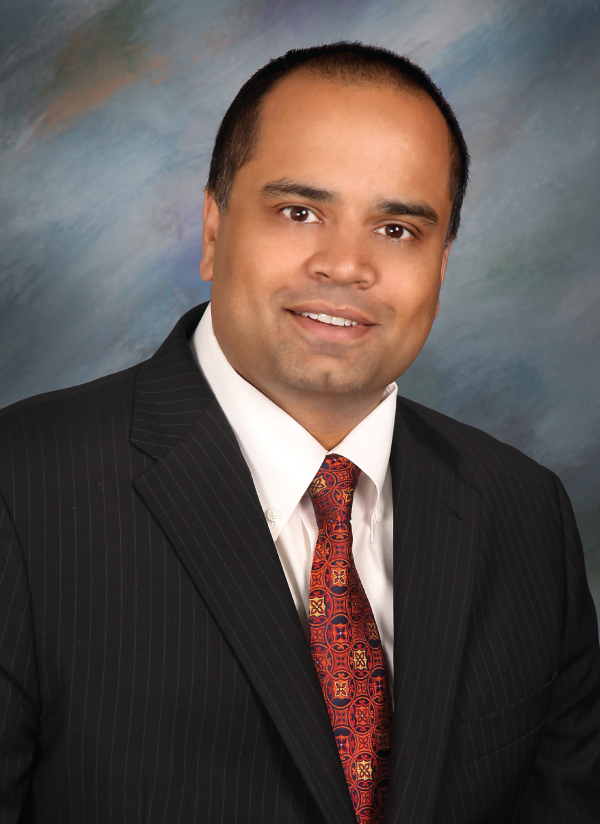
Defence Turkey: Mr. Mehta, you are new in your position as President of Sikorsky Military Systems. Could you please tell us about Sikorsky’s near-term plans?
First of all, thank you for this opportunity to make sure we can tell our messages in important places like Turkey where we have had such a long and historic partnership. I’ve been in my position for eight months.
My focus has been to navigate some of the challenges that we have in the U.S. Government and military environment from a budgetary standpoint. And trying to accelerate the growth in our international markets.
For instance, in countries like Turkey, I continue to focus on building partnerships with Turkish industry, as well as promote our helicopter products. We strive to design, manufacture and support the best helicopters in the world, and we are very excited whenever a country like Turkey decides to use our products.
We have been very successful selling our products, especially Black Hawk helicopters, into Turkey, so now it’s time for Sikorsky to become an integral part of Turkish industry. Some of the projects involve industrial participation, and forming partnerships. A good example is our joint venture with Alp Aviation. Sikorsky has continued to provide significant investment in that partnership, which has been very successful for us. Now we are sourcing work to Alp Aviation in Turkey because of good competitive quality at very competitive cost, and excellent technical engineering and support.
My focus for the company will continue to be 10 and 15 years in the future, that is, the long-term cycle business. Contracts come and go, but relationships last a lifetime. So my goal is to build long-lasting relationships with customers in countries like Turkey.
Defence Turkey: Do you have plans to invest in Turkey?
We do. Actually, through our joint venture we have significantly expanded our footprint at Alp Aviation, and we look forward to putting more work into Alp Aviation, which is becoming a strategic partner for Sikorsky and many other aerospace companies in the United States. While we can always build buildings, or put more tools into place, the important thing for us now is to focus on investment in people.
Our number one concern is to make sure that we continue to have the best and the brightest people in Turkey. We want to attract university students to companies like Alp Aviaton, so we can continue to make sure we get not only the manufacturing support, but high level technical and engineering support.
I am on the board of directors of Alp Aviation. On a recent visit, I was very happy to see not only a work force that’s very motivated and very energetic, but also very young. So we are going to continue to attract more young folks in Turkey as they leave university, and we will continue to grow our business there, and attract investment to Turkey.
Defence Turkey: Actually you have very strong ties with Turkish Military side and Defence industry side. What can you say about the current situation about the general purpose helicopter project?
The Turkish Utility Helicopter Program has gone on for several years, especially since we been down-selected. All great things in life are worth patience. I give SSM [the Undersecretariat for Defence Industry] a lot of credit. Between SSM and Sikorsky, we have come a long way. It’s a very complex project. I don’t think Sikorsky has ever undertaken a project in the international world as complex as this. Even SSM has indicated this is one of the more complex projects they’ve dealt with. So I think, whenever you have a project of such complexity, it’s important to take the time to make sure that you put the right agreements and contracts in place.
This agreement is not a two-year or five-year agreement. We are talking about an agreement that will last at least 30 years. So it’s important for us to get it right, and it’s important for us to make sure we have the same expectations going in. We continue to make progress in that regard. I’m very optimistic and very hopeful that in the short term we will be able to publicly announce the progress that we’ve made in the form of a signing so that we can start building these great helicopters.
Defence Turkey: And also In the coming period of course, there are new indigenous programs like National Helicopter Project and also Light Helicopter Project and so on. What do you think about these projects? What will be your next steps? What do you offer actually?
As part of the Turkish Utility Helicopter Program, the objective is to have an indigenous Black Hawk-based platform from which helicopters can be manufactured and produced with TAI in Turkey, for use within Turkey, and ultimately to export from Turkey especially to those countries with whom Turkey has particularly strong ties. Long historic cultural connections and ties. Places where Sikorsky aircraft struggles sometimes to reach those markets and make our mark in those markets. But we are very excited about the opportunity have a partnership between Sikorsky and Turkey to go take an indigenous Turkey utility helicopter and be able to sale it and support it in those markets.
Defence Turkey: What will be the new technologies that you can offer to Turkey?
I think some of the technologies actually will not come specifically from the helicopter itself, but the technologies that are necessary to manufacture the helicopter. For instance, high speed machining capability. We always invite you to come and see us at Alp Aviation, and take a look at the precision machining technologies.
While technology is important, technology is also one of those areas that comes and goes. More important to us is making sure that we have the right talent base. It is not only about the building machines and technologies for the future, it’s about making sure we have the right minds, making sure we have the right engineering talent in place for the future. I look forward to a day when we can go to our Turkish engineering staff and ask them for their ideas on how can we approve our product. That it is the ultimate objective for us.
Defence Turkey: Thank you very much for this interview. Would you like to add something for our readers?
We are very excited about the opportunities. We will continue to provide updates and progress about our opportunities. We strongly encourage, and this a personal passion of mine, not only from a professional standpoint, we strongly encourge universities, and students who looking for education, please consider aerospace as a viable sector. Please go into the aerospace industry. It’s been very rewarding for me. I think they will find it to be a rewarding carreer as well.