“Spain and Türkiye Pursue the Same Objective, to Achieve Technological Sovereignty and Strategic Autonomy, and for that, We Need Reliable Partners, True Allies We Can Count On!”
Defence Turkey: In order to strengthen the competitiveness and globalization of the Spanish Defence Industry in September 2024, a new Directorate-General for Strategy and Innovation of the Defence Industry (DIGEID) was created from some of the responsibilities of the Directorate-General for Armament and Materiel (DGAM). Can you elaborate on the main mission, task, of the Directorate General of Strategy and Innovation of the Defence Industry (DIGEID)?
Lt. Gen. Ivorra RUIZ: The creation of DIGEID marked a turning point in Spain’s defence industrial policy. Our mission is twofold: on the one hand, to reinforce Spain’s strategic autonomy, ensuring that we possess critical capabilities without depending on third parties; and on the other, to modernize and promote our Defence Industrial and Technological Base.
This means anticipating future challenges, fostering innovation in areas such as artificial intelligence, robotics, additive manufacturing and new materials, and integrating our large, medium, and small companies into European and NATO programs, as well as creating strategic alliances with the defence industries of our allies. It also involves ensuring that industrial policy is aligned with the operational needs of our Armed Forces. In short, DIGEID is the driving force that connects innovation, industry and national security, while strengthening the international competitiveness of our defence industry.
Defence Turkey: As Director General of Strategy and Innovation of the Spanish Defence Industry how would you explain your job and official duties? How would you sum up your role?
Lt. Gen. Ivorra RUIZ: My role as Director General is to lead this global strategic vision. This means ensuring that every industrial and technological decision strengthens Spain’s autonomy and contributes to equipping our Armed Forces with the capabilities they need, both today and in the future.
In practical terms, my duties include steering strategy, promoting public–private cooperation, building bridges with universities, technology centers and companies, and representing Spain in international forums and partnerships where the future of the defence industry is shaped, creating strategic alliances that strengthen collaboration with our allies. Put simply, my role is to ensure that innovation and industry translate into real capabilities for defence and competitiveness for our country, maximizing the impact of every euro invested.
Defence Turkey: How do you compare the roles of DIGEID and DGAM?
Lt. Gen. Ivorra RUIZ: The two directorates are complementary and work in close coordination. I like to explain it with a simple image: DIGEID is the “binoculars” and DGAM is the “magnifying glass.” DIGEID looks ahead, anticipates trends, and defines innovation and internationalization policies. DGAM, on the other hand, focuses on execution: acquisition, approval, sustainment, and modernization of weapon systems.
It is a natural division of tasks: we think about what the industrial and technological base should look in the medium and long term, while DGAM ensures that our Armed Forces have the equipment they need today. Two different lenses, but focused on the same mission: to build a solid, innovative, and internationally connected defence industrial base.
Defence Turkey: Could you please provide some key facts about the Directorate General of Strategy and Innovation of the Defence Industry (DIGEID)? Could you elaborate on the structure, responsibilities and number of personnel working at the Directorate?
Lt. Gen. Ivorra RUIZ: DIGEID is structured into three Deputy Directorates-General: Planning, Technology and Innovation; Industrial Defence Strategy; and Management and Internationalization of the Defence Industry. We have a highly qualified team that combines technical expertise with strategic vision.
Our mission is to create a stable and predictable framework for the sector, one that inspires confidence among large companies, SMEs, and start-ups alike, fostering a dynamic and resilient ecosystem. The key lies not only in our internal structure but in our ability to coordinate and drive the entire sector, integrating industrial, scientific, and technological actors into a single collaborative framework.
Defence Turkey: Can we get an assessment of the first half of 2025 from the Spanish DIGEID’s perspective? Could you please summarize the highlighted efforts of Directorate within 2025 first half?
Lt. Gen. Ivorra RUIZ: The balance is very positive. We are contributing to the rollout of the Industrial and Technological Plan for Security and Defence, with more than €10 Billion mobilized and an estimated impact of 96,000 jobs. Spain currently leads 28 European Defence Fund (EDF) projects and participates in 91, with a very significant involvement of SMEs, universities, and technology centers.
We have also strengthened public–private cooperation through new observatories and governance mechanisms, and we have accelerated the incorporation of emerging and dual-use technologies, which not only reinforce military capabilities but also generate innovation and progress in civilian sectors such as health, energy, or transport. In short, DIGEID has consolidated itself this semester as a fully operational strategic instrument, proving that investing in defence also means investing in security, innovation, and economic development for the entire country.
Defence Turkey: As the Director General of DIGEID, what kind of initiatives are you undertaking to strengthen international cooperation and increase external support for the Spanish defence ecosystem?
Lt. Gen. Ivorra RUIZ: As Director General, one of my responsibilities is the planning and development of Spain’s defence industrial and industrial cooperation in this area, as well as international cooperation and representation in international defence industry forums. I am also tasked with providing institutional support for the internationalization of the Spanish defence industry and its exports.
Accordingly, DIGEID and its Deputy Directorates-General provide institutional backing to the internationalization of our Defence Industrial and Technological Base. We accompany and promote Spanish companies abroad, facilitating contacts and supporting their participation in international events and bilateral meetings where they can showcase their products and capabilities.
At the same time, within the framework of Spain’s Defence Policy, my Directorate-General actively fosters international cooperation at both the bilateral and multilateral levels. It also represents Spain in industrial and armament forums of key international organizations and agencies such as the European Union, NATO, and OCCAR.
Spain is highly involved in European defence initiatives, and DIGEID plays a central role in ensuring that our industrial ecosystem gains access to EU instruments and programs. This strengthens the competitiveness and integration of our companies in international defence value chains.
Defence Turkey: It is not possible to have a strong defence without a competitive defence industry; and a competitive defence industry can only be built on two fundamental pillars: innovation and technological transformation. What kind of innovative and technological transformation do you envisage to establish a strong defence industry in Spain?
Lt. Gen. Ivorra RUIZ: Spain’s vision for innovation and technological transformation is clear: a strong defence industry must be innovative, technologically advanced, and closely connected to the wider national ecosystem.
Our approach is guided by the Defence Industrial Strategy 2023 and the Defence Industrial and Technological Plan 2025, which prioritize dual-use technologies, digitalization, and the strengthening of national industrial capabilities. We are promoting open innovation ecosystems that connect major companies, SMEs, start-ups, universities and technology centers, accelerating the adoption of emerging and disruptive technologies across both the public and private sectors.
Key areas of focus include artificial intelligence, quantum computing, robotics, advanced communications, and new materials, as well as secure networks, space systems and next-generation computing. Around 31% of the €10.4 Billion 2025 Plan is devoted to new technologies in telecommunications and cybersecurity.
At the same time, Industrial Participation Plans (PPI) ensure that innovation leads to real industrial capability — through technology transfer, local manufacturing and stronger national supply chains. Spain also encourages traditional defence companies to mentor and collaborate with start-ups developing dual-use technologies, fostering agility and creativity within the defence ecosystem, in line with international initiatives such as NATO’s DIANA program.
Ultimately, our goal is to build a technologically advanced, sustainable and competitive defence industry, one that drives innovation, supports economic growth and strengthens both Spain’s and Europe’s strategic autonomy.
Defence Turkey: How does the creation of the new directorate (DIGEID) relate to Spain’s participation in European and NATO programs?
Lt. Gen. Ivorra RUIZ: Before this Directorate was created, the DGAM, through the Deputy Directorate General for International Relations, was already working hard to encourage our Industry to participate in EU and NATO programs. The establishment of the DIGEID streamlines this promotional activity, centralizing decision-making processes more efficiently and making them more consistent with industrial, and technology and innovation strategies.
This allows for greater agility in promoting multilateral cooperation and collaboration within the EU and NATO defence industries, synchronizing this necessary cooperation with the capacity development processes of both organizations and their member states.
Defence Turkey: What kinds of technological fields does DIGEID aim to develop through civilian–military synergies?
Lt. Gen. Ivorra RUIZ: DIGEID is strongly committed to advancing technological fields through civilian–military synergies, with dual-use technologies at the heart of its strategy. This is clearly reflected in Spain’s Defence Technology and Innovation Strategy, which makes cooperation in R&D&I around dual-use technologies a central pillar.
A key mechanism for this is the COINCIDENTE Program, which has been active for several decades under the Ministry of Defence. COINCIDENTE regularly launches calls for proposals to identify and adapt civilian technological breakthroughs to military needs, ensuring that advances in technological fields such as artificial intelligence, advanced materials, CBRN defence or autonomous systems can be rapidly transferred to defence applications.
In parallel, DIGEID works closely with the Centre for Technological Development and Innovation (CDTI), Spain’s main public agency for supporting business R&D&I. CDTI dedicates significant resources to financing dual-use technologies, facilitating the transfer of civilian innovation to the defence sector. So far, we have worked together in technology fields related to Space systems (artificial intelligence applied to Earth Observation and on-board data processing) as well as unmanned ground systems.
Internationally, DIGEID promotes participation in major European and transatlantic initiatives, such as the European Defence Fund (EDF), which supports collaborative R&D&I projects in dual-use technologies; the European Defence Agency (EDA), promoting collaborative R&T projects in dual-use technological areas (naval technologies, space systems, air-to-air automatic refuelling, propulsion systems, …); as well as NATO’s DIANA accelerator and the NATO Innovation Fund (NIF), which drive the adoption and investment in disruptive technologies with dual use applications.
In summary, DIGEID’s strategy is to build a dynamic ecosystem where civilian and military innovation reinforce each other, using national and international programs to ensure that Spain is at the forefront of dual-use technological development for defence and security.
Defence Turkey: What steps do you plan to take to strengthen SMEs and start-ups in Spain’s defence industry?
Lt. Gen. Ivorra RUIZ: Supporting small and medium-sized enterprises and start-ups is a core priority of Spain’s Defence Industrial Strategy 2023. The Ministry of Defence, through the Sub-Directorate General for Defence Industrial Strategy (ESIND), promotes an inclusive industrial ecosystem that ensures SMEs are integrated into national and European value chains. This includes specific measures such as territorial “industrial corridors”, incentives for technology clusters, and participation in dual-use innovation programs. These actions not only promote regional cohesion but also expand the number of companies contributing to the Defence Technological and Industrial Base (BITD).
Through the Participation in Industrial Plans (PPI) required in major acquisition programs, the Ministry guarantees that large contractors incorporate SMEs as qualified suppliers and partners in research, production, and maintenance activities. Each PPI includes an Industrial Participation Scheme detailing national subcontracting levels, employment generation, and technology transfer, ensuring that smaller firms gain access to high-value work packages and sustain long-term capabilities.
By linking these actors with European initiatives like the European Defence Fund (EDF) and PESCO, Spain aims to make its SMEs more competitive internationally and position them as key contributors to a resilient, innovative, and export-oriented defence industry.
Defence Turkey: Is Spain interested in bolstering defence industry cooperation with Türkiye? What are the biggest challenges on the way to full and open cooperation between the two countries?
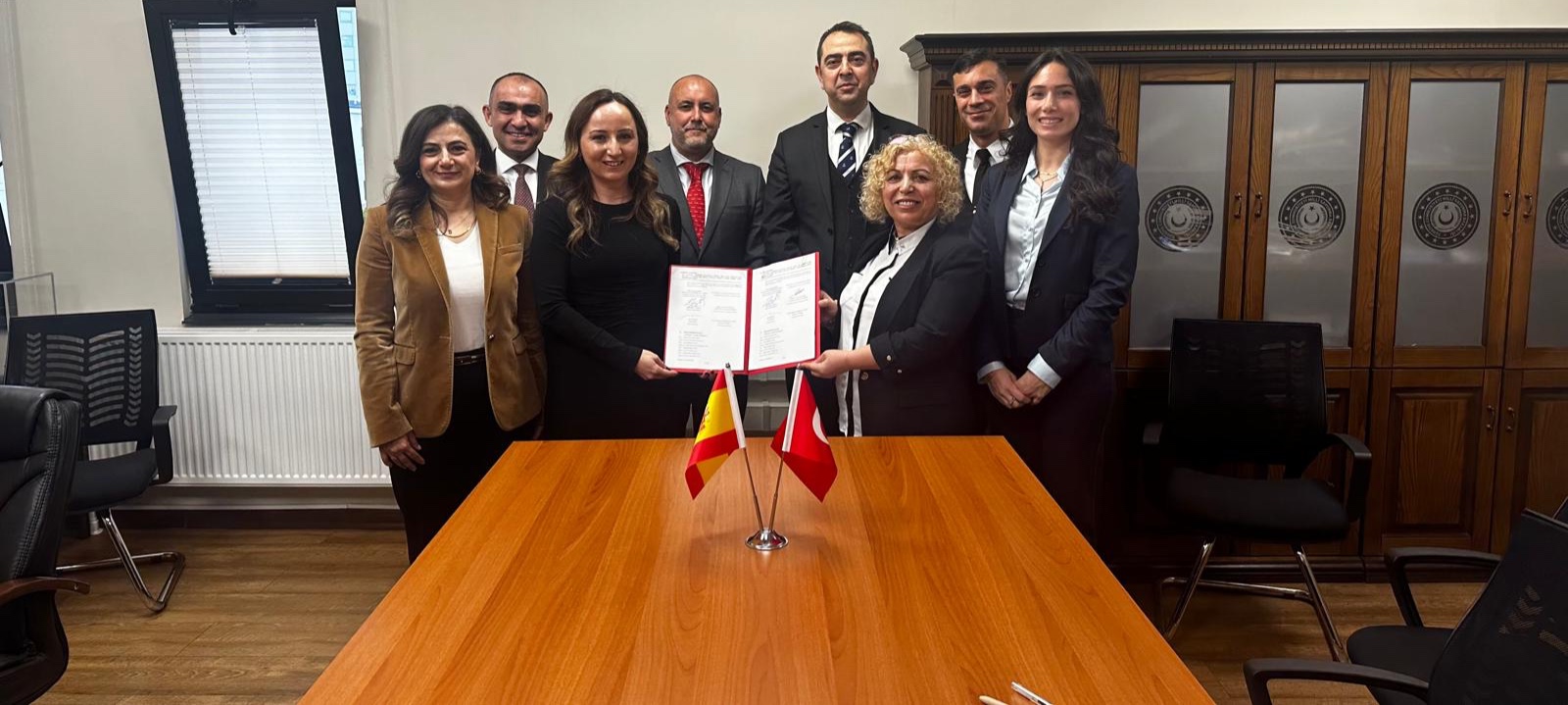
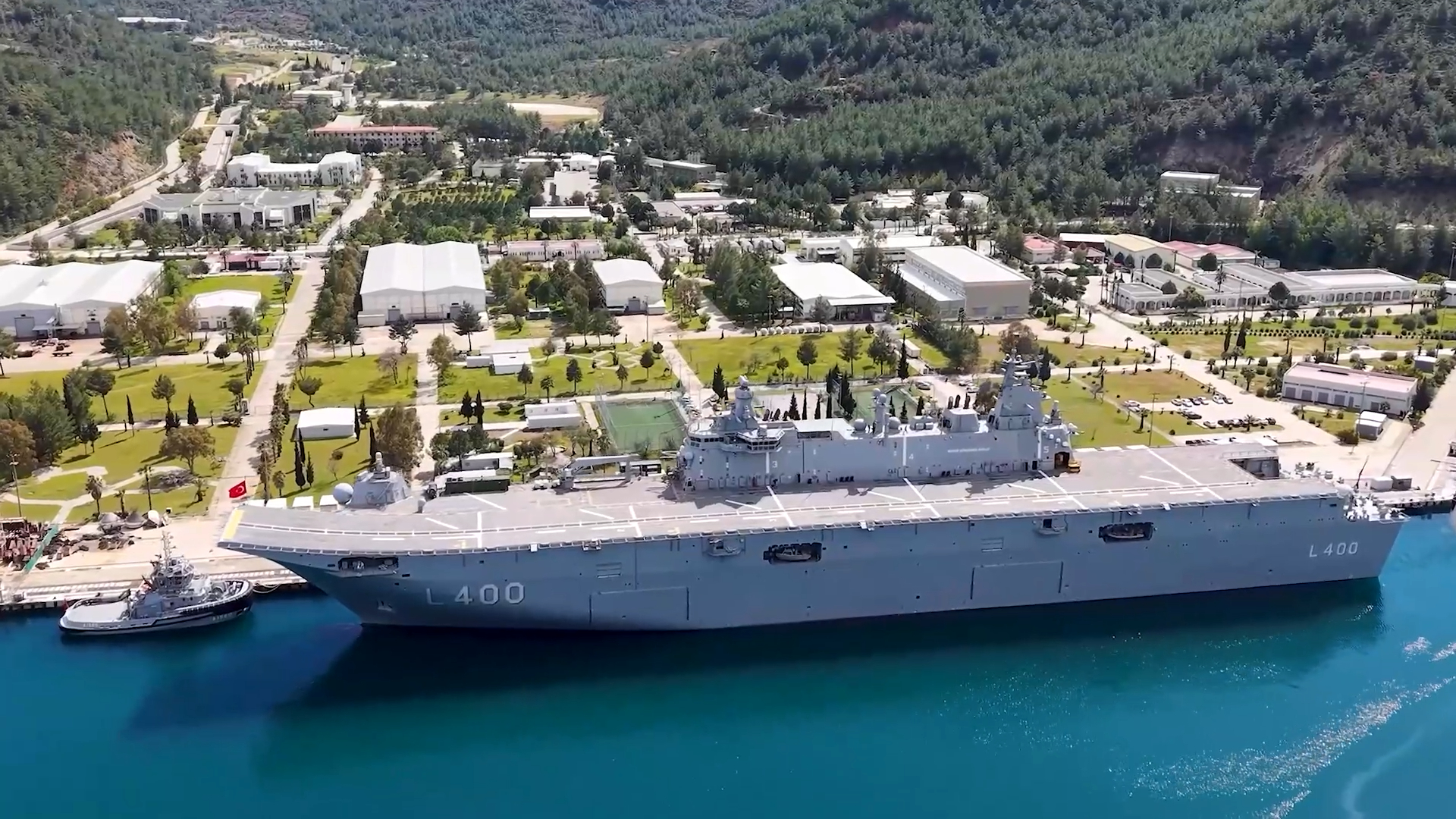
Lt. Gen. Ivorra RUIZ: Spain and Türkiye, as friend countries and allies in NATO, share common interests and worries regarding security and defence. We pursue the same objective, to achieve technological sovereignty and strategic autonomy, and for that, we need reliable partners, true allies we can count on. Both our technological and industrial defence bases can be complementary in several areas and cooperate and work jointly to satisfy necessities from the Armed Forces of Spain and Türkiye. We find very good examples in vessel construction from Navantia to the Turkish Navy, or the recent MoU between our two countries to jointly develop a trainer jet for the Spanish Air Forces based on the HÜRJET Program. Under the leadership of SSB President Haluk GÖRGÜN, Turkish Aerospace Industries (TUSAŞ), led by President and CEO Mehmet DEMİROĞLU, and Airbus Spain, chaired by Francisco Javier Sánchez SEGURA, recently signed a strategic cooperation agreement on the HÜRJET Program, reflecting the mutual trust and growing industrial collaboration between our nations. Those are the first but solid steps of a long-range collaboration between our countries.
Defence Turkey: Lt. Gen. RUIZ thank you for sparing your time for our readers