SSM: It is High Time on the Stage with Indigenous Products
Defence Turkey: Dear Undersecretary, first of all thank you very much for this interview. We have seen that 2014 was a successful year for the Turkish Defence Industry. What are your views and comments for year 2014 as the Undersecretariat?
We could comprehend that year 2014 is the sequence of the acceleration we reached. In order to increase this acceleration, several concepts are needed to be established. One of the most important things that we will concentrate on is the contract for tank power-pack group, because we should achieve the required competence in certain subsystems. The project regarding the development of engines for various platforms, primarily for the tanks the contract of which was signed with Tümosan, is a significant milestone and needs efforts. We should identify such milestones right now and further develop our platforms both in terms of indigenousness and competence.
In summary, we started to deliver “Atak” helicopters in 2014. We signed the power-pack development program for our Main Battle Tank. Our infantry rifles were started to be used. We can list similar achievements like this.
We started to push our companies in order to present the platforms not in use but taking part in our important projects to the market. We would like to receive our Unmanned Aerial Vehicle “Anka”, New Generation Basic Trainer Aircraft “Hürkuş” and Main Battle Tank as immediate as possible. We give importance to use our products at fields after passing all stages regarding development.
Defence Turkey: Dear Undersecretary, you have left nearly one year behind in your assignment. What will be your strategic progress in the upcoming period?
First of all, we aim that our platform products will be available at the market competently. Our platforms are referred everywhere with proud but unfortunately we have not started to use many of them yet. We could not see these platforms at the market both in terms of use and sales. The qualification process of these projects should immediately be completed and entered into the inventory. We should be determined and resolute in order to achieve this. Many platforms and systems are being referred in the press and other environments and many people think that these systems are in use. However, they are not available in the market / at the field yet. We want them to be at the field in the most optimum and competent manner and even at the market as an export product.
We want to say that we have obtained this amount of export income from these products. With the activation of these products, we aim to increase our export which is now at an amount of $1,65 billion In order to achieve this, these platforms need to be put on the market with full performance and be marketable. In order to reach at the level we desire, we should be competent especially on the basis of subsystems and the components we say as indigenous should be entirely indigenous.
Defence Turkey: Turkey has an export target of $25 billion in 2023 regarding defence, aerospace, security and MRO fields. As of the end of 2014, our defence and aerospace export figure is nearly $1, 6 billion. Could you please share with us the sectorial breakdown of this export target at an amount of $25 billion? In view of the current data, do you think all given sectors are able to meet the expectations? What are the deficiencies and actions to be taken?
As all known, in export, there are lots of parameters such as the technical features of the product, capabilities of the industry, export restrictions, international policies, global demands and the country’s innovation capabilities. Considering 2014 export figure of $1,65 billion, it is obvious that 2023 target is a challenging one. I can say that, on our way to this target, we need new approaches and studies with a proper export strategy. We are struggling to proceed to 2023 target by moving the export support activities that we have been conducting with our companies and related institutions to an optimum level.
Defence Turkey: Dear Undersecretary, regarding Government to Government sales, we are informed that a study for increasing our companies’ exports, especially to the countries in our region and to new markets under governmental guarantee and support has been prepared within the Undersecretariat for Defence (SSM) Industries and has been submitted to the decision making authorities. Do you expect any important developments in 2015 within this framework? If we need to compare the current status and the sales conducted under governmental guarantee, which advantages and contributions would such sales provide to our country?
In line with one of our goals in the SSM Strategic plan that is “enabling the sustainability of the defence industry”, we provide support to our defence industry companies’ export, marketing and promotion activities abroad. During these activities, as we came across our counterparts’ - in the regions we determined as priority target markets for Turkish defence industry products - demands in setting the government as one of the parties of the contract from time to time, we initiated the studies you mentioned. Some of the countries in the World have export support institutions especially for defence industry products. We aim our Undersecretariat to assume a similar role and thus function as a bridge between the countries desiring to see the government as an addressee and Turkish defence industry.
We already know how the FMS (Foreign Military Sales) system of the USA functions. Additionally we examined the operating systems of the remaining export support institutions. Starting from this point of view, we gathered with the representatives of the sector regarding the draft Law on the foreign military sales we prepared. We shall initiate the required activities in order to render this draft becoming a Law after finalizing the draft we prepared with the comments of the sector’s representatives, in line with the views of all the shareholders. We hope that this draft would become a law in the new legislative session.
In case of government to government sales, our industry shall be able to suggest such mechanisms to our counterparts as a tool to support the export and marketing activities in the countries where our political and economic relations are strong and thus step forward in the countries that search governmental guarantee.
Defence Turkey: Dear Undersecretary, comparing our Defence Industry companies’ current company acquisitions or expanding abroad through joint investments with the past performances, how do you assess our companies’ performance in this respect? Do you think it is sufficient? Which types of incentives should be created in order to promote investing in foreign countries and attract them? Is there an existing study conducted by our government regarding this issue?
I can claim that our expansion activities in the Middle East and Middle Asia Regions are ahead compared with the other regions. In the upcoming period, we shall be continuing to promote the investment companies focusing on products that would appeal the foreign country markets in order to increase the defence and aerospace exports. As we also mentioned in our strategic plan, we believe that the export activities are highly essential evaluating through the perspective of the sustainability of our sector. Our companies’ foreign investments are capable of creating similar added values in respect with the sustainability concept.
Within this framework, we encourage our companies through supporting the development of international competition, R&D support that bears important in acquiring new markets with innovative products, promoting the participation to foreign events and other types of support enabled by our foreign cooperation offices and various other activities. In addition to the aforementioned, the industry participation offset contracts may be used indirectly as a means in foreign investment and cooperation issues
On the other hand, we attach importance to the concept of expanding to foreign countries and underline the importance and essentiality of this. We observe that our companies’ profit levels are reaching to certain levels and wish that they make use of these profits in these types of investments. Our companies have certain quests, enterprises. Some of them are actualized. This issue is featured in our agenda. There are large and small competent companies both in the east and in the west. We believe that through conducting deep analyses, we shall be able to seize such opportunities and accomplish them. We may claim that such investments shall also contribute to the rapid development of the industry.
Defence Turkey: Could there be any government aid for such investments?
What you refer to by using the term “governmental support” is crucial. Our companies may make use of their profits easily. Besides, since as the SSM we own certain amount of shares of various companies, we are capable of taking over a company in theory. We encountered no obstacles so far during the company acquisition procedures considering the financial or incentive aspects.
Our Undersecretariat provides financial support to various projects with development purposes and equipment sustainment to others. All these points shall be evaluated when a company’s acquisition comes up to the agenda. We do not ever forget that our main function is to develop the Defence Industry and we shall always provide support to all the movements towards this end and exert the best effort we can for their success.
Defence Turkey: Dear Undersecretary, Turkish Defence Industry surely needs qualified work force in order to create brand products. Which procedure do you think should be followed towards this end?
The work force emerges as a vital concept when referring to the ‘Brand Work Force’. The valuable work force in our sector graduates from highly qualified schools with high degrees, enter the sector and assume important responsibilities. But how efficiently we make use of them? How much could we benefit from these brains? How efficient does this work force think they are at the environment they exist in? These are all very essential aspects for us. Are we able to provide this, does the individual thinks he outputs his entire potential, are we able to pass the training process rapidly? We need to ask these questions to ourselves. When compared with the levels of the World, the experience of our sector is at a low level. How could we immediately increase this experience? Could we implement a special mentorship or training procedure? As soon as we are able to implement all the aforementioned, we shall be able to make use of our work force in its real capacity. Instead of waiting for years, we need to lean towards the special training and education programs. And surely we need to closely follow the know-how in the world.
Defence Turkey: Dear Undersecretary, you have very well-defined the means to train experienced, specialized and qualified personnel and utilize them in efficient and productive manners. Surely, we have an important human resources trained in our country and currently employed in significant foreign programs abroad. In addition to your bureaucratic identity, you are also an academician. In this respect, what should be done to enable the contrary brain drain and thus gain the trained human resources to our Defence Industry?
Building a mechanism is important here, only if you manage to establish a mechanism you may attract such people. Firstly, there is the financial aspect; you should be able to satisfy such people financially, besides you should offer them an environment where they could get job satisfaction. A research environment where people could work together efficiently and create results needs to be arranged. Providing the aforementioned two aspects is of vital importance. Currently, our companies are able to offer attractive financial facilities and some of our universities are capable of doing so, yet the facilities still need to be extended and improved. Moreover, I believe that sending the personnel abroad through special programs and also engaging the foreign human resources to certain projects in certain periods would also create awareness of essence, because the brain power does not necessarily need to exist absolutely at a certain place or environment. After completing your project, one may remain in the other studies held in various countries in the world from the place one resides. I believe enabling such facilities are quite important. Of course this will be conducted in a systematic manner, if we claim to create 10 thousand active people within the next ten years; there must be a road map and resources for this. This issue was also evaluated on today’s Defence Industry Executive Committee as well.
Defence Turkey: Dear Undersecretary, speaking of the Defence Industry Executive Committee, what would you like to say on the decrees made at the Defence Industry Executive Committee Meeting (SSIK) held today (27 April 2015)?
Actually these are familiar decisions in some respect; the passenger aircraft project came to the agenda during the SSIK meeting. This program’s execution under the auspices of our Undersecretariat was deemed advantageous. Because while we conduct the Indigenous Fighter Aircraft Programme (TFX) and our various defence companies are presently exerting efforts in this regard, we believed that we could manage this project as well. In this sense, the Turkish Regional Passenger Aircraft concept came to the agenda during the meeting.
By saying regional passenger aircraft, one will not consider this concept as a mere type of special aircraft or just as a passenger aircraft. Beyond such usages, there is an array of other purposes of usage and some of these purposes are related to the military areas. In this respect, we believe that our Undersecretariat taking part at least in the execution of this project would be useful. On the other hand, we are continuing the development of an Indigenous Fighter Aircraft Programme (TFX), and we bring our Helicopter engine development to the agenda as well. Our priority is to indigenously develop the engines and systems and we are step by step actualizing this aim.
Defence Turkey: Dear Undersecretary, what would you like to say on the latest status of the TF-X program which is also considered as one the prioritized programs of Turkey?
Within the scope of the Development of an Indigenous Fighter Aircraft Programme (TFX), as part of the design and prototype production, we aim to develop a single-seated, air superiority focused, low radar traced aircraft that would fulfill the operational requirements of our Air Forces Command. Besides, through a different project management approach, we are conducting this project by a Program Management Office (PMO) that employs specialist staff from the Air Forces Command, from our Undersecretariat and from related defence companies/institutions and that is embodied within the premises of our Undersecretariat.
The decisions regarding the configuration and the engine of the aircraft will be taken through the Defence Industry Executive Committee Decrees taken during the beginning of each year and during the ongoing pre design stage. At this stage, I may declare that negotiations are ongoing for cooperation with a foreign partner experienced on the design, development and production stages of a combatant aircraft that we may collaborate in areas our industry requires support.
Defence Turkey: What would you like to say on recently launched Aselsan Radar and Electronic Warfare Technology Center’s contributions to the program and to our country in general? Could we reach the capacity to develop and produce our own radar systems that form the most important part of the long range air defence systems with this facility?
I would like to start by wishing this Aselsan’s Radar and Electronic Warfare Technology Center good luck. As you may know, Aselsan has been working on the radar and electronic warfare issues for 25 years. In line with the increasing requirements and with the support of the Undersecretariat for Defence Industries, Aselsan Radar and Electronic Warfare Test Center recently started operating. In order to accomplish the design, production and tests of the radar systems, this facility incorporates near field/remote antenna testing anechoic chambers, clean room areas that enable the microwave module production, clean room areas required for LTCC and thin-film production, system integration hall, production hall, dynamic RF test laboratory, EMC and environmental conditions test infrastructures.
With the help of the radar design and production technologies it developed within the last 25 years, Aselsan reached a competent level on early warning air defence detection and tracking radars capable of 3 dimensional target acquisition and tracking, weapon locating radars and detecting warheads for smart radars. Aselsan develops indigenous products in this area. In addition to this, the development of Multifunction Phased – Array Radar to be scaled and utilized at the Air Defence Combat frigate and other vessel categories of the Naval Forces Command, long range early warning air defence radars capable of detecting Ballistic Missiles and aircraft nose radar studies for Air Forces Command’s aircrafts intensively continue and the first qualified products are planned to be included into the inventory between 2018 – 2020.
Consequently, considering the technology accumulation of Aselsan so far and the radar systems that are either already developed or currently under development from the perspective of the new infrastructure and facilities, we assess that developing the research and fire control radars that compose the most important part of the long range air defence systems through national resources would not be too difficult.
Defence Turkey: It has been decided to initiate the contract negotiations with Sedef Shipyard for the Landing Platform Dock (LPD) Project that would deploy a force at the size of minimum 1 battalion at the Aegean, Mediterranean and Black Sea to the crisis region with its own logistical support and without requiring any main bases. The contract negotiations have been going on for 15 months. Could you inform us on the current status? Which type of a platform to cover the needs of Turkish Naval Forces is envisaged?
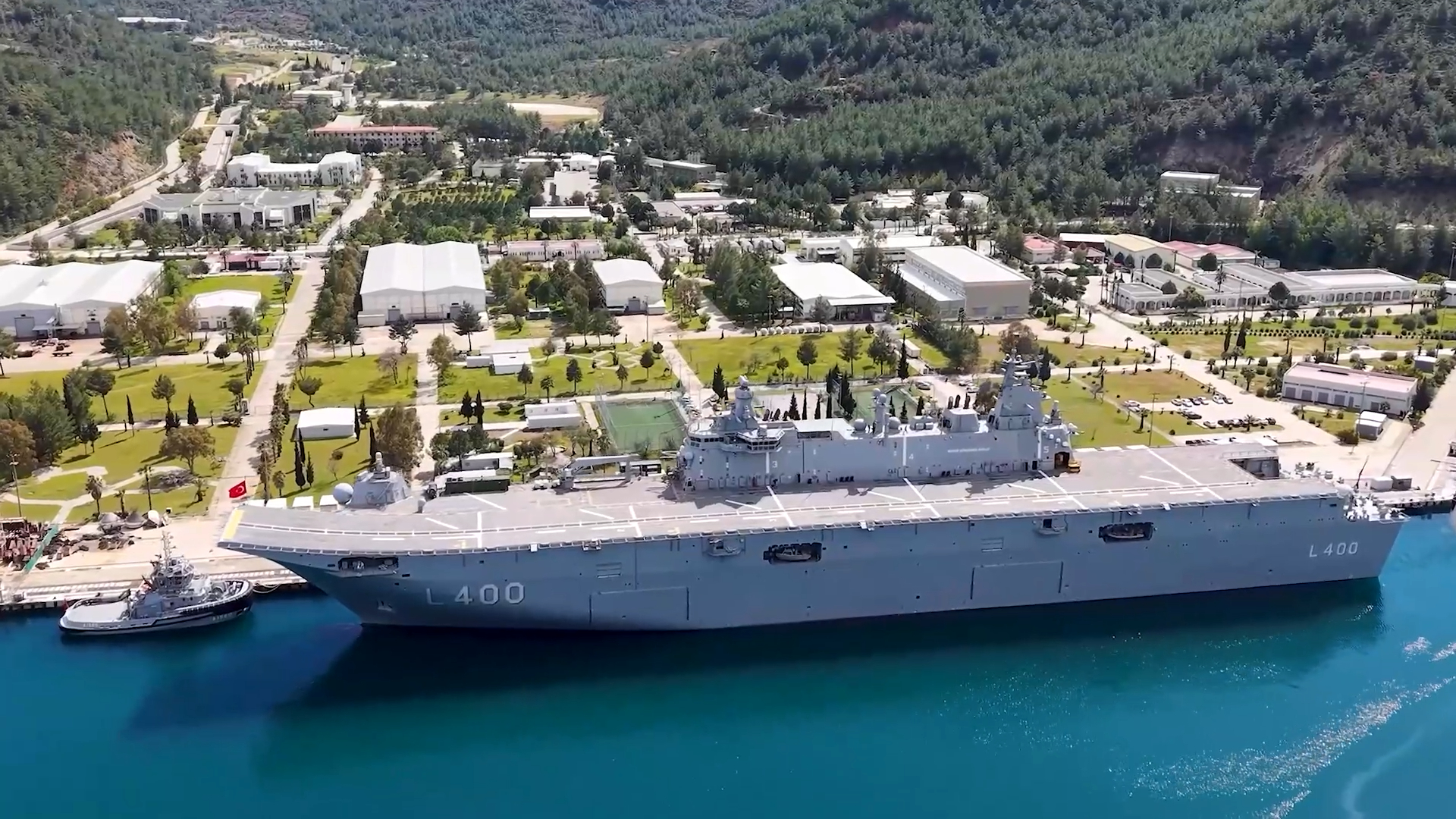
With the Landing Platform Dock (LPD) Project conducted for covering the demands of our Naval Forces Command, it is planned to build the greatest vessel at the inventory. Within this scope, we arrived to the final stage on the technical aspects of the contract negotiations with Sedef Gemi İnşaat A.Ş. and we plan to sign the contract within May following the accomplishment of the negotiations on administrative issues.
LPD vessel will be capable of containing various components that would perform strategic deployment, non – combatant operations (peace support, evacuation of the non – combatants, humanitarian aid and natural disaster aid operations) required by our national defence policy that cover mostly the peace era and partially the crisis periods and conduct regional security tasks and offer diverse services. LPD is such a vessel that is composed of the following features;
4 Landing Craft Mechanics (LCM),
27 Amphibious Assault Vehicles (AAV),
2 Landing Craft Vehicle Personnel (LCVP),
1 Vehicle for the Commander
1 Rigged Hull Inflatable Boat (RHIB)
Defence Turkey: Will there be a tender for the procurement of landing platforms that are expected to constitute the second phase of the LPD program? Are all the options such as foreign direct procurement, joint development or national production available? Is there any model identified in this respect?
We have identified domestic development model for the project as a result of the assessments we made for the procurement of Armored Amphibious Assault Vehicles required within the scope of the Landing Platform Dock (LPD) Project. ZAHA Project for the related procurement has been initiated and the Request for Proposals was issued to FNSS and Otokar companies on 14 March 2014. Currently, the proposals collected from the companies are under evaluation.
Defence Turkey: Dear Undersecretary, within the scope of the Turkish Type Assault Boat program, the Request for Information (RFI) conclusion report was finalized and submitted to the Presidency of General Staff and Naval Forces Command at the end of 2014. Is this program expected to be put on the agenda of the Defence Industry Executive Committee (SSIK) in the near future?
Within the scope of the Turkish Type Assault Boat Project, activities of our Naval Forces Command for the preparation of the Technical Specifications are continuing by taking into consideration the Information Request Document Conclusion Report submitted by our Undersecretariat at the beginning of 2015. Once the Technical Specification is submitted to our Undersecretariat, the preparatory work for the Request for Proposals will be initiated and the Request for Proposal will be issued before the end of 2015.
As you may know, after the accomplishment of the evaluation of the proposals submitted in response to the Request for Proposals, the results will be presented to the Defence Industry Executive Committee
Defence Turkey: Feasibility studies for the TF-2000 program were accomplished at the last quarter of 2013 and the studies for the project model are still continuing. Within the framework of the requirements by our Naval Forces, the aim is to introduce a platform in which various technologies that may be developed in the long run could be implemented and that has low life cycle cost and configuration flexibility. What would you like to comment on the future and priorities of this program in this respect? Could you please summarize the related studies conducted and the current stagus?
With the launching of the TF-2000 Anti-Air Warfare Frigates Project, development of platforms that would have effective roles in the defence of our territorial waters and would also successfully represent our country in international waters is planned. By equipping these vessels with advanced technology sensors and weapons, these will support the friendly and allied nations and have deterrent forces for the rest of the foreign elements.
In line with the decree made by the Defence Industry Executive Committee, the project will be conducted in three stages namely the design, prototype building and serial manufacturing stages. Currently, the stages of the identification of a project model for the project jointly executed with the Naval Forces Command and the finalization of technical specifications in accordance with the developing technology are being conducted. We aim to accomplish our preparations at the soonest time possible and immediately start the project design stage.
Defence Turkey: Within the scope of the MILGEM program, could you please assess the building activities regarding the 3rd and 4th vessels and the tender process for the manufacturing of the 5th and 8th vessels at private shipyards?
In line with the decree of the Defence Industry Executive Committee and within the framework of the MILGEM Project, the third and fourth vessels are being produced at the Istanbul Shipyard Command by applying the project model of the first two vessels. Currently the construction activities for the third vessel are being held in an intensive and rapid manner. The construction of the fourth vessel will be initiated within the next year.
Meanwhile, the preparatory studies for the 5th and 8th vessels are being conducted. I believe that we will be initiating the tender process regarding the project in the short run following the accomplishment of the project model identification studies.
Defence Turkey: Dear Undersecretary, how does the program schedule for the Indigenous Helicopter Development Program proceed? Could you please summarize the recent developments?
As you may know, the contract was signed in 2013 with the main contractor TAI and the program schedule was launched. Within the first year since the signing of the contract, experienced engineers were assigned for the establishment of design teams and a structuring process was passed. Then, these design teams initiated their design activities and continued their studies intensively. As part of the Project, presently the “Pre Design” activities are pursued following the accomplishment of the “System Specifications Review” activity which was accomplished in September 2014. As a result of the studies held to date, the concept design was established and frozen; sub system level requirements were set and pre design activities were initiated in line with these requirements.
Defence Turkey: Could you please inform us on the up-to-date status of the program initiated for the development of a launching vehicle that could also mount a satellite into the low earth ground orbit within the scope of the Space Launch System Project in the initial stage, establishment of a launching center composed of ground systems supporting the launching operations and the establishment of a production infrastructure required for the launcher vehicle?
The activities, envisaged by the UFS Project Pre Conceptual Design Period (Period – 1) Contract signed between our Undersecretariat and Roketsan, were completed. Presently, the studies for building the plans for the Design and Development Period (Period – 2) that foresees the accomplishment of the design/ development/ test/ production activities of the launcher vehicle and establishment of the satellite launcher center are being conducted.
Our efforts for establishing a strategy and a road map required for making this project as fruitful as possible both in technological and financial aspects continue. Our efforts to this end are quite essential as we intend to establish the production and test facilities that require quite high costs in such a way that they would feature the most advanced technologies in the world and a sustainable business model for launching as well.
Defence Turkey: Considering the world average, especially regarding the critical technologies, which level do you think Turkey should aim in Space and Aerospace?
Turkey started its space journey in the beginning of the 90s with the procurement of TURKSAT communication satellites and since then, procured a total of 7 communication satellites from foreign countries. In addition to direct procurement through Turksat 2A, Turksat 3A, Turksat 4A and 4B programs, Turkey also took part in the technology transfer processes and a great number of human resources were trained on this issue. At the point we arrived, our target after 25 years from our first satellite procurement is to internalize the technological know-how accumulation increasing in the communication satellites area with the useful experiences and knowledge acquired in previous activities and thus conduct projects that would transfer these inputs to useful and meaningful outputs.
In accordance with this target, towards the end of 2014, under the auspices of our Dear President, the signing ceremony of the Turksat 6A National Communication Satellite Project was held and with this Project, development process of the first domestic communication satellite was launched. Within the scope of the Turksat 6A project, our Undersecretariat assigned Aselsan for the accomplishment of the national development of the military communication systems to be installed into the satellite and ground station. Our aim here is to utilize the domestic facilities and know-how in a most convenient manner and produce a competitive communication satellite design owned by our national institutions and transform them into marketable products for foreign countries.
We have been working on military satellite signaling systems that would meet the demands of Turkish Armed Forces for long years. Regarding this issue and on the production of more complex military or civilian communication platforms, our efforts to raise the domestic participation ratio to the highest level and support the design of competitive products continue.
In addition to this, studies for the ground observation satellites operating at low earth orbits were initiated with the BILSAT satellite project in the beginning of 2000s under the leadership of TÜBİTAK Space Technologies Research Institute (TÜBITAK-UZAY). In line with the decrees of the Supreme Council for Science and Technology’s 11th Meeting, the outputs of the National Defence Researches and National Space Research Program conducted under the auspices of our Dear President, and with the experiences and vocational know-how acquired through BILSAT Project, “RASAT” and “Gokturk-2” satellites designed and manufactured in Turkey, were launched in 2011 and 2012 and these satellites are still successfully conducting their tasks at the space.
The production of our “Gokturk-1” satellite was completed in France in April 2015. This satellite will arrive to Turkey in May, Spacecraft Assembly, Integration and Test Center (AIT) established at TAI facilities. Before launching, “Gokturk-1“ will pass the functional tests and environmental tests and following its launching from the launching base in South America within year 2016, it will start operating at the space. Similar to TURKSAT satellite projects, we combine the know-how, experiences and awareness acquired from the technology transfer content within the “Gokturk-1” project with the knowledge gained from “BILSAT”, “RASAT” and “Gokturk-2” projects and aim to accomplish the systems required by the strategic and financial aspects through the maximum utilization of domestic resources in new observation satellite projects and thus form our road map for the space
In conclusion, similar to what we accomplished in communication satellites, in low earth orbit satellites we determined our goals as increasing our technological knowledge and investing in human resources on this issue. Besides by internalizing the acquired technologies, we aim to cover the demands for products and services through maximum utilization of domestic facilities and creating competitive designs while achieving this. In parallel with these aims, we expect the completion of the pre design phase of our “Gökturk-3” satellite project in the first half of year 2016 and formation of the first conceptual design. Following this, we plan to shape new projects in order to support the development of the human resources, test center and hardware infrastructure regarding this issue.
As the Undersecretariat for Defence Industries, we aim to create a space industry that is capable of rapidly manufacturing satellites to the market in Turkey. The formation of such a sector is among our sine qua non issues. In order to reach the level where Turkey markets space systems to foreign countries and achieve full independence at the space, we focused all our efforts and strength to this respect.
Defence Turkey: Dear Undersecretary, regarding “Altay” Main Battle Tank, a contract with Tümosan A.Ş. was signed on 17 March 2015 as part of the power development program that covers the indigenous design, development, prototype production, test and qualification of the power-pack in Turkey. How many phases will this Program contain? What kind of model is planned to be produced with the technical consultancy, support and domestic contribution? Could you please assess this process?
The Design and Development Period Contract signed with Tümosan A.Ş. on 17 March 2015 is composed of five stages. These stages are as follows:
Requirements Identification Stage (Stage -1)
System Pre Design Stage (Stage -2)
Critical Design Stage (Stage 3)
Sub System Production and Test Stage (Stage -4)
System Integration and Product Qualification Stage (Stage-5)
The total duration of the project is foreseen as 54 months. Within the scope of the project, the maximum utilization of present domestic facilities and capabilities is planned. If required, obtaining technical support from abroad may be considered. Initially, at the first stage, the indigenous design, development, prototype production, test and qualification of the power pack planned to be used within “Altay” Main Battle Tank is aimed. In the progressive process, creating domestic solutions to power packs required for the remaining land and naval platforms within Turkish Armed Forces’ inventory is amongst the targets of the Project.
Defence Turkey: What is the current status of “Altay” program? According to the program schedule, the qualification of the tank is supposed to be initiated at the end of 2015 and first months of 2016. What would you like to comment on the qualification and serial production processes as well as current status of the program?
Within the scope of our “Altay” Project, we are presently conducting our preparations towards the serial production period in addition to the ongoing System Qualification and Acceptance Tests. In line with the experiences we gained from the past processes, keeping the potential problems that we may come across at a minimum is our main goal. To this end, we are exerting efforts to draw the general framework of the serial production process in close collaboration with the Land Forces Command.
Moreover, we are brainstorming on neutralizing the negative effects of the delays occurred prior to the serial production and potential delays, so that they would not affect the serial production schedule. When these efforts result in a positive way, we will be able to cover the tank demands of the Land Forces Command in line with the schedule. As foreseen in the start of our project, we intend to start the serial production activities of the “Altay” tank in the beginning of 2016 and aim to accomplish the first deliveries within the first months of 2018.
Defence Turkey: Dear Undersecretary, prominent studies are ongoing within the Undersecretariat for Defence Industries on the military certification of manned and unmanned air vehicles. What are the ongoing and potential studies? Additionally, what will our country acquire through these military certifications?
The military airworthiness certification studies were initiated with the C-130 Modernization (Erciyes) Project in year 2007 and we issued the first Type Certificate of our country in August 2014. Developments of a National Task Computer (Özgür), New Generation Training Aircraft (Hürkuş-B), Development of an Operative UAV Engine are some of the projects that we currently conduct the airworthiness certification activities. In addition to these, among our international projects, we execute the airworthiness certification of the Joint Strike Fighter and A400M New Generation Airlifter Projects
In the upcoming term, we will be conducting the military certification activities regarding the Development of an Indigenous Fighter Aircraft (TFX) Project, Peace Eagle National EDT Project, Air platform stand-off electronic support/attack project -Utility Helicopter program (HAVASOJ) Project and Indigenous Helicopter Project. Similar to the “Hürkuş” Project, we intend to transfer the know-how and experiences we gained in military certification area in Indigenous Helicopter Project in cooperation with the General Directorate of Civil Aviation to the civilian certification area.
On the other hand, we provide active participation to the STANAG study groups that operate within the NATO for the establishment of certification standards towards the flights of UAVs in non-segregated air spaces. Moreover, we closely follow the activities of the NATO Airworthiness Study Group and MAWA (Military Airworthiness Authorities) Forum established in order to harmonize the procecess and airworthiness regulations within the military aviation safety by the European Defence Agency (EDA).
With the aforementioned airworthiness certification studies, we aim to establish the an internationally acceptable level for the risks of aviation safety, therefore increasing the loss of life and property to a minimum level, and increase the export potential of our indigenous air platforms, engines and their equipment and parts.
Within this framework, in military airworthiness certification area, both in quality and in quantity, we will continue our efforts to develop our human resources and form legal regulations.