Steps Forward for New UAV Technologies: GÜVENTURK
Middle East Technical University (METU) Aerospace Engineering (AE) Department
In the year 2004, Middle East Technical University (METU) Aerospace Engineering (AE) Department founded a research and development center related to Unmanned Aerial Vehicle (UAV) technologies by means of a project supported by DPT. While the center focused its studies on Mini and Micro UAV at the first stage, “Güventürk”, Mini UAV system, which is a totally original product, was designed after a short period of time. After the prototype production, “Güventürk” UAV system was qualified holistically through the test flights.
Apart from the design and production of original platforms, the center also initiated the studies of design and production of an original and completely domestic autopilot for the first time in Turkey. An intimate cooperation has been established with the Small Medium Enterprises (SME) in METU Technopolis. As a result of such a cooperation autopilot system has been produced with SATEK.
Studies of the production of the Tactical UAV have still been conducted in the center mentioned above. The aim of this article is to give information about “Güventürk” Mini UAV system developed in METU UAV technologies center.
METU Mini UAV “Güventürk” is an original UAV system designed and produced by METU Aerospace Engineering Department with a very small budget by making use of maximum domestic sources. It can be easily carried by two personnel. It was designed to accomplish the missions of observation, reconnaissance and surveillance within a range of ten kilometers through the use of day or infrared (IR) camera. It is hand launched and without ever needing a runway it is capable of belly landing on a flat surface.
• Depending upon the mission to be accomplished, it is able to carry a day or IR camera • UAV can be prepared to flight within 10 minutes • Brushless electric motor provides the UAV to fly very silent • Owing to its very low descend rate, it can transmit the images and complete its flight silently over the target zone even when the motor is off • High quality video transmission is provided “Güventürk” Mini UAV system, which was produced in the laboratories of METU by Department of AE has been made up of 100 percent composite.
The fuselage which carries the autopilot and other electronic components that provide autonomous flight has been made of carbon fiber and has been strengthened by Kevlar for landing loads. Flight loads that will be exerted on the wings which provide low descend rate, are high. Due to this reason wings were produced with a method called “sandwich structure”
and they are made of Kevlar and eglass.
Wings have been lightened and strengthened under pressure and heat with the method of “vacuum bagging” by means of composite curing oven.
During the design stage of the UAV the utmost attention has been paid to the “security of the staff”. The motor is in front of the UAV and this prevents the propeller from injuring the staff during launch, moreover, in case of the motor shaft brake down or propeller brake off it minimizes the risk of injury.
The original UAV, which has been developed through the use of domestic resources, has been designed to minimize the expenses during the stages of both production and operation. “The ease of operation and maintenance” of the UAV has been the most important design criteria.
No more than two personnel in needed to carry, to prepare and to fly the UAV.
Aircraft can be separated into 5 parts and can be fit into a bag. The system that is taken out of the bag can be ready for the flight again within ten minutes.
The UAV that has been made up of composite materials has a high degree of strength and usual landings do not damage the aircraft, therefore, no maintenance is needed. The battery cover is placed under the fuselage minimizes the possible damage that can occur in the hard landings. The Mini UAV can be ready to the flight in the shortest time just after the replacement of this battery cover. In case of running out of battery or motor stop for any reason, the aircraft can accomplish its landing like a glider owing to its wide wing span. Running out of battery has no effect on the stability of the aircraft. Apart from its autonomous flight ability, the aircraft can also be manipulated by an operator in the ground control station.
The use of folding propellers prevents the damage of propeller during landing.
When the worst condition is taken into consideration, the possible damage on the aircraft during hard landing does not affect the parts of the aircraft such as wing, fuselage and tail but the plastic bolts and joints. “Güventürk” can fly again within few minutes after the replacement of those small, inexpensive parts.
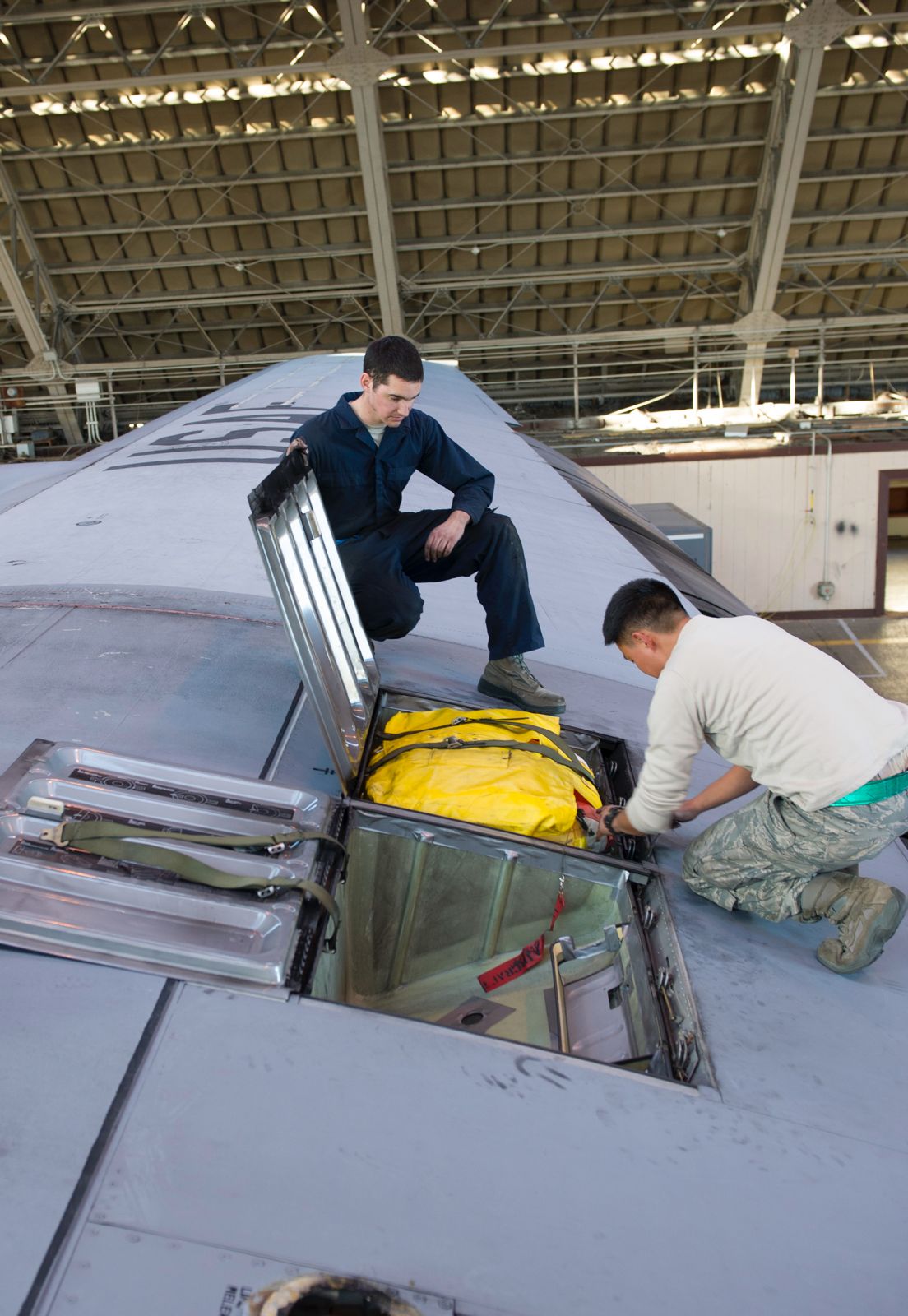
The access to whole electronic hardware on UAV is possible through the covers that are opened to fuselage and mid-wing, thus, maximum ease, quick and easy access to each part during the stages of maintenance and preparation for the flight has been provided for the user.
“Güventürk” carries payload as night or day camera depending upon the quality of the mission. The camera that has been placed under the wing of the aircraft can rotate about two axes (pan/tilt) free from the maneuver of it.
The data is transferred to ground control station in real time.
The domestic autopilot studies of “Güventürk” Mini UAV system has been conducted together with METU and SATEK in METU Technopolis. The hardware of the domestic autopilot system has been completed and it has been tested since the construction of an original autopilot with microprocessor of world standards.
Since the beginning, dependence of “Güventürk on external sources has been kept in minimum during the stages of design, production and flight.
Together with the fully operation of original autopilot system, Mini UAV system that is totally original and domestic with respect to platform and flight control will have been opened to the use of Turkey by METU.