SURFACE SHIP SONARS TURKISH SOLUTIONS
In 2006 Turkey’s leading underwater acoustics and sonar system manufacturers such as ASELSAN, METEKSAN DEFENCE and TÜBİTAK MAM have started their studies on the development of underwater acoustic systems and on the indigenization of naval electronic systems, particularly those within the scope of the MİLGEM Project. In this context, since technology transfer from abroad was not possible, they have made significant investments in the field of underwater acoustic system technologies, which previously did not exist in Turkey.
Making significant contributions to the activities of the Turkish Naval Forces, including MİLGEM and İSTİF Class Frigates and the modernization of the submarines in its inventory, as well as supplying underwater acoustic systems for export customers (including Pakistan, Indonesia and Ukraine) today ASELSAN and METEKSAN DEFENCE are listed among global players in underwater acoustics and sonar systems. The companies today have reached the point where they can provide indigenous solutions for all types of sonar system requirements (towed, hull mounted and dipping) of both surface and under-surface platforms.
In line with its corporate mission, ASELSAN has undertaken an important role in establishing the necessary infrastructure and technology, as well as acquiring critical knowledge in the field of underwater defense. ASELSAN first started its studies on the development of underwater acoustic systems in 2006 and has made important technological achievements in a very short time. According to figures disclosed in 2020, during the 10-year period (2009-2019) ASELSAN has successfully completed 33 deliveries for 11 different indigenous underwater acoustics systems on 36 different platforms (16 submarines and 20 surface ships) in Turkey and abroad. The company continues to work in accordance with the contract schedules for over 30 systems in the field of underwater acoustics and sonar systems ordered by both Turkish Naval Forces and export customers. ASELSAN currently delivers the FERSAH Hull Mounted Active/Passive Sonar System, MATES Mine Detection System, ASIST Intercept Sonar System, KULAÇ Echo Sounder System, HIZIR Torpedo Defense System with a Towed Array, containing passive sonar arrays/transducers, and the DÜFAS Towed Low Frequency Active Anti-Submarine Warfare Sonar System for both the Turkish Naval Forces and export customers.
Having been assigned by the Presidency of Defense Industries (SSB) as Turkey’s Center of Excellence in Underwater Acoustics in 2009, METEKSAN DEFENCE has carried its expertise to the field of underwater sonar systems and was awarded a contract for the industrialization (both dry-end and wet-end) of the YAKAMOS hull mounted active/passive sonar developed by the Turkish Naval Research Center Command (TNRCC), which operates under the Turkish Naval Forces Command, used aboard the ADA Class (MİLGEM) Corvettes. Today, METEKSAN DEFENCE is meeting the sensor needs of not only the Turkish Naval Forces’ ADA Class and the Pakistan Naval Forces’ PN-MİLGEM/BABUR Class Corvettes but also for the sonars of the Turkish Naval Forces AY, PREVEZE & GÜR Class diesel/electric submarines through domestic production, without any external dependence. The YAKAMOS Hull Mounted Active/Passive Sonar is also expected to be deployed on the MİLGEM Corvette of the Ukrainian Navy. METEKSAN DEFENCE is also supplying the active/passive sonar head on the next generation AKYA national Heavyweight Torpedo and has installed its Submarine Intercept Passive Sonar (IPS) to one of the four AY Class submarines in the TNF’s service. The Intercept Sonar System is located at the back part of the sail in AY Class Submarines. Systems developed by METEKSAN DEFENCE for submarine platforms include hydrophones, side scan sonar arrays, intercept passive sonars, intercept detection and ranging sonars, digital underwater acoustic modems, hardware and software for sonar systems pre-electronics, signal processing and beam forming, and sonar operator interface software.
Another Turkish company that is serving the Turkish Defence & Aerospace Industry through development of underwater acoustics is ARMELSAN. Established in 2012 and aiming to reduce Turkey’s external dependence on matters of defense technologies ARMELSAN develops and produces underwater acoustic systems including the mid-frequency MELİS 2071 Hull Mounted Anti-Submarine Warfare Sonar, NUSRAT 1915 Mine Hunting Sonar, ARAS-2023 Diver Detection Sonar and the ORKUN 2053 Helicopter Active Dipping Sonar. ARMELSAN is cooperating with ASELSAN on the FERSAH Hull Mounted Sonar and the DÜFAS Towed Low Frequency Active Anti-Submarine Warfare Sonar System.
FERSAH Hull Mounted Sonar System
One of the most important products of ASELSAN (in cooperation with ARMELSAN) in underwater acoustics and sonar systems is the FERSAH Hull Mounted Sonar System. As a new-generation hull mounted mid-frequency band active (active sonar frequencies; 6.7kHz, 7.5kHz and 8.4kHz) and passive (passive sonar frequencies; 3kHz to 12kHz) band Anti-Submarine Warfare (ASW) sonar, FERSAH has been selected for İSTİF Class Frigates and for the BARBAROS MLU Program. For Anti-Submarine Warfare (ASW) missions in addition to the SH-70 ASW/ASUW Helicopter integrated with either HELRAS or AN/ASQ-18A dipping sonar, the İSTİF Class Frigates will feature ASELSAN’s FERSAH hull mounted medium frequency active/passive sonar system and the HIZIR Torpedo Defense System with a Towed Array containing low frequency passive sonar array. The AN/SQS-56 hull-mounted sonar on-board the BARBAROS Class Frigates will also be replaced with the new generation FERSAH Sonar System. In addition to the ASW role, FERSAH also features an avoidance mode against mine like objects. The system is composed five units: A Sonar Wet End containing a cylindrical transducer array, a Connection Box, a Power Cabinet, a Processor Cabinet and an Operator Console. FERSAH will be one of the most important components used to carry out the detection, monitoring and classification functions of the underwater contacts of these ships to ensure that they avoid torpedoes aimed at them and to develop attacks against hostile submarines. The FERSAH Hull Mounted ASW Sonar was showcased for the first time at the IDEF ‘19 Fair in Istanbul. The Factory Acceptance Tests (FATs) of the first sonar to be integrated on the first of İSTİF Class Frigates TCG Istanbul (F-515) were completed during July 6-9, 2021. In active mode, the FERSAH Sonar System is capable of detecting, tracking and analyzing submarines and mine-like objects, and in passive mode the system detects, tracks and analyzes submarines, torpedoes or vessels with passive noise. In the FERSAH, ASELSAN utilized the up-to-date algorithms it used in its previous underwater acoustic systems projects. As passive sonar system ASELSAN previously developed the ASIST Intercept Sonar System still functioning on three AY Class Submarines of the TNF and the passive sonar algorithms of the HIZIR Torpedo Defense System utilized on the ADA Class Corvettes. The more improved version of the aforementioned algorithms has been utilized in the FERSAH Sonar System. In Active Mode, the algorithms developed as part of the MATES (Mine Detecting Sonar System) and TORK Anti-Torpedo Torpedo Projects have been updated and used in the FERSAH.
KULAÇ
KULAÇ is an Echo Sounder System designed for submarines and surface ships. As electronic navigational aid equipment, KULAÇ echo sounder calculates the distance between surface ship to bottom and submarine to bottom and surface by measuring the time difference between transmitting and receiving acoustic signals. Developed originally to meet the needs of surface ships with national facilities, KULAÇ was also integrated into four AY Class submarines in Turkey after a winning tender for the Echo Sounder Project of the TNF in 2012 against a leading manufacturer abroad. After the integration to AY Class Submarines of, KULAÇ was also selected by the Indonesian Navy in 2015 to be integrated into their Type 209/1300 Class Submarine. As the first underwater system sold for Indonesian submarines (integration on Chakra Class Type 209/1300 KRI Nangana [402] was completed in 2017) and exported in the field of acoustics, KULAÇ has been integrated and is being integrated into 20 surface ships including the Turkish Naval Forces’ ADA Class Corvettes, BARBAROS MLU and TCG Anadolu LHD ship as well as into the Pakistan Navy’s 4 PN-MILGEM/BABUR Class Corvettes and into five submarines in Turkey (on 4x AY Class and also selected for the PREVEZE Class MLU) and abroad (Indonesia). KULAÇ will also be integrated into the ISTIF Class Frigates of the Turkish Naval Forces.
MATESS
ASELSAN started to work on MATESS in 2013 with own resources to reduce foreign dependency. The first prototype was ready in the following year using the experience obtained from the ZARGANA Project. MATESS, whose name is an abbreviation of “Mine Detection Sonar System” in Turkish, can be used in submarines and mine hunters. Inducted into the TNF service in late 2018, the MATESS is a Mine Detection and Avoidance Sonar providing automatic detection, localization and classification capability for underwater objects. It has bottom mine or moored mine detection functionalities in addition to diver detection. The MATESS Mine Detection Sonar System, which has been developed to have simple user interface, modular design and open architecture, can easily be tailored for different user requirements. It consists of a Transducer Array, Transmitter and Receiver Unit, Signal Processing Unit and User Interface Unit. MATESS can be used both in submarines and mine-hunting vessels; the system was harmonized and used for the modernization of the dry-end units of a mine-hunting vessel. The MATESS is currently used in the TCG Edincik (M 509) Mine Hunter of the TNF. According to ASELSAN the end-user is very satisfied with the performance of the system. MATESS integration efforts on the Engin (former Circe) Class TCG Edincik Mine Hunter started in 2017, to replace the obsolete DUMB 20B mine hunting sonar on board and it was completed in 2018.
HIZIR Torpedo Defense System
Indigenously developed by ASELSAN for corvettes and higher-class ships, HIZIR is a soft-kill countermeasure system equipped with the most up-to-date technology. The HIZIR Torpedo Defense System detects and classifies torpedo threats and attempts to counter the acoustic sensor or the seeker head of the torpedo by generating decoy signals that are tailored to attract the attacking torpedo, luring it away from the ship. The HIZIR system consists of the following sub-systems:
Torpedo Detection Array (Towed Array, a passive sonar array with a total length of 800m, it includes a magnetic device that can cause the torpedo to detonate prematurely)
Towed Acoustic Decoy (located at 650m of the Towed Array)
Towing Winch (for the lowering and unmooring of towed units),
Electronic Cabinet
Launchers (Port/Starboard)
Expendable Acoustic Decoys (DÜLGER and MEZGİT)
Operator Display & Control Units (Consoles)
The HIZIR System can operate in integration with the ship’s sonars, command control systems and data distribution units. An important feature of the system is a triple hydrophonic structure with advance detection, classification and positioning algorithms that immediately detect the direction of incoming torpedoes threats, without requiring the ship to maneuver. Due to this feature, the HIZIR system can detect torpedoes over long distances, providing the ship with sufficient reaction time. Once a torpedo is detected, the system promptly recommends to the operator the most appropriate tactic for evading the torpedo threat. These tactics include the evasive maneuver of the ship, the planning for a towed decoy operation, towed decoy parameters, and the launch timing of expandable decoys. During the sea trials carried out in the first half of 2018 with ASELSAN, the HIZIR Torpedo Defense System, successfully detected and classified the DM2A4 Heavy Weight Exercise Torpedo approximately 10-12km away and managed to deceive/jam it. The HIZIR Torpedo Defence System is currently deployed on the 3rd and 4th ADA Class Corvettes of the TNF and the Ultra Electronics’ Sea Sentor Surface Ship Torpedo Defence System (SSTDS) on board the first two ADA Class Corvettes will be also replaced with HIZIR. The PN-MİLGEM/BABUR Class Corvettes of the Pakistan Navy and the MİLGEM Corvette of the Ukrainian Navy are also set to be integrated with HIZIR Torpedo Defense System.
Multi-Static Sonar Suit for TF-2000 Destroyers
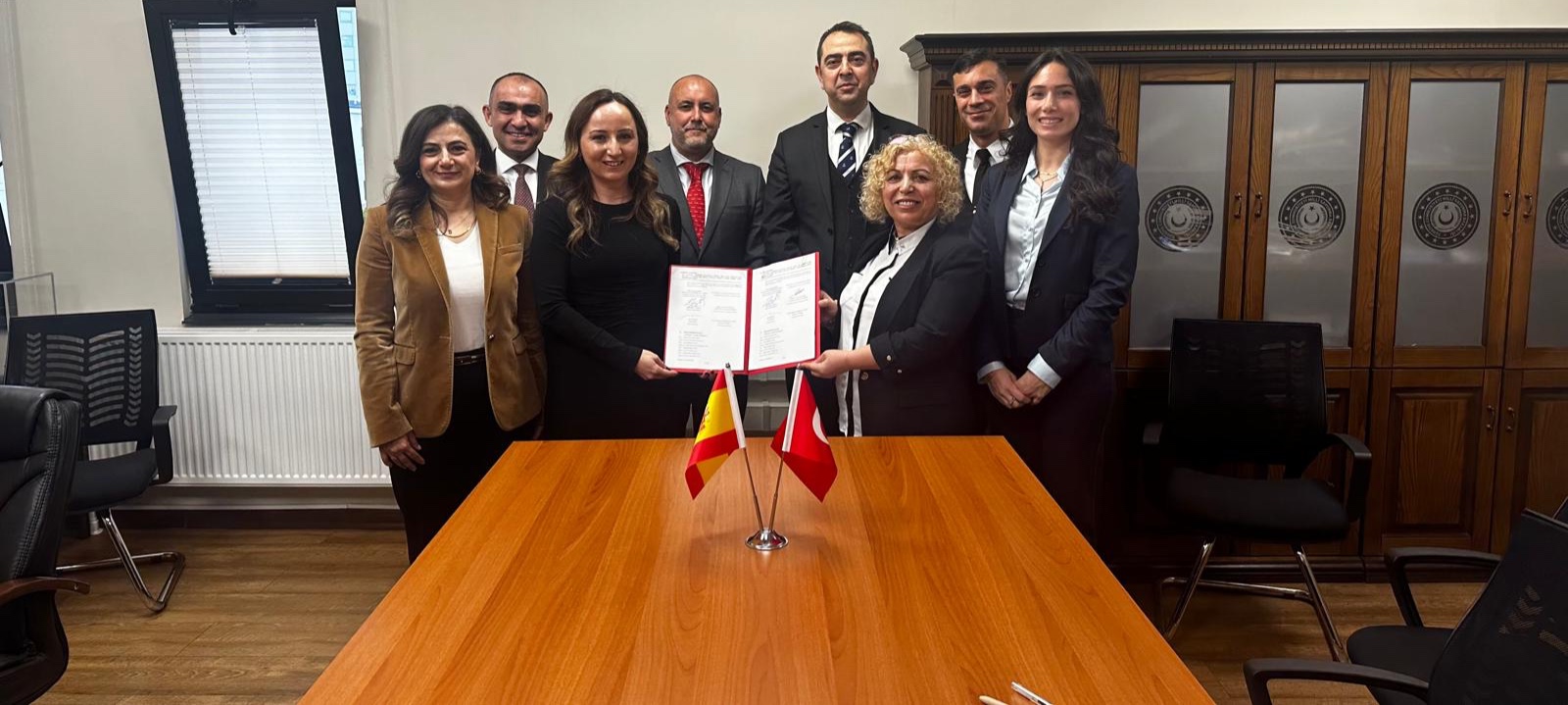
ASELSAN and ARMELSAN have been assigned by the SSB to develop a multi-static sonar suite for TF-2000 Air Defense Warfare Destroyers, the first of which is planned to enter TNF service by 2030. For this purpose, a protocol was signed between the Turkish Presidency of Defense Industries (SSB), ASELSAN and ARMELSAN on August 17, 2021, within the scope of the 15th International Defense Industry Fair (IDEF '21), in order to develop the new generation multi-static sonar suite to be used in TF-2000 Destroyers with national means. The Protocol Signing Ceremony on the Development of the TF-2000 Multi-static Sonar Suite was attended by President of Defense Industries Prof. Dr. İsmail DEMİR, Chairman and General Manager of ASELSAN Prof. Dr. Haluk GÖRGÜN and ARMELSAN Defense Board Chairman Yetkin KARAKAŞ.
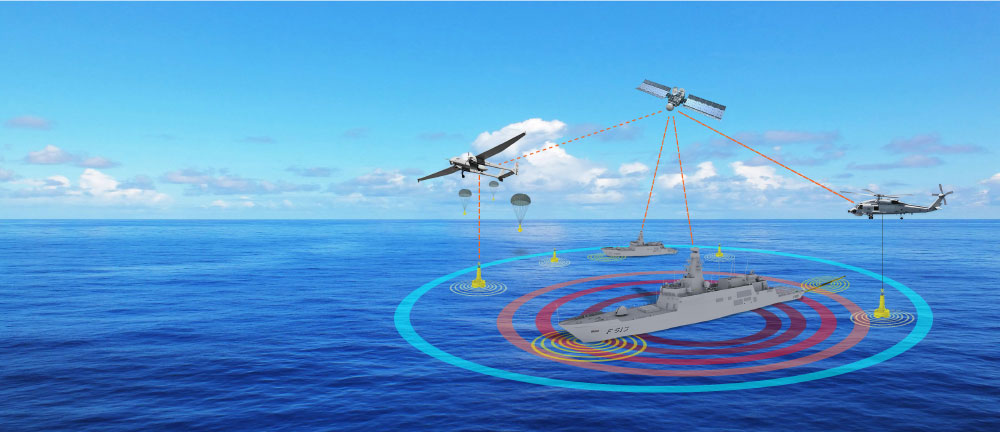
With the signed protocol, frequency band compatible sonar systems on the same ship or other surface ships will be able to work together with helicopter dipping sonars and sonobuoys (which can talk/communicate with each other via link), and thus it will be possible to detect underwater threats in a very wide area.
The term 'Bi-static' refers to the cases where 2 simultaneous active sources are used in conjunction with the joint operation, and the term 'Multi-static' denotes the cases where more than two simultaneous active sources are used together with the co-operation route. In this respect, the DÜFAS and TF-2000 Sonar Suite are designed with multi-static capability.
Within the scope of the project to be carried out under the Main Contractor ASELSAN’s responsibility, ARMELSAN will act as the Main Subcontractor. According to the information I have obtained, under the TF-2000 Multi-static Sonar Suite Development Project the first TF-2000 Multi-static Sonar Suite system is set to be completed at the end of a 36-month schedule and to be composed of; prototypes of the Hull Mounted Sonar System that will operate in the lower frequency band (3-5kHz) than current hull mounted sonar systems, Towed Active & Passive Array Sonar Systems (DUFAS + HIZIR-TDS to be towed with two separate towing winches), Helicopter Dipping Sonar (ORKUN-2053) and Small Object Detection Sonar (in order to detect small underwater objects such as AUVs). In the medium frequency hull-mounted sonar system (to be manufactured at the same frequency [3-5kHz] so that it can communicate/work with the ORKUN-2053 Helicopter Dipping Sonar and DUFAS) to be developed for the TF-2000 Air Defense Warfare Destroyers, the know-how and infrastructure obtained from the FERSAH Sonar System, developed by ASELSAN within the scope of the BARBAROS Class MLU Project, will be utilized to the maximum level.
Meanwhile, apart from the SSB, the Turkish Ministry of National Defense (MoND) has also initiated a more comprehensive project for Multi-static Sonar technology and in this context, the selected domestic companies were asked to submit their proposals on November 10, 2021, and this date was then extended to November 25, 2021.
YAKAMOS
There is no doubt that the hull mounted YAKAMOS mid-frequency band active (active sonar frequencies; 5kHz – 9kHz) and passive (passive sonar frequencies; 3kHz to 5kHz) band Anti-Submarine Warfare (ASW) sonar is the first and the most advanced project completed by Turkey in the field of underwater acoustic systems. Developed by the Turkish Naval Research Center Command (TNRCC), which operates under the Turkish Naval Forces Command, YAKAMOS is the sonar used aboard ADA Class (MİLGEM) Corvettes and is set to be integrated into PN-MİLGEM/BABUR Class Corvettes of the Pakistan Navy. For this purpose, the Military Factory and Shipyard Operation Inc. (ASFAT, Main Contractor of PN-MILGEM Project) awarded a contract on July 31, 2019 to METEKSAN DEFENCE to procure 4 sets of YAKAMOS Hull Mounted Sonar Systems for PN-MILGEM/BABUR Class Corvettes.
The TNRCC initiated the conceptual design efforts for the YAKAMOS sonar in 2005 and formal contract was awarded on July 12, 2006. The conceptual design, prototype production and initial tests were completed in two years. Development tests started using the open sea towboat TCG Darica in 2007. Tests and performance optimization were completed in two years. In 2009, METEKSAN DEFENCE won the tender for the industrialization of the underwater section called “wet-end” and started to supply this component to the MİLGEM project. In 2010, the first version of the YAKAMOS sonar (dubbed YAKAMOS-1) was integrated to the TCG Heybeliada Corvette, the first ship of the ADA Class (MİLGEM) Project. Following the sea trials and optimization efforts YAKAMOS-1 sonar’s acceptance process was completed in late 2010. By utilizing the data collected with the first ship from different seas and different conditions, as well as polygon data and user feedback, a series of improvements were made on the system until the integration of the sonar to the TCG Büyükada, the second ship of the MİLGEM Project, in 2013. In 2016, METEKSAN DEFENCE was selected again to industrialize the entire sonar, including its dry-end sections. With contributions and efforts of METEKSAN DEFENCE, the local content rate on the YAKAMOS sonar has increased to over 90%.
Following the completion of industrialization efforts, and after having taken over all responsibility related to the sonar through technology transfer by the TNFC, METEKSAN DEFENCE immediately launched the necessary work for its indigenization and to address changing needs and technologies. The company has also made a series of improvements to YAKAMOS in line with a road map. These improvements have been applied to the third and fourth MİLGEM ships, which are equipped with METEKSAN DEFENCE sonars. The company carried out the following activities on the YAKAMOS-1 sonar:
The sonar of the third ship of the MİLGEM Project, TCG Burgazada, has a series of novelties. METEKSAN DEFENCE started from scratch with the sonar software and rendered the software units depending on the hardware used independent from the hardware. It developed on its own PGA cards that were previously procured from abroad and were no longer possible to purchase from the same source. Since the noise level of the cards developed is lower than the previous cards, the sonar’s performance has been enhanced. Similarly, the ADC-DAC cards that were previously procured from abroad but were no longer possible to purchase from the same source have started to be procured from a different source. METEKSAN DEFENCE also developed a dummy load that simulates wet end to easily test all these modifications in the laboratory environment.
The sonar of the fourth ship of the MİLGEM Project, TCG Kınalıada has an active tracker feature. Furthermore, the sonar also has a simulation mode that enables the continuation of training activities during deployments as well. How these improvements performed in the field was tested, and they were later applied as upgrades to the first and second ships of the MILGEM Project as well. As such, it has been ensured that all four ships of ADA Class (MİLGEM) Corvettes feature the same equipment and software and provide the same performance. For each YAKAMOS Sonar METEKSAN DEFENCE delivered a total of 300 MST-01 Transducers (288 on wet-end arrays of YAKAMOS sonar +12 for spare), 50 column cables (36 on the wet end + 14 for spare) and 1 wet-end.
METEKSAN DEFENCE has also developed the MST-03 Transducer, which was manufactured in the same dimensions as the MST-01, to reduce the resonance frequency of the MST-01. Designed for the surveillance of the underwater environment to automatically detect and track underwater targets such as submarines, mines, UUV/AUV’s and torpedoes, the MST-03 Transducer has a longer detection range than the MST-01 under the same ambient conditions. According to METEKSAN DEFENCE, though they have similar resonance frequency TVR (Transmitting Voltage Response) values, the RVS (Receiving Voltage Sensitivity) values of the MST-03 Transducer are 2-3dB better than the RVS values of the MST-01 Transducer. Though the MST-03 Transducer METEKSAN DEFENCE has offered the YAKAMOS-2 sonar (whose equipment is indigenised sticking to the architecture of YAKAMOS-1 and resistance to environmental conditions is improved) within the scope of BARBAROS MLU and YAKAMOS-3 (later re-named as YAKAMOS-2020, a modular, scalable and integrated sonar suite whose software and algorithms have been improved. The YAKAMOS-3 will be interoperable with different wet-end units on different platforms, thanks to its modularity) for the first İSTIF Class Frigate, the TCG ISTANBUL. But in each of these tenders SSB has selected ASELSAN/ARMELSAN FERSAH Sonar over YAKAMOS. However, the Pakistan Navy preferred the YAKAMOS sonar for its BABUR Class Corvettes.
METEKSAN DEFENCE unveiled the new version of the YAKAMOS sonar dubbed the YAKAMOS 2020 during the IDEF ‘19 Fair. The YAKAMOS 2020 mid-frequency Hull Mounted Sonar System for corvettes and frigates takes the YAKAMOS product family to the future, keeping pace with technological advances and evolving threats. With a more compact, more capable, modular and innovative scalable hardware and configurable software architecture, YAKAMOS 2020 is easily adaptable to developing technology and changing acoustic environmental conditions. As a user-friendly sonar blended with the experience of the YAKAMOS sonar the YAKAMOS 2020 Hull Mounted Sonar System, with its improved technology, is a new generation medium frequency, surface ship Anti-Submarine Warfare (ASW) and obstacle avoidance sonar, which is designed for the surveillance of the underwater environment to automatically detect and track underwater targets such as submarines, submersibles, torpedoes and mine-like objects. Compared to YAKAMOS, the YAKAMOS 2020 is claimed to have much more efficient and improved performance thanks to its new sonar array.
During the 7th Naval Systems Seminar held in October 2017, METEKSAN DEFENCE shared the model specimens taken for the YAKAMOS-1 from LYBIN, (the NATO-approved acoustic ray trace model, which is a well-established and frequently used sonar prediction model, performance analysis software owned by the Norwegian Defence Materiel Agency [NDMA]). According to these model specimens, which showed the estimated detection ranges of the sonar, indicated that YAKAMOS-1 is an appropriate solution for the waters surrounding Turkey. According to these LYBIN model specimens the YAKAMOS-1 is estimated to have a detection range of 10-12,000 yards in the Mediterranean Sea, 7-10,000 yards in the Black Sea and 3-4,000 yards in Aegean Sea. As the best hull mounted sonar system in the TNF inventory, which has been proven in naval exercises and firing tests, the YAKAMOS Sonar on board ADA Class Corvettes has served commendably at sea and in different regions around the world where it has played a role in various NATO missions. During a naval exercise one of the ADA Class Corvettes was able to detect an AY Class Submarine (Type 209/1200) from a distance of 12,500 yards