Textron Aviation Exhibited King Air 260C METS for the First Time at FIA24
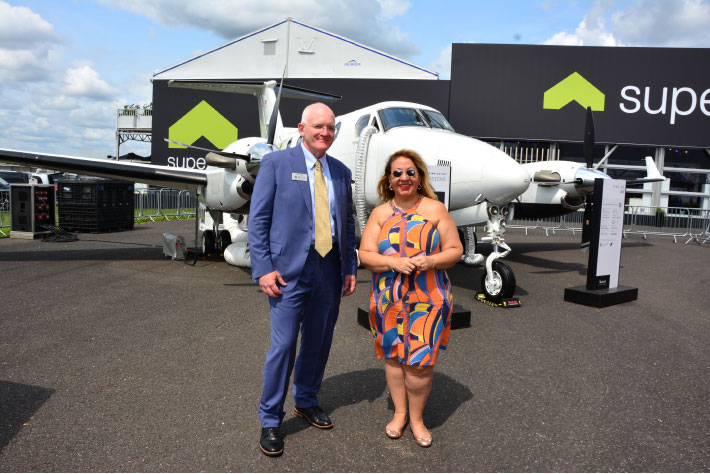
Textron Aviation's Beechcraft King Air 260 Multi-Engine Training System (METS) made its international debut at the Farnborough International Airshow 2024 (FIA24). The company-owned King Air 260C displayed at FIA24 was employed during the development phase of the METS Program, and then supported the training of U.S. Navy instructor pilots prior to the deliveries of T-54As. Designated T-54A in U.S. Navy service, the METS aircraft is based on the standard King Air 260 that the FAA certified in March 2021.
The U.S. Navy selected the King Air 260/T-54A aircraft to fulfill a requirement to replace the aging King Air 90-based Beechcraft T-44 Pegasus fleet and signed a contract in January 2023. Based at Naval Air Station Corpus Christi in Texas, the T-54A fleet will support pilot training for the multi-engine fleets of the Navy, Marine Corps, and Coast Guard, including the V-22 Osprey. The King Air 260 is an improved and updated version of the popular King Air 200. The U.S. Navy is going to take delivery of up to 64 T-54As by the middle of 2026. First two aircraft ordered under the $113.1 Million valued initial contract, which covers a total of 10 aircraft, were delivered by Textron Aviation to the U.S. Navy on April 22, 2024 and instructor pilots training has started.
The King Air 260/T-54A aircraft features a pressurized cockpit, which is configured with three crew seats: two for student pilots, plus an instructor pilot position. There are two more seats at the back side of the cabin. If required, the U.S Navy/end user can have student aviators in there as observers. The METS configuration also includes a data acquisition and telemetry system with datalink, which enables real-time maintenance tracking. The recorded mission data, plus cockpit video, also support post-flight debriefing.
The U.S. Navy’s selection of the T-54A has generated considerable interest in the King Air 260 METS, and in May 2024, Royal Canadian Air Force has chosen the King Air 260 METS for its Future Aircrew Training requirement. Seven ‘T-54 Plus’ aircraft are to be supplied via the SkyAlyne consortium led by CAE and KF Aerospace. During FIA24 the King Air 260C was shown to military delegations. According to Textron Aviation there are some other countries that have expressed interest in this type of aircraft and the company believes that there is considerable scope for the type in Europe, where several air arms want to replace aging multi-engined trainers, and where a growing roster operates King Air-based special missions aircraft, for which the 260 METS would serve as an ideal training partner.
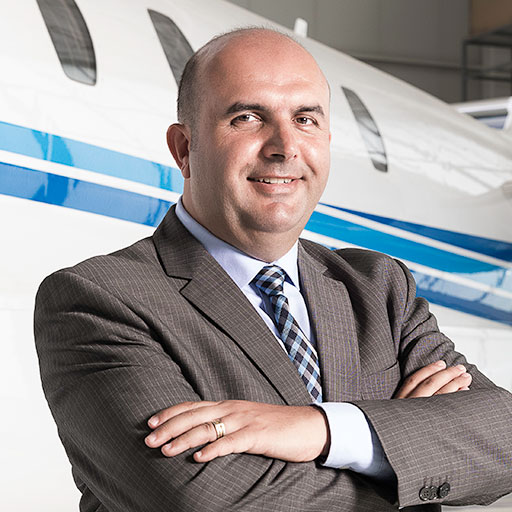
At FIA24, Defence Turkey has created an opportunity to have an exclusive interview with Bob Gibbs, VP of special missions and strategy Aaron TOBIAS, METS Program Flight Test Chief Pilot to get first-hand information on the King Air 260/T-54A aircraft and on the special avionics that were added to the aircraft for the METS Program and unique to the airplane.
Defence Turkey : Can you please inform our readers about the King Air 260 METS?
Bob GIBSS: This is the aircraft configuration that we just sold to the U.S. Navy, and the U.S. Navy is going to take delivery of up to 64 units by the middle of 2026. So, it has some special features to it, it's not heavily modified, but it does have some special features to it that we've integrated to our production line. So now customers can come and get these new features as part of our building the aircraft process. But it's a very interesting aircraft going to be used for training. Maybe we should take a look at it.
Defence Turkey : Can you elaborate on the cockpit configuration of the King Air 260/T-54A aircraft which features with three crew seats?
Bob GIBSS: When the time they get into this airplane, they (students) already know how to fly, they're already pilots. So, you would actually have two student pilots sitting in the aircraft, and then there's an observer seat in the back that has a visibility of both pilots, the pilot and the co-pilot, to manage or help manage the sortie, the training mission. So, you see a seat swings out and goes right into the middle of the pilot and co-pilot. There are two other seats in there.
You can reconfigure the aircraft into cargo role in 20 minutes. That's the beauty of a King Air. You can take the seats out. You can either strap the cargo down to the seat rails that are there, or we offer a cargo floor that'll make the floor flat, then you can have the cargo in the aircraft. This aircraft particularly has a cargo door. And if we step around the side, you can see the cargo door. It's an interesting configuration.
There's actually a door within a door that we call the door that's open, an air stair door. And then if you shut it, you can open the whole door, which is a cargo door. You can see the outline of the door.
And you can open the entire door. And then with the cargo flooring, you could slide a pallet right on the flooring and tie it down, put it in the aircraft, however you want to load. Many, many aircraft are configured this way for air ambulance, so it's much easier to load and unload a patient with the cargo door open.
Defence Turkey :Since there are two more seats at the back side of the cabin, can we say that during each flight, four student pilots can be trained or the students sitting at the rear seats are just observers in the back?
Bob GIBSS: When the U.S. Navy does their training, they can have student aviators in there as observers.
Defence Turkey : But they don't rotate out?
Bob GIBSS: They can. They do offer that as an option. So, they can go to an auxiliary field and then rotate them out, and one instructor can take care of four students.
Defence Turkey : So typically, you have two student pilots sitting in the front, the observer sitting right in between them?
Bob GIBSS: Depending on the qualification of the student, you may have two up front who are qualified. They're not necessarily a student. One student, one Instructor Pilot (IP), another IP observing, watching them work together, or two students who are qualified.
Defence Turkey : Can you elaborate on the primary reasons why the U.S. Navy chose the King Air 260 as the platform for the METS (Multi-Engine Training System) Program, instead of the King Air 360?
Bob GIBSS: It's a little less expensive. I think that has a lot to do with their choice. And it's, you know, of course, with less mass with a smaller aircraft, it's a little easier to maneuver. It fit the exact profile that they were looking for. So, they had done a lot of analysis and decided that the profile didn't need to be the profile of the 360.
The purpose of this training is military twin training. So, they're moving up from this turboprop twin aircraft to a larger turboprop aircraft.
Defence Turkey : Does the aircraft also feature some additional avionics for the training purpose?
Bob GIBSS: Yes, it does have additional avionics equipment. My colleague, Aaron maybe help us explain what it does have.
Aaron TOBIAS: Well, they started off with the addition of course, the auto-throttles that the King Air 260 had in the first place. But through the U.S. Navy Training Program, we incorporated what's called “Guard Mode,” which is great for a training environment for helping to protect the engines from an over-aggressive application of power. So, it will engage, push the throttles back to help reduce the exposure for possible maintenance events from engine exceedance, torque, or temperature. We're rolling that in and make that available for commercial King Air 260s now as well.
Beyond that, in the cockpit, we've added full-time angle of attack (AOA) displays. So, the U.S. Navy would prefer to train for better energy management using the angle of attack to supplement the traditional airspeed indication for a stabilized approach.
The one other piece of equipment that it has is the IRIS Outerlink System, which is basically a recording system for instructors to record the pilot as they fly. They can do both audio and video and data recording, and then they can download all of the data when they get to the ground and go play it back for a debrief with the pilot and show them where they could get better, what mistakes they made.
Defence Turkey : Since the instructor pilot is sitting in the rear seat, and the student pilots who have basic flight training sitting in the cockpit, in case of emergency conditions, can the instructor pilot could easily take control of the aircraft?
Aaron TOBIAS: No, I mean, you would have to speak to the specific operator how they would choose to operate the process by which they would qualify folks to be occupants of the control.
Bob GIBSS: Typically, you have an instructor pilot sitting in the front seat until the two people in the front seat are already qualified to fly the air.
Aaron TOBIAS: Yes. So, the third seat may often be used for other, in addition to that, would be purposes of maybe an examiner conducting a checkride, evaluation flight of a two-crew operation where you would have otherwise trained, qualified crew that are perhaps being evaluated for...
Defence Turkey : Thank you for sparing your time to our readers