``The KC-46A would be an excellent choice for the Turkish Air Force when they decide to replace or augment their KC-135 tankers.``
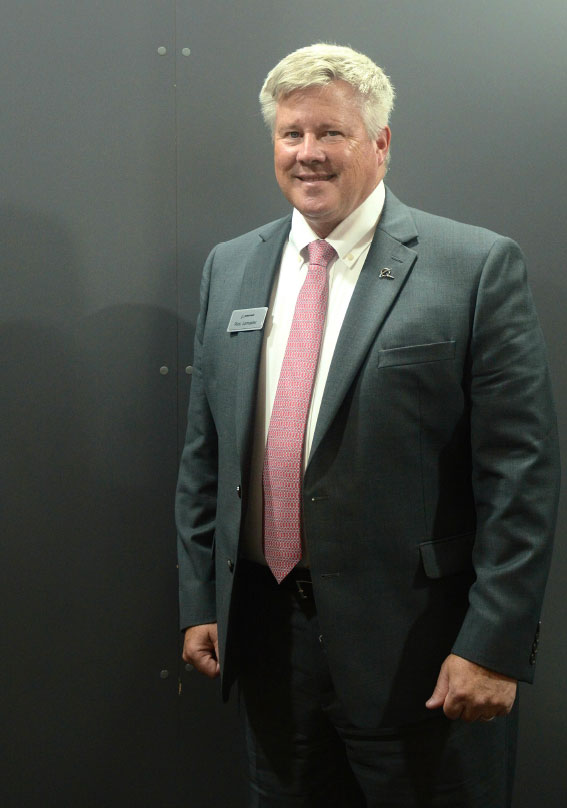
An Exclusive interview with Rick LEMASTER, Senior Director, Global Business Development, Middle East, North Africa, Türkiye & Israel.
Defence Turkey: Can we start our interview with an overview of 2023’s first 6 months from Boeing Defense’s point of view? Could you summarize your major activities during the first 6 months of 2023? What are your focus areas in 2023, and why?
Rick LEMASTER: We work with our customers to deliver products and services that meet the needs of the mission. Some major activities related to our defense portfolios include KC-46A Block 1 upgrades that will further enhance the unprecedented data and communications connectivity the KC-46A provides to joint and allied forces for battlespace situational awareness. Every month, global operators fly hundreds of sorties with the KC-46A, and its proven aerial refueling systems deliver more than five million pounds of fuel to the joint force and allied receivers.
In July, Boeing transitioned to the new CH-47 advanced Block II production with a Final Block I Contract to South Korea for 18 Chinooks and one to Spain.
Boeing also began building two new U.S. E-7 Airborne Early Warning & Control (AEW&C) aircraft through an Undefinitized Contract Action awarded by the U.S. Air Force in 2023. The E-7A will provide 360-degree coverage via the MESA (Multi-role Electronically Scanned Array) sensor.
Defence Turkey: Boeing is the world's largest aerospace company and leading manufacturer of commercial jetliners and defense, space, and security systems. How would you best describe Boeing Defense in the global defense market? Where do you see the strong points of Boeing Defense, and how does it differ from its competitors? Could you please provide some key facts about the company (such as market share in military aircraft, number of aircraft, both fixed wing and rotary wing delivered globally so far, and military aircraft backlog) for our readers?
Rick LEMASTER: Boeing is an innovation powerhouse with a long and proud history of pioneering advances in aerospace. We continually push the boundaries of science and technology by investing in innovation to solve the world's most complex challenges, from the seabed to space, accelerating the digital transformation for our global defense customers and providing cutting-edge technology to keep the world and our warfighters safe.
Our latest publication of the Defense and Space Market Outlook 2022–2031 indicates a $2.8 trillion global market. The United States represents nearly 60% of the total market, with the rest coming from nations worldwide. These large, stable markets sustain enduring demand driven by geopolitical and security challenges.
And though I cannot comment on specific customer deliveries due to sensitivities, one thing remains certain: countless nations have put their trust in Boeing's defense products and are serving warfighters worldwide every day.
Defence Turkey: What innovative technology areas will Boeing Defense focus on in the near term? How is Boeing Defense addressing the future of military aviation? What kind of new products do you see a demand for in the coming years? What can the industry expect to see on the horizon as new products and services from Boeing Defense further strengthen its market-leading product lineup and meet the evolving needs of global customers?
Rick LEMASTER: We see the future of aerospace as being fundamentally: Producible, Digital, Sustainable, and Autonomous.
Our focus isn't merely on existing products or niches but on developing key capabilities. Our investments are now transitioning from theoretical R&D concepts into tangible innovations that promise our customers a generational leap in capability.
A core area of our focus is digital transformation. We're enhancing the entire lifecycle of our products, from design to sustainment. A notable example of our digital endeavors is the T-7A Red Hawk. This advanced trainer transitioned from design to first flight in a mere 36 months and represents streamlined assembly, heightened first-time quality, and a comprehensive digital strategy in aerospace design and manufacturing.
Defence Turkey: Could you elaborate on your company's targets in the military manned and unmanned aircraft sector, and how do you envision Boeing Defense 10 years from now in the sector?
Rick LEMASTER: We are focused on harnessing our rich legacy to fast-track an autonomous future. Over the years, we've been deeply involved in developing autonomous aerospace capabilities. A testament to this commitment is the MQ-28A Ghost Bat, our latest uncrewed platform, uniquely positioned as the first we've designed, developed, and manufactured outside the U.S. This move aligns with our global strategy, reflecting our belief in harnessing talent and meeting the needs of customers worldwide. Many of our future defense programs are proprietary, and we are dedicated to pioneering innovations that reshape the landscape of crewed and uncrewed defense platforms for the future. We will see Boeing’s consistent and growing presence to support the U.S. and its allies for years to come.
Defence Turkey: Can you elaborate on the current status of the E-7 Program? Boeing sold a total of 14 E-7 airborne early warning and control (AEW&C) aircraft to Australia, Türkiye, and Korea between 2009 and 2015. What kind of feedback have you received so far from the end users? Do the E-7 users request modernization or Mid-Life Upgrade to boost the existing capabilities of the aircraft?
Rick LEMASTER: The E-7 program has seen significant interest from our global partners. To confirm, the delivery of the E-7 AEW&C aircraft sales between 2009 and 2015 is: South Korea (4), Australia (6), and Türkiye (4). Additionally, there are currently 3 units in production for the United Kingdom in addition to the two that are currently on contract for the U.S. Air Force.
Global operators have been demonstrating the unmatched capability, interoperability, and reliability of the E-7. The E-7 is also designed to allow growth as mission needs evolve. I'd direct you to the respective air forces for specific details on desired evolutionary enhancements.
Defence Turkey: The E-7 AEW&C aircraft is currently operated by three Air Forces: Royal Australian Air Force (RAAF, with 6 E-7A Wedgetail), South Korean Air Force (RoKAF, with 4 E-7As designated Peace Eye) and the Turkish Air Force (TurAF, with 4 E-7Ts, designated Peace Eagle). The Royal Air Force (RAF), which will be the fourth user of the E-7A, ordered five E-7As in 2019 to replace its aging E-3D Sentry fleet. However, it reduced the order to three aircraft in 2021 to save money. According to open sources two of the Boeing 737NGs to be converted into E-7A are second-hand airliners, the third one is new-build. Boeing stopped assembling commercial 737NGs in 2019 and made the final deliveries in January 2020. The 737NG is superseded by the fourth generation 737 MAX, which was introduced in 2017. Do you have a plan to use 737 MAX airframes in future E-7A orders?
Rick LEMASTER: The E-7A AEW&C, derived from the 737NG, taps into a vast supply chain that notably trims maintenance and logistical costs. Supported by a network of 278 global service centers and 30 repair facilities and grounded in the expertise at Puget Sound, its 737 foundation offers significant operational advantages. Compared to the E-3's 707-based design, the E-7A is more fuel-efficient. The vast commercial reach of the 737 line drives competitive ownership costs, as confirmed by USAF data that indicates decreasing operational costs for the 737 over the years. Boeing continues to use the 737NG for militarized modification to the E-7 configuration.
Defence Turkey: Can you elaborate on the configuration of RAF E-7As and their delivery schedule? Can you elaborate on the technological differences (including the MESA radar) between the RAF E-7As aircraft and the 14 E-7As still in use?
Rick LEMASTER: There are now three 737s on British soil undergoing modification in Birmingham, and we are seeing good progress—including one of which has the distinctive MESA sensor installed. The RAF's E-7As are the first new Wedgetails built in over a decade and feature modernized enhancements.
Defence Turkey: The US Air Force (USAF) has also decided to buy E-7As as an E-3C Sentry replacement. On March 1, 2023, Boeing announced that it has signed a contract valued at US$1.2 billion with the USAF to start work on the first E-7A Battle Management and Command & Control Aircraft, with plans to field a fleet of 26 in total. Can you elaborate on the current status of the USAF E-7A Program? When do you start to deliveries to the USAF?
Rick LEMASTER: E-7 is the key to allied forces situational awareness and connectivity. There is no other aircraft that comes even close to what the E-7 can do. So, you can see why our new customers are so eager to get it in service—and why it is playing such a crucial role in the world right now.
On Feb 28, 2023, the USAF awarded Boeing the E-7 contract under a UCA. And the $200M in the US budget to accelerate E-7 allowed us to start work sooner by staffing up to be prepared for execution.
Currently, production is underway at Spirit aerospace for the two aircraft, and two production slots are reserved on the Boeing Commercial 737 NG skyline for them.
The USAF program entails roughly two years for building and another two years for modification, followed by certification.
Defence Turkey: Are the USAF E-7A Battle Management and Command & Control Aircraft based on new build 737NG airframes?
Rick LEMASTER: The Boeing Next Generation 737-700 commercial aircraft is built in Renton, Washington. The E-7 leverages mature commercial derivative design, certification and modification processes already in place – ensuring speed-to-ramp to meet customer needs.
As a critical enabler to surveillance and battle-space dominance, the E-7 AEW&C is outfitted with a large and powerful MESA radar, providing high-quality full 360-degree surveillance sensor data at range. Quality data at range enables early decision-making and preserves the tactical advantage. The E-7 has mature and proven technology designed for future growth, including advanced processing, communicating and networking, and unmanned teaming.
The 737 is one of the most prolific airplanes in modern history and benefits from a mature, global supply base, ensuring E-7 mission reliability and its unmatched capability.
E-7 is the only available, persistent, combat-proven platform to meet national sovereignty and regional mission needs while strengthening interoperability with allies – now and in the future.
Defence Turkey: Can you elaborate on the current status of the KC-46A Pegasus Program? How many orders have you received so far from the USAF, and how many deliveries took place? What do you see as the strong points of the KC-46A, and how does it differ from its competitors?
Rick LEMASTER: As of August 2023, more than 70 KC-46As have been delivered globally to the U.S. and our allies of the 138 on contract with global customers. More KC-46A Pegasus tankers are in service globally than any aerial refueler except the Boeing-built KC-135.
The U.S. Air Force Air Mobility Command has approved the KC-46 for worldwide deployment and combat operations. Demonstrating its unmatched capability, the KC-46A is more than just a refueling aircraft; it provides combat capability and essential data, making it a multi-mission tanker tailored for the 21st-century warfighter.
The combat-readiness and agile-combat-capable design of the KC-46A enables more booms in the air throughout the operational theater, providing fuel and data when and where it is needed. The KC-46A boom provides a receiver envelope three times larger than the KC-135, which it is replacing for the U.S. Air Force. It has 212,000 pounds (96,162 kilograms) of fuel capacity enabling the full spectrum of refueling missions.
As a connectivity hub at the tactical edge, the KC-46A is armed with data links to relay data throughout the fleet and joint forces. The Pegasus tanker connects multi-domain warfighters, providing tactical situational awareness to the crew and the fleet for real-time information superiority. As the needs of the mission evolve, the KC-46A can efficiently integrate new capabilities and advanced technology thanks to its in-line production. The KC-46A also features layers of defensive countermeasures to detect, avoid, defeat, and survive threats.
Globally, operators are flying hundreds of sorties with the KC-46A each month, and its proven aerial refueling system has successfully delivered more than 160 million pounds of fuel to joint force and allied receivers. The KC-46A would be an excellent choice for the Turkish Air Force when they decide to replace or augment their KC-135 tankers.
Defence Turkey: The KC-46A Pegasus Program has suffered a stream of deficiencies since its introduction, including issues with its over-stiff boom and the remote vision system for boom operators, and insufficient documentation for loading cargo on the jets. Can you elaborate on the status of ongoing efforts launched to fix these deficiencies? Have you completed the fixing process? What kind of feedback have you received so far from the end users?
Rick LEMASTER: We are working closely with our U.S. Air Force customer and have a path to closure on each of these issues. The KC-46A’s unmatched multi-mission capabilities enable cargo, passenger, and aeromedical transportation, in addition to its aerial refueling and data connectivity capabilities. With a large cargo door and cargo rollers, the KC-46A is adaptable to rapid cargo loading and mission versatility and can be configured in just two hours. Compared to the KC-135, the KC-46A holds three times more pallets--as many military-standard pallets as a C-17. It can hold twice as many people as the KC-135 and hold 30% more patients than the KC-135 in the aeromedical configuration.
Defence Turkey: Focusing on Türkiye now, one of the best-known Boeing products in Türkiye is the E-7T Peace Eagle AEW&C aircraft. Türkiye signed a contract with Boeing for four E-7Ts and received the first aircraft in February 2014 after a six-year delay and the last in December 2015. Can you elaborate on services and support already provided or being provided to the TurAF E-7T AEW&C fleet? Have you received any formal interest from the TurAF for the E-7 Mid-Life Upgrade?
Rick LEMASTER: Boeing delivered four E-7T Peace Eagle AEW&C aircraft to Türkiye, with the first arriving in February 2014 and the last in December 2015. As for the support and services, Boeing has been actively engaged in ensuring the operational readiness and sustainment of the Turkish Air Force E-7T AEW&C fleet, and with the capability mentioned of the E-7 that ensures battlespace advantage and interoperability with other allies flying the E-7 today, including NATO. We continue to engage closely with our Turkish Air Force customer concerning their mission needs.
E-7 operators benefit from a common baseline configuration product line approach that ensures global interoperability advantages customized for mission needs and allowing for future growth as threats evolve.
Based on a militarized Next-Generation 737, the E-7 leverages platform commonality for crucial mission readiness, as well as lifecycle value and streamlined sustainment with reduced support & training costs and worldwide parts availability.
Defence Turkey: Awarded in 2002, the Peace Eagle contract also included 2 optional buys. This option has not been turned into a firm order until today. Do you expect any additional E-7 orders from Türkiye?
Rick LEMASTER: The Peace Eagle contract of 2002 did include options for two additional purchases. Currently, Türkiye has not converted these options into a firm order. We remain open to future collaborations, and the Turkish Air Force would better address this.
Defence Turkey: Boeing has had a strong, long-standing partnership with Türkiye for 77 years, supporting both airline operators with commercial jetliners and the government with defense platforms. How would you summarize Boeing’s involvement in Türkiye over the last decades? Can you elaborate on the footprint of Boeing Defense in the Turkish military aviation/defense sector?
Rick LEMASTER: For nearly 80 years, Boeing has cultivated a rich partnership with Türkiye in commercial aviation and defense. This enduring collaboration has firmly anchored Boeing in Ankara and Istanbul. Through our $200 million annual investment in Türkiye's work placements, we've also become an integral part of the nation's employment fabric, supporting almost 5,000 jobs.
Delving into the defense sector, the CH-47 Chinook and E-7 Peace Eagle stand out as two of our platforms that proudly serve Türkiye’s defense. The Chinook, in use globally for over six decades, epitomizes heavy-lift helicopter excellence. Revered for its unmatched capability and interoperability, it serves many roles, from combat and humanitarian to logistics. The Turkish military, alongside 19 global operators, can vouch for its indispensable role.
The Turkish Air Force E-7 Peace Eagle offers unparalleled surveillance with its state-of-the-art MESA sensor. It benefits from the E-7's unmatched operational readiness and forward-looking technological adaptability with other global forces.
Regarding what's on the horizon, the KC-46A Pegasus tanker represents our vision for the future of the Turkish Air Force. Already serving in theaters globally, the KC-46A is not just a tanker; it's a symbol of Boeing's relentless commitment to innovation, with its multi-mission capability tailored for the modern warfighter and ongoing advancements like the Block 1 upgrade contract to further enhance the Pegasus’ advanced communications capabilities. The KC-46A is a testament to our unwavering dedication to providing only the best to our Turkish partners and supporting their mission as a NATO member, making it the best candidate for the recapitalization of the 7 current KC-135 tankers the Turkish Air Force flies.
Defence Turkey: What can you tell us about Boeing Defense’s participation at the IDEF’23 Fair? What are you expecting from the exhibition?
Rick LEMASTER: Our participation at IDEF'23 allowed us to connect with our customers and stakeholders in Türkiye, and it was another opportunity to understand their requirements better and offer our best solutions. It was impressive to see many Turkish defense companies showcase their latest defense portfolios, and the leaps they have made in a short time are proof of the strength of the Turkish defense sector. Boeing aims to strengthen relations with the Turkish defense sector and looks forward to continued growth and collaboration