The New Playground of the Turkish Defence Industry: Unmanned Surface Vehicles
During the Russia-Ukraine War that started on February 24, 2022, a new page in the history of naval warfare was opened with the coordinated surprise attack carried out by the Ukrainian Armed Forces on the naval base in Sevastopol in Russian-occupied Crimea (home to the Black Sea Fleet of the Russian Navy) on October 29, 2022, using 9 Unmanned Aerial Vehicles (Drones) and 7 Unmanned Surface Vehicles (USVs).
With this attack, the first of its kind in naval warfare, the Ukrainian Armed Forces proved they have the element of surprise in battle. On the other hand, the attack claimed to have damaged at least three ships of the Black Sea Fleet of the Russian Navy, causing Russia to lose its psychological superiority. According to open sources, at least 3 vessels of the Russian Navy were damaged due to the attack by USVs, especially the Flagship of the Black Sea Fleet Admiral Grigorovich Class Frigate Admiral Makarov (Commissioned in December 2017), and Ivan Golubets, the Natya Class Minesweeper. Short videos of the semi-submersible USVs used during the attacks were also shared on social media (recorded by the onboard camera).
The Russian Ministry of Defense confirmed that the attack occurred at 04:00 on October 29 and that the Ivan Golubets Minesweeper was slightly damaged. The Russian Ministry of Defense also claimed that the preparations for the attack on Black Sea Fleet ships and civilian ships in Sevastopol were carried out with the support of Royal Navy personnel in Ochakiv, Ukraine. Moreover, it turned out that the USV used in the attack were the same vehicle as the unidentified USV that hit the shores of Sevastopol on September 21, 2022. The approximately 5.5m long USV is equipped with a water jet powered by a jet-ski engine. It features a Starlink antenna at the back, day and IR vision cameras on a gimbal in the middle, a laser range finder in the front, and two fuse sensors in the nose on the top and bottom (it is believed that a redundant system may have been used so that it does not activate by itself when the waves crash in the rough sea). The USV is believed to be armed with an explosive weighing up to 200 kg triggered by an impact fuse. Although no serious damage was caused to the Admiral Makarov Frigate, which weighs 4,500 tons, with this much explosives, the blast can rip a 1-2m wide hole in the hull and can cause a certain amount of damage to the electronic equipment and weapons systems on the ship, and loss of personnel.
As a significant example of how A/USVs can be effective against enemy military ports, naval bases, and vessels as an asymmetrical threat in a conventional war, the Sevastopol Port Attack once again revealed the importance of the Unmanned Surface Vehicle Project and the Autonomous Surface Vehicle Procurement Project, which was initiated under the coordination of the Defense Industry Agency (SSB) in the 2010s for the Turkish Naval Forces Command.
Türkiye Prepares Another Upcoming Success Story with UAVs with Unmanned Surface Vehicles
Türkiye, which has become one of the world's leading players in the field of UAVs, has exported BAYRAKTAR TB2 to 27 countries, AKINCI to 5 countries, ANKA to 4 countries, AKSUNGUR to 2 countries and KARAYEL-SU to 1 country in the last years (in 2021, UAV export revenue exceeded US$750 million and is expected to exceed US$1 billion in 2022). The first studies on UAVs in Türkiye were initiated by the Defense Industry Agency (SSB) in the 1980s to better learn about UAVs, to determine their CONOPS, and, if necessary, to decide on the industrialization model for their local production.
The earliest UAV development studies, which started with the UAV-X1 (Şahit) Project signed between the SSB and Turkish Aerospace Industries (TUSAŞ) in March 1990, gained a new dimension with the Turkish Indigenous Unmanned Aerial Vehicle (TUAV) Program initiated by the SSB in 2001 (SSB provided US$828,000 [278,000+550,000] support for the project). The first domestically produced target drone aircraft, TURNA and KEKLİK Systems, entered the Turkish Armed Forces (TAF) service in 2001, and as a result of the projects carried out under the coordination of the SSB and the Agency's R&D support, industrial infrastructure for UAV Systems has started to emerge in our country since 2004.
The products of this industrial infrastructure, indigenously designed Tactical and MALE Class UAV Systems such as ANKA, BAYRAKTAR TB2, and KARAYEL-SU, were improved to carry indigenous weapon systems such as SAL-guided MAM-L, MAM-C, and BOZOK. With the introduction of new Armed UAV systems, the operating concept of UAV/UCAVs, which were only used for reconnaissance and surveillance until that day, has also expanded. The TAF started to utilize UAV/UCAV Systems as a force multiplier rather than a reconnaissance/surveillance platform in operations carried out inside and outside our borders, and they have visibly transformed the course and execution of operations. Strengthening the effectiveness and deterrence of both the TAF and the Security Forces, UAVs changed the course of the battles by disrupting the military balance in Libya and Azerbaijan and proved that they could be a force multiplier against regular armies.
Thanks to the SSB's foresight and timely efforts, Türkiye has become one of the few countries that grasped the importance of UAVs early on. Thanks to the sector companies that have successfully accomplished their tasks and responsibilities, the Turkish Defense Industry has reached the level where it can meet the UAV needs of both the TAF and Security Forces, as well as friendly and allied countries, with high-tech, cost-effective and combat-proven solutions that meet NATO standards.
Considered one of the best countries in the world in the field of UAVs, Türkiye is preparing to write a similar success story in Unmanned Surface Vehicles, with the technological infrastructure and know-how gained from UAV Projects. Türkiye continues its efforts under the coordination of the SSB with increasing intensity to meet the A/USV needs of both the TAF and Security Forces as well as friendly and allied countries in the near future. Successful Unmanned Surface Vehicle Projects, which have been launched recently by different companies with the support of the SSB, will play an essential role in the success of Türkiye, which is taking firm steps towards becoming a game changer with indigenous A/USV solutions designed and equipped according to different needs, as in UAVs. Having achieved great success in developing unmanned vehicles, the Turkish Defense and Aviation Industry aims to maintain this momentum and position Türkiye among the leading countries in the field of AUSVs with the cooperation between companies and coordination of the SSB.
A Brief History of Unmanned Surface Vehicles and Studies in the U.S. and South Korea
According to open sources, the first surface vehicle, which can be considered the ancestor of today's Unmanned Surface Vehicles (USV), was built by Nikola TESLA in 1898, and TESLA held a demonstration with a radio-controlled boat in New York in the same year. Built by TESLA in 1898 and called "Tel-automaton," the 6-meter-long steel-hulled remote-controlled boat, unfortunately, failed to attract the attention of military officials in the US and England at the time. The Imperial German Navy, on the other hand, started to use FL-7 boats, which were controlled remotely from a shore station through a spooled wire, in 1917.
During the Second World War, the development of USVs accelerated, and studies were carried out for mine clearance and post-battle damage assessment. While radioactive water samples were collected by unmanned boats in 1946, remote-controlled USVs began to be used for minesweeping in the 1950s and as targets ships in guided missile and artillery exercises in the 1960s. In the 1990s, USVs equipped with acoustic and magnetic scanners began to be seen on the battlefield, and with the rapid development of technology in the early 2000s, USVs conducted intense reconnaissance/surveillance and intelligence-gathering missions through onboard sensors. In the 2010s, several countries, especially the U.S., Germany, China, England, Israel, and South Korea, started to use Unmanned Surface and Underwater Vehicles with different functions.
The U.S. Navy established the Unmanned Warfare Systems Directorate (OPNAV N99) in 2015 to increase its capability to fight using Unmanned Systems and is forming a new task force called Task Force 59 (TF-59) within the U.S. Naval Forces Central Command (5th Fleet, responsible for naval forces in the Persian Gulf, Red Sea, Arabian Sea, and parts of the Indian Ocean), which will be comprised of Unmanned Surface Vehicles that are connected and can be controlled beyond line-of-sight by satellite communication, equipped with 360-degree high-definition cameras, Automatic Identification System (AIS), radar, and supported by artificial intelligence. Officially announced on September 9, 2021, Task Force 59 aims to rapidly integrate unmanned systems and artificial intelligence to increase situational awareness and deterrence in the 5th Fleet's mission area. In his speech at the U.S. Coast Guard Academy on October 4, 2022, the 5th Fleet Commander, Vice Admiral Brad COOPER, stated that the U.S. and its allies needed a force of 100 USV by the end of the summer of 2023 to perform patrol/surveillance missions in the Red Sea and the Persian Gulf (around the Arabian Peninsula). TF-59 operates USVs such as Saildrone Explorer (stationed at the Aqaba Naval Base, Jordan, in the Red Sea since December 2021), MANTAS T-38 Devil Ray (stationed at Manama, Bahrain), Sea Hunter and Sea Hawk (Sea Hunter's sister ship, but with over 300 improvements based on experience from the Sea Hunter Program), and MQ-9B Sea Guardian UAVs, and MQ-8B Fire Scout Unmanned Helicopters. Reportedly, Iran attempted to steal one of the Saildrone Explorer USVs operating in the Persian Gulf in September 2022, but the U.S. Navy destroyers in the region prevented this attempt.
The U.S. Marine Corps (USMC), on the other hand, initiated the Long-Range Unmanned Surface Vessel (LRUSV) Project in the late 2010s under the coordination of the Marine Corps Combat Development Command (MCCDC), and on January 25, 2021, the company Metal Shark was selected to build the 11m long LRSUV platforms with aluminum hulls (5086 aluminum alloy). The LRUSV Program covers the acquisition of fully autonomous surface vessels that can deploy or retrieve munitions at a point at sea, track and destroy enemy targets, and have swarm attack capability by acting in coordination with each other. In the first phase, the USMC aimed to procure 3 LRUSVs for evaluation and demo purposes, to achieve Initial Operational Capability (IOC) in FY-22, and to start using LRUSVs operationally between 2025-2027. The company Metal Shark displayed the first completed LRUSV vehicle with hull number "01" in July 2022 during the LRUSV and Long-Range Fires (LRF) demonstrations held at the Marine Corps Systems Command in Quantico, Virginia.
The Republic of Korea Navy (ROKN), which has been working on Unmanned Surface Vehicles (USV) and Unmanned Underwater Vehicles (UUV) since 2017 under the National Defense Revolution 4.0 plan, announced that a comprehensive restructuring would be carried out in October 2022. In this framework, the Naval Unmanned Systems Command will be established, which will consist of the Unmanned Surface Vehicle Flotilla, the Unmanned Underwater Vehicle Flotilla, and the Unmanned Aerial Vehicle Flotilla. Unmanned vehicles currently account for about 1% of the Republic of Korea Navy's core assets, and the ROK Navy aims to increase this to 9% in the mid-2020s and 28% by 2030. The Naval Unmanned Systems Command is expected to be fully operational by the 2040s when unmanned vessels make up around 45% of the entire fleet. In parallel with the addition of unmanned systems, the ROK Navy predicts that the percentage of enlisted personnel will decrease from 37.1% to 20% in the same time frame. South Korean company Hanwha Defense has developed the ASWUUV (Anti-Submarine Warfare Unmanned Underwater Vehicle) under the project initiated by the South Korean Defense Acquisition Program Administration (DAPA) in 2017. ASWUUV is 6.5m long, 1m wide, and weighs 3 tons. The ASWUUV can stay at sea for 30 days with onboard hydrogen fuel cells, has a maximum speed of 10 knots, and can operate up to a depth of 300m. The operational capability demonstration of the project was held in June 2022, and the first phase was completed in September 2022, while the second phase is expected to start in 2023-24. The company LIG Nex1also has developed an AUSV named Sea Sword-II, it is 12m long, 3.5m wide, and weighs 11 tons, as part of a program supported by DAPA. In a statement made on December 15, 2021, the company announced that it had completed the sea trials with the Sea Sword-II AUSV, which it exhibited for the first time during the MADEX 2019 Fair. The Sea Sword-II AUSV, which has a water jet powered by two diesel engines, can reach a maximum speed of 35 knots and has a range of 180nm at 20 knots.
Unmanned Surface Vehicles and Türkiye
The first USV requirement in Türkiye was studied under the Aksaz and Foça Naval Bases Underwater and Surface Surveillance and Detection System (AFSUDES/YUNUS) Project. The request for proposal (RFP) was published on August 17, 2005, and the contract was signed with ASELSAN (and Sub-Contractor Kongsberg) in December 2007. Also, the Israeli company Rafael offered the Protector USV, and Elbit Systems offered the Seagul Multi-Purpose Unmanned Surface Vehicle. However, the USV acquisition was later abandoned, and only underwater passive/active acoustic and electro-optical sensors were installed on the bases.
The first indigenous USV of our country is the Levent Unmanned Surface Vehicle, which was developed under the Multi-Purpose "High-Speed Remote-Controlled Boat Project" by ASELSAN in coordination with the Turkish Naval Forces Command. LEVENT can be used in various missions such as mine countermeasures, reconnaissance surveillance target acquisition (RSTA), maritime security, patrol, target towing, and logistics. The system is based on the widely used Rigid-Hull Inflatable Boat (RHIB) platform, which provides high mobility, speed, and endurance in adverse conditions. The LEVENT Unmanned Surface Vehicle was first demonstrated to the Turkish Armed Forces' top brass on the Distinguished Observers Day of the Sea Wolf Exercise in May 2013.
With the experience from the LEVENT Unmanned Surface Vehicle, ASELSAN developed the decommissioned L-1 (successfully used in naval mine tests on October 17, 2014) and decommissioned MTB-8 Boats (successfully employed as a target for a HellFire missile on the Distinguished Observers day Sea Wolf 2015 Exercise), which were converted into remote-controlled autonomous vessels, as well as the ALBATROS-T Unmanned Surface Vehicle-Target (USV-T) and the ALBATROS-S Unmanned Surface Vehicle-Swarm (USV-S), which can navigate and operate in swarms independent of central control.
Türkiye's first indigenous new generation Armed Unmanned Surface Vehicle (AUSV) was the ULAQ AUSV, developed by ARES Shipyard and METEKSAN DEFENCE, which was launched in February 2021. During the Sea Wolf 2021 Exercise in May, it fired two CİRİT Missiles against a surface target 5km away. The serial production of ULAQ started in late 2021 after its design and equipment were updated under the tender requirements (the RFP was published in August 2021). ULAQ was followed by ASELSAN-SEFİNE Shipyard product MİR/MARLİN (NB57 ASW and RD09), YONCA-ONUK Shipyard and HAVELSAN product SANCAR and DEARSAN product SALVO A/USV solutions.
The commercial and military use of Unmanned Surface Vehicles is increasing every day. Unmanned systems have various applications on the surface and underwater, especially in high-risk areas of activity, and are becoming more common in the world's navies. Just as UAVs transform from a reconnaissance surveillance platform into a force multiplier that can change the course of the war by disturbing the balance of military power, Unmanned Surface Vehicles will also have the potential to change the course of naval warfare in the future.
Unmanned Naval Vehicles are used in maritime patrol, minesweeping, reconnaissance and surveillance, anti-submarine warfare, anti-surface warfare, maritime security operations, special forces operations, electronic warfare, force protection, harbor defense, and attacking naval bases. Unmanned Surface Vehicles with interchangeable, modular payloads will be able to perform mine countermeasures, electronic warfare, maritime security, hydrography, and other missions using the same platform, mission control system, and data links.
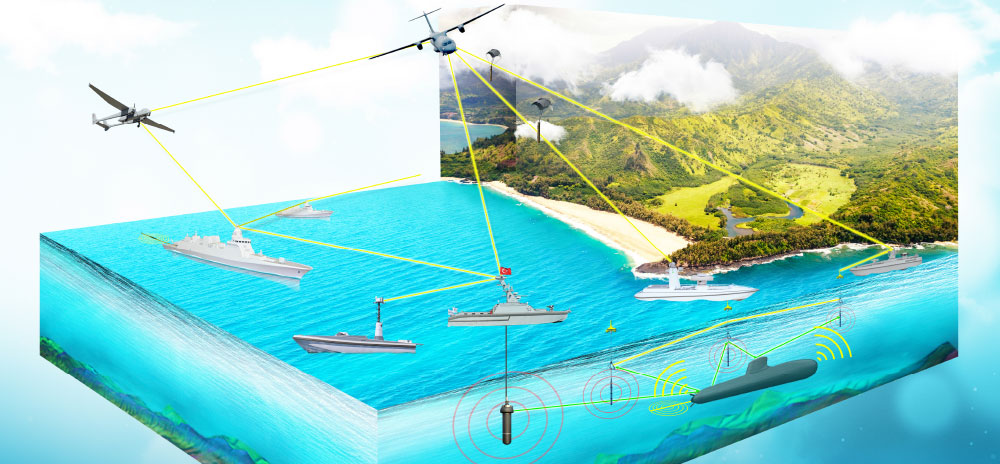
With the rapid development of technology, the operational concept of USVs is also changing and developing. In this context, new and game-changing concepts, such as the swarm use of unmanned naval systems connected via data links, come to the fore. Different munitions or payloads to be fitted on A/USVs that can operate in swarms will increase the ability to destroy targets and the effectiveness of logistic support activities, making these systems a force multiplier on the battlefield. Based on this fact, depending on the technological developments in recent years, fully autonomous USV development studies for military and civilian use have gained momentum.
In order to provide swarm capability for Unmanned Surface Vehicles in Türkiye, the Swarm USV Project was initiated under the coordination of the Defense Industry Agency (SSB), and a contract was signed with ASELSAN. Under the project, the first swarm use demonstration was made with four ALBATROS-S USVs in 2021, and the first phase of the project was completed in August 2021. In June 2022, the Heterogeneous USV Swarm, consisting of 4 different types of USVs (7m long ALBATROS-S and 15m long MİR USV), operated together in the Mediterranean. On June 19, 2022, the President of Defense Industry Agency Prof.İsmail DEMİR announced on his via official Twitter account that the new phase of the Swarm USV Project has begun and said: "The new member of our Swarm USV Family, MİR and ALBATROS-S worked together in a swarm with two USVs of different sizes and capabilities." Currently, four USVs can operate together under the Swarm USV project, and it is planned to perform a swarm demonstration with 8 USVs in the following months.”
On December 13, 2022, SSB DEMİR announced on his official Twitter account that the 3rd Phase of the Swarm USV Project has been realized and said: “We continue to develop high-autonomy unmanned surface vehicles and expand our USV family! In the 3rd phase of the project, we implemented the octal swarm architecture with USVs. The ALBATROS-S USVs swarm performs different tasks, shares sub-tasks, and is divided into sub-swarms.”
A/USV Concept of Operations (CONOPS)
USV and AUSV platforms developed by Turkish Defense Industry companies have two different usage modes: Remote Control and Autonomous. They can be remotely controlled or used in the autonomous mode both via the Mobile Ground Control Stations and another platform with ADVENT Combat Management System (CMS). While each A/USV requires a human operator in Remote Control Mode, in Autonomous Mode, any number of USVs and AUSVs can be operated via the Mobile Ground Control Station or ADVENT CMS, depending on the bandwidth constraints.
In fact, UAV/UCAVs and A/USVs are remotely controlled in a similar way. In that context, the Turkish Defense Industry can also use the communication infrastructure and technology it has developed for UAV/UACV projects to remotely-control A/USVs. For example, UAVs can be controlled from 150km to 300km over the line-of-sight (LoS) data link. For short distances (LoS), UAVs can transmit video over Digital Video Link (L, S, and C-Band, up to 150km), Digital Communication Link (Ku-Band and C-Band, up to 200km), Video Audio Transmitter Unit/Modem (real-time data transmission from 30-50km in line-of-sight) and IDM-501 video/data terminal. Like UAVs, USVs can be controlled via LoS links or SATCOM by establishing a Ground Control Station on high hills and providing LoS communication conditions. As with UAVs, each USV needs a human operator for remote control via LoS links over the Ground Control Station. The second operator is required for the management of the payload. However, with SATCOM, the number of operators changes according to the diameter of the antenna. For example, the C2Tech product Mini HUB can operate 3 satellite terminals at the same time, while HUB can operate 5 satellite terminals. Each Mobile Satellite Ground Station with a 3.7m diameter antenna can simultaneously operate 4 to 5 SatCom air terminals with 10mb/s capacity. However, to operate 10 terminals at the same time, the antenna diameter needs to be increased. A similar situation is also valid for the maritime environment, but the infrastructure provided by satellite tracking systems allows the control of 3 to 4 A/USVs over a single HUB when the weather conditions are bad. The ULAQ, MİR/MARLİN, SANCAR, and SALVO A/USV platforms feature a certain amount of artificial intelligence and swarm mission capability. This capability allows multiple A/USVs to be controlled simultaneously by a single Mobile Coastal Control Station or ships with ADVENT CMS. With this capability, homogeneous (consisting of the same A/USVs) or heterogeneous (consisting of different A/USVs) swarms can be monitored/controlled with a single Mobile Coastal Control Station. When necessary, a manned ship will be able to take over the task of the Mobile Coastal Control Station.
As required by law, AUSVs will not be capable of using weapons autonomously. Autonomy is being developed for navigation and payload capabilities. Boats in different groups can communicate V2V (vehicle-to-vehicle) within and between the groups. While larger data is shared within the group, communication is used for task distribution between groups. Being able to function with LOS, BLOS/SATCOM from a single command center is the basis of communication capability.
Autonomous Surface Vehicle Procurement Project
To meet the needs of the Turkish Naval Forces Command, the Autonomous Surface Vehicle Procurement Project was initiated by the SSB, and a Request for Proposal (RFP) was published in August 2021. The project, in which the companies were asked to submit their proposals until September 6, 2021, included the procurement of 1 Harbour Defense Vehicle and 1 Anti-Surface Warfare Vehicle.
As part of the Project, the SSB implemented a procurement model that it had not implemented before and started to work with 4 different companies on unmanned surface vehicles. In this context, 4 separate contracts were signed with ASELSAN/SEFINE, METEKSAN DEFENCE/ARES, HAVELSAN/YONCA-ONUK, and finally, DEARSAN. Under the A/USV Project, the SSB defined Primary (joint tasks) and Additional (specialized areas) for the 4 private-sector shipyards. While Intelligence, Reconnaissance, Surveillance, Anti-Surface Warfare, and Maritime Patrol missions were defined as Joint Tasks, Mine Countermeasure Mission was assigned to HAVELSAN/YONCA-ONUK product SANCAR AUSV, Electronic Warfare and Electronic Attack Mission to ASELSAN/SEFINE Partnership, and Anti-Submarine Warfare (ASW) Mission was assigned to METEKSAN DEFENCE/ARES Partnership. Contract negotiations continued between the SSB and DEARSAN, the 4th company/shipyard. Speaking at the 'Future of Unmanned Naval Systems and Türkiye's Potential' panel held under the moderation of Tolga ÖZBEK at SAHA EXPO 2022, Head of the SSB Naval Platforms Department, Cenk Cumhur KIYKIM shared information about the Specialized Tasks in the project and the Additional Task assigned to DEARSAN. "For example, we assigned Electronic Warfare to one platform, Mine Countermeasure to another platform, apart from this, we assigned Anti-Submarine Warfare to another platform, and the last task was a study on defining organic UAV capability for our Unmanned Surface Vehicles. We assigned this task to our last partner..."
While assigning Primary and Additional Tasks to the 4 shipyards, the SSB left them free to choose the material to be used in the production of USV/AUSVs that would perform these missions. Therefore, while no clear definition was made for the materials in the project (such as aluminum hull or composite hull), only the product's capabilities, payloads, and operational concepts were defined. In fact, since the use of A/USVs is a new field in the world, the boundaries are not clearly drawn regarding the concept. The concepts are expected to be refined after the 4 shipyards demonstrate the capabilities of their A/USV solutions with different payloads and capabilities. Therefore, in the Phase-I (Verification Phase) of the Project, A/USV solutions will demonstrate their autonomous navigation and mission capabilities, and then competition is expected to be held on mission profile and payloads under Phase-II. The Verification Phase of the project is expected to be completed in April 2023 with the participation of the SSB and the Turkish Navy, and following the Interim Acceptance process, the payloads will be tested in Phase-II.
The Turkish Naval Forces Command (TNFC) shared its expectations for the Autonomous Surface Vehicle Procurement Project with the shipyards with a comprehensive presentation during a meeting coordinated by the SSB. According to our sources during his presentation at the meeting held in December 2021, Rear Admiral Ramis AKIN, Technical Commander of the Naval Forces Command, stated that A/USVs should be designed to carry Modular Payloads consisting of interchangeable sensors and that they expect a product with functional autonomous navigation capability. In the meeting, a precise definition was not specified on mission autonomy, as the other world navies are still studying different concepts. The legal boundaries regarding mission autonomy have not yet been clarified (whether the system can make decisions). During the presentation it was also pointed out that GENESIS and GENESIS ADVENT CMS are being used in a significant portion of the surface platforms of the Naval Forces (90%) and announced that the CMS for Unmanned Surface Vehicles has been named “ADVENT ROTA” and the Ground Control Station for the A/USVs has been named “ADVENT KALYON”. Meanwhile at his address at the 10th Naval Systems Seminar, held on November 15-16, 2021, Rear Adm. AKIN had pointed out that one of the most important elements in the 21st century Hybrid Warfare concept is the integration of unmanned platforms into manned warfare platforms as a force multiplier and stated that the TNFC also closely follows the developments in this area and has been actively working on it. Rear Adm. AKIN also expressed that they consider the autonomous surface and underwater vehicles projects carried out by the Defense Industry Agency (SSB) as an important step towards the future and that they also follow NATO activities on unmanned naval systems closely and they are making efforts to ensure that the knowhow gained is transferred to our country. Underlining that Türkiye has the power to develop and manufacture the required unmanned systems with mission systems and payloads, AKIN pointed out that this potential was demonstrated to the entire world with both UAVs and UUVs, but that there is an important drawback at one point. “For example, Company A brings its own unmanned system and says, here is my antenna, here are my consoles, and installs them on the ship. Then Company B comes and says I have developed one, I want to install these antennas and consoles on this ship. We're working on installing them on the ship. If we put in one, we will not be able to put in the other, because it will not work. If we put them all together, we will encounter problems regarding electromagnetic fields or physical problems on the ship and we will try to solve them. Even if this example is for the ship, it also applies to our coastal systems, our onshore surveillance systems. This applies to both naval and unmanned aerial systems. In short, we have problems that need to be solved, which we can categorize as the interoperability and determination of standard interfaces. In other words, we need to develop unmanned systems that do not work alone but can work in full compatibility with a command & control system already in use and in the inventory. Now, if we are strong enough to set the rules in this league of unmanned systems in which we play a part, we need to define the communication infrastructures, messaging standards and control interface standards together, make them uniform and impose them on those who will develop new systems in order to manage the problem areas that I have mentioned.”
Therefore, while accepting products from 4 different companies and shipyards, the Turkish Naval Forces want Ground Control Stations of A/USVs such as ULAQ, MİR, MARLİN, SANCAR, and SALVO to work integrated with the ADVENT ROTA Combat Management System. Thus, these A/USV platforms will be able to communicate with the surface warships in the Turkish Navy inventory. Therefore, the Naval Forces Command expects an A/USV infrastructure that can communicate with and can be controlled from the manned surface warships in the inventory when necessary. Hence, companies need to design their software according to these infrastructure standards.
As stated in the “Future of Unmanned Naval Systems and Türkiye's Potential” panel held at SAHA EXPO 2022, ASELSAN/SEFINE product MARLİN and METEKSAN DEFENCE/ARES product ULAQ platforms actively participated in the Electronic Warfare (EHDEM) 2022 Excercise off the coast of Antalya in the last week of October and demonstrated their capabilities to the Turkish Navy.
On the other hand, apart from the Autonomous Surface Vehicle Procurement Project, a defense system consisting of diver detection sonar, radars, and A/USVs is on the agenda for 8 critical facilities, 5 of which are naval bases, including Aksaz and Foça. The number of A/USVs to be procured under these two Projects is expected to reach double digits over time. It is believed that the number of Autonomous Underwater Vehicles and Unmanned Surface Vehicles (AUV and USV) to be procured for the Turkish Naval Forces may reach 40. Depending on their mission profile, AUSVs will be equipped with sensors such as GENESIS ADVENT CMS, LoS Data Link System, Satellite Communication (SATCOM) System/Terminal, Tactical Data Link System, V2V Data Link System, Dipping Sonar (ORKUN-2053 and YAKAMOS Light), Diver Detection Sonar, Sonobuoy Signal Processor, Radar Electronic Support and Electronic Attack Systems and Electro-Optical Targeting Systems. They will also be armed with weapon systems such as UMTAS and CİRİT Missiles, 12.7mm Remote-Controlled Weapon Station (RCWS), ASW Rockets, Sonobuoy Launcher, ORKA Lightweight Torpedoes (LWT), KUZGUN-KY Smart Munition, and anti-ship missiles.
Indigenous USV/AUSV Solutions of the Turkish Defense & Aerospace Industry
MİR USV and MARLİN AUSV
In 2021, two new Unmanned Surface Vehicles with aluminum hulls started to be developed with the cooperation of ASELSAN and SEFİNE Shipyard for the security of the Blue Homeland in autonomous reconnaissance - surveillance, Anti-Surface Warfare (ASuW), Anti-Submarine Warfare (ASW), and protection of base/port/critical facilities and high-value surface platforms. With the ceremony held at SEFİNE Shipyard on July 7, 2021, the block assembly activities of the Autonomous and Swarm Capable Armed Unmanned Anti-Surface Warfare (ASuW) Vehicle MARLİN, which was known as RD09 at that time, started, and the first steel cutting of the Autonomous and Swarm Capable Unmanned Anti-Submarine Warfare (ASW) Vehicle MİR, known as NB57, was carried out. SEFİNE Shipyard unveiled its A/USV solutions for the first time during DIMDEX 2022 in March 2022 in Doha, Qatar. The SEFİNE Shipyard representative, whom we had the opportunity to meet during the fair, emphasized that the first boat was already in the Sea Acceptance Tests (SAT) stage.
MARLİN Armed Unmanned Surface Vehicles (AUSV), which can be used for the protection of critical bases and ports and perform reconnaissance, surveillance, and patrol missions, and MİR USV, which can detect submarines with its onboard sonar and engage submarines with light torpedoes and ASW rockets, have been designed and manufactured to operate and communicate with UAV/UCAVs and autonomous underwater vehicles (AUV). It is stated that these new-generation approaches can alleviate the operational burdens of the navy, thereby reducing operating costs to reasonable levels. Both vessels will be able to support long-term intelligence-reconnaissance-surveillance operations and provide effective support in missions requiring firepower of manned surface and underwater platforms. In terms of autonomous navigation capability, both vessels will be able to navigate safely on their own by processing the images of their surroundings using onboard obstacle avoidance systems, navigation radar, and electro-optical cameras.
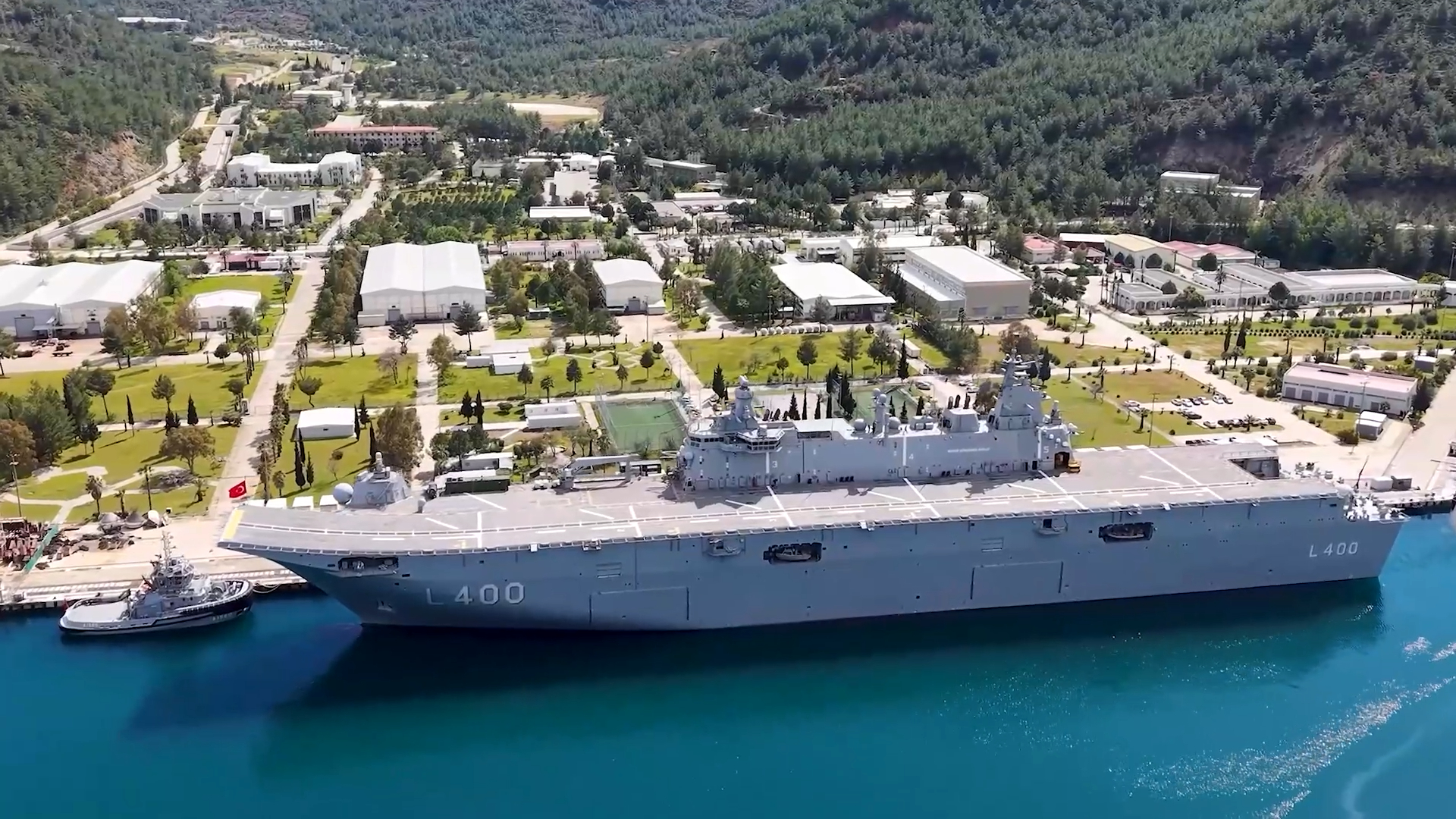
Both MİR USV and MARLİN AUSV can move to the operation area on their own from the port or can be transported by cargo planes, military ships, or by road and transferred to their mission location. In this context, for example, MİR USV or MARLİN AUSV can be one of the mission modules to be carried on TCG Derya DİMDEG, which can carry mission modules. Apart from TCG Derya, MİR USV and MARLİN AUSV can be carried on BAYRAKTAR Class LST, TCG Anadolu LHD, and other ships providing logistic support, as well as surface vessels with helicopter pads can carry them in special containers and deploy them in the operation area. Both MİR USV and MARLİN AUSV can perform autonomously or with Remote Control together with other naval units and successfully conduct missions with Combat Management Systems (CMS) in an integrated manner.
A SEFİNE Shipyard representative, whom we had the opportunity to meet during the DIMDEX 2022 Exhibition, said: "We are building two Unmanned Surface Vehicle prototypes with aluminum hulls as Concept Development Prototypes, with the partial support of the Defense Industry Agency (SSB) and some with our own internal R&D funds. One of them is the Anti-Surface Warfare (ASuW, RD09) model, and the other is the Anti-Submarine Warfare (ASW, NB57) model. Our first boat will be ready to enter service with our Navy at the end of this year, within its contractual term. Our second boat will have demonstrated its first operational capabilities by the end of this year. In June 2023, it will be delivered to our Naval Forces. So we will deliver the prototypes with a difference of 6 months."
Designed for anti-surface warfare, the RD09 MARLİN can transform from monohull to trimaran form with outrigger hulls (floats) attached to both sides of the hull and on which weapons can be placed. Thus, the payload capacity can be increased, allowing different weapons and systems to be used. The RD09 Autonomous and Swarm Capable Armed Unmanned Anti-Surface Warfare Vehicle, which has two counter-rotating propellers driven by two diesel engines, has a length of 14.75m, a width of 3.85m, a draft of 0.85m, and weighs between 21 to 26 tons depending on the payload and floats according to the product brochure. MARLİN/RD09, which is stated to be able to conduct missions in sea state 4 and navigate in sea state 5, has a cruising speed of 10 knots and a maximum speed of 36+ knots. MARLİN/RD09 is stated to have a cruising range of 700nm and can stay at sea for 7 days. On the product brochure of the scale model exhibited at DIMDEX 2022, it was written that the total length is 15m, the maximum speed is 32+ knots, the cruising range is 400nm, and it can operate in sea state 5. MARLİN got its name from a species of swordfish known to sailors as the 'ship-sinker' (because it can seriously damage a boat with its pointed nose).
The MİR/NB57 Autonomous and Swarm Capable Unmanned Anti-Submarine Warfare (ASW) Vehicle will be fitted with both the ARAS-2023 Diver Detection Sonar, ORKUN-2053 Dipping Sonar, and Sonobuoy Launchers, and it will be ready for delivery by the end of 2022. The ARMELSAN product ORKUN-2053 Dipping Sonar will be used in the towed configuration on the NB57/MİR ASW USV built by SEFİNE Shipyard. Just as the ASW Helicopter must hover while performing sonar operations, the USV will dip the sonar at a fixed point and begin to listen if the presence of a submarine threat is suspected. If nothing is detected, it will collect the sonar and move to another location. Like the MARLİN AUSV, the NB57/MİR will also be able to carry different anti-surface/submarine warfare weapons and systems and undertake critical anti-surface and anti-submarine missions.
In June 2022, the approximately 15m long MİR USV was spotted at sea for the first time and operated together with the 7m long ALBATROS-S USVs as part of the Heterogeneous USV Swarm. Although MİR has an aluminum hull and superstructure, part of the mast is made of composite materials to allow RF signals to pass through and not create a blind sector for communication systems. The total weight of MİR İDA is stated as 21 tons, and it is underlined that it can carry a payload of 1/3 of its total weight. Thanks to its high fuel capacity, the MİR USV can stay at sea for an extended time (cruising range can be up to 800 nautical miles) and has flexible mission parameters. It can communicate with manned or unmanned platforms and cooperate with the allied command center.
Designed to operate in open seas, the MİR USV is the first Unmanned Surface Vehicle produced for the Turkish Naval Forces for anti-submarine warfare purposes, and it can be used in many different types of naval warfare such as anti-surface warfare (ASuW), anti-submarine warfare (ASW), electronic warfare (EW), mine warfare, and asymmetric warfare. Designed for alternative weapon configurations that can provide high firepower, MİR USV is equipped with high-tech sensors such as navigational radar, ASELSAN SEA EYE KIRLANGIÇ Electro-optical reconnaissance & surveillance system, ASELSAN KARETTA Anti-Jamming GNSS (with anti-jamming and anti-spoofing features), ASELSAN ANS-510D Inertial Navigation System (INS), RF Communication, 4G/LTE Communication Unit (communication capability via GSM networks over 4G LTE), ASELSAN Ku-Band Satellite Communication System (SATCOM also has L-Band – Narrowband Satellite Communication System, it can transmit real-time video and images via SATCOM), Dipping Sonar (DS), Obstacle Avoidance Sonar, Single Beam Echosounder, Diver Detection Sonar and Automatic Identification System (AIS). The self-protection of the MİR USV is provided by the ASELSAN product 12.7mm STAMP-2L Remote Controlled Weapon System. MİR USV will be able to operate within the borders of Blue Homeland without any communication interruption, thanks to its indigenous designed unique communication system that can function in the electronic jamming environment.
The approximately 15m long MARLİN/NB57 AUSV was first spotted in September. On September 15, 2022, President of the Defense Industry Agency İsmail DEMİR announced on his official social media account that MARLİN AUSV is the first Unmanned Surface Vehicle with Electronic Warfare capability in the world (ASELSAN ARES-2NC R-ES System and ASELSAN AREAS-2NC Compact R-EA System). The SEFINE Shipyard representative, whom I had the opportunity to meet with during the ADEX 2022 Exhibition held in Baku, the capital city of Azerbaijan, on September 6-8, 2022, explained that MARLİN AUSV was tested with ASELSAN product Electronic Warfare Systems before the Exhibition and pointed out that MARLİN will participate in NATO Exercises held in Portugal in September.
Developed locally and nationally in cooperation with ASELSAN and SEFİNE Shipyard, the MARLİN AUSV participated in the REPMUS (September 12-22) and Dynamic Messenger (September 25-30, 2022) Exercises, respectively, in Portugal. MARLİN successfully represented our country, demonstrating its capabilities in the REPMUS '22 NATO Exercise, which was held on the Troia Peninsula in Portugal with the participation of approximately 1,500 civilian and military personnel from 16 NATO Member countries, including Türkiye. Around 40 Autonomous Underwater Vehicles (AUV), 18 Unmanned Surface Vehicles (USV), about 45 Unmanned Aerial Vehicles (UAV), 16 ships, and one submarine participated in the exercise. The MARLİN AUSV was the only platform that sailed out to sea on a day when no one could go out due to harsh weather conditions. During the scenario, which required finding enemy submarines, the MARLİN AUSV was the only unmanned surface vehicle that succeeded in finding targets that simulated enemy submarines thanks to its onboard sonobuoy processor. While performing its task, MARLİN also demonstrated that it can jointly operate with manned Navy elements in an international event. MARLİN, which can undertake important roles such as Electronic Warfare, Anti-Submarine Warfare, and Amphibious Warfare, will thus be the first unmanned surface vehicle to represent our country in NATO Exercises of this size.
The MARLİN AUSV is planned to be used in naval warfare operations for defensive and offensive purposes, on the coast or in the open sea. With the capability to perform critical missions even in the toughest sea states thanks to its unique hull design, MARLİN can carry different payloads such as guided missiles, light torpedoes, 12.7 mm machine guns, electronic attack, electronic support, sonobuoy that extends the sonar range, and towed array sonar systems in line with operational needs.
Designed to meet high speed, stability, and maneuverability requirements, MARLİN is equipped with ASELSAN's remote-controlled weapon station, electro-optical reconnaissance & surveillance system, radar, anti-jamming GNSS, electronic warfare, and national software systems. MARLİN is also considered to herald a new era in naval warfare. In this context, the surface-to-surface, and surface-to-land versions of the KUZGUN-KY (Solid Propellant) missile developed by TÜBİTAK SAGE can also be fired from MARLİN. In this context, a strategic cooperation agreement for indigenous munition systems was signed between TÜBİTAK SAGE and SEFİNE Shipyard in June 2022. The emblem on the MARLİN AUSV, which participated in the NATO Exercises, also included 2 KUZGUN-KY launchers, each with 4 cells, placed on the floats attached to both sides of the hull. The KUZGUN-KY, which can reach a speed of Mach 1.5 and reach a range of 40 km, can be used in the fire-and-forget mode on AUSV. The KUZGUN-KY, a member of the KUZGUN Guided Modular Munitions Family, will use a dual-mode seeker (will feature both Semi-Active Laser Seeker and IIR Seeker). However, there will also be a version of the KUZGUN-KY with a Millimeter Wave (MMW) Radar Seeker. The KUZGUN-KY missile is expected to undergo tests by the first quarter of 2023 and provide significant firepower at sea.
SANCAR AUSV Test Continue..
In October 2021, YONCA-ONUK and HAVELSAN decided to cooperate and started to work on the development of a Level 3 Autonomous AUSV. In line with the requirements of the Turkish Naval Forces Command, the development and testing process of the SANCAR Armed Unmanned Surface Vehicle continues under the contract signed on April 8, 2022, between the Defense Industry Agency (SSB) and HAVELSAN - YONCA-ONUK. The SANCAR AUSV was launched at the YONCA-ONUK Shipyard on June 2, 2022, with the participation of the President of the Defense Industry Agency Prof. İsmail DEMİR, and the first sea tests were completed in September 2022. In this context, the AUSV's software and remote-control mode tests have been conducted to a large extent, and autonomy tests are currently underway. Following the completion of the tests, the SANCAR AUSV is planned to be delivered in 2023.
Within the project's scope, HAVELSAN provides platform autonomy, mission system software, ground control stations, mini-GVDS (Ship Data Distribution System), Satellite Communication System and anti-jamming GNSS. YONCA-ONUK is responsible for the production of the hull of the AUSV and the integration of the payloads. Developed to perform reconnaissance, surveillance, anti-surface warfare, and mine countermeasure missions, the SANCAR AUSV will minimize the risk with unmanned use in dangerous missions for human life and enable multiple tasks to be carried out more cost-effectively with its payloads. The SANCAR AUSV was first unveiled to the world with the scale model exhibited during the African Aerospace and Defence Expo (AAD 2022) held at Waterkloof Air Base in Pretoria, South Africa, between September 21-25, 2022, with the participation of around 450 companies from 30 countries.
Although the SANCAR AUSV is represented as a prototype, it is actually built on a proven platform. SANCAR is based on 8 MRTP-12 Fast Patrol Crafts hulls delivered to the Turkish Navy by YONCA-ONUK. In this sense, SANCAR, a proven design, can be used autonomously over ADVENT CMS. Therefore, it will be possible to perform joint missions by being controlled by other surface platforms equipped with network-centered ADVENT CMS. The SANCAR AUSV features a derivative of ADVENT CMS named "ADVENT ROTA", which is adapted for Unmanned Surface Vehicles and contains artificial intelligence (AI) elements. SANCAR can perform missions in the open seas by providing an uninterrupted communication infrastructure, thanks to the combined use of RF/GSM/SAT systems.
SANCAR can be used in two different modes, Remote Control and "Autonomous." It can be remotely controlled or used in Autonomous mode both via the Mobile Ground Station and other surface platforms with ADVENT. In remote control mode, if more than one vessel is needed to be controlled simultaneously, each SANCAR requires an operator, while in Autonomous mode, any number of SANCAR USVs can be assigned via both ground stations and ADVENT, depending on the bandwidth limitation. The SANCAR AUSV can reach over 40 knots (80km) in Remote Control Mode. In line with the capabilities of ADVENT/ROTA CMS, swarm operations are also being studied. In this context, HAVELSAN plans to bring swarm capability to SANCAR by combining its know-how from the studies on BAHA and BARKAN UAV/UGV with the capabilities of the ADVENT/ROTA Combat Management System. HAVELSAN continues to work carefully on scenarios and concept studies for SANCAR's deployment to the operational area. On the other hand, emergency scenarios are also being studied for the possibility of SANCAR being captured by hostile forces in the operation area or in case of a malfunction in the boat.
YONCA-ONUK has designed the SANCAR according to end-user requirements. However, larger platforms may be built in the future in line with new requirements, such as longer endurance, better seaworthiness, or to operate in higher sea states. Therefore, the SANCAR platform can grow and gain new features according to the Turkish Navy's future requirements. .In order to be marketed to other friendly coutries, the SANCAR AUSV can be reconfigured according to customer specifications. HAVELSAN and YONCA-ONUK offer the SANCAR as a package together with ADVENT/ROTA CMS. The payload can be changed for additional functions requested by potential customers. ADVENT/ROTA CMS can be reconfigured to perform different missions depending on the payload.
The SANCAR AUSV platform, which uses autonomous technologies such as data fusion and artificial intelligence, also has a modular structure. The SANCAR AUSV is equipped with a 12.7 mm STAMP-2 Stabilized Weapon System, 2x2 UMTAS/L-UMTAS Missile and Launcher, and MİLMAST product Telescopic Mast (Navigation radar, E/O camera, anti-collision systems). With a cruising range of over 740 kilometers, the SANCAR AUSV has a length of 12.73 meters, a width of 3.3 meters, and a displacement of 9 tons.
ULAQ AUSV Family
ULAQ is the name of the first indigenous next generation Armed Unmanned Surface Vehicle (AUSV) Family developed in Türkiye in cooperation with ARES Shipyard and METEKSAN DEFENCE, which includes different platform types, capabilities and functions. The name of the AUSV Family was derived from Turkish ULAK, a messenger, an envoy from ancient history with his extraordinary skills and extreme warriorship capabilities. ARES Shipyard is responsible for the design, construction, and outfitting activities of the vessel, while its partner METEKSAN DEFENCE performed the integration of remote command, autonomous algorithms, data link, and data transfer systems.
In 2018 Antalya-based ARES Shipyard and Ankara-based METEKSAN DEFENCE teamed up to manufacture Türkiye’s first indigenous AUSV and the ULAQ AUSV Project was officially initiated by the parties in the same year. The research and concept studies were published between 2018-2019. In 2019, the prototype production process started with national capabilities, and prototype design studies were completed in the first quarter of 2020. The production of the first prototype (Anti-Surface Warfare/ASUW configuration) started in June 2020 and the design studies of the prototype boat were finalized in August. On October 28, 2020 ULAQ was introduced at a joint press conference organized by Meteksan Defence and ARES Shipyard. Eventually, the first prototype vessel (ASuW version) was displayed in Antalya, Türkiye in December 2020 and launched on February 12, 2021 in Antalya.
The anti-surface warfare (ASuW) version of ULAQ AUSV, successfully completed missile firing trials during the Turkish Navy’s Sea Wolf 2021 Naval Exercise, the most comprehensive naval exercise in the history of the Turkish Republic. According to the video footage, two CİRİT Laser Guided Missiles were fired against a land target from the ULAQ AUSV in a series and the target was successfully hit by ULAQ with a salvo of shots fired on May 27th. Within the scope of the scheduled firing trials of the Sea Wolf 2021 Naval Exercise, ULAQ launched the CİRİT Missile with telemetry on May 26th and following the first successful launch test, the CİRİT Missile that was fitted with a live warhead was successfully launched and hit the target by the ULAQ AUSV on May 27th. During the live firing trial that was performed in the south of Antalya Bay within the scope of Sea Wolf 2021, the distance between the target and ULAQ was 5km and the speed of the ULAQ ASUW was 15kts. During the live firing trials the ASuW version of the ULAQ AUSV was activated and was directed from the Mobile Coastal Control Station (MCCS) and transferred to the firing area. The Naval Forces Command and Coast Guard Command platforms also accompanied the firing trials. After the target was detected by sensors onboard the ULAQ, a pair of CİRİT Laser Guided Missiles were fired and scored a direct hit on the land target.
The anti-surface warfare (ASuW) version of the ULAQ AUSV was fitted with Tactical Missile Launching System armed with four laser-guided CİRİT Missiles in a four-cell CİRİT Smart Pod and two laser-guided long-range anti-tank guided missiles (L-UMTAS). After the live firing trials, the ASuW version completed the acceptance trials.
Following the ASuW version, which is the initial phase of the project, as per the Turkish Naval Forces (TNFC)’s requirement the development began on the Base/Harbor Defense Boat version for critical base/facility and port security missions in addition to reconnaissance and patrolling duties. The ARES Shipyard & METEKSAN DEFENCE Joint Venture introduced the new variant of the ULAQ Family in December 2021. The payload and armament of the new version differs from the first prototype (the ASuW version), which successfully completed port and sea trials as well as live missile firing in 2021. The electro-optic director on the Base/Harbor Defense Boat version of the ULAQ ASUV is the SeaEye-KIRLANGIC Electro-Optical Reconnaissance and Surveillance System, which replaced TACFLIR/SEAFLIR onboard the ASuW version. The Tactical Missile Launching System, on the other hand, was replaced by a 12.7 mm stabilized remote weapon station (RWS). The RWS is designed to be flexible enough to be fitted with various stabilized weapons. When a 12.7 mm machine gun is fitted, a total of 500 rounds of ready-use ammunition are carried. When a 7.62 mm machine gun is fitted, a total of 1,000 rounds are carried. Compared to the ASuW version the Base/Harbor Defense Boat version of the ULAQ ASUV, that was based on the ARES-35 FPB Control Boat design developed for the Turkish Ministry of Interior-Coast Guard Command, also features a longer and larger (some 1m) hull and two diesel engines each driving a water jet. The ASuW variant has a single diesel engine driving a single propeller.
All sea testing with the 12.7 mm RWS were completed satisfactorily in December 2021. Following this stage, live-firing trials were performed in January 2022.” In the joint press release issued on January 24, 2022, Utku ALANÇ, General Manager of ARES Shipyard, and Selçuk Kerem ALPARSLAN, President of METEKSAN DEFENCE, announced that all tests, including the firing tests with the 12.7 mm RWS, of ULAQ’s Base/Harbor Defense Boat version have been successfully completed.
Following the ASuW and Base/Harbor Defense Boat versions ARES Shipyard & METEKSAN DEFENCE Joint Venture have started the serial production of ULAQ AUSVs for Anti-Submarine Warfare (ASW, to be fitted with the YAKAMOS-L Dipping Sonar and a pair of ORKA Lightweight Torpedo Launchers), Electronic Warfare, Mine Counter Measures (MCMs), Intelligence Surveillance Reconnaissance (ISR) and Search & Rescue (SAR) as well as for firefighting (Fi-Fi) and humanitarian aid/evacuation, by benefiting from the know-how obtained from the first two vehicles. Meanwhile, TÜMOSAN has been selected to develop and deliver national diesel engines for the ULAQ AUSV Family.
ULAQ AUSV Main Features
The ULAQ AUSV System consists of two major subsystems; the Surface Vehicle and the Mobile Coastal Control Station (MCCS/SAKİ). The Surface Vehicle was built from advanced composites and has a range up to 800km and can reach speeds of 130km/h, with day & night vision capabilities, a secure communication infrastructure and is armed with either a Tactical Missile Launching System, a stabilized turret system, that can carry four UMTAS/L-UMTAS Missiles or eight CİRİT Missiles, or two UMTAS/L-UMTAS and four CİRİT Missiles, or with the 12.7 mm RWS. The new and improved version of the Surface Vehicle will be able to carry both the 12.7mm Machine Gun and the Missile System at the same time. With a length of 11m, a beam of 2.70m, displacement of 6 tons and a payload capacity of up to 2 tons the ASuW variant of the Surface Vehicle has a unique telescopic mast to utilize the E/O System for 360 degree enhanced day & night vision capability as well as increased target acquisition and a designation range for laser guidance. With its modular structure, different payloads can be easily integrated to the Surface Vehicle. The CRPA GNNS Anti-Jam System is part of the ULAQ AUSV navigation system to obtain geographical information in case of a GNSS jamming attack. Class-B AISS Transponder, INS, Radar and O/B Sensor System whose are part of collision avoidance system of ULAQ AUSV, provide safe navigation with sense-and-avoid functions. The ULAQ AUSV is also equipped with passive and active stabilization systems and a damage-control system with self-righting capability.
The ULAQ AUSV can be operated from the Mobile Coastal Control Station (MCCS/SAKİ) and headquarters or from sea platforms such as aircraft carriers or frigates. The Surface Vehicle can be operated and monitored from the MCCS. Considering its mobile and modular structure, the MCCS has full capability to be easily integrated into a land (C2 center, Shelter etc.) or a manned surface platform in accordance with the operational need. The MCCS has been designed to operate 24/7. It has life and system support equipment such as power distribution units, lighting and air-conditioning. The first version of the Mobile Coastal Control Station, called MCCS in short or SAKİ, was designed as a minivan and features a single antenna dish, two control consoles (each has two displays) and was operated by two crew members (Captain and Gunner). While the management of the ULAQ is provided through the Captain’s console, the control and monitoring of the missile systems, which are located on the ULAQ as a payload, is provided via the Gunner console. Based on a minivan the first version of MCCS/SAKİ was completed and launched for sea trials in January 2020. Whereas, the second version of the MCCS/SAKİ is based on 6x6 tactical wheeled vehicle and features two generators and two antenna dishes for improved controlling performance and extended communication/control range. Thanks to its sheltered structure the new version of the MCCS/SAKİ also provides the crew a more comfortable working environment. Providing bidirectional data transfer with the ULAQ through Line of Sight (LOS) and Beyond Line of Sight (BLOS-SATCOM) data links, the CCS has an instant communication feature with platforms and command control centers over KEMENT and TAFICS interfaces and has a network-enabled operational infrastructure. The Anti-Jamming GNSS AKSON C-Band Data Link, developed by METEKSAN DEFENCE for unmanned and manned reconnaissance and surveillance air platforms, with a data transmission range of more than 200 km (at Line-of-Sight/LoS), will enable joint operations with UAVs.
The ULAQ AUSV is not only a remotely controlled unmanned vehicle, but a state-of-the-art autonomous vessel with superior capabilities thanks to its artificial intelligence features. It has the capability to operate with other AUSVs with equal or different structure, and conduct joint operations with UAVs, UCAVs, TUAVs and manned aircraft. The state-of-the art communication systems developed for the ULAQ AUSV Family ensures secure, real-time and high-speed digital communication in tactical environment. Either LoS/BLoS Point-to-Point or Network Enabled Communication Systems are available for the ULAQ platforms depending on the operational requirements. With relay and handover capability of LoS Data Link System (C-Band and features >10mbps data rate in realtime) and Vehicle to Vehicle (V2V) communication (S-Band V2V data Link System features >6mbps in realtime) infrastructure ULAQ AUSV expands its effective operation area. Thanks to its BLoS (SATCOM, Ku-Band Data Link System features >6mbps data rate in near realtime) communication capability ULAQ AUSV Family can be operated up to an 800km range. The ULAQ AUSV communication infrastructure also includes KEMENT Tactical Data Link (TDL) which enables Network Enabled Capability (NEC) and Network-Enabled Weapon (NEW) among Command Control (C2) Systems, land, sea and air platforms, weapons (such as ÇAKIR Cruise Missile) and mission systems in the battlefield. As a last word, it is worth mentioning that the ULAQ has a flexible design which can be customized based on the end user’s requirements.
DEARSAN USV-15 SALVO
Established in 1980 and located in Tuzla, Istanbul Turkish Naval and Commercial shipbuilder DEARSAN designed and developed an Armed Unmanned Surface Vessel (AUSV) with its own resources in cooperation with its partners ASELSAN, ROKETSAN and YALTES. DEARSAN Launched the first prototype of its Armed Unmanned Surface Vessel (AUSV) SALVO (USV-15) in January 2022 and conducted a live firing test with SALVO on May 25, 2022 on the coast of Kurşunlu Village in the Karacabey District of Bursa, Turkey.
During the live firing test, which was attended by Ambassadors of many countries, Military Attachés, many local and foreign diplomats, guests and members of the press, DEARSAN’s SALVO AUSV prototype launched CİRİT Missiles and fired off a 12.7mm machine gun mounted on its SARP-L remote weapons station against a moving surface target. According to DEARSAN, both weapons “hit the target with pinpoint accuracy.”
Featuring a composite hull SALVO AUSV in Anti-Surface Warfare (ASuW) configuration, it has an overall length of 14.79m, a beam of 3.83m, draft of 0.75m and depending on the selection of diesel engine, maximum speed of between 45-60 knots. (83 km/h – 111 km/h). According to DEARSAN, SALVO has a range of 300nm.
The SALVO AUSV is powered by a pair of diesel engines each driving a water jet. The ASuW variant of SALVO AUSV is armed with a YALMAN Tactical Missile Launching System, a stabilized turret system, that can carry up to four UMTAS/L-UMTAS Missiles or eight CİRİT Missiles, or two UMTAS/L-UMTAS and four CİRİT Missiles, and SARP-L 12.7 mm stabilized remote weapon station (RWS) of ASELSAN. SALVO is equipped with an electro-optical surveillance sensor mounted on a telescopic mast, a navigation radar, and a YAMGÖZ 360° Close-Range Surveillance System developed by ASELSAN.
In addition to the ASuW variant, other versions of DEARSAN SALVO are under development. Those versions are going to be capable of performing special operations such as reconnaissance-surveillance and intelligence gathering.
SALVO is designed to be controlled remotely from mobile vehicles, headquarters and command centers and to be deployed from shoreside stations or from floating platforms such as Landing Platform Docks, Frigates, Mine Hunting Vessels, Patrol Boats and Corvettes. Its command and control architecture can be installed on a variety of seagoing and shore-based platforms. Its intended uses are for ISR, surface warfare, facility patrol duty and armed escort missions. According to DEARSAN, the SALVO AUSV it is also capable of operating in fully autonomous mode