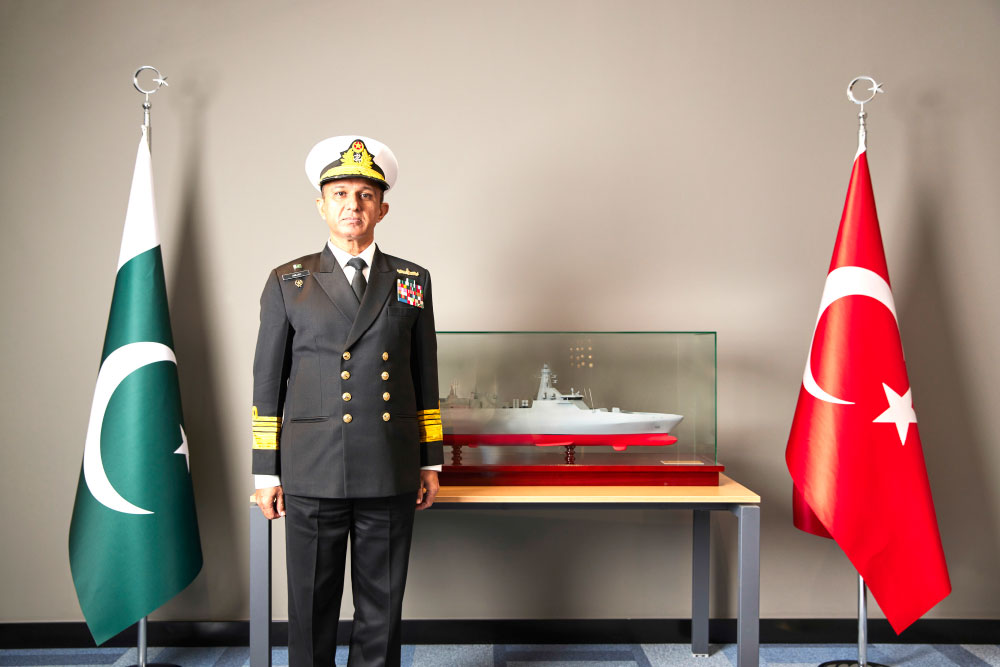
Chief of the Naval Staff (CNS) Pakistan Navy, Admiral Muhammad Amjad Khan NIAZI: “I Have Been Much Impressed with the Quality of Workmanship and Commitment of the Turkish Technical Workforce at Istanbul Naval Shipyard”
Defence Turkey: As Chief of the Naval Staff (CNS) of the Pakistan Navy (PN), can you describe the main tasks associated with your role?
Admiral Muhammad Amjad Khan NIAZI: As Chief of the Naval Staff, I exercise command and control of the Pakistan Navy (PN) in operational, combat, logistics, administration, training and welfare matters. I am also the Chief Technical Adviser to the Government on all matters concerning the Navy, Naval Defense and Maritime Affairs, both in peace and war. The powers vested in me as the Chief of the Naval Staff are by the Supreme Commander of the Armed Forces i.e., the President of the Islamic Republic of Pakistan. Accordingly, my focus is towards maintaining a combat ready and agile force, capable of dealing with the entire threat spectrum stretching from the non-traditional and sub-conventional realm to high-end conventional conflict. I am confident that we are transforming the Pakistan Navy into a potent, resilient and reckonable force.
Defence Turkey: The Pakistan Navy is a small yet a potent and balanced force, capable of safeguarding Pakistan’s maritime interests and ensuring the country’s seaward defense. Can you elaborate on the current force structure and assets of the Pakistan Navy?
Admiral Muhammad Amjad Khan NIAZI: The Pakistan Navy is well equipped for accomplishment of assigned tasks that include seaward defense of Pakistan, protection of vital SLOCs, defense of Creeks Area and cope up with all contemporary challenges in the gray-hybrid zone, while focusing on security of ports and harbors especially Gwadar Port.
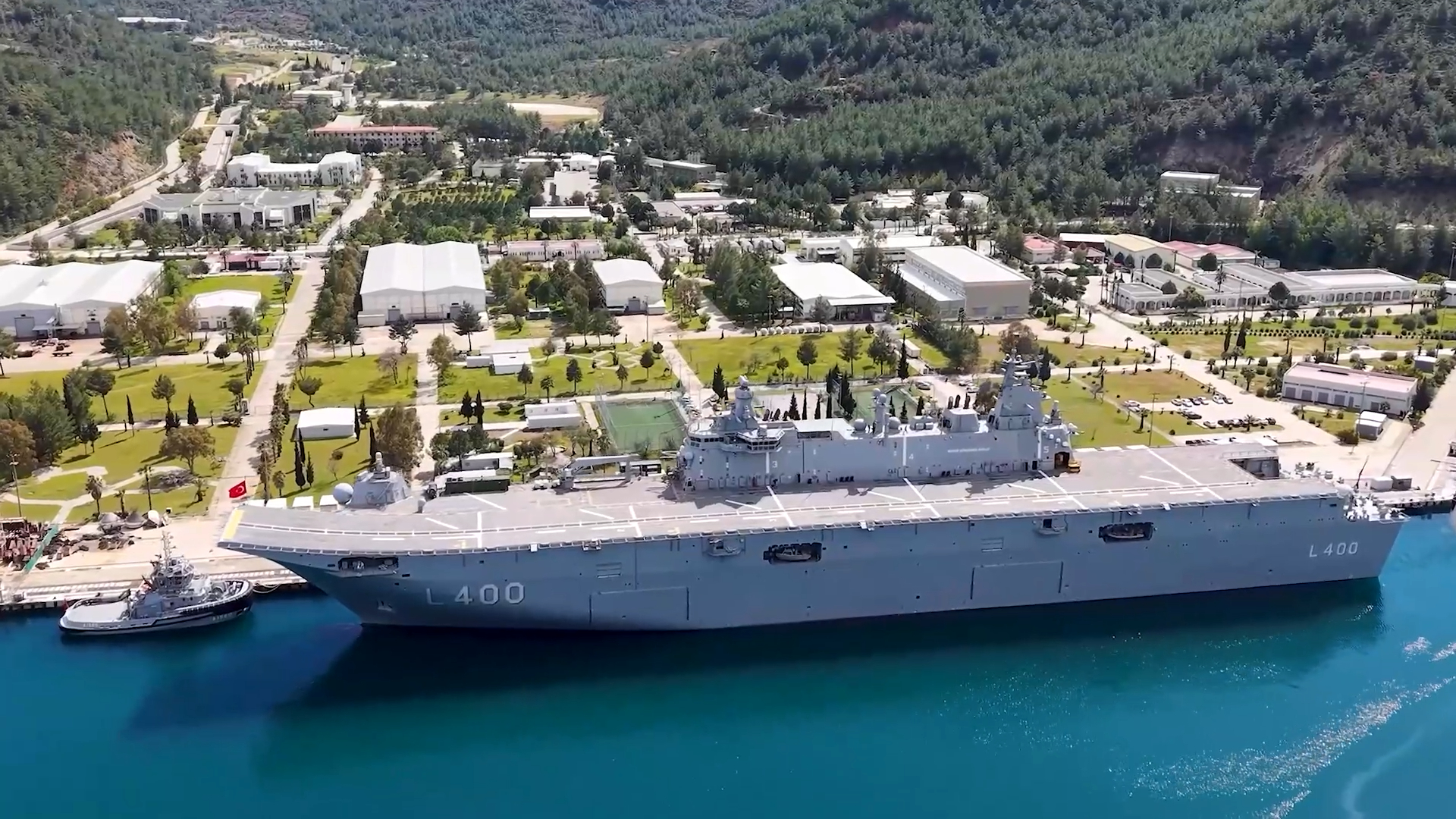
The Pakistan fleet is comprised of a balanced four-dimensional force. Our surface forces include: modern frigates, missile craft, mine hunters, auxiliary tankers, survey vessels and a training ship. Our subsurface force consists of potent conventional submarines. We have a naval air arm with state of the LRMPAs, helicopters and UAVs. The PN also has Special Operations Forces and Pak Marines. This force structure gives the Pakistan Navy both offensive and defensive capabilities making the PN a combat-ready and multi-dimensional force. It is also network enabled and well equipped to avert any cyber threats. Our focus remains on induction of advanced capabilities so that despite our smaller size, we remain fully capable to undertake our assigned tasks. Induction of Type 054 A/P Frigates from China, MİLGEM Class Corvettes from Türkiye and HANGOR Class Submarines (S/Ms) will further enhance the PN's capabilities.
Defence Turkey: Would you please tell us about the PN’s core role and responsibility in national defense in the overall regional defense architecture?
Admiral Muhammad Amjad Khan NIAZI: Ensuring seaward defense of Pakistan and protection of sea routes and maritime interests of Pakistan are the core tasks of the PN. The security challenges for Pakistan include both Traditional and Non-Traditional threats. The PN is a balanced multi-dimensional force and maintains the highest level of combat preparedness to deal with the complete spectrum of threats stretching from non-traditional and sub-conventional challenges, and to win, if a high-end conventional war is imposed. In addition, the PN has been participating in all regional/international efforts and initiatives taken for maintaining good order at sea. The PN's support for the Combined Maritime Forces (CMF), operating under the auspices of US NAVCENT, exemplifies our commitment to the common goal of ensuring freedom of navigation for uninterrupted flow of sea trade in the region. The PN has also been participating in various International Forums, Multinational Exercises, Humanitarian Assistance and Disaster Relief efforts and has undertaken Noncombatant Evacuation of stranded Pakistani and foreign nationals from conflict zones.
Defence Turkey: How do you see the Pakistan Navy’s future role in the region? What are the main perceived maritime security threats and challenges?
Admiral Muhammad Amjad Khan NIAZI: The global security environment is dynamic, highly volatile and in an unprecedented transition; shaped by primacy of great power competition, strategic realignments, competing interests and pursuit of technological dominance. In our region, the unresolved Kashmir dispute and Indian gross human rights violations in Indian Illegally Occupied Jammu & Kashmir, continue to threaten regional security. Additionally, nuclearization of the Indian Ocean through induction and acquisition plans of a considerable number of nuclear submarines equipped with long range nuclear weapons by India beyond Indian legitimate needs, is going to impact the strategic balance in the region. On our Western seaboard, simmering tensions and hotspots are manifesting into a precarious situation for shipping plying on international energy SLOCs (Sea Lines of Communication). The fragile situation in Afghanistan post U.S. rapid withdrawal and proxy wars in Syria and Yemen continue to impinge upon regional security. In the nontraditional domain, maritime terrorism, piracy, drug trafficking and human smuggling remain major challenges. Risks posed by natural disasters, climate change and the recent pandemic have further complicated the security calculus. In order to confront the aforementioned challenges, the Pakistan Navy has significantly enhanced its reach, preparedness and influence in the AOI (Areas of Interest). The PN’s participation in coalition operations coupled with increased maritime exercises with regional partners have afforded improved Maritime Domain Awareness and professional competence. The PN has also actively promoted naval diplomacy in the region and beyond. Despite increased maritime compulsions, the Pakistan Navy is ensuring requisite readiness and contributing effectively toward maintenance of regional maritime order.
Defence Turkey: How do you assess the PN’s contributions to regional peace and your Navy’s cooperation with neighboring states’ Navies?
Admiral Muhammad Amjad Khan NIAZI: The PN aspires to maintain and enhance collaboration with friendly Navies with particular focus on enhancing collaboration at regional level and encourage maritime regimes at international and regional levels. In the same context, the Pakistan Navy joined the International Community in its efforts to maintain regional peace and stability in our maritime milieu. The PN joined Combined Task Force-150 (CTF-150) under the Coalition Maritime Campaign Plan (CMCP) in April 2004. The PN is also playing an active role in Combined Task Force-151 (CTF-151), the counter piracy component of Combined Maritime Forces (CMF) which was formed in 2009. The PN has commanded CTF-150 12 x times and CTF-151 10 x times and has recently handed over commands of CTF-150 and 151 on 21 July and 18 Aug 2022 respectively. It is pertinent to highlight that the PN's concerted efforts in CTF-150 and CTF-151 have been widely recognized on an international level. Moreover, these opportunities have also enhanced our interoperability with CMF member Navies and helped us foster lasting partnerships in the region and beyond. Furthermore, the PN has also instituted the Maritime Security initiative of ‘Regional Maritime Security Patrol’ (RSMP) to fulfill international obligations toward Maritime Security and to protect its own national interest in the IOR (Indian Ocean Region) with strategic autonomy. Additionally, with the aim to achieve regional harmony and collaborative maritime security, the PN has also been organizing the AMAN series of exercises biennially since 2007.
Defence Turkey: Maritime security has diverse meanings as it largely depends on the purpose and context for which the term is referred to. When used in the backdrop of freedom of the seas, it generally means an environment free from threats to good order at sea. In 2018, as a result of re-evaluation of the maritime environment and recalibration of its maritime security choices, the Pakistan Navy launched the maritime security initiative Regional Maritime Security Patrol (RMSP). Can you elaborate on the purpose, coverage area and chief objectives of RMSP and the tasks the PN have accomplished so far under RMSP?
Admiral Muhammad Amjad Khan NIAZI: The PN remains engages with international partners besides independent deployments against asymmetric threats. In this regard, the PN has instituted the maritime security initiative ‘Regional Maritime Security Patrol’ (RSMP) since 2018 to fulfill international obligations to Maritime Security and to protect its own national interest in the IOR with strategic autonomy. RMSP is focused on establishing maritime patrols along the vital choke points and important maritime areas in the IOR by PN ships with embarked helicopters. The broad objectives of the RMSP initiative include contribution towards maintenance of good order at sea and to deter/curb the menace of piracy, maritime terrorism, narco-arms and human smuggling and other illicit activities. These patrols are established along three important axis namely; the Horn of Africa, North Arabian Sea and the Central Indian Ocean. Another important objective of RMSP is to foster partnerships with regional countries and enhance interoperability. So far, the PN has completed 31 RMSPs.
Defence Turkey: Can you list the most important procurement and modernization programs for your Navy and the envisaged time frame of realization?
Admiral Muhammad Amjad Khan NIAZI: Progressive capability development is an important pillar of my vision for the Pakistan Navy. Our developmental strategy hinges upon induction of force multipliers, indigenization and maintaining diversified options to mitigate external dependence. At the same time, we believe in making the best use of the available resources. We have contracted the construction of frigates and corvettes with the support of friendly countries. As warships are the mainstay of any Navy, induction of more ships is in the offing. In this regard, Type 054 A/P Frigates are being acquired from China. Two ships have already been inducted while the remaining two ships are likely to join the PN Fleet by 2023. Two YARMOOK Class OPVs have already been inducted, while two larger and more capable OPVs are under construction in Romania. The PN is also procuring four MİLGEM Class Corvettes, which are at various stages of construction in Türkiye and Pakistan. Building on the experience gained during construction of MİLGEM Class Ships, the PN has contracted the JINNAH Class Ship, which will be our first ever indigenously designed and built frigate sized warship. Moreover, the HANGOR Class S/Ms Program is progressing well and S/Ms are under various stages of construction in Pakistan and China. The Pakistan Navy has acquired Jet LRMPAs (Long Range Maritime Patrol Aircraft) for highspeed surveillance and deep-sea strike capability, which are currently under modernization. We also have also inducted CH-4 MALE UCAVs from China. In short, during the next five years or so, the Pakistan Fleet will be transformed into a modern and potent Fleet, equipped with the latest frigates, corvettes, OPVs, modern submarines, LRMPAs and UCAVs in service.
Defence Turkey: Under the contracts signed in 2017 and on June 1, 2018, Pakistan is procuring a total of four Type 054 A/P Frigates (classified as TUGHRIL Class) from China and the lead ship PNS TUGHRIL (F-261) was commissioned into PN service at a ceremony held at Hudong-Zhonghua Shipyard in Shanghai, China on November 8, 2021. Equipped with a stateof-the-art combat management and an electronic warfare system, along with modern self-defense capabilities, the Type 054 A/P Frigates are the largest and most advanced warships China has ever exported. Can you elaborate on this acquisition and the technical specifications and capabilities of the Type 054 A/P Frigates? What do the TUGHRIL Class Frigates bring to your Navy? Do you have a plan to procure further ships in this class?
Admiral Muhammad Amjad Khan NIAZI: Induction of Chinese-origin Type 054 A/P TUGHRIL Class Frigates is an important project for the PN. Type 054 A/Ps are multi-role frigates and equipped with state-of- the-art weapons and sensors. The CM-302 SSM and LY-80 SAM onboard Type 054 A/Ps substantially enhance the PN’s anti-surface and anti-air warfare capabilities. Furthermore, these ships are also equipped with the latest sensors, subsurface weapons and Combat Management System. These ships will significantly boost the PN Fleet capabilities to accomplish its assigned tasks in a contemporary operating environment. Furthermore, the PN is also in process of inducting MİLGEM Class Corvettes and OPV Batch-II to modernize the PN surface fleet. Future procurement will be considered after integration of these ships into the PN Fleet.
Defence Turkey: The PN is also procuring 8 HANGOR Class Submarines with Air Independent Propulsion (AIP) Systems from China by 2028. In April 2015, the Government of Pakistan approved purchase of 8 export version of Type 039B Submarines from China for the Pakistan Navy. The deal was finalized on 23 July 2015. 4 of 8 already under construction in Wuhan, China, and the construction of the fifth one (will be named PNS TASNIM) was officially launched on December 9, 2021, at the Karachi Shipyard & Engineering, Works (KS&EW) in Pakistan. Three more HANGOR Class Submarines will be constructed at the KS&EW. Can you elaborate on the technical specifications and capabilities of the HANGOR Class Submarines and their delivery schedule? What will the HANGOR Class AIP Submarines bring to PN? Do they incorporate any Pakistan specific equipment and capabilities?
Admiral Muhammad Amjad Khan NIAZI: HANGOR Class Submarines are under various stages of construction in Pakistan and China. These S/Ms are one of the most modern types of S/Ms in the world. They will be equipped with latest weapon and sensors, mostly of the Chinese origin. Pakistan is already operating AIP onboard existing AGOSTA-90B (KHALID) Class Submarines and induction of HANGOR Class Submarines with AIP onboard will further enhance our subsurface capability.
Defence Turkey: How would you describe the importance and status of integrating sophisticated weapons on PN ships and submarines? Can you comment on the Sea Spark-2022 Exercise during which Pakistan Navy Fleet units demonstrated combat readiness and war fighting capability by live firing of AGM- 84L-1 Harpoon Block II (from P-3C MPA), RGM-84 Harpoon (from PNS TARIQ Destroyer) and DM2A4 Heavyweight Torpedo (from KHALID Class PNS/M HAMZA Submarine) against a decommissioned Type 21 destroyer and a floating sea target. What did the Exercise demonstrate? What kind of signal does the successful live firing send to other regional nations?
Admiral Muhammad Amjad Khan NIAZI: The exercise Sea Spark-2022 demonstrated our resolve and operational readiness to protect our maritime interests against any external aggression. The exercise was also useful for the training of our crew and to enhance coordination between various arms of the PN. Live Weapon Firings are effective means to maintain combat readiness and demonstrate credible conventional deterrence. Of late, the PN has made major strides in acquiring self-reliance in missile technology with the indigenous development and induction of state-of-the-art missile systems. The PN will continue to boost its operational capabilities keeping in view technological advancements in missile development.
“ALBATROS SAM are Under Consideration for JINNAH Class Frigates and F-22P Ships”
Defence Turkey: What can you tell us about the agenda of your visit to Istanbul and your meetings in Türkiye? What are the targets of your official visit to Türkiye?
Admiral Muhammad Amjad Khan NIAZI: The top of my agenda obviously is to witness the launch of the PN-MİLGEM Ship No 2 KHAIBAR (Design) alongside the political leadership of Türkiye and Pakistan. Engagements with the leadership of the Turkish Navy and Industry, such as ASFAT is also a very important part of my visit. As always, I am deeply moved by the warmth extended by our Turkish brothers and have been much impressed with the quality of workmanship and commitment of the Turkish technical workforce at Istanbul Naval Shipyard.
Defence Turkey: Instead of the HHQ-16 (LY-80N) Medium-Range Air Defense Missile System in a 16-Cell Vertical Launch System (VLS) to be located behind the main gun, the Pakistan Navy BABUR Class Corvettes are being armed with MBDA’s new generation Naval Based Air Defense (NBAD) System ALBATROS NG. The renewed design of PN-MİLGEM Corvettes, with a pair of six-cell (2x3) modules of the ALBATROS NG Maritime Launching System (MLS) was disclosed for the first time on April 30, 2021 during the PN-MİLGEM-3 Corvette’s keel laying ceremony held at Istanbul Naval Shipyard in Tuzla, Istanbul. Can you elaborate on the main reasons laid behind this change? Do you have any further plan to use ALBATROS NG also in other surface platforms such as JINNAH Class or F-22P ZULFIQUAR Class Frigates?
Admiral Muhammad Amjad Khan NIAZI: Let me clarify that there was no change as such in the selection of the air defense system. As is the case with any equipment a number of factors are involved; such as the specific roles of the platform being equipped, ease of integration, cost, etc., these are taken into account. In the case of PN-MİLGEM, the successful construction of the PN-MİLGEM Class was taken as a template and ASFAT’s deeper understanding and rich experience of working with Turkish and Western OEMs has also been a factor in arriving at this decision. We have all the confidence in MBDA, ASFAT, HAVELSAN and Thales to make this integration a success and add this much-needed AAW capability to the Pakistan Fleet. Broadly answering the last part of your question, standardization of equipment is always a preferred option for the ease of operation and maintenance. Accordingly, ALBATROS SAMs are under consideration for JINNAH Class Frigates and F-22P Ships.
Defence Turkey: PN design teams, who took part in PN-MİLGEM design efforts in Istanbul, Türkiye together with the Turkish naval ship designers have also started to design a new ship, which is called the JINNAH Class Frigate (JCF). The scale model of JINNAH Class was displayed for the first time during the IDEF ‘21 Fair in August 2021 at the ASFAT stand. Can you elaborate on the current status of the JINNAH Class Frigate Project? When is the first JINNAH Class Frigate expected to be inducted into PN service? Can you elaborate on the technical specifications and capabilities of the JINNAH Class Frigates?
Admiral Muhammad Amjad Khan NIAZI: As you are aware that the PN ship design team is working in collaboration with their Turkish Naval counterparts in the designing of the JINNAH Class Frigates (JCF). Upon successful completion of the 1st three phases, the JCF has entered the Functional Design Phases. With regards to the technical specification and its capabilities, all I can share at this stage is that these are larger in size and have greater length and displacement. Most importantly, the JCF will be equipped with state-of-the-art weapons and sensors, which will be a mix of indigenous equipment along with systems from friendly countries.
Defence Turkey: Turkish Navy rendered assistance to the Pakistan Navy (PN) to establish submarine service in its early days. During the second half of the 1960s in the age of Guppy Class submarines the two Navies established a joint training system and several PN submarine officers received training at Gölcük Naval Shipyard. Besides frequent exchange of visits at all levels, both the navies were actively collaborating through professional seminars, bilateral ship visits to each other’s ports, joint naval/SOF Team exercises and mutual training assistance. Can you elaborate on your relationship with the Turkish Navy? Are there currently any ongoing cadet/officer exchange programs between the two Navies? Could you please comment on the importance and benefits of performing annual joint sea exercises with the Turkish Navy?
Admiral Muhammad Amjad Khan NIAZI: Relations between the Pakistan and Turkish Navies (TN) have nurtured in a climate of trust and mutual understanding. Besides frequent exchange visits at all levels, both the navies are actively collaborating through a broad range of professional interactions. PN-TN Expert Level Staff Talks have been conducted regularly since 2018, which remain a major platform to further expand the scope of cooperation between the two navies. The PN and TN regularly participate in each other’s multilateral exercises AMAN and MAVİ BALİNA. Moreover, the PN-TN bilateral exercise TURGUTREİS is also a regular-feature that continues to enhance interoperability between the two brotherly Navies. In terms of training, PN-TN collaboration has existed since 1987 in which officers and personnel frequently have undergone and continue to conduct exchange visits and training courses.
Defence Turkey: Türkiye enjoys deep-rooted brotherly and strategic relations with Pakistan. Since its independence, Pakistan has been enjoying very friendly and warm bilateral relations with Türkiye in all fields especially defense. Military cooperation between these two brotherly countries, which started soon after Pakistan’s independence, has been flourishing ever since, resulting in closer cooperation and understanding between the Armed Forces of the two countries. How do you evaluate the current state of Pakistan-Türkiye cooperation in the Naval field? What is your forecast for the future?
Admiral Muhammad Amjad Khan NIAZI: Relations between Pakistan and Türkiye have traditionally been exceptionally close; rooted firmly in common religion and cultural legacy. For centuries, there has been a free flow of people and ideas as well as religious and mystical traditions between the lands that now constitute Türkiye and Pakistan, shaping a strong perception of a common civilizational heritage. Therefore, the relationship between Pakistan and Türkiye have stood the test of time and there is a convergence of views on important regional and international issues. These similarities and strong ties have led to valuable military cooperation. The Navies of both countries are extensively involved in broad-based engagements, ranging from high level visits, operational engagements to collaboration in the training domain. With induction of Turkish origin platforms in the PN especially MİLGEM Class Corvettes, I foresee the interactions to increase in future, with a focus toward enhancing interoperability between the two Navies.
Defence Turkey: The Pakistan Navy (PN) has been hosting the Multinational Naval Exercise AMAN biennially since March 2007. Exercise AMAN brings together a number of Ships, Aircraft, SOF/EOD Teams and Observers from Navies East to West under one umbrella for collaborative peace and security in the maritime domain. Could you please tell us about the progress made so far for AMAN 2023? Why is Exercise AMAN gaining importance and relevance today for the region? Why is Exercise AMAN important for Pakistan in particular? What message would the PN like to convey to the regional navies through the AMAN series of exercises?
Admiral Muhammad Amjad Khan NIAZI: The PN in 2007 took the initiative of organizing the AMAN series of multinational exercises on a biennial basis. The purpose of the exercise is to promote cooperation and interoperability between the regional and extra regional navies operating in the IOR (Indian Ocean Region). Exercise AMAN is a manifestation of Pakistan’s commitments towards peace and stability reflected in its motto ‘Together for Peace’ and bringing Navies of East and West under a common platform for the good of global commons. The exercise has now turned into a major multilateral exercise in the region with a significant turn out. The 7th series of Exercise AMAN was conducted in February 2021 in which 43 countries participated despite the COVID-19 environment. The increased participation reflects growing trust in the value of the exercise and the Pakistan Navy’s credibility in the region. The 8th series of Exercise AMAN is scheduled in Karachi from 10-14 Feb 23 and participation of a number of Navies is expected in the forthcoming exercise. Concurrent with AMAN-23, the Pakistan Navy is also organizing the first ever International Maritime Expo and Conference (PIMEC) in Karachi. The Expo will bring together stakeholders and companies from diverse maritime fields to exploit the potential offered by the blue economy. The three-day Expo will provide an opportunity for Business to Government and Business to Business interactions for joint ventures and investments in Pakistan’s maritime sector. A Maritime Conference will also be conducted during PIMEC in which eminent speakers, experts and representatives from public and private sectors will share their views on contemporary maritime issues and viable options for developing countries especially Pakistan to spur the blue economy.
“BAYRAKTAR TB2 UCAV Is Being Evaluated for Induction in the PN”
Defence Turkey: The Pakistan Air Force (PAF) recently acquired large number of AKINCI and BAYRAKTAR TB2 UCAVS from Türkiye and according to sources they will be fitted with HENSOLDT's ARGOS II FLIR and Prec ISR GaN AESA Radar. Does the PN have any plan to acquire AKINCI and/or BAYRAKTAR TB2 UCAVs to further augment the service’s intelligence, surveillance, and reconnaissance capabilities in the maritime domain and to support its maritime operations?
Admiral Muhammad Amjad Khan NIAZI: Induction of force multipliers is one of my priorities in pursuit of PN Development Plans. The PN is thus giving due focus towards the induction of UAVs to improve surveillance capabilities in our Area of Responsibility (AOR). The PN is already operating Tactical UAVs, which include Scan Eagle and LUNA NG Unmanned Aerial Systems. Furthermore, the PN has also acquired Medium Altitude Long Endurance Combat UAVs (MALE UCAVs) CH-4 from China. Furthermore, PN procurement and R&D efforts are being steered to induct additional unmanned systems to achieve cost-effective Maritime Domain Awareness in our AoI (Areas of Influence). In this regard, M/s BAYRAKTAR is also currently being engaged and BAYRAKTAR TB2 UCAVs is being evaluated for induction into the PN.
Defence Turkey: Gwadar Port, now under construction, is located close to the mouth of the Persian Gulf just below the Straits of Hormuz. It is the third commercial port of Pakistan after Karachi and Qasim but it would also host a naval base and a naval shipyard. Can you elaborate on the status of the naval base and shipyard construction efforts at Gwadar Port? As far as I know the feasibility studies for the Submarine Maintenance Shipyard design to be located at Ormara Naval Harbor (ONH) and Gwadar Forward Naval Bases have been carried out by STM.
Admiral Muhammad Amjad Khan NIAZI: Gwadar Port, in close proximity to the Gulf of Oman, has the potential to act as a Transit Port for Central Asian Republics and Afghanistan. It also provides a connection between mainland China and the Middle East, Africa and beyond. Gwadar Port is a commercial port while the China Pakistan Economic Corridor (CPEC) is a manifestation of deeper and credible relations between China and Pakistan, which has the prospects to serve as a conduit for the betterment of the entire region. The PN is also maintaining a Task Force at Gwadar raised to ensure maritime security of Gwadar, its approaches and on-going CPEC related projects. Moreover, Gwadar Naval Base will enhance the PN’s presence towards the Western Part of Pakistan’s coast and will provide additional flexibility to fulfill our roles and tasks whereas Gwadar shipyard will contribute towards the blue economy of our country. The feasibility studies for the projects are underway and various national and international companies are being engaged in this regard. The PN is also pursuing expansion of the Jinnah Naval Base at Ormara including the maintenance yard for the PN Fleet.
Defence Turkey: What is the way ahead for the Pakistan Navy?
Admiral Muhammad Amjad Khan NIAZI: The PN aims to become a balanced yet effective Naval Force able to operate in all dimensions of naval warfare. We are pursuing projects to enhance our surface, subsurface and aviation forces and to build the capacity of Special Operations Forces. We are also taking steps to bolster coastal and port security. It may be noted here that we don’t have any aggressive or expansionist designs against anyone but are deeply concerned by the massive naval build-up of our adversary, especially with the acquisition and operations of nuclear submarines in the region. We therefore remain alive to the situation and contributing effectively towards credible deterrence, preservation of national security, safeguarding of maritime interests and advancing regional maritime security.
Defence Turkey: Would you like to add anything in the way of a message for our readers?
Admiral Muhammad Amjad Khan NIAZI: Today, the seas are becoming increasingly important due economics, for which the Navy remains an essential instrument to safeguard maritime interests. Additionally, economic compulsions and fast changing security outlook have forced nations to come closer to each other than yester years. In this regard, the ongoing efforts of the Turkish Navy (TN) are highly commendable. The TN’s commitment to effectively contribute to global peace and security deserves special appreciation. On these footprints, the PN is also pursuing the policy of Collaborative Maritime Security through increased interaction with the international community. Hence, there lies enormous potential for both the Navies to widen their mutual interaction and gain bilateral support to generate positive effects in the maritime arena.
Defence Turkey: Admiral NIAZI, thank you for sparing your valuable time for our readers