``The Project to Equip the Mi-17 Helicopters with NVG Flight Capability Is Expected to Save Approximately US$7.5 Million``
Defence Turkey: Can we begin our interview by getting information about the organizational structure of the Support Group Command and the services it provides to the units of the Gendarmerie Aviation Department?
Colonel Ruhi YÜKSEL: Within the structure of the Support Group Command, there are the Group Headquarters, Maintenance Command, Depot Command, and Support Battalion Command. The Support Group Command is responsible for the aircraft maintenance, spare parts procurement, and logistical activities of the Gendarmerie Aviation Department. Additionally, the service and guard platoons under the Support Companies carry out the management and guard duties of all buildings and facilities under the department.
Furthermore, the Support Group Command is responsible for managing significant procurement and supply activities that need to be coordinated from the headquarters for the units stationed in different provinces under the Gendarmerie Aviation Department. The large-scale material and spare parts storage activities required by the Depot Command are also carried out by the Support Group Command. All financial transactions related to these procurement and supply activities are also handled by our group command.
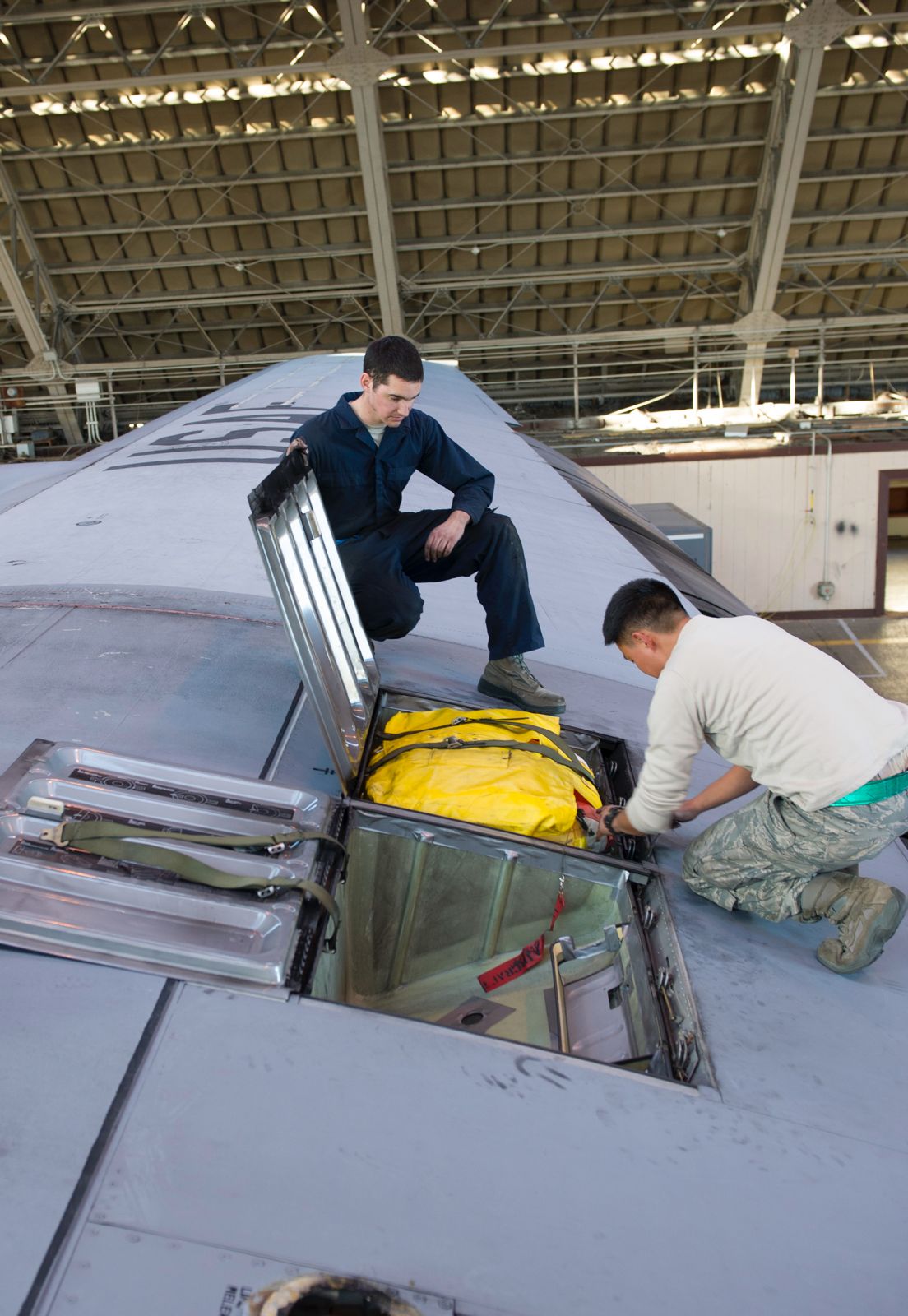
The education and training activities carried out by the Gendarmerie Aviation School Command include the daily and phased maintenance of the AB-205 (UH-1) Helicopters, which serve as the basic training helicopters for pilots and technicians. These maintenance tasks are conducted by the Maintenance Command to ensure uninterrupted flight training for pilots and technicians, along with the provision of classrooms and training materials. Additionally, technician assignments for flight execution, accompanied by flight instructors, are managed by the Support Group Command. As of today, maintenance activities are conducted to keep up seven helicopters flight-ready on a daily basis. Pre-planned training flights are scheduled to depart at 09:00 in the morning, with the return typically around 11:45. If no malfunctions occur during or after the flight, the helicopter is refueled and positioned in the helicopter parking area, ready for the next flight. In the event of any malfunction or issue identified by the pilots during the flight or by technicians during post-flight checks, the relevant maintenance team promptly intervenes, regardless of working hours, to swiftly diagnose and rectify the issue. Once the problem is resolved, the helicopter is prepared for flight again. In the afternoon, flights resume around 13:30, and after the pilots shut down the engines around 16:30, end-of-day maintenance and checks are performed by technicians, as authorized. If any malfunctions are identified, they are addressed promptly, and the helicopters are positioned in the park hangar, ready for the next flight, without delay or adherence to standard working hours.
The critical point here is the uninterrupted execution of maintenance. In other words, the concept of working hours does not apply. If necessary, maintenance activities can continue through the night until morning because it is of utmost importance that these helicopters are operational for the next day. This continuity ensures both the integrity of training courses and the seamless completion of training activities as planned.
What I am describing refers to daily flight and maintenance activities. Additionally, there are cases where significant malfunctions occur that cannot be rectified quickly or require higher-level maintenance authorization. In such instances, the relevant aircraft is taken to the Central Maintenance Hangar, where specialized technicians with expertise in the field intervene. After necessary interventions, once the aircraft is ready for flight, the maintenance officer presents it to the instructor and student pilots after a proficiency flight conducted by pilots.
All these maintenance activities are carried out with great dedication and strict adherence to maximum safety protocols. Otherwise, the slightest negligence or failure to comply with safety rules could result in significant material and human losses.
While our main principle is zero error and maximum safety, we also have a fire brigade team capable of responding to accidents and fires that could occur within our unit or neighboring units. Additionally, we have a rescue vehicle and personnel within the Support Group Command to handle potential accidents, ensuring prompt response and casualty recovery activities in case of accidents or emergencies, all while maintaining the highest level of safety standards.
Our fire brigade team responds to fires that could occur in neighboring units or within administrative boundaries. Comprised of professional firefighters and expert enlisted personnel, our fire brigade operates on a shift basis, providing 24-hour coverage.
The maintenance and sustainment activities for our newly acquired Gyrocopters are carried out by our own technicians. Additionally, since Gyrocopters operate on regular gasoline and our existing tankers cannot be used for refueling due to incompatibility, we have efficiently addressed this challenge by procuring two fuel tankers, each with a capacity of 1,000 liters. This self-reliant solution has proven to be the most cost-effective way to address the refueling issue. The use of regular gasoline for Gyrocopters significantly reduces flight costs, making operational expenses incredibly economical. While the hourly flight cost for a helicopter is approximately US$3,000, for a Gyrocopter, this cost reduces to around US$35.
As a result of these economic advantages, Gyrocopters have been actively employed in aerial traffic control and law enforcement tasks and are expected to be utilized for many years to come. Currently, our inventory includes 3 Gyrocopters, which have collectively accumulated 750 flight hours, with 200 hours dedicated to traffic and road control flights. Throughout this period, the Gendarmerie Aviation Maintenance Personnel have performed 6 maintenance checks, each lasting 100 hours, on the Gyrocopters. The cost of each maintenance check is estimated at 300 Euros. Two Gyrocopters are stationed at the Ankara Gendarmerie Aviation Group, while one is assigned to the Aydın Gendarmerie Fleet Command.
Defence Turkey: Could you inform us about the total flight hours of the King Air B-350 Gendarmerie MAISR (Manned Airborne, Intelligence, Surveillance and Reconnaissance) Aircraft, Citation C680 Sovereign, and Gyrocopter aircraft in the inventory of the Gendarmerie Aviation Department, as well as the maintenance activities conducted on these aircraft?
Colonel Ruhi YÜKSEL: Until 2016, there were no fixed-wing aircraft in the Gendarmerie Aviation Department's inventory. The first three King Air B-350 turboprop aircraft joined the ranks of the aviation department in 2016. Initially procured through service contracts, these aircraft were employed to meet the aerial reconnaissance and surveillance needs of the Gendarmerie General Command. After the initial 3-year service contract, the aircraft were officially integrated into the Gendarmerie General Command's inventory. Until then, the aviation department did not even have a single aircraft technician. However, with the commencement of the second service contract signed with TUSAŞ, technician training became a crucial aspect. Immediate technician training began, and over the course of the ongoing contract, experienced aircraft technicians were trained through on-the-job training, equipping them with valuable expertise. As the contract with TUSAŞ concluded, the aviation department, now with around 40 technicians, took over all maintenance, logistics, and sustainment activities for the B-350 aircraft, including procurement activities.
The maintenance management of the three B-350 MAISR aircraft was transferred to the Gendarmerie Aviation Department on November 23, 2022. Since the moment we stopped receiving maintenance services from the company (November 23, 2022), B-350 MAISR aircraft have completed a total of 1,100 flight hours. During this period, the Gendarmerie Aviation Maintenance Personnel conducted 5 major 200-hour phase maintenance checks on the B-350 aircraft. This transition has reduced the hourly flight cost from US$3,500 (under the service contract) to US$2,000.
The Citation C680 Sovereign Command and Control Aircraft entered service on July 12, 2017, and has accumulated a total of 1,147 flight hours to date. The Citation aircraft boasts higher performance compared to the B-350s but requires a longer runway, leading us to operate this aircraft from the Esenboğa Airport. It is transferred from the General Directorate of State Airports Authority under protocol and maintained in our custom-built hangar.
Defence Turkey: Can you enlighten us about the recent maintenance activities carried out for the AB-205 (UH-1H), Mi-17, S-70, and T129B ATAK Helicopters within the inventory of the Gendarmerie Aviation Department?
Colonel Ruhi YÜKSEL: In 2022-2023, a total of 33 Intermediate Level Maintenance and 13 Major Level Maintenance activities were conducted for UH-1 Helicopters. During the same period, for the Mi-17 Helicopters, a total of 4 Intermediate Level Maintenance and 3 Major Level Maintenance activities were completed. For the S-70 Helicopters, in 2022-2023, a total of 15 Intermediate Level Maintenance and 3 Major Level Maintenance activities were performed. As for the ATAK Helicopters, a total of 7 Intermediate Level Maintenance and 4 Major Level Maintenance activities were carried out during the same timeframe. The maintenance operations for ATAK Helicopters take place in Diyarbakır.
The maintenance periods for Sikorsky helicopters consist of 10, 50, 100, 250, and 500-hour maintenance intervals. During the 10-hour maintenance, checks are conducted for oil leakage or any potential cracks on the helicopter. The 25 and 50-hour maintenance checks are considered intermediate maintenance phases. The 100-hour maintenance is more detailed and could take up to 2 days, depending on the condition of the aircraft. Subsequently, the 250-hour Intermediate Level Maintenance lasts approximately one week. The 500-hour maintenance is performed as Major Level Maintenance and takes around a month to complete. During the 500-hour maintenance, the helicopter is essentially disassembled down to its smallest parts. All components, including the engines and rotor blades, are dismantled, and these systems undergo meticulous inspection. Depending on flight intensity, each Sikorsky helicopter generally undergoes 500-hour Major Level Maintenance approximately once every 1.5 years. For the Mi-17 Helicopters, maintenance intervals are set at 25, 50, and 300 hours.
Defence Turkey: Could we receive an update on the current status of the Night Vision Goggles (NVG) Flight Capability Project for the Mi-17 Helicopters, which has been entirely carried out through unit capabilities?
Colonel Ruhi YÜKSEL: Until now, flights with NVGs were only possible with our S-70 Helicopters. The increasing focus on natural disaster search and rescue operations in recent times has necessitated enhancing this capability. A project was initiated using solely our unit's resources to make our MI-17 Helicopters, which previously had only daytime flight capability, compatible with NVGs. With this project carried out entirely by our own personnel, 15 out of 18 helicopters in our inventory were adapted to fly at night, and flights were started. As part of the project, a total of 248 lamps were manufactured and assembled per helicopter, and fuse panel labels were re-manufactured.
Additionally, a crucial element for NVG flights, a digital radar altimeter compatible with night vision, was developed by one of our skilled technicians to fulfill this requirement. As part of this effort, a total of 108 dim/bright adjustment potentiometers were manufactured and installed.
We expect to complete the remaining 3 helicopters by the end of this year. The project is expected to result in a total savings of approximately US$7,5 Million.
Furthermore, based on our experiences from firefighting flights, when approaching the sea or a lake to collect water, regardless of day or night, the downwash effect of rotor blades would raise the water into the air, causing it to hit the helicopter's windows directly. If the water were salty, activating the wipers would immediately dry the saltwater on the windshield, obstructing visibility completely. To address this issue, our technicians devised a project to install a water spraying mechanism onto the wipers of our MI-17 Helicopters, thereby enabling the windshield to be washed with water.
During firefighting flights, although external air temperature measurements read 38 - 40°C, the inside of the helicopter, exposed directly to the sun, can exceed 50°C. Taking into account the challenging nature of firefighting flights and aiming to reduce pilot and technician fatigue and improve flight comfort, a mini refrigerator has been installed on all our MI-17 helicopters. This addition has bolstered endurance during intensive flight activities, enabling personnel to carry out tasks more efficiently.
Defence Turkey: Can we inquire about the capacity of the Çelik Kanatlar (Steel Wings) Hangar, the construction activities of which began on November 23, 2020, and was officially inaugurated on March 31, 2022, establishing itself as Turkey's largest reinforced concrete maintenance hangar? Can you provide details about the new capabilities it has brought to the Gendarmerie Aviation Department?
Colonel Ruhi YÜKSEL: The Çelik Kanatlar Hangar is composed of three sections and boasts a covered area of 18,000 square meters. Spanning across a ground level and three additional floors, the hangar has the capacity to accommodate up to 18 aircraft simultaneously. Within the central section, there is a 10-ton crane designed for conducting major maintenance operations. This crane is equipped with a movable structure capable of lifting engines and rotor blades. The other two sections are utilized as helicopter parking areas. Furthermore, we have workshops where our colleagues specializing in airframe, engine, and avionics both work and carry out maintenance tasks and repairs for the respective components. Moreover, our Çelik Kanatlar Hangar includes 52 working offices, a personnel rest area, a briefing room, a gymnasium, and a masjid.
Our Conference Hall, which can accommodate up to 240 people for educational and cultural activities, as well as our personnel dining hall, are located on the top floor. The Conference Hall has the technical means to provide simultaneous interpretation in four languages.
Constructed by the Housing Development Administration of Türkiye (TOKİ) in a mere 400 days, the Çelik Kanatlar Hangar is equipped with the latest technological features, embodying the concept of a smart building. To minimize potential damage to the aircraft, an automatic fire suppression system has been integrated into the hangar, capable of filling the hangar with 1,5 meters every of foam in 2 minutes when necessary.
Defence Turkey: Commander, thank you for sparing your valuable time for our readers.