The Ramstein Flag 2024 Exercise
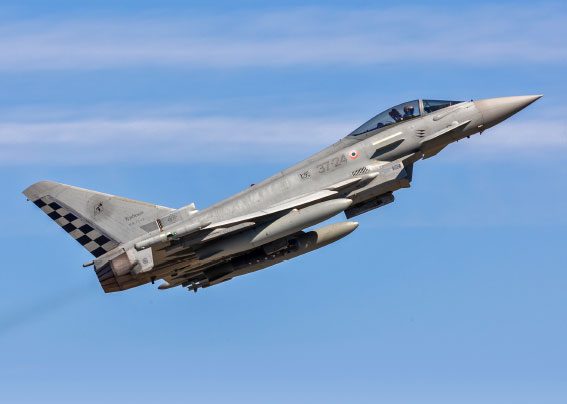
The Ramstein Flag 2024 Exercise was held at Andravida Air Base from September 30 to October 11, 2024. Organized with the support of NATO’s Allied Air Command, the exercise serves as a tactical level training event, offering participating countries realistic and challenging scenarios within a complex operational environment. The event brought together over 130 fighter aircraft and approximately 2,100 personnel from 12 countries. As a first-of-its-kind exercise, NATO fighter jets flew approximately 1,100 sorties, focusing on countering anti-access/area denial (C2AD) systems and integrated air and missile defense systems. On the ground, the Hellenic Navy, NATO Space Centre, and U.S. and Greek Special Forces played key roles. Additionally, Greek Army air defense systems, including the Patriot, Hawk, and Skyguard, were actively involved in the operations.
The United States Air Force conducted its first Red Flag exercise 49 years ago, in 1975, at Nellis Air Force Base in Nevada. The exercise was designed to enhance air combat skills by training Air Force personnel in large-scale, realistic scenarios against a simulated adversary force.
Over time, this concept expanded globally, leading to an increasing number of joint exercises held multiple times a year, such as Red Flag-Alaska, Green Flag, and Maple Flag. Similarly, in Türkiye, the Anatolian Eagle exercises, first conducted in 2001, serve the same purpose. Ramstein Flag represents the future of NATO exercises, focusing on addressing current and emerging threats. It is set to become a "routine" event, with the next exercise scheduled to take place in the Netherlands.
Following Russia's invasion of Ukraine, the use of missiles, unmanned aerial vehicles (UAVs), and fighter jets near NATO borders has significantly increased, heightening air and missile threats to NATO territories and populations. As a clear demonstration of the Alliance's commitment and its capability to implement the "Deterrence and Defense" concept in the Euro-Atlantic region, the inaugural exercise in the "Flag" series was conducted.
Sweden, NATO's newest member, participating in such a comprehensive event with its Gripen aircraft, sends a powerful message. It can also be interpreted as a response to criticisms directed at Stockholm. Romania’s involvement carried equally strong significance. The country, which has become a key player in the Western—and by extension, U.S.-led—front against Russia through its acquisition of F-16s and its recent order of F-35s, played a distinct role in the exercise. Unlike other countries, Romania’s F-16s took off from their home bases, participated in the exercise after refueling, and then returned to their bases. This approach reflects Romania’s limited fleet of modern aircraft and the risks associated with temporarily deploying them to another country.
According to a statement from NATO Allied Air Command, Greece was chosen as the host country due to its compact geography, encompassing sea, plains, and mountainous terrains, which enable training to occur simultaneously across three locations. The exercises featured live-fire capabilities and created a complex tactical environment, primarily designed for air forces. The activities focused on Counter Anti-Access/Area Denial (C2AD) missions. A key highlight of the exercise was the integration of fourth- and fifth-generation aircraft, command-and-control systems, and ISR (Intelligence, Surveillance, and Reconnaissance) elements, along with the coordination of real-time operations in a multinational environment. The event, which marked the first implementation of contemporary tactics and doctrines at the NATO level, can also be interpreted as a signal of a return to Cold War-era strategies. Another noteworthy aspect is the absence of any scenarios addressing asymmetric attacks and UAVs in the statements provided. This omission is striking, as they have been among the most critical elements of the Russia-Ukraine war.
The most significant point regarding this exercise, from our perspective, is that the Turkish Air Force was unable to participate, despite being one of the event’s planners. Greece, as in the past, continued to advance its longstanding unjust claims during the event. According to the Chicago Convention, state and military aircraft are exempt from FIR (Flight Information Region) notifications. However, Greece unlawfully insists that Turkish aircraft file flight plans with Athens—a requirement that, to our knowledge, has no parallel elsewhere in the world. Naturally, Türkiye refuses to comply with such demands. Another issue arises from Greece’s unlawful assertion that its territorial waters extend six miles while its airspace covers ten miles. This discrepancy, coupled with its FIR-related claims, leads Greece to unfairly treat international airspace as part of its sovereign territory. Due to these unacceptable claims, Türkiye chose to withdraw from the exercise at the last moment.
This situation can be seen as a significant loss for NATO. The Turkish Air Force is among the most experienced within the alliance and one of the few capable of operating in C-A2AD environments. The fact that this valuable expertise could not be shared with other allies during such an important exercise, due to Greece's unlawful claims, highlights one of the exercise's greatest shortcomings.
Considering that instability in the region is expected to increase in the coming period and that the results of the U.S. presidential election will directly impact NATO's activities, it is not difficult to predict that the Ramstein Flag Exercise will continue to grow in the coming years. With its established infrastructure and extensive experience, it would not be surprising if Türkiye becomes the third country to host this exercise, following the Netherlands