The Unmanned Revolution in the Sky
Due to its geographical location, Türkiye is either a neighbor or very close to troubled regions of the world. Due to its proximity to conflict zones and its long history of combating terrorism both within and beyond its borders, Türkiye has had its own unique needs. The Kurdistan Workers' Party (PKK-Partiya Karkerên Kurdistanê), recognized as a terrorist organization by the US and the EU, is a separatist militant group that has been carrying out armed attacks against civilian and military targets in Türkiye since August 15, 1984.
By the 1990s, air superiority had become increasingly important in the Internal Security Operations conducted against the PKK. The increasing number of general-purpose and attack helicopters were used for both personnel transport and armed reconnaissance flights. Attack helicopters proved very useful in the region, but they also had their own drawbacks. The combination of the region's high mountains and high summer temperatures reduced the helicopters' performance. Their time spent in the mission area and the loads they carried were decreasing.
Intelligence, Surveillance, and Reconnaissance (ISR) activities were becoming increasingly important for gaining control of the area. Unmanned Aerial Vehicles (UAVs) were needed to monitor critical geographical areas such as gorges, passes, and valleys used by PKK militants as transit routes, sensitive transportation routes, and PKK camps both domestically and abroad.
The General Atomics GNAT 750-45 MALE (Medium Altitude, Long Endurance) UAV System, consisting of six aircraft, a Ground Control Station, and a Portable Image Enhancement System, was ordered in December 1992 and deliveries began in August 1993 to meet this need. Thus, with the GNAT 750-45 UAV, which entered service in 1994, Türkiye became the second NATO country after the US to deploy advanced UAVs in the MALE category.
The use of this system, adopted early on, did not prove as beneficial as initially intended. The main reason for this was that the Air Force did not want to use the acquired system, so the GNAT 750-45s were given to the Army. Since the army perceived this system as an extension of the artillery function rather than the Army Aviation Command, the system was initially deployed in the UAV unit established in Çorlu to support the artillery regiment there, performing artillery reconnaissance missions.
This mistake was eventually rectified, and the GNAT 750-45s deployed to Batman Air Base in May 1997 were actively used in Internal Security Operations. Following the positive results obtained, two more Enhanced GNAT (I-GNAT) UAVs and one additional Ground Control System were ordered in May 1998, and the systems were delivered within the same year.
Although the most advanced systems of their time were acquired very early on, these systems were not utilized to their full potential. The main reason for this, as mentioned above, is the failure to use it correctly. The lack of interest from aviation professionals and the lack of vision from Army caused this important step taken during that period to become obsolete. Although the aircraft flew for very short periods, operational and usage errors quickly rendered them incapable of meeting needs.
While the armed forces using the system did not fully understand the value of unmanned aerial vehicles, the institution then known as the Undersecretariat of Defense Industries (SSM-Savunma Sanayii Müsteşarlığı), which guided the defense industry, recognized the importance of UAVs and initiated various projects for the production of these systems in Türkiye.
Original UAV development efforts, the seeds of which were sown in the early 1990s with the UAV-X1 Witness Project, gained a new dimension with the Turkish Unmanned Aerial Vehicle (TİHA-Türk İnsansız Hava Aracı) Program, initiated by SSM in 2001. The first domestically produced target aircraft, Turna and Keklik Target Aircraft Systems, entered service with the Turkish Armed Forces in 2001, and as a reflection of the projects carried out under the coordination of SSM, an industrial infrastructure operating in the field of UAV Systems began to form in our country from 2004 onwards.
Under the TİHA Development Program, a contract was signed between the main contractor TAI and SSM on December 24, 2004, for the development of a unique TİHA System consisting of three MALE Class UAVs, one Ground Control Unit, one Ground Control System, two Ground Data Terminals, three Day/Night Cameras, two Radars, and one Automatic Landing/Takeoff System.
In parallel with the TİHA project, and to meet the 'urgent' needs of the Turkish Armed Forces, a tender was issued through Turkish Aerospace (TAI) for the direct procurement of three MALE UAV systems totaling 10 aircraft, and as a result of this tender, 10 Heron MALE UAVs were ordered in 2005. The Heron MALE UAV System entered the inventory of the Air Force Command (HvKK-Hava Kuvvetleri Komutanlığı) on March 23, 2010. They are currently deployed at the 14th Base Command in Batman.
In the same year, the Mini Unmanned Aerial Vehicle Development Project was initiated to meet the Turkish Land Forces Command's needs for short-range reconnaissance, surveillance, and target detection activities both day and night. Deliveries of 19 Bayraktar Mini UAV Systems, comprising 76 aircraft ordered under a contract signed between SSM and the KaleKalıp/Baykar Makina Joint Venture on October 4, 2006, began in 2007. Baykar, a company whose name we now hear frequently, thus entered the UAV sector.
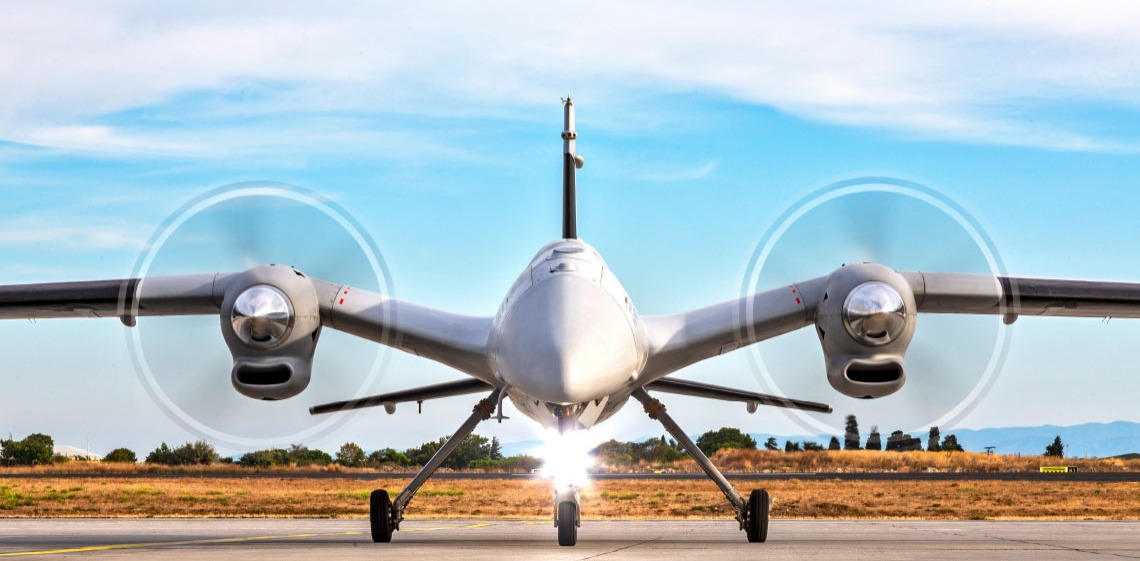
As part of the National Tactical UAV Development Project to meet the Turkish Land Forces' tactical UAV needs, a tender process was conducted with the participation of KaleKalıp/Baykar Makina Joint Venture and Vestel Defense Industry companies. As a result of this process, on January 6, 2010, it was decided to purchase two Tactical UAV Systems (12 aircraft) from KaleKalıp/Baykar Makina Joint Venture. Thus, the Bayraktar TB1 was born. When the project reached the mass production stage, the TB2, which was developed from the prototype TB1, went into production. The TB2's first flight took place on May 3, 2014. Six TB2s were delivered and entered service on November 22, 2014.
The ANKA Block-A MALE UAV, developed and produced with national capabilities under the TİHA Project, made its first test flight on December 30, 2010. To meet the Turkish Air Force Command's need for a MALE type UAV system, a contract was signed between SSM and TAI on October 25, 2013, for the procurement of an ANKA MALE UAV system consisting of 10 aircraft with additional capabilities and features (satellite control capability, radio relay, and CATS FLIR System integration). Deliveries of the ANKA Series Production (ANKA-S) project, which will be based on the ANKA Block-B airframe, began in 2017. ANKA-S is a system that adds strategic power to the Turkish Air Force Command. Six aircraft can be controlled simultaneously via satellite. Encrypted data transmission is provided in all communication systems, and hardware encryption is used in IFF and radio communication. Data recording is protected with a national encryption solution.
With the increase in the Turkish Armed Forces ISR (Intelligence, Surveillance, and Reconnaissance) capabilities, coupled with its increased rotary-wing capabilities, a new era began in the fight against terrorism. In 2016, the principle of confronting and preventing terrorism at its source, beyond the borders, was adopted. During this period, the number of cross-border operations and established bases increased, first in Iraq and then in Syria. To protect these elements and enable them to conduct operations, there was a greater need for UAVs. As their numbers rapidly increased, so did their capabilities. The most important of these capabilities is the ability to directly attack identified targets by integrating weapons, instead of using UAVs solely for ISR activities. The first SİHA (Silahlı İnsansız Hava Araçları / Unmanned Combat Aerial Vehicles - UCAV) began to enter the inventory in 2016.
The first test firing from SİHA was the Cirit guided missile launched by the ANKA-B. This was followed by a MAM-L launch by the TB2. After these test firings, the first official UAV operation was announced by Anadolu Agency on October 23, 2016, stating that four terrorists were neutralized in northern Iraq using a BAYRAKTAR TB2-S. Thus, more proactive methods were adopted in counter-terrorism operations.
In 2016, SSM launched the AKINCI TİHA (Taarruzi İnsansız Hava Aracı / Attack Unmanned Aerial Vehicle) project. TAI and Baykar Makine submitted their own proposals. In January 2018, Baykar Makine was selected for the project. AKINCI, which made its first flight on December 6, 2019, entered service on August 29, 2021. Thanks to its two turboprop engines, AKINCI can fly much faster than conventional UAVs. This also increases its payload capacity. The High Altitude Long Endurance (HALE) class system has a maximum take-off weight of approximately 6 tons and a payload capacity of 1,500 kg. While the standard weapon of the TB2 and ANKA is the MAM-L, weighing approximately 50 pounds, AKINCI can carry ammunition up to 2000 pounds, such as the MK-84. AKINCI is capable of carrying almost all guided weapon systems developed by the Turkish defense industry. It can also carry mission systems such as the Murad 100A AESA radar system developed by ASELSAN, the ASELFLIR electro-optical camera family, and the ASOJ-234U Electronic Warfare Pod. With its capabilities, AKINCI has opened up new areas of use and operational concepts (CONOPS) for the Turkish Armed Forces.
With its current capabilities, the Akıncı significantly enhances the air strike power of the air forces of relatively small countries. With lower initial purchase and operating costs than manned jet fighters, it has begun to carve out a place for itself in the market.
Developed and manufactured in just 18 months, based on the ANKA Unmanned Aerial Vehicle Platform, the AKSUNGUR, a medium-altitude, long-endurance class drone, made its first flight on March 20, 2019. AKSUNGUR is designed in a twin-boom configuration and is equipped with two TEI PD170 turbocharged 4-cylinder diesel engines. While the fuselage, wings, and landing gear have been redesigned, the control systems are shared with the existing ANKA family. With a payload capacity of 750 kg and a flight capability of up to 40,000 feet, the Aksungur UAV possesses a very effective strike force. It can stay airborne for up to 60 hours.
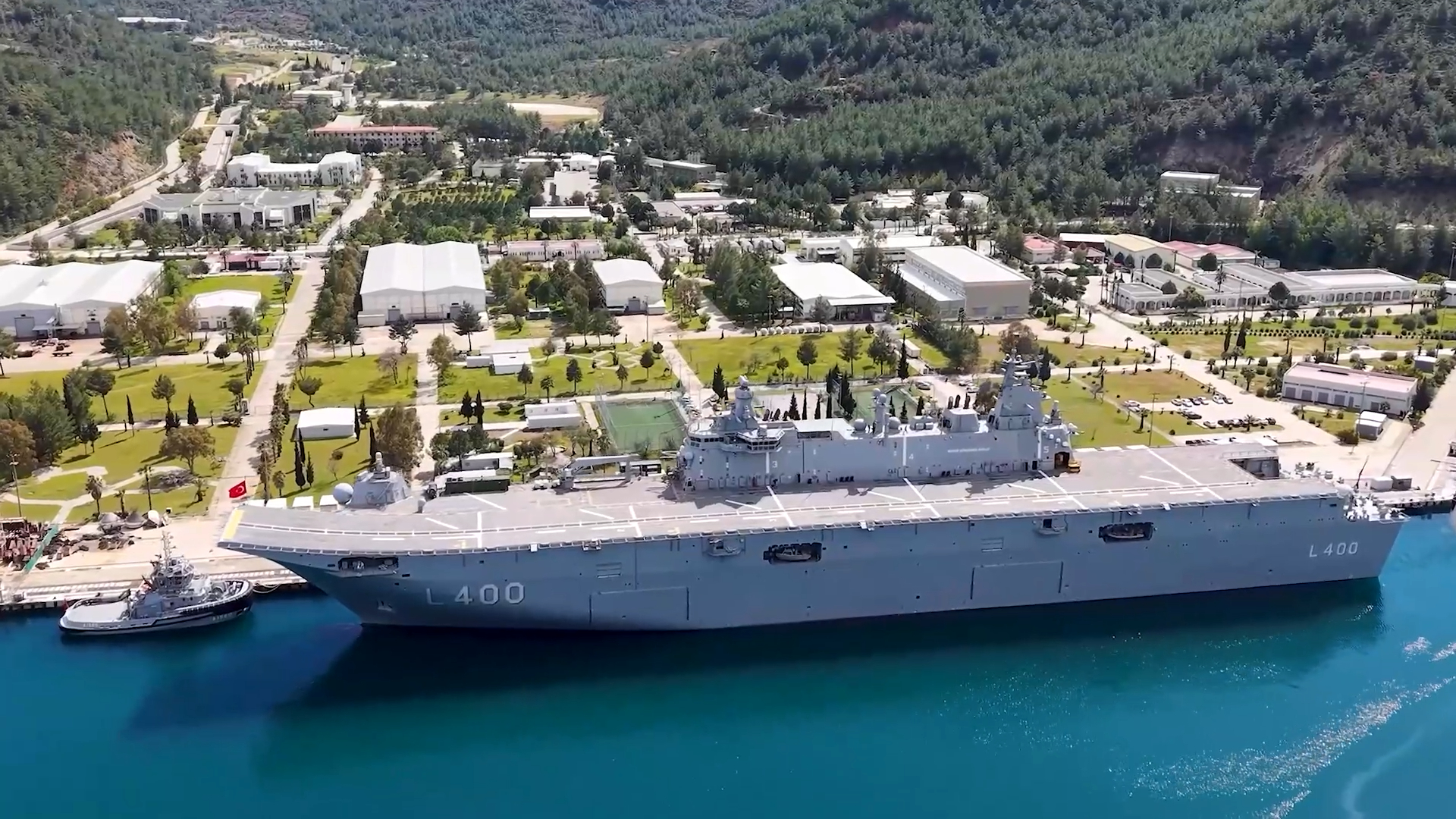
In parallel with the production of the TCG Anadolu LHD (Landing Helicopter Dock) ship, Baykar Makine started working on the TB3 model in 2020 to meet the need for a STOL (Short Takeoff and Landing) capable unmanned aerial vehicle to be used on this ship. With a length of 8.35 meters, a wingspan of 14 meters with folding wings, and a height of 2.6 meters, the TB3 is compact yet highly capable. With a payload capacity of 280 kilograms, the TB3 has a maximum takeoff weight of 1,450 kilograms. Powered by TUSAŞ Motor Sanayii (TEI)’s PD-170 engine, the TB3 has an operational radius of 2,200 kilometers, can fly for more than 24 hours at an operational altitude of 20,000 feet, and has a maximum altitude of 30,000 feet. A number of significant milestones were reached during the development of the TB3. The first prototype of the aircraft was publicly unveiled on March 27, 2023. On October 13, 2023, TB3 began its first runways on the runway. Following rapidly progressing ground tests, it made its first flight on October 27, 2023. A replica of the ramp on the deck of TCG Anadolu was built at Baykar's facilities in Çorlu. On June 1, 2024, TB3 performed its first ski-jump test from this ramp, demonstrating its compatibility with aircraft carrier-based operations.
On November 19, 2024, during tests conducted off the coast of Aksaz Naval Base, the TB3 completed its first flight from the amphibious assault ship TCG Anadolu, marking a transformative moment in naval aviation. The TB3 completed a 46-minute flight and landed back on the ship without requiring any landing support equipment. This successful test followed over 700 hours of land-based test flights. According to Baykar, the TB-3 is capable of autonomous take-off and landing without operator intervention. This capability is expected to simplify operations at sea in adverse weather conditions.
The deployment of the Bayraktar TB-3 on short-runway ships like the TCG Anadolu offers transformative capabilities for modern military operations. In Maritime Reconnaissance and Surveillance missions, the TB3's long operational range and advanced sensor systems will enable the Turkish Navy to monitor large maritime areas and provide early warning of threats. In Amphibious Assault Operations, the TB3, deployed on amphibious assault ships, can provide close air support during landings and deliver real-time intelligence to enhance the effectiveness of landing forces. Furthermore, the TB3 can precisely neutralize both high-value targets and smaller, asymmetric threats (such as unmanned surface vehicles (USV) and armed boats).
With projects initiated in the early 2000s, the Turkish defense industry has become one of the world's leading countries in the field of Unmanned Aerial Vehicles (UAVs). As the evolution continues, transitioning from piston-engined UAVs to larger, turboprop-engined aircraft, two major players in the sector, TAI and Baykar Makine, have begun developing a Turbofan-engined MİUS (Muharip İnsansız Uçak Sistemi / Combat Unmanned Aircraft System).
The exact start date of the ANKA-III Program, which is being carried out using TAI's own resources, is not known, but the development process of the MİUS, now known as ANKA-III, was announced to the public with two slides shared by TAI in a presentation at the "Turkey's UAV Roadmap with Emerging Technologies" panel held on December 24, 2015. This process was officially formalized by a decision of the TAI Board of Directors in January 2022. ANKA-III successfully completed its first flight on December 28, 2023. With its extremely flat flying wing (delta wing geometry) fuselage design, lacking any vertical surface, ANKA-III potentially has a low radar signature. With a low radar cross-section, the MİUS can also carry its ammunition in internal weapon bays. With a take-off weight of approximately 7 tons, ANKA-III can operate at an altitude of 40,000 feet, reach a speed of 0.7 Mach, and remain airborne for 10 hours. Until the TF6000 turbofan engine developed by TEI enters service, the AI-322 engine acquired from Ukraine is being used. With the new generation stealth MİUS, Türkiye will have strategic first strike capability.
The Bayraktar KIZILELMA Project, a turbofan-engined unmanned combat aircraft that Baykar Makine began developing with its own resources in 2020, was completed in May 2021. On July 20, 2021, the first concept design images and initial details about the aircraft's features were shared with the public. The first flight test of the unmanned combat aircraft was conducted on December 14, 2022. KIZILELMA is an unmanned combat aircraft with twin vertical stabilizers, delta wings, and a canard. It features a fuselage designed with specific angles and shapes to reduce radar cross-section and provide stealth capabilities, and an internal weapons bay for carrying precision-guided air-to-air and air-to-ground munitions. Furthermore, the coatings on the fuselage are manufactured with a serrated structure to further reduce radar cross-section.
KIZILELMA has a fuselage length of 14.7 m, a height of 3.3 m, and a wingspan of 10 m. With a maximum takeoff weight of 8.5 tons and a cruising speed of Mach 0.6 and a maximum speed of Mach 0.9, KIZILELMA will have a flight time of 3+ hours, a mission/combat radius of 500 nm, and a climb capacity of 35,000 ft. Capable of autonomous takeoff and landing, KIZILELMA will be able to carry payloads such as an Electro-Optical Targeting System (EOTS/IR/LD/LRF) and a Multi-Purpose ASELSAN MURAD AESA Radar, and thanks to its SatCom communication capability, it can be controlled and commanded both within line of sight (LoS) and beyond line of sight (BLoS). KIZILELMA has a payload capacity of 1,500 kg.
In a test conducted on November 29, 2025, a high-speed jet-powered target aircraft, launched as part of the scenario, was detected and tracked by the MURAD AESA radar, developed by ASELSAN and mounted on the Bayraktar KIZILELMA drone. After the target was precisely marked by the radar, KIZILELMA fired the GÖKDOĞAN Beyond Visual Range Air-to-Air Missile, developed by TÜBİTAK SAGE, which it carried under its wings. The domestically produced missile launched hit the jet-powered target aircraft with pinpoint accuracy.
Baykar Makine, the world's largest unmanned aerial vehicle (UAV) company, has signed export agreements with 36 countries for the Bayraktar TB2 SİHA (armed UAV) and with 16 countries for the Bayraktar AKINCI TİHA (unmanned combat aerial vehicle). The company, which has produced more than 700 aircraft, aims to continue this success with KIZILELMA. Similarly, TAI has sold around 150 UAV systems to more than 12 countries with its ANKA and AKSUNGUR UAVs, and with the stealth ANKA-III, it aims to have a say in a market where very few manufacturers exist worldwide. In Türkiye and around the world, AKINCI has flown 100,000 hours, ANKA 500,000 hours, and TB-2 1,250,000 hours. Very few countries in the world have such experience.
The Turkish Unmanned Aerial Vehicle (UAV) story began with a 6-kilogram hand-launched mini UAV and has transformed into a success story over approximately 20 years, flying an 8500-kilogram jet-propelled unmanned combat aircraft prototype equipped with internal EOTS and AESA radar, which is planned to be put into service soon. Initially used solely for ISR (Intelligence, Surveillance, and Reconnaissance) purposes, UAVs are now capable of performing complex missions such as SEAD/DEAD and ELINT/SGINT. Turkey is not only a UAV producer but also a country developing new tactics and creating CONOPS (Concept of operations) systems with its UAVs. Thanks to these capabilities, it has had a transformative impact on the course of conflicts in Syria, Libya, Karabakh, and Ukraine.
When the development of the KAAN aircraft is considered alongside the ANKA-III and KIZILELMA projects, it is clear that "manned-unmanned teaming" (MUM-T) will come to the forefront in the force structure after 2030. Turkey sees the future in unmanned systems to reduce its dependence on foreign sources and strengthen its defense and deterrence capabilities. In line with this vision, it continues to invest in both platforms and their subsystems. As with manned platforms, the most challenging aspect for Turkey will likely be engine design and production. If it overcomes this challenge, unmanned aircraft could become the main striking force of the Turkish Air Force in the future