“The Warrior, Today and Tomorrow.” International Future Soldier Conference Held in Ankara
The International Future Soldier Conference/IFSC organized by Defence Turkey magazine with the support of the Ministry of National Defense, Turkish General Staff, Presidency of Defense Industries, Defense Industry Manufacturers Association (SaSaD), and with the cooperation of METU Teknokent – TSSK was held at the Sheraton Hotel in Ankara on October 19, 2021.
As it was held for the first time this year, the event mainly focused on creating synergy and cooperation in “Future Soldier Concept and Technologies” to express its overall goal clearly, and the main theme of the event was “The Warrior, Today and Tomorrow.”
The ongoing global programs in this field, the technological level, and the capabilities achieved in the sector were examined during the conference. The activities of the NATO member countries in the working groups and global technologies and implementations were reviewed in the morning session. The “Industry’s Perspective of Military Digitalization” and “New Trends and Technologies in the Future Soldier Concept” were discussed in two different panels during the afternoon program.
The conference took place with the participation of nearly 400 local and foreign representatives in defense and the military, however foreign participation was limited due to the pandemic.
The Turkish Land Forces Command’s Training and Doctrine Commander Lieutenant General Sinan YAYLA and executive military officials, military attachés, and defense representatives of nearly 27 countries with embassies in Ankara and executives of the Turkish defense industry companies attended the conference.
The event started with opening remarks from Yılmaz KÜÇÜKSEYHAN, President of the Executive Board of the “Future Soldier Conference.” KÜÇÜKSEYHAN said, “Today, the whole globe needs to fight against the issue of terrorism. Terrorism is taking lives every day, and all countries must be prepared to fight against it. We aim to render the ‘Future Soldier’ ready to act against terrorism. We must keep a deterrent force in the armed forces to avoid a war. Countries can defeat terrorism by helping each other. The ‘Future Soldier’ concept we envision will defend countries and maintain peace as a deterrent power. No one can attack you if you are powerful.”
SaSaD Member of Board Zeynep ÖKTEM emphasized that the International Future Soldier Conference will yield beneficial results for the Turkish Armed Forces and the armed forces of friendly and allied countries. "Today, as a result of the change in threat perception, it is expected that there will be significant changes based on technology in the armies of developed countries in the near future. At the Future Soldier Conference, different approaches will be presented on what should be done to increase the situational awareness of the armies in this process to become more agile and integrated and overcome the new challenges. There is no doubt that the answer to the changing threat perception will bring many issues such as digitalization, smart sensors equipped with innovative detection algorithms, the creation of the soldier's digital twin on the battlefield and unmanned platforms to our agenda, while on the other hand, it will be instrumental in the launch of many new studies and even projects on these issues. Regardless the main focus of all these technological developments is human. Therefore, infantry will play an important role in the future battlefield. We hope that this conference will shed light on the technologies and capabilities that need to be used and adopted by future militaries. We believe that the International Future Soldier Conference will yield beneficial results for the Turkish Armed Forces and the armed forces of friendly and allied countries.”
President of Defense Industries Prof. İsmail DEMİR: “Over 20 countries are aiming to build up against the threats of the future and modernize the weapons and systems operated by the physical security of a dismounted soldier have already launched the 'Future Soldier’ project.”
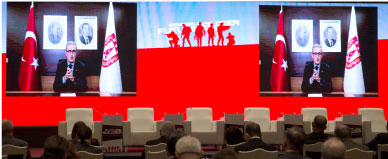
President of Defense Industries Prof. İsmail DEMİR addressed the participants in the event’s opening remarks through videoconferencing. DEMİR started his speech by thanking those who contributed to the event with SaSaD and Defense Turkey magazine and added that he planned to attend the event in person but could not participate physically as he was going to attend the funeral of the Chairman of the Bayraktar Group Executive Board Özdemir BAYRAKTAR. DEMİR stated that the warfare concept that is as old as the history of humanity is an ever-changing one due to the necessities of the time, technological changes, strategies implemented, and other similar factors, yet the nature of the concept remained unchanged and continued “The nature of warfare does not change, it focuses on humans, and it is based on human nature. Humans are the foundation of the fighting powers. In the end, all the battles are based on people’s interests. The technology and concepts defining warfare in our times are being transformed constantly and rapidly, whereas humans who are the primary actors in warfare remained unchanged to a large extent. Today, soldiers may be more trained and well-equipped than their historical predecessors, but their performance capabilities are similar. Over twenty countries are using the ‘future soldier’ project or program that aims to modernize the weapons and systems utilized by the physical power of a dismounted soldier to make a difference and prepare for future threats. Many of these projects and programs are focused on benefiting from the advantages brought by developing technologies such as new communication technologies, artificial intelligence, robotics, exoskeletons, augmented reality, advanced materials, and nano technologies."
Prof. DEMİR underlined that defining strategies based on requirements shaped in the battlefield of the future and conducting proactive activities were essential and added, "Gaining an advantage over the enemy in the battlefield requires being aware of one’s capabilities and using them effectively regardless of the knowledge and technology of the time and owning a superior capacity. Integrating such capacity with state-of-art technology is among the primary deterrence factors. Instead of merely adapting to the current circumstances, achieving sustainable deterrence necessitates the vision of the warfare’s future, identifying compatible strategies and acting proactively. The developments in electronics, communication, and material technologies paved the way to critical breakthroughs in the military area. The effects of these developments on the 21st century has altered the execution of battle radically. In this context, the course of science and technology has brought certain technologies, systems, and solutions to the fore in the area of defense towards the midst of this century. Development of military capabilities, defense technologies, and warfare-related strategies are directly linked with technology. Estimating the course of warfare in the near and distant future, probable battlefields and circumstances, and potential capabilities to be obtained by enemies are essential for maintaining an efficient fighting force. In other words, building a defense capacity that fulfills modern requirements is possible when used with the strategic, economic, political and technological visionary powers."
Prof. DEMİR emphasized that it will be the most important component of the battlefield of the future and that they continued working on areas such as swarm unmanned air-land-naval vehicles, big data, cyber security and space, satellite technologies, artificial intelligence and robotics, laser and electromagnetic weapons and continued, "We are aware that Turkey does not have the luxury of lagging behind in the global defense industry any longer and we proceed accordingly. There is huge competition in the world due to ever-increasing technology, and Research and Development (R&D) and innovation activities in defense are one of the most notable actors of this race. Therefore, identification of R&D, Product Development, and Innovation strategies, and management of technology projects bear strategic importance for our Presidency. Our country has been rapidly proceeding towards becoming a global power, and it has made a significant breakthrough in the defense industry, especially in recent years. Our industry and exports have been growing on account of the projects conducted to this end, and our foreign dependency in this area has been minimizing day-by-day. Above all, the outputs of these projects, the platforms, and the systems are being used in the field and help our security forces to perform their tasks safely. All these achievements have been reached thanks to our President Recep Tayyip ERDOĞAN's powerful leadership and his support in the decision-making processes as well as the defense industry ecosystem’s efforts. Today, on account of the capabilities of the platforms and sub-systems it builds, Turkey has become an actor in the defense industry instead of being a market. I believe we will see a more advanced Turkey than today, in the near future due to our journey launched towards the technologies of the future."
Special Presentation- HAVELSAN Digital Troops Concept “Integrated and Autonomous Robotic Systems”
HAVELSAN R&D, Technology, and Product Management Director Tacettin KÖPRÜLÜ gave a presentation on Integrated and Autonomous Robotic System Technologies within the Concept of Digital Troops. KÖPRÜLÜ underlined that the Digital Troops concept will be the most critical power in the battlefield of the future and added, “There are rapid developments in information and communication technologies. New concepts such as the remote management of a business emerged due to the pandemic, especially in the last two years. We also experience this in warfare. We aim to minimize the number of losses and avoid direct contact with the enemy. We want to see and know before the enemy; we wish to move before the enemy moves. Actually taking all these concepts to a certain level requires a significant amount of effort. This activity is a very tough one because we are at a point that requires a rational, transformative, and integrated perspective. We can achieve this only with the Turkish Armed Forces (TAF), our sector’s companies, and stakeholders.” KÖPRÜLÜ continued, “Today, we use the word digitalization in every sector. We moved onto the digitalization stage not only in the defense industry but also in all public services such as healthcare and education. In fact, we had already built a model in 2010. First, with the development of information systems at the beginning of the 2000s, we went through a period where the real world was transferred to a digital environment to which we refer as e-government. In the second period, we searched for what we could do entirely in the digital environment. Here we are speaking about the period where cyber warfare started. Social media is the best example of this. Presently, 70% of Turkey’s youth are living in the digital realm instead of the real world. The third stage is a very critical one; it is the period where we return to real life from the digital one. Augmented Reality is a good example. Today many weapon systems are run by software, and when you perform a cyber-attack, you can conquer it and use this platform against its user. In other words, we entered a stage where cyber and physical systems are combined. The most exciting part is the final stage. Towards the 2030s, we are entering a new era where the robotic age begins.”
KÖPRÜLÜ touched on how the globe with the digitalization trend would influence the defense industry and underlined that digitalization in the operational area has changed the conventional characteristics of warfare. “We are in a very chaotic environment, we need to examine very complex parameters, and we have been generating an amazing amount of data. It is not easy for one to analyze this and decide about it alone. Therefore, regarding this, the existence of infrastructures we call the information systems where all the data are processed, and quite developed analytic algorithms are generated is essential. Our company has already launched many projects in this area. With the digital troops concept and within our vision of seizing the future, we aim to develop more effective technologies regarding the activities in the battlefield function area that will give us an advantage and create a synergy and eventually put them into the service of our security forces. At the same time, we attach great importance to increasing competence in sourcing. Enhancing robotic technological competence with autonomous systems and man-machine concepts are particularly among our targets.”
KÖPRÜLÜ mentioned the integrated autonomous robotic platform technologies in which HAVELSAN invested and added that in present activities, unmanned aerial vehicles and autonomous robot systems have become indispensable components for the battlefield, as force multipliers exponentially increasing combat power. “We define autonomous robot systems such as sensors, operation systems, the control system architecture that we refer to as effector and command-control combat systems. We define its components as fully autonomous, semi-autonomous, or remote-controlled systems in the way they are currently used. When we qualify something as fully autonomous, it means that once the task is assigned, the decision is made by that system, and it is responsible for the results as it comes back. So, if we envision a world like this, what will be the legal and ethical aspects? Who will take the responsibility when such a robot kills a human being? These are all topics for research. We designed a ten-year roadmap particularly about digital data and rapidly launched projects with our resources, and developed intermediate UGV and tactical level UAV systems. The infrastructure we use, such as simulation modeling, has accelerated our activities. Without models or simulations, we neither picture a war nor understand how such robotic systems should act in uncertain environments.”
KÖPRÜLÜ stated that they aim to add joint mission intelligence to the autonomous systems developed by HAVELSAN to fulfill joint operation demands and to operate them in swarms. KÖPRÜLÜ underlined that they plan to maintain an interaction between autonomous systems with all air, land, and naval platforms, including manned platforms. KÖPRÜLÜ said, “The management of multiple UAVs and UGVs by a single soldier is an amazing force multiplier. We could not even imagine this, but today maybe one person will direct an army of hundreds of unmanned systems. The trend is heading in that direction. Therefore, adopting a more efficient, cost-effective, and highly successful system with a smaller number of soldiers seems possible. In the long run, we process these activities with concepts such as artificial intelligence and big data. Major developments are in question regarding computers. Palmtop computers will be revealed. When such innovations occur, each soldier will have a supercomputer; a supercomputer will operate on every robot. We will achieve a great power when we achieve this.” Tacettin KÖPRÜLÜ lastly emphasized the importance of transferring robotic technologies developed in the civilian realm regarding the concept of digital troops to the defense industry and expressed that it would be advantageous to advance such technologies jointly. “We need to consider how to add artificial intelligence modernization over existing conventional land, air, and naval platforms. This is not only a mechanical or physical modernization; we are speaking of including intelligence. The doctrine studies regarding the autonomous platform technologies need to be conducted by the Forces. Is a robot a device in the inventory, or is it under the personnel category? What is the difference between them? We need to clarify these points. The utilization of autonomous systems should be examined by legal regulations. Ethical rules need to be arranged. Training is quite critical. It is a sine qua non. Robots go to battle and record an amazing amount of data. You process this recorded data and perfect your algorithms and transfer it completely to next generation robots. So, all the combat experience and past records can be uploaded on a single robot, and experience is the greatest asset of an army. Training doctrine systems are working on transferring this experience, and this can be processed under a new concept. Especially with the development of artificial intelligence, when we take the changing quality of combat into consideration, we believe that a major gap will occur between countries with this capacity and those lacking it. This will stand out more in the 2030s. Therefore, we cannot ignore this technology or this concept. Future Soldier is the transformation of troops, the soldier himself and the commanders directing them as a brand-new doctrine.”
Training and Doctrine Commander Sinan YAYLA: “The systems and technologies to be used by the Future Soldier/Dismounted Soldier need to have high-level protection against Electronic Jamming, Electronic Attacks, and Cyber Attacks.”
Land Forces Training and Doctrine Commander Lieutenant General Sinan YAYLA delivered an informative presentation on the Turkish Armed Forces future demands and expectations from the industry regarding the “Future Soldier,” “Dismounted Soldier” concept. Expressing his content to be a part of the Future Soldier Conference that gathered users, procurement authorities, manufacturers, and research institutions, Lieutenant General YAYLA said, “I believe such activities gathering Turkish Armed Forces’ institutions and industrial enterprises will significantly contribute to shaping the future’s security environment.”
“For a powerful, deterrent, and effective Army, we need to produce the products that our rivals lack and use them effectively. Developing technology has been changing combat styles. Just like today, the end results in warfare will be reached by trained individuals in the future. Developments in technology and battlefields render the individual, in other words ‘Dismounted Soldier’ factor, more significant for the time being and in the future. No matter how far the weapons and equipment of soldiers develop technologically, the decision-maker will still be human beings in the operational environment of the future. Technological developments have been increasing the diversity and effects of the threats on the battlefield. Therefore, the tasks of the soldiers increase while the Dismounted Soldier’s sphere of influence widens.
We can list the technological expectations from the Future Soldier under seven bullet points as follows:
Improving the performance and training of personnel
Increasing survivability measures
Boosting the efficiency of munitions and weapons
Developing logistical support elements through maneuver capability and fire support
Establishing command control and secure communication systems
Maximum benefit from precision sensors
Achieving energy savings by demand-based power planning
The design of such technologies should have the capacity to fulfill the soldiers’ mental and physical requirements on the battlefield. The personnel in the battlefield who will confront the constantly changing and developing threats should not be subject to information overload. The notifications transmitted via the sensors should be kept at a minimum level to suffice the performance of a task.”
Lt. Gen. YAYLA pointed to the need to enhance situational awareness by visualization of data and added that these applications must support the control of other systems to be used with combat and information systems as well. Lt. Gen. YAYLA said, “The personnel’s performance, psychological and medical data must be tracked with the sensors and the personnel’s capability to perform the tasks should be evaluated.” Commander Lt. Gen. YAYLA also noted, “Equipment and hardware that will enhance the Dismounted Soldier’s mobility should be developed, and the Dismounted Soldier should be transformed into a platform” and added that both energy savings would be achieved, and the Dismounted Soldier’s survivability and maneuver capability would be enhanced if such equipment could be designed and manufactured in a modular, ergonomic, and lightweight structure. Lt. Gen. YAYLA also underlined that the new technological systems to be manufactured for the Future Soldier/Dismounted Soldier should be able to recognize its personnel and should be automatically disabled in case they are captured by the enemy.
Lt. Gen. YAYLA underlined that each soldier must continue to perform their task under all combat, field, and weather conditions and noted that developing lightweight, ergonomic equipment to boost soldier mobility and maneuvered capability is essential for the soldier to adapt to unfavorable conditions. Lt. Gen. YAYLA continued, “Within the context of survivability measures, modular, lightweight and heatproof technologies that do not disturb the skin and are resistant against sweat and external abrasives, technologies with CBRN protection and first-aid ability, technologies that can provide protection against directed energy weapons such as microwave and laser in addition to the effects of conventional munitions, detect psychological and physical changes and injuries, and that can detect sensors directed towards it and adopt counter-measures to such sensors are required.”
Lt. Gen. YAYLA reminded participants that a major part of military technologies turn into targets against cyber threats in today’s battlefield and underlined that the systems and technologies to be used by the Future Soldier/Dismounted Soldier need to have a high level of protection against Electronic Jamming, Electronic Attack, and Cyber Attacks. Lt. Gen. concluded his speech by expressing the importance they place on the International Future Soldier Conference which was held for the first time in our country and added, “I believe this conference will be useful for following the activities conducted in this area as well as for the technological developments and future projections, for revealing the existing capabilities of the defense industry and increasing awareness. The TAF has acquired great know-how and capabilities in the fight against terrorism, and technological developments will enhance the TAF’s efficiency and deterrence capacity further. To that end, I want to state that we are ready for all collaboration requests that will be required for developing the TAF’s capabilities within the framework of the relevant legislation. I hope this conference will be fruitful for all participants and I extend my warmest regards.”
NATO Land Armaments Coordinator Osman TASMAN: “Turkey’s Permanent Participation in NATO’s Dismounted Soldier Group is quite critical.”
Attending the event from Brussel via teleconference, NATO’s Land Armaments Coordinator Osman TASMAN delivered a presentation titled “The NATO Perspective on Army Armaments Development: Dismounted Soldier Focus.” Informing the audience on NATO Army Armaments Group – NAAG, TASMAN made statements on NATO’s Armament Perspective:
"I have been working at NATO for many years. This is my 32nd year here, and I will retire in three years. I am acting as the NATO Army Armaments Group’s - NAAG secretary. The NAAG has various sub-groups. There are eight groups ranging from helicopters to CBRN defense, from artillery to military engineering. The Dismounted Soldier group is one of these groups. This group is the largest group among all. Speaking of NATO’s Armament Perspective there are three main functions. The most crucial function is to build a forum that will enable data exchange with the groups. This is followed by achieving standardization, interoperability, and international cooperation. There is the fourth function that follows these three, and this forms a synergy on the industry, R&D, and information generation. NATO has a concept named DOTMLPFI (Doctrine, Organization, Training, Material, Leadership, Personnel, Facilities, Interoperability); among these, NATO focuses mostly on material, equipment development and maintaining the interoperability between them. Contribution to the doctrine and training should also be included. This does not mean that there is no interoperability in the activities executed. Interoperability is, of course, critical, but the ones I mentioned are genuinely the most essential ones. So, who is in charge of them all? NATO does not have a building or hundreds of employees. There is, in fact, one coordinator, and we are working on all these issues with my assistant. Committees are working on these points at NATO. NATO countries assign experts to these committees, and working groups are established. Some of them are in a decision-making position, and some focus merely on the related work."
Sharing information on NAAG’s functions and activities, TASMAN continued, "NAAG functions under the Conference of National Armaments Directors (CNAD), and the CNAD is supervised by the North Atlantic Council (NAC). The NAC is the top decision-making authority. It makes decisions on political and military areas. There are sub-committees attached to this authority. They vary from twenty to thirty sub-committees, and they continuously report to the council. The committees also have groups. There are three main armament groups attached to the CNAD, and there are also other groups. I mentioned the committees, but we are speaking about it as a conference. The CNAD is a committee, but its title is a conference, and there are some reasons for this. The most significant one is the armament, this is rather left to the countries, and the countries manage this issue with their budgets. NATO does not have an armament budget. There is no such thing besides the very extreme cases. Budgets allocated to the armament area are an internal issue of countries. Independent countries run their armament activities, and the CNAD conducts the coordination. NAAG remains at a rank below. There are nine sub-groups within the NAAG, and eight of them function under NAAG. These eight are at the tip of the iceberg; there is also another one which is the coalface of NATO, where all the work is done. The standards are set, and the necessary work is done here. This ninth group is, in fact, composed of ad-hoc, temporary, or permanent groups or teams of different sizes. These groups do not have decision-making capacity, but all the necessary work is conducted in these groups. They report to superior authorities. Dismounted Soldier has many panels which report to the Dismounted Soldier Group and the decision-making process is carried out in this way. If these decisions override its authority, they are directed to NAAG or the CNAD and even to the council in case of very critical decisions.
Speaking about NAAG’s perspective on the Dismounted Soldier concept, TASMAN made the following statements: "Land Capability Group Dismounted Soldier Systems (LCGDSS) is NAAG’s Dismounted Soldier group. This is NATO’s largest group at its level. It contains an expert group of nearly 250 people. If you ask why is it so important, well, when we think of the Dismounted Soldier concept, it is a group that fulfills the requirements of not only the land infantry but also the needs of the amphibious (marine), naval forces, air forces, and special forces. Not every country has ships or coasts, not all countries own aircraft or tanks, but they all have soldiers. We mention a complicated system here, it has a unique structure, and it is based on humans. Every system has a structure of man, even unmanned systems have man-based structures, but the Dismounted Soldier system is one where the human factor exists the most. NATO’s need for interoperability requirements has been gradually decreasing. In the past, during the cold war era, in times where NATO fought against Soviet armed forces in central Europe, interoperability at the level of army corps was required. Then the structure changed completely. Interoperability at the Dismounted Soldier level started to be required between countries. Therefore, certain Dismounted Soldier standards were developed; this is a very substantial source for interoperability."
TASMAN underlined the critical importance of the open architecture for Dismounted Soldier Systems and added that a structure was developed to enable the harmonized operation of Dismounted Soldier with its internal elements, its integration to the systems over it, and to render it open to development. "The activities to this end are on course. A standard will be issued in the upcoming months, and I believe this standard will provide crucial input for all countries and Turkey. There is a disorganization issue in question, a structure that will develop a solution for the disorganization in sensors, weapons, uniforms, and equipment is being formed, and I presume that it will be a standard taking part at the center of all aspects. The load carried by the soldier is a very critical issue since it is not only a physical load. This is rather a cognitive load; it is a psychological concept and reducing such a burden is very crucial. We are becoming more and more electronic, and we are using electrical power. Surely, meeting such power needs, its distribution to various elements, and maintaining its sustainability are essential. Therefore, there is a group focusing on this, and they are issuing standards for this field. We have many standards on the clothing of the soldier, and there are activities within this context. We are speaking of smart fabrics, systems that will reduce the weight of the equipment carried by the soldiers. We are also working on systems that create a solution for harsh weather conditions. The interchangeable characteristic of munitions is very critical. Of course, the soldiers do not go to the battlefield alone, they benefit from various armored ground vehicles and naval vehicles, and there are activities regarding this issue as well."
Informing the audience on NATO’s standardization activities regarding the Dismounted Soldier area, TASMAN continued his speech about the content of such activities. "The standardization-related activities (STANAG 4677) started mostly in Afghanistan. It was a story without a happy ending, but it taught a lot to NATO. Let me give an example from Afghanistan on how this standard functions. For instance, a Turkish squad is performing at a Street in Kabul, and there is a German squad at Street number 2, right next to it. The distance between the two is 10-20 meters, but they do not see each other. The Turkish squad recognizes a threat, the German squad is in the same region, but they are not aware of it. In this situation, the commander of the Turkish Squad informs the company commander on this case, and he reports it to the headquarters. There are Liaison officers at the headquarters, and they are notified. Then this data is transferred to lower ranks. Eventually, this information is exchanged perhaps 10 times until it is transmitted to the German squad. There is either misinformation in this case, or the information is reported quite late. STANAG 4677 can directly transfer the Turkish squad’s data to the German squad through a translation mechanism. Surely, encryption and various symbology issues stand out at this point as these are specific to countries. This information is instantly translated via an electronic translator, STANAG 4677, from one country’s structure to the structure of the other country. To begin with, this prevents blue on blue, and at the same time, it enables the instant exchange of situational awareness data to the squads of different countries performing in the mission region. Actually, it is not a novelty, it is a ten-year-old STANAG, but it is a system that is constantly developing and changing. I may qualify it as NATO’s critical contribution to interoperability."
TASMAN gave information on the activities conducted as part of the Dismounted Soldier concept for reducing the load carried by soldiers and stated that the power supplies carried for the electronic equipment have a considerable effect on the carried weight and mentioned the activities for developing alternatives regarding this issue. "Weight is another point regarding Dismounted Soldier activities. The United Kingdom has a project in this area. Within the context of this study, soldiers wear special goggles and go to a mountainous field for training with a load of nearly 40kgs. The eye movements of soldiers are recorded during the training. In the beginning, the soldiers are extremely awake, and they are constantly observing the surroundings. However, their pupils got tired in time, and they started to gaze at their feet after an hour. They get extremely tired because of the weight they carry, and they are immensely vulnerable in respect to situational awareness and are open to all sorts of threats. Mental and psychological fatigue is a very critical issue. Also mentioned by Dear Yılmaz KÜÇÜKSEYHAN, a soldier will be the first person to notice an incident. Though, the person that first recognizes the threat carries a heavy burden and it gets harder for them to survive in this situation. The power supply is another crucial issue following the weight load. Different types of batteries are being used inside weapons, on the soldiers, in the sensors, and communication devices. The battery is a very critical source of weight, and it must have backups. Power supplies still cover the volume and weight of all the systems to a notable extent, so we place great importance on the ongoing activities in this area. Regarding power supply/battery, there are activities such as thermo-electric garments, benefiting from solar energy, and generating power kinetically with the motions of the soldiers. There is once again a STANAG example on this, the 4740. There is an internal system named Picattiny rail where all power requirements are stored on his weapon. In this way, the sensors mounted on the weapons can use the power directly through the central system on the weapons without requiring any power supply."
TASMAN also touched upon other activities NATO executed as part of the Dismounted Soldier concept and informed participants on the ongoing standardization activities regarding ground vehicles. “We launched an activity that gathers different working groups to build solutions for the potential problems that can arise during the transportation of soldiers from different countries by other countries’ ground vehicles. The first one is extremely simple. Three-dimensional anthropometric measurements of the soldiers’ loads must be made. The base of the activities in this area is mostly medical studies, and these are being conducted on naked human bodies. The soldiers, on the other hand, are surely not naked. Some countries started to carry out activities in this area by using 3D scanners. There are studies on how to secure soldiers with seat belts when the soldiers are on the vehicles. The seat belts on military vehicles are not as simple as the three-point seat belts of civilian cars; much more different complex systems are being used. This surely is not rocket science; the soldiers will learn how to use them but suppose that the vehicle hits a mine, the entire electrical system is collapsed, and the inside of the vehicle is filled with smoke, the soldier needs to get out of the vehicle in all this mayhem. If the soldier is not trained well, they may spend precious seconds and even worse minutes while trying to unlock the rather complicated security systems and seat belts. If the last soldier is stuck, then a situation may arise that may risk the lives of the entire squad. This, unfortunately, does not have a standard; we are trying to develop standards for it. It is not easy because the industries have built different systems up until now. We must harmonize all the different systems. Moreover, supplying power to soldiers in the vehicles is a separate area that needs to be worked out. Will it be with a USB or an adapter? We need to have standardization for this. How will the communication and situational awareness of soldiers be maintained? The soldiers need to orientate themselves when they arrive at a mission region after lengthy vehicle deployments. They will have to orientate when they are inside the vehicle. The related standards absolutely need to be developed; we are working on this currently, and probably the standards will be revealed after 1-2 years." TASMAN also mentioned the standardization of munitions and continued, "NATO has two munition test centers. Achieving interchangeable munitions is extremely critical. Of course, the countries are not obliged to make interchangeable munitions, they can use any munition they wish, but when they participate in an international operation, the munitions must be certified and interchangeable. Otherwise, they may even face certain legal problems, or every country must establish its logistical system, and this is a big financial burden. NATO does not support this, and it aims to make certification obligatory regarding this issue."
As he concluded his presentation, NATO Land Armaments Coordinator Osman TASMAN expressed his wishes about the Turkish Armed Forces’ participation in the NATO Dismounted Soldier group. "Please join the Dismounted Soldier group; I address every country when I say this. I have a special message for Turkey; participation is not always continuous. I believe it will be useful to search for the country-specific reasons behind this. Please improve the standards and join the development activities. Developing NATO standards means, at the same time, displaying the industrial power of the country, and surely it has positive outcomes. I also kindly ask you to focus on the certification issue I mentioned."
Keynote Speech "Australian Army's Dismounted Combat Program Script"
Following the TASMAN presentation, Australian Defense Force Defense Attaché to Turkey, Col. Richard Campbell took the floor and addressed to the quests about the Australian future soldier strategy. CAMPBELL said: “ Distinguished guests, ladies, and gentlemen thank you for the opportunity to describe the Australian Army's dismounted combat program. The program provides continuous modernization of the Australian Defense Forces Soldier System, which includes small arms, helmets, body armor, night fighting equipment, an increasing level of robotics, and autonomous systems. Modernization will occur by enhancing the soldier and the team through incremental digitalization and improvements in the short term with step changes in the future, including integrated robotics and autonomous systems and artificial intelligence, enabling combat teams. The 2020 Defense Strategic Update for Structure Plan and Subsequent Defense Planning 2022 to 2021 to find the enduring need for dismounted combatants in the ADF to provide persistent ground presence, operate in complex terrain and defeat adversaries through close combat. Australian dismounted combatants provide the ability to shape Australia's strategic environment by being able to deploy into complex congested environments across the spectrum of operations from humanitarian aid to joint land combat. The dismounted combatant through continuous modernizations will enable a credible land force that can deter actions against Australia's interests while also providing a lethal, protected, and enabled force able to respond to challenges ranging from natural disasters to security threats. The program consists of a series of projects that equip the soldiers with lethality systems, that is pistols, rifles, machine guns, personal defense, weapons, and associated sighting and targeting accessories, situational awareness systems, night vision and thermal imaging devices, and survivability systems - being low carriage, field equipment, body armor, rations, clothing, boots, and other protective equipment.
The Australian Defense Force recognizes that in the future, the enemy will have greater access to emerging technologies that allow them to achieve disruptive effects out of proportion to the size of their force. Remaining informed on current and emerging threats while also experimenting with emerging technologies will drive the sustainment and continuous modernization of dismounted combat capability. To achieve this, the ADF has embedded dedicated science and intelligence advisers within the modernization program. The current dismounted combat capability can be characterized as an analog system comprised of many discrete products with varying levels of integration, harnessing the effects that can be generated by digital components. A new technical information network will be at the core of enabling the next generation of the capability. Increasing the digitalization of the system through incremental improvements will allow the dismounted combatants to meet the demands of the future battlefield. The ADF's dismounted combat capability advantage will be derived through the speed and quality of actions by individuals and teams and the range at which tactical effects can be applied. Developments in human performance optimization, education, and training will complement this digital evolution. The key risks for the program stem from the increasing speed, which technology of this nature is evolving, and the increasing spread of these capabilities to potential adversaries. The ADF can no longer anticipate that dismounted combatants will enjoy a decisive technological advantage over potential adversaries. Rather, any advantage is likely to be hard-fought and transitory. Maintaining the pace required to ensure capability advantage over adversaries whilst complying with acquisition processes and sustainment requirements will be a key challenge. Maintaining this advantage will require the integration of novel technologies as an early adopter, adding to the friction involved in rapid in-stride upgrades. Bulk upgrades of large volumes of equipment for the soldier will give way to frequent small improvements.
I just pause to explain that we recognized probably about 15 years ago that having old senior officers like me deciding what the best combat uniform was, was probably not doing an advantage to the soldiers. So, most of the people who are engaged in developing new combat uniforms, new low-carry equipment are corporals, sergeants, warrant officers, and young officers, not guys like me who don't carry that equipment anymore. Organizations such as Diggerworks play a critical part in enabling rapid experimentation, user trials, and introduction into service of items that improve the overall soldier combat system quickly. The program's recent implementation of a combat applications lab presents an opportunity to test and validate new concepts while also evaluating emerging technology, the use on the soldier or as part of a combat team. The lab will also provide a channel to engage Australian industry providers either directly or in concept with projects managed by the Defense Innovation Hub, a government initiative that stood up in 2017 seeking to take advantage of good ideas born from local industry rather than large international defense companies. Corona Virus has helped to accelerate Australia's push toward self-reliance where possible. Australia has an enduring requirement to be able to produce and maintain defense material, such as small arms, ammunition, and combat clothing on shore. We will, however, seek to balance this against the need to be interoperable with key allies such as NATO and our Pacific partners.
The program is being pursued in three broad time front faces. Phase one is modernizing the force in being. This is from year 0 to year 4 and will provide incremental improvements established as business as usual and evolution from analog to a digital soldier and expansion of the Combat Applications Lab. Phase two is from year 4 to year 10 where we are developing the Army Objective Force. We're looking for semi-autonomous combat teams through increased use of robotics and genuine programmatic management. Phase three is 10 years and beyond, where we are actualizing the future force. The combat team will be enabled by automation and AI, and we will have a fully digital soldier system.
Some of the projects included in the program: Land 159 (Lethality), which looks at a series of rolling replacements for pistols, sniper rifles, shotguns, machine guns, rifles, and anti-armor weapons. This project will commence delivery of pistols and sniper weapons next year, with all these weapons delivered by about 2030. Some key decisions have already been made, such as the acquisition of the Spike-LR2 missile as the Australian Defense Force Direct Fire Anti-Armor Weapon. The Spike system is also the solution for the Land 400 Series of vehicles where we are replacing every armored vehicle or modernizing every armored vehicle within our Army. Land 53 (Situational Awareness) is night vision and thermal at the soldier level. The ADF has recently purchased about 18,000 of the latest series of binocular night vision devices, which will be delivered in the next 12 months. An additional 5,000 sets of devices that fuse thermal and night vision will be delivered next year. Land 125-4 is an Integrated Soldier System, which is field equipment, body armor, and clothing. We've recently upgraded our Body Armor and Helmet commencing in 2017, and we are now looking to update field equipment and load carriage equipment. The future size of the phases of this project will include digital communication systems around 2023 to 2024. The projects in the Dismounted Combat Program have an approximate acquisition provision of AU$ 3.5 billion dollars over the next 10 years and sustainment provision of about AU$ 210 million per year for every year of that decade as well. So, it is a large system. It's especially large when you consider that Land 400, the replacement, and modernization on the vehicle fleet is itself another 4 to 6 Billion Australian Dollars.”
Keynote Speech "Dismounted Soldier System Power and Data"
Glenair, Market Development- Simon COVERDALE also shared detailed information about Glen Air company profile and has been carried out about the future soldier concept. COVERDALE said: “When we talk about what Glenair is offering to the dismounted soldier world, first of all, a couple of words on Glenair. We are a US company privately owned and has been in the connector business for over 60 years with manufacturing facilities around the world, including the US, UK, Germany, and Italy. We also have a couple of offices in Turkey. We are very vertically integrated, so pretty much everything we show you has been manufactured and designed from raw material. Started life in connections and back shells back in the 1950s, and there are a couple of points that are really relevant to the dismounted soldier environment. Back when we used our Mighty Mouse series, it was adopted over 20 years ago. In 2016 we combined all our technologies, including the requirements to manufacture parent data hubs and using the reference connectors that we were awarded the contract for in the Nett Warrior and Land Warrior programs. So over 16 years' worth of experience, we built our own hub and offered it to the market. That is our STAR-PAN product range.
First of all, standards. We really need to appreciate that there is no interoperability without standards, and as our NATO colleagues earlier in his presentation, as I'm sure, had referred to, standards are key for interoperability. We talked about our offerings, talked about weight, and not everybody needs a very complex system. Some things can be just a simple cable, so scalability is very important. Building bridges - there are many devices out there today which we use, which may be 20 years old, and there are devices that are coming in the next few years that we wish to use together. So how do we build those bridges? We have solutions for those as well. We've been doing a lot of work on dismounted soldiers. We must not forget dismounted soldiers are not always dismounted. They are actually mounted generally to get to the location get back from the location. So, what are the standards that we generally work within in the military world? Starting with the Nett Warrior white paper, which was written around the Nett Warrior and Land Warrior Programs specifying the connection and pinouts, it is very important when you are able to specify right down to the C2 level, the connector type, and the pinouts without specifying at the lowest level. It's very difficult to build interoperability as you go up. There are NATO STANAG standards that will be developed and written around the above standard from Nett Warrior, such as STANAG 4695, which was released in 2017, it enables NATO to have a standard going forward for connections for power on the soldier. After that, there are also other standards for data, the C4ISR standard and a new standard being developed by NATO also which combines the two above STANAG standards quickly.
What are the pinouts? Very simple, it's talking about power, what's the power delivery mechanism, and what's the protocol that's used when assessing batteries that are on the man or in the items being used by the soldier. The standard is the electrical standard of interoperability that is the USB. Now USB 2.0 has been around for a very long time, and it's also a very useful standard because it's in everything we do. Even when USB-C was produced, you'll actually notice if you look at the pinouts in a USB-C connector, there are still dedicated USB 2.0 connections, so this is reverse capability and forward compatibility. What we provide as Glenair is the interconnection element. We don't provide the peripherals; we just provide the hub and cables which adapt to your existing and potentially newly acquired equipment. The aim here is to keep it simple for you. We don't ask you to change anything, what we ask you to do is to tell us what you have, and we will then provide a platform-by solution. The importance is that with a hub in the middle or if those standards that we've just seen in terms of NATO or Nett Warrior come into play, because the hub uses those standards such as SMBus, standard connections, USB, etc.
I've mentioned scalability. Scalability is exceedingly important. 50% of the reason people actually would like a hub is to increase their autonomy in terms of power. So, one of the simplest options in connecting two digital devices together is just a simple Y-cable with Y-element providing a connection to an external battery, so the autonomy can be extended. As soon as you go past digital connections, you start to need a hub to be able to manage that data. That's where our STAR-PAN comes in. We also have Mission Manager, but the mission manager is dedicated to the management of the protocols and aligning of the data coming from the peripherals, which, as I said earlier, may come from an old device or devices yet purchased. We provide the complete system, including hubs, cables, le pouches, frames, etc. Generally, the latest connections for the latest equipment being used in the field. Because we are a connector company, we focus on the connection needs of the peripheral devices, first, ensuring whatever connection we make with those devices manages to give the full capacity of the device to the operator. A lot of targeting devices, many of our customers are either in reconnaissance capabilities, JTAC capabilities, or just field surveillance or for the observer capabilities or these requirements linked to targeting out positions. So, from the very smallest PLRF (Pocket Laser Rangefinder) up to the latest devices from SAFRAN Electronics, which combines media data, metadata all in one, we connect all those devices on power and data.
I mentioned STAR-PAN system is based on USB 2.0. It is not proprietary; we try to make all of our interfaces either a military standard if it exists, or an industry standard. Industry standards are, in many cases leading military standards, especially in the area of electronics and protocols. USB 2.0 is sometimes looked at as an all protocol and slow protocol, but in reality when you look at the protocol in the speeds of USB 2.0, it's 480 megabits per seconds (Mbps), generally several times faster than any of the devices you're using in terms of communication that you will be caring today. One protocol I've mentioned was SMBus. SMBus is a really important protocol for managing the power on your system. It enables you to interrogate the battery, make sure that when you are charging, safe charging is performed, and the batteries are continually being monitored. We employ those standard protocols to our advantage within the hub and to the advantage of the user, enabling our STAR-PAN hubs to be actual onboard charges. Our system of power management in the hub is essential. As I said, it's 50% of the reason people want a hub, the other 5%, obviously being data. This percent shows you what we try to do in our hub and power management. We have two power lines within our hubs. We have the battery voltage line, and we have the VBus line. The VBus line is used for all the protocols on the data management side. On our current hubs, we have PAM Port, personal area network ports, and radio ports. Radio ports are bi-directional on data and also power. Because the next largest battery generally found in any soldier system will be the radio battery, we provide API codes or built applications as per the customer's requirements so that they can be integrated directly into currently used battlefield management systems by the customer. It’s the customer’s choice, whether to use our existing solutions or to build their own. What's important is the API codes are available to be under the control of our hubs, so you can build it directly into the battlefield management system, which benefits the user.
As I said before, there is a mounted to dismounted element. Some of this work is already being tried and tested with other software solutions that are available in the market today, including SitaWare (C4I Battle Management System of Danish company Systematic Inc.). SitaWare is software that is aimed at the HQ level and the front-line level. So typical mechanized divisions within the SitaWare also have an edge piece of software, and all of these things combine. What also needs to be combined is that the soldier element needs to be able to talk to the front-line element and the front-line element needs to talk to the HQ element. To do that and to connect on power and data. We have already trialed this system with the development of SitaWare and made both data and power connections where we've been watching the movement of 5,000 items per second. As I mentioned, some items being used in the military have a particular form of driver that was commonly used for many years. But today, if you like to purchase your new phone with the highest processing power and use an Android-based system, that driver no longer exists in that custom ROM (Read-only Memory). I'm talking mainly about Android-based devices, but this can also apply to other things like iOS-based devices, which are generally locked down. In terms of the interface, there are many different things that need to be done in terms of multiple Ethernet rerouting and connections. So, by taking all of these elements, and then bringing them to a standard interface by physically connecting the mobile hubs, the next stage was to connect those messages and protocols digitally. The solution that came is a mission manager. Mission Manager has a Snap plugin architecture to be able to load dedicated applications. With a secure direct link connection, we do secure pairing if the customer would like to use it in a Wi-Fi-based element where they would like to connect Wi-Fi items before they can be connected or assessed sharing of keys based on if a physical connection is made first.
Applications can be built with a development manager so that the aim is to simplify the connections of the soldier on the battlefield. For example, we have already built Snap plugin applications whereby in a particular use case, the customer would always have to align IP addresses manually or try to align particular hardware to particular port settings. Another use for the Mission Manager, which creates a virtual and local VPN network, we are able to digitize all the ports and automatically assign the codes of the devices being connected, such as the PID code, product ID, or the VID code (Vendor ID). Using just simple elements such as commonly placed in peripheral items, we are able to auto-assign, no matter which port the soldier ends up plugging his device into, on our hub. One of the very key elements is to reuse information and assets that are available to maybe one soldier but to share information procured by one soldier across the team. In short, the Mission Manager is a solution that is adaptable and flexible without adding complexity by reducing complexity for the soldier in the field.
Our next-generation products are slightly different from our existing products for the benefit of the end-user. You may recall that I mentioned that we had PAN ports and radio ports. We also had power inputs such as auxiliary ports and battery ports. The next generation hubs are designed to only have what we call UPP ports to replace the radio ports and the power input ports. UPP stands for Universal Power Port. We use a seven-pin arrangement in this connection which is not in line with the current NATO specifications, but the seven pins do not prevent us from connecting existing cables or even new cables to the older solutions. Our cables adapt to the older solutions as well as the newer solutions by physically identifying themselves as a table that can retract the central pin if there is no slot for it, which is where the seventh pin comes in, and to identify what it is connecting to, in terms of connected device type. How do we do that? Very simple, we employed the USB-C PD (Power Delivery) protocol, which is an industry-standard. Within that protocol, we have the ability to identify it by asking the question over the protocol. What are you? What do you need before we do anything? In this range of connectors, we have also increased the capacity from the standard 5 Amp capability that you will find in the normal connector range to an 8 Amp capability. This 8 Amp possesses a significant advantage because it enables us to use the new range of SMBus batteries which are coming out with 8 Amp connectors that can power more and more additional electronic devices without the need for heavier and heavier batteries to increase the capacity.
1st Panel – An Industrial Perspective for the Digitalized Battlefield
A panel with the theme “An Industrial Perspective for the Digitalized Battlefield” was held first as part of the International Future Soldier conference’s afternoon program, and it was moderated by the SSB R&D and Technology Management Department Head, Dr. Şaduman AZİZ. ASELSAN Defense Systems Technologies Vice President Behçet KARATAŞ, VESTEL Defense Deputy General Manager İbrahim PAMUK, HAVELSAN Training Services, and ILS Group Manager Oktay TUNCER and ROKETSAN Vice President Murat KURTULUŞ attended this panel as speakers. Presentations were made regarding today’s environmental positions and those regarding future soldier concepts and the technologies to increase awareness, as well as presentations about technologies to accompany troops in the digitalized battlefield to support the fulfillment of duties.
In this presentation on “Future Soldier Technologies and ASELSAN’s Related Activities,” ASELSAN Defense Systems Technologies Vice President Behçet KARATAŞ spoke on the technological developments of the last twenty years and shared information on the command control and communication systems ASELSAN developed in this period for the Turkish Armed Forces as part of the network-enabled capability. KARATAŞ said, “As you know, technology changed quite rapidly in the last twenty years. Around 15-20 years ago, in a TV interview Bill Gates said that movies would be displayed, and TV channels would broadcast via the internet and that we would do our shopping on the internet, and everyone thought he was speaking of science-fiction, but now, technology enables all of them. In this respect, Future Soldier is this conference’s theme, yet it is a group game. So, in a group game, all players have to perform their tasks synchronously. In this context, as ASELSAN, we have been developing systems to enable our troops to perform synchronously since the ‘90s. Of course, as we develop such systems, we have various products ranging from the tactical field to the highest strategic level, but we always consider synchronous operation. To that end, upon the demand of our Land Forces, we developed the ADOP in the ‘90s, then TAİKS and HERİKSS command control systems. We continued and developed the sixth HERİKSS and delivered the third ADOP system. We continued to deliver such systems so far and availed systems that enable the synchronous performance of our troops. Individual success is quite significant, but the meaning of the success achieved by a team is quite high. The achievements to be reached by a team are much more, and we always kept this fact in our mind. Surely, we achieved all these under the guidance of the SSB and the Turkish Armed Forces. Within this context, in NATO standards, we are involved with all the working groups. We ran many operations with NATO and performed all our tasks successfully.
Regarding command-control, I mean real-time data sharing because the real-time and synchronous execution of activities is quite critical. In this context, the data accumulated by radars, electronic warfare systems, electro-optics, surveillance systems, and communication systems in the tactical field should be gathered and analyzed in a short period. The present technologies enable this. As you know, ASELSAN is based on communication. In this respect, we conducted these activities with the 9,600 frequency-hopping radios and data terminals over the TASMUS communication infrastructure, which is the first system we developed. Presently, they evolved into systems that also include electronic warfare-protected radios with frequency-hopping that are IP-based and that contain satellite communication. These systems can immediately collect all data and analyze them by artificial intelligence technologies, including deep learning, and they either support the commander or sometimes perform the tasks autonomously. At this point, we are developing the network-enabled capability command control system for our Land Forces. We hope to deliver it this year. Presently the acceptance process is in progress. This is a system that contains all command control levels extending from the corps level to the soldier level.”
ASELSAN Defense Systems Technologies Vice President Behçet KARATAŞ: “Within the scope of the Future Soldier, we are delivering 186 CENKER systems to our Land Forces Command”
Informing the audience on ASELSAN’s Future Soldier activities, KARATAŞ underlined that 186 CENKER systems are to be delivered to the Land Forces Command soon. “I will briefly mention the activities we perform as part of the Future Soldier concept. With the SSB’s R&D department, we are conducting a Project titled HAMLE as part of network-enabled capability. In this project, we will integrate this system, including battle games, to network-enabled capability by using artificial intelligence. At that point, before launching the system in the field, we will have the chance to see our deficiencies and superiorities over the system with certain simulations. Another critical input as part of the network-enabled capability is the CENKER system we developed for the Future Soldier. This and the Future Soldier we mentioned are related to this subject. Our CENKER system includes a healthcare kit. It features a 3D augmented reality imaging goggle. It also contains night vision cameras. It includes the bidirectional communication infrastructure, so it is capable of communicating with the center and transmitting data to the center. In addition, it owns the communication infrastructure that enables communication within the squad, ASYA – the sniper detection system and a system to assist the Future Soldier. With our own resources, we are working on systems to add to CENKER when we deliver it. Presently, we are to deliver 186 CENKER systems to our Land Forces Command. It includes the Future Soldier concept that contains all the features we mentioned. It will contain the features that can transfer its own image to the center while performing operations according to the images transmitted by the center. Besides, we are working on wearable technologies and related energy harvesting radio backpacks. There are systems that can both charge themselves and store the backup power they need. Additionally, we are conducting activities on active camouflage. We are working on wearable technologies that can change their camouflage according to light conditions, day-night conditions, or current terrain conditions.”
KARATAŞ talked about the programs they conducted using the IoT-based technologies and underlined their activities in this area ranging from underwater programs to space. Behçet KARATAŞ noted that they are working on the command control systems that can be used by the Future Soldier in the tactical field and continued, “As ASELSAN, we have a series of activities extending from underwater to space. We focus on the autonomous vehicles that operate underwater, and that can remain in sleep mode and restart when required for the performance of tasks. This can also be considered as a Future Soldier system. Regarding underwater acoustics, we developed underwater modems named Network Akustika with our own resources by which we can also transfer data. We strive to build all our underwater units with multi-static features. In civilian technology, we call this IoT, where all things communicate with each other, and we are adapting this technology to our underwater systems. We are adding features to enable their operation in the same way. Besides, we have the RADNET Project conducted with our Air Forces to generate the entire aerial image on the surface. New capabilities will be added to the existing RADNET. In addition, we have a command control system called HAKİM which we execute with a friendly nation to integrate entire air components and weapons. We are developing this in line with the protocol we signed with our Air Forces and for the demands of the Air Forces Command to have it integrated into the systems in our country. In this way, we will be able to expand the air picture. Surely, such activities will eventually enhance our soldiers’ security and services in the successful performance of operations. What we call the Future Soldier may be a robot or a soldier, so it has two eyes and an ear, a nose, but when in teams, it will have hundreds of eyes, noses, and ears, and therefore, it can conduct more effective tasks in an operational sense. We continue to work on the activities to that end.
We have activities on robots as well. They are either for load carrying or operational use. These are among the projects we develop with our resources. Therefore, we have been conducting our activities with the universities and our ecosystem and our other defense industry companies to fulfill the Turkish Armed Forces’ needs. We are delighted to minimize our Turkish Armed Forces’ foreign dependency. At this point, we must mention the points regarding IoT technologies. We successfully completed cloud technology activities, microprocessor development activities, and the ÇAKIL Project. We have the potential to enhance our competitive power by pushing the limits of technology and advancing further. We accomplished them; for instance, we completed the microprocessor development project with TÜBİTAK under the leadership of the SSB. We wish to carry this further by extending it to different areas to cover all needs by optimizing it for artificial intelligence.”
KARATAŞ briefly touched upon ASELSAN’s activities regarding smart munitions and informed the audience on their efforts to reduce the Future Soldier’s load. KARATAŞ said, “We have quite significant projects regarding smart munitions. When we developed the 35mm particulate ammunition in the KORKUT system, it became an extremely effective weapon system, especially against drones and swarm drones. Moreover, it is a low air defense system to be used to destroy the missiles launched for air defense. We also adapted this to the 40mm grenade launcher. It can be used to destroy crested threats or targets as well. We are thinking of diversification. Regarding smart munitions, we also work on lowering their costs and their weight and minimizing the power consumption. We have activities for lowering the Future Soldier’s loads. In that, as information technologies develop, the battery load of soldiers also increases inevitably. We are working on optimizing this battery charger in terms of minimization. Moreover, when you have a resilient communication infrastructure that can operate real-time in concern with certain tasks, you can achieve optimization by assigning certain functions to the center. We also run activities to maintain the infrastructure that enables the Soldier to perform more operations with less power.”
ASELSAN Defense Systems Technologies Vice President Behçet KARATAŞ lastly mentioned the personal equipment and systems planned to be featured by the Future Soldier as well as the development activities regarding physical performance and cognitive processes. KARATAŞ shared his opinions about the expansion of such activities with the participation of universities, research institutions, and the defense industry. KARATAŞ said, “Our primary suggestion is about working on cloud technology, especially in command control Future Soldier systems. As ASELSAN, we are ready to provide all kinds of support to provide cloud technology with national servers for security reasons, including the development infrastructure in the cloud environment together with open-source national development programs. In this way, there will not be any interoperability problems as the systems developed by different companies will be developed in the same environment, and we believe that it will be more cost-efficient. Apart from that, the establishment of a center of excellence will make us very happy. We have different activities in this area, and I would like to underline that we are ready to contribute in any way we can. We do not have any problems in using the existing technology. We need to advance further now and push the limits of technology, for example like building our own processor, wearable technologies, as we did in ÇAKIL. But when the companies start to develop the materials, they all have their own styles. In these areas, we expect institutions such as TÜBİTAK and our universities to actively provide these to the service of industry. I believe that the utilization of systems with basic technologies with a technology preparedness level of 3 or 4 would be more feasible. Aside from that, when we speak of the Digital Battlefield, we cannot ignore command control. Extension of the command control systems in this area and performance of the operations with such systems by our Land Forces, Air Forces, and Naval Forces is among our greatest wishes. We are ready to assume tasks in this area, and we believe that we can create more rapid and cost-effective solutions with our past experience and our know-how.”
VESTEL Defence Deputy General Manager İbrahim PAMUK: “In Solid Fuel Oxide Cells We Developed a Prototype Entirely in Turkey without any Foreign Components.”
VESTEL DEFENSE Deputy General Manager İbrahim PAMUK made a presentation on “Digital Healthcare Solutions in the Battlefield” and informed the audience about the activities conducted by VESTEL DEFENSE and AYESAŞ on the Dismounted Soldier and Future Soldier concepts. “Concerning AYESAŞ and VESTEL, it is quite simple; AYESAŞ has been working on command control, radar, and integration areas for a long time. In respect to VESTEL Defence it is perhaps the youngest of the companies in this area. It was founded at the end of 2003. It had two main aims. One of them was unmanned air vehicles, and the other was fuel cells with hydrogen technology. The production phase was aimed at after the development phase. This has been achieved in UAVs. Presently we have products with various features. Of course, it will not be wrong to say that the expectations regarding UAVs were infinite, and we strive to include these expectations in the products. Speaking of fuel cells, this is a technology that many people are hearing about recently. However, it is older than 150 years. The first demand came up with the question - from where to supply power to the satellite launched to space in 1960. Solar panels would generate power. This is a difficult technology because it requires enough demand. As you know, it is still not very affordable, that’s why demand should be sufficient. But this demand sometimes varies on a voluntary basis and sometimes on the essentiality.”
İbrahim PAMUK underlined that energy needs would stand out more in future battle conditions and mentioned VESTEL Defence’s activities and targets in the fuel cell area, mainly in hydrogen technology. “Presently, technologies on batteries are quite popular. Our target has always been the electric car, but according to the trend, the electric car will be followed by the hydrogen car. The demand for hydrogen cars is not quite intensive presently, for it is quite expensive, and the way of supplying the hydrogen is uncertain. As you know, Turkey’s first fuel cell submarine is currently going through trial tests. The hydrogen is supplied from Germany throughout the trial testing process. When the trial test is over, we will start to experience the hardship of providing the hydrogen in the quality and amount it requires because placing hydrogen in a container and transferring it is not that simple. Therefore, we need to focus on these issues now. Likewise, regarding fuel cells, we are conducting activities in various sizes ranging from very small scales to quite large scales. As VESTEL DEFENSE, our target is to carry out R&D until the prototype stage and wait for the accumulation of sufficient demand in the production phase. We even completed various projects regarding solid oxide fuel cells. One of them was a project that aimed to benefit from diesel oil to supply power to a border post, a mobile hospital, or armored vehicles. There are similar projects in the world waiting the emergence of demand. Even the world failed to carry this challenging technology to the desired level but remains persistent as its theoretical efficiency is over 85%. There is no such thing, even technologies reaching efficiency levels of 30% are perceived as wonderful ones, so 85% is an amazing percentage. Therefore, material development in this regard continues. With the contribution of the defense industry, we built this prototype entirely in Turkey without procuring any foreign parts. Besides the pump, we developed the membrane and the sub-components in Turkey. We are displaying a perfect model of Industry-University collaboration with Niğde University. We even have a laboratory founded at Niğde University and have staff there. It is primarily used for our requirements and for the University’s academic studies the rest of the time. Last year this laboratory received the Higher Education Council’s success award.”
PAMUK noted that digitalization has become inevitable in our times and added that the most critical steps towards digitalization were taken with remote access, especially due to challenges caused by the pandemic. PAMUK spoke of certain instances on the shaping of remote access in light of data transmitted by sensors and said, “We have learned much during the Covid-19 period. We know how it feels to stay at home. So, we observed the ways of remote access to surmount the difficulties set by staying home and started to discover them. In fact, we started to experience the most critical steps of digitalization in this way. Actually we initially got used to distant learning and access to information. So, what if the information we access is transferred by a sensor? Then we start to be able to receive such information remotely. A data cluster is not that essential, but when you pick the data you need from the cluster, then it becomes quite precious. The difference between data and information is the ability to acquire the format you wish. The best acquisition method is selecting and collecting the data one wishes to gather from that cluster by using Artificial Intelligence. This is the initial stage. Then we need to interpret this data we obtained for use in our business. We heard of the first examples of artificial intelligence years ago when a machine played chess with a human being. The machine only identified the positions of the chess pieces then. In fact, in the beginning, there were no sensors; the position of the pieces was controlled with the keyboard by human beings. Upon receiving this information, the machine must decide on the next step. This decision-making algorithm is the foundation of artificial intelligence. The causes or steps of the interpretation requirements have to be built. In those days, certain processes could be run by using this digital development; this means that the data was obtained through remote sensors, interpreted in clusters, and required decisions were made. Radar integration is no different from this. Presently, the devices with the integration level of IoT that is the Internet of Things have started to take part in our lives. If you want to, you can see the temperature of the refrigerator and increase it or correct it. What you actually do is to take the data of that sensor. Assessing and interpreting these collectively is critical. You know Moore’s Law. It claims that the number of transistors on a microchip doubles every 18 months. However, this law cannot be valid anymore because the distance within the chips has to be shortened to boost the transistors. When this is achieved, the discussion will go up to how thin the lines can be. “
VESTEL Defence Deputy General Manager İbrahim PAMUK stressed that the future of the soldier would be based on the “Digital Soldier” concept and underlined that a soldier is, whether purposefully or not, a point of data collection. PAMUK added that a mechanism for collecting all the data via the sensors and transmitting it to the related centers is required for the future. “Lately, we started to focus on issues regarding the healthcare of soldiers. To elaborate, we are concerned with collecting data on heartbeats, pulse, blood pressure, and other relevant data and conveying these data to a station for their interpretation. Artificial Intelligence is a great tool for the interpretation of such data but considering that the person who will interpret is also a resource, it is wiser to use that resource efficiently. In the past, doctors would visit homes to treat patients. Then we started to go to hospitals. Today, bringing such data and algorithms to the doctor is among our priorities. This used to be called telemedicine before; the US Army severely felt the need for such a concept during NATO’s battles in the Balkans because, especially when soldiers suffered from bleeding, they would not be able to tell their location. As VESTEL, we started to build our plans on putting sensors on the soldiers as part of wearable technologies for gathering and accumulating data, particularly about the wellbeing of the soldiers. We aim to receive data via sensors but from where will the sensors be powered. The batteries will run out after a certain time. That being the case, we are working on fuel cells to power the sensors or providing power individually to soldiers to cover their needs. It can either act as a sensor or it can run to power the communication capacity of the soldiers. We have been programming mobile stations and devices alike to enable the utilization of the dismounted soldier or the digital soldier, or a few groups of soldiers. Americans have, in fact, tried this. They launched a project to detect the whereabouts of certain distinguished persons or soldiers, but there is no further information about this project. They integrate a tiny fuel cell into the soldier’s body, or the soldier sticks this to his body when he is about to lose consciousness; the fuel cell is activated with the blood sugar and transmits the location of the soldier to a center as a GPS signal.”
Fighters of the Future World: The Digital Troop
HAVELSAN Training Services and ILS Group Manager Oktay TUNCER gave a presentation titled “Fighters of the Future World: The Digital Troop” covering the activities in the operational atmosphere of the future and underlined that HAVELSAN continued to work particularly on autonomous swarm intelligence as well as training and simulation within the Dismounted Soldier concept. TUNCER underlined that when technology is at stake, humans and machines basically have interaction and he noted how the Future Soldier concept will determine the battlefield of the future. TUNCER said, “In today’s Future Soldier conference, I want to start with the context of how to determine the battlefield of the future and talk about the features in todays and the future’s battlefield. When we envision the battlefield of the future, well, as we all know, the developments are quite rapid. So, the slow ones are doomed to end. There is a motto, ‘Speed is Life.’ In my opinion, battles where all developments are rapid, the speed of decision-making platforms as well as the pace are increased, are ahead of us. The success of the operation is possible by integrating the activities in the battlefield’s function areas. Therefore, when we approach the issue in terms of time, location, and power, synchronization of the activities is a huge requirement, and surely there’s digitalization – the reality of our times. The commanders must decide very fast. Automation is another today’s reality. Also, human-machine interaction is a critical reality nowadays. When we think of the Future Soldier Operational Concept, automation, sensors, and a complex operational environment come to mind. Now, our Chief of General Staff can communicate directly and easily with a border post commander in Hakkari. I believe that the theater has extended. The theater is much wider than before, and the dimensions have changed. The number of actors increased. Only soldiers fought in the past, but now there are more actors. The ones who took part in the Afghanistan operation would know this; there is a complicated number of actors. An operational environment there are thousands of actors gather and where non-governmental organizations from various countries, governmental organizations, international organizations, and civilian structures is a fact of today’s reality. We know that air, naval, and land operation environments in the classical sense now also include cyberspace. It used to be like this in the past, but now it can create a strategic impact in the tactical field. That’s to say; even the smallest incident can create a governmental or even a global effect. For instance, I experienced an incident during my assignment in Afghanistan. Our ISAF headquarters had been busy with the burning of a Quran for days. It has been repeated by other speakers as well; there is excessive information and data, so data gathering and deriving meaningful results are primary requirements. I believe our solutions should be developed based on these.”
Oktay TUNCER mentioned confusion on the human-machine interaction in defense industry projects and underlined that this must be baselined first. TUNCER continued, “The second point I want to emphasize is that when we take a look at defense industry projects, the focus is mostly on solutions to enhance or maintain human-machine interaction, and this is also the reality of our times. HAVELSAN is currently working on human-machine interaction. The literature in this area suggests three models. Autonomous systems with human-robot interaction such as Unmanned Air Vehicles and Unmanned Land Vehicles are one of these models. Another is the group of interactions maintaining the analysis of more data in a wider field by gathering artificial intelligence with machines through the use of larger artificial intelligence such as Big Data. The third model is comprised of solutions that lead to Human Augmentation, boosting the physical performance and capacity of humans. In my opinion, everyone should have the same understanding of autonomous systems. Here, in his speech in the morning, our commander pointed to a complication. Exactly, we should all conduct these activities by reaching a consensus on the concepts. Three points arise when we speak of autonomous systems. When we take a look at the decision-making process, the decision cycle is as ‘obtain and evaluate data, decide, act and repeat.’ Thinking about this cycle, this loop, the machine we invented realizes this loop, but eventually, the decision is given by humans. This is the first point, the human-controlled systems. The second group is the semi-autonomous systems, here the machine also actualizes the loop, but the final decision is made by men. These are semi-autonomous systems. If the autonomous system can make the decision, then we have full autonomy. I think even the most modern forces cannot fully realize the full-autonomy concept, but when we take a look at the developments, there are countries that may achieve this in the future. Ethical and legal issues about this subject are being discussed presently. So, if an environment for a machine is created where the machine completes the entire loop, gives a decision, evaluates, and even draws conclusions from the decision, then it may have adverse effects for humanity in the future. Yet, autonomy is today’s reality, and we have to achieve this with the systems we will create.”
TUNCER: “We Conduct Tactical UAV and UGV Activities with a Very Special Team of Nearly 40 People. We Aim to Render UAV and UGV Swarms Capable of Integrated and Autonomous Performance in Operations in 2022.”
“After clarifying this conceptual framework, let’s focus on HAVELSAN’s activities in this area. Our R&D Director mentioned this in the morning session. Aware of this tactical-level need, we have been working on this point in our tactical UAV and UGV activities for the last two years, with an extremely special team of nearly 40 people, and this year we introduced both our tactical level UAV and UGV as prototypes. After running field tests in the operation environment, we reviewed the lessons learned, and I want to sincerely declare that our prototype UGVs and tactical level UAVs are available for operational tasks. We built a working group when we launched these activities in HAVELSAN, and we already know our existing solutions. Where can we place this, what can we do additionally, where shall we start? While we were asking these questions, we decided to do the following. The function areas of the digital troops in the battlefield, in other words, the maneuver, fire support, air defense, command control, survivability, and logistic support, have been our starting point. Then we launched our digital troop concept by developing our solutions in a way to activate the function areas of the battlefield and added our existing solutions to these concepts. We placed and grouped our autonomous system solutions to enable the activation of the function areas of the battlefield, to maintain fire support, maneuver, survivability, and intelligence in a modular sense. At this point, we arrived, as I mentioned before, at the tactical level, we ran the field tests of both the unmanned air vehicle and multi-rotor M6 vehicle, and we think they are presently ready for operational tasks. In terms of ground systems, we developed the initial version of Alphan. Then we tested its vulnerabilities in the field with Barkan. As you know, we competed in our Presidency of Defense Industries’ competitions. I am proudly declaring that currently, it is the leading Unmanned Ground Vehicle. Of course, this is not enough. We have this in our vision, we actualized it partly for the UGVs, and our engineers are working on the algorithms for air vehicles; by the end of this year, we will render our unmanned air vehicle and ground vehicle swarms. We aim to enable both swarms to perform autonomously and integrate with each other by the end of this year. As HAVELSAN, we are working on this area now, and hopefully, we will achieve this target of integrating the swarms in 2022.” Informing the audience on HAVELSAN’s activities on UAVs and UGVs in the last two years, TUNCER concluded his speech on the panel by mentioning HAVELSAN’s successfully accomplished projects regarding simulators.
HAVELSAN Training Services and ILS Group Manager Oktay TUNCER continued, “The simulator was one of HAVELSAN’s main focus areas in the beginning. Benefitting from our previous experience we built sensors capable of performing Body Motion Analysis, solutions that can reveal body movements with sensors. Currently, we have simulations of all platforms flying within the body of our Land, Air, and Naval Forces, and we have delivered these simulators to our Armed Forces. Merely, Chinook and C-130 were not among these simulators. Their development towards the production stage has been launched recently. So, in terms of training platforms, our Armed Forces own all flying platforms’ Level-D standard simulators. We are surely aware that training is quite critical for the Future Soldier. We aim to create training environments that can deliver training on incidents on the battlefield in an integrated and virtual environment that can run decision-making mechanisms and processes. In this regard, we have solutions that can execute the training and operations in individual, operative, and strategic levels in virtual environments. For instance, we indigenized the tactical environment software named National Tactical Environment Simulation that we use in our simulator. This is one of the most notable success stories we achieved at HAVELSAN. We used to import it, but we can create the tactical environment in our simulators now. Our Malazgirt Project focuses on this area. We can build simulators of all types of weapon platforms. We built simulators of the sniper, parachute, ground vehicles, and M-60 tank. Moreover, we can establish integrated training centers; we accomplished the modernization of the latest Battle Game simulation center in Istanbul, including its infrastructure. We manufactured a very modern Battle Game and training center from scratch for Qatar, and this has been one of our most crucial export items in the last two years. We also have command control solutions. For instance, we have command control software named HARBİYE which we refer to as Defense-out-of-a-Box in the international arena, which can generate the image of the operation field for the commander in individual, tactical and strategic levels and can be used in vehicles and on personnel. We have been modernizing all vessels of the Naval Forces with our ADVENT/GENESIS system. We indigenized the firing control systems. HvBS is a major long-term project of HAVELSAN. We adapt it for new demands and use it in our other solutions. We have information and management systems. We developed cloud technology regarding logistics. We built HAVELSAN Drive. We indigenized communication systems such as DİYALOG and İLETİ, and we offered them as HAVELSAN solutions. We have image processing software. When the battlefield of the future is in question, we can create the software to process and combine the images transmitted by the sensors, as also mentioned by our VESTEL representative. We have an assignment in the National Fighter Jet project; we have projects such as preparing its digital twin and maintaining the cyber security of the platform. We believe we can use them as indigenous platforms in the future’s battlefield and indigenize the software.”
ROKETSAN Vice President Murat KURTULUŞ: “We Demonstrated ALKA-NEW - the Network Enabled Weapon, a New Concept of ALKA to Representatives of All Our Security Forces”
ROKETSAN Vice President shared ROKETSAN’s views on the future’s battlefield within the context of the Dismounted Soldier concept and relayed information particularly on their digitalization goal and their upcoming R&D activities. “As we spoke of changing concepts, surely regular army battles were replaced by proxy wars in this period. Technologies owned by the country started to determine superiority instead of the number of soldiers. In fact, owning the technology does not suffice in the field; there is also the requirement to improve the capacity of implementing the technology. In today’s battlefield, asymmetric threats are the most recent ones. Especially with the increase of urban warfare and conflicts, our security forces’ need for portable, lightweight, smart, and autonomous systems has started to rise. As ROKETSAN, we conducted these analyses quite intensely last year with our local and foreign stakeholders and launched the implementation of a strategic plan covering the term 2021-2025. This year, as of January, we intensified our activities on innovative and indigenous technologies that align with the changing warfare conditions. We also identified the strategic targets such as directed energy weapons, development of smart missiles and munitions systems, and development of innovative armor/protection systems for the protection of the Dismounted Soldier and platforms in line with changing battle conditions.”
In his speech, Murat KURTULUŞ stressed that they particularly focused on systems and advanced technology concepts such as directed energy weapons and guided mini-missiles to facilitate activities of the Turkish Armed Forces in operational fields. KURTULUŞ said, “We had the opportunity to display certain new products at the recent IDEF Fair. To date, ROKETSAN designed and developed over forty systems ranging from underwater to space and offered most of these indigenous systems to the Turkish Armed Forces inventory. We had the chance to demonstrate our innovative products at IDEF, in addition to our existing products. One of them is our laser-guided mini-missile. This is an innovative and lightweight system that can be used both for defensive and offensive purposes in urban warfare environments. This system weighs nearly 1 kg, features a laser-guided and semi-active seeker, and has an active range between 1,000 m to 1,200 m. Since it is a small, miniature system, it is capable of shooting at the aimed part of the target, and it is so innovative that it does not create any collateral damage to the environment. We can integrate this system into UAVs, and we displayed it with the name METE at IDEF. We demonstrated it on the UGV, the Unmanned Ground Vehicle at HAVELSAN’s stand. So, it is a new system that can be easily used on USVs, Unmanned Surface Vehicles. Currently, the development activities regarding METE are at the final stage.
Another system to provide flexibility to our security forces also in residential terrain is the KARAOK. With a Radius of 120 mm, this system will have high warhead efficiency. It is a portable, lightweight system that can be used by the Dismounted Soldier, and its backblast area is reduced to a great extent; we believe this system will be effective in the field. As it has an infrared seeker, it allows for night/day use under all types of weather conditions. The third system I wish to mention is the directed energy system. These will come up on the agenda more due to increasing demands. We are presently carrying out the tests of the ALKA system. Numerous attacks are made with affordable drones and mini and macro-UAVs that can be easily found as part of terrorist activities. IED traps are being set, especially in urbanized terrain. To destroy these IEDs, we are working on the ALKA system, which can destroy IEDs remotely without sending troops or entering the danger zone. The ALKA system primarily conducts soft interception and interception with electromagnetic jamming against fixed or rotary-wing drones. In case the threat continues, the system shoots the target with a laser on its body, wing, or propeller at 750-1,000 m and destroys it. Last week we ran a new test related to this. We had the opportunity to test ALKA’s new concept, namely the ALKA-NEW, the Network Enabled Weapon, in an environment with the participation of representatives of all our security forces. Here, we achieved to manage the rotary and fixed-wing UAVs simultaneously arriving over a critical facility through a single command center, directed two different laser guns autonomously to a target, and destroyed it. We built a demo of this as well. We are also working on new versions to enable the integration of the ALKA to other systems in the existing bases. With the artificial intelligence and machine learning algorithm it contains, it can adapt to the environment and will feature the capabilities to customize itself according to the threats in its surroundings. In the next step, it will be used as one of our Layered Air Defense Systems’ critical capabilities.”
2nd Panel – New Trends and Technologies in Future Soldier Concept
The International Future Soldier’s last panel was held with the theme “New Trends and Technologies in the Future Soldier Concept” and was moderated by Presidency of Defense Industries’ Innovative Systems Department Head Melih ABİŞ. BİTES Defense and Information Systems Vice President Erinç ALBAYRAK, Prof. Volkan PATOĞLU from Sabancı University’s Engineering and Natural Sciences Faculty and Bilkent University’s NANOTAM Director Prof. Ekmel ÖZBAY made presentations as panelists.
The first speaker of the panel, BİTES Defense and Information Systems Vice President Erinç ALBAYRAK, gave a presentation titled “Innovative Digital Soldier Technologies in the Future’s Battlefield.” ALBAYRAK shared information on the infrastructures developed for the Future Soldier as part of BİTES’ innovative technology approach and the activities within BİTES’ vision and mission. Erinç ALBAYRAK stated that the Internet of Things (IoT) concept takes part in all aspects of our lives and added that we would be facing it more frequently in the future’s battlefield.
ALBAYRAK emphasized that in order to properly transfer the concept of the Future Soldier to the battlefield, the network infrastructure in the battlefield should be expanded likewise, and broadband communication opportunities should be included in the battlefield. “When we approach this issue within the framework of Armed Forces doctrines, instead of running operations in urbanized terrain, running it in its surroundings was regarded strategic up till now. However, in the changing battlefield, most of the battles are fought in urban areas. Hybrid wars are on the agenda. Armed Forces used to perform hand-to-hand fighting against the enemy in the past, but today asymmetric war against asymmetric threats has emerged. Therefore, the problem set has become more complicated for the Armed Forces. At the end of the day, as companies on the technology side, we evaluate that the battlefield will be changing in terms of the components in the next period. Presently, an operation environment based on infantry is dominant, but we will shortly face autonomous, semi-autonomous vehicles and, in the long run, fully autonomous issues after the concerns on previously mentioned ethical values are solved. From this perspective, the need for network infrastructure on the battlefield is at the utmost level. If we are speaking about the Future Soldier concept, we must update the network infrastructure of the battlefield broadband requirement. Communication infrastructure is the most basic requirement of many companies involved in technology, in particular with the Future Soldier concept, like our company. Today, our main communication infrastructure includes radio-based narrowband applications. We are speaking of 5G now. This enables data transfer through high broadband. In this direction, ULAK Communication, an affiliate of ASELSAN, has been assuming quite critical tasks in our country. With our Innovative Projects department, we have been executing a conceptual prototype demonstration of a project titled Military Tactical Operation Kit (ATOK) for the 4.5G broadband communication infrastructure used in the battlefield, and ULAK is involved in this project. At this point, our greatest solution partner is ULAK’s base stations which will provide the communication band we require on the battlefield. Therefore, a company’s journey alone on this path is not sufficient; the entire ecosystem has to work on it.”
BİTES Defense and Information Systems Vice President Erinç ALBAYRAK: “In the Augmented Reality Field, we have Signed 2 Contracts with the SSB on Enhancing the Situational Awareness in Urbanized Terrain and Armored Vehicles Since 2007.”
ALBAYRAK gave information on the projects developed by BİTES for the TAF on increasing situational awareness, mainly in urbanized terrain, and noted that the delivery of the augmented reality projects would start in the next two years. Noting that they have signed two contracts with the SSB for Land Forces Command for increasing the situational awareness of the infantry and armored vehicles in urbanized terrain, ALBAYRAK continued, “With the developments in weapons, sensors, network communication and particularly Bandwidth broadening, we expect smart cameras and smart sensors we refer to as Edge Computing to take a bigger part in the battlefield. As BİTES, we started our projects in augmented reality in 2007, first with R&D projects with TÜBİTAK and then as part of the Technology Acquisition Fund projects in our Presidency of Defense Industries. Finally, we signed two contracts during the recent IDEF Fair with the MEBS Department of the Presidency of Defense Industries for increasing the situational awareness of the infantry in urbanized terrain and for enhancing the situational awareness in armored vehicles, which we call beyond-line-of-sight. We carry out activities under the KARAR project of our Land Forces Command and in this area. When we speak of augmented reality, additional weapon systems, and sensors, we should not forget that the actual task of our soldiers is to fight. They must perform their actual functions as they are this much involved with weapons, sensors, screens, smart devices. Therefore, we need to reduce their cognitive loads as well. We must transform this into a format with plain interfaces and simple symbology as much as possible to enable rapid comprehension. Even though this subject is tackled as part of human-machine interaction, Human Machine Interfaces must be qualified to support the cognitive load. Moreover, we need to run the weight calculation very precisely in our projects; we make additions in grams, like 50 gr, 100gr because after long walks, lengthy deployment periods, and under the challenging conditions of the battlefield, 100 gr feels like 5 kg after an hour. This point is really very critical. All companies focusing on technology should adopt solutions to minimize the weight in line with such requirements.
In respect to increasing situational awareness, I mentioned previously; we signed a contract with the Presidency of Defense Industries. T0 of the project was initiated containing the friend-or-foe recognition, avoidance of friendly fires, IED detection, monitoring, and tracking of critical facilities and infrastructures over a map by using image processing techniques during urban warfare. We reached a certain level in our ATOK project related to this project. With the KARAR project, we will exceed the point we achieved in ATOK, and in two years, we will deliver a product to our Armed Forces to simplify the complex battlefield environment of urban warfare. To that end, with the Virtual Sandboxes, situational awareness in the headquarters and operations, the operational environment, and the tactical environment have been transferred to the digital environment to enable faster planning. Virtual sandboxes entirely utilize augmented reality-supported technology. At this point, BİTES also has a virtual sandbox system that was developed with ASELSAN as part of the network-enabled capability project. With ASELSAN’s valuable contributions, we realized the active installation as a classroom in MEBS school in Mamak by integrating the command control systems also known as TAKS and TÜKS in ADY. Moreover, the Turkish Military Academy needs training classrooms to run these issues in their courses in a laboratory to enable our young lieutenants’ orientation. Our activities in this scope continue intensely.”
ALBAYRAK mentioned their activities on armored vehicles conducted as part of situational awareness and underlined that they had augmented reality projects not only for improving situational awareness on the battlefield but also for maintenance, repair, and logistics. ALBAYRAK said, “Another subject discussed under situational awareness is armored vehicles. During the operation, personnel connecting to the world, so to speak, with tiny portholes, are deployed with armored combat vehicles to the zone. The first losses and the most critical losses emerge when personnel get out of the vehicle when there is slight awareness about the conditions of the battlefield. To avoid this, the 360-degree situational awareness infrastructures around our armored vehicles, as part of the KARAR project I mentioned, is being developed to combine augmented reality technology with image management systems and an infrastructure that does not stop the connection with the outside world in the armored vehicle. Our vehicle commander inside wears an augmented reality goggle. Then the outside world image captured by the cameras installed outside the vehicle is transmitted to the augmented reality goggle. In this way, our team commander inside the vehicle can launch his task as if he is in glass armor, without disconnecting from the battlefield environment. This also enables instant data collection about the course of the operation, the whereabouts of the friends and enemies as we enrich this with the in-vehicle command control systems.
From this perspective, we have another projection after these two projects. In the near future, touchscreens, keyboards, mouses and keypads will not exist in our world. With the expansion of Augmented Reality Technology, they will turn into virtual keyboards and images. Therefore, the systems we use in our Armed Forces will have to be adapted in line with new technologies. Surely, when we consider the Future Soldier, we have issues like digital soldiers, numerous sensors, many cameras, communication equipment installed on our soldiers, and the logistics issue. Also, by benefiting from similar infrastructures, their logistic plans and repair and maintenance activities should be provided uninterruptedly during war and peace. At this point, we believe that Remote Maintenance solutions are critical technologies to be used not only in repairing a tank but also in first aid for injured soldiers. When we think about such amounts of weapons and sensors, we come across the requirement of training. To that end, we considered the requirement of generating cost-efficient new solutions with innovative technologies to extend the existing training and simulator infrastructures and let every troop own training infrastructure. Within this context, we launched our project to render the simulators cost-efficient, lightweight, rapidly portable, and mountable under the Mixed Reality framework. We even demonstrated our product’s first version at IDEF Fair.”
BİTES Defense and Information Systems Vice President Erinç ALBAYRAK: “When We Speak of the Future Soldier, We Must Keep Generation Z in Mind. They Will be the Ones on the Future’s Battlefield.”
ALBAYRAK underlined that Generation Z will be on the future’s battlefield and they should not be forgotten in the Future Soldier concept and said, “When we discuss the Future Soldier concept, we must take into consideration the changes in generations, the new generation is different. They grow up with smartphones and tablets. Therefore, we have to adapt our user interfaces, command control screens on the battlefield according to Generation Z. I will not mention the name, but recently a famous Israeli armored vehicle manufacturer made an official declaration. This manufacturer carries out a project for managing new generation armored vehicles by gamepads that are X-Box-style game platforms. Therefore, we should not forget about Generation Z; they will be on the battlefield in the next years, we should add technologies such as smartphones and augmented reality with which they are familiar and enable their effective utilization.”
ALBAYRAK underlined the need to approach critical technologies as a whole with a broad perspective within the scope of the Future Soldier concept and emphasized the necessity of various fund-providing governmental institutions and organizations for their support to universities and technology companies working in these areas. BİTES Defense and Information Systems Vice President Erinç ALBAYRAK concluded his speech by saying, “Artificial intelligence, smart uniforms, data fusion, broadband, and secure communication are critical technologies that need to be discussed in the Future Soldier framework. When we reach a certain maturity level in all these technologies, we may actually face an entirely digitalized battlefield in the next ten years or maybe longer. We believe that if any of these components is lacking, the efficiency of these new technologies will fail in the field. Therefore, we proceed by not only focusing on a few topics but by examining all dimensions of the subject with a broad perspective. Within this context, assignment of new innovative projects in line with our Armed Forces requirements to universities, SMEs, technology companies by our Presidency of Defense Industries and TÜBİTAK and other fund providers and transfer of their expertise in this area are quite critical. It is critical because the US launched a project titled IBES that amounts to US$ 22 billion, and it aims to procure 160,000 augmented reality goggles. This US$ 22 billion is a quite critical amount to support the soldiers equipped with many wearable innovative medical sensors, location detection sensors. Therefore, without being too late, we need to find funds and resources for these projects, and we expect your support in developing such technologies and paving the way for our defense industry companies. Our Innovative Projects Department, also under the guidance of our General Staff, has been working with a resource that is negligible next to US$ 22 billion to reveal a prototype of military tactical operation kit project for nearly one and a half years. Our project is now at the acceptance stage; acceptance tests are on course; we developed the algorithms on situational awareness supported with the augmented reality goggles and on the identification of our soldier’s health condition by medical sensors developed by HAYRİYA company and VESTEL. These algorithms are developed with the expertise of our professors working on warfare surgery at Gülhane Military Medicine Academy. Also, we focused on location detection based on Pedestrian Dead Reckoning algorithms in cases where GPS does not exist. For example, during deployment of 6.5 kilometers, we can, fortunately, detect and track the location of our soldier without GPS, with an error margin of around 25 to 40 meters. I believe that if we start now, we will not have a major gap between the countries investing higher amounts in this area, and the Turkish Defense Industry will take a leading position thanks to the academies, the SSB and TÜBİTAK.”
Exoskeletons to Enhance Human Performance
In his presentation in the panel, Prof. Volkan PATOĞLU from Sabancı University Engineering and Natural Sciences gave detailed information on the Exoskeleton systems that are being developed across the world. PATOĞLU also shared critical information on the activities conducted mainly by the defense industry in this area in Turkey. In the first part of his speech, Prof. Volkan PATOĞLU primarily talked about the overall definition and classification of the Exoskeleton systems. PATOĞLU said, “Now, as also emphasized by all our colleagues who made presentations today, for instance, Osman TASMAN from NATO and İbrahim PAMUK from VESTEL also underlined this point, we wish to equip our soldiers with augmented reality with various sensors, decision support mechanisms but when we do this, at the same time we put batteries on the soldier and constantly increase the load carried by the soldier. Though the target is 25 kg, currently, our soldiers are mostly deployed with loads weighing 40 kg or more, and they have to walk for kilometers with this weight. This is a critical problem, and surely the load has direct impacts. For example, when you walk with a load of 40 kg, the energy you exert is 40% more than usual, 4.5 hours of deployment can be carried out with 25kg, but with 40 kg load, your energy is consumed in 2.5 hours. Thus, a decrease is seen in our soldiers’ situational awareness and cognitive activities as they are genuinely very exhausted. This problem must be solved in some way. This is an instantaneous problem, but when one walks with a load, he ends up with permanent problems in his spine, back, and knees. Most of the soldiers conducting deployment with 20 kg complain about backaches. 15% of the soldiers constantly carrying loads suffer from knee pain because when one walks with the load, he carries triples; we call these dynamic forces, so it continuously affects your joints, and this could result in permanent injuries in the long run. Also, when you walk, you need to increase the torque by 40% in your ankles, 100% in your knees, and 50% in your hips. In other words, much more muscle activity is required, and the lasting effects of this are observed to some extent in the field with a 40 kg load. Between 2004-2007, one-third of the American soldiers evacuated from Iraq and Afghanistan was because of spinal connective tissue and muscular skeleton system injuries. This is two times more than the releases due to injuries on the battlefield. In other words, we are actually losing our soldiers before their arrival to the site during the deployment. So, what is the solution? Different technologies are considered at this point. One of these technologies is the Exoskeleton system that enables the soldier to carry the load without losing the capability of decision-making and instant adaptation skills. Exoskeleton systems centralize humans in particular.
You can think of exoskeletons as wearable mechanic structures. Mainly there are two different exoskeleton systems. The first one is a passive system; there are no batteries. There are no actuators, engines; these are wearable systems that support your skeleton and transfer the load in the backpack to the ground to increase your resilience and avoid injuries. The second one is composed of active exoskeleton systems. These are similar to the passive system, but we additionally have batteries and engines. These apply torques to joints thanks to our engines to enhance your performance and strengthen you. When we think of the target of the exoskeleton systems, it is increasing the endurance of the user; we do not want to injure the user. Therefore, transferring the load to the ground is essential for the systems that carry the load. Other than that, where applicable, we can make additions to increase the performance. Lightweight is critical because it is, in the end, an external skeleton system, you wear it on your body, and its weight can obstruct your movements; therefore, its ergonomic design is also crucial. It has to have a large space and allow almost all your movements; it should not restrict you in any way. Energy consumption is a very substantial issue. There has been much emphasis on this because when you install huge engines to strengthen the system, then your skeleton system consumes so much energy. You insert gigantic batteries, so the system gets clumsier and blocks your motions. Therefore, batteries with low energy consumption are quite critical; zero energy consumption batteries are even better as you may not recharge them on the site. So, what will you do with this system? This is a point that needs to be considered. The cost is also important, we wish to equip all our soldiers with such systems, but if we ideally build a system of US$ 100,000.00, then we can only hand it to one or two special forces units but cannot give it to every soldier, we want it to be worn as if it is a backpack. Compliance with military conditions and not requiring maintenance is crucial. Another point underlined by the soldiers, it must work silently because if the engine sound is heard during a night operation, then you may be hunted like a bird by the enemy. This is quite significant and must be taken into consideration. Ease of use is another point; we do not want our soldiers to feel tired cognitively while they use this system. They have to perform their tasks in a normal way. The system has to support the soldiers as much as possible in this process. These are the criteria. Of course, there is a trade-off at this point. If we increase the resilience too much, then it becomes a very heavy system; therefore, various exoskeleton systems are being developed.
I categorized exoskeleton systems into two basic groups: active and passive systems. Now I will categorize the active ones into two groups. The first group is the heavy-duty powered exoskeletons. I associate these with the custom devices for carrying a load, these are clumsier, but they are quite robust. These systems can increase human power ten to fifteen times; they allow you to lift 100 kg easily. The second group is the assistive exoskeletons. I find them similar to motorcycles. They empower you and accelerate you, but they do not do the whole work for you. They conduct a part of the tasks, for instance around 20% - 25%; these systems are for boosting performance and increasing speed. These are lighter systems; they are usually less than 10 kg. Finally, I compare the passive exoskeleton systems to bicycles, as there are no engines or batteries in them. We are speaking of systems that enhance your performance and prevent any injuries.”
Sabancı University Engineering and Natural Sciences Faculty Member Prof. Volkan PATOĞLU: “Weighing only 7 kg, the Indigenous and National Exoskeleton System we developed as Interact Medical is the world’s most lightweight system. It is presently being tested actively on the field by the Special Forces Command upon the order of the Turkish General Staff.”
PATOĞLU talked about international practices regarding Exoskeleton systems and shared information on the indigenous and national Exoskeleton systems and development activities conducted through Interact Medical and introduced at IDEF Fair previously. PATOĞLU said, “When we take a look at the practices in the world, first there is a study by American Sarcos Robotics in 2005. It is a heavy system; it weighs 80 kg. You must put your feet over a thing like a clog. However, it strengthens you amazingly. It can lift 100 kg. Its utilization is a bit hard because you have to wear a helmet; if you accidentally put your hand on your face, you can rip your head off; it is that strong. Since it weighs 80 kg, during the trials, it is tied with a wire from the ceiling because it is not easy to get up if the system falls down. The most important problem is that it is tied with a cable as it consumes an unbelievable amount of energy. So, it can be used with a battery for only a short time. Of course, this was fifteen years ago; activities in this area have been going on for over twenty years with DARPA. Its 2020 version is built entirely mobile, but some issues remain unresolved. It is still a big and clumsy system; you still need to wear helmets and perform the movements slowly. The cognitive load of the user is high, but we are speaking of a system that is quite convenient for certain tasks, for instance, tasks such as munitions loading. Sarcos also mentions this point explicitly. These are not technologies that are developed for the battlefield, but they are quite adequate for special operations like munitions loading. So, if we move onto the second group, the assistive exoskeletons, there are three examples here. The first one is Lockheed Martin’s ONYX system. It weighs 9 kg and supports only the knee joint. There is an engine on the knee, and it is a very low-profile system. It is tied to the hip to avoid falling; there is a sensor in the foot. It is an active system that can enhance the performance where the knee is critical, especially during squats, weight lift, climbing the stairs, duck walk, and motions in caves. It has batteries and a limited performance period. At the same time, the system has a response time of 150 milliseconds. In other words, when you start moving, it can keep up with you after 150 milliseconds. So, there is a slight load here in cognitive terms. There is a soft exoskeleton system developed by Harvard. This is a system entirely comprised of wearable fabrics and cables. It weighs 9 kg. There are two engines around the waist. Engines apply force to ankles and hips at the right time and aim to increase performance when walking. With this system, a performance increase of 15% was achieved with customized assistance in lab tests. The lightweight characteristic of these two systems is quite critical. However, these two have a deficiency or what they failed to consider is that your body still feels the load because these are not systems that transfer the load to the ground.
The Phase 1 version of the exoskeleton system we have been developing with ASELSAN was introduced as ASYA in 2017 at IDEF Fair. Phase 2 is the system we are presently working on. It is a very lightweight active system; it weighs 12 kg, there is a 20 kg backpack at the back, but it supports this load by applying torque to the hips and knees. It is an entirely indigenous and national system. It is a very user-friendly, ergonomic, and quiet running system. I want to briefly mention the subcomponents. The most critical point here is, of course, ergonomics, so it must adapt to the human. It must enable movements. To achieve this, we regularly hold working space and ergonomics experiments, Motion Capture experiments. The second point is interaction control; the engines and powertrain components must be selected properly. One of the most critical features of our system is its quiet running capability and no 150 milliseconds response time. When you push the system, it can move with you. This is very crucial because even if it runs out of battery, you can support it as a passive exoskeleton, and the system can continue to track your motions. This is a very significant technology. Other than that, there are Impedance control algorithms, and there is a quiet running infrastructure as we conduct the control without using a force sensor. In other words, you do not have to do anything when you shift to running from walking. We are speaking about a system that can naturally adapt to the movements of the soldier. Therefore, our activities in this project have been proceeding very well. The activities we have been conducting actively, and the support we give need to be customized. Every person walks differently, so everyone needs different torques. We, therefore, call it human-in-the-loop; we have been working on finding customized support levels by using customized artificial intelligence algorithms with optimizations where the customer is online. This project is currently at the TRL-7 level. Various activities have to be conducted for it to be launched in the field. As I mentioned, the passive exoskeleton systems are without batteries, cells; these are entirely mechanical systems. Canadian Mawashi Company has the Uprise product, which is being tested by the French army. It provides much more flexibility than other skeletons because they limit the motions due to their size and rough design. Mawashi Uprise, on the other hand, allows any motion conducted on the site and at the same time transfers the weight on your back to the ground. These systems are also quite lightweight. They weigh around 8.5-9 kg. They transfer the load to the ground and prevent injuries in this way. They do not consume energy, and they are convenient for sites and all types of adverse conditions. You do not need to recharge them, and therefore they do not require maintenance. In terms of costs, Mawashi Uprise’s cost is a bit high; presently, it is around US$ 80.000. The main reason behind this is they are specially printed in 3D from titanium; efforts to reduce this amount are on course at this stage. If I speak about the costs of other systems, the heavy-duty Exoskeleton is being rented for US$ 100,000 per year. Active exoskeletons’ costs are around US$ 40,000 – 100,000. These passive systems cost around US$ 3,000 – 5,000. These figures can be lowered further.”
Prof. Volkan PATOĞLU from Sabancı University Engineering and Natural Sciences Faculty: “We are carrying out activities on exoskeleton systems to make a veteran soldier walk again. We made a promise about this to our 3rd Corps Commander. We will hopefully fulfill it soon.”
“We presented the exoskeleton system we developed as Interact Medical with our Presidency of Defense Industries, at the IDEF Fair. This is an entirely indigenous and national design that we developed. It is the lightest system in the world at 7 kg, and it is a passive exoskeleton system that can transfer 80% of the backpack weight to the ground. Both exoskeletons, particularly the passive exoskeleton, are designed to be adjusted to all our soldiers with a height between 1.65 to 1.85 meters. This indicates its superiority to its foreign equivalents. Currently, we are actively running field tests. We presented this to our Chief of General Staff. Tests are being carried out by the Special Forces and the Gendarmerie upon his order. We are testing it in the field with various tasks. We are actively conducting activities for reducing the weight of minesweeping, jammer transportation, and bomb disposal uniforms and executing various deployments with backpacks and field tests. We plan to conduct the long-term tests in the upcoming months. I mentioned the defense industry applications, but actually, there are applications of the exoskeleton systems for the workers carrying heavyweight and conducting repeated motions in the industry, exoskeleton applications for improving their ergonomics, and on top of all, there are medical applications. For instance, we have been manufacturing medical devices, rehabilitation robots regarding the recovery of veteran soldiers. We are presently working on activities to enable one of our veteran soldiers to walk again. Regarding this issue, we made a promise to our 3rd Corps Commander. We will make him walk as soon as possible. To conclude, there is indeed a significant amount of know-how in this area in our country. All these technologies I mentioned have been patented in three continents, and as Sabancı University Interact Medical, we are among the top fifteen companies among all companies in the world. We have decent know-how, we are assertive and competitive in this area, and we will hopefully continue to carry out great projects with the support of our Presidency of Defense Industries.”
New Gan RF and Power Electronics Technologies for the Future Soldier
The last panelist of the program, Bilkent University, Director at NANOTAM, and CEO at AB MİKRO NANO Prof. Ekmel ÖZBAY, made a presentation titled “New Gan RF and Power Electronics Technologies for the Future Soldier.” Sharing information about wafer and transistor development and production activities carried out in Turkey since NANOTAM’s establishment, Prof. Ekmel ÖZBAY gave information about Gallium Nitrate (GaN), an extremely critical material, especially in radar technologies. Prof. ÖZBAY first started his speech by evaluating the situation of the academic infrastructure in Turkey, which is of critical importance for the development of sensor technologies.
“We listened all day long here, and of course, the most important thing for the Future Soldier is the sensors. However, most of them are the components that we have to buy from abroad or that we fail to buy. At this point, the university is an important place because these fundamental technologies can only be developed in the university environment, but at this point, we believe in the importance of university-industry cooperation. This is something the SSB has always wanted because if the work done at the university does not turn into a commercial product, that is, if it is not used in the industry, it becomes useless in a sense. In fact, the role of R&D is always asked, and it is said, ‘We wastefully spend money.’ We wanted to put an end to this opinion. University-industry cooperation is something we have always wanted, but it doesn't work. Why doesn't it work? That’s why many actions need to be taken simultaneously, and we haven't achieved this yet. Each party has its own duties, the university, industry, and the state.
Our duty as a university is to train people. I have trained a lot of people over the years; I have been a lecturer at Bilkent University for 26 years. Some of my students went to foreign countries, and they represent Turkey abroad; we are in contact with all of them. Some of them returned to Turkey. We have trained a lot of people. Now I have two roles. I’m the director at NANOTAM, the place where we develop the technology, and also the CEO of ASELSAN - BİLKENT MİKRO NANO A.Ş., which we call ABMN. I am also its CEO. If you look at the employees, most of the Ph.D. staff is on the technology side, that is, on the NANOTAM side, but the technicians and other engineers are on the production side. On the one hand, I have research assistants. We have administrative staff. Again, the duty of this university is to train personnel, but it must have knowledge and technology. You have to offer something to the industry, manpower, and technology. Otherwise, why should they work with you? We did the science well, but does it turn into technology? Does it turn into products? Let me talk about an article in Science magazine. It is the only Invited White Paper published from Turkey. There are already 8-9 articles from Turkey in Science magazine. However, it is currently the most cited article in the history of the Republic of Turkey. This shows that our work is valid in the international arena. We did science, but how will this turn into technology, a product? Of course, with patents. We are also very assertive about patents. We are about to receive our 100th patent soon. We have about twenty patents a year because both our numbers and our technologies have increased.”
ÖZBAY continued his speech with the establishment story of AB MİKRO NANO. "We talked about personnel and technology, but there is still much work to do. We need to work focused. We need to produce high-tech products with joint projects. So how will this happen? Of course, with university, industry, and government collaboration. So far, the SSB has given us significant support. We also worked with TÜBİTAK, we received several projects from the Ministry of National Defense's R&D Department in the past, and we carried out joint projects for different industries, especially with ASELSAN. I'm talking about an experience of 15-20 years. We developed prototypes, delivered products, and acquired technological know-how. The products are ready, the technology is ready, but it needs to be commercialized. If every successful project could be commercialized, there would be too many products. It is not an easy task because you need a suitable market; you need to invest; it must be feasible. Here, too, universities and industry have a role to play. When we look at the market, especially the current needs of ASELSAN, for example, in Gallium-Nitrate (GaN), ASELSAN told us they would buy chips in the coming years for US$200 million. We offered for them to buy the US$100 million portion from us and establish a joint company. But we did not just stay in GaN and switched to another technology. When you start to develop new technologies, everyone starts coming to you. Thanks to this company, we entered new areas that we never anticipated. Of course, we have demand and feasibility, but we also need money. How are we going to do it? Let me be clear: ASELSAN came to us first before the university. First of all ASELSAN wanted to establish the company itself, but our university rector Abdullah ATALAR said we are here too. 50/50%, Bilkent University gave US$3 Million, ASELSAN gave US$3 Million, and we established a company with US$6 Million capital. But of course, we needed to create more funds for investment; then, we got a loan from the Development Bank of Turkey. Eight years, 3+5. We got a loan of TL24 million and made our investment with it. We have established an infrastructure to turn the technology we developed within the scope of previous projects into commercial products. We laid the foundation about 7 years ago and constructed our building. This is our commercial product building. In other words, we produce technology in the university's research center and transfer the appropriate technologies to this company."
Talking about the main working areas of the company, especially SWIR detectors, ÖZBAY shared information about the product development and production activities they have implemented for defense industry companies, including ASELSAN and ROKETSAN, within the scope of sensor technologies. "Now, I'm going to talk about four different technologies; two of them are currently at the product stage. The first is photoelectric technology and sensor systems. SWIR (Short Wave Infrared) detectors allow you to see in IR (Infrared), especially in foggy environments. We have developed the necessary technology for this, and we can manufacture sensors in different formats with different resolutions such as 512, 648, or 1024p. Our systems have world-class performance. We even export to Poland and Canada. We even got offers from China. But more importantly, we turned these detectors into cameras and developed SWIR cameras in Megapixel format. We successfully carried out the environmental tests and delivered them to the Presidency. Another of our sensor technology is Laser Warning Receivers (LWR). ASELSAN has a product, but it imports the sensors inside from abroad, from Japan or Korea. We have developed a sensor with a silicon NGS. The second one is about to be developed within the scope of a project supported by the SSB. Our roadmap is ready. When we develop technology in a project, we can immediately transfer it to the commercial product. Therefore, neither the SSB nor the Foundation Companies or other companies working for us have any concerns about the commercialization of the project given to the University. In the meantime, we also work with Akçelik, we also work with Meteksan Defense, and we are open to working with different companies.
KADRAN is one of our important products. It is used in munitions. Our sensors are currently used in all laser kits of ASELSAN. Q17 was developed for ASELSAN, and Q15 and Q10 were designed for ROKETSAN. Another core business in our company is Gallium-Nitrate (GaN) RF (Radar Frequency) technology. We started to develop this technology under the leadership of the SSB R&D Department. We also received considerable support within the scope of TÜBİTAK-1007. Our main development study began with the HUZ Project and it continues. Why GaN? Because this material is very special, especially for high power, it is the only material for RF systems. It is 10 times more powerful than Gallium Arsenide (GaAS) and can operate at very high frequencies. In 2014, they awarded the Nobel Prize to the scientists who developed this material. We had capacity at the R&D level before, but after we founded the company, we built a MOS (Metal–Oxide–Semiconductor) transistor for 2.3 million Euros. Additionally, we have created a testing infrastructure for the nanolithography system."
Bilkent University, NANOTAM Director Prof. Ekmel ÖZBAY: “We have an annual production capacity of 200 GaN Wafers. We are talking about a technology with 1,000% added value.”
In his speech, Bilkent University, NANOTAM Director Prof. Ekmel ÖZBAY shared information about the wafer production infrastructure established in Turkey and the projects carried out in this context with the Presidency of Defense Industries. "We have an annual production capacity of 200 GaN Wafers. We are talking about a technology with 1,000% added value. For each US$100,000 Wafer, we buy US$10,000 of materials. In other words, we are talking about a technology with 1,000% added value. It is not an easy task because there are various critical steps. You have to test all of them. Right now, we have brought the chip technology to a good point. We can produce wafers, but it doesn't end there. You have to characterize it, then cut it into small parts and pack it again. Then, of course, you have to test them all. Furthermore, we have an order for the S-Band project at the moment. We have produced 20 watts, 40 watts, and 75 watts transistors. We are currently working on a project for jammers with the SSB. At the moment, everything in ASELSAN jammers is domestic and national, except the transistor, which is imported from the US. In this context, we made the final acceptance of 4 different transistors last week. Hopefully, our products will be used in jammers soon.
Within the scope of radars, we have come a long way in the X-Band, that is, in the 10 Gigahertz frequency. Again, we have a project with the SSB called AKASYA. In the AKASYA project, we make both the switch and the amplifier, which are the most critical parts of the transceiver component of the radar system as well as the most expensive parts. We have production capability for the switches and have begun the qualification process. We have also demonstrated that we can meet the requirements in amplifier production. We will start the acceptance process this week. In addition, within the scope of the MOGAN project supported by the SSB, we are currently in the acceptance phase for the GaN Integrated Circuits. We have high volume manufacturing capability. We even have spec sheets. We are working with Meteksan Defense in the MİLDAR Project. We have met all the specs for different radar systems operating at 35 Gigahertz. Another important aspect of Gallium Nitrate is that you can make very efficient power amplifiers or converters. Thanks to GaN, you can make the parts you normally use silicon much cheaper and lighter. Another usage area of Gallium Nitrate is 5G. We are currently working with the company ULAK in this field. ULAK's main activities are base stations. GaN is used in base stations to provide efficiency at high speeds over 26 Gigahertz or in 3.5 Gigahertz systems, 5G. After RF, Gallium Nitrate's second-largest market will actually be 5G and communications technology. BİTES Vice President also mentioned that. I hope our products will be used there as well. To sum up, in AB MİKRO NANO/NANOTAM, we brought the most basic technologies from article-level to TRL-9, and we are making commercial products with high added value to ensure the security of our country and get our economy to a better point"