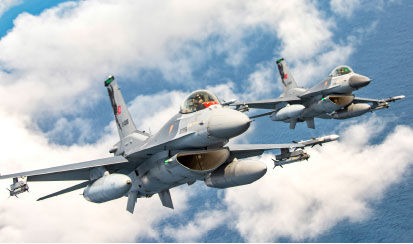
Turkish Air Force Protects Baltic Skies
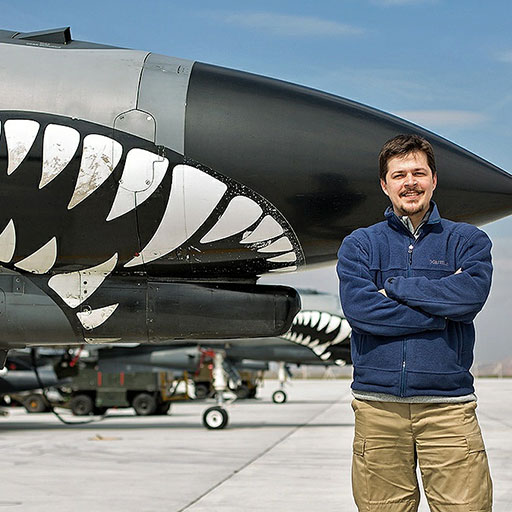
The air policing task developed by the 6th Main Jet Base Command of the Turkish Air Force at the 22nd Air Base Command in Malbork, Poland, continues to be carried out as of 06 July 2021. Together with Turkey, they are stationed in Lithuania with Spanish Eurofighters and in Estonia with Italian F-35s and continue their duties. After the deployment of our aircraft, first of all, the NATO Alarm Reaction (Tango Scramble (T-SCR)) flights, which are considered as environment recognition flights and the rehearsal/training of the alarm reaction mission, were declared ready for duty. During the mission, training and real alarm reaction missions were carried out at different periods under the control of the CAOC (Combined Air Operation Center) in Uedem, Germany. The mission of detecting and identification/prevention of undefined air traffic from the air has been carried out to protect the airspace of NATO member countries, and the main purpose of the mission has been achieved and it has been proven again that our country can perform the duties to be given within NATO. A press day was held on 26 August 2021 in order to introduce this mission, which is given great importance by Turkey and NATO, to the press and the public. Many members of the media and aerial photographers from various countries attended the press day and I was one of the lucky aerial photographers at this event.
After leading NATO Baltic Air Policing in the spring of 2006, this was the first time Turkey deployed their fighter jets to NATO’s enhanced Air Policing mission. Operating from Malbork, Poland, the task force consists of four F-16 aircraft from the 161st Squadron, Bandırma, Turkey. The F-16 which is combat-proven multi-role fighter, continues to serve as the backbone of Turkey and for NATO defense missions as well. Turkey has conducted many missions under the umbrella of NATO as a deterrent. Turkey has been a NATO member since 1952 and is ready to accomplish NATO peacekeeping missions with well-trained and experienced personnel.
Colonel Ahmet ÇANDIR, the commander of the Turkish unit in Malbork, said that in Poland, they were performing the duty of protecting NATO's borders in the north. Expressing that their aim here is to show Turkey's support to NATO, ÇANDIR said, "We are here to share our experience in our country with both NATO allies and the Polish unit and to perform it in the best possible way. Here, we perform our duties with 79 personnel, 9 of which are pilots. We have carried out very successful operations in order to come from the south to the north of NATO and to perform our duties here. It is one of the biggest elements that shows NATO's mobility, alliance solidarity and cohesion."
Major Murat DILER, who was one of the two pilots that participated in the air-to-air photo shoot, also stated that they are performing their duty on a 24/7 basis with a watch system and they can take off in matter of just 15 minutes at most. Explaining that their aim is to protect NATO airspace DILER said, "Our mission is in Poland. At the same time, we can perform missions in the Baltic airspace. We have a duty to prevent unidentified aircraft from entering into Baltic airspace."
What is the Baltic Air Policing Duty?
In the heart of Europe, on the coast of the Baltic Sea, between NATO and EU members Poland and Lithuania, there is a small piece of land of 223 km2 called Kaliningrad. This strategically important region is Russian territory. Kaliningrad Oblast, which has no land connection with Russia, is 370 km away from its homeland at the closest point. Of course, since there is no possibility of connection by land, both military and civilian transportation to this Oblast can only be provided by sea and air. As you can see, Russian jets generally do not use transponders, do not communicate with Air Traffic Control or prepare a flight plan when entering and leaving this region, which is surrounded by NATO and European airspace. This is where the demanding prevention activities that make up a large part of the Baltic Air Policing (BAP) Mission begin. In short, the most basic aim is to prevent Russian jets from flying in this region by waving their arms.
The BAP Mission is the result of agreements made to achieve a single standard of security in NATO/EU airspace for NATO member states that do not have the necessary air capabilities. Since the three Baltic states, Lithuania, Latvia and Estonia, which joined NATO on 29 March 2004, do not have the necessary air assets to contribute to NATO Air Command on their own soil, Alliance members provide protection to these countries through the Baltic Air Policing.
The Baltic Air Policing Mission has been running for 17 years since March 30, 2004. When the three Baltic States joined NATO, a NATO Air Command capability at the highest readiness level was established at Šiauliai Air Base in Lithuania. The mission, which was directed only from this base until May 2014, was expanded within the scope of NATO's Assurance Measures to its Eastern Allies after Russia's annexation of Crimea and a second Air Command was established in Estonia's Ämari Air Base. In addition, as a temporary additional measure at that time, Polish Air Force units at Malbork Air Base were reinforced by the French Air Force in May 2014.
One of the activities with the highest symbolic value, which symbolizes NATO's visibility and solidarity, is the BAP Mission. Air Policing and missions that serve similar purposes are very important both for the member states to have equal protection against threats and for alliance solidarity and determination to reach a noticeable level by potential future members.
As part of the BAP Mission, NATO forces are deployed at air bases in Lithuania and Estonia, ready to be managed by NATO's Combined Air Operations Center in Germany when necessary. The Lithuanian, Latvian and Estonian Air Forces contribute to the mission as host countries.
Air policing is a purely defensive mission, with 17 NATO member countries contributing to it so far. Although countries usually participate in the Air Policing mission, which is planned at a high level of readiness on a 24/7 basis, with 4 aircraft, this number can rarely go up to 6. While only 1 country was on duty in the same period until May 2014, after the 2014 crisis between Russia and Ukraine, it started to be carried out by 3 or 4 countries with 12-16 aircraft. After 2015, the number of countries varies between 1-3 and the number of aircraft varies between 4-13 according to the period. The number of personnel participating from each country also varies between 50-100.
Interoperability among our Allied Air Forces is important, particularly in accomplishing our peacetime mission of Air Policing. Different Allies rotating in the BAP Mission on a four-month basis and working together with our Baltic Allies continually improves our interoperability and air integration of the Baltic air forces. The multinational character of BAP reflects the Allies’ fundamental commitment to NATO and more specifically to safeguarding the Baltic States’ airspace. BAP demonstrates NATO’s assurance, solidarity and resolve to the Baltic States.
What is the purpose of NATO Air Policing and how does it work?
NATO Air Policing ensures the integrity of Allies’ airspace and protects Alliance nations by maintaining a continuous 24/7 Air Policing within Supreme Allied Commander Europe (SACEUR)’s area of responsibility. It is a peacetime defensive mission. As the term “policing” suggests, just like the national police forces do on the ground to respond to anything out of the ordinary e.g., protest rally, traffic accident or property offence NATO jets get airborne to monitor so-called events, i.e., unusual situations in the air. Air Policing scrambles respond to military and civilian aircraft that do not follow international flight regulations and approach Allied airspace. These responses seek to safeguard NATO airspace and to support the safety of its users.
NATO Air Policing scrambles respond to military and civilian aircraft that do not follow international flight regulations and approach Allied airspace. Often these aircraft fail to: properly identify themselves, communicate with Air Traffic Control or file flight plans.
Allied radars pick up a track of interest out of more than 30,000 air movements daily inside European airspace. If the corresponding aircraft is not complying with international flight regulations the track is reported to one of the two NATO CAOCs (at Uedem, Germany, and Torrejón, Spain) which decides whether or not to launch a Quick Reaction Alert (Intercept) (QRA(I)) aircraft from one of the Allied air bases that are on 24/7 stand-by for such missions. Once launched the QRA(I) jet is controlled by a Control and Reporting Center (CRC) and brought up close to the aircraft to identify or escort if necessary. The CAOC will monitor the whole operation and report to HQ AIRCOM where all information about intercepts is registered. Providing security by safeguarding NATO members through Air Policing is one of AIRCOM’s standing missions.
There are three international aviation requirements and elements of best practice for aircraft flying in international airspace. These are to be in contact with the responsible Civilian Air Traffic Control (ATC) unit, to file a valid flight plan and to send an IFF signal via an International Civil Aviation Organization (ICAO) compliant transponder.
NATO via its CAOC reserves the right to launch its Quick Reaction Alert (Interceptor) or QRA(I) aircraft to intercept any aircraft flying close to or towards NATO airspace, in accordance with the situation. This demonstrates that the Alliance is constantly vigilant and safeguards the airspace over its European Allies. Specifically, when any of these three elements is not present, NATO is more likely to scramble its QRA(I) fighters to conduct an intercept of that aircraft, first, in order to secure NATO Airspace from any possible threat, and second to provide assistance in case of in-flight failures. The ATC relies on the transponder signal to accurately locate a flight; if an aircraft fails to send a transponder signal, it may cause a potential risk to other air traffic, as it may not be possible to accurately determine the position of that aircraft and separate it from other civilian and military traffic.
Measuring the level of Russian Air Activity by looking at NATO Alpha Scramble numbers is misleading, because the decision to scramble depends on the situation – both geographical and tactical – and is at the discretion of the Commander of the Combined Air Operation Centers. This is a defensive response to Russian air activity that occurs over international waters near NATO Allied airspace and that ensures we can safeguard NATO airspace whenever and wherever needed. After Russia’s illegal and illegitimate annexation of Crimea, we have seen a significant increase of Russian Air activity across our area of responsibility.
As in the past, NATO will continue its air policing duties as long as necessary to protect its airspace. For this purpose, each NATO member country will continue to show unity and solidarity, even if they come from different countries and different cultures





