Turkish Armed Forces is one of the Oldest and Rooted Armed Forces in the World
It is unlikely to think that our defence industry is a newly-established one, considering how rooted our armed forces are. The artilleries that are the first products of the industrialization period within the scope of firearms were used by the Sultan Murad I, at the first Kosovo war in 1389. Moreover, the utilization of gunpowder as a domestic industrial product began during the reign of Sultan Bayezid II (1481-1512) and many gunpowder mills were known to be launched in the Ottoman land.
Ottoman Empire’s position as a leading and competent empire especially regarding the defence industry lasted until the end of 17th century; yet this position started to diminish in 18th century due to the economic crises that the empire endured.
Between the years 1923 – 1950, the reconstruction efforts were initiated and starting from 1924, light weapons, artillery repair and production, cartridge/capsule, gunpowder, rifle factories’ investments were made under the organization of Military Factories General Directorate. This organization has been continuing its activities since 1950 as an government owned company under the Mechanical and Chemical Industry Corporation (M.K.E.K).
In the meantime, Gölcük Shipyard was founded and then Taşkızak Shipyard was launched and Naval Defence Industry investments were made.
With the establishment of TamTAŞ in Kayseri in 1926, the Aerospace Industry activities were initiated. Until 1950, around 300 aircrafts were built within the scope of the aerospace industry that covers the private sector as well.
Significant investments were made and the essential defence industry infrastructure was established during the term 1923-1950, yet the investment thrust slowed down and reached the point of cease because of the surplus defence equipment acquired with the grants through the Marshall Plan aids initiated by the USA and following our country’s membership to the NATO.
During the term following the years 1964 – 1967 and 1974 Cyprus Peace Operation, as a result of the lessons learnt from the events that our country experienced, a brand new defence industry investment thrust was initiated and Aselsan, Havelsan and Aspilsan companies were founded. G-3 and MG-3 rifles, 90 mm HEAT and APFSDS ammunition and similar defence product projects were conducted at the M.K.E.K under licenses.
With the establishment of the Undersecretariat for Defence Industries in 1985 and considering the competencies of the industry in addition to the production programs under license, both national and international partnerships were formed between years 1985-2000. With the initiation of the joint production programs (i.e. Stinger; Armored Combat Vehicle; F-16 Fighter Aircraft), the experience and depth of the defence industry were developed.
Institutions such as the TAI, FNSS, Havelsan and Roketsan took part in our sector during the aforementioned period and were the sources of highly important developments.
With the start of the 2000s, the technological maturity and depth of our defence industry as well as the post-cold war atmosphere granted the courage and confidence required for the initiation of indigenous product development programs to the requiring and procurement authorities. Through such motivation, the domestic development of indigenous products and domestic procurement were adopted as the preferential procurement method. When such type of procurement is unavailable, the procurement from the International Consortiums and domestic joint production were identified as sine qua non principles. This principle formed a revolutionary movement in the sector and product development projects with wide range of products were launched. With this will, the following national product development projects were assigned to our national defence industry as a mission;
Within the scope of land platforms; armored tactical tracked and wheeled vehicles, vehicles with special purposes (mobile floating bridge, riot control vehicle, etc.), main battle tank and unmanned land vehicles,
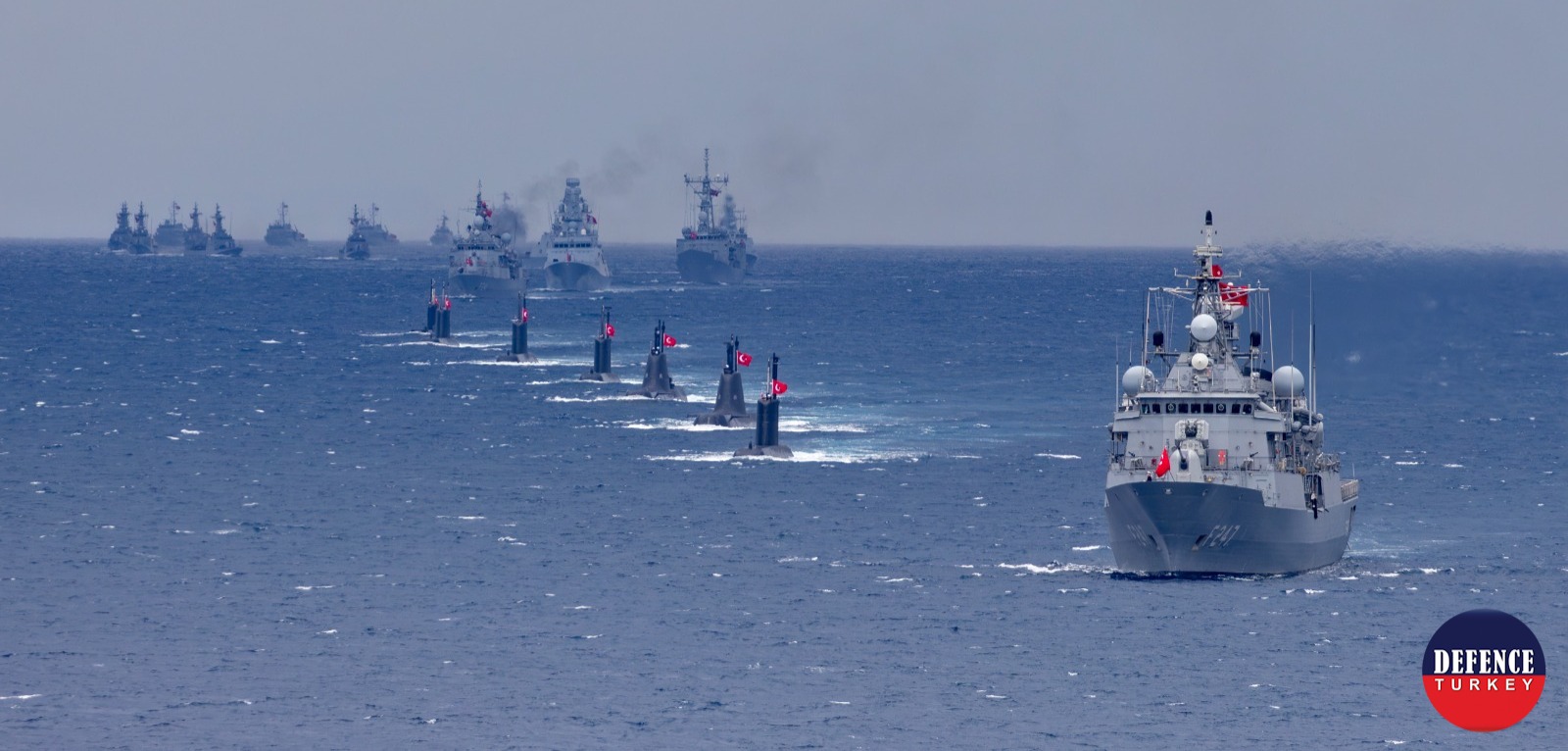
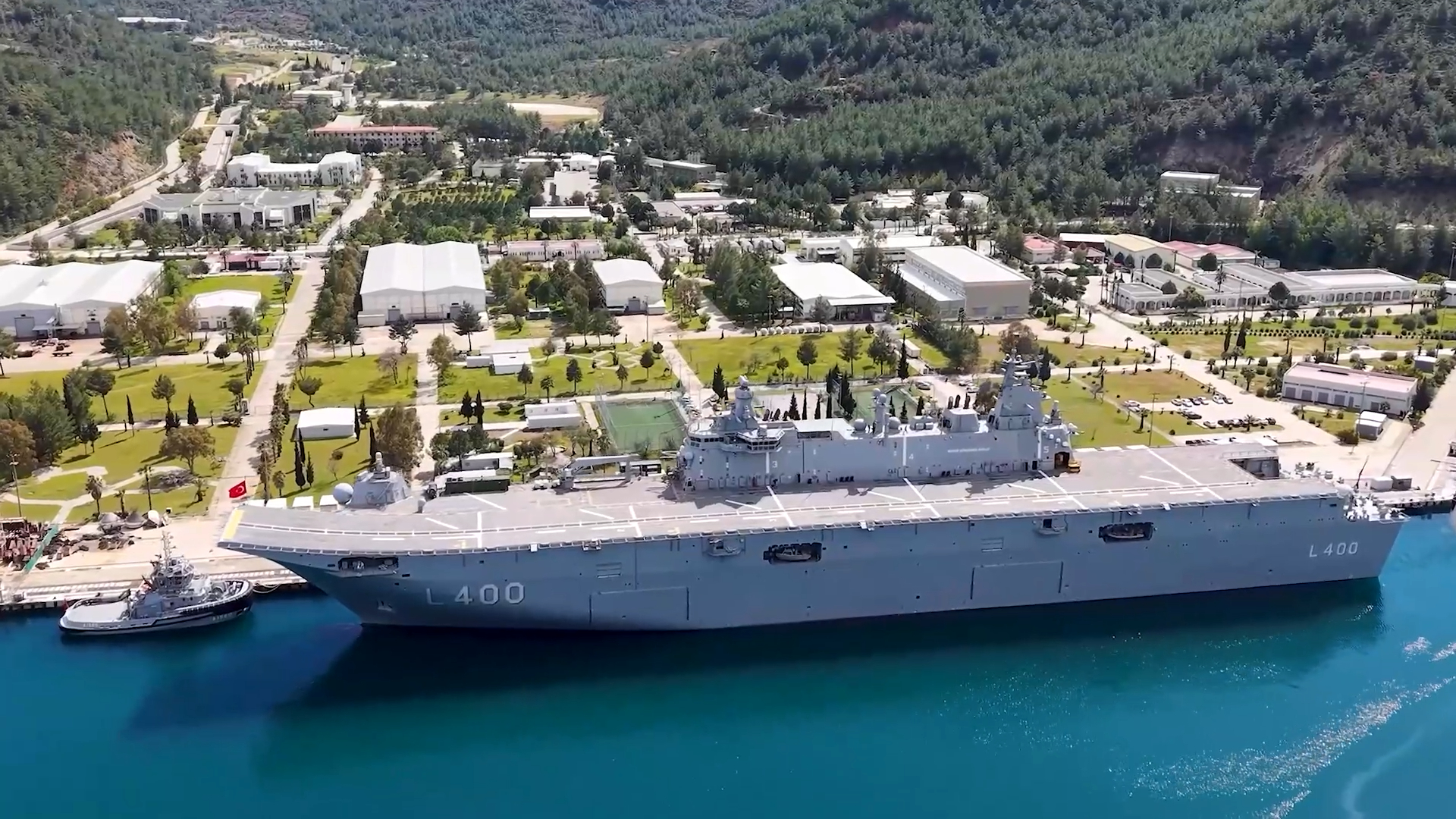
In naval platforms, corvette class national vessel, coast guard, search and rescue boats, landing ships, logistical support ships, unmanned naval vehicles,
Within the framework of air platforms, the training aircrafts, unmanned air vehicles, utility and attack helicopters and aircrafts, and satellite,
Command control, communication and avionics equipment and defence electronics used in all platforms,
Simulators particularly for air platforms (helicopters, aircrafts), training centers with simulators, augmented reality applications,
As part of the weapon systems, towed/self-propelled artillery, mounted/stabilized weapon platforms (for missiles, machine guns/artillery), multi barrel missile launcher systems, precision guided ammunition and weapon systems (anti-tank missiles, air defence missiles, air to surface missiles and stand-off missiles), light weapons (gun, infantry rifles and sniper rifles, machine gun),
Field support (Field Hospital and Kitchenette, etc.) and logistical equipment and services, special armors and protective equipment, etc,
The products of this assignment were verified and included into the inventory of our armed forces. Consequently, our Defence and Aerospace Industry started to introduce its indigenous products in a wide variety to the armed forces of our friendly nations in international markets.
Presently, the defence industry of our country is in such a position that it is capable of covering Turkish Armed Forces’ (TAF) requirements regarding land platforms and naval platforms and conventional weapons and ammunition. Our defence industry reached a level to exist in world markets as a quite serious supplier. The period until the 100th Anniversary of our Republic will be allocated for the completion of the projects initiated on the development of air platforms (warcrafts and helicopters), submarine platforms and space components (satellite, launch platform, etc.) and improved short and medium range air defence systems, long range high-precision ammunition and weapon systems and for the studies to be conducted for their introduction to the inventory and world markets.
In addition to the aforementioned, nationalization studies concerning some critical materials/ parts and technology, projects concerning mainland security (smart cities/border security applications, utilization of unmanned air and submarine vehicles for the protection of valuables, etc.) are expected to take place intensely within the agenda.
As our Defence and Aerospace Industry grows and develops indigenous products, its export capacity has started to diversify. Below table indicates the development regarding recent years.
Europe, USA and Gulf Countries are regarded as markets with high export potential. Concerning aerospace; the qualified parts, subcomponents and accessories within the scope of off-set cover the most important share while in Land and Surface platforms, Weapon Systems and ammunition appear as important export items. Concerning the defence export, USA, European Union (Spain, Italy, Germany); Gulf Countries (Saudi Arabia, United Arab Emirates) are the export markets existing at the top of the list.
In addition to marketing their indigenous products, our industrialists achieve important developments such as establishing joint production facilities through technology transfer in developing markets or conducting production with their own investments. In this respect, I would like to underline FNSS, Aselsan, Roketsan and Havelsan’s activities in Turkic Republics, South Korea and Pakistan.
The severe cut in the defence budgets of the countries after the global crises in 2008 is a known fact. The defence expenditures of the world increased during 1998-2010; this increase, especially during the years between 2001 and 2009, reached to its peak and was identified as 5 percent. A recession was observed in 2011 for the first time in normalized defence amounts of the world’s defence expenses and 0,3 % increase was calculated according to the figures of 2010. Within this scope, the defence expenditures of USA (although it remains still on top of the list) showed a decrease for the first time since 1998. The world defence expenditures of years 2012 and 2013 were seriously affected by the defence budget shortages of the USA and West Europe that used to make the highest defence expenditures. Africa, Middle East, Sub Saharan Africa and Pacific Asian countries’ defence expenditures increased in an important scale due to their threat perceptions. So, this development was a balancing component. In Europe, only in East European countries especially the defence expenditures of Azerbaijan and Russia increased but with the decrease in West and central Europe’s defence expenditures balanced this increase. The world’s total defence expenditure amount was identified as 1.753 Billion $ in 2013. When normalized in line with the exchange rates and flat rates of year 2010, this amount is reduced to 1.634 Billion $ and this figure indicates the same level of the defence expenditures of 2010 that was determined as 1.629 Billion $.
On the other hand, terrorist attacks are becoming more and more important within the scope of the contemporary threats, thus the need for structuring in line with the asymmetrical threats instead of classic conflicts is expanding. This also defines the sector’s requirement of focusing on mainland and border security projects. Smart cities, border-coast and continental shelf security aspects are coming to the forefront. In this context, new projects developed in areas such as Unmanned Air Vehicles/ Land Vehicles/ Submarines, Surveillance/ intelligence/ communication, etc. are included in the agenda and business areas of the sector players. Again, as a result of the advanced technology, our sector encountered an unbelievable amount of data base management and Big Data Management concept emerged as an important activity area for present and near future.
The entry of cutting edge technology products into the inventories of armed forces brought the concepts of Integrated Logistic Support and Augmented Reality into our agenda as prominent areas.
From the Warehouse Inventory Management to the operationalization of Platforms and Systems/ Weapons as well as training of the crew by professional companies are foreseen in Integrated Logistic Support Concept.
In conclusion; 55 percent of platform, system/ weapon and logistic requirements of TAF are presently covered domestically. I should mention this is a pleasing development in comparison with the 25 percent rate in the beginning of 2000s and this development will continue in a similar momentum.