VITAL ELEMENT AND FORCE MULTIPLIER OF THE TURKISH NAVAL FORCES
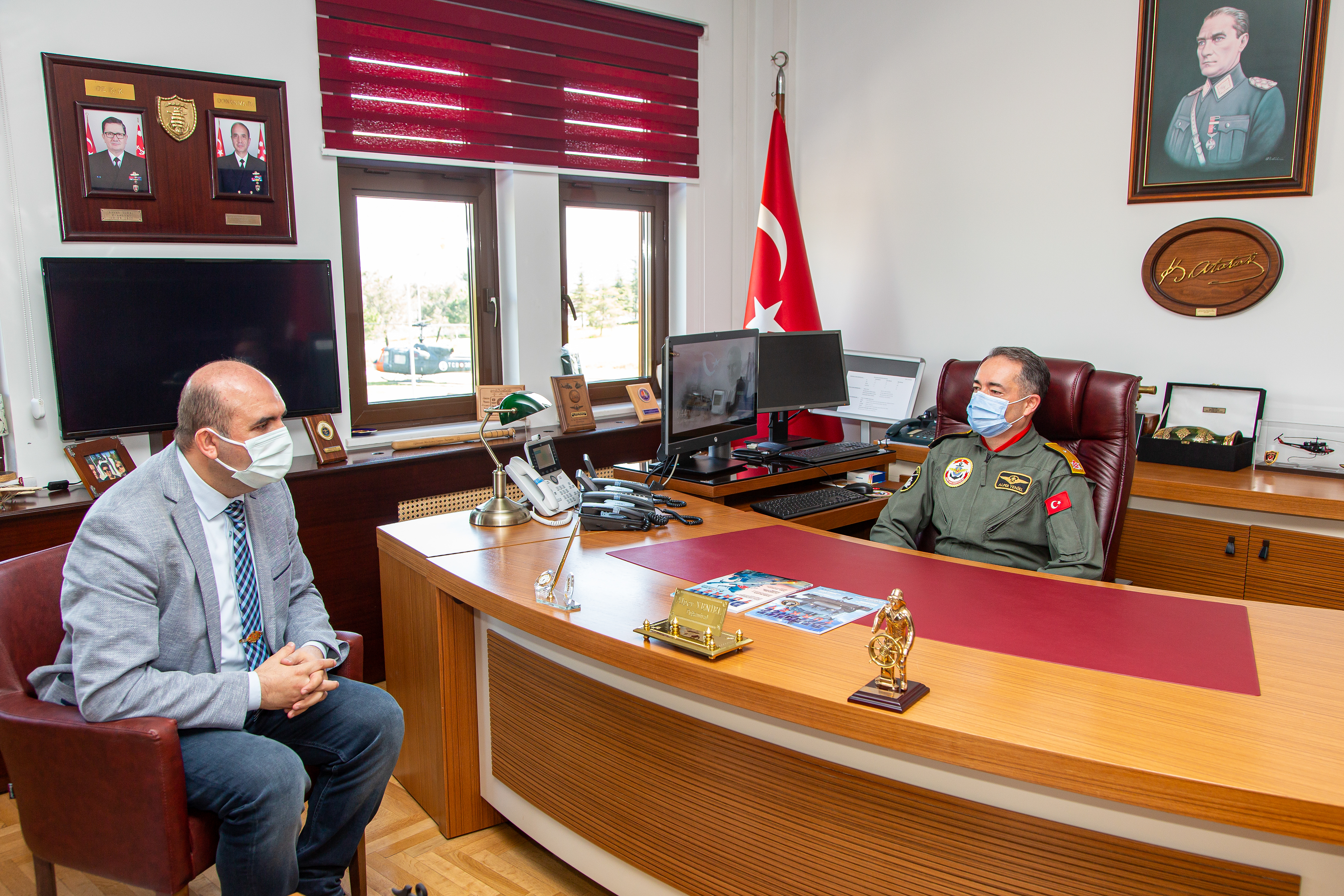
Naval Aviation that stands out as a vital element and a force multiplier for the Turkish Naval Forces. On 22 April 2021, with the special permission given by the Ministry of National Defense (MoND), we visited Topel Naval Air Main Base Command at Kartepe, Kocaeli for you to get firsthand information on the expectations and goals of the Naval Aviation for the past, present and future, as well as to get information on on-going activities and projects and to view on-site activities. Witihin the scope of our visit, in order to make a note in history, we talked to Rear Admiral Alper YENİEL, who has been acting as the Naval Air Commander since August 2018.
Defence Turkey: The Naval Air Command contributes greatly to the Turkish Naval Forces (TNF) through the modern fixed and rotary wing modern naval aircraft and Unmanned Air Vehicles equipped with state-of-the-art sensors, command control and weapon systems in its inventory along with the aerial reconnaissance and surveillance, Anti-Surface Unit Warfare (ASUW) and Anti-Submarine Warfare (ASW) capabilities that are required in the tasks and operations conducted in Turkey and abroad. Could you briefly talk about Naval Air Command’s development in Turkey? Which stages has the Turkish Naval Aviation which celebrates its 107th anniversary this year been through to date? In which tasks has it gained its experiences and which air platforms it has used so far?
Rear Admiral Alper YENİEL: Naval aviation’s history in Turkey started with Naval Mechanic Lieutenant Fethi Bey who was sent to Bristol Aircraft School in 1912 to receive airplane mechanics training. As he was quite fond of and talented in flying, the Lieutenant received pilot training at the academy.
The first aircraft of the Naval Aviation was the Curtiss F-2 aircraft that arrived at Kadiköy for the demonstration on 16 June 1914 and was bought for 2.190 Liras as it was admired when it landed in sea before the pier. The establishment of a Naval Airplane School was decided immediately after the procurement of the first naval aircraft. The founding day of our “Naval Aviation” is acknowledged as the establishment of our first force, Deniz Tayyare Mektebi (Naval Aviation School) on 25 June 1914, at the present location of the Air Force Academy at Yeşilköy.
Upon the outbreak of World War I, two “Nieuport 6H” naval aircraft brought to İstanbul were delivered to the Deniz Tayyare Mektebi. These aircraft successfully performed at the Çanakkale Front as well. In 1916, three “Gotha WD 2” type aircraft were procured and the 1st Deniz Tayyare Bölüğü (Naval Aviation Company) was founded in İstanbul. Later that year, two “WD 12” and two “WD 13” type aircraft were purchased and joined this company. In 1917, the 2nd Deniz Tayyare Bölüğü was founded in Ereğli at the Black Sea region followed by the establishment of the 3rd Deniz Tayyare Bölüğü in Batumi in 1918. With the addition of the German Gotha WD 5-8-15, Hansa Brandenburg NW and Sablatnig SF5 type aircraft, Grigorowich captured from the Russians and Short 184 type aircraft captured from the British were included in the inventory in the period that followed, raising the Ottoman Naval Aviation’s number of aircraft to 19.
During the War of Independence, the Naval Aviation pilots joining the fight with the aircraft taking off of the Konya Tayyare İstasyonu (Konya Aircraft Station) achieved remarkable success.
Naval aviators were then assigned to ship tasks after 1947 since there were no naval aircraft or companies any longer.
At the end of the 1960s, with the awareness of the essence of a powerful naval force and in line with the targets identified according to Turkish Naval Forces Command’s (TNFC) national and NATO-related tasks, it was decided to establish a Naval Air Force comprising of two fleets.
Upon the inclusion of four S-2A Tracker type aircraft purchased from the Netherlands into the inventory, the “301st Naval Air Fleet Command” was founded in Etimesgut/Ankara on 18 October 1971, and on 04 August 1972 the fleet was transferred to the 6th Main Jet Base in Bandırma to enable more effective performance at a location near the sea. Later, with the procurement of 12 S-2E type aircraft, the number of aircraft in the fleet has reached to 16.
Efforts for founding a helicopter fleet were launched upon the decision of procuring three AB-204B type helicopters in 1971 and the “Naval Helicopter Fleet Command” was established in Güvercinlik/Ankara on 15 August 1972. The AB-204B Helicopters that arrived on 4 October 1972 became the first rotating-winged air platforms of Turkish Naval Aviation. These helicopters featured the capability of firing the AS-11/12 Wire Guided Missiles against the surface platforms and Mk-44 Lightweight Torpedo and Mk-54 Depth Charges against the submarines. To render it near the navy and naval operations, the Naval Helicopter Fleet Command was deployed to Cengiz Topel Airport on 19 May 1973 and its name was changed as “351st Naval Helicopter Fleet Command”. Finally, on 19 September 1973, the first landing and take-off over a ship was realized.
Throughout the Cyprus Peace Operation, our aircraft from Antalya airport and helicopters from Çiğli Airport successfully accomplished their missions for reconnaissance and surveillance to support the operation.
Cengiz Topel Airport jointly used with the Turkish Air Force Command was assigned to the TNFC on 14 July 1976 and upon the deployment of the 301st Naval Air Fleet in Bandırma, the Naval Air Base Command was established on 4 August 1974.
During the Gulf Crisis that emerged in 1991, this Command performed at the region deployed at the Antalya Airport and on the ships. From October 1993 to August 1995, to support the homeland security operations at South and Southeast Anatolia, 26 naval helicopter pilots displayed outstanding success with the UH-1 and Mi-17 Helicopters within the inventory of the Gendarmerie General Command.
Since 2001, Naval Aviation has elevated its Anti-Submarine and Anti-Surface Unit Warfare capabilities executed at the ships and on the ground to superior levels thanks to the P-235 Maritime Patrol (M/P) Aircraft and Sikorsky SH-70 Helicopters added into the inventory. The 24 SH-70 and 9 AB 212 SUH helicopters presently performing are also being used for training the helicopter pilots at the Deniz Tayyare Uçuş Okulu (Naval Aviation Flight School) within the Naval Aviation Training Center.
To date, six P-235 M/Ps, two P-72 M/Ps and three C-72 Utility Aircraft have included in our inventory as part of the MELTEM Projects. Within the scope of the project that is presently at the delivery stage, four more P-72 Maritime Patrol Aircraft will be included in the Naval Air Command until the beginning of 2022. In this way, a total of 12 Maritime Patrol Aircraft comprising of six P-235s and six P-72s and three C-72 Utility Aircraft will be contributing greatly to the protection of our blue homeland.
Moreover, within the scope of the UAV Projects launched to support the naval air operations with the Unmanned Air Vehicles (UAVs) manufactured with domestic resources, 10 Bayraktar TB2s and six ANKA B UAVs were delivered to the Naval Air Command. With the 21 additional systems to be supplied by 2023, the number of our UAVs/UCAVs will reach 37.
Naval aviation, standing out as an indispensable element and force multiplier of the Naval Forces Command, has been safely executing all the missions night and day, rain or shine as a distinguished force scaring away the enemies and assuring the friends in the protection of our rights and interests at the Blue Homeland with the highly trained and motivated staff and manned and unmanned naval air vehicles with state-of-the-art command control and weapon systems.
Defence Turkey: Could you give information about the current establishment and organizational structure of the Naval Air Command located in Cengiz Topel Base in Kartepe district of Kocaeli and the Naval Aviation Units/Squadrons, Air Bases and Helipads under its command?
Rear Admiral Alper YENİEL: With all its elements and staff, the Turkish Navy has been conducting its tasks selflessly and loyally to maintain peace and security in the blue waters of our homeland. Naval Air Command is the eye, ear, arm and powerful fist of our Navy on account of the facilities it owned with the help of our glorious nation, the superior air vehicles “that become more national day-by-day” and by the efficient mission and warfare systems over these.
The Naval Air Command exerts such power presently from the Topel Naval Air Main Base Command as the center, Çanakkale and Dalaman Naval Aviation Base Commands and from Geçitkale/TRNC Naval Airport Command, with the Maritime Patrol Aircraft, Naval Helicopters, improved UAVs and UCAVs Utility Helicopters and Training Aircraft.
Topel Naval Air Base Command is the center where the Naval Air Command’s “Operation, Training, Logistics and Maintenance” activities are conducted in an integrated manner. At our Main Base, particularly pilot training activities are conducted and intensive efforts are being exerted for training the staff to be employed at our Command “under the auspices of the Naval Aviation Training Center that contained the Deniz Tayyare Uçuş Okulu -the Naval Aviation Flight School-founded in 1914”, the maintenance/repair activities for several air vehicles in various types are being executed at the highest level thanks to the “Main Maintenance Command” and all the logistical support services required by the maintenance and operation of the air vehicles are being carried out centrally by the “Material Management Command.” In return to the efforts exerted, our trained staff and constantly available air vehicles are effectively carrying out their tasks at the blue homeland and at relevant fields.
Our Çanakkale and Dalaman Naval Aviation Base Commands on the other hand are our resilient operation units founded with all infrastructure and superstructure components to rapidly transport our force at the center to surrounding seas and thus expand it geographically and to protect the borders of our blue homeland. These base commands are also equipped with qualified staff and modern air platforms. These base commands at Çanakkale and Dalaman are deployment centers for our naval air vehicles and they host joint activities conducted with friendly countries as well. Especially, during the “Blue Whale” Military Exercises held under the auspices of our TNFC every year, the naval air vehicles and staff particularly from the US and from our sister country Pakistan are hosted with pleasure at the “Dalaman Naval Aviation Base Command.”
Similarly, our Geçitkale Naval Airport Command founded in 2019 at Geçitkale/TRNC, has turned into a new center for our UAV/UCAV flights conducted at the East Mediterranean. This unit continues to increase its development and efficiency with the assigned staff and allocated superior Turkish UCAVS.
Additionally, the mission-oriented utilization of the HELIPADs at Aksaz and İstanbul continues.
Defence Turkey: Our Navy’s critical force multiplier, the Naval Air Command presently exists at seven seas across the globe. With its rich historical accumulation dating back to 1914, its highly trained and motivated staff and modern air vehicles capable of coping with both surface and underwater threats, the Naval Air Command is able to execute operations at the world’s seas and stands out as a flexible and distinguished force. Which type of training process does the staff (pilots and Flight Engineers), who builds the spirit of Turkish Naval Aviation, go through to become a Naval Aviator? What is the duration of the Basic Training and Combat Readiness Training provided in this context and how many sorties are being accomplished (in physical and simulation environments)?
Rear Admiral Alper YENİEL: At the Naval Air Training Center Command, the following trainings are provided for the staff employed in the body of the Naval Air Command: Type Orientation Training for Pilots, Specialization Courses and Type Orientation Training for the Tactical Coordination and Navigation Officers, Flight Operators and Flight Engineers, Basic Course and Specialization Training is offered to Maintenance Officers and Petty Officers, and yearly flight controls of the Pilots, Tactical Coordination and Navigation Officers, Flight Operators and Flight Engineers’ yearly flight controls are being executed. Moreover, Helicopter Pilots are trained at the Deniz Tayyare Uçuş Okulu (Naval Aircraft Flight School) Command within the Naval Air Training Center Command and the training of aircraft pilots are planned to be launched in the last quarter of 2021.
Helicopter Pilot Training: Within the scope of this training type, 1.355 hours of ground courses and flight training of 140 hours (95 hours with the helicopter and 45 hours with the simulator) are provided to the helicopter pilot candidates in a period of 12 months. Thanks to the pilot training provided at the Naval Aircraft Flight School, the candidate pilots with the notion of naval aviation, are capable of conducting flights in international standards, constantly following the innovations in the developing military and civil aviation technology and continuously renewing themselves, aware of performing their tasks at high flight security levels.
Other training types offered at the Naval Air Training Center are as follows;
SH-70 Helicopter Type Orientation Training: following 168 hours of ground courses, a total of 44 sorties comprising of 23 sorties with an actual helicopter and 21 sorties with a simulator are conducted in a flight training of 6 months,
P-235 Type Orientation Training: Following 150 hours of ground courses, training of 23 sorties in 5 months,
P-72 Type Orientation Training: Upon 150 hours of ground courses, training of 23 sorties in 5 months,
Tactical Coordination and Navigation Officer Specialization Course: After 680 hours of ground classes, a total of 18 sortie flight training comprising of 10 sorties with an actual aircraft and 8 sorties at a simulator conducted in 7 months,
Flight Operator Specialization Course: Upon 480 hours of ground classes, a total of 18 sortie flights composed of 10 real aircraft and 8 sortie simulators in 6 months,
Flight Engineer Specialization Course: After 680 hours of ground classes 21 sortie flight training in 7 months.
Within the scope of Maintenance Officer-Petty Officer Trainings, required by all the maintenance units affiliated to the Naval Air Command,
To Aircraft Maintenance Officer trainees, a total of 840 hours of training comprising of 544 hours of theoretical training, and 296 hours of applied training within a period of 6 months is provided,
To Aircraft Maintenance Petty Officer trainees, a total of 1.575 lesson hours of training including 725 lessons hours of theoretical training and 850 hours of applied training are given in a period of 10 months.
Defence Turkey: Which type of training does the staff receive at the Naval Air Training Center within the Topel Naval Air Main Base Command? How many hours/sorties of flight has been conducted with the HELSİM Simulator launched to service towards the end of 2010 and used mainly for the Orientation and Combat Readiness Training and how many pilots and radar/sonar operators have been trained to date? Is there any plan for the modernization of the simulators or for the increase in number?
Rear Admiral Alper YENİEL: Naval Air Training Center’s mission is to provide Basic Training to Pilots, Tactical Coordination and Navigation Officers, Flight Operators and Flight Engineers and Maintenance Officers and Petty Officers who have freshly started their professional lives while offering additional training to actively working staff for their professional progress through Orientation and Specialization Courses aligning with the technological development and maintaining professional standardization of the flight personnel.
One of our most remarkable helpers in the execution of these tasks have been the SH-70 Helicopter’s Full and Partial Flight Simulators named HELSİM, which recently completed 10.000 flight hours.
These simulators are being used in Basic Pilot Training, Tactical and Acoustic Sensor Operator Expert Training, Type Orientation Training and Yearly Flight Controls. Since 2010, basic pilot and orientation training with 3.335 sorties and 5.589 hours of flight has been given to 87 pilots and radar/sonar operator orientation training has been efficiently delivered to 75 pilots with 2.663 sorties and 4.648 hours of flight.
Besides, the project for the procurement of one P-72 Full Flight Simulator and one P-235 Partial Flight Simulator is in progress under the title DEKASİM (Maritime Patrol Aircraft Simulator).
Defence Turkey: Could you inform us on the role and utilization concept of the Unmanned Air Vehicles (UAV) within Turkish Naval Aviation?
Rear Admiral Alper YENİEL: Upon their induction into the inventory, the Unmanned Air Vehicle systems became a force multiplier for the combat capability of the Turkish Naval Forces and Naval Aviation. The UAVs are effectively used by the Naval Forces Command especially for the establishment and maintenance of the Identified Naval Picture, target intelligence generation, planned/dynamic targeting in tactical and operative levels during times of crisis/battle, Amphibious Operation, constant surveillance of a critical zone/platform, Non-Combatant Operation and Search and Rescue supporting activities.
Currently, 2-3 UAVs conduct flights 24 hours a day, 7 days a week (in 24/7 basis), within the scope of the reconnaissance and surveillance of the Blue Homeland.
Defence Turkey: What additional capabilities have been provided to the Naval Air Command with the inductions of ANKA and BAYRAKTAR UAVs/UAVs/UCAVs Systems, which are now operating under the auspices of the Naval Air Command? Can we get information about how many flight hours/sorties have been performed with these UAVs so far?
Rear Admiral Alper YENİEL: On account of the electro-optical cameras, radars, weapon systems, long endurance and real-time target acquisition capabilities they feature, UAVs offer the capacity to the decision-making authorities to change the course of the battle. In this context, the UAV Systems in our inventory added a new meaning to the intelligence-reconnaissance-surveillance tasks, facilitated the Operative and Tactic Commanders in our naval jurisdiction area and enabled the efficient operation of the forces with fewer requirements.
Moreover, in the firings conducted in 2019 and in 2021 with the national and indigenous munitions against the land and naval targets from 15 km distance, the targets were shot accurately and destroyed, assuring the friends and scaring the enemies.
Our UAV Squadrons have accomplished over 25.000 hours of flight since 2018.
Defence Turkey: Could you inform us on the training program implemented for the crew (pilots and sensor operators) performing at the ANKA and BAYRAKTAR UAV/A-UAV Systems?
Rear Admiral Alper YENİEL: Personnel working in UAV/UCAV Systems complete their basic training that lasts between 4 to 6 months and covers both theoretical and practical courses, and in the units they are assigned they become Combat Ready following the completion of 50 hours of flight and 5 landings and take-off trainings.
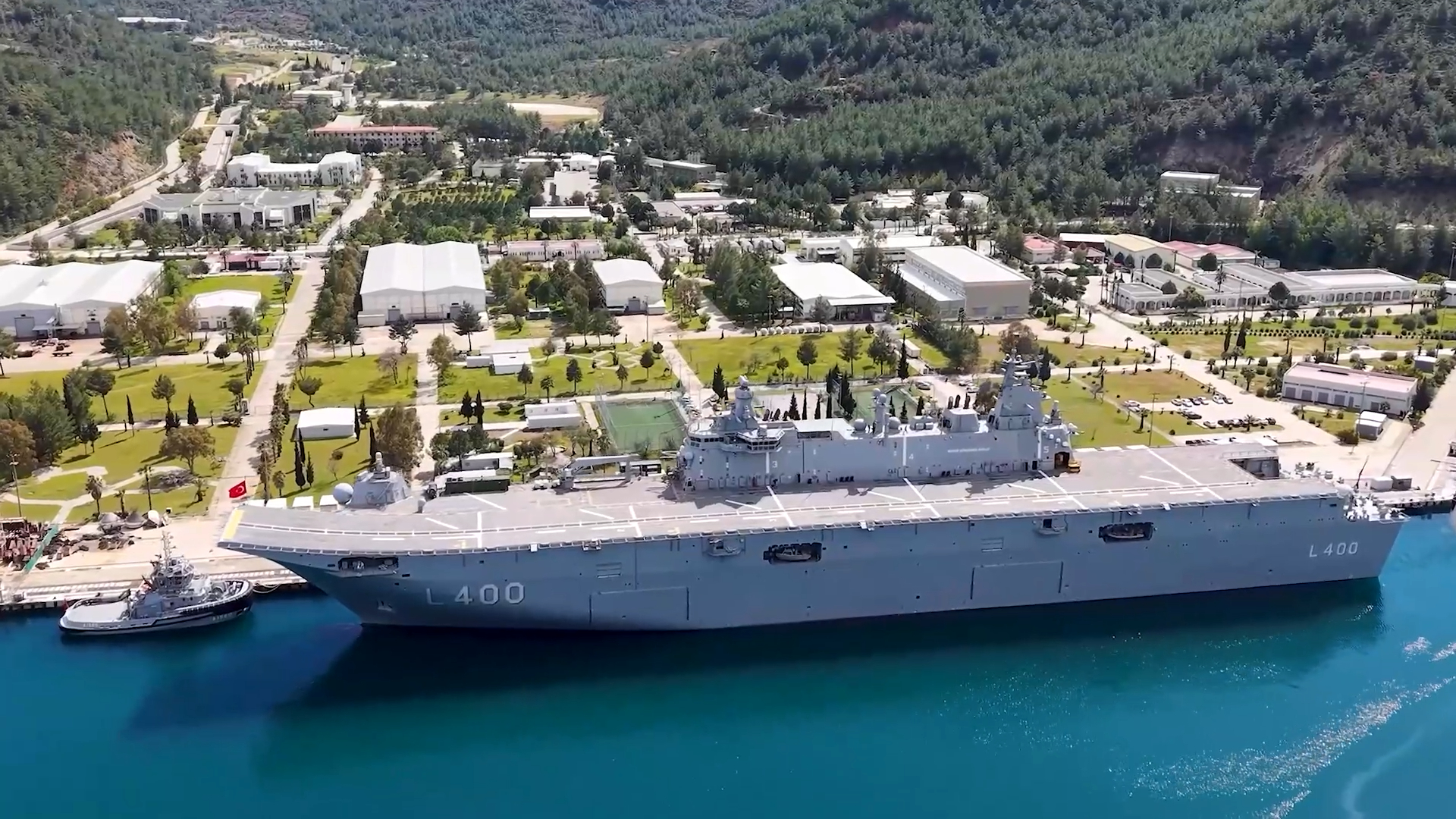
Defence Turkey: Previously, deployment of F-35B Joint Strike Fighters to Anadolu Amphibious Assault Ship (LHD) was planned and training of two pilots was launched in this context. Yet, upon Turkey’s exclusion from the F-35 JSF Program in July 2019, the alternative for transforming Anadolu LHD ship into a UAV/A-UAV carrier ship came to the agenda and the activities were launched. What are your comments on Naval Air Command’s approach to this and to which extent do you reckon LHD Anadolu will be efficient and effective as a UAV/A-UAV carrier ship?
Rear Admiral Alper YENİEL: As you have also mentioned, deployment of F-35B Joint Strike Fighters was planned for the LHD Anadolu Amphibious Assault Ship and training for two pilots was launched to that end. However, in this present stage, the focus is transferred onto the alternative solution methods for our needs. One of the alternatives is the deployment of multiple UAVs/A-UAVs over LHD Anadolu.
To that end, domestic companies launched their activities and manufacturing A-UAVs with higher carrying capacity, indigenous engines and more useful loads are aimed. These UCAVs in question will be capable of lifting off from shorter distances compared to the existing UCAVs and will have a shorter stopping distance.
Since the UCAVs can be controlled from the LHD Anadolu, the execution of the operation from much longer ranges will be possible, and this will contribute greatly to the monitoring of wide maritime zones and support the amphibious operations.
Defence Turkey: Naval Aviation is a critical element of the TNFC. Nowadays it is also regarded as a separate force multiplier in the estimation of the combat power. What would you like to say about Naval Aviation’s position within the Turkish Naval Forces, as well as its mission and vision?
Rear Admiral Alper YENİEL: Thanks to its coastline of 8.333 km and seas that surround three sides of its land, our country is a blue country in its full sense. Protecting our maritime jurisdiction strongly is of essential importance for the protection of our country’s rights and interests. The importance of this notion has been realized further on account of the “Blue Homeland” doctrine. From this perspective, defending our blue homeland extending to an area of 462.000 km² is on top of the missions and responsibilities of the Naval Forces Command. To fulfil such responsibilities, obviously, the naval operations need to start far beyond our territorial waters since beyond-the-horizon threats are expected as a result of the developing technology and multi-layered warfare.
Under such circumstances, the naval air vehicles equipped with state-of-the-art technology systems and weapons and utilized by our competent staff with high know-how is our greatest strength for dominating the field over our surrounding seas 365 days and 24 hours and for maintaining our preparedness against potential threats at the highest level.
For these reasons, the Turkish Naval Forces have attached great importance to the development of Naval Aviation since the 1970s and it combined the famous saying of the Great Turkish Sailor Barbaros Hayrettin Pasha, “Whoever Dominates the Seas Will Dominate the World” with our Great Leader Mustafa Kemal ATATÜRK’s target implied in his “The Future is in the Skies” saying.
Defence Turkey: Could you inform us on the innovations achieved at the Naval Air Command in the period under your Command and the developments occurred in the main modernization projects since your assignment?
Rear Admiral Alper YENİEL: Several modernizations and new air vehicle projects have been realized throughout the Naval Air Commander assignment I assumed in August 2018. On top of these projects, the most critical one is the utilization of the UAVs and A-UAVs that have been manufactured through indigenous and national resources in our naval air operations as force multipliers. These components gained great superiority to our Naval Forces Command.
As part of the UAV Procurement Projects, the UAV operations we launched with 10 Bayraktar TB2 UAVs/UCAVs in 2018-2019 and 4 ANKA-B UAVs have been enhanced with the 2 ANKA-B (THS) UAVs included in our inventory in early 2021. Furthermore, according to the plans, 6 more satellite-controlled ANKA-B (THS) UAVs/A-UAVs until the end of 2021 and 15 more Tactical UCAVs until the end of 2023 will join our Command. Within this scope, the number of our UAVs/UCAVs will reach 37 from 16 with the additional systems to be received until 2023.
The requirement for Bases to deploy the UAVs/UCAVs is as important as the UAV/A-UAV Procurement Projects. In this context, regarding the protection of our country’s and TRNC’s rights and interests at East Mediterranean, Geçitkale Airport at TRNC has been delivered to us to provide UAV/UCAV support to our Navy’s continuous activities and on 05 November 2019 Geçitkale Naval Airport Command was established.
The first of the six P-72 M/P Aircraft to be included in the inventory within the scope of the MELTEM-3 Project become operational in December 2020 and the second one in March 2021, and the number of our Maritime Patrol Aircraft has reached 8, including the P-235 M/P Aircraft. A total of 4 more P-72 M/P Aircraft will be delivered, 2 by the end of 2021 and 2 in the first quarter of 2022. Also, as part of the MELTEM-3 Project, the third C-72 Aircraft was included in the inventory in April 2021. Thus, the number of our Utility Aircraft reached 3.
Due to the increase in the number of air vehicles, the need to train some of our pilots within our structure emerged and to that end, the Naval Aviation Flight School was founded on 26 April 2019. Eight helicopter pilots have completed the courses carried out at our school and become ready for their assignments. Presently the training of 6 pilot candidates is in progress.
To maintain the configurational harmony of our helicopters, modernization process has been applied to five of the first lot of 7 SH-70 helicopters included in our inventory in 2001-2002 and the helicopters were updated to the level of the 17 helicopters received in the second lot. The modernization process of the remaining two helicopters is planned to be completed by April 2022.
Besides, we have been carrying out the activities for the procurement of various air vehicles such as Attack Helicopters/Aircraft and UAV/A-UAVs and ship-based UAVs that can be mounted over different surface platforms such as the Utility Helicopters, New Generation Naval Helicopters, Long Range New Generation Maritime Patrol Aircraft, Elementary and Basic Training Helicopters and Aircraft, Frigate/LHD/Aircraft Carrier.
Within this framework, to include the T129 ATAK Helicopters that were developed through indigenous and national resources and are regarded as the best in its class in the world to our organization, 4 helicopter pilots have been sent to the “ATAK Helicopter Pilot Orientation Course” executed at the Land Forces Command.
Regarding the utilization of the “National Command Control and Combat Management System” at our P-235 and P-72 Maritime Patrol Aircraft received under the MELTEM Projects, activities coordinated by Turkish Naval Research Center Command (TNRC-C/ARMERKOM)under the TNFC were launched with HAVELSAN A.Ş. and the contributions of our flight and maintenance teams paved the way to fruitful results in the flight test activities conducted with the ADVENT MARTI CMS Prototype Software The activities reached a critical level with the first flight and in parallel with the momentum and maturation of the activities in the upcoming period, the activities on system engineering, prototyping and project design required for the integration of the ADVENT MARTI CMS of which the TNFC owns the intellectual property and license rights, with all naval aviation components including the UAV Systems and their interoperability with all other platforms with ADVENT Combat Management System (CMS) are in progress.
As part of the Improvement of Sonobuoy Analysis Systems, trial flights have been executed with the P-235 Aircraft as a result of the activities on acoustic analysis system by Koç Bilgi ve Savunma Teknolojileri A.Ş. and ASELSAN A.Ş. under the coordination of TNRC-C/ARMERKOM. The system developed is able to successfully process sonobuoys (active/passive) and the activities in this context are in progress.
An activity was accomplished under the auspices of our Main Maintenance Command to enhance the beyond-the-horizon business contacts acquired in the reconnaissance/patrol missions conducted with the existing systems and the number of contacts was increased up to ten times.
To prevent the accidents-crashes that may emerge at low altitude over the land, Helicopter Obstacle Detection System has been installed on all the AB-212 and SH-70 helicopters within the body of the Naval Air Command. Thus, the helicopters gained the capability of preventing obstacles at low altitude.
Throughout my term, various construction activities have been accomplished as part of the infrastructure and superstructure modernization of our airports, particularly regarding the UAV deployment facilities and maintenance hangars, and such construction activities continue.
For regularly holding the “Surviving the Helicopters Crashing at Sea/the Aircraft at Emergency Landing” Training, the project on a new “DUNKER Simulator” equipped with state-of-the-art technology has been launched within the Naval Air Command. The acceptance activities for the simulator building are planned to be launched as of May 2021. This facility stands out as the most progressive and modern simulator of its kind in the world.
Moreover, the construction of the New Control Tower was launched on 2 December 2020 to enable secure execution of both military and civil flights. The Project is planned to be completed in 2022.
Defence Turkey: The battles of the future will take place in a multi-dimensional environment in terms of time, space and means, where all kinds of technological innovations will play a role. What awaits Naval Aviation in the three-dimensional operational environment of the future? How does Turkish Naval Aviation prepare itself for the combat environment of the future in terms of both personnel training, and the inventory of fixed and rotary-wing manned and unmanned air vehicles?
Rear Admiral Alper YENİEL: In the future’s three-dimensional operational environment, the importance of Naval Aviation will increase further as might be expected and it will have to constantly renew itself in line with the technological developments. Perhaps the world’s most autonomous technology, the unmanned aerial vehicles that have longer endurance and range, with more developed weapon systems, with longer economic life, lower operational costs capable of performing their tasks in all weather conditions will be preferred.
Under such circumstances, to own the air vehicles equipped with high technology and utilize these air vehicles in the best way with qualified staff, the Naval Air Command has to remain up to date, train qualified flight and ground personnel and support indigenous and national projects.
In light of this, I believe the Naval Air Command has been fulfilling its tasks in the best possible way. We reorganized our units, completed our personnel activities, and improved our staff training facilities in a very short while for the operation of the UAV/UCAV Systems that have been included in our inventory in the last three years. The transformation we accomplished in such a short period in fact signals the contributions our Command will be making to naval operations and to our country in the future. With the Unmanned Air Vehicles, we will acquire until 2023, owning more systems and rendering the uninterrupted coverage of all our seas are planned regarding the Topel, Dalaman, Çanakkale and Geçitkale Airports.
Thanks to the developing technology, for the combat environment of the future the TNFC aims to acquire new generation UAVs fitted with SAR/ISAR featured Surface Search Radar, Automatic Identification System (AIS), E/W Systems, communication relay payloads, and able to deploy sonobuoys and/or able to process sonobuoys launched from other naval air vehicles.
Moreover, the developments on the utilization of “Swarm UAV” technology and Artificial Intelligence in UAVs are being followed closely. In light of these developments, I am confident that our Naval Forces will be maintaining its pioneer position dominating the region for long years.
Defence Turkey: After a considerable delay (such that TCB-703 Utility Aircraft was delivered free of charge as a delay penalty), the first P-72 Maritime Patrol Aircraft with the tail number TCB-751 was delivered to TNFC on 11 December 2020 (inducted into the service on 15 December 2020), and the second aircraft on 11 March 2021. What additional capabilities have been acquired by the Naval Air Command with the induction of ATR72/600 (P-72) MPAs into the service?
Rear Admiral Alper YENİEL: With the launch of P-72 MPA (Military Patrol Aircraft), the capability of carrying and firing more sonobuoys, Link-16 data link system and the capacity to fire both Mk-54 and Mk-46 Lightweight Torpedoes were acquired in addition to the facilities and capabilities of the P-235 MPA. Besides, with the high speed and long endurance of the P-72 Aircraft, operations can be conducted at the territorial waters extending to West Mediterranean.
Defence Turkey: Is there any plan for adding a Guided Missile capability to the P-235 and P-72 MPAs in the inventory regarding the Anti-Surface Warfare? To that end, is the integration of the Medium Range Anti-Ship Missile (OMGF) developed by ROKETSAN into to the aircraft on the agenda?
Rear Admiral Alper YENİEL: To reflect the operational efficiency and deterrent effect of the Maritime Patrol Aircraft to the operational field, the development of modern, lightweight air-to-surface missiles with indigenous/national facilities and enabling their integration to MPA are quite critical. As part of the “Development and Integration of Air-to-Surface Guided Missile,” Project, adding a Guided Missile capability with a minimum range of 25 nautical miles was planned to the P-235 and P-72 MPA in the inventory regarding the Anti-Surface Warfare.
Defence Turkey: Considering TNFC's ongoing new surface warship projects and the Anatolia Amphibious Assault Ship (LHD), which is expected to enter the inventory in 2022, is additional helicopter procurement on the agenda? When will the veteran AB-212 helicopters in the inventory be decommissioned?
Rear Admiral Alper YENİEL: Regarding the air vehicles to be deployed on the LHD Anadolu, the Utility, Medium Weight Transport, Airborne Early Warning, Attack and New Generation Helicopter Projects are in progress.
Including six Utility Helicopters required for fulfilling the air transportation needs between “Coast-to-Ship/Ship-to-Ship” in the inventory and rendering them equipped with state-of-the-art technology are aimed.
The Medium Weight Transport Helicopter Project and Airborne Early Warning Project (AEW) Project continue simultaneously. Within the scope of the Project, Multi-Purpose Medium Weight Transport Helicopter and AEW Helicopter need are planned to be covered with the gradual delivery of a total of 26 helicopters by 2030. The first four helicopters will be received in 2024.
16 Attack Helicopters, capable of accompanying the transport helicopters, providing close air support to marine corps performing amphibious operations and intervening in the targets/regions that the fighter jets cannot engage with are aimed to be received gradually by 2026. The pilot training regarding these helicopters is in progress at the Army Aviation Academy Command.
Regarding the retirement of AB-212 Helicopters extending to years and accordingly the need for maritime helicopter, the procurement of 12 New Generation Helicopters that will gradually be launched to service and that will cover all technological requirements of a maritime helicopter in the future is planned.
Defence Turkey: Is there any plan for the modernization or replacement of TB-20 Trinidad Aircraft (seven aircraft) which joined the Fleet in 1995 for use in pilot training?
Rear Admiral Alper YENİEL: 3 of the TB-20 Aircraft which we have been using for over 25 years were retired. Currently, 4 TB-20 Training Aircraft in the inventory are still being utilized in the pilot sustainment training and naval air controller training.
The utilization of TB-20 Aircraft has been planned in the initial stage in the Fixed-Winged Pilot Training at the Naval Aviation Flight School offered to render DzKK to be capable of covering its pilot requirement for the fixed-winged platforms. In the short run, the preparations for replacing the TB-20 Aircraft with our national project HÜRKUŞ Aircraft continue. With the high-performance HÜRJET Aircraft with basic jet training capability, achieving the target of training pilots who have received Basic Jet Training for performing at the airships in the upcoming period is planned.
Moreover, a total of 12 Training Aircraft comprising of 6 Primary and 6 Basic Training Aircraft that will enable TNFC to fulfil its fixed-winged pilot requirement with its own resources is planned to be launched as of 2026.
Defence Turkey: The replacement of the old generation AN/AAS-44 Electro-Optical Reconnaissanc, Surveillance and Targeting (FLIR) System on SH-70 Anti-Submarine Warfare/Anti-Surface Unit Warfare (ASW/ASUW) Helicopters with a new generation device was on the agenda and to that end, tests were conducted with the FLIR Systems’ StarSAFIRE 380-HLD FLIR System in the first half of 2018. In the news reflected in the press at that time, it was stated that ASELSAN's CATS FLIR System, would also be tested. However, no orders have been reported in the press for the project in question. What can you tell us about the latest situation on this subject?
Rear Admiral Alper YENİEL: Within the scope of the “SH-70 Helicopters Modernization Project”, the AN/AAS-44 model FLIRs in SH-70 Helicopters are planned to be replaced by a long-range national and indigenous FLIR that will cover the present requirements.
Considering the fact that the new generation E/O System can also be integrated onto P-235 and P-72 aircraft, TNFC has been regularly attending the monthly meetings at ASELSAN premises on the development of Electro-Optical Pods and improvement of the existing CATS.
Defence Turkey: What are your thoughts regarding the Naval Air Command’s future? What is your message on that note?
Rear Admiral Alper YENİEL: I would like to state that as Naval Aviators with a history that dates back to 1914, we will be determinedly and unrelentingly fulfil all our assignments in the protection of our rights and interests at the Blue Homeland like we had in the past and we will be pursuing our activities to have a modern and resilient naval air power manufactured with indigenous and national facilities.
To that end, embracing a naval air power with fighter jets is one of our primary targets. The Naval Forces with fighter jets to be included in our inventory such as the LHD Anadolu, LHD Trakya and New Generation Aircraft Carrier will be fulfilling all its assignments at the utmost level.
Defence Turkey: Dear Commander, would you like to add any points?
Rear Admiral Alper YENİEL: I would like to express my gratitude for this meaningful visit you paid to the Naval Air Command. Thanks to this interview, many of our citizens who have followed this interview will be proud of the level reached in the field of Naval Aviation and I am certain that many young people will be joining us in the future.
Defence Turkey: Dear Commander, I would like to express my gratitude on behalf of our readers for all the information that you have provided.