WFEL is Ready to Meet Turkish Land Forces Future Requirements on Bridge Systems
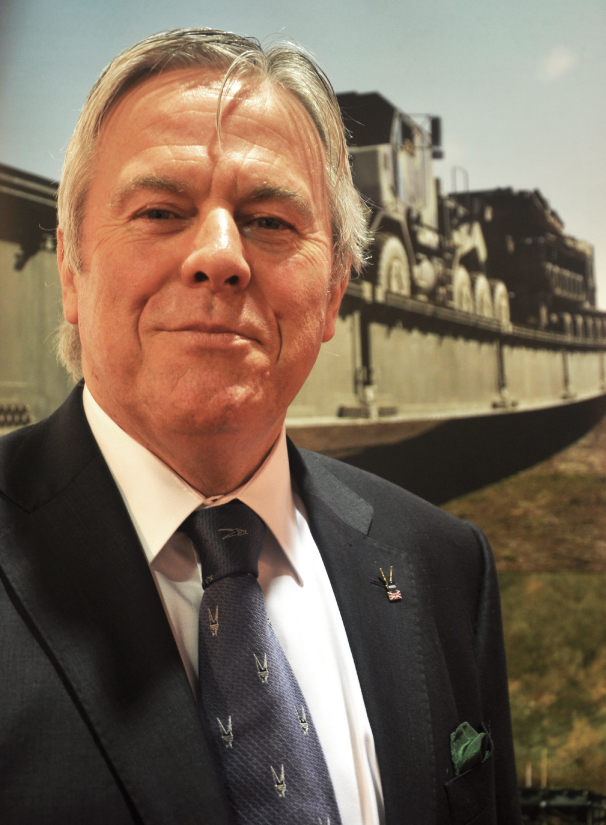
Defence Turkey: Mr. Houghton, could you please infrom us about the core capabilities and products of WFEL?
WFEL is the established world leader in the design and manufacture of tactical military bridging, supplying 40 armed forces from around the globe for over 40 years and is a prime contractor to both the UK Ministry of Defence and U.S. Department of Defence.
Our expertise is based upon a near century of defence engineering excellence including concept design, prototype manufacture and full scale production of a range of rapidly deployable modern bridging systems for use on military and disaster relief operations.
We have an in-house research and development capability that enables WFEL to provide additional military-grade engineering solutions to meet urgent operational requirements.
WFEL’s portfolio of tactical military bridges are used to help advancing military forces to rapidly span gaps where retreating armies have blown up bridges. In recent times the bridges have become increasingly deployed in support of relief and rescue efforts following civilian emergencies such as earthquakes and floods.
The WFEL bridge range includes the Dry Support Bridge (DSB), Medium Girder Bridge (MGB) and Air Portable Ferry Bridge (APFB):
• The US Department of Defense identified that they were missing a tactical military bridge a gap in their inventory to complement their holdings of assault and lines of communications bridges. The WFEL DSB was designed to specifically meet the US requirement to span a 40m gap with just 8 soldiers and a single launch vehicle in less than 90 minutes.
• The MGB has been in operation since 1971 and with 500 MGB systems in use with 39 armed forced worldwide has proved to be a classic example of precision military engineering that has stood the test of time.
• The APFB was designed to meet the needs of military and civilian disaster and emergency relief operations that demand rapid mobility and flexibility.
Defence Turkey: In May, WFEL was acquired by German land defence systems provider Krauss-Maffei Wegmann GmbH. Could you please enlighten us about this new structure? What will be the new developments and approaches according to this acquisition?
The acquisition of WFEL by Krauss-Maffei Wegmann (KMW) of Germany allows for both companies to take advantage of each other’s different international links whilst complementing the overall product range of both companies
With WFEL now a part of the KMW group we can, for the first time, provide the international marketplace with a complete military bridging capability, combining KMW’s portfolio of vehicle-integrated systems with WFEL’s ‘bolt-on’ products which can be added to a variety of different vehicle chassis.
In addition, KMW is one of the world’s leading military vehicle manufacturers so together the two businesses are set to explore synergies for new and existing customers through a combined product portfolio of vehicle and bridging solutions.
With permanent overseas operations in a number of territories including Turkey and Brazil, KMW’s international infrastructure also provides WFEL with increased on-the-ground resources to boost new bridge sales in key markets.
Defence Turkey: Recently you have completed £8.5 million contract for the Turkish military. Could you please inform us about your activities, ongoing programs and future opportunities in Turkey?
WFEL and the Turkish military signed a contract in August 2008 for the procurement of 2 x 40 metre DSBs, transported and launched from Oshkosh vehicles. As part of this agreement WFEL’s specialists delivered a trials and then training package to engineer troops at their barracks in Kırklareli. These troops learnt how to deploy and operate the systems quickly and now have a good working knowledge of the DSB. WFEL continues to provide in-country support to the engineers and the DSB is proving to be a great success and popular with the end users.
KMW has a permanent workshop operation in Turkey, so there may be further potential for WFEL to take advantage of this facility to offer increased on-the-ground resources to help support new bridge sales as we understand that the Turkish MOD have additional bridging systems requirements in their procurement plan.
For the future we would like to see most if not all of the combat engineer regiments equipped with 2 x DSBs. This would allow for the bridges to be located throughout the country where they can then be deployed rapidly both for military and also civilian emergency and disaster relief operations.
Defence Turkey: What are your R&D activities, new products?
The DSB has been further developed and now is able to span up to a 46 metre gap (was 40m) taking vehicles up to military load classification (MLC) 120, (was MLC 96). We have also designed and manufactured walkways to allow vehicles and pedestrians to safely cross the bridge at the same time.
Switzerland is the first country to take the 46m gap DSB and with the procurement of extra ends of bridges engineers can now deploy 2 x 30m bridging systems from 1 x 46m set.
Defence Turkey: What are your activities being carried out with Turkish companies? As you are aware, Turkish companies have sound achievements in different markets like Malaysia, Saudia Arabia and other Middle East countries. Do you plan to make any cooperation with Turkish companies for 3rd markets?
It is our policy to work with locally based companies in our target countries as we find that this allows for better access to the higher reaches of the government and military.
However, we are currently looking for representation in Turkey to help us market the DSB and our other bridging systems not only within the Turkish Armed Forces but also Disaster Response organizations. The British Embassy in Ankara is helping to identify suitable and well connected Turkish companies. We hope to have appointed new representatives before the end of 2012.
Defence Turkey: How do you assess your plans focused on investment, partnerships and strategic structure in Turkey?
We are very conscious that many of our potential end users are in countries with a desire for either offset or indigenous manufacture. As a manufacturing company making a niche product in our own factory with our own highly skilled workforce this desire does present us with challenges.
With our links with KMW and its intent to develop a workshop in Turkey (Istanbul area) to help support the Leguan armoured vehicle launched bridge it may well be possible that this workshop, with its local staff, could provide the support to future bridging systems that the Turkish Armed Forces procure thus bringing the maintenance and maybe repair/replacement part skills and expertise into Turkey.
Defence Turkey: Finally, would you like to add something and give a message to our readers?
WFEL is not a ‘fire and forget company’. After sales support is very important to us and with our bridge inspection and our training teams we do our utmost to ensure end users of our bridging systems get best value from the equipment.
Whether it on military operations in places such as Afghanistan or in support to the civilian population following a natural disaster such as the tsunami in Japan you will find WFEL bridging systems.
We have examples of bridges still being deployed that are over 30 years old so any military force procuring our bridges knows that it is buying a quality item that has stood the test of time and provides tremendous long term value for money in these difficult times of recession.