Defence Turkey Examines Pakistan Navy’s Strategic Trajectory Through Interview with Admiral Naveed ASHRAF
The interview positions 2025 as a stress-test year, highlighting how the Pakistan Navy balanced deterrence and maritime security operations during heightened India–Pakistan tensions while simultaneously contributing to multinational counter-narcotics efforts in the North Arabian Sea. This dual-role performance underscores a broader doctrinal emphasis on combining conventional naval deterrence with constabulary and cooperative security missions.
At the strategic level, Admiral ASHRAF outlines a transition toward a more network-centric and technology-driven force under Vision 2030. The planned integration of unmanned systems and AI-enabled capabilities indicates a deliberate move toward distributed maritime operations and enhanced situational awareness across contested domains.
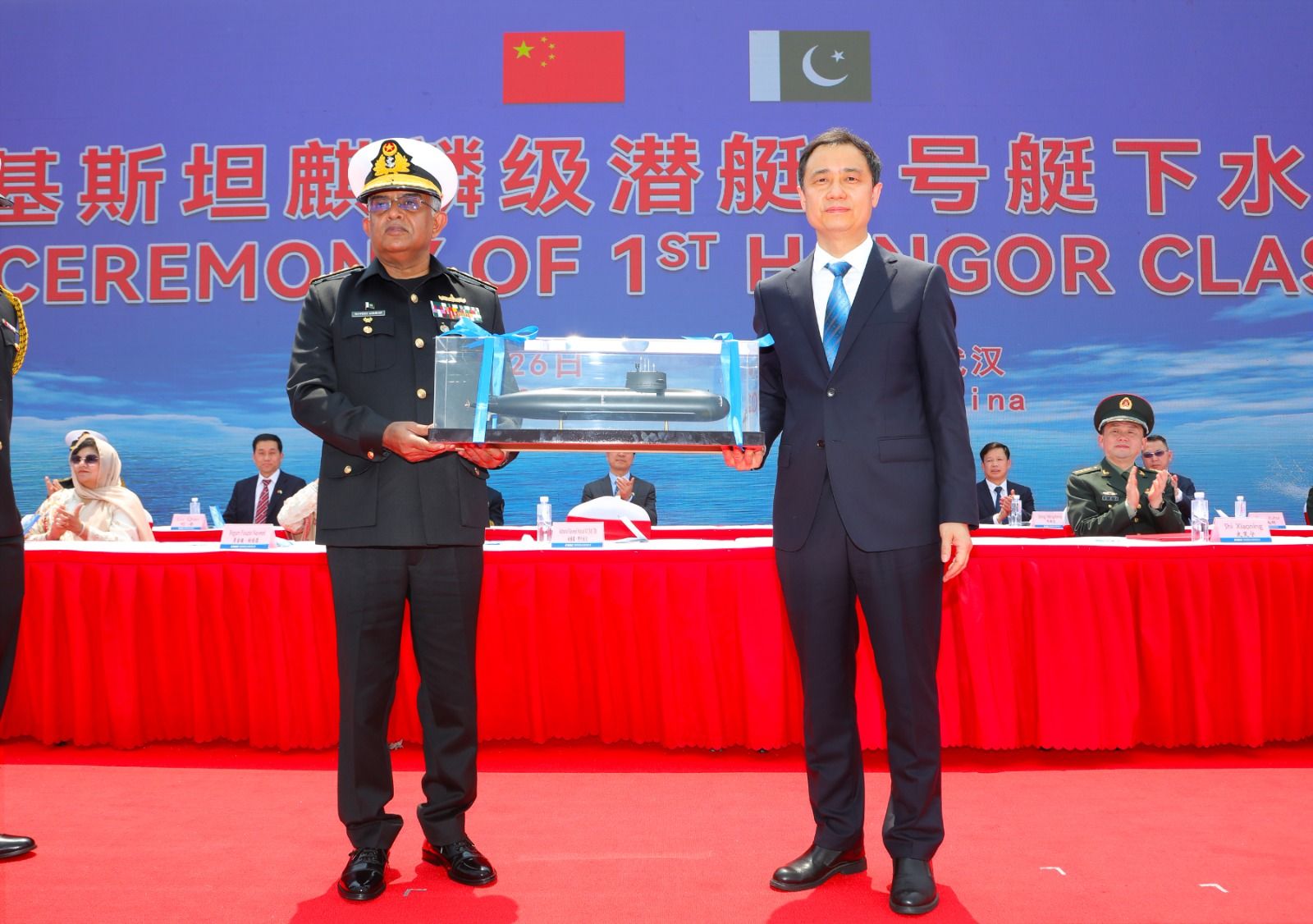
A key analytical takeaway from the interview is the Pakistan Navy’s pursuit of capability diversification through parallel procurement and modernization tracks. The induction of Chinese-origin TUGHRIL Class (Type 054A/P) Frigates and the HANGOR Class AIP Submarine Program reflects a deepening operational reliance on Eastern platforms, particularly in high-end naval warfare domains such as air defense and undersea warfare.
“The acquisition supports a modern and numerically sufficient submarine fleet capable of operating effectively in the Arabian Sea and the Indian Ocean, while ensuring strategic balance against regional naval expansion.”
The HANGOR program emerges not only as a force multiplier but also as a cornerstone of Pakistan’s long-term industrial strategy. Its emphasis on technology transfer and domestic construction signals a structural shift toward indigenous capability development.
“Through technology transfer, we are gaining expertise in advanced submarine design, construction techniques, systems integration and quality control processes.”
The HANGOR Submarine Program, in particular, emerges as a cornerstone of Pakistan’s maritime deterrence architecture. Beyond its operational impact, the program’s emphasis on technology transfer and local construction signals a structural shift toward indigenous industrial capacity, aligning with broader defense industrial diversification goals.
In parallel, ongoing cooperation with Türkiye, particularly through the KHALID Class Agosta 90B Submarine MLU Program carried out with STM, demonstrates a hybrid procurement strategy aimed at mitigating supplier dependency while maximizing technological absorption and enhancing local know-how.
“The project undertaken by PN in collaboration with Türkiye's defense company STM has significantly enhanced the operational effectiveness, survivability and longevity of the Navy's submarine fleet.”
“By engaging both China and Türkiye, Pakistan is diversifying its supply chain, gaining access to varied defense technologies, developing multi-source technical expertise and improving bargaining leverage in any future procurement.”
Beyond platform upgrades, the program has contributed to institutional and industrial capacity building.
“It has enhanced our indigenous technical expertise, improved maintenance capabilities at local dockyard and deepened strategic defense ties between Pakistan and Türkiye.”
The interview further highlights Pakistan’s efforts to enhance indigenous shipbuilding capabilities through technology transfer and industrial development.
Regionally, the expansion of Pakistan’s AIP-equipped submarine fleet is likely to recalibrate the undersea balance in the Arabian Sea, enhancing sea-denial capabilities and reinforcing strategic deterrence vis-à-vis adversaries. This is complemented by an increasing focus on unmanned underwater vehicles (UUVs), suggesting that the Pakistan Navy is preparing for a more complex and data-driven undersea battlespace.
Looking ahead, Admiral ASHRAF underscores the growing importance of undersea warfare, artificial intelligence, and unmanned systems, while also emphasizing the strategic value of defense cooperation with Türkiye. Türkiye–Pakistan defense ties are framed not only as procurement-driven but increasingly as co-development-oriented, particularly in emerging technologies. He also addresses the future of multinational initiatives such as Exercise AMAN, reinforcing Pakistan Navy’s commitment to collaborative maritime security in an increasingly complex regional environment and positioned as instruments of maritime diplomacy, aimed at fostering interoperability and reinforcing a cooperative security architecture in the Indian Ocean Region (IOR).


