
The Birth of Transall
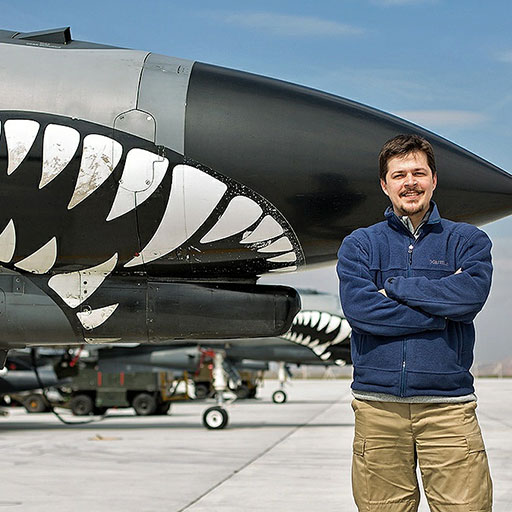
Cem Doğut
The Transall project began in 1957 when Nord-Aviation proposed a cargo aircraft to replace the ageing Noratlas in service with the French Air Force. As French requirements alone were not sufficient to ensure the program's viability, a partner had to be found, and Germany became interested in the project. On December 15, 1958, three aircraft manufacturers were selected to study and produce the aircraft: Nord-Aviation on the French side, and Weser Flugzeugbau (VFW) and Hamburger Flugzeugbau (HFB) on the German side.
In 1959, the aircraft’s design was finalized, beginning with the selection of Rolls-Royce Tyne engines. On December 16, 1959, an intergovernmental agreement officially launched the program, and production was divided among the factories of the cooperating countries. Assembly lines were established in Bourges, Bremen, and Hamburg.
On February 25, 1963, the prototype of the C-160 Transall (TRANSport ALLiance), a military cargo aircraft developed through French-German cooperation, made its maiden flight at Melun-Villaroche.

On November 22, 1967, the first C-160 was delivered to the French Air Force, followed by the German Air Force in April 1968. Production continued until 1973, resulting in a total of 169 aircraft, including three prototypes, six pre-production aircraft, and 160 serial production aircraft, comprising 50 for the French Air Force and 110 for the Luftwaffe.
The Transall C-160 belongs to the medium-range transport aircraft category and has a payload capacity of 32,275lb (16 tons). The aircraft has a range of 2,750 nautical miles with an 8-ton payload and 1,000 nautical miles with a 16-ton payload. The cargo compartment measures 17.2 x 2.98 x 3.15 meters.
Turkish Air Force Meets the C-160D Transall
A total of 20 C-160D Transall aircraft were supplied to the Turkish Air Force as surplus aircraft from the German Air Force in order to enhance its airborne transportation and airborne operation capabilities. When the C-160D aircraft were delivered in 1971, they did not have an airborne cargo drop capability. The 12th Air Transport Main Base Command developed and integrated the necessary systems for these aircraft using its own resources.
In 1971, 18 personnel from 221st Squadron (221. Filo) travelled to Germany for training on the C-160 aircraft that had entered service with the squadron. Upon their return to Türkiye, these personnel completed the training of the remaining squadron personnel.

The delivery of the C-160D Transall aircraft to Türkiye began on May 18, 1971, with the arrival of the aircraft bearing tail number 69-029. In total, 20 aircraft were added to the Turkish Air Force inventory.
After 55 years of service, the first C-160D Transall delivered to the Turkish Air Force, serial number 69-029, bid farewell to the skies with its final flight on March 26, 2026. During its 55-year service life, the aircraft accumulated a total of 285,000 flight hours.
The C-160 aircraft has been replaced by the A400M aircraft. The 221st Squadron will now continue operations with a fleet of 10 A400Ms.

C-160 Transall Life Extension and Avionics Upgrade Programs
The modernization programs were carried out to improve the flight safety and operational efficiency of the C-160D aircraft, which entered the Turkish Air Force inventory between 1971 and 1972, in line with modern technological requirements.
For this purpose, the following modifications and improvements were implemented by the 2nd Air Maintenance Factory Directorate in Kayseri:
LEDA is a German acronym for “Lebensdauerverlängernde Maßnahmen” (Life Extension Measures).
· LEDA I and II included life extension measures focused on the wing structure. In addition, doublers were installed on the wing center sections and outer wings.
· Under the LEDA III modification, detailed corrosion control procedures and additional structural reinforcement work were carried out on the fuselage.
· The side cargo loading door, which was no longer operationally required, was removed. This modification prevented potential hydraulic and structural problems in that area.
· The SYP 820 dual-platform gyro, which had a high failure rate and maintenance cost, was removed and replaced with the C2G platform gyro, which became available following the retirement of the F-104 aircraft and was subsequently used actively without major issues.
· The APN-22 radar altimeter, which had technological limitations, was replaced with the more advanced AHV-6 radar altimeter.
· The SELCAL (Selective Calling) system was modified to comply with the mandatory coding requirements of European airspace regulations.
· Due to maintenance challenges and operational shortcomings, the LORAN navigation system was removed and replaced with the GPS-100 system.
· The RDR-1 radar was replaced with the more advanced Primus 90B weather radar.
Depot-level maintenance for the C-160 aircraft was carried out by the 2nd Air Maintenance Factory Directorate. On average, the aircraft underwent depot-level maintenance approximately every three years.

C-160D Transall’s Participation in Operations and Other Important Missions in the Turkish Air Force
Cyprus Peace Operation (July 20-22, 1974)
Twelve C-160D aircraft participated in the operation. During the Cyprus Peace Operation, a total of 37 sorties were flown over 84 flight hours. Approximately 1,400 personnel and 95,000kg of supplies were air-dropped onto the island.
As the C-160 aircraft were mostly hit during the first sortie of the operation, the bright orange sections on the aircraft, including the engine nacelles and rudder, were rapidly repainted in camouflage colors upon their return to base. Eleven of the twelve aircraft participating in the operation were hit by various types of ammunition.
Kardak (Imia) Crisis Troop Deployments (January 27-31, 1996)
All assigned deployment tasks were completed within 24 hours. The 221st Squadron participated in the deployment with 10 C-160D aircraft. During 21 sorties, 274 personnel and 195,250kg of supplies were transported, while a total of 85 flight hours were accumulated.
Air Operations in Bosnia and Herzegovina
As part of the United Nations Humanitarian Relief Operation, the 221st Squadron was deployed to Zagreb for three months beginning on July 25, 1993, transporting humanitarian aid to Sarajevo.
ISAF (International Security Assistance Force - Afghanistan) Flights
As part of the ISAF mission, 202 personnel and 42,500kg of supplies were transported to Afghanistan in 28 sorties in 2002, accumulating 265 flight hours. Between 2005 and 2007, a total of 1,592 personnel and 155,451kg of supplies were transported in 130 sorties, accumulating 458 flight hours.

Operation Unified Protector - Libya
Turkish Air Force transport aircraft delivered 129 tons of humanitarian aid to the Libyan people during the operation. On September 18, 2011, two transport aircraft, one C-130 and one C-160, were tasked with conducting an airborne humanitarian aid delivery mission to people in hard-to-reach areas. The C-160, which took off from Benghazi Airport, successfully air-dropped aid supplies near the Waddan settlement south of Sirte.
Following the drop, the aircraft came under anti-aircraft fire but successfully evaded the threat and returned to Benghazi Airport without sustaining any damage. The mission, during which a total of 16 tons of aid supplies were air-dropped, marked Türkiye’s first overseas airborne supply-drop operation since the Cyprus Peace Operation.
Libya Evacuation Mission
During the evacuation operation carried out between October 23 and November 14, 2011, the 221st Squadron evacuated 2,887 Turkish citizens and 1,240 foreign nationals in a total of 117 sorties conducted with C-160 transport aircraft, while also transporting 104 tons of cargo.
Special Mission Transalls
Transall aircraft were not limited to cargo transport operations. They also served as some of the most specialized platforms in the Turkish Air Force inventory.

MilKar-2U Project
The first MilKar-2U (Milli Karıştırma / National Jamming-2U) aircraft was delivered in 1995. The aircraft is distinguished by its cylindrical black ESM antenna mounted on the fuselage directly behind the cockpit. The MilKar-2U configuration also features a retractable electronic jamming antenna housed inside the right landing gear nacelle of the C-160D Transall aircraft. The system is deployed externally after takeoff and retracted back into the nacelle at the end of the mission.
MilKar-2U aircraft were later modernized by Aselsan. As part of this modernization effort, a modular roll-on/roll-off Air Platform Mission Module powered by the aircraft itself was integrated into the platform. For Imaging Intelligence (IMINT) missions, the AselFLIR-300T FLIR system was mounted on the rear fuselage, while antennas for Communications Intelligence (COMINT) missions were installed on the underside of the fuselage.
The Air Platform Mission Module, featuring sound and heat insulation, climate control, and internal lighting, includes six operator consoles for the MilKar Operator, Mission Manager, FLIR Operator, and Communications Listening and Interception System Operators, as well as two large LCD screens dedicated to the Mission Manager. When the Air Platform Mission Module is removed from the cargo compartment, the MilKar-2U aircraft can also be used in the transport role.

The electrical power required for the Air Platform Mission Module is supplied by an Auxiliary Power Unit known as the Gas Turbine Generator, located in the left landing gear nacelle of the C-160D Transall aircraft.
One of the last two remaining C-160 aircraft suffered an accident on January 25, 2024, following an engine failure. Shortly after takeoff, the aircraft experienced an engine malfunction, forcing the crew to perform an emergency landing. The aircraft involved in the accident, serial number 69-036, was one of the two aircraft configured in the MilKar-2U configuration and was subsequently written off due to the damage sustained.
The C-160D MilKar-2U aircraft are planned to relinquish this mission in the coming years to the aircraft being procured under the ongoing Hava SOJ (Airborne Stand-Off Jammer) Program. The Hava SOJ system is based on the Bombardier Global 6000 platform and is scheduled for delivery by the end of this year.

Gören-I Project
The Gören-I Project was launched to meet the Turkish Air Force Command’s requirement for a “Manned Reconnaissance Aircraft.” The project includes the conversion of three C-160D Transall transport aircraft in the Turkish Air Force inventory for ISR (Intelligence, Surveillance, and Reconnaissance) missions, as well as the procurement and integration of ground-based systems capable of receiving, processing, and transmitting imagery obtained by the aircraft in real time to relevant units.
Within the scope of the project, the C-160D aircraft were equipped with the AselFLIR-300T FLIR System, two operator consoles, and a Savronik Data Link System, including an Air Data Terminal and antenna system for transmitting acquired FLIR imagery to the Ground Control Station. A dedicated interface was also developed to enable the sharing of imagery received at the Ground Control Station with relevant Turkish Air Force units. The aircraft conducted its first flight in 2011.
Beginning in 2013, the AselFLIR-300T FLIR system used on the Gören-I aircraft was replaced with the FLIR Systems Star SAFIRE 380-HLD FLIR system, which had previously been tested successfully on one of the aircraft.


