7th Naval System Seminar Gathered Naval Industry Professionals
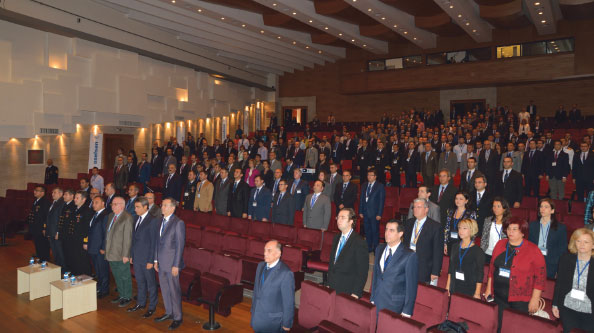
Seventh of the Naval Systems Seminar was held at the METU Cultural and Conventional Center on 12-13 October 2015 with a broad participation. Presentations on construction technologies regarding naval platforms, command control and battle systems, radar EH applications in naval platforms, sea security applications, Naval Electro-Optical System solutions and various other issues were made by companies throughout the Naval Systems Seminar organized by the Navy Captain (Ret.) Zafer Betoner. Turkish Naval Forces Command Personnel in various ranks officially attended the event in which Stefan Larsson, Commander, Head of Plans, SwAFHQ Navy Department of Swedish Naval Forces attended as a guest speaker.
Prof. Kemal Leblebicioğlu on behalf of ODTU – BILTIR; Mustafa Murat, Engineer MSC, Senior Colonel Naval Forces Command Vessel Construction Department Head and Mr. Müjdat Uludağ, Naval Platforms Department Head of the Undersecretariat for Defence Industries gave the inauguration speeches of the event.
In his opening remark, Prof. Kemal Leblebicioğlu underlined the importance of supporting the universities for reaching competency in Naval Platforms and technologies and added that small scaled projects with less costs should be realized in order to achieve this while reminding that for the time being this was limited with the support handed by TUBITAK. “TUBİTAK can support such projects to a certain extent, at this point we need to increase the support given by the companies. The support from the “Company + Academy” combination is of vital essence in these types of projects and companies, who wish to increase their know-how, need to be involved in the process” added Leblebicioğlu.
Emphasizing on the importance attached by foreign countries to these projects Leblebicioğlu continued his words: “There are over 300 centers in the United States that perform activities merely on underwater vehicles and technologies. The youngest of these centers was established 60 years ago and its contributions barely started to emerge nowadays. As Turkey, we have to establish such centers that would generate innovation in vessel construction and technologies; thus gain our country added value and offer our moral and material support. I hope that the support in this respect will increase”.
Engineer MSC, Senior Colonel Mustafa Murat: “Our Aim is to Have National Platforms and Systems”
On behalf of the Naval Forces Command that officially attended this year’s seminar for the first time, Engineer MSC, Senior Colonel Naval Forces Command Vessel Construction Department Head mentioned in his remark that the sensitive geographic stance of Turkey was an indicator of how huge Turkey’s requirement for Naval Forces was. “One of the main issues of our Naval Forces to be dealt with is decreasing the level of foreign dependency and we believe we have made great progress in this regard. The progress we made in a brief amount of time particularly on the production of information platforms and systems is satisfactory. I would like to state that for the uninterrupted continuity of the developments in this respect, we will be giving support to our industry in full throttle. On the other hand, I would like to draw your attention to another significant point as well. As Turkey, with the products emerging in the recent years, we started to comprehend the difference between domestic production and indigenous production. From the days where we made parts assembly or production with the support of foreign companies, now we started to conduct production completely with national capabilities and through product development, integration and test infrastructures. The developments we witnessed are satisfactory, still considering the worldwide developments we need to accept that we still have a long way ahead of us” said Murat.
Senior Colonel Mustafa Murat expressed that through MILGEM (National Corvette Ship) Program; Turkish Naval Forces assumed the performance responsibility and led the sector. “Assuming the performance responsibility, we aimed to become the pioneer within the scope of the MILGEM. We will continue to exist as a pioneer in the more complicated, risky and difficult programs in the future. We identified our target as owning national platforms and systems and we are aware of the challenge ahead of us. However, the progress achieved in a short period through the activities conducted under the leadership of the Undersecretariat for Defence Industries and the recent developments encourage us for the future”.
Relaying important messages to the players of the sector regarding the following period, Murat continued “During the system and platform development stage, we need to focus on the flexible and modular solutions that may be reached with an effective design plan and multiple techniques. Then again, we also have to concentrate on developing cost-efficient products with high efficiency and usability. We attach great importance to the organization of these national and international seminars, meetings and events where we seize the opportunity to conduct negotiations and discussions and to display our products. These gatherings are also important for lighting the way to the accomplished and ongoing studies and activities. We will continue to lead and guide you as long as you gather in such events”.
The export revenue of the vessel construction industry reached up to 1,252 billion USD in 2014
In his presentation, Mr. Müjdat Uludağ, Naval Platforms Department Head, Undersecretariat for Defence Industries, conveyed information to the participants on the statistics regarding the military and civil shipyards and the programs executed in these facilities. Stating that construction, maintenance and repair activities of the vessels were being conducted in a total of 145 shipyards, Uludağ expressed that in 54 of these shipyards 249 vessels were built. Moreover, Uludağ mentioned that 22 platform support vessels, 20 police boats, 10 patrol boats and 50 vessels of various categories were constructed. He added that with 9882 persons in Tuzla region, 6954 persons in Yalova, 1871 in İzmit and 1627 in the remaining locations, a total of 20334 personnel were employed in the sector. Uludağ mentioned that there were 31 docks composed of 24 floating, 6 dry and 1 synchronic docks in these facilities, pointed that the total annual vessel construction capacity of the facilities in our country was 4 million 200 thousand tons. Uludağ also stated that presently the vessel construction production activities were being conducted at 3.948.000 m2 over the total of 7.526.647 m2 allocated for such activities and added that in 2014, except the maintenance costs, the export revenue of the vessel construction industry in Turkey in 2014 went up to 1,252 billion $. “When the size of the active facilities considered, we observe an annual 317$ of export revenue per square meter. All these figures I mentioned were achieved when our sector was about to hit the rock bottom. We cannot compare today with years 2007-2008. Back in those days, our shipyards had plans for 5,6,10 years as well as related customer potential, whereas today we progress according to the plans designed for a few years. Most of our potential customers earn their revenue from crude oil sales. Due to the decrease of the price per barrel of the crude oil from 150 $ to 50$, many countries adopted austerity policies and cut back their expenses. Besides, as our neighbor countries could not complete their political evolution that recently started with the Arab Spring and additionally the crisis we have with them from time to time, we can claim that our export potential is going through a cyclical hardship” said Uludağ.
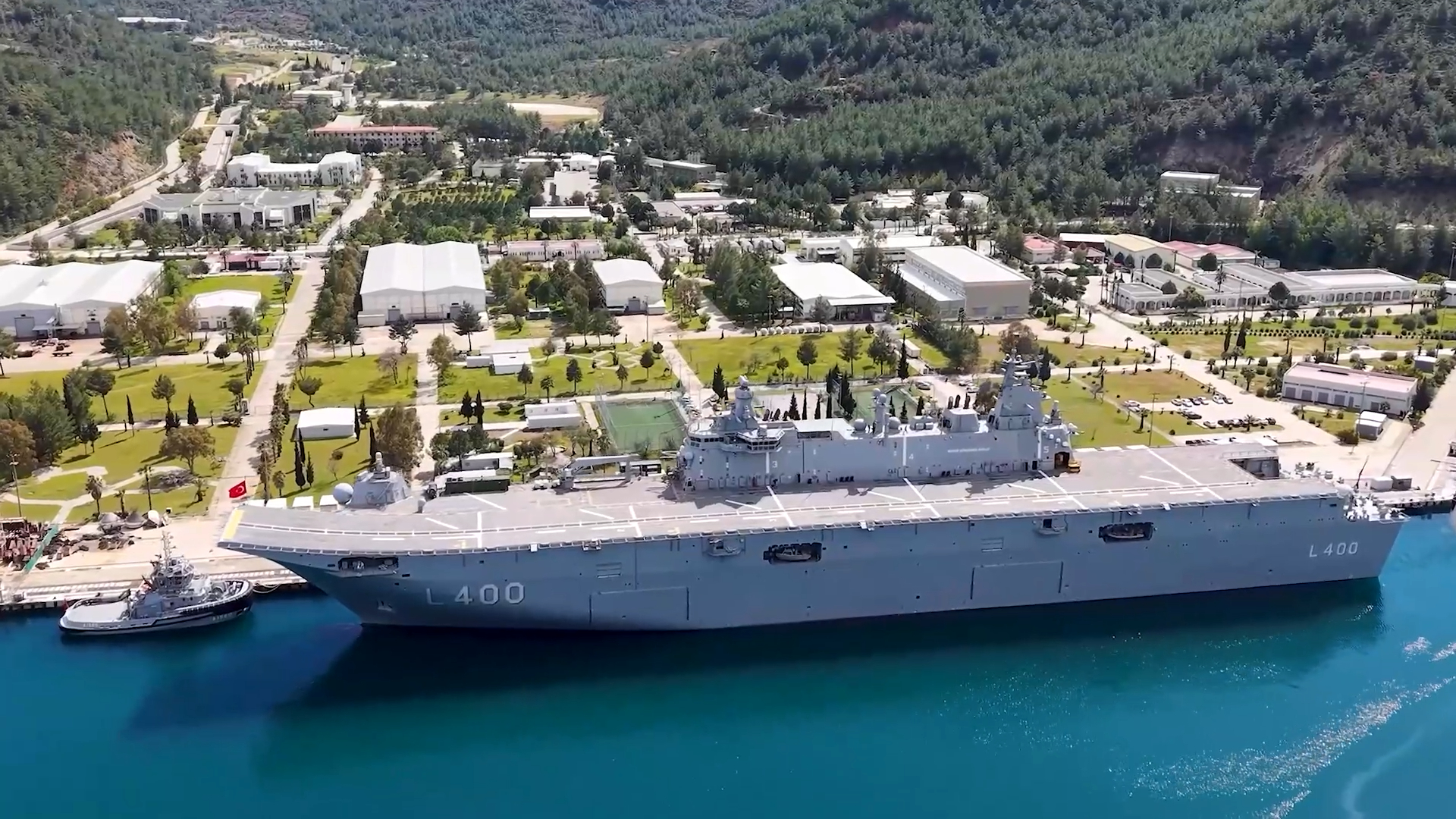
Head of the Naval Systems Department of the Undersecretariat for Defence Industries Müjdat Uludağ mentioned that the Undersecretariat contracted most of the great projects to private shipyards in order to increase the military vessel construction capabilities of the private shipyards and continued: “I would like to state that the contribution provided to our sector by the 4 Coast Guard Search and Rescue vessesl, 16 new type patrol boats with 400 tons displacement, 8 high-speed amphibious ships (Landing Craft Tank), 2 LSTs, MOSHIP and Landing Platform Dock projects is of great importance for us”. Additionally Uludağ underlined that the design, construction and hardware, material, equipment and system procurement of the vessels being conducted through indigenous facilities was essential for the improvement of the existing capabilities of our country and added, “Our MILGEM Corvette is one of the most significant projects, the design and integration studies of which are provided through our domestic industry. As part of this project and as the Undersecretariat for Defence Industries, we signed a contract on the service and material supply for the procurement of approximately 9200 items with a total of 75 private sector industry companies”.
Regarding the foreign markets, Uludağ stated that as the main contractor of the Pakistan Navy Fleet Tanker Project, they executed the design package; system material package supply and ELD activities and added, “The construction activities of the tanker are being conducted in the Karachi shipyard at Pakistan. Within the framework of this project, our domestic industry companies assigned in MILGEM program are assuming important tasks. Up to date, the total of the procurements are over $15 million in this project”.
Assessing that the contribution of the domestic industry within the military vessel projects would be increasing further in the upcoming period, Uludağ reminded that with the level of competency it reached, the Turkish Defence Industry now stood at a point of no return and stated that in the near future, a vision for the indigenous development and export of more complicated and major systems such as Main Propulsion systems should be dominating the sector. Expressing that our shipyards in charge of Military Vessel Construction and companies such as Aselsan and Havelsan were undertaking important tasks in the sub systems area regarding the naval platforms and added “Havelsan reached a significant achievement with the Vessel Integrated Combat Management System ‘Genesis’ and took major positions in the programs such as MILGEM, New Type Patrol Boat, LST and LPH (Landing Plat. In the meantime Aselsan assumed responsibilities in crucial issues such as integrated battle, fire control stabilized weapon system, communication, navigation radar, sonar systems and electronic warfare in addition to its achievements in critical technologies such as the torpedo counter measure systems for submarine and surface vessels”. Müjdat Uludağ also underlined that the Meteksan Defence, Koç Bilgi and Savunma Sistem, Gate Electronic and TÜBİTAK assumed essential roles in important projects and reached a certain level of competency on these issues.
Following the opening remarks, main sponsors of the event Aselsan and Havelsan made presentations and several panels took place at different halls.
Throughout the seminar that lasted for two days, the following issues were examined: Aselsan brand in Naval Warfare/Task Systems, Command Control and Battle Systems, Developments in Torpedo counter measure technology, Warfare system integration in the military naval platforms, applications towards amphibious operations, radar EH applications in naval platforms, main propulsion system selection and integration in military vessels, waterjet propulsion for Naval Crafts, optimizing power architectures of Naval Systems, maritime security applications, added value of variable depth sonar in naval operations, performance based logistics-service agreements approach, naval electro-optical system solutions, naval damage control by Ignacio, cooperation requirements between Merchant navy and naval forces in the field of maritime safety, advanced engineering solutions for marine vehicles.
The eighth of this seminar taking place biennially is planned to be held in October 2017.