Aeromedevac the Dutch Way “We Care, Anytime, Anywhere”
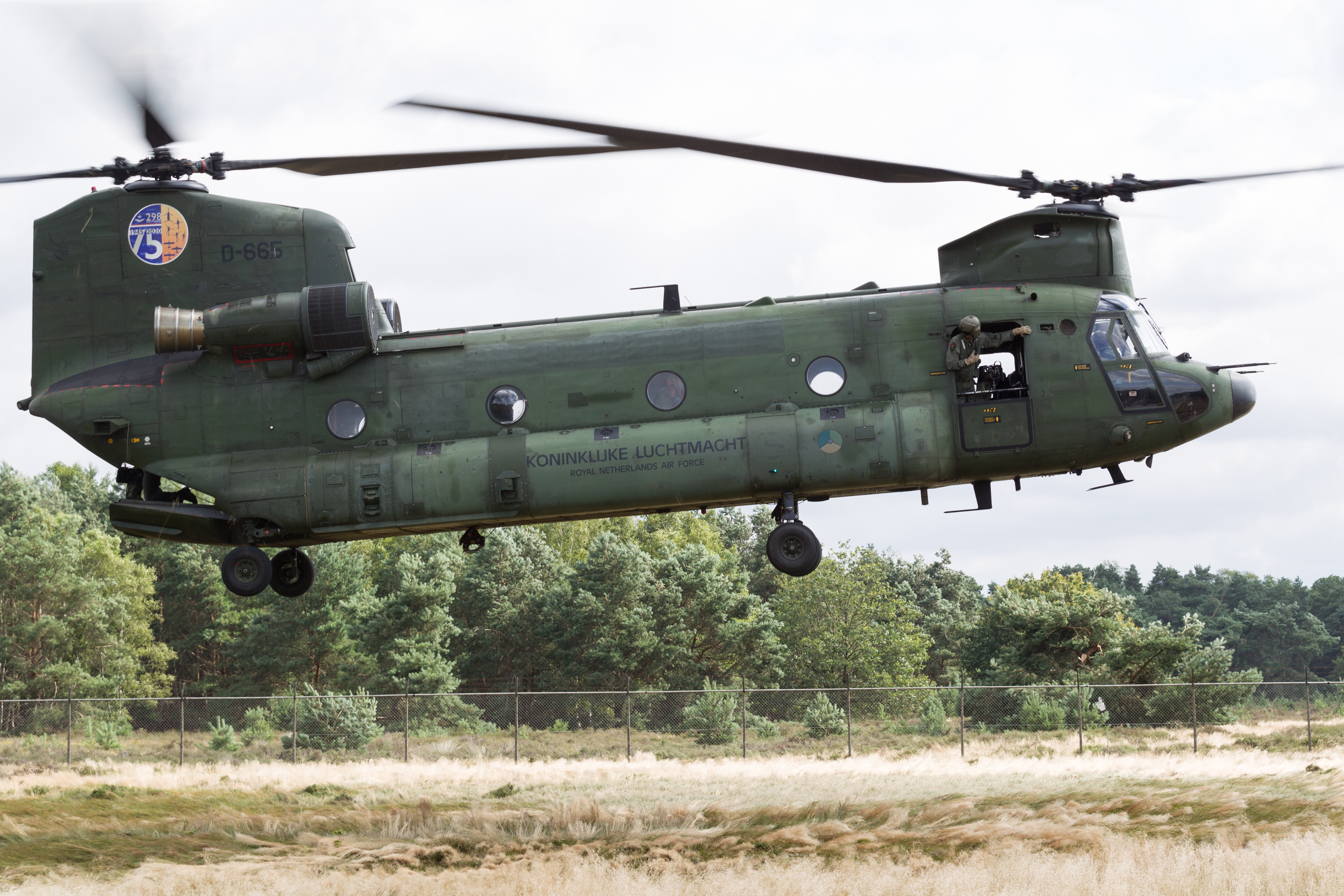
While the CH-47D Chinook crew transports a patient towards a hospital as quickly as possible, the Aeromedical Evacuation Physician (AEP) and Aeromedical Evacuation Nurse (AEN) do everything they can to keep the patient alive. The helicopter acts as a flying ambulance in these cases. This is a typical scenario which can occur in a real-life situation during a deployment or as part of an evacuation of military service personnel. The annually held ORAC (Operational Readiness Aeromedevac Course) prepares participants by training for these urgent situations.
During July 2021 this two and a half week training was organized in the Netherlands. ORAC is the Initial Rotary Wing Aeromedevac course of the Royal Netherlands Air Force (RNLAF) which is conducted by the Operational Health Department (Operationele Gezondheidszorg/OGZ). The OGZ is a part of the Center for Man and Aviation (CML). The OGZ consists of soldiers with a (specialist) medical background. One of the main tasks of the OGZ consists primarily of providing Aeromedical Evacuation (AE) capacity (Air Transport for casualties). With AE, wounded soldiers and civilians are taken by helicopter to a hospital in the mission area (Forward AE) or flown back to the Netherlands by Airlift (Strategic AE). If many patients need to return to the Netherlands, they can be accommodated before the flight in a so-called Casualty Staging Unit (CSU). Supporting the ORAC course is 298 Squadron, stationed at Gilze-Rijen Airbase, of the Royal Netherlands Air Force/ Defense Helicopter Command (Koninklijke Luchtmacht/Defensie Helicopter Commando - DHC) operating the Chinook CH-47Ds and lately the new CH-47F MY CAAS version since 2021. During Rotary Aeromedical Evacuation training participants start their training on the C-130 Hercules fixed wing platform, explained Lt Col Johan, Chief Aeromedical Evacuation Medical Director of the RNLAF. “We start the AE training with the support of Austria, the United States and Canada. We buy training courses from these countries because we have limited availability in our own C-130 Hercules fleet’.
ORAC is a preparation course for participants that wish to obtain Rotary Wing Aeromedevac Evacuation (AE) status. As in 2020 the course in 2021 was also held in the Netherlands as travelling to the US brought big challenges due to COVID-19 situation. Normally the course takes place under the supervision of the RNLAF 302 Squadron stationed at Fort Hood (US Army Airbase), Texas.
The training integrates knowledge on Aero-Medical Training, Trauma and other Emergency Medicine, into a good working concept supported by a Helicopter Platform. The ORAC course is supported by a highly experienced AE Instruction Group consisting of Aeromedical Evacuation Physicians (AEP), Aeromedical Evacuation Nurses (AEN) and medical specialists with both military operational (mission deployments to e.g., Bosnia, Iraq, Afghanistan, Mali) and civilian experience.
Since 2009 the Royal Netherlands Air Force organized the ORAC courses in three different countries; the Netherlands (2017,2020-21), the United States (Fort Hood, Texas 2018, 2019, 2022), Utah, Salt Lake City (2015), Wisconsin, Fort McCoy/ Volk Field (2009 t/m 2014, 2016) and Canada: Ontario, Petawawa (2018).
The 2021 edition was attended by 18 participants. The training consisted of both theory and practical lessons/exercises. Key attention areas are Physiology, Stress of flight and Crew Resource Management principles. The goal for ORAC participants is to become more familiar with the equipment and materials used in the Aeromedical Evacuation role which are a vital component to be able to work in this environment.
Captain Gracia was one of the participants of the ORAC 2021 course. It was her first experience flying a helicopter. “It gave some moments of stress and I also had to adapt to the flying circumstances like noise, vibration and tiredness” she explained. The personal goal for Gracia was to participate together with the military Flight Doctor during the helicopter flights and learning and adapting to the specific procedures during medevac flights. “You must be sure that all is secured, and of course the safety of the patient during transportation is priority number one. Also, communication on board the Chinook with both the loadmaster as the pilot was a big challenge to me” continues. “The priority here is to get to the helicopter with the patient in safe conditions as soon as possible. The ORAC course gave us a great inside look and experience in what to expect during a deployment, next steps will be training (including the FAMET - Forward Aero Medical Evacuation Training Course) and to be ready to be deployed in the near future.”
Sergeant Major Chris was one of the Instructors and Course Managers of the ORAC 2021 course. (The Course Manager coordinates all substantive matters during the course). “My personal satisfaction is to witness the personal growth of the participants during the course. Their emotions go from 100% concentration and tension with a big relief at the end of the flight. ORAC is a short and intense period of intensive cooperation. Participants often meet their personal boundaries; it is our job to lead them in the right direction. “My main goal is to convey my experience and the lessons learned to the participants. This should result in having everyone participating during the course prepared for the complex tasks, unfortunately this is not achievable for all” Sergeant Major Chris adds. “The ORAC course is split in three basic parts: lectures, practical lessons and scenario training” he underlines. “This course was my eleventh edition, having participated in both ORAC and FAMET.
The ORAC course is one of the last parts of our operational readiness for forward Aeromedical Evacuation” Sergeant Major Chris explains.
As a nurse or physician one must first undergo general military and medical training.
After placement at the OGZ, the following education and training courses must be completed; for example, OSEG KLU (Emergency Medical Royal Netherlands Air Force training) where participants learn how to take care of trauma patients as a team in an Air Force composition with Air Force equipment. BLS/ILS/ALS: B - Basic Life Support, I - Immediate Life Support and A - Advanced Life Support courses that provide a Standardized approach to Cardiopulmonary resuscitation in adults (among this are also CPR courses). Other training is in the field of survival, safety and equipment” Sergeant Major Chris added.
“A follow-up training to ORAC is FAMET (Forward Aeromedical Evacuation Training). In FAMET training elements are added to the final objectives of ORAC. All of this is simulated to offer training that is as realistic as possible in which as many facets of the forward AE as possible are discussed. We are currently overhauling the ORAC to ensure that the course connects even better with the other courses and training in the future.” Sergeant Major Chris concluded.
“We try to fly as stable as we can during the training to allow participants to get used to conducting their training tasks during flight. We try to keep the communication to a minimum to allow the participants to work on the helicopters’ intercom during their evacuation training” according to Michiel, one of pilots of the RNLAF 298 Squadron involved in the course. “In general, the learning curve is clearly visible. Although we only get a superficial understanding of their actions, it is important that the participants provide updates to the Aircrew during these flights. For example, the destination where they want us to go with the patient, any flight restrictions that the injury entails for the patient and everything that is needed at the drop-off location (specialist teams and resources) must be communicated. In the beginning of the course this is often forgotten, but after a few flights we notice the improvement in flight crew communication” noted Michiel.
“The most important part of the training is how to approach and work safely in an operational flying Helicopter. Participants learn how to be secure during the flight, they also need to move the patient, all equipment and the medical backpacks in the helicopter. Secondly, they need to learn how to communicate on board” according to Major Sven A3 current OPS of the Operational Health Department (Operationele Gezondheidszorg/OGZ).
Major Sven continued “Flying occurs with open windows and tail lift so that you also need to deal with drafts and noise during the flight. In addition, tactical flying is regularly performed (depending on the type of “mission.”) All this is done to mimic reality as much as possible. There is also a static night exercise in which you need to examine and stabilize a patient with very limited light options (Light Discipline). First of all, there is an introductory flight where you can get used to the helicopter and the behavior of the various equipment during flight movements (Tactical Flying). Subsequently, various "mission" flights take place in which you land at a point of injury (incident location), you briefly map the patients there and if necessary and possible, whether or not under threat, stabilize and prepare for Air Transport. In the event of a "hot" landing zone, the medical team, including an Air Mobile Protection Team (AMPT) immediately load the patient. The participants should make a clear plan where the patient should be transported to (nearest Medical Treatment Facility, Role 2 or Role 3) and answer questions such as how to fly towards the pilot (low and loud gives a lot of vibration and will be painful for a patient with fractures) and whether there is a height restriction (in a patient with, for example, a collapsed lung). When the helicopter returns, a sign from the loadmaster must be clearly observed to see if the helicopter can be approached, after which the patient is transported to the helicopter. The patient is then secured on the stretcher and connected to the monitor, after which they are taken to a Medical Treatment Facility (MTF). Because of the potential threat, it is often impracticable to stabilize the patient before transport and the first assessment and treatment of the patient often takes place in a flying helicopter with all conceivable stresses of flight” concluded Major Sven.
Each “mission” is assessed by two instructors (always a combination of a medical specialist, physician and a flight nurse instructor). This duo cooperates first on the AE skills (safety, communication, situational awareness, collaboration as a team) and secondly, on medical content. At the end of each course day, the results of all participants are discussed and if necessary, areas for improvement are identified by the instruction team” explains Lt. Col. Johan The training course also concludes with a theory exam and at least five “missions” are performed where the candidate is in the “lead” multiple times. All missions flown are assessed and reviewed using a standard checklist and evaluation form. The missions become more complex as time goes by and the participant must show the corresponding increasing achievement.
Lt. Col. Johan continues “ORAC training has been around for more than 10 years and is performed at least once a year. Belgian colleagues also participated in ORAC. In 2018, at the request of the Canadian Armed Forces, an ORAC was even provided (by a Dutch AE instruction team) towards Canadian physician, nurses and medical technicians, to support them in their Operational Readiness, preparation for the Canadian Aeromedevac (UN) mission (2019) in Mali. During this joint-collaboration communication was in (medical) English. The AE instructors assessed and supervised their Canadian colleagues. The Canadian colleagues were very satisfied with this intensive way of cooperation, guidance and feedback. The ORAC is an excellent course in the field of aeromedical evacuation and is assessed as very valuable and evaluated very well in collaboration with the instruction team. However, additional, short, type-specific training (depending on which airframe is available) in the context of mission-oriented training remains necessary. Clinical experience should remain the guiding principle and annual internships are desirable. Conducting many flying hours and multidisciplinary cooperation increase the operational character. The ORAC course is seen by participants as good preparation for an actual deployment.”
The next step in the training syllabus is FAMET (Forward Aero Medical Evacuation Training) which is an additional training for full operational status of the flight physician and nurses. The scenarios are more complex and include simulated hostile scenarios. Participants will continue with the FAMET course a year after finalizing ORAC.
The next FAMET course will be held in the United States again during the first half year of 2022 at Fort Hood, Texas





