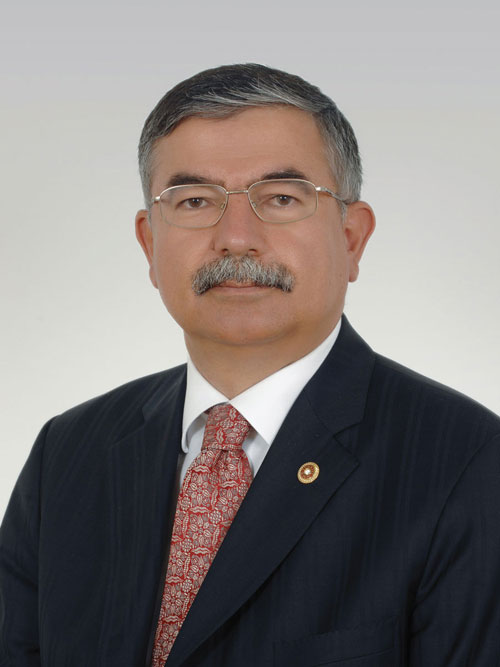
An Assessment on Turkish Defence Perspective and Industrial Improvements by Turkish Minister of Defence, Mr. İsmet Yılmaz
Defence Turkey: As the NATO member, Turkey has taken active roles in peace keeping operations and keeps on doing so in many regions such as Bosnia-Herzegovina, Kosovo, Afghanistan, Sudan, Lebanon and Gulf of Aden. What are the joint missions, trainings and cooperation activities of Turkey currently being performed with NATO?
Turkey has a long list of contributions to peace keeping operations conducted under the respective mandate and auspices of the UN, NATO, EU and the OSCE. They mark Turkey’s stabilizing role in a geographical scope well beyond its neighborhood, from Somalia to East Timor, from Bosnia-Herzegovina to Afghanistan. The total number of Turkish troops that has been assigned to such peace keeping operations is well over 10.000.
Today, Turkey not only takes part in missions and operations for collective defense and crisis management purposes, but also mobilizes its increasing "soft power" by means of using its deep historical ties with populations and countries in the Middle East and North Africa. Turkey has also provided substantial contributions to all NATO operations and missions including in Bosnia-Herzegovina, Kosovo, Afghanistan, Iraq and Libya as well as the maritime operation in the Mediterranean and counter-piracy mission off the coast of Somalia. While outside NATO’s own responsibilities, Turkey continues to contribute to a number of UN and EU-led operations, including both military and police missions.
As for the Balkans, since 1995, Turkey participated and continues to actively take part in all operations led by NATO in the Balkans. As such, Turkey contributed to IFOR and SFOR in Bosnia and Herzegovina, KFOR in Kosovo and Operations Essential Harvest, Amber Fox and Allied Harmony in Macedonia. We will continue our support to KFOR as well. We also contribute to the EULEX in Kosovo with police officers and one judge. Following the completion of NATO’s SFOR operation in Bosnia-Herzegovina in the end of 2004, a new and separate operation named EUFOR-ALTHEA was initiated by the EU relying on NATO assets and capabilities. Currently, Turkey is the second largest force contributor of EUFOR-ALTHEA Operation.
Turkey is also firmly determined to continue assisting Afghanistan with a view to achieving conditions conducive to a sustainable, stable and secure environment. Turkey is engaged in her most comprehensive assistance program ever in Afghanistan. With regard to the security sector, we have around 1600 troops deployed under ISAF. We are providing extensive training to the Afghan National Security Forces both in Afghanistan and in Turkey. These contributions are clear demonstrations of our firm commitment to assist Afghanistan in achieving a safe and secure environment.
Defence Turkey: In view of the emerging developments in the surrounding region especially suffered in our neighbors Syria and Iraq, what kind of activities that are currently being carried out by Turkey, as the NATO member, to ensure peace and security in the region?
In the light of her basic principle of "peace at home, peace in the world", Turkey has always been working towards ensuring more stability, security and prosperity in the region.
On the other hand, it is a fact that our active pursuit of a more stable and secure environment in our neighborhood has gained pace and scope after the end of the Cold War, due to the radical changes in the international environment. Turkey indeed feels the direct impact of every development in its surrounding regions.
Common geography and historical relations with the region certainly dictate Turkey to follow an active policy in the face of acute developments in the region. From the outset, Turkey has followed a principled policy concerning unfolding popular movements in the Middle East. We have continuously stressed that governments have the responsibility to meet the legitimate aspirations of their people. This is indeed the only way to achieve sustainable security and stability in the region. Needless to say, genuine democracy cannot be achieved overnight. It takes an arduous and gradual process of institution-building and experimentation.

We would like to see a democratic constitutional system taking root in our neighborhood so that all religions and sects can coexist with multiculturalism in harmony and peace. If ongoing popular movements succeed in establishment of democratic systems with its all institutions, this will certainly serve the interests of the people in the region.
Turkey was among the first countries to call on the respective Governments to heed the outcries of their people and be responsive to their legitimate aspirations. This applies to the Syrian case as well.
In the period ahead, we will in any case continue to act in cooperation and coordination with the related parties in order to end the bloodshed, to continue our deep-rooted solidarity with the Syrian people with a view to alleviating their suffering. As for our particular role in restoration of peace and stability in Syria, Turkey will be ready to share her own democratic experience and expertise with the Syrian people in their quest for a free and democratic Syria.
Turkey always supported the stability, prosperity, territorial integrity and freedom of people in these countries. We believe that in this time of uncertainty, our consistent and constructive efforts are even more relevant and important.
Defence Turkey: The Strategic Concept agreed by NATO in 1999 has lessened its attributes after a while due to the changing international conjunctures and security threats. NATO then adopted new concept in 2010 with allied countries after all these developments. How do you perceive the position of Turkey in this new strategic concept?
Agreeing on the new Strategic Concept at the Lisbon Summit has obviously been a very important achievement for NATO as it lays a sound basis for the future of the Alliance. The Concept finds common ground amongst Allies, while providing them a clear perspective on a number of major issues: NATO’s core tasks, defense and deterrence capabilities to respond to modern threats, partnerships, NATO’s relations with other international organizations and NATO’s reform. The Defense Package endorsed in Chicago Summit is a plan outlining a vision and a clear way forward towards our goal of NATO Forces 2020.
With the new Strategic Concept, NATO began to evolve from a Euro-Atlantic defense organization into a global organization of crisis management. NATO began to execute intensive public diplomacy activities, changed its understanding on "enemy" completely and focused on coping with emerging risks, threats and challenges. The importance of cooperative security and Partnerships is rising.
NATO has the intention to strengthen the political dialogue and practical cooperation with Middle East and North Africa. In this framework Turkey assumes the role of a natural bridge between north and south, west and east, among Europe, Asia, Africa and Middle East, embracing all of these cultures.
2012 marks the 60th anniversary of Turkey’s membership to NATO. Throughout its membership, Turkey has been a major security provider. In this context, a forward-based early warning radar has been deployed in Turkey which is under NATO command and control. In the face of a rapidly changing and complex security environment, in line with the new Strategic Concept, Turkey will continue to make its contributions to the Alliance’s work.
In this respect, we keep on contributing to NATO’s missions and operations in a comprehensive and active way. Turkey also mobilizes its "soft power" by means of using its deep historical ties with countries in the wide geography where NATO acts. This matches up with the partnership based on "reciprocity, mutual benefit and mutual respect", as defined in the new Strategic Concept.
Defence Turkey: Turkey has taken significant steps in defence industry during the recent 20 years. Being a foreign-dependent country in the past, today, as a sound country, Turkey develops and produces its indigenous products through national opportunities. Many of our national projects from National Tank Project to Unmanned Vehicles, National Combatant Vessel, Attack Helicopters, and Guided Missile Systems have already been continuing. What are your views and comments regarding our defence industry in respect of its current situation?
As the Ministry of National Defense, it’s our initial aim to build and improve a modern infrastructure of defense industry and advance it to a competitive level in the international arena.
Concrete initiatives for the infrastructure of the national defense industry have been started in the late 80s by the establishment of Turkish Armed Forces Foundation (TAFF). Beside the Mechanical and Chemical Industry Corporation which was acting in the defense field at that time, other national defense industry companies such as Aselsan were set up by the means of this foundation.
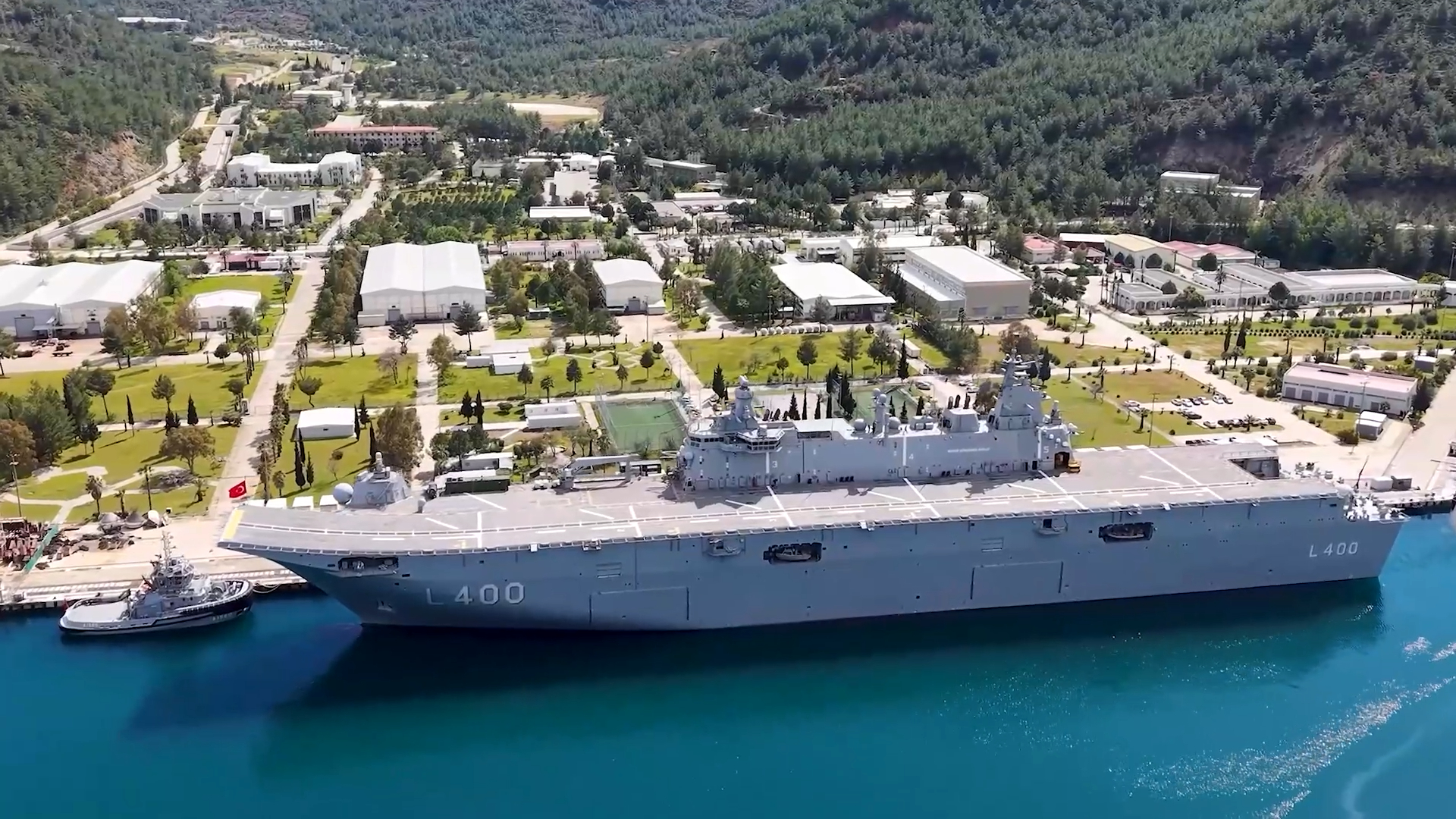
Up to the 2000s, for the production of war weapons, vehicles and ammunition, it was preferred to cooperate and co-produce with countries and companies prevailing in the international arena. This enabled many defense projects like Milgem, Altay Main Battle Tank, Attack Helicopters and Unmanned Aerial Vehicles [UAV’s] to be successfully executed by our national defense industry. Nowadays, Turkish Defense Industry significantly meets the needs of our Armed Forces and plays an effective role in the highly competitive international defense market by developing its indigenous products.
As a concrete sign of the above mentioned developments;
- The ratio of domestic supply raised up to 54 % while it was just 25 % at the beginning of 2000s. Taking this ratio into account, it can be said that, on average, at least 1.5 billion US Dollars has been saved annually.
- Turkish defense industry production increased by 25,9 % in 2011 compared to the size of 2010.
- The defense industry turnover, which includes direct sales to Ministry of National Defense, Undersecretariat of Defense Industry and Turkish Armed Forces reached to 3,4 billion US Dollars in 2011, from the level of 2,7 billion US Dollars in 2010.
- The amount of national products export of 853 million US Dollars in 2010 also reached to 1,1 billion US Dollars in 2011 with 23 % rising.
- Moreover, we made 666 million US Dollars, 215 million from domestic sources and 451 million from foreign sources, Research and Development investment in Defense Industry Sector in 2011. According to these figures, our sector spent 4 % of its turnover for the R&D.
We consider the future objectives of our defense industry in line with the Vision of 2023 of Turkey. In this context, by increasing export in defense industry, we aim to contribute the 2023 export target of Turkey.
On the other hand, to maintain and develop the design and manufacturing infrastructure based on high technology currently owned by our defense industry, it appears that there is a need to launch a breakthrough for the foreign sales as well as the satisfaction of the domestic demand.
I reckon that both of their domestic and overseas market shares will increase along with the completion of the other important national defense projects.
Defence Turkey: According to 2012-2016 Strategy Plan presented by our Undersecretariat for Defence Industries, it is clearly understood that Turkey has set itself crucial objectives. In line with the set objectives, how do you perceive the status of Turkish defence industry in the next ten years?
2012-2016 Strategy Document was published in March 2012. The issues which are primarily important for the defense industry within the context of the plan are as follows;
Achieving Maturity in Program Management,
Sustainability of the Defense Industry,
Developing Technological Competence.
In the scope of these objectives, Undersecretariat for Defense Industries will focus on the endeavors to ensure the profundity of the defense sector. Moreover, Undersecretariat for Defense Industries will guide the Small and Medium-Sized Enterprises (SME’s) and suppliers presented in the defense industry in order to develop their capabilities related to the program management and technology level.
As it is acknowledged, for many years, offset has been implemented and executed by Undersecretariat for Defense Industries under the defense industry projects. For the defense industry projects, the contractors are obliged to commit an Industrial Participation/Offset (IP/O) obligation amounted to at least 70 % of the main contract value within the framework of the IP/O Directive published in 2011. For the proposals to be submitted in this respect, more use of the national industry, especially SME’s and suppliers, will be primarily promoted to profound the domestic defense industry.
Nonetheless, the endeavors related to the design projects enabling the growth of the technological competence and the studies regarding the improvement of R&D activities will become more important in order to give more strength to defense sector. I believe that obtaining a number of critical technologies as a result of these design and R&D activities will increase the number of the indigenous products and hence, the capability of the industry’s competitiveness in the world market.
Within the context of the aforementioned Strategic Plan, it is anticipated that the turnover target for the defense industry will be 8 billion USD for 2016 with the export target 2 billion USD. In my opinion, those figures may be smoothly doubled in 2020’s with the condition that the performance of the activities envisaged under the Strategic Plan are efficiently followed and that maximum effort is spent for the stimulation of the defense sector.
Defence Turkey: R&D studies are of great importance for our Defence Industry to increase its competitiveness in an international platform. In achieving this, our universities, Undersecretariat for Defence Industries, defence industry companies and Turkish Armed Forces are in close cooperation with each other. Could you please inform us on the ongoing R&D studies as well as the initiative programs? Also, as Turkey, at which fields do we have to specialize ourselves and improve our capabilities?
With Defense and Space R&D projects that are carried out by our Ministry for meeting war weapons, tools and supplies which are needed by Turkish Armed Forces with domestic facilities, We attach great importance to develop national competencies in the area of;
- Rocket Missile Technologies,
- Satellite Space Technologies,
- Sensor Technologies,
- Guidance Technologies,
- Communication, Recognition and Electronic Warfare Technologies,
- Weapon and Ammunition Technologies,
- CBRN Defense Technologies.
During carrying out Defense and Space R&D projects, not only National Department of Defense Budget but also sources of TÜBİTAK are used efficiently. Furthermore, in order to transform projects which are carried out by Defense Industrial Enterprises with their own resources into products, models of İMECE-style projects that are participated by all interested parties are also developed.
In the 2012-2016 Strategic Plan of Undersecretariat for Defense Industries, our vision is determined as "making Turkey superior in defense and security technologies" and in accordance with this goal, our mission is defined to be "management of industrialization, technology and procurement programs that assures the continuous improvement of Turkey’s defense and security capabilities."
In this regard, to accomplish our objective for gaining competence in industry and technology, we carry out our R&D and Technology Management activities under the following 4 main areas;
-Technology Management Strategy,
- Technology Roadmapping,
-Technology Development Liability,
-Human Resources and Infrastructure.
The first document that explains ourTechnology Management Strategywas published in 2011.
This document, driven by the needs of the Turkish Armed Forces, is designed as a living document and is prepared to handle the planning, application and monitoring of the future activities with a strategic management approach, for the purpose of establishing a competent technological base. It is planned that this document will be revised, in regular intervals, as required by the needs emerging from application and technological trends.
Technology Roadmapping activities can be defined as systematic activities that;
- Pave the way for the indigenous development of the defense systems and platforms that are planned to be procured in scope of the TAF requirements,
- Pave the way for the original designs,
- Manage to achieve the subsystems/components/technologies, which were determined as top priority to establish the necessary technological infrastructure.
These activities include the identification and realization of the guided R&D Projects necessary to increase the technological competence level.
Technology Development Liabilityis within the scope of the procurement projects and charges the Contractors with the liability that should constitute a certain amount of the project cost and that should contain the realization of the R&D projects, which provide inputs to the final products or product roadmaps, in collaboration with the SME’s and universities/research institutes. This application aims at the establishment and improvement of a structure that provides a more effective collaboration between the industry, universities and research organizations.
As an example of our activities in the area ofHuman Resources and Infrastructure, the program of ‘Training Researchers for the Industry’ (SAYP) can be given. This program includes the configuration of the ongoing and future dissertation studies of the employees of the defense industry, who are also post graduate students in Middle East Technical University (METU), in accordance with the medium and long term R&D strategies of the companies and with the aim to shape in the context of the priority areas defined by Undersecretariat for Defense Industries. In this context, an MOU was signed on October 4th, 2011 between Undersecretariat for Defense Industries, METU, and 3 defense sector companies i.e. Aselsan, ROKETSAN and TUSAŞ.
On the other hand, Teknopark İstanbul, established within the scope of Advance Technology Industrial Park & Airport Project (ITEP), will focus on the following selected target industries in Turkey’s pursuit to be one of the leading countries in advanced technologies;
- Aviation and Aerospace,
- Defence Industries,
- Marine Technologies,
- Advanced Electronics,
- Industrial Software,
- Advanced Materials.
Estimated to reach 2 Billion US Dollars in total investment, Teknopark İstanbul aims to house circa 1.000 firms and more than 30.000 skilled research and development staff, with a closed area of approximately 650.000 square meters and generate 5-7 Billion US Dollars turnover per year in advanced technologies at the end of a 15 year development period.
Within the "Support Program", there is the "Support Program for the R&D Projects of Public Authorities (aka 1007 Program)" which is managed and funded by TUBITAK. In this regard, R&D projects proposed by Undersecretariat for Defense Industries are evaluated and funded by Defense and Security Technologies Research Grant Committee of TUBITAK.
For the ongoing R&D Projects that are funded by Undersecretariat for Defense Industries and TAF, Project Management Directive of Undersecretariat for Defense Industries is applied. Currently, we are working on a directive specifically designed for R&D Projects.
Our goal is to increase incrementally the share of R&D expenditure (including the resources allocated for defense by TUBITAK) in the total defense expenditure from 1-2 % to 5 %, until the period of 2015-2016. We plan to allocate a certain amount from the modernization resources in order to support the defense R&D Projects.
We achieved significant developments in the first stage of technological competency; i.e. "the platform design, system integration and engineering level", and now it is time to identify a methodical development to achieve the second and third levels, which are in the "subsystems" and "component, material and technology" areas respectively.
The broadening of the technology base can only be possible by expanding to the deeper levels. The first step is to provide the industry and research organizations a structure suitable for technology production, and the second one is to create the required resources.
The supply chain management approaches of the prime contractor companies are of critical importance. These companies have to undertake the responsibility of forming and improving their supply chains to have the capability to design at the subsystem/component/material/technology level. Accordingly, for a robust technology base, it is essential that the industry should benefit from the capabilities in the universities, research organizations and TUBITAK Institutes.
Defence Turkey: The International Defence Industry Fair (IDEF), which is held biannually in our country, will again be held in İstanbul in 2013. The long-standing projects are coming to an end and final products are gradually coming out. Turkey plans to present and exhibit its indigenous products to the international defence sector for the first time in IDEF. In this respect, what are your expectations from IDEF? Do you think we have an opportunity to turn these final products into exportation with this fair? Could you inform us on the preparations that Turkey is carrying out in terms of IDEF?
IDEF, which has been held since 1993 with an increasing success with the patronage and support of Ministry of National Defense, and management and responsibility of Turkish Armed Forces Foundation, is one of the most prestigious defense fairs in the world that gathers the esteemed delegations, participations and trading visitors in the procurement chain. 633 companies from 46 countries, 212 of them are native; 437 delegation members from 70 countries, and 52.502 professional visitors participated in the 10th IDEF held in 2011.
IDEF is a platform that the leading national and foreign companies in defense industry exhibit their products and systems. In this scope, IDEF gives Turkey the opportunity to demonstrate especially her original products to the world market. As examples; Milgem (National Ship), New Type Guard Boat and S Class Frigate, equipped with Turkish Made Combat Management System (GENESIS) were exhibited in IDEF 2011. Similarly, weapons, weapon systems and equipment, equipped with the latest technology that are developed and produced in the recent years by the Turkish Defense Industry attract great interest in IDEFs. I would like to mention especially that IDEF makes great contribution not only to the defense industry but also to the promotional activities of Turkey.
In IDEF 2013, the products of Turkish Defense Industry such as Unmanned Air Vehicle, Helicopter, Anti-tank Weapons, Satellites; air platforms like Anka, Atak, Hürkuş, Utility Helicopter, Göktürk I-II; rocket/missile systems as UMTAS, CIRIT are planned to be exhibited and presented to the international defense sector. IDEF makes a great contribution to the increase in defense industry export figures in the recent periods parallel to the developments in the defense industry; and I also evaluate that IDEF to be held in 2013 will give an extra acceleration to this increase.
The 11th IDEF International Defense Industries Fair will be held between 07-10 May 2013 inIstanbul. The preparations of IDEF-2013 began five months after IDEF-2011 executed; the exposition area was determined; the preparations of official delegations and participants that will be invited are going on. Our expectation from IDEF-2013 is to increase the participation of the national and international defense industry companies.
Defence Turkey: What kinds of studies are being performed in Turkey with regard to the transition to professional army?
Regarding the process of transition to professional army in Turkey, specialist sergeants are being employed regarding the "Contracted Privates and Corporals Law", numbered 6191, by the Force Commands, Gendarmerie Command and the Coast Guard Command.
In this context, five brigades within the structure of Land Forces and one brigade within the structure of Gendarmerie, six brigades in total have been reformed with commando sergeants and commando corporals. In addition to employment of professional personnel, the "Contracted Privates and Corporals Law" numbered 6191 has been enacted on 10 March 2011 to be charged primarily at the frontier troops.
For the year 2011, 534 contracted privates and corporals have been employed to be assigned within the body of the Land Forces Command. The mentioned personnel have taken office at the Frontier Brigade Command on 13 February 2012. 480 personnel have started to be trained within the year 2012, and will be assigned within the body of Land Forces Command following the completion of their training.