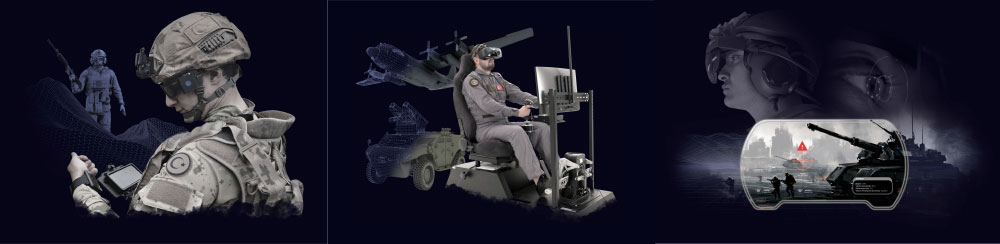
BİTES Focusing on Future Warfare Technologies
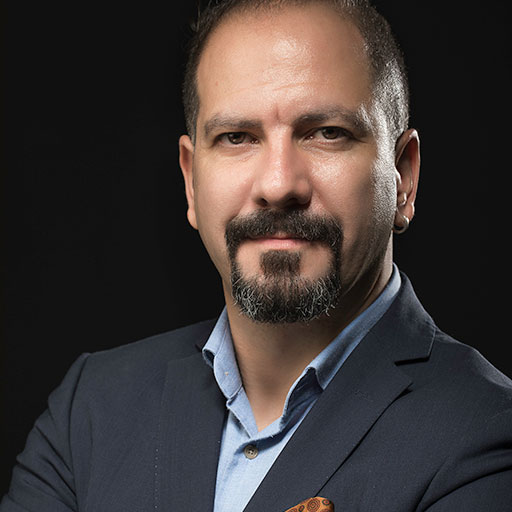
Uğur COŞKUN, BİTES Board Member and CEO, and Erinç ALBAYRAK, BİTES Vice President, came together with economics and defense media correspondents at a press breakfast organized by the Association of Economics Reporters.
Founded in 2001 in Istanbul by Uğur COŞKUN to operate in the field of IT technologies, BİTES Defense and Aerospace Technologies entered the defense industry in 2004 with the project for the development of the driver training simulator for M-60 tanks with its own resources. BİTES, 51 percent of which is owned by ASELSAN, has become one of the key players in the defense industry with a strong and dynamic staff of nearly 500, and more than 60 projects in niche technologies such as Augmented Reality and Image Processing, Artificial Intelligence, Modelling and Simulation Technologies, Avionics System Software, Embedded Software Technologies, and Cloud Technologies.
During the press breakfast, CEO Uğur COŞKUN provided information on BİTES's journey in the defense industry from past to present, noting that they officially entered the defense industry by winning the Sikorsky Computer Based Virtual Training Systems tender opened by the Presidency of Defense Industries in 2005, and that today they are a key stakeholder in the defense industry in various projects. He made a presentation on the ATOK System (a product of the Future Soldier concept), “Bright Sight” (Vision System enables the crew to ‘see-through’ the vehicle’s armor), Virtual Sandbox, “KARMA” Mixed Reality Training System, SARP-SIM project, Virtual Maintenance Simulators, BİTES Metaverse, Computer Based Training Systems, and Webinar System “BizBize.”
“We are Developing Future Technologies for Future Warfare and Future Battlefields.”
COŞKUN stated that they are developing future warfare technologies and focusing on technologies that enhance situational awareness in combat environments, predict the location of friendly and foe troops with artificial intelligence algorithms, and in technologies supported by AI (Artificial Intelligence). He also stated that IoBT (Internet of Battlefield Things) technologies, which is also called the battlefield of the future, has a significant place in the company’s vision:
“As a result of the information sharing of all elements in the battlefield, an information superhighway emerges, and our company's vision includes the processing of all the information that emerges, information extraction, and the development of algorithms supported by AI for decision-makers to fulfill the best decisions. We have several R&D studies with our stakeholders on the utilize of cloud technologies in closed networks. We are a business that keeps up with new trends on global scale, foresees the next technological advancement, and concentrates on it. We are creating future technologies for future warfare and future battlefields. In this regard, BİTES is the pioneer in Türkiye in terms of the future soldier concept, and the name of the project developed under this concept is "ATOK", which stands for Military Tactical Operation Kit, and many countries across the world are focusing on this concept. This product is in demand from friendly and allied countries. The TAF’s and our Security Forces' induction of ATOK will further increase overseas interest in our product.”
“With the assistance of the ATOK Project, an armored command vehicle transforms into a command-and-control center.”
BİTES CEO COŞKUN also shared technical specs about the Military Tactical Operation Kit, which was developed to enhance control and superiority in the tactical field and to speed up the decision-making process of military and security forces.
“The ATOK Armored Command Control Vehicle is equipped with a Radio Antenna, Base Station (4.5G/LTE), SATCOM, ATOK Servers and Command Control Tablet. We transform the armored vehicle into a command-and-control center. This vehicle burst upon the theatre and set up a network. Previously, the Turkish Armed Forces utilized it to request the base station for the network from GSM operators. The network is set up with its own armored vehicles at present. Broadband communication is needed for video and image transmission in the operational field. Data and information transfer from multiple units and even autonomous systems may also be required. You need broadband communication for this. 4G/5G infrastructures must also be proper in the field of operations. Here, ULAK Communication provides the unique network LTE infrastructure. They also ensure the security of this network.
With the 4.5G/LTE base station on the armored vehicle provided by ULAK Communication, the location and medical condition of the commander and each subordinate within that network can be seen both as a map and as a location. If requested, this network system, which functions as a closed system within the confines of its range, can also transmit any images, videos, or data to the center and headquarters through SATCOM from the vehicle.”
"With the ATOK terminal, personnel can serve in the field of operations for more than 72 hours without a battery.”
COŞKUN also gave information about the working concept of the system and the smart systems on the soldier and said the following:
"Troops on the battlefield has a mobile phone that has been redefined at the core level and can be remotely managed via MDM (Mobile Device Management) systems and is convenient for the battlefield. Embedded in a tablet-like case, this mobile device is not affected by rain, dust, and mud. Through this phone, each soldier has a command-and-control terminal. It is exceptional on the battlefield with its processor, screen size, and battery life. There is no service that will drain the battery while these mobile devices are not in use because it is Android free, and we developed its software. Troops or Security Forces on the battlefield can utilize this terminal for more than 72 hours. With portable batteries, this time frame can be increased by up to five days. The smart watch integrated into this terminal is worn on the soldier's arm, considering the difficulties of frequently opening and looking at the terminal that is connected to the assault vest with a rubber strap in the battlefield. With this smart watch, the troop can easily confirm their real-time position, the location of friendly and foe units, and other required information."
“All units designated on the UAV and beyond line of sight can be transmitted to the troop in the field through the goggles.”
COŞKUN, who also provided information about the capabilities of other smart systems on the single troop, stated the following: "Each troop also has augmented reality googles on the battlefield. These goggles automatically reflect the location, and distance of friendly and hostile units on the googles, just like the AR applications we use on our smartphones. When suppressive fire is necessary, the position of friendly units is very critical, and these googles will assist the troop to make decisions and act quickly. On the other hand, these goggles will give the troops the ability to see the location and distance of the threat when the BAYRAKTAR UAV designates a threat beyond the troops’ line of sight. Especially in an airborne case, the landing point of the paratroopers will display in real-time on their googles.”
“The real-time position of the troop can be monitored with the medical condition monitoring sensors on the troop.”
COŞKUN also shared details about the medical condition monitoring sensor and algorithm, which can transmit the troop’s medical condition to the team commander via the sensors on him, and said, "In case of a loss of communication with the soldier, the team commander can reach the soldier's medical condition over his mobile device, including whether he is bleeding, experiencing trauma, as well as stats on his body temperature and pulse. The data received through the sensor is interpreted with the health monitoring algorithm. Does the soldier have minor injuries or is it a fatal injury? Is the soldier alive? We can first convey it to the team commander, then if requested it can be conveyed to higher-rank commanders."
“Within a 10-kilometer range of movement, precision position sensors and algorithms can pinpoint the troop's location without the need of GPS with accuracy of 15 meters.”
COŞKUN also provided details on the precision position sensor on the soldier's boot and its working principles:
“We have developed a technology for determining the location of the soldier without using GPS data. We are also collaborating with a military boot manufacturer to mount this sensor inside the soldier's boot (currently mounted on the top of the boot). When the soldier moves their foot, we can pinpoint the location of the soldier through an algorithm based on acceleration-vector data. We calculate this using math and physics formulas. Within a 10-kilometer range of movement, we can pinpoint the soldier's location without the need of GPS with accuracy of 15 meters. When our unit enters a GPS jamming zone, the sensor is activated. In fact, this is a simple sensor that connects to a mobile device through a fast, near-field communication infrastructure. The mobile device fuses the data coming from the sensor. Algorithms run on the mobile device. Information such as where the troop is and where he will be deployed is crucial for the team commander. For instance, the coordinates of the meeting-point where the helicopter will pick you up after the operation are known, you have a walking distance of 3 kilometers to the meeting point, and you are in an environment without GPS. This is where this system becomes critical.”
COŞKUN also stated that, in addition to the health sensor and the precision position sensor, they are also working to pin a sensor on the troop's rifle. This sensor will be able to digitally count the ammunition and bullets in the rifle and will then reflect the current status of the ammunition to the soldier and the team commander through augmented reality goggles.
“We integrated a base station on the ANKA UAV with a Pod. The UAV can set up a network in deep valleys.”
ÇOŞKUN stated that if the mobile command and control vehicle is out of range, or in case of any GPS jamming, or unpredictable interruption of communication, the receiver and transmitter on the soldier can set up a network among the team: "In case of GPS jamming, each soldier sets up a network with rest of team. Throughout the movement, each soldier can generate critical information on their whereabouts. GPS jamming is very difficult as the network is generated by close distance and frequency hopping. The Wave frequency has to be high to succeed in jamming in this vicinity and it is not easy. On the other hand, we are working on new technology over the UAV. In the deep valley, the signal is interrupted. In this concept, the ANKA UAV sets up a network in deep valleys. A base station was integrated on the UAV with a pod. Thus, the team can maintain communication uninterruptedly."
“ATOK Terminals are also cyber security resilient.”
Emphasizing that ATOK terminals have a cyber security resilient architecture to prevent external intervention, Erinç ALBAYRAK, Vice President of BİTES, said, “ATOK terminals have a closed network, and since the SIM cards used are not purchased from mobile service providers, anyone wishing to access the system must have the appropriate SIM card. The devices must be registered in the database as Media Access Control (MAC) addresses. In addition, two-factor authentication must be used. A key is required, just like in crypto devices. If two devices are communicating with each other, the keys first exchange information with one another, and the communication only begins once the software has determined that the keys are accurate. In the field testing we have done so far, interference to the system—whether for RF or cyber security reasons—has not been attained. Numerous Cyber Security cluster members have tested our system. On 15 December 2022, the test & qualification process was conducted in both our Special Forces Command and Gendarmerie Command, and there were no issues encountered here either.”
“The aim is to deliver the first serially produced systems to the Special Forces Command in 2023. We have received orders for 100 infantry soldiers and five armored vehicles for Police Special Operations. We will start the deliveries in the ninth month of this year.”
The ATOK project, which was initiated in 2020 as a project of the Presidency of Defense Industry Agency and the first demo of which was presented to decision-makers in June 2021, made its debut at IDEF'21. The initial tests were conducted on FNSS’ STA PARS 4x4 vehicle, and the test campaign and acceptance of the system to be delivered to the Special Forces Command was completed on 15 December 2022, while the first serial production delivery is scheduled to launch in 2023.
Uğur COŞKUN, BİTES CEO, also addressed the serial production phase of the project and other requests received for the system: "It is aimed to deliver the first serial production systems to the Special Forces Command in 2023. We have received orders for 100 security forces personnel and five armored vehicles for Police Special Operations. We will make our first delivery in the ninth month of 2023."
It is anticipated that the first system manufactured for Police Special Operations will be delivered to the end-user in the ninth month of 2023 and the remaining systems in the 12th month of the year.
While many of the equipment/devices/electronics in the ATOK kit are supplied domestically, the communication infrastructure on the armored vehicle is provided by ULAK Communication. MİLMAST manufactures the mast system on which the base station is installed. ASELSAN manufactures the SATCOM (Satellite Communication System) terminal aboard the armored vehicle, while Lentatek (Vestel Defence) manufactures the soldier's health sensor. Currently, batteries are imported from other countries to power the augmented reality goggles and other equipment. Efforts to indigenize these two systems are ongoing. In this regard, an agreement was signed between BİTES and ASELSAN Sivas during the Future Soldier Conference held in October 2021 for the production of a domestic AI goggles prototype, and negotiations between ASPİLSAN and BİTES are underway for the domestic production of battery systems.
Uğur COŞKUN, CEO of BİTES, provided detailed information about the capabilities and current status of the ATOK project, and also informed the press about the See-Through Armor Technology “Bright Sight”, Virtual Sandbox, “KARMA” Mixed Reality Training System, SARP-SIM Project, Virtual Maintenance Simulators and Computer Based Training Sets that the company is working on.
See-Through Armor “Bright Sight” Provides Tank Driver Situational Awareness
Developed using AI technology, “Bright Sight” provides the crew in the armored vehicle with 360° situational awareness in the tactical field. “Bright Sight” can exchange data with all systems in the armored vehicle, it combines the 360° electro-optical and thermal camera images received from the close-range surveillance system, operations information received from Command-and-Control Systems and geographical data received from in-vehicle systems, and presents them to the soldier.
Uğur COŞKUN describes “Bright Sight” See-Through Armor Technology as follows: "You can imagine yourself driving a glass tank when wearing goggles while operating an armored vehicle. You will see every detail of the vehicle in front of you.”
Bright Sight is capable of working with the current systems deployed on the vehicle. The system a provides tactical advantage to personnel by visualizing the information gathered from the systems that can supply interfaces. Bright Sight displays the video streams supplied by the Enhanced 360° Close Range Surveillance System, according to the user's perspective. The system enriches the video stream with the geo-referenced operational data from C21S and other deployed systems on the vehicle. The system enables the user to control the vehicle status by displaying data such as speed, fuel level, motor temperature, etc. gathered from the Vehicle Control System.
The video streams gathered from Surveillance Systems are stitched together and transferred to the smart glass used by the crew. The view perspective of the crew is calculated and the camera streams in the field of view are displayed with tactical data and symbology gathered from the C21S systems on their real geographical location. Bright Sight is capable of displaying video streams of external video sources like UAVs in range. Additionally, the system can display the raster and vector formatted maps of Geographical Information Systems.
The contract for the “Bright Sight” project, which was initiated as a project of the Presidency of Defense Industry Agency, was signed at IDEF’21, and the first delivery of this system, which is intended to be used in the M60 FIRAT MBTs in the inventory of the Land Forces Command, is anticipated to be made in 2023.
Opportunity for Weapon Simulation Training in a Vehicle with SARP-SIM
The SARP-SIM project is defined as an embedded training simulator developed using simulation technologies for the remotely controlled SARP weapon system. While the concept of a training system embedded in a land vehicle is being used in this project for the first time in Türkiye, SARP-SIM enables the operator to receive training with real SARP weapon system equipment (mission equipment).
By pushing the simulation button on the weapon control station inside the vehicle and connecting it to the computer with the necessary software via cables, the SARP-SIM weapon simulator—which was developed jointly by ASELSAN and BİTES for the training request for weapon systems in armored vehicles—switches into the weapon control station simulation mode. The weapon operator can practice real-world scenarios with real tools and keys in vehicles that are at the duty location, in the operations field, in the hangar, and on the battlefield. The training can be completed in a classroom using a computer and an interface box if the trainee so chooses, in addition to in the vehicle.
The system, which BİTES began to develop last year, uses computer software to create a simulated tactical environment. Within the tactical environment, the operator is able to fire with real equipment based on real ballistic calculations. This is possible day and night, and under any weather conditions. The operator experiences and practices how to counter potential threats in a combat environment, how to use the weapon effectively, how to improve their manual and motor skills, and what to do in case of possible malfunctions in the system with SARP-SIM.
Stating that the system’s acceptance is about to be completed, COŞKUN said that embedded simulations such as SARP-SIM will be required more in the future: "With this embedded simulator, every device and system can function as a simulator. Since we are a subsidiary of ASELSAN, we have developed an infrastructure that will enable all the systems we produce to be used as simulators for every vehicle and system, without the need to establish a separate simulator center, and we are about to introduce this system into the TAF’s inventory for the first time. The acceptance process has been completed. We can also apply this system to air defense systems and radars. Any device with a screen and monitor can function as a simulator."
Simulation Costs will Reduce with the KARMA Mixed Reality Training Set
The KARMA Mixed Reality Training Set combines real-time simulation software and 3D virtual environments with the outside world using a mixed reality headset. KARMA offers a cost-effective and high-fidelity training environment for mission training on complex systems and platforms. KARMA can also be customized for training addressing conditions on land, at sea, and in the air. The necessary weight and cost savings can be achieved by eliminating the requirement for projection screens, motion systems, and moving components.
BİTES is currently working on “KARMA” Mixed Reality Goggle Simulation for the GÖKBEY helicopter and the KİRPİ Armored Vehicle.
The Tactical Field is Going Digital with Virtual Sandbox
The Virtual Sandbox, supported by AR technology, is used as a modern tactical development tool by enabling the execution of operations in the targeted field. The data is reflected as a 3D hologram on the decision maker’s goggles, and thanks to the Virtual Sandbox, decision makers can also enhance their tactical capabilities.
BİTES, which has also made significant progress in the Military Metaverse, is about to complete the establishment of an infrastructure that will allow real and virtual elements to conduct exercises together in the Metaverse with the Virtual Sandbox, Bright Sight, Mixed, virtual, and augmented reality solutions. This new product is anticipated to be launched in the upcoming period