Defence and Aerospace Sectors & Sub- Industry
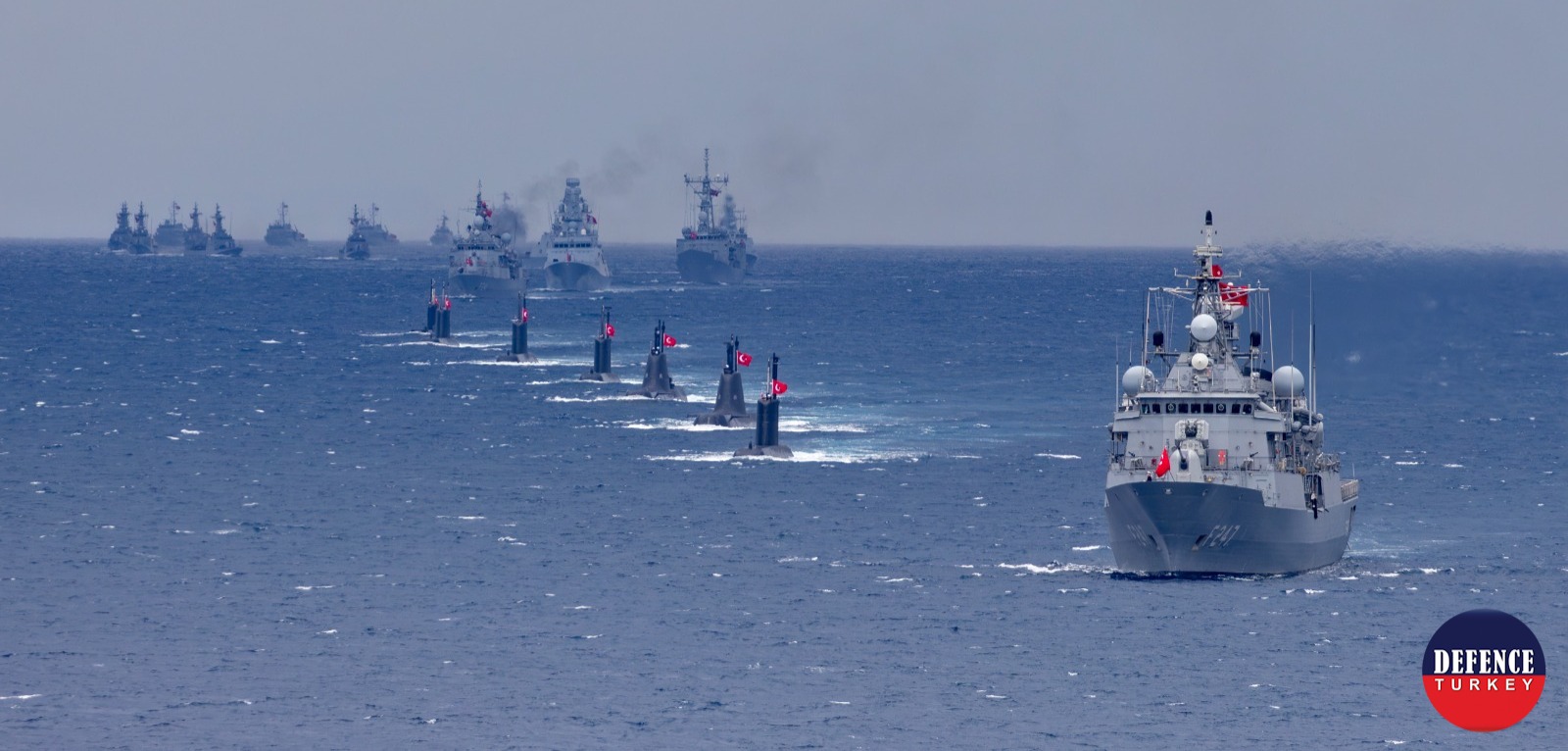
Her critical location where Europe, Asia and Middle East coincide and her proximity to the regions with conflicts and terrorist incidents, a strong army has always been of essence for Turkey for protecting her boundaries and national interests. Having the second greatest army of the NATO, Turkey assumes significant responsibilities within the NATO and supports the United Nations by participating in the humanitarian aid works in the scope of the crises where this organization responses. This concept requires acquiring an international identity and emergency response capability. The asymmetric threats that Turkey goes through also entailed a change in the structuring. As a result, the need for secure, effective, timely intelligence activities and troops with high mobility capacity, weapons/ammunition with accurate firing intensely came to our agenda.
National Defence Ministry’s Budget for 2012 was increased by 7.4% and determined as 12.2 billion USD. This budget does not contain the supplies covered with the budgets of Gendarmerie and Coast Guard Command and National Defence Fund. If the 2.6 billion USD for Gendarmerie, 6.4 billion USD for Turkish National Police and 197 million USD allocated for the Coast Guard Command is added to the aforementioned budget amount, Turkey allocates a budget of total 19 billion USD for Defence and National Security. Although the budget for Defence and Security was increased by 7.4%, the total of this item was 5.2% in our country’s national budget and if compared with the budget of year 2011, a decrease of 0.2% was observed in the Defence and Security Budget. When the latest developments in our region, Turkish Armed Forces’ struggling against terrorism and its contributions to the United Nations Peace Corps are considered, we believe that a shrinkage in the Defence expenses could be mentioned rather than an expansion as it is also in the Western Civilization.
It is recognized by all parties that Turkey has to have a strong Defence industry so that a scale of such a great army could be furnished with modern equipment and Turkish Armed Forces could accomplish the aforementioned missions. In order to reinforce the Turkish Defence Industry, the Ministry of National Defence identified its strategic goals and priorities in supplies in the beginning of 2000s:
With national production and technology,
From international consortiums
From joint manufacturing
Through direct procurement
Within this scope, improvement of the Prime Contractors that could develop platforms, systems and products were considered and new strategies for spreading the industry were developed. This also aims the emergence of a focused sub-industry. Within the industrialization process of today, it was observed that a supply-chain consisting of a prime contractor, sub-contractor, sub-sub-contractor’s integration is more economic and rational than great, integrated facilities specialized in a wide range of fields. This is an indication that the goals of the Undersecretariat for Defence Industries are right on.
As a result of the importance attached to the supply through national product and technology in the last 5 years, the rate of covering Turkish Armed Forces’ demands through national resource increased to 54% from 25% and owing to its wide product range, our Defence industry’s export capacity increased to the level of 1.3 billion USD (2012 SSİB data) from a level of 784 million USD (2008). As a result, our prime contractors in the global markets began to take significant shares in these markets.
The strategy of a widespread industrialization will contribute to increasing the rate of national resources utilization and developing the potential of export. Currently, 30-40% foreign contribution exists as qualified material/component and sub-systems in the national products of the Turkish Defence Industry. Nationalization of these foreign materials, components and sub-systems shall develop the exportable nature of a product that shall minimize the foreign source dependency. The artificial barriers created with ITAR and OSLO agreements and the difficulties in getting export permits for our indigenous products shall be swept away.
National Defence Ministry’s Undersecretariat for Defence Industries (SSM) defined the ways of improving the sub-industry especially the Small and Medium Sized Enterprises (SME) and how to spread the industrialization in its “Document of Industrialization Strategy”. By imposing a 70% domestic contribution obligation in new system, platform, ammunition supplies and requiring 30% of that percentage to be provided from SMEs, SSM displayed its commitment and support to the domestic industry and to the SMEs. On the other hand, a similar application is being implemented in the areas of developing sub-system, components, material and technology. While supporting the projects that gather Industrialists (SMEs included), Universities and Research Centers by establishing centers of excellence, SSM also stipulates in its contracts and agreements a liability of developing products and technology in 1% of the total project amounts.
On the other hand, Turkey became a center of civil aviation among Europe, the Middle East, North Africa and Caucasus. The remarkable progress of Turkish Airlines in recent years, its fleet of 181 aircrafts and flights to 189 points have gained an impetus to the aviation sector. In addition to these, with private airline companies entering in the sector, there has been an increase of 372% in the rate of domestic passengers and 77% raise in international passengers compared with the rates of 2000s. Consequently, our companies acting in the aviation sector also became suppliers in the sector and started selling their products and services as sub-industrialists to the major producers and operators.
With the recession in the world Defence industry due to the global crisis of 2008, all the countries started making cuts in their Defence budgets, this period is, on the other hand the heyday of the civil aviation sector. While expecting the current orders to be completed within 8 years at the latest with the installed production capacity, an annual increase of 10% for the next ten years is anticipated. This displays the significant opportunity for the Turkish Aviation Industry.
For meeting the domestic and international demands in Defence and Aviation sector, the sector players of various sizes will have to form a synergy and get the places they deserved in the picture.
In general sense, the term Sub-industry refers to the small sized businesses that assume the manufacturing of certain parts, materials and supply of services that the Prime Contractor Firms do not (or do not desire to) produce at their own facilities. Prime contractor firms prefer benefitting from sub-industry enterprises as they do not wish to make inert investments and would like to avoid annexes, facilities and equipment. And also they wish to decrease the production expenses and keep away from high rates of employment. Sub-industry, especially the SMEs offer the following advantages besides the ones aforementioned:
Owing to their relatively small sizes and their simple and plain decision making mechanisms, they react swiftly and offer quick solutions for meeting the demands and tend to produce alternative solutions.
They provide competitive prices due to their low indirect costs and cost-effective operations.
They are proactive and innovative and prepare cost-effective solutions.
They are business and profit oriented and they swiftly perceive the signals within this scope and make investments in short time.
Customer satisfaction is their priority; they are loyal suppliers who are also audited easily.
The sector executives observing these advantages offered by our Small/Medium Sized Industrialists felt the necessity to deal with them through a special implementation. The European Union initiated applying the incentives for supporting the SMEs with its motto “Think Small First”. Additionally, similar implementations are being carried out by the management of our country’s industry and economy (The Ministry of Science, Industry and Technology and Ministry of Economy).
Our sub-industrialists are highly pleased with such applications that are offered to them; still they express certain expectations so they could increase their contribution to the Defence and aviation sector.
Our sub-industrialists started cooperating with the main players of the sector by assuming roles such as supplier, approved supplier and strategic partner. Within the scope of such forms of cooperation;
They wish to see long-term planning and a possibility of cooperation for directing their structuring and investments. They express that they could not make long-term planning and hold back from making new investments due to the annually repeated tenders. They expect extended agreements and would like to exchange projections for the future.
They would like the Strategic Partnership implementation to be generalized and become the sole-source supplier within this implementation. They state that the rights and responsibilities of the parties could be determined and guaranteed under Teaming Agreements signed by the parties in such cases.
For overcoming the financial difficulties while executing the agreements, providing convenience in obtaining a letter of guarantee (firm order securities, advance payment guarantees, etc.), payment models in which the cash-flows do not cause negative balances are among the expectations. Within this scope, they demand long-term loans with low levels of interest from the Defence Industry Fund for their investments.
Regarding the foreign entrepreneurs establishing companies in our country and thus covering the national contribution rate within the scope of covering the foreign companies’ off-set obligations as a setback to their development and considering it as a negative implementation that does not provide a technologic contribution to our country, they demand the local partner (minimum 50% capital shareholding) condition to be brought into the agenda by SSM. They expect this point to be taken into consideration in the studies for the renewal of the Document of Industrialization Strategy under preparation.
They anticipate the establishment of accredited test centers in which the foreign resources are utilized in tests and certification procedures. In this way, they aim to accelerate the deliveries and lower their costs.
They wish the acceleration of studies for the naturalization of the System/Platform and products in the inventory and emphasize the need for increase in the project productivity regarding this issue.
They believe that the implementation of performance based logistic support concept in the platforms-systems and products in the inventory would both render the Turkish Armed Forces’ systems/personnel operationally ready with convenient costs and prevent the loss of technological competence.
We believe that the aforementioned suggestions would be examined and evaluated by the Ministry of National Defence and our prime contractors and thus the possibility for development in this sector would be created.
The potential progress regarding the aforementioned points shall improve our sub-industry, spread the capabilities widely and increase our sector’s ability to meet internal demand while making progress in exports.