Era of Innovation and Cross Industry Enlargement
Please give us a brief overview of your company.
TEKİM was established in 2005, by the experts who had strong engineering and management background in the defence industry. We are providing consultancy, training and management services for high-tech industries, higher education and research institutions. Some service areas that have to be mentioned in advance may be, systems engineering, technology management, innovation management, and project management. On the enterprise side, using enterprise engineering and enterprise architecture framework methodologies, we provide holistic enterprise management and enterprise development solutions. Our solutions totally cover strategic management, business processes, and human resources/infrastructure layers of the enterprises.
How do you summarize current and 2023’s Turkish Defence Industry outlook?
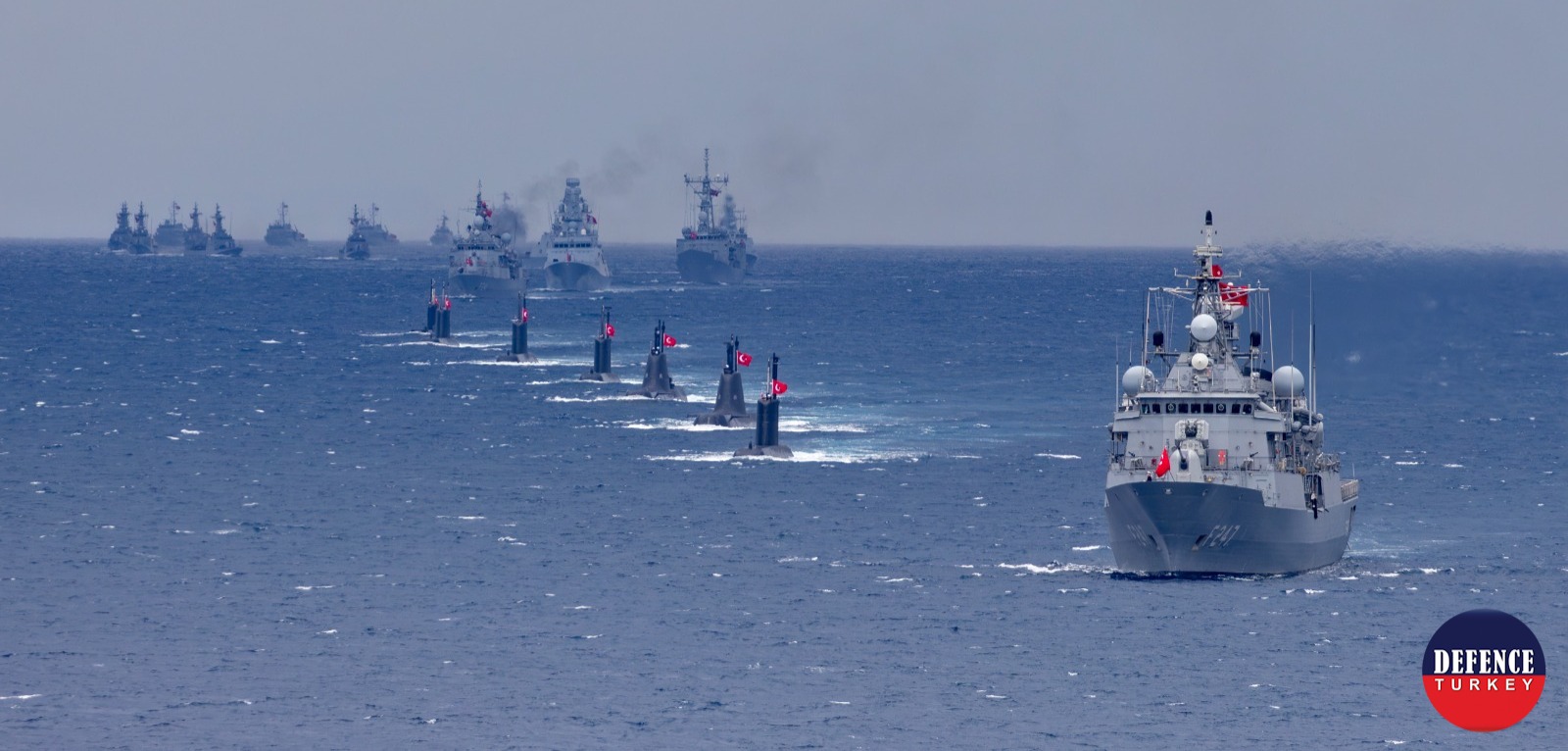
In the last 15 years, Turkish Defence Industry (TDI) demonstrated a stable development performance. In this period, Turkey transformed his country profile from a “defence systems and technologies importer” to a “systems and technology developer” one. Turkish Ministry of National Defence (MoD) Undersecretariat for Defence Industries ‘(SSM’s) acquisition policies and programmes, which were focused on increasing domestic added value at the beginning, and then diversifying national acquisition sources (mainly by integrating national SME’s into the supply chain) have been the major success factors. Now, towards 2023, we are on the edge of a new era. In the first half of this 10 year period, we shall be concentrating on “developing technological competence” as stated in the SSM’s 2012-2016 Strategic Plan. The next period will definitely be the era of innovation and cross industry enlargement, to support achieving Turkey’s ambitious 2023 goals. Therefore, by 2023, we hope to see at least 5 of major prime contractors as international, multi-sectorial actors, taking part in the first defence 100 list.
What will be the most challenging areas for the TDI towards 2023 and what are your suggestions to overcome these challenges?
To our opinion, next decade’s challenges can be grouped in three areas. First one is obviously technological challenges and related risks. The second group will be management challenges, a normal situation that all enterprises face as they grow. The third group will be business challenges, which are observed as the companies will try to position themselves as global competitors and multi-sectorial actors.
There are many technological challenges related to current land, naval and aeronautical systems acquisition programmes. For these programmes, an integrated technology management approach is needed and is being implemented by SSM. This will ensure to get the maximum contribution from Turkey’s current knowledge, capability and infrastructure assets, as well as to benefit from the global ecosystem opportunities.
Towards 2023, prominent keywords for the technological challenges will be cyber warfare, unmanned systems, near space operations and warfare, unmanned micro-systems, and bio-nanotechnology. To overcome these challenges, we, as domestic ecosystem actors, need to align our policies, strategies, programmes, and resources toward common goals, within the national innovation system framework. In this process, effective use of global ecosystem opportunities is essential for getting the best from international cooperation, open innovation, precompetitive R&D, project partnerships, and common acquisition and logistic support programmes.
On the company level, we recommend our customers to raise the capability and maturity level of their innovation, technology and business ecosystem management processes, which should be integrated to new product development and other business processes. These areas must be led by the company boards, and implemented in all functional areas. In this context, we suggest expanding the use of technology readiness assessment methodology in three areas for this purpose. First one is the Technological Maturity Level, which shows us the global maturity and availability of the target technologies. The second one is the Technological Capability Level, which helps us to assess maturity and availability of domestic and internal assets. The last one is the Technology Readiness Level, which is used to assess program or project specific technological capabilities, challenges and risks.
Needless to say, management capabilities and infrastructures must advance as the company grows. Despite this fact, “strategic drift” is a common phenomenon that most of the growing enterprises face. Today, change management through quality or performance management systems is not sufficient to overcome this challenge. We recommend a holistic Enterprise Architecture Management approach, governed by the board and implemented by cross functional teams.
Third group of challenges are real economy related. As in the other countries that have a defence industry base, TDI is not the biggest sector of the Turkish economy, and there are limitations for a growth depending only on domestic demand. International defence market is seen as one of the directions of the growth, and Turkish companies demonstrate an accelerating performance in the recent years. However, when the size, competing actors, and political constraints of the international defence market are taken into consideration, it is clear that, this line of growth also has limitations. With strong international cooperation, both in acquisition programme level and capital investment level, we can force these limitations.
However, if we are talking about 2020s, to our opinion, major driving force of a sustainable company growth shall be sectorial diversification towards commercial, civil professional and non-military public markets. This approach has been a de-facto strategy exercised by SMEs or expert companies such as specific hi-tech manufacturing service providers. To some degree, some of the main contractors also have non-military market experience, gained through public ICT, transportation, and civil aeronautics programmes. Next decade may be the right time to implement this strategy widely as a sustainable growth alternative. In this context, in addition to ICT, some initial actions are being observed with transportation, including civil aeronautics, and medical sectors. Automotive is another potential sector. Dual-use technologies that TDI possesses can be used as leverage in this transformation process. To our opinion, management of this type of business transformation actions can only be implemented as multi-year enterprise development programmes. They need a strong leadership and initial business analysis phase to start, and it takes at least one or two strategic periods to get the business outcomes.
In this context, what kind of services do you provide or plan to provide to TDI
We shall continue to provide consultancy, training and management services, aligned to sectorial needs, and supported by new, innovative and indigenous solutions. Systems engineering and enterprise engineering are our core competencies. We differentiate ourselves by our solid defence industry background, hands-on field experience, and indigenous solution models.
In enterprise consultancy field, TEKİM developed a holistic solution named “Enterprise Development Programme Framework” which is based on enterprise architecture analysis. We adapt this framework to the specific needs of the each company or public institution, and implement an enterprise development programme using enterprise engineering and project management methodologies. “Innovation Based Enterprise Development Programme” is a derivative of this framework that can be implemented in all high-tech companies for which innovation is the main driving strategy. For these programmes we also provide supporting services, such as business process re-design and automation guidance, enterprise knowledge management system establishment or management information system acquisition support.
On the training side, our new services to be mentioned may be event simulation based training and virtual learning environment services. Built on real world management challenges, such as a new high-tech product development project or a system acquisition project, event simulation based training is an innovative way to prepare teams for the project challenges, reduce risks and increase project success. Continuous learning, collaborative learning, self-learning, learning communities, open access, and open courses are globally emerging concepts. With our original digital content, we plan to integrate these concepts in our virtual learning environment solutions, and provide customized enterprise services.
Our strong support to university-industry collaboration will continue. We position TEKİM as a knowledge and service broker and value adder on the university-industry technology transfer interface. To increase the efficiency of this interface, we are planning to develop innovative services, such as a cloud based capability intelligence service, based on a domain specific ontology and semantic web technology to foster university-industry collaboration, research cooperation and technology transfer.