FNSS Delivered Marine Assault Vehicle to Turkish Naval Command

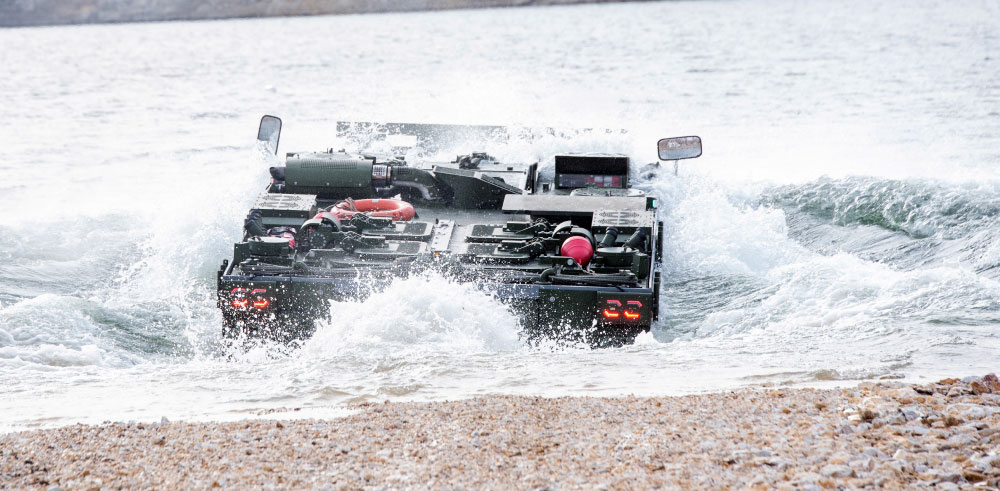
The deliveries of the Marine Assault Vehicle (MAV/ZAHA) developed under the project, for which procurement activities are carried out by the Presidency of Defense Agency (SSB) to meet the marine assault vehicle requirements of the Turkish Naval Forces Command (DzKK), have initiated to the Amphibious Infantry Brigade Command.
Turkish Navy’s Marine Armored Amphibious Vehicle Program that was signed between the Turkish Presidency for Defense Industries (SSB) and FNSS on March 7, 2017.
Within the scope of the project, in total 27 vehicles, including 23 personnel carriers, 2 Command & Control vehicles, and 2 Recovery Vehicles will be delivered to Turkish Naval Forces. The MAV has four different configurations: Personnel Carrier, Command & Control (C2), Recovery Vehicle, and Mine Clearance Vehicle.
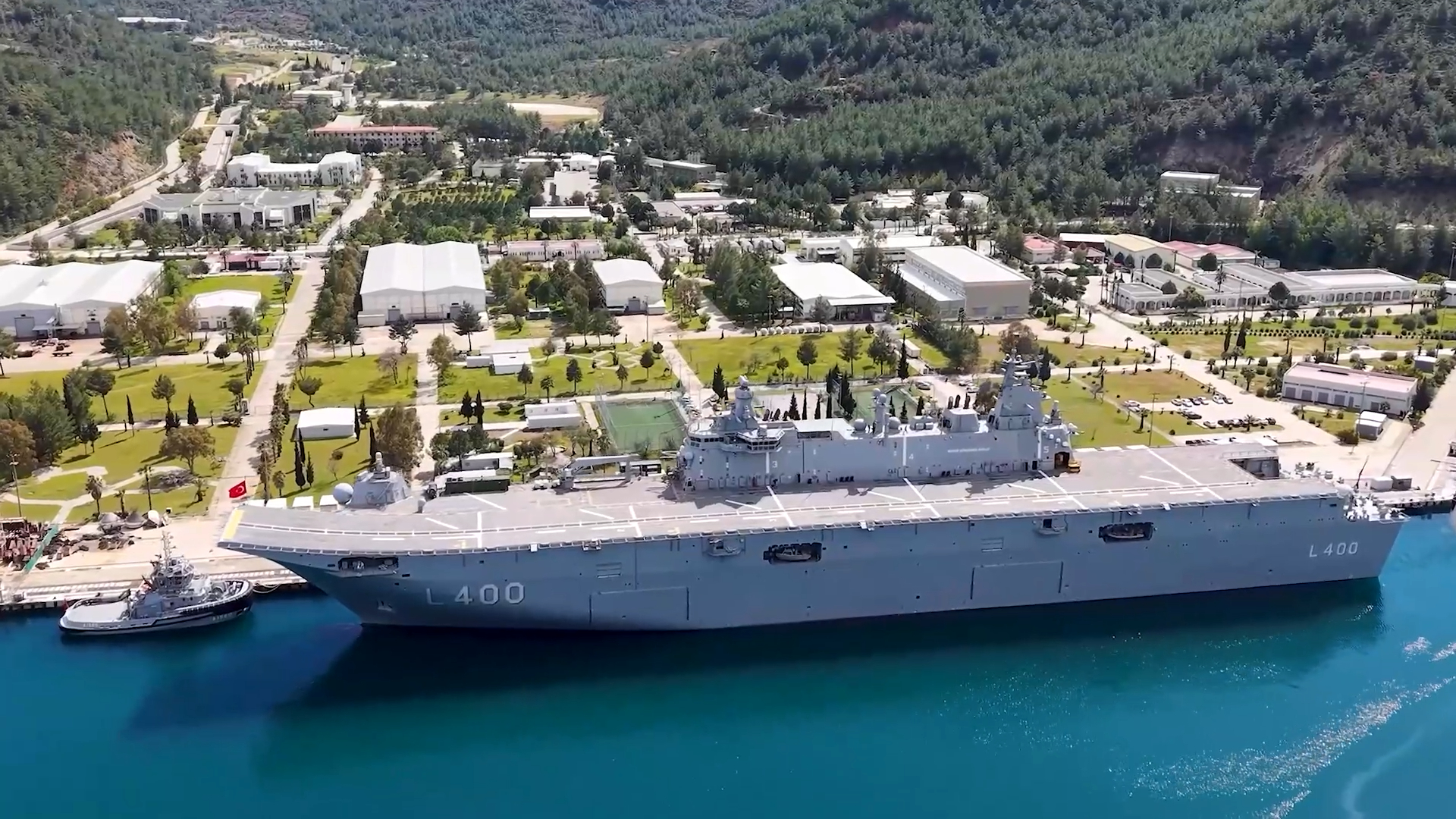
The Marine Assault Vehicle (MAV) is the latest technology amphibious vehicle designed by FNSS to meet amphibious operational requirements. During the beach landing phase of an amphibious operation, these vehicles are launched from landing helicopter docks (LHD) and are able to rapidly cover the distance between the vessel and the shore, allowing marine units to land under armor protection. The MAV fire power is provided by the purposely designed CAKA dual remote-controlled turret that can be armed with a 12.7 mm MG and a 40 mm AGL.
CAKA Remote Controlled Turret (RCT) system is designed by FNSS, the turret will be exhibited first time on the Marine Assault Vehicle (MAV) during IDEF 2021. CAKA is developed to be the firepower of MAV, with its ability to carry a maximum load of ready-to-fire rounds, and it is also ballistic protected. CAKA RCT, which stands out with its corrosion resistance and sealing at the highest level, can be used safely in all weather and sea conditions.
Compared to similar manned turrets in service with US Marine Corps’ Amphibious Vehicles, FNSS CAKA RWS offers greater advantages with its; lightweight, better protection for the gunner, target acquisition, reliability, accuracy, and occupies less internal volume inside the vehicle. CAKA RWS is power operated and armed with 12.7mm MG (50 Cal) & 40mm AGL (Automatic Grenade Launcher). The remote turret can be easily integrated into various manned and unmanned ground vehicles as well as naval surface vessels.
The ÇAKA Remote-Controlled Tower (UKK) named after the great Turkish Sailor CAKA bey, ÇAKA Remote Controlled Turret System, which was produced according to design requirements, MAV technical specifications, and conditions of use, was designed to offer the most appropriate solution for its intended use. FNSS General Manager and CEO Nail KURT shared outstanding capabilities of the CAKA in this launching ceremony, “In accordance with the user's requirements, two separate guns, a 50-caliber heavy machine gun, and a 40mm automatic grenade launcher were mounted on it. The turret was designed like a marine system. As you know, the MAV is able to operate under extremely difficult sea conditions. In this respect, we prioritized the suitability of the systems on the turret with these difficult conditions. It differs from our other turrets in terms of both corrosion resistance and sealing. It was developed to survive long-term conditions in the sea and on land and to resist salty seawater.
The Marine Assault Vehicle features a water-resistant hull which demonstrates superior amphibious characteristics. The completely sealed unique hull design offers the self-righting capability and improves mobility in water. It does not utilize a double or V-hull as it will drastically affect the performance of the vehicle at sea. The MAV weighs 30 metric tons and is equipped with a 600hp front-mounted diesel engine power pack. The engine has a fully automatic transmission system. The vehicle is propelled by two powerful rear-mounted water jets in amphibious mode, which can handle up to sea-state 4. The maximum amphibious speed of the vehicle is 7 knots, while the maximum road speed is 70 km/h.
MAV can be also considered superior in the following respects:
Number of personnel transported by the vehicle (18+3)
Level of ballistic and mine protection,
Its new generation remote controlled turret (.50-Caliber Machine Gun & 40mm Automatic Grenade Launcher)
Its performance on land and in the water.
FNSS MAV is manned by a crew of three members including a commander, a driver, and a gunner. The driver sits in the front and the commander is positioned behind the driver. The gunner’s compartment is located in the middle of the vehicle and offers the gunner a clear view of the surroundings to track down enemy movements. The MAV can carry up to 21 (18 dismounted infantry + 3 crewmembers) troops as well as cargo in a large compartment at the rear of the vehicle. The vehicle is also fitted with a hydraulic ramp at the back.
MAV is capable of maneuvering on a 60% vertical and 40% horizontal gradient, climbing 90 cm-high obstacles, and crossing 200 cm-wide trenches. The 8.3-meter-long and 3.3-meter-wide vehicle features a reinforced hull bottom armor and the thickness of the bottom plate is adjusted to maximize energy absorption. The protection level of the MAV can be further improved with add-on applique armor plates. The vehicle is also fitted with a coaxially mounted smoke grenade launcher, automatic fire extinguishing system, and a dedicated CBRN (Chemical, Biological, Radioactive, and Nuclear) protection system.
In the ZAHA project, maximum local content was utilized the subsystem supplies such as communication within the vehicle and with other vehicles, and communication systems with the LHD Class TCG Anadolu ship. Within the scope of the project, many subsystems such as periscope, track, road wheel, and speed reducer were also localized