IDEF Fair Hosted Many Firsts in Its New Venue and Served as Host to Significant Agreements in Turkish Defence Industry Exports
First organized in 1987 under the name IDEA and adopting the IDEF name starting from 1993, the International Defence Industry Fair, now held under the umbrella of the Turkish Armed Forces Foundation (TSKGV), celebrated its 32nd anniversary this year. KFA Fairs organized IDEF for the first time this year, and the event was held simultaneously for the first time across four different locations in close proximity to one another.
The 17th International Defence Industry Fair (IDEF) was organized this year for the first time by KFA Fair Inc. and over 1,100 products, 26 of which are new, were exhibited for the first time, including the advanced technologies forming Türkiye's Layered Air Defence System "STEEL DOME" concept, the GÖKSUR-100N VLS Vertical Launch Air Defence System developed in collaboration between ASELSAN and TÜBİTAK, ASELSAN's ASELFLIR 600 Electro-Optical Reconnaissance, Surveillance, and Targeting System, the CENK 350-N GaN AESA fixed four-face Ship Radar, and the DERİNGÖZ 100L/300 Autonomous Underwater Vehicle, MoND R&D Center’s GAZAP and HAYALET Aircraft Bombs, ROKETSAN’s TAYFUN BLOK-4 Hypersonic Ballistic Missile, the GÖKBORA Ramjet-Powered Beyond-Visual-Range Air-to-Air Missile, and the ŞİMŞEK-II Satellite Launch Vehicle (SLV), STM’s Turkish-Type Fast Attack Craft, TİTRA Technology’s Next-Generation Unmanned Helicopter ALPİN-2, the SEYYAH Visual Navigation System, and PARS VTOL, TÜBİTAK-SAGE’s GÖKHAN Ramjet-Powered Beyond-Visual-Range Air-to-Air Missile, and the SOM-M Air-Launched Cruise Missile (ALCM) developed for the National Combat Aircraft KAAN. It was also held simultaneously for the first time across four different locations in close proximity: the Istanbul Expo Center (72,000 m² indoor area), Atatürk Airport (IDEF Terminal), Ataköy Marina (IDEF Port), and WOW Congress Center, encompassing a total area of 295,000 square meters, and lasting for the first time a full 6 days.
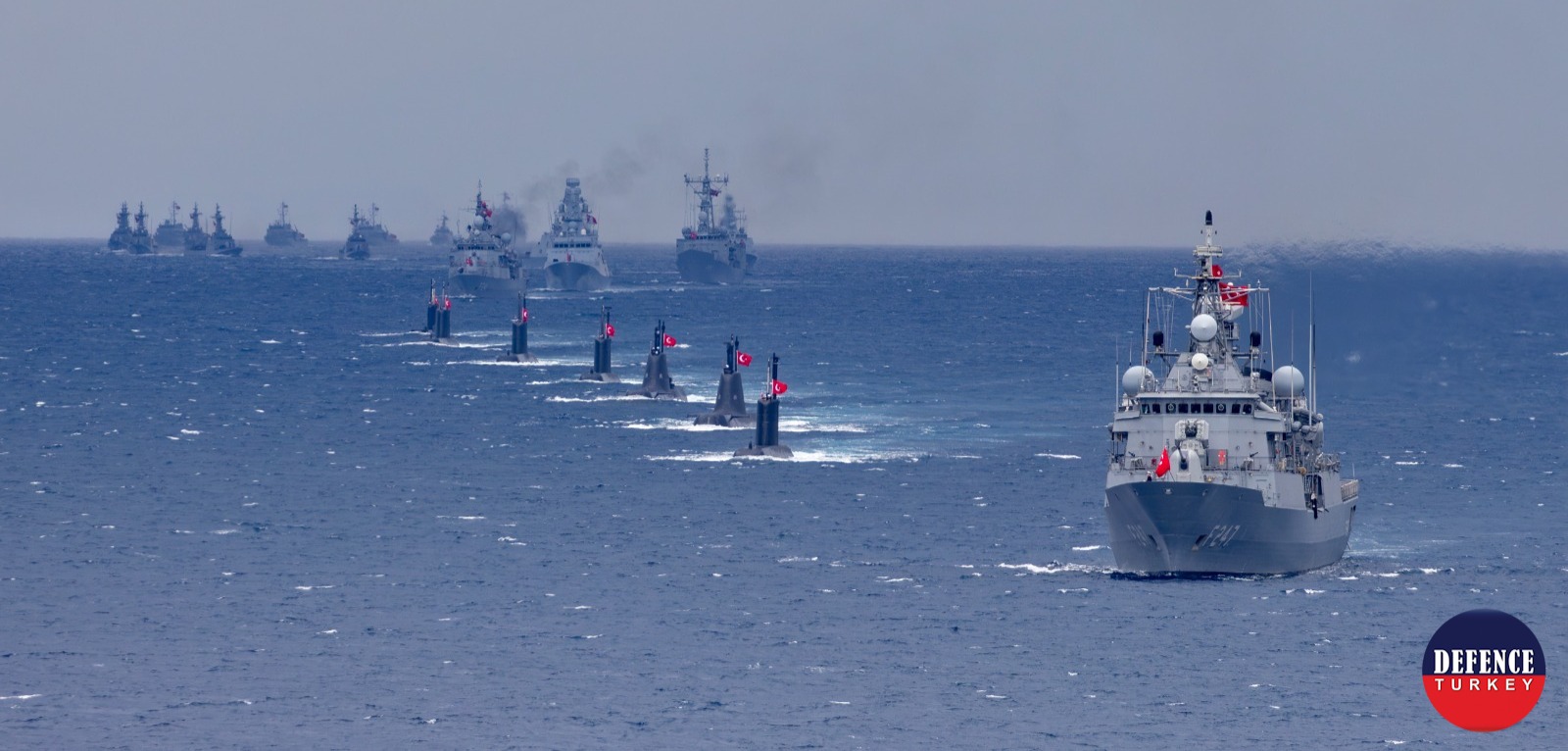
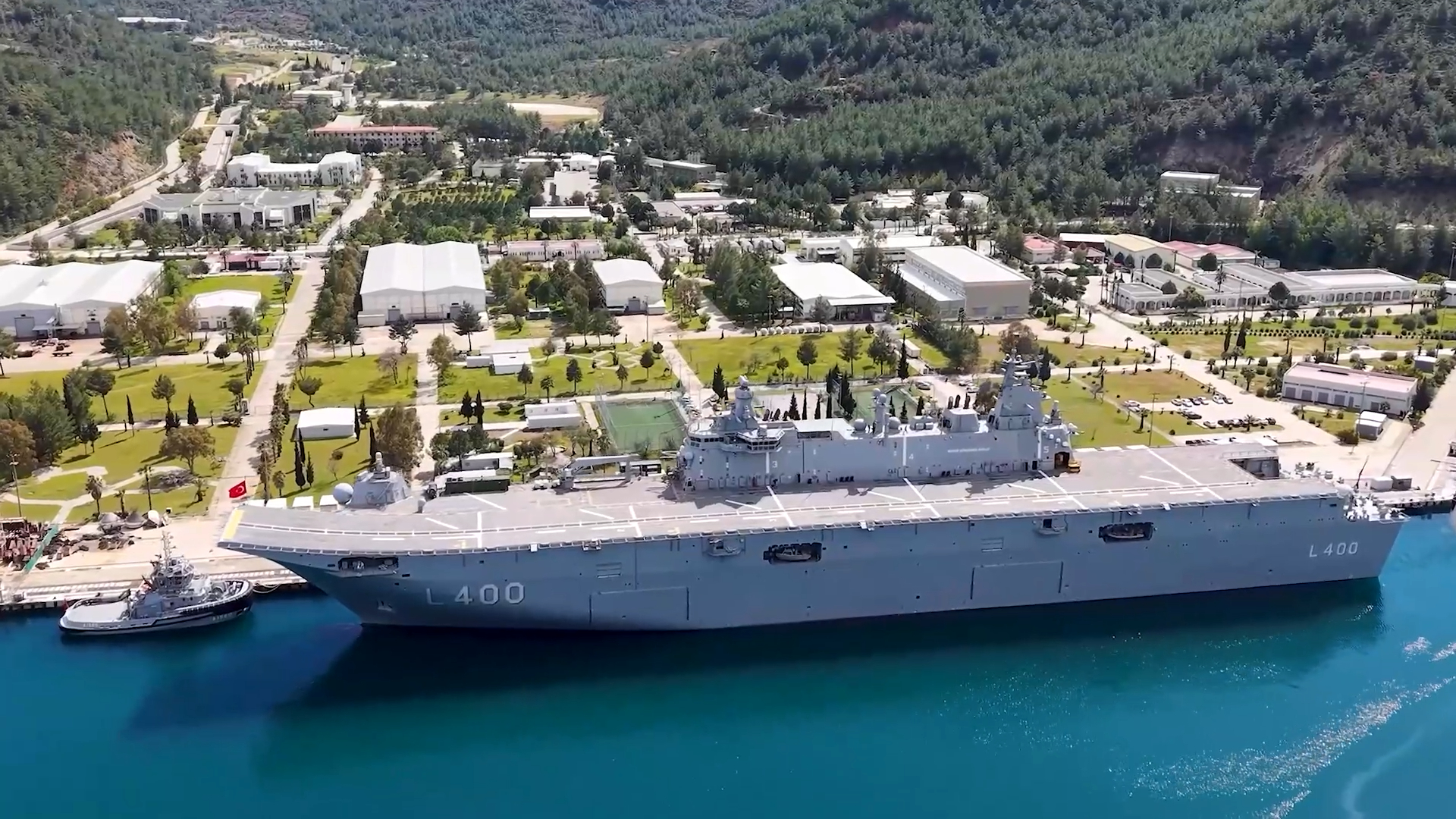
Istanbul Expo Center (IFM) hosted Integrated Defence Systems, Radar Technologies, Electronic Warfare and Communication Solutions, Drones and Anti-Drone Systems. The C Terminal at Atatürk Airport, where the official opening ceremony was also held, served as both a static ground display for armored vehicles and a dynamic aerial demonstration area for manned and unmanned fixed-wing and rotary-wing aircraft. Fourteen warships (such as TCG Anadolu, TCG Derya, TCG Istanbul, and TCG Alemdar) anchored off the coast of Ataköy Marina under the name IDEF Port welcomed guests throughout the fair and were open to visits by domestic and foreign delegations. Small sea platforms—including Armed Unmanned Surface Vehicles (ULAQ, MARLIN, and SANCAR) of the Turkish Naval Forces Command and Coast Guard Command, Coast Guard Boats, SAT Boats, and the Fast Type Landing Craft (LCT)—were exhibited within Ataköy Marina. During the fair, Ataköy Marina (IDEF Port) not only served as an exhibition area for naval platforms but also functioned as a strategic transit point. According to data from KFA Fair, the official welcome and farewell ceremonies for 229 delegations and 967 delegation members from 114 countries and international organizations visiting the fair were conducted via Ataköy Marina. The WOW Congress Center was used for strategic meetings, panels, and international cooperation discussions.
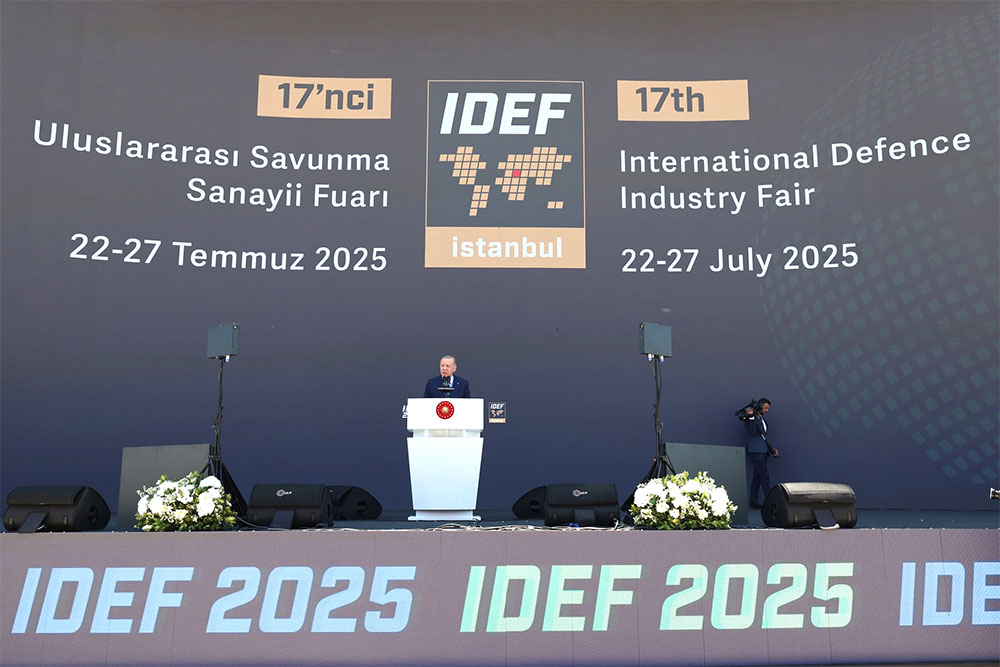
The IDEF 2025 Opening Ceremony took place on July 22 at the IDEF Terminal with the participation of President Recep Tayyip Erdoğan. As part of the opening ceremony, unlike previous fairs, a dynamic demonstration was conducted on land, in the air, and at sea. Bilal TOPÇU, General Manager of the Turkish Armed Forces Foundation, stated the following in an interview with Anadolu Agency regarding the opening ceremony: “Actually, we planned it not as a military parade but as a commercial passage ceremony. We passed the strong products of the Turkish Defence Industry, which we now market and offer for sale to the whole world, in front of our esteemed President and the attendees during the passage ceremony. It was a very synchronized and beautiful ceremony with our air defence systems, components of our Steel Dome, armored vehicles, unmanned aerial vehicles, helicopters, aircraft, unmanned surface vehicles, and ships.”
Minister of National Defence Yaşar GÜLER held meetings during IDEF 2025 with the Defence Ministers of Azerbaijan, Belgium, Senegal, Slovenia, and Congo; the Chief of General Staff of Pakistan; the Deputy Defence Minister of Vietnam; and the Ground Forces Commander of the Libyan National Army. Defence industry, military training, and cooperation topics were discussed in these meetings. On the same day, a "Memorandum of Understanding on Strengthening Mutual Military Security" was signed with the Azerbaijani Defence Minister, while on July 23, a Memorandum of Understanding (MoU) was signed with the UK Defence Minister regarding Türkiye becoming a user of the Eurofighter Typhoon.
In previous years, IDEF Fairs, which lasted 4 days, were open only to professional visitors for the first 3 days and to the public on the 4th day. However, to enable participating companies and delegations to conduct a greater number of business meetings and hold more signing ceremonies during the fair, and to allow more people to visit due to the intense interest from citizens, the fair duration was extended to 6 days this year. As a specialized fair, the first 4 days were open only to industry professionals by invitation, while July 26 and 27 were also open to the public, attracting significant interest.
Since 2009, when it started to be organized in İstanbul, IDEF—also referred to as the 'Eurasia Meeting' and the largest fair in the Eurasia region—has become the fourth largest defence industry fair in the world in terms of the number of participating companies. Initially organized to introduce the Turkish Defence Industry to the world, IDEF Fairs bring together domestic and foreign defence industry professionals under one roof.
As a reality of Türkiye, a series of problems occurred during the fair: long queues formed at entrances due to both security checks and the printing of badges, and some participating companies complained about last-minute changes in booth locations and the lack of the expected number of foreign delegation visits. However, in my personal opinion, the IDEF 2025 Fair, organized for the first time by a different organizer and simultaneously across four different locations covering a total area of 295,000 square meters, was successful. Despite being held during an extremely hot period in July, the air conditioning systems in the exhibition halls at the Istanbul Expo Center (IFM)—especially in the halls displaying large vehicles—provided comfort for both the relatively fewer visitors in the first three days and the fair-goers as well as the company personnel at the booths, enabling them to perform their duties comfortably in indoor spaces. However, on days when visitor numbers increased, the air conditioning systems were insufficient in the July heat. During the IDEF '25 Promotional Meeting held in August 2024, when information was shared that the opening ceremony would be held in an open area and that a passage ceremony demonstration with land and air vehicles would take place, I had hoped that a live vehicle demonstration area would be prepared at Atatürk Airport C Terminal (IDEF Terminal), similar to the Eurosatory and IDEX Fairs, where wheeled and tracked armored vehicles could showcase their mobility and maneuverability. However, watching only a commercial passage ceremony on asphalt pavement with the participation of land vehicles developed and produced by Turkish Defence Industry companies truly disappointed me.
IDEF 2025 Fair in Numbers
In its 32nd year, the IDEF '25 Fair set a record in its history with the number of visitors, delegations, participants, and signing ceremonies held. According to data from TSKGV and KFA Fair, the IDEF '25 17th International Defence Industry Fair, which lasted 6 days and saw participation from 114 different countries around the world, along with NATO, the African Union, and the Turkish-American Business Council, hosted a total of 1,491 companies—907 domestic and 584 foreign—from 49 countries operating in the defence, security, maritime, aviation, and space industries (compared to 1,461 companies from 54 countries in IDEF '23, with 689 domestic and 772 foreign). The IDEF '25 Fair, visited by 121,753 people from 114 countries (compared to 94,198 people from 107 countries in IDEF '23), saw the participation of 230 delegations and 971 delegation members from 96 countries and 4 international organizations—including 115 high-level ones—invited through official invitations by high-level authorities from the Ministry of National Defence, the Ministry of Interior, and the Secretariat of Defence Industries to the defence ministers of friendly and allied countries, as well as high-level civilian and military procurement officials (compared to 187 delegations and 738 delegation members from 78 countries and 3 international organizations in IDEF '23). Secretary of Defence Industries Prof. Dr. Haluk GÖRGÜN stated in a social media post on July 27 that representatives from 103 countries participated in the fair, thereby reinforcing Türkiye's international influence in the defence industry, and that diplomatic and commercial relations were strengthened with 231 official delegation visits. In his statement, GÖRGÜN remarked the following regarding the IDEF 2025 Fair, one of Türkiye's most important organizations in the defence industry: “The successfully concluded IDEF Fair carried our engineering strength, export vision, and strategic determination to the world, enabling us to secure a strong place among the global players in the sector.”
During the IDEF '25 Fair, 29 meeting offices (announced as 31 in IDEF '23) were opened by procurement authorities from the Ministry of National Defence (MoND), the Ministry of Interior, and the Secretariat of Defence Industries (SSB), 6,301 bilateral meetings were planned between participating companies and delegations (announced as 5,397 in IDEF '23), and 270 signing ceremonies took place (compared to 141 promotional programs, cooperation protocols, and contract signing ceremonies in the previous fair). On the 2nd, 3rd, and 4th days of the fair, 3 Panels and 16 Presentations were held (compared to 5 Panels and 8 Presentations in the previous fair). The ships anchored off the coast of Ataköy Marina and the boats exhibited within the marina were visited by 46 foreign delegations and/or ambassadors throughout the fair period.
SAHA İstanbul, Türkiye's largest industrial cluster, strongly participated in the IDEF '25 Fair with 218 member companies. Among the participants were Türkiye's leading defence industry companies, as well as Lockheed Martin (USA), Leonardo (Italy), Airbus (Europe), the pavilion led by EDGE from the United Arab Emirates, and the Saudi Arabian pavilion, which achieved the broadest foreign participation in the fair. The four major foundation companies—ASELSAN, TUSAŞ, ROKETSAN, and HAVELSAN—exhibited their products in different halls for the first time at IDEF '25, rather than in a single hall.
In recent years, Türkiye has made significant strides in the defence industry and begun to establish a solid position in the market. On one hand, it has increased the domestic production rate in the defence sector to 83%, while on the other, it has reached the capacity to export approximately 230 types of defence industry products—primarily UAV and UCAV solutions, land vehicles, naval platforms, weapon systems, and ammunition—to 180 countries. More than 50% of defence industry sales are made to NATO allies, 27% to Europe, and 25% to the United States. This success has secured Türkiye's position as the 11th largest global defence exporter. The IDEF Fairs, which have evolved over the past 32 years into a significant international platform for promotion, marketing, and cooperation in the defence, security, maritime, aviation, and space industries, have played a crucial role in sustaining the interest and demand from existing and potential buyers in target export markets for Turkish Defence and Aviation Industry products, along with the promotional and cooperation activities conducted there. In this sense, the IDEF '25 Fair served as a demonstration to the international market that the Turkish Defence Industry has now reached the capacity not only to meet domestic needs but also to address global demands, reflecting the level it has achieved.
The IDEF '25 Fair left a positive impression in terms of showcasing the current state of the Turkish Defence and Aerospace Industry and providing insight into its future potential, with particular attention drawn to the high number of delegations from African and Middle Eastern countries. Both the Middle East and Africa represent two important markets for Turkish Defence and Aerospace Industry product exports. In bilateral meetings held with delegations from African and Middle Eastern countries during the fair, topics such as partnerships in the defence industry, local production, and technology transfer stood out. Thanks to its NATO-standard high-tech product range, competitive pricing, and openness to technology transfer, Türkiye is receiving considerable interest in the Middle East and African countries. In recent years, Turkish Defence and Aviation Industry companies have been signing three-digit contracts for defence and aviation product exports with countries in these two markets. Information obtained from the meetings indicates that Turkish Defence and Aviation Industry companies are now beginning to be viewed as long-term solution partners in the defence and aviation industry by some African and Middle Eastern countries. Significant interest was also observed from China at the IDEF Fair, which has become a brand where the sector's heart beats over 32 years, particularly from drone manufacturer companies. Chinese companies exhibited their products to visitors in International Hall No. 11. The next fair, IDEF '27—the 18th International Defence Industry Fair—is expected to be held again in Istanbul in May 2025.
IDEF '25 Hosted Historic Agreements from the Turkish Defence and Aviation Industry
Secretary of Defence Industries Prof. Dr. Haluk GÖRGÜN stated in a social media post on July 27 that 270 signing ceremonies were held throughout the IDEF '25 Fair, reaching a total contract volume of US$9 Billion. President Recep Tayyip Erdoğan, in a statement following the Cabinet Meeting on July 29, highlighted that the total value of the contracts signed at the IDEF '25 Fair exceeded US$9 Billion, while the total value of defence export contracts reached approximately US$5.85 Billion, and said, “A total of 270 signing ceremonies were held under IDEF '25; 65% of them were export-oriented.”
Among the 270 agreements signed during the IDEF '25 Fair for new collaborations and product sales, the most noteworthy ones were undoubtedly the sale contract for 48 KAAN National Combat Aircraft (MMU) to Indonesia over a 120-month (10-year) Schedule, signed on July 26 with the participation of Head of SSB Prof. Dr. Haluk GÖRGÜN; the agreement signed between TAIS Shipyards and the Indonesian Ministry of Defence covering the sale of 2 İSTİF-Class Frigates to Indonesia; and lastly the Strategic Cooperation Agreement signed on July 24 between TUSAŞ and Airbus Defence & Space for the HÜRJET Jet Trainer Aircraft to be supplied to the Spanish Air Force. The scope of the agreements signed on July 26, covering the sale of 48 KAAN National Combat Aircraft and 2 İSTİF-Class Frigates to Indonesia, is estimated at 10 to 12 Billion Dollars.
The KAAN MMU Sales Contract signed with Indonesia—strategically important as it marks the first export of Türkiye's 5th Generation Combat Aircraft KAAN—was a continuation of the industrial agreement signed on June 11, 2025, between Turkish Aerospace Industries (TUSAŞ) and Indonesian Defence Minister Sjafrie SJAMSOEDDIN. In a post made on the same day on the SSB's social media account, the following information was shared regarding the agreement: “In line with the 'Government-to-Government (G2G) Procurement Agreement' signed with the Indonesian Ministry of Defence on June 11, 2025, covering cooperation for a total of 48 KAAN Aircraft; we have today completed the signing ceremony of the commercial contract containing all details and technical annexes of this agreement. This signing is not just an export move; it is also the gateway to a new era in engineering, production, and technology sharing. The local industrial infrastructure to be established in Indonesia will be the on-the-ground reflection of our friendship-forged strategic depth.” In a statement made on the same day on TUSAŞ's social media account, the signing of the Official Contract for the sale of KAAN was announced, and the following words were added: “We are proud to have signed the largest defence export agreement in the history of the Republic; we will continue to work more and produce more for our country!”TUSAŞ, which participated in the IDEF '25 Fair with over 2,000 square meters of stand space across 4 areas, also signed a Framework Agreement with Indonesia's aviation and defence industry entities PT Republik Aero Dirgantara (PT RAD) and PT Dirgantara Indonesia (PTDI). Under this agreement, PT RAD will take responsibility for preparations for infrastructure related to the MRO (Maintenance, Repair, Overhaul) needs of the 48 5th Generation KAAN MMUs to be produced at TUSAŞ facilities and delivered to Indonesia, including factory establishment and operation of local facilities. Additionally, the establishment of a joint company by PT RAD and ROKETSAN is planned for the integration of munitions into KAAN Aircraft. This company will undertake the production of the munitions specified within the scope of the project. Considering the overt and covert embargoes we have faced in the past in the export of defence and aviation industry products, it would not be an incorrect assessment to say that the KAAN export could only become possible through the localization of some critical subsystems already present on the aircraft. The KAAN currently features foreign-sourced critical subsystems, such as the U.S.-based GE Aerospace F110-GE-129E Turbofan Engine, and hydraulic and fuel systems of Italian origin. On September 24, 2025, a Memorandum of Understanding (MoU) was signed in the presence of SSB between TUSAŞ and the Italian firm OMA (Officine Meccaniche Aeronautiche). Through this MoU, the two companies confirmed their joint commitment to the production of equipment developed by OMA in Türkiye after qualification and certification processes have been completed.
Meanwhile, TUSAŞ President & CEO Mehmet DEMİROĞLU stated during the fair that three prototypes of KAAN are currently on the production line—one for ground tests and the other two for flight tests—and that they aim to conduct the first flight with the initial flight test prototype in April 2026, followed by the first flight of the second prototype a few months later. DEMİROĞLU also announced plans to deliver KAAN in 2028 with the GE Aerospace F110-GE-129E Turbofan Engine, and starting from 2032-2033 with the national TF35000 engine. The TF35000 Turbofan Engine, which will power KAAN and is being developed domestically and nationally as a 5th-generation aircraft engine, is expected to undergo early tests in 2026, with deliveries of KAAN National Combat Aircraft to the Turkish Air Force beginning at the end of 2028 or early 2029. During an interview in September, TEI General Manager Prof. Dr. Mahmut AKŞİT pointed out that while the prototype production cost for the TF6000 Turbofan Engine is around of US$5 Million, this figure could rise to as much as US$50 Million for the TF35000 Turbofan Engine to be used in KAAN, and expressed that in an aircraft engine project, it is generally necessary to produce 25 to 30 engines until the engine is made airworthy and the certification process is completed. The total development and prototype production cost for the TF35000 Turbofan Engine, which will power the 5th Generation National Combat Aircraft KAAN, is expected to reach US$1.5 Billion.
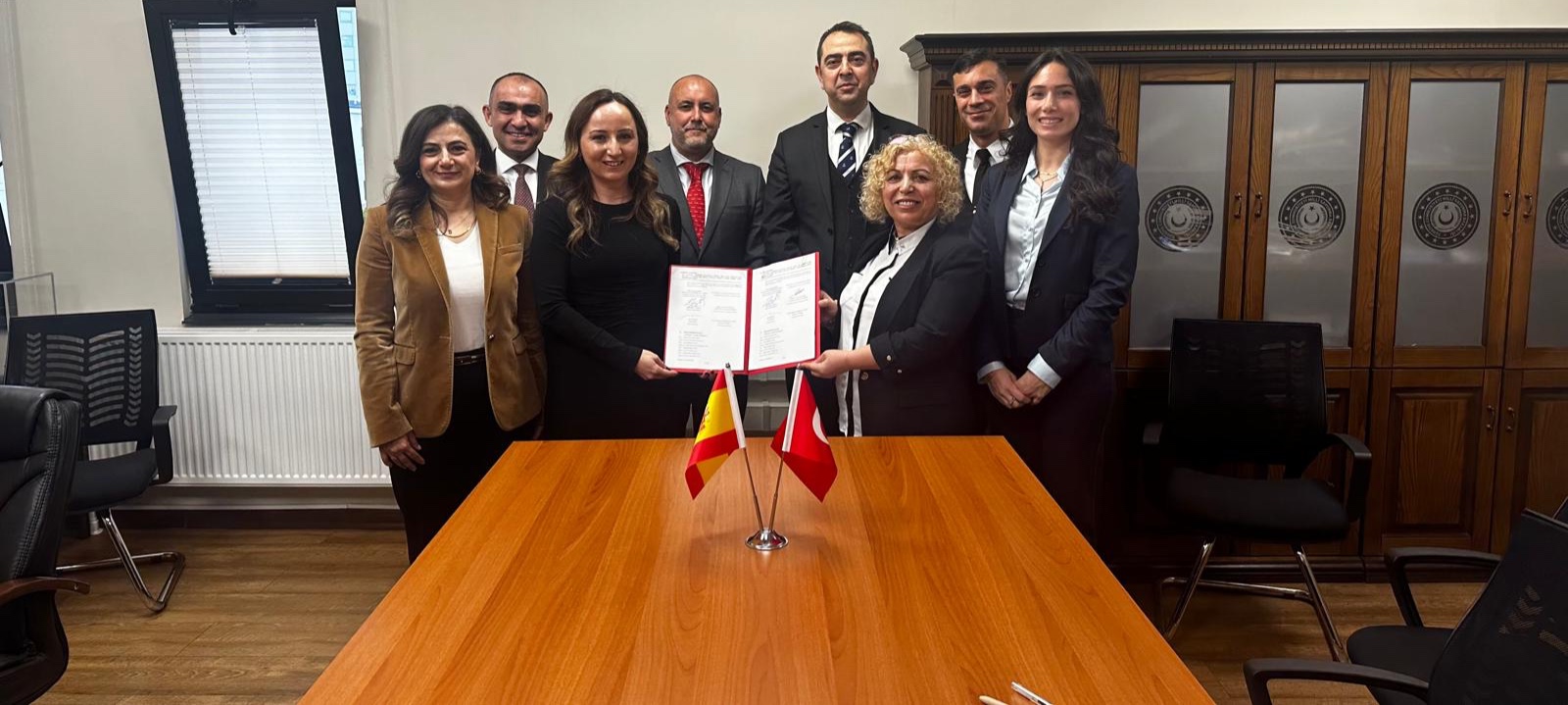
On July 24, a Strategic Cooperation Agreement was signed between TUSAŞ and Airbus Defence & Space for the joint production of the HÜRJET New Generation Advanced Jet Trainer (AJT) and Light Combat Aircraft (LCA) to meet the needs of the Spanish Air and Space Force, bringing the parties one step closer to signing the final Sales Contract. As recalled, TUSAŞ had previously signed a Memorandum of Understanding (MoU) in May 2025 during the FINDEF 2025 Fair with Spanish defence industry companies led by Airbus to identify and develop industrial cooperation opportunities under the Spanish Air and Space Command's 'Advanced Jet Training Aircraft, Integrated Training System – Combat (ITS-C)' Program, for which HÜRJET was selected. Although contract negotiations began for 24 aircraft, the latest information indicates that the number of aircraft to be procured could reach up to 30. The official contract for the sale of HÜRJET to the Spanish Air and Space Command is expected to be signed by the end of October or, at the latest, by the end of 2025, with deliveries beginning in 2028. TUSAŞ President & CEO Mehmet DEMİROĞLU emphasized that the HÜRJET Joint Production Program for the needs of the Spanish Air and Space Force (SASF) will be implemented in two separate phases, noting that under Phase I, HÜRJET aircraft in the same or similar configuration as those to be delivered to the Turkish Air Force will be produced and delivered ready for use, thereby allowing the SASF to receive and immediately begin operating these aircraft starting from 2028. Under Phase I, the production and delivery of 15 to 20 HÜRJET aircraft at TUSAŞ facilities is envisaged. Under Phase II, the production of certain parts/components and subsystems of HÜRJET in Spain is being considered. Although the production of some avionics and control components in Spain is anticipated within this scope, as of July 2025, the specific systems and components to be produced by Spanish companies had not yet been finalized. A Supplemental Type Certificate will be obtained for the HÜRJET SASF Configuration, which will emerge from the integration in Spain of subsystems belonging to Spain that will be produced and integrated into HÜRJET in Spain.
On the other hand, news is emerging that Patrulla Águila, the aerobatic team of the Spanish Air and Space Force (Ejército del Aire y del Espacio), also plans to procure HÜRJET. Established in 1985 with its main base at San Javier Air Base in the Murcia region, Patrulla Águila currently uses Spanish-made CASA C-101 Aviojet aircraft for its training and demonstration flights. Meanwhile, according to Spain's Official Gazette dated September 24, 2025, issue no. 230, in relation to the number of HÜRJET to be procured under the Integrated Advanced Flight Training System Program (Integrated Training System Program) initiated for the Spanish Air and Space Force, the expression “up to 45 units” has been included. This data suggests to us that the Spanish Air and Space Force may procure up to a total of 45 HÜRJET New Generation Jet Trainers (AJT) and Light Combat Aircraft (LCA), with 30 for the advanced training aircraft fleet needs and up to 15 for the aerobatic team Patrulla Águila. In the Official Gazette, the following information has been provided regarding the matter: “The Spanish Air and Space Force will replace its current F-5M (AE.9) Jet Trainer Aircraft fleet with the Integrated Training System – Combat (ITS-C) based on the HÜRJET platform developed by TUSAŞ. Under the program, a configuration adapted to the needs of the Spanish Air and Space Force will be developed in collaboration with the Spanish National Aviation and Defence Industry and other stakeholders. This program will represent a significant leap in the current level of technology in training platforms for combat pilots. The program includes the procurement of up to 45 aircraft, the production of the HÜRJET platform at TUSAŞ facilities, and the conversion of these aircraft at Airbus Defence and Space (Airbus D&S Spain) facilities in Spain to meet the needs of the Spanish Air and Space Force. Additionally, training activities to ensure the initial support of the platform and its sustainability throughout its life cycle are also included in the program. The conversion to the Spanish Configuration defined by the Spanish Air and Space Force will be carried out by Airbus D&S Spain, including the integration of higher-performance equipment developed by the Spanish Defence Industry and the updating of the Integrated Training System – Combat (ITS-C). The development and implementation of this program will be conducted within the framework of the Joint Venture (Unión Temporal de Empresas – UTE) established with TUSAŞ in accordance with Spanish legislation, with Airbus D&S Spain acting as the national coordinator and main contractor for the national aviation industry companies participating in the project. The pre-financing of the program will be provided by the Spanish Ministry of Tourism, Industry and Trade (MINTUR) to Airbus D&S Spain, and Airbus will transfer this financing to the UTE consisting of TUSAŞ and Airbus D&S Spain. This model will be applied in a manner similar to the financing models used in projects such as the Tigre MKIII Program (Royal Decree 1009/2022, December 5) and the Halcón Program (Royal Decree 891/2023, November 28).” Furthermore, according to the same Official Gazette dated September 24, 2025, issue no. 230, a credit of EUR 1.040 Billion will be provided to Airbus Defence and Space (Airbus D&S Spain) for the Jet Trainer Flight Integrated Training System – Combat (ITS-C, Phase 1/2), where the HÜRJET platform was selected.
TUSAŞ also signed a Memorandum of Understanding (MoU) with GE Aerospace on July 23 during the fair, aimed at using F404 Turbofan Engines in the HÜRJET Advanced Jet Trainer Aircraft and developing the necessary supply activities for their integration. TUSAŞ seeks to further enhance its existing cooperation with GE Aerospace in the context of flight test activities to be conducted with HÜRJET's new prototypes, while targeting the continuation of GE Aerospace's support in the project's subsequent phases. On the other hand, both companies have reached an agreement on taking additional steps regarding the maintenance, repair, and overhaul (MRO) needs of the F404 Engine. As recalled, on June 22, 2023, during the Paris Air Show, TUSAŞ's former President & CEO Temel KOTİL announced that TUSAŞ had signed a contract with GE Aerospace to procure 100 F404-GE-102 Turbofan Engines under the HÜRJET Program. A total of 200 F404-GE-102 Turbofan Engines (100 firm + 100 optional) are expected to be purchased for HÜRJET. TEI had been conducting negotiations with GE Aerospace for some time to produce certain parts of these engines and perform their final assembly. In this context, a MoU was signed on July 22, 2024, in Farnborough among TUSAŞ, TEI, and GE Aerospace to evaluate the integration of the F404 Engine into new HÜRJET aircraft variants and to collaborate on this matter. In the press release published by GE Aerospace on that date, it was stated that under the agreement, the three companies had reached a consensus on cooperating in the flight tests of the HÜRJET Program's new variants and exploring potential applications for other engine and system products from GE Aerospace's Defence & Systems business unit. The bulletin, which included the statement “For these new variants and potential customers, it is being considered that TEI—the joint venture company established by GE Aerospace and TUSAŞ in 1985—will perform the assembly, inspection, and testing of F404 engines in Türkiye,” also highlighted that TEI would undertake the assembly, maintenance, repair, and overhaul (MRO) of the engines for HÜRJET Jet Trainer Aircraft and export customers.
Another significant development during the IDEF '25 Fair was Türkiye's principal agreement with the United Kingdom on the procurement of up to 40 new-build Eurofighter Typhoon combat aircraft. On July 23, Turkish Defence Minister Yaşar GÜLER and UK Defence Minister John HEALEY signed a Memorandum of Understanding (MoU) regarding Türkiye becoming a user of the Eurofighter Typhoon. This agreement marks an important turning point in the Eurofighter Typhoon procurement process, which gained momentum in 2022. According to information from our sources at the Ministry of National Defence (MoND), Türkiye plans to procure 40 new-build Eurofighter Typhoon (Tranche 4/4+) aircraft, in addition to a certain number of second-hand Tranche 3 aircraft. Previously, Eurofighter Typhoon Tranche 1 aircraft that were to be decommissioned by the Royal Air Force (RAF) had been considered, but this option was later abandoned due to reasons such as the aircraft's age, high maintenance costs, and inability to meet modern operational requirements. Although no official number has been announced, it is stated that the procurement of approximately 20 aircraft in Tranche 3 configuration is expected, and that these aircraft are likely to enter service before the delivery of the new-built Typhoons.
Among the 270 agreements signed at the IDEF '25 Fair, the other standout agreements were as follows:
A contract was signed between the Secretariat of Defence Industries (SSB) and TUSAŞ (Turkish Aerospace) to procure an additional 57 T625 GÖKBEY Helicopters.
On July 25, 2025, the National Airborne Early Warning (AEW) Radar (ALP 200A) Development Contract was signed between the SSB and ASELSAN.
On July 26, a contract for 2 MILGEM İSTİF-Class Frigates was signed between TAIS Shipyards and the Indonesian Ministry of Defence.
On July 23, a contract for the procurement of 3 DENİZHAN Naval Guns was signed between MKE and the Indonesian Republikorp Defence Industry Holding.
On July 23, an agreement for the sale of the ÇAKIR Cruise Missile was signed between ROKETSAN and Republikorp.
On July 23, a 5-year (3+2) Maintenance and Repair Contract for the engines of Cougar Helicopters in Turkish Armed Forces inventory was signed between TEI, MoND General Directorate of Military Factories (AFGM), and ASFAT (Military Factory and Shipyard Management).
A contract amendment was signed between TÜBİTAK SAGE and MoND to improve the range and capabilities of the National Ramjet-Powered Air-to-Air Missile (GÖKHAN).
On July 24, a cooperation protocol targeting the conversion of manned helicopters into unmanned aerial platforms was signed between Pacific Technology subsidiary TİTRA and General Directorate of Military Factories (AFGM).
A Memorandum of Understanding was signed between TÜBİTAK SAGE, ASFAT, and MKE for the development and production of the new National Ramjet-Powered Air-to-Air Missile (GÖKHAN) Development Project.
A Memorandum of Understanding was signed between TÜBİTAK SAGE and MKE to develop 35mm Armor-Piercing Ammunition and Penetrator with Enhanced Lateral Effect (PELE).
A Memorandum of Understanding signed between TÜBİTAK SAGE and MKE for the development and production of the CİNGÖZ Guidance Kit for 2.75-inch (70mm) Rockets was.
A cooperation protocol was signed between TÜBİTAK UME and MKE for the establishment of the Quantum Research Center and production infrastructure for Quantum Navigation Technologies.
A cooperation agreement was signed between TÜBİTAK SAGE and ROKETSAN to develop Liquid-Fueled Ramjet Propulsion Systems for the Supersonic Anti-Ship Guided Missiles.
A cooperation protocol was signed between TÜBİTAK MAM and MoND for the establishment of the Chemical, Biological, Radiological, Nuclear (CBRN) Institute.
A contract was signed between TÜBİTAK UZAY (Space Technologies Research Institute) and SABANCI UNIVERSITY for the production of Satellite Structural Panels.
A contract was signed between TÜBİTAK UZAY (Space Technologies Research Institute), POLOPTECH, and TUA (Turkish Space Agency) for the Lunar Research Program Image-Supported Navigation System.
On July 23, a Contract Signing Ceremony for the Long-Range Air-to-Air Missile (GÖKBORA) Development Project was held between SSB and ROKETSAN.
On July 24, a contract was signed between SSB and HAVELSAN for the T70 Helicopter Simulator Project.
On July 25, a Contract Signing Ceremony was held between SSB and ASELSAN for the V/UHF Radar System (ALP 400G) Project. The ALP 400G V/UHF Radar System, to be developed under the project, is expected to fill a significant gap in Türkiye's air defence network with its capabilities such as high-resolution target detection, multi-target tracking, and automatic classification, offering radar coverage ranging from low-altitude threats to high-altitude targets.
On July 25, "Cruise Missile Engines Serial Production Contracts" were signed between ROKETSAN and KALE JET Motors with the participation of Secretary of Defence Industries Prof. Dr. Haluk GÖRGÜN. Under these contracts, KALE JET Motors will deliver KTJ-3200A (for ATMACA), KTJ-3200S (for SOM), KTJ-3700, and KTJ-1750 Turbojet Engines to ROKETSAN for SOM, ATMACA, KARA ATMACA, and ÇAKIR Cruise Missiles. KALE JET Motors had previously signed a contract on June 19, 2023, for the production and delivery of a certain number of KTJ-3200G Turbojet Engine variants. It is noteworthy that this last contract did not include additional KTJ-3200G orders.
İSTİF Class Frigate, DENİZHAN Naval Gun, and ÇAKIR Cruise Missile Export to Indonesia
The contract for the procurement of 2 MILGEM İSTİF-Class Frigates for the Indonesian Navy was signed on July 26 between TAIS Shipyards and the Indonesian Ministry of Defence. The scope of the sale of 2 İSTİF-Class Frigates to Indonesia is estimated at US$1 Billion. It is claimed that Indonesia is also eyeing the İZMİR (F-516) and İZMİT (F-517) Frigates, which are currently under construction for the Turkish Naval Forces. Meanwhile, under the agreement signed during the fair, MKE will also deliver 76/62 mm DENİZHAN National Naval Guns to Indonesia. The agreement, signed on July 23 between MKE and the Indonesian Republikorp Defence Industry Holding, covers the procurement of 3 DENİZHAN National Naval Guns for 3 ships. TAIS Shipyards is currently constructing two KCR-70M Fast Attack Crafts (FAC) for the Indonesian Navy. For the first of these FACs, the steel-cutting ceremony took place in October 2024, and the keel-laying ceremony was held in July 2025. The boats will be equipped with a 76/62 mm main gun. It is possible that two of the DENİZHAN National Naval Guns have been ordered for the İSTİF-Class Frigates, and one for the first KCR-70M FAC under construction. Additionally, on July 23 at the IDEF 2025 Fair, an agreement was signed between ROKETSAN and Republikorp for the sale of ÇAKIR Cruise Missiles. The signatures on the agreement were signed by ROKETSAN General Manager Murat İKİNCİ and Republikorp Executive Norman JOESOEF. The ÇAKIR Cruise Missiles are expected to be used on FACs entering the Indonesian Navy's inventory. It is claimed that the agreement also covers the local production of the ÇAKIR Missile in Indonesia and the necessary technology transfer for this purpose. ROKETSAN had previously signed a contract in June 2024 during the INDO DEFENCE 2024 Fair with Republikorp Defence Industry Holding for the joint production of ATMACA Anti-Ship Cruise Missiles in Indonesia. According to IISS Military Balance data, ROKETSAN sold 45 ATMACA Anti-Ship Cruise Missiles to Indonesia in 2024. Indonesian defence contracts are special in that, despite the signing of the agreements, they only come into effect after the Ministry of Defence (MoD) provides funding for the initial payment. This period can sometimes take several years. For example, although the preliminary contract for two Lithium-Ion Battery-Powered Scorpene Evolved Submarines from the French Naval Group for the Indonesian Navy was signed on March 28, 2024, the contract only entered into force on July 23, 2025.
57 Additional T625 GÖKBEY Orders
On July 24, 2025, a contract for the procurement of an additional 57 T625 GÖKBEY Light Utility Helicopters was signed between the SSB and TUSAŞ, with the participation of SSB Secretary Prof. Dr. Haluk GÖRGÜN and TUSAŞ President & CEO Mehmet DEMİROĞLU. TUSAŞ announced that deliveries of these helicopters will begin in 2028. Each of the GÖKBEY Helicopters will be powered by the TEI-produced TEI-TS1400 Turboshaft Engine. The delivery of the 57 helicopters is planned to be completed by 2031. With this contract, the total number of orders for the GÖKBEY Light Utility Helicopter has reached 83 (26+57). TUSAŞ announced that all GÖKBEY deliveries will be completed by 2031, equipped with the special mission equipment selected by the users. Under the contract, of the helicopters to be produced, 3 will be delivered to the Naval Air Command, 15 to the General Directorate of Security Aviation Department, 11 to the Air Force Command, 14 to the Gendarmerie Aviation Command, 8 to the Army Aviation Command, and 6 to the Coast Guard Air Command. TUSAŞ plans to increase the GÖKBEY production rate starting from 2027, first to 2 helicopters per month and then to 3 helicopters per month. As recalled, the first of the T625 GÖKBEY Light Utility Helicopters, developed domestically and nationally by TUSAŞ, was delivered to the Gendarmerie Aviation Command on October 29, 2024, the second in December 2024, the third in January 2025, and the fourth in August 2025. The Gendarmerie Aviation Command had ordered 20 T625 GÖKBEY helicopters in the first batch. The fourth T625 airframe in the initial 20-unit batch will offer better lifting/carrying performance to the user, as it is more than 200 kg lighter than the first three T625J Early Delivery Helicopters (EDH). A portion of the first batch of 20 T625 GÖKBEY Helicopters will feature ASELSAN's ASELFLIR R-400D E/O System, along with a hoist and cargo hook.
National Airborne Early Warning (AEW) Radar (ALP 200A) Development Contract
With the agreement signed on July 25, 2025, between the Secretary of Defence Industries Prof. Dr. Haluk GÖRGÜN and ASELSAN General Manager Ahmet AKLYOL, the first step was taken toward the domestic and national production of the airborne surveillance radar system, which is the most critical component of Airborne Early Warning and Control (AEW&C) Aircraft. Under the National AEW&C Radar (ALP 200A) Development Contract, the L-Band Airborne Surveillance Radar System (AEW&C Radar, ALP 200A) to be developed is planned to be integrated into both manned and unmanned aerial vehicles. This new radar system will enable more effective monitoring of Türkiye's airspace, strengthen early detection capabilities, and create a faster and more comprehensive response capacity against threats. One of the project's most important outputs will be its role as a foundational building block for national AEW&C platforms. This means that all future AEW&C systems to be developed will be based on this radar technology. Within the scope of the project, the airborne surveillance radar system to be developed will first be tested in the field for technology demonstration purposes on a designated UAV platform. In this way, the system's performance and integration capabilities under real operational conditions can be evaluated. The project targets the completion of the Critical Design Review (CDR) phase within 36 months, while the integrated prototype is planned to be ready within 60 months (5 years) from signing the contract.
ASELSAN is also involved, alongside HAVELSAN, TUSAŞ, Turkish Technic, and the General Directorate of Military Factories (AFGM), in the E-7T Airborne Early Warning and Control (AEW&C) Aircraft Modernization Project initiated by SSB, aimed at upgrading the E-7T AEW&C Aircraft—the most powerful ISR (Intelligence, Surveillance and Reconnaissance) platform in the Turkish Armed Forces inventory—to meet the current operational needs of the Turkish Air Force Command (TurAF), while addressing obsolescence issues in the operating system and software used in the mission systems. The four E-7T AEW&C Aircraft, which have accumulated over 26,000 flight hours in TurAF’s service over the past 11 years, are being modernized through a two-phase program. In the first phase, the ELTA product EL/L-8382 Radar ESM/ ELINT (Electronic Support Measures/Electronic Intelligence) System, which has maintenance and sustainment issues, is being replaced with ASELSAN's domestically developed ARES 2-A Radar ESM System, a product of experience gained from the HAVA SOJ (Stand-off Jammer) and KORAL-II Ground-Based SOJ Systems. Phase-I of the project began in the first half of 2023 and is planned to be completed by the end of 2025. The first test flight following the integration of the ARES 2-A National Radar ESM System on the first aircraft, tail number 13-003 and callsign GÜNEY, was conducted in June 2024. ASELSAN has also developed ground support units for the ARES 2-A. It is claimed that the E-7T AEW&C Aircraft with tail number 13-003 demonstrated successful performance during tests conducted at EHTES, even achieving better results than the EL/L-8382 in terms of signal detection and detection sensitivity (RMS). Following the completion of ARES 2-A integration efforts on the E-7T AEW&C Aircraft callsign GÜNEY, work has begun on retrofitting the system onto the other three aircraft. The ARES 2-A Radar ESM System will also be used on HAVA SOJ platforms. In the Phase-II, initiated under the decision of the Defence Industry Executive Committee (SSİK) meeting on January 2, 2024, the four E-7T AEW&C Aircraft are undergoing upgrades including IFF Mode 5 Transponders, additional SATCOM and UHF/VHF antenna integrations, Link-16, Link-22, T-Link National Tactical Data Link System, and GNSS (a new encrypted system is being installed to provide crypto-based GPS capability even under high-power jamming environment), along with renewal of mission system software for national sensor fusion (an ADVENT-based mission system is being installed) and hardware (all mission computer hardware is being localized) with domestic equivalents. As a subcontractor alongside Turkish Technic in the project, ASELSAN signed a US$84 Million contract in December 2024 with the TUSAŞ-HAVELSAN Joint Venture—the prime contractor—to supply Identification Friend or Foe (IFF), Navigation, and Communication Systems to be used on the aircraft. No modernization work is being conducted on the Northrop Grumman L-Band MESA AESA radar antenna (consisting of 288 high-power GaAs-based T/R modules). Additionally, the Joint Range Extension Applications Protocol (JREAP) and the Joint Tactical Information Distribution System (JTIDS) capabilities are expected to be incorporated into the aircraft to extend TDL communication ranges.
Maintenance Service Contract for the Makila 1A1 Engines of Cougar Helicopters
On the second day of IDEF '25, a 5-year (3+2) Maintenance and Repair Contract for the engines of Cougar Helicopters was signed between TEI, General Directorate of Military Factories (AFGM), and ASFAT. It was noted that the project covers approximately 80 different modules of the Makila 1A1 Turboshaft Engines powering the AS532 Cougar Helicopters, with a value reaching US$75 Million. TEI General Manager Prof. Dr. Mahmut F. AKŞİT and AFGM General Manager İmdat ERSOY were also present at the signing ceremony. Utilizing the capabilities of the 1st Air Maintenance Factory Directorate (HBFM) as well, TEI—which has successfully completed maintenance and repair activities for nearly 150 Makila 1A1 Engines and their modules to date—will provide services to AFGM under the signed contract for the maintenance, repair, and testing activities of the Makila 1A1 Engines powering the Cougar Helicopters in Turkish Armed Forces inventory, as well as accident-crash investigations, overhauls, depot-level maintenance (D-Level), modifications, and on-site repair service support. With this agreement, which is critically important for keeping the Cougar Helicopters actively used by the Land and Air Forces operational, TEI will continue to undertake the repair and maintenance activities of the Makila 1A1 Engines and modules for 5 years, with the support of the 1st Air Maintenance Factory Directorate. TEI had been authorized by the Secretariat of Defence Industries (SSB) as the Main Contractor for the 3,000-hour or 15-year Depot-Level Maintenance of the Makila 1A1 Engines in the Turkish Armed Forces inventory, as well as for unplanned engine and module maintenance operations.
GÖKHAN Ramjet Missile Ceremony, Contract Amendment for Range and Capability Increase for GÖKHAN, and GÖKHAN Block 2 Development Contract
The Launch Ceremony for the domestically developed liquid-fueled GÖKHAN Ramjet Missile was held on July 25 at the TÜBİTAK SAGE booth, where a full-scale model of GÖKHAN was also exhibited. The development of GÖKAN began under the "National Ramjet-Powered Air-to-Air Missile Development Project" signed on May 21, 2021, between the Ministry of National Defence (MoND) and TÜBİTAK Defence Industries Research and Development Institute (SAGE). GÖKHAN will take its place among next-generation air-to-air missiles with its liquid-fueled ramjet engine technology, high maneuverability, and two-way data link capability. In the project, the Conceptual Design Review (CDR) and Preliminary Design Review (PDR) have been completed, and activities are continuing in the Ground Testing Phase. In the Ground Tests and Flight Test Phases planned for 2026, subsystem and system validation tests will be conducted, along with flight and firing tests. Initially usable on platforms such as the F-16 ÖZGÜR and National Combat Aircraft KAAN, and in later stages on other platforms like KIZILELMA and HÜRJET, GÖKHAN will position Türkiye among the few NATO countries capable of developing ramjet-powered air-to-air missiles. Equipped with an indigenous warhead and fuze systems developed domestically by TÜBİTAK SAGE, GÖKHAN will serve as a strategic force multiplier in Türkiye's air defence with its architecture compatible with internal weapon stations (IWB), advanced electronic infrastructure, and extended-range capability.
At the ceremony, attended by Minister of National Defence Yaşar GÜLER, Minister of Industry and Technology Mehmet Fatih KACIR, Trade Minister Ömer Bolat, and TÜBİTAK SAGE General Manager Kemal TOPALÖMER, the "Contract Amendment for National Ramjet-Powered Air-to-Air Missile GÖKHAN Range and Capability Increase and Contract for the Development of Long-Range GÖKHAN Block 2" was signed between TÜBİTAK SAGE and the MoND, along with the Memorandum of Understanding for the production of GÖKHAN Project between TÜBİTAK SAGE, ASFAT, and MKE. Following the ceremony, Minister of Industry and Technology Mehmet Fatih KACIR said, “With GÖKHAN, we will also turn a missile project capable of operating at much longer ranges, much higher altitudes, and supersonic speeds into reality step by step. We will conduct our first tests this year. With the signatures today, we have pushed the range goal in the project further ahead. God willing, we will bring the GÖKHAN Project to a level comparable to its counterparts with the most advanced capabilities in the world.” TÜBİTAK SAGE Institute Director Kemal TOPALÖMER, in his statement on the matter, said: “We have completed the Conceptual Design and Preliminary Design Reviews. We saw that we can make a missile that can go much further and is more capable than this missile. We also presented this to our esteemed National Defence Minister and our esteemed Industry and Technology Minister, along with technical reports. With their support, today we have made a contract amendment in the existing contract for a national air-to-air ramjet missile that will reach a much longer range, which we will call Block 2. There is no delay in our schedules.” Reminding that there are 4-5 countries in the world working on liquid-fueled ramjet engines but only 1-2 countries have been able to turn it into a product, TOPALÖMER said, “Türkiye is now one of them; with our 2018 liquid-fueled ramjet engine project, we crowned this capability with the GÖKHAN Project. In the near future, we are starting Ground Tests and External Load Certification Tests for GÖKHAN. God willing, we will conduct the Ground Tests in the first quarter of 2026.” When asked whether the range increase in GÖKHAN will be achieved through an increase in the missile's length and weight, TOPALÖMER responded that he cannot disclose those details at the moment, and to the question of whether they plan to install an AESA-type seeker head on the GÖKHAN Block 2 Missile—given that the GÖKBORA Missile under development by ROKETSAN will have an AESA seeker—he said that if it is ready in time, it will be installed; otherwise, it can be added to the Block 3 version. TÜBİTAK SAGE Institute Director TOPALÖMER also stated that the GÖKHAN Missile was designed from the beginning to fit into the internal weapon bays of KAAN.
Meanwhile, on July 25th, a Cooperation Agreement was signed between TÜBİTAK SAGE and ROKETSAN for the development of a liquid-fueled ramjet propulsion system for the Supersonic Anti-Ship Guided Missile Project. The GÖKHAN, a liquid-fueled ramjet-powered beyond-visual-range air-to-air missile capable of reaching speeds of Mach 3+, will be equipped with an INS/GPS and two-way encrypted data link for mid-stage guidance and a solid-state Active Radar Seeker (RF) for the terminal phase. While the standard GÖKHAN missile has a range of 65-70 nautical miles (approximately 130 km), the contract amendment will increase the maximum range to 100 nm, and I estimate that the Block 2 version will exceed 150 nm.
Long Range Air-to-Air Missile (GÖKBORA) Development Project Contract Signing Ceremony and Solid-Propellant Ramjet Air-to-Air Missile GÖKBORA
Having begun its development work in mid-2024, ROKETSAN introduced the solid-propellant ramjet beyond-visual-range air-to-air missile GÖKBORA for the first time during the IDEF 2025 Fair. On July 23, during the IDEF 2025 Fair, a Contract Signing Ceremony for the Long-Range Air-to-Air Missile (GÖKBORA) Development Project was held between the SSB and ROKETSAN. On the same day, the "Contract for the Development of AESA Seeker (AGRAS 3101/AA) and onboard Missile Data Link (National Tactical Data Link/T-Link)" for the GÖKBORA Missile was also signed by the Secretariat of Defence Industries (SSB), ASELSAN, and ROKETSAN. According to information shared at the ceremony, GÖKBORA will be 3.75 m in length and 180 mm in diameter, and capable of reaching a range of 100+ nautical miles (185 km). GÖKBORA will be equipped with a fragmentation, high-explosive warhead for effective destructive capability. The beyond-visual-range air-to-air missile GÖKBORA is powered by a solid-propellant ramjet engine (elemental boron solid rocket fuel) and capable of reaching speeds above Mach 3. It will be equipped with INS/GPS and a two-way encrypted T-Link data link for mid-course guidance, and ASELSAN's AESA-type AGRAS 3101/AA Active Radar (RF) Seeker for the terminal phase. Designed with foldable rear fins, the GÖKBORA Missile can be carried in both external pylons and internal weapon bays on KAAN and KIZILELMA thanks to this feature. The GÖKBORA Missile can also be carried on external pylons of the F-16 ÖZGÜR Aircraft.
An expert I consulted pointed out that for a munition with a 180 mm diameter, the choice of a solid-propellant ramjet engine is actually more advantageous, allowing GÖKBORA to reach 100+ nautical miles while GÖKHAN can only achieve a range of 65-70 nautical miles. He added, “Using liquid fuel in small-diameter missiles causes excess dry weight because the fuel tank also takes up space inside the missile body. This creates an unused volume where you cannot put fuel. However, on the contrary, using liquid fuel in larger missiles actually turns into an advantage. In larger missiles, liquid fuel is more advantageous compared to solid propellants because liquid fuel has higher energy density.” According to open sources, solid-propellant ramjet engines are in a solid grain form (premixed fuel and oxidizer pressed into fine powder) that is bonded to the missile body; since they do not require moving pumps/injectors, they have a simpler mechanical structure. Solid-propellant ramjet engines are mostly preferred for firing systems that demand quick response and high initial thrust, and energy/pulse values are increased using special additives like boron-loaded fuels. In liquid-fueled ramjet engines, however, fuel storage, high-pressure pumps, injectors, and ignition systems are required, making the system more complex and sensitive. Nevertheless, liquid-fueled ramjet engines are preferred in long-range missiles or reusable systems where restart capability, longer burn times, better efficiency, and finer power adjustment are desired. Meanwhile, during an interview conducted in September, ROKETSAN General Manager Murat İKİNCİ stated that the ramjet engine to be used in the GÖKBORA Missile is nearly completed and that they are currently conducting its tests.
TİTRA and AFGM to Convert UH-1H and AB206 Helicopters into Unmanned Versions
On July 24, a cooperation protocol was signed between Pacific Technology subsidiary TİTRA and the General Directorate of Military Factories (AFGM) at the IDEF '25 Fair, targeting the conversion of manned helicopters into unmanned aerial platforms. At the ceremony held on the third day of IDEF 2025, Pacific Technology Board Member M. Selman DÖNMEZ and AFGM General Manager İmdat ERSOY were also present. The Cooperation Protocol was signed by TİTRA Group Founding Partner and Board Member Ekrem ÜNLÜ.
Under the project, the Bell 206 (AB206) and UH-1H Helicopters will be converted into unmanned versions with a payload capacity exceeding 1,000 kg. This conversion will enable the re-evaluation of existing manned helicopters for operational and strategic purposes. TİTRA will develop all components integrated into the project with domestic engineering capabilities. The conversion process will consist of an indigenous design avionics suite, a fully domestic autopilot system, an advanced mission computer, and ground control station software.
During our visit in November 2023, we had the opportunity to see more than 20 UH-1H/AB-205 Utility Helicopters, along with OH-58A Kiowa and AB-206 Training Helicopters, that had been withdrawn from flight and were awaiting decommissioning procedures in the 5th Main Maintenance Factory Directorate. The venerable UH-1H/AB-205 Utility Helicopters are planned to be replaced by the T625 GÖKBEY Helicopter. Although the T625 GÖKBEY Light Utility Helicopter may not meet most of the needs of Army Aviation in the Southeast region of Türkiye, it will be put into service in other mission areas thanks to being a domestic platform.
TİTRA had previously achieved many firsts in rotary-wing UAV technology with the ALPİN projects it developed and introduced to the Turkish Armed Forces inventory. While ALPİN platforms have a payload capacity of up to 200 kg, the new conversion project aims to exceed this capacity significantly. In the future, it is envisaged that military logistics will largely be carried out with unmanned helicopters.
Following the signing ceremony, Pacific Technology Board Member M. Selman DÖNMEZ, in his statements, emphasized that the project is not only technical but also a strategic move, and added: “The project we have launched under the leadership of our Pacific Technology subsidiary TİTRA is not just a conversion technology; it is also a strategic step that strengthens Türkiye's aviation and defence industry. Thanks to this system, developed entirely with domestic engineering capabilities, our country is crossing a new threshold in the field of rotary-wing unmanned aerial systems. As part of a group leading Türkiye's technological transformation, we take great pride in this important cooperation.”
TİTRA unveiled its brand new solutions for the first time during the IDEF '25 Fair with a ceremony attended by Secretary of Defence Industries Prof. Dr. Haluk GÖRGÜN: ALPİN-2, the next-generation version of ALPİN—Türkiye's first and only domestically developed unmanned cargo helicopter with fully localized hardware and software reaching a total of 80% domestic content; the SEYYAH Visual Navigation System, designed to be compatible with any platform and featuring high-accuracy positioning technology that operates without GPS in signal-jamming environments; and the PARS VTOL solution, which stands out with its vertical take-off and landing capability and advanced mission features. TİTRA had delivered 2 ALPİN unmanned helicopters to the Land Forces Command in 2024. During the development of ALPİN-2, feedback and improvement suggestions from the Land Forces Command based on their experiences using ALPİN-1 actually played a significant role. On December 15, 2024, a contract was signed between the SSB and TİTRA under the "Rotary-Wing Cargo UAV Project" for ALPİN-2. Under this contract, in the first phase, a total of 4 ALPİN-2 Next-Generation Unmanned Helicopters will be delivered by the end of 2025 (2 to the Land Forces Command and 2 to the Special Forces Command). The additional ALPİN-2 units included as options in the contract are expected to be ordered before the end of this year. TİTRA has integrated its own MERKÜT FPV drones (4 on the left side and 4 on the right side) onto the ALPİN-2, enabling both self-protection and target engagement in potential situations. Cargo operations using the external hook on the ALPİN platform have evolved into an internal cargo carrying concept via a hoist system with the ALPİN-2. The engine output of the ALPİN-2 has also been increased. Studies are also underway for the integration of the CİRİT Missile onto the ALPİN-2. Speaking at the press dinner held on the evening of July 20 before the IDEF '25 Fair, TİTRA Group Founding Partner and Board Member Ekrem ÜNLÜ emphasized that the contract signed with the SSB is a framework where the price is determined, and additional orders will be placed on top of it. Regarding TİTRA's ALPİN production capacity, ÜNLÜ shared the following information: “Normally, for high-volume serial production, we have the infrastructure capacity to produce 4 units per month. But currently, we are delivering 4 units in one year because our R&D work for producing ALPİN-2 takes quite a bit of time. We have validated it now. Flight and test activities continue at our test center in Ankara. At the same time, we are producing the helicopters we will deliver to our other soldiers. There are many new technologies and systems that we have validated there. Most are domestic, and we produce them ourselves. Our software, communication systems, etc. Therefore, our development and flight activities on that side will actually continue until December, when we start deliveries to the Turkish Armed Forces.” ÜNLÜ also stated that 3 different products from TİTRA will enter the inventory in 2025, and announcements regarding them will be made in due time. Explaining that the Turkish Armed Forces is one of the world's first armies to use unmanned helicopters for logistics purposes and that ALPİN has actually changed the military concept in terms of logistics, ÜNLÜ said that with ALPİN, they can drop off cargo to an outpost 8 km away—which previously took 6 hours by vehicle—and return in 19 minutes, and after proving this, ALPİN began to be used multiple times a day for logistics purposes. In response to my question about whether domestic orders increase interest in TİTRA in export markets, Pacific Technology Board Member M. Selman DÖNMEZ said, “Let me put it this way; especially until recently, there have been very serious contacts with Gulf countries, North Africa, and Central Asia. Our meetings are still ongoing. In the recent period, contacts from Europe have also started to increase, particularly after new budget changes. Although they are in the initial stages, there are European countries with which we have serious negotiations. When the reference is the Turkish Army, as you mentioned, selling a product globally becomes really much easier.”
During the IDEF '25 Fair, a Memorandum of Understanding was also signed between Pacific Technology and EHSİM (Electronic Warfare Systems Engineering), a subsidiary of HAVELSAN—one of the Turkish Armed Forces Foundation companies specialized in electronic warfare. The memorandum covers the integration of electronic warfare systems developed by EHSİM into the DUMRUL unmanned aerial vehicle (UAV) platforms produced by TİTRA. Based on the principle of joint product development, this cooperation aims to enhance the platforms' capabilities with the integrated electronic warfare systems