NATO`s Future in the Light of the Summit
by Yavuz Türkgenci
The NATO Summit will be held in the Netherlands on 24-25 June 2025. The main issues that may be on the agenda at the Summit are strengthening the defense and deterrence capability, bolster the defense industry and support to Ukraine. In a global security environment shaped by conflicts in the Middle East and Asia, in addition to Ukraine, the Summit can be expected to have important consequences for the future of NATO.
The US rhetoric on withdrawal from Europe is one of the most important factors affecting the agenda. This gap will have to be filled by the EU and non-EU countries. In this context, air and missile defense systems, artillery systems, ammunition and missiles, drone and counter-drone systems, military mobility, artificial intelligence, cyber and electronic warfare, strategic infrastructure are the critical capabilities set out in the white paper prepared by the EU. However, in addition to these capability shortcomings, the ability of armies to conduct high-intensity warfare, force structure, especially armored and mechanized warfare, logistic support system, medical treatment and evacuation system should also be emphasized. The fact that some of these militaries have focused on peacekeeping and crisis management for a long time and limit defense spending make it difficult for them to regain the capability for high-intensity warfare. Therefore, it will be tough for the EU to overcome this capability deficiency and regain deterrence and defense capability in a short period.
NATO's experienced infrastructure is expected to be the focal point for the EU to increase its deterrence and defense capability. In this framework, important structures such as NATO Command and Force Structure, Defense Planning System, Procurement System come to the agenda as important capabilities that are readily available. In this way, the EU can be expected to make significant progress in the field of deterrence and defense in a short time.
One of the most important factors determining the level of combat readiness of armed forces is their military culture. The fact that the military cultures of some EU countries focus on peacekeeping and crisis management rather than high-intensity warfare can be a major source of problems. It will take time to build this culture towards high-intensity warfare in a short period. While it is easier for armed forces to transition from conventional warfare concepts to concepts such as peacekeeping and crisis management, the opposite is more difficult. Non-EU NATO allies will have an important contribution to make to this problem.
The Ukrainian War provides important examples for understanding the changing character of warfare. In this sense, it is vital to thoroughly apprehend these examples and re-evaluate the concepts, weapon systems, and equipment. The teachings of the Cold War era are very different from the battles that took place in this war. Ukraine's use of unmanned systems to inflict heavy casualties on the Russian navy in the Black Sea is an important example. The widespread use of drones for reconnaissance and kamikaze attacks is another example. In this framework, it is evaluated that the lessons learned from the Ukrainian War are very important, but future wars will be much more technology-intensive, and work should be done to be ready for these wars.
It is another important factor in increasing deterrence and defense capability. It is known that The Armed Forces of EU Member Countries are 63% dependent on the US and 15% on non-EU countries. The EU is trying to create a resource of approximately €800 billion in order to strengthen its defense industry. This resource needs to be transformed into capability procurement through effective defense planning. Behind the revival of the defense industry base, it is an important need to establish a defense planning system based on high-intensity warfare. With a decision at the summit, it would be possible to increase defense spending above 5% of GDP. However, it should be taken into account that the expenditures should be made in a cost-effective manner towards the realization of strategic security objectives.
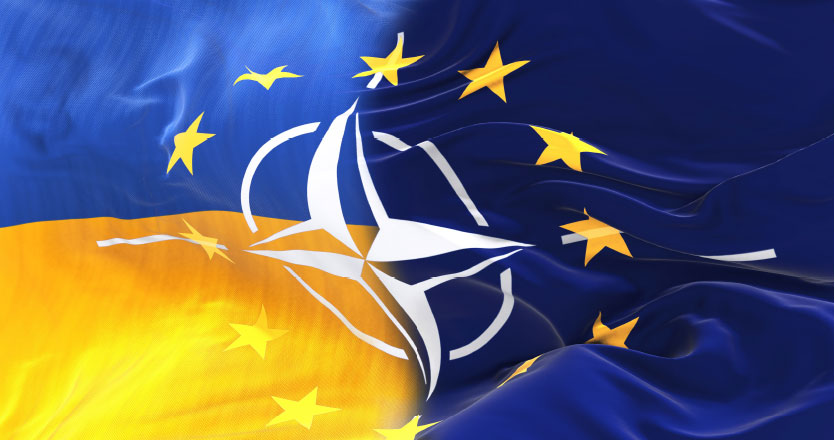
NATO and the EU attach importance to Ukraine in different ways. First, Ukraine is seen as an outpost and a shield for European defense. The Ukrainian Armed Forces has made significant progress since 2014. It has made significant progress, especially in the use of technology and in adapting to the changing character of warfare. In this sense, it can be said that it has a much more advanced structure than the armed forces of many EU member states. It also holds important lessons for high-intensity warfare in the digital age. It is considered vital for the future of the alliance that the lessons learned in warfare, which many EU members will find difficult to understand, are put into practice for NATO within the scope of the Summit.
Iran-Israel conflict may increase the importance of the Summit. This conflict may have some critical implications for the global economy by causing an increase in the oil prices. Escalation may worsen the global economic situation, which is already in a critical situation. Of course, NATO needs to study the lessons learned from the high intensity conflict perspective. But more important than that, the conflict will define the global alliances in the global big power competition more clear. This may also have implications in the NATO concepts and planning.
Conclusion
In conclusion, the Summit will be an important meeting to evaluate the results of the NATO Strategic Concept released in 2022, especially in terms of European defense, and to review the measures that can be taken to increase deterrence and defense capability, especially for the future. In addition, a significant increase in defense expenditures will be an important stage in the deterrence and defense of the Alliance. Naturally, new conflicts and threats such as Iran-Israel may effect the Summit agenda also. Therefore, it is considered that the decisions to be taken at the Summit will be important within the framework of the future of the Alliance