Naval Electronic Warfare Systems & Turkish Naval Forces

According to open sources EW refers to any action involving the use of the electromagnetic spectrum (EM spectrum) to control the spectrum, attack an enemy, or impede enemy assaults. The purpose of EW is to deny the opponent the advantage of and ensure friendly unimpeded access to the EM spectrum. EW can be applied from air, sea, land, and/or space by manned and unmanned systems, and can target the enemy’s communication systems, radars, or other assets both military and civil. EW consists of three major subdivisions: Electronic Support (ESM), Electronic Attack (EA) and Electronic Protection (EP).
Traditionally used to perform the task of target identification, Electronic Support Measures (ESM) gather intelligence through passive “listening” to electromagnetic radiations of military interest. The main task of ESM systems is summarized as contributing to the preparation of the picture of the tactical situation by detecting and diagnosing the Electro Magnetic (EM) broadcasts (in the frequency band defined for the system) of the threat and target radar/radars in the operational environment where the platform is deployed. Electronic Attack (EA) (previously known as Electronic Countermeasures [ECM]), on the other hand, involves the offensive use of EM energy, directed energy, or anti-radiation weapons to attack personnel, facilities, or equipment with the intent of degrading, neutralizing, or destroying enemy combat capability including human life. EA Systems, on the one hand, protect the platform on which they are used against RF-guided anti-ship missiles that threaten it, by actively jamming against radar seeker heads, on the other hand, they apply preventive active jamming techniques against threat or target radars than broadcasting in the operational environment.
The Turkish Naval Forces (TNF) acquired their first ever modern Radar ESM (RESM) System capability with the induction of DOGAN Class (fitted with SUSIE ESM) Fast Patrol Boats (FPBs) and AY Class (fitted with DR2000U ESM) Submarines (Type 209/1200) into the service during the second half of the 1970s. With the YAVUZ Class Frigates, which were procured within the scope of the MEKO 200 Track I Project, implemented in the early 1980s and the first of which was put into service in 1987, the RAPIDS ESM System from Signaal/MEL was also added to the TNF inventory. Within the scope of the follow-on MEKO 200 Track IIA and Track IIB Projects a total of 4 BARBAROS Class Frigates, fitted with the more modern Cutlass B1 Radar ESM and Scorpion B (Scorpion-II, with two jamming heads/steerable transmitter units [TWT-based], a tracking antenna and DRFM-based techniques generator, thanks to its dual transmit antennas it can generate narrow beam dish for surgical beam formation and wide beamwidth horn for area jamming) Radar EA (R-EA) Systems from Racal Radar Defence Systems (RRDS, now Thales), have been inducted into the TNF Service. According to open sources, while the 2 to 18GHz Cutlass B1 uses a 32-element antenna array and offers a bearing accuracy of 2˚rms, the system can operate in pulse densities of up to 500,000 per second and has sensitivity and dynamic range values of -60 dBmi and 60 dB, respectively. The Cutlass B1 can be fully integrated with the company's Scorpion series jammers. The Scorpion B (Scorpion-II) can perform RF jamming in 7.5 to 18GHz bands. It is stated that the DRFM (Digital RF Memories) capable Scorpion B, with 360˚ side coverage, has a proven response time of 1.5 sec and is capable of generating 10 modulation types, including continuous and burst noise, cover pulse noise, synchronized railing and false target generation. In action, the Scorpion can handle up to 8 simultaneous threats per jamming head (antenna/steerable transmitter unit). It is reported that the Scorpion B is able to generate up to 200kW ERP. The Scorpion B started to be deployed also on YAVUZ Class frigates during early 1990s, and it is still the only Radar EA system onboard surface warships in service today with the TNF. The TNF performed its first ever R-EA test with the Scorpion B (Scorpion-II) R-EA System on board the TCG Turgutreis (YAVUZ Class, fitted with two Scorpion-B jamming heads each able to jam 8 threats simultaneously) Frigate against 16 F-16C/D aircraft of the TurAF in the Mediterranean Sea in 1993 and successfully jammed the AN/APG-68 radars of these aircraft (which did not have the AN/ALQ-178(V)3 EW Self Protection System at that time). On the other hand, the first National Electronic Warfare Tests in the history of the Turkish Naval Forces were carried out from the TCG SalihReis Frigate (Track IIB) between 17-21 September 2007 in the Marmara Sea.
As part of the MEHS-YAVUZ Project, the Cutlass B1 ESM System, of which the antenna is located at the top of the main mast in YAVUZ Class Frigates, was replaced with the Aselsan’s ARES-2NC ESM System antenna and within the scope of BARBAROS MLU Project Aselsan’s ARES-2N(V)2 Radar ESM and AREAS-2NC Naval Radar Electronic Attack (EA) Systems will replace the existing Cutlass B1 ESM, and Scorpion B EA Systems.
The first four DOGAN Class FPBs that entered service with Turkish Naval Forces during 1977-1981 received Mid-Life Upgrades (MLU) between 1998 and 2002 and in this context the onboard SUSIE ESM system was replaced with the MIKES (now Aselsan) ELDES-21 Electronic Support System. Under a contract awarded in 2010 the SUSIE (RESM) System of the RUZGAR Class have been replaced with ASELSAN’s ARES-2N Radar ESM System. Meanwhile the DOGAN Class FPB EW System Modernization Project, launched upon the contract awarded in 2019, covers the replacement of aged ELDES-21 ESM Systems with the ARES-2Ns. Meanwhile according to the 2019 Aselsan Activity Report within the scope of the KILIC-II Class FPBs ESM System Modernization Project, the Racal/Thales Cutlass B1X (Sealion) ESM System onboard the boats are being replaced with Aselsan’s ARES-2NC Radar ESM System. According to sources even the Cutlass B1X is a very effective ESM System, during recent years technical malfunctions were experienced frequently due to overheating in the tasks performed especially in regions with hot weather conditions. On the other hand, in 2014 the indigenously developed DERF-A Radar ESM System has been integrated on the TCG Meltem (P-334, KILIÇ-II Class) FPB for testing purposes. The DERF-A Radar ESM System is still onboard the TCG Meltem. With the delivery of PREVEZE Class (Type 209/1400) Submarines, the first of which was commissioned in July 1994, the Dolphin Radar ESM System (according to open sources it is the submarine version of the Cutlass system, receives signals in 2GHz to 18GHz frequency range, featuring a mast-mounted omnidirectional and DF array and has sensitivity and dynamic range values of -60 dBmi and 60 dB, respectively) has been added to the TNF inventory. In May 1998 the Sealion Radar ES and threat warning system (operating in 2-18GHz bands and 62dBmi sensitivity) with 3˚rms DF sensitivity was ordered for the AY Class TCG Atılay (S-347) and TCG Saldıray (S-348) submarines. Equipped with the Sealion EDT in 2001, the TCG Saldıray (S-348) was decommissioned in November 2014 and the TCG Atılay was decommissioned in November 2016. The GUR Class (Type 209/1400 Mod) submarines, the first of which was commissioned in July 2003, are fitted with the Sealion/Dolphin II ESM System (according to open sources it operates in 2GHz to 18GHz bands with 2.25˚rms bearing sensitivity and LPI radar detection capability). Along with the surface and air platforms (both fixed wing and rotary wing) that entered the TNF service in the following years, the AN/SLQ-32[V]2, ABR-16 [DR2000S], LR-100, DR-3000A/S, ARES-2N, ARES-2SC and ARES-2NC Radar ESM Systems also entered the service of the TNF.
Turkish Defence Industry’s Capabilities in Naval EW Field
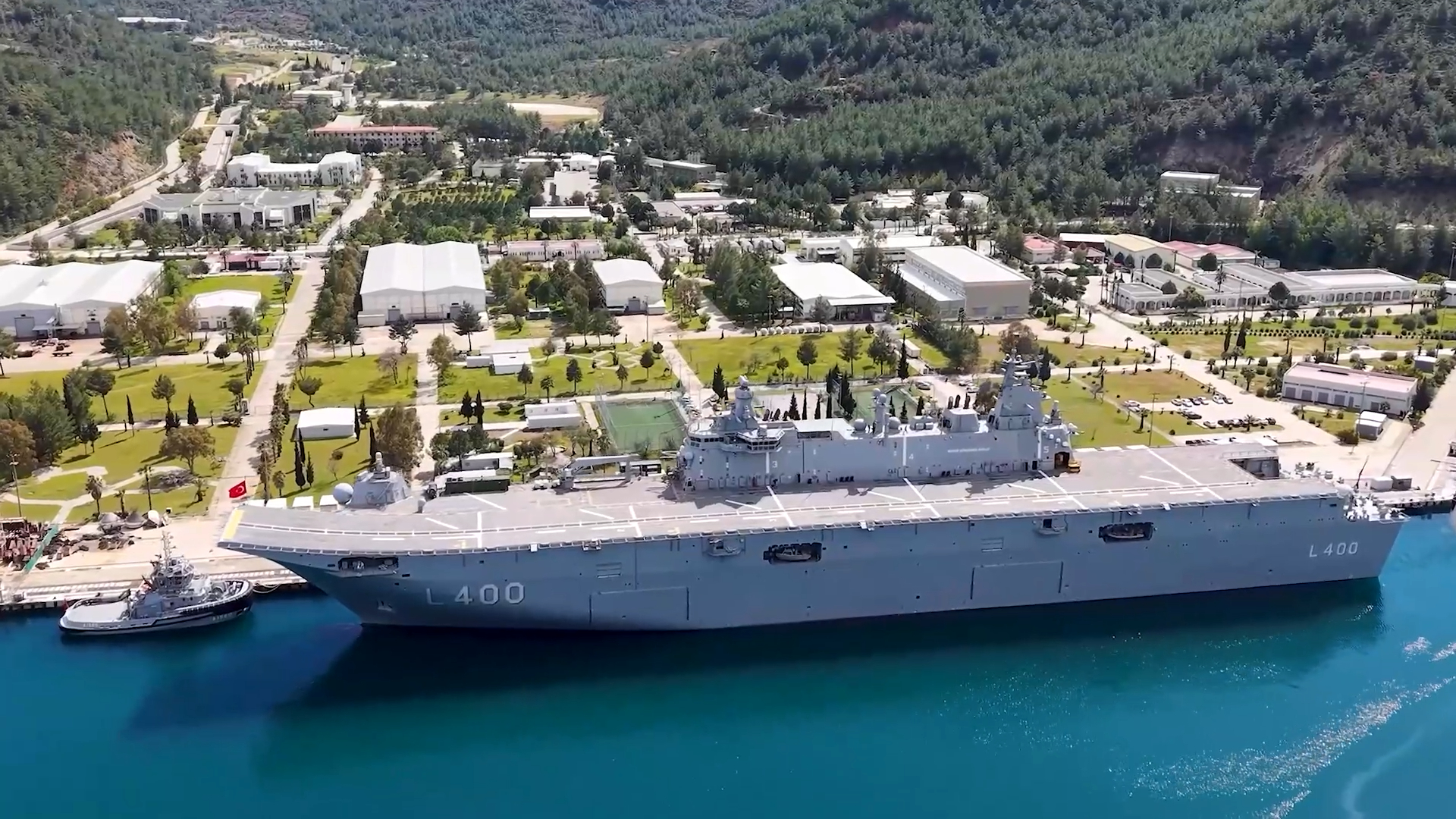
ASELSAN, the flagship company of the Turkish Defence and Aerospace Industry, has worked in the field of land-based EW systems since 1984, producing ESM & EA/ECM Systems for surface and subsurface naval platforms since 2006. ASELSAN’s first product in the field of Naval Platform Radar ESM Systems ARES-2N’s development efforts were launched in 2006 and the first system entered the service of the TNF for the first time onboard the first ADA Class Corvette, the TCG Heybeliada (launched in September 2008 and commissioned in September 2011). The ARES-2N was also selected for the RUZGAR Class FPBs in 2010 (with a unit price of around US$4 Million), for the second ADA Class Corvette TCG Büyükada in 2011, SANCAKTAR Class Landing Ship Tank (LST) ships in 2015, and DOGAN Class FPBs in 2019. The ISTIF Class Frigate TCG İstanbul and LHD Anadolu are also being fitted with ARES-2N(V)2 Radar ESM. Within the scope of the BARBAROS MLU Program the existing ARES-2N (RESM) System will be upgraded to ARES-2N(V)2 configuration. Contrary to the ARES-2N (RESM) System, which operates in the 2GHz to 18GHz frequency range, the ARES-2N(V)2 is able to cover 2-40GHz frequencies and can also be extended to cover 0.5-2GHz and it features new generation wide-band receivers improving instantaneous band width and receiver parameters. In order to extend its frequency coverage a pair of digital receiver (RX) antennas will be integrated (to be located just above the AREAS-2NC R-EA’s TX antennas) on the mast of the BARBAROS Class Frigate. According to ASELSAN, the ARES-2N(V)2 Radar ESM will feature detection of LPI emitters, high POI, low probability of false alarm and very high direction-finding accuracy.
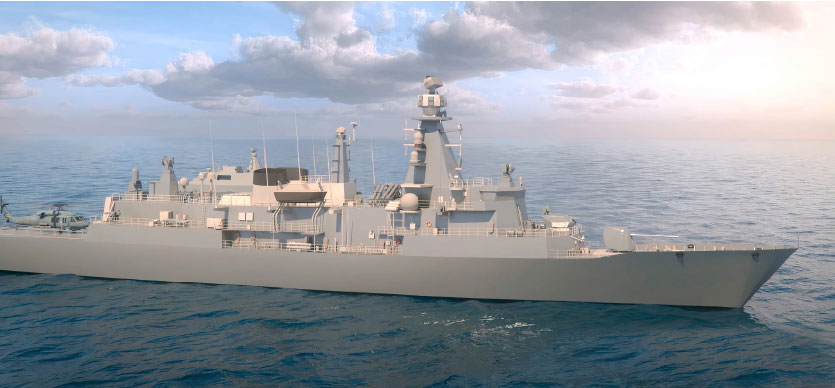
Meanwhile, contrary to expectations and what is seen in previously shared CGI images and scale models, the ISTIF Class Frigates will not feature the ASELSAN AREAS-2N Radar Electronic Attack System. The ships will be integrated with the AREAS 2NC Radar EA System and a pair of sub-band and high-band TX antennas (jamming heads/steerable transmitter units). Although there were both the AREAS-2N (2 x) and the AREAS-2NC antennas (4 x) on the scaled TCG Istanbul Frigate (F-515) model exhibited at the STM booth, during IDEF ’21, according to STM the AREAS-2N will not be onboard ISTIF Class Frigates. On the other hand, a company representative, whom I had the opportunity to talk with on this issue at the ASELSAN stand, underlined that the use of AREAS-2N R-EA System onboard the ISTIF Class never came to the fore.
The ARES-2N RESM System receives signals in the 2GHz to 18GHz frequency range. The threat library used in the system was prepared by the Turkish Navy Research Center Command (TNRC-C/ARMERKOM), and the Console, Antenna, Receiver and Software Algorithm were developed by Aselsan engineers. The name ARES comes from the abbreviation of “ASELSAN Radar ESM System”. The system has capabilities of detection, identification, classification, tracking, direction finding, geolocation, audible warning, platform related parameters and emitter parameters recording. The ARES-2N can detect radar signals in broadband and uses the monopulse direction finding technique in broadband with a high signal processing speed. The system has sensitive parameter measurement and unique emitter identification capabilities and is able to automatically track the emitters detected and determine their locations. With its broadband feature, ARES-2N is claimed to have a very high probability of detection. The high processing speed and sensitivity level ensures detection capability of low output power radars at long distance. Due to its band selectivity, the system is reported to be able to operate under CW or Pulse Doppler signals without the desensitization that broad frequency band systems are exposed to. ARES-2N has a multi-channel digital receiver and 360 degrees of azimuth coverage as well as capabilities of digital recording and target position indication on a digital map. The Mission Data File used in the system can be reprogrammed by the user. According to open sources, ARES-2N, which has 2° to 5° RMS direction finding (DF) sensitivity, during sea tests was capable of detecting LPI type radars precisely from a range of 30km and above thanks to its multi-channel digital receiver. The ARES-2N RESM onboard the ADA Class Corvettes has an antenna made of composite material and is covered with radar absorbing material. Having a diameter of 3.5m (receiver and processor units are placed inside the antenna structure) and a weight of over 1 ton, the antenna is deployed approximately 30m above sea level.
Under the MEHS-YAVUZ (National Electronic Warfare Suit for YAVUZ Class) Program, that launched with a contract awarded on February 4, 2013, and which was completed in December 2019, YAVUZ Class Frigates received a very limited upgrade mainly focused on the replacement of the existing Racal Cutlass B1 RESM System with ASELSAN’s ARES-2NC RESM System and the replacement of the existing decoy launcher with the Aselsan Decoy Launcher ASELDAS. Featuring a twin balcony antenna structure, the ARES-2NC (Naval Compact) has a broadband microwave digital receiver operating in the 2-18 GHz frequency range. The system is placed inside a composite radome that is corrosion resistant and waterproof and meets the MIL-STD-810F environmental and MIL-STD-461E electromagnetic induction/electromagnetic compatibility (EMI/EMC) standards. The MEHS National Electronic Warfare Suite was first integrated on the TCG Fatih in July 2017 and the comprehensive field performance tests, which lasted 3 weeks, were completed successfully in December 2017. The Harbour Acceptance (HAT) and Sea Acceptance Tests (SATs) of the second ship of the MEHS-YAVUZ Program, the TCG Yıldırım were completed in December 2017. The Harbour Acceptance Tests (HATs) of the TCG Yavuz, integrated with MEHS, were completed successfully in 2018. Integrated with MEHS in 2018, acceptance of the fourth frigate under the MEHS-YAVUZ Program, the TCG Turgutreis was completed in December 2019.
ASELSAN also developed the ARES-2SC RESM System to meet the requirements for the radar electronic support measure system to be used in submarines with national and modern technologies. In the first phase, the system was integrated into two AY Class (Type 209/1200) Submarines (TCG Doganay and TCG Dolunay) in 2013 and the ARES-2NS model of the system was selected for the New Type Submarine Project (REIS Class Type 214TN). The ARES-2SC performs functions such as detection, identification, classification and display (in the suitable format), automatic and manual recording and replaying capabilities towards radar systems broadcasting in the 2-18 GHz band along with radars that have a low probability of detection. The system, with 360 degrees of horizontal azimuth coverage, has a compact antenna resistant to high pressure, high technology broadband digital microwave receivers and high data processing capability. In order to reduce the acoustic signature, a liquid cooling system is used in the ARES-2SC, which meets the MIL-STD-810F environmental and MIL-STD-461E electromagnetic induction/electromagnetic compatibility (EMI/EMC) standards. With the pressure tight compact antenna structures, the high-tech wideband digital microwave receiver and sophisticated design enable the ARES-2SC to perform ES missions reliably and successfully within a short reaction time.
While the ARES-2SC with the single balcony compact antenna and wide-band microwave receiver structure for AY Class Submarines and ARES-2NS Radar ESM Systems with the twin balcony antenna structure for Type 214TN REIS Class Submarines are currently available, the ARES-2NCL RESM System (2-18GHz) with the single balcony compact antenna structure and combining both Radar Warning and ESM antennas for the FPBs has also been developed. ASELSAN also exported "ARES-2NCL Extended" RESM Systems to Pakistan. They are believed to be mounted/or already mounted on 2 platforms in the inventory of the Pakistan Navy. The Factory Acceptance Tests (FAT) of the systems and their delivery to Pakistan were scheduled to be completed in 2020. The ARES-2NCL Extended ESM System was previously evaluated for F-22P Zulfiquar Class Frigates and OPVs in the inventory of the Pakistan Navy. ASELSAN also delivers the ARES-2SC/P RESM System under the Pakistan Navy Agosta 90B MLU Project carried out by STM, the Main Contractor.
President of Defense Industries Ismail DEMIR announced on his social media account on September 19, 2020, that the ARES-2 Series Radar Electronic Support Measures (ESM) System of ASELSAN will be integrated into the Naval Forces Command (TNFC) Long Horizon Maritime Surveillance System. With his post, DEMIR shared the following information: “The production of ARES Series Radar Electronic Support Systems, which make significant contributions to the Turkish Armed Forces (TAF) for the detection and identification of threat radar emissions with high accuracy, continues. An ARES series Radar ES system will also be integrated into the Turkish Naval Forces Command (TNFC)’s Long Horizon Maritime Surveillance System, which plays a critical role in protecting our country's interests in the surrounding seas. As a consequence, the capabilities of our Naval Forces in radar and electronic warfare will increase!” The Long Horizon Project was initiated to create the tactical picture of the TNFC in the operation field and to transfer this tactical picture to the command-control centers. Phase-1 of the Project, consisting of 3 Suricate Mk2 Surface and Air/Coastal Surveillance Radars and 3 DR3000S RESM Systems, was delivered in early 2010. The Long Horizon System that was put into use in the Aegean Sea within the scope of Phase-I was then extended to cover the Eastern Mediterranean with 2 additional Suricate Mk2 Surface and Air/Coastal surveillance radars (4th and 5th radars), the procurement and installation activities of which were completed at the end of 2012. 5 Suricate Mk2 Radars supplied within the scope of the Long Horizon System were deployed at the related sites established in Gökçeada, Bozdağ, Kuşadası, Kaş and Kantara (TRNC). As far as I know, only 3 DR3000S Radar Electronic Support Measure (ESM) Systems of Thales were supplied within the scope of Phase-I, and further ESM requirements for an additional two sites (4th and 5th sites) were expected to be covered through local solutions.
In 2018 ASELSAN secured a contract to deliver an undisclosed number of AREAS-2NC Radar EA System to replace existing Scorpion-B EA Systems. According to the company, the prototype AREAS-2NC Radar EA System (on board YAVUZ Class TCG Fatih Frigate) and integrated with ARES-2NC ESM, was tested successfully during NATO NEMO - Naval Electro Magnetic Operations held in Antalya, Turkey during October 30 – November 4, 2017. The AREAS-2NC EA System features an RF solid state amplifier, DRFM-based techniques generator and mechanically directed stabilized dish antenna structure. Within the scope of the BARBAROS MLU Project, ARES-2N(V)2 RESM and AREAS-2NC EA Systems will replace the existing Cutlass B1 ESM, and Scorpion B EA Systems. According to ASELSAN, the AREAS-2C Radar EA System covers 8-18GHz frequencies (but is extendable to various frequency coverages) and is capable of applying both Coherent and Non-Coherent jamming techniques, and it has similar and even better capabilities than the Scorpion II Radar EA System. Thus, in action, with two jamming heads/steerable transmitter units, the DRFM capable AREAS-2NC is claimed to be able to handle up to 8 simultaneous threats per jamming head.
ASELSAN also developed the state-of-the art AREAS-2N Radar EA System, which features AESA arrays that are able to generate RF energy (electronic attack waveform) in a very tight beam format (pencil beam) to attack the RF systems threating the ship. Since the system can move and steer beams at computer speed literally within microseconds, and is able to put multiple beams out simultaneously, the AREAS-2N can engage multiple targets/threats at the same time. ASELSAN displayed the mock-up of the AREAS-2N for the first time at the IDEF ‘17 Fair. The LHD Anadolu will be fitted with a comprehensive integrated ESM and ECM suite including ASELSAN’s ARES-2N(V)2 (RESM) and new generation AREAS-2N Radar EA Systems. Featuring both wide and narrow band digital receivers, Digital RF Memory (DRFM, for modern coherent threats) and solid-state power amplifiers, the AREAS-2N will include a total of 4 AESA antennas (each covers a 90-degree field of view and incorporates over 1,000 T/R modules) of which two of them will be deployed at the port and the remaining two at starboard side of the ships. Thanks to its directional RF radiation capability, which enables deceptive and noise jamming techniques in a dynamic threat environment, the AREAS-2N Radar EA System is able to jam/deceive up to 32 threats simultaneously (8 threats per antenna).
ASELSAN displayed the Radar Jamming and Deception Simulator (RAKAS), based on BMC’s 6x6 10-ton tactical wheeled vehicle, for the first time during IDEF ‘19 in the open exhibition area. RAKAS is a simulator system designed for the training of radar and EW operators in the Turkish Naval Forces. According to the 2020 ASELSAN Activity Report, the RAKAS System has been inducted into the Turkish Naval Forces service. The RAKAS System was developed by ASELSAN under the RAKAS and MUKAS Procurement Project, the contract of which was signed on September 9, 2012. ASELSAN (MIKES at that time) was the Prime Contractor of the project, covering the design development and delivery of one RAKAS (for the Turkish Naval Forces Command) and one MUKAS (Communications Jamming and Deception Simulator) along with 10 mobile OPKAR Electronic Attack Systems (for the Turkish Land Forces Command). Defined by ASELSAN as “Turkey’s first Electronic Warfare Training Simulator” the transportable RAKAS can be deployed on both naval and land platforms. On the ship, RAKAS will be mounted on the flight deck. RAKAS consists of five important subsystems (working together in a single shelter) namely, the Radar Electronic Attack Simulator (RETSIM), Radar Simulator (RADSIM), Radar Electronic Support (RADED), RAKAS Communication Electronic Support, RAKAS Communication Electronic Attack and the STTS (Stabilized Target Tracking System).
The RETSIM subsystem enables the training of radar operators on ECM techniques by applying various predefined or user programmable electronic attack techniques. RADSIM enables the training of the target platform operational staff and radar operators by simulating the electromagnetic radiation of the threat radar system. The RADED subsystem can detect radar systems (including modern radars) in the inventory and provides the necessary parameters for the application of electronic attack to the radar systems (including modern radars) in the inventory and enables the training of radar operators on ECM techniques. The RAKAS Communication Electronic Support subsystem can conduct detection in the communication bandwidth, provide and transfer necessary parameters to the Radar Electronic Attack Simulator, for the application of Electronic Attack techniques. The RAKAS Communication Electronic Attack subsystem, on the other hand, enables the training of communication operators under the jamming and deception conditions and enables the evaluation of the jamming and deception techniques developed for threat/target communication systems. The STTS is composed of the Stabilized Directional Antenna Platform (SDAP) and Target Tracking System (TV-IR camera and DF antennas) which is installed on the SDAP. The SDAP is used for steering the TV-IR system, DF Antennas, RADSIM and RETSIM antennas to the target and tracking the target.
Though it is qualified as a Radar Jamming and Deception Simulator, in addition to radar jamming, deception, interception and position finding capabilities, with the help of the small MUKAS (RAKAS Communication Electronic Attack subsystem) installed within the system RAKAS is also capable of communication/interception, jamming and deception. Therefore, RAKAS is not merely a simulator but also a product that could be used operationally in the tactical field. At the same time, RAKAS is capable of simulating the radars operating at different frequency bands. RAKAS is a system that could be used against land, air and naval targets and with the help of its automatic tracking system (Stabilized Target Tracking System/STTS) it is capable of detecting and tracking air targets. The missiles threating the ship could be detected via the radar or the ESM system (RAKAS Communication Electronic Support subsystem) on the vehicle and they could be jammed via the antennas over the turret (Stabilized Target Tracking System/STTS). However, since RAKAS is a training simulator in its current configuration, there may be a need for more effective tactical systems to electronically attack the missile threat. However, with RAKAS, tests and performance measurements regarding the frequency band of a missile’s seeker in the TNF inventory can be performed.
The NAZAR Project, carried out with the participation of companies METEKSAN Defence and ALTINAY within the scope of the TNFC’s requirement, is a Directed Infrared Countermeasure (DIRCM) System that can be used against new generation IR/IIR guided missiles and contains a Thulium fiber laser with an output wavelength around 2µm. Thulium lasers are actually known as lasers with very low efficiency of converting energy into beams. For example, in industrial lasers, 100W of electricity can be converted into a beam of around 45W, while in Thulium lasers this value is usually around 4W.
As a Laser Electronic Attack (EA) System NAZAR DIRCM is a lower-power (power consumption/requirement is less than 10kW) laser system designed to blind adversarial electro-optical and infrared sensors by projecting a dazzler laser beam at them. The capacitor assembly required for the instantaneous energy that the Thulium laser system will need during firing is being developed by ALTINAY and tested at the prepared test stand.
The Phase-I Critical Design Phase of the NAZAR Project, the contract of which was signed between the Presidency of Defense Industries (SSB) and the Main Contractor METEKSAN Defence in 2016, was successfully completed in July 2019. The production of the first land based NAZAR Land System has been completed, and Acceptance Tests are currently ongoing. The system is expected to be delivered to the Turkish Naval Forces Command (TNFC) by the end of 2021.
Under the contract Main Contractor METEKSAN Defence will deliver Land, Naval and Lite versions of the NAZAR Laser EA System to the TNFC. The land-based version can counter the seekers of EO and IR-guided missiles in five different wavelengths. Considering the size of the system NAZAR Naval would only be suitable for large and powerful naval platforms. That is why from the design stage, the NAZAR Naval System was planned to be used in TF-2000 Destroyers. Both NAZAR Land and NAZAR Naval turrets feature 11 optical windows and operate in 5 different wavelengths. The NAZAR Laser EA System has its own tracking capability thanks to highly accurate LIDAR (Laser Imaging Detection and Ranging), a laser-based detection/tracking system on the turret. METEKSAN Defence will produce the NAZAR Naval in about 1.5 years. After the production is completed, this system is expected to be installed on the LHD Anadolu for testing purpose. The NAZAR Lite version is planned to be launched around mid-2023 and to be completed in 2024. The Lite version will operate in several wavelengths (depending customer decision) and will be lighter, so it can be installed on smaller surface platforms such as Fast Attack Crafts, Corvettes, or Frigates. Thanks to its longer engagement range compared to existing CIWS, the NAZAR Laser EA System can also be effectively used in simultaneous, salvo or swarm attack scenarios. It can quickly deal with multiple threats by engaging in succession. After blinding the first threat, it can immediately engage the second.
According to the information I have obtained, although the NAZAR DIRCM does not have the power to destroy the threat missile, it will have the power to dazzle the optic seeker. According to experts, 2W or more energy will be needed to break through the protective coatings and permanently damage the seeker head sensor. Since a HellFire II missile was used as a threat missile in the computer-generated image of NAZAR’s prototype, it was considered that the system may have dual-band capability. In this case, the NAZAR DIRCM can be used both against IR/IIR threats with a wavelength of 2 microns and against threats with a 4-slice laser detector (such as HellFire II) operating in a 1-micron wavelength.
Developed by TÜBİTAK MAM Materials Institute, the MAM-TFDLS is a ship-deployed anti-missile floating decoy system able to seduce, distract or confuse approaching RF guided missiles. It complements other active and passive soft-kill and hard-kill countermeasures onboard the ship. Floating Decoys are used as off-board passive targets against RF-based threats (radar-guided missiles, surveillance and fire control radars, etc.) as part of Electronic Countermeasures (ECM), especially as part of the naval electronic warfare concept.
Within the scope of the Floating Decoy and Launcher Development Project, which was initiated by the Turkish Ministry of National Defense (MoND) R&D and Technology Department with the support of TÜBİTAK and dated back to 2007, a floating decoy and launcher system able to generate a ship-like Radar Cross Section (RCS) was developed and produced by the TÜBİTAK MAM Materials Institute. This off-board surface floating decoy aims to be caught by the hostile radar/RF seeker by creating a ship-like RCS (able to generate greater RCS than the launching ship thanks to its broadband multi-reflector structure) and deceive the RF-based threat into following it instead of the main target (friendly surface element). The MAM-TFDLS Floating Decoy, which requires a small footprint for installation on the ship, can be inflated with nitrogen in a short time and can operate between -20 °C and 50 °C. The MAM-TFDLS Floating Decoy and Launcher System consists of 4 primary subsystems, including the Floating Decoy, Inflator System, Launcher System and Canisters, and the Electronic Control Unit. The MAM-TFDLS Floating Decoy and Launcher System, which was approved by the Turkish Naval Forces and issued a NATO Stock Number (NSN, DA 0296913), was successfully tested in the Naval Electro Magnetic Operations (NEMO) 2017 trials developed by NATO’s Above Water Warfare Capability Group (AWWCG) and hosted by the Turkish Naval Forces Command (TNFC). The scale model of the MAM-TFDLS Floating Decoy was displayed for the first time to visitors at the TÜBİTAK MAM booth during the IDEF ‘17 Exhibition held in May. A TÜBİTAK MAM official, whom I had the opportunity to meet with at the Exhibition, stated that the system successfully deceived the fire control radar of the ship, which was acting as the hostile, and the floating decoy got locked instead of the friendly ship