Turkish Armed Forces` Medium and Heavy Class Helicopters Requirement
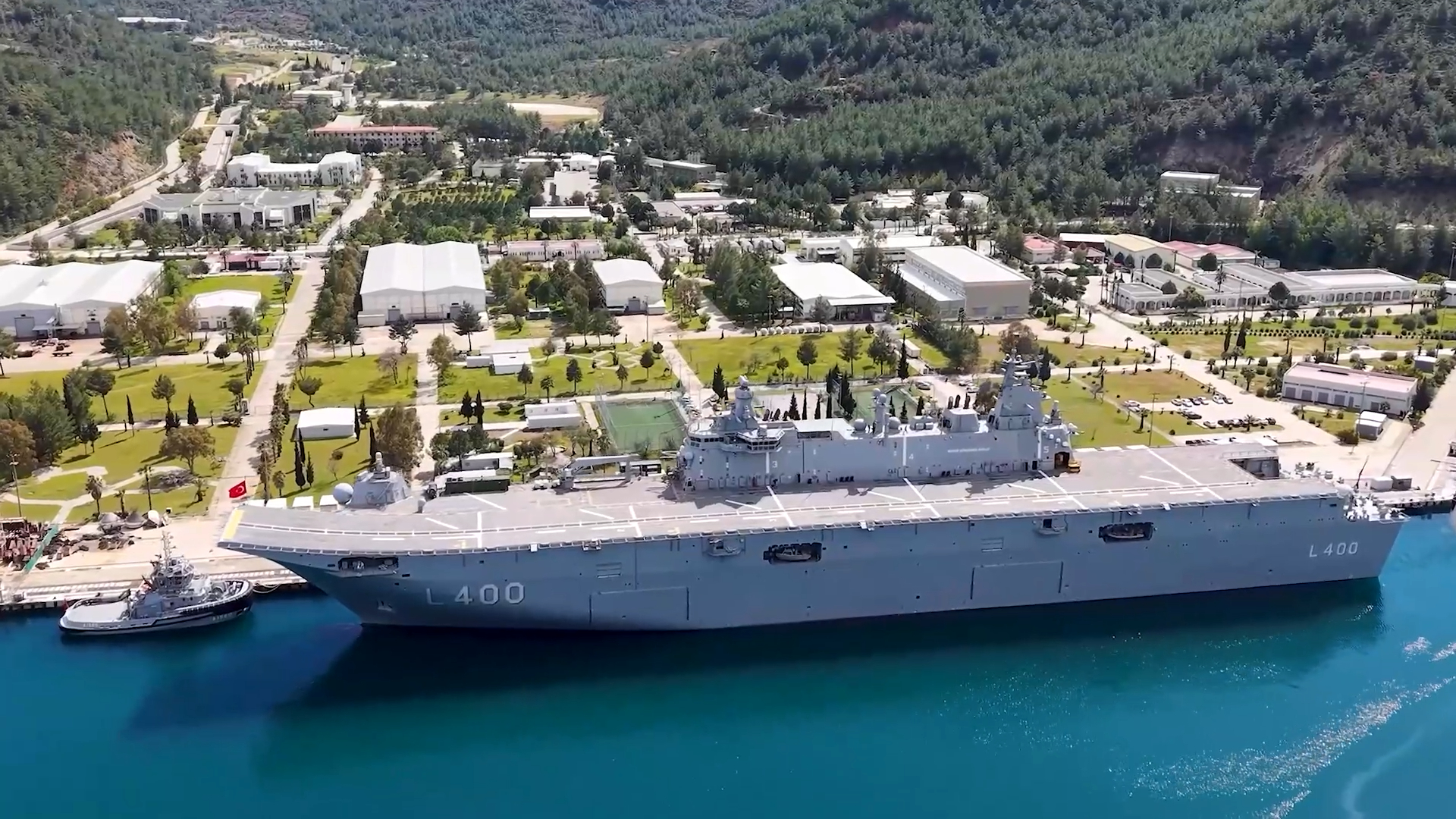
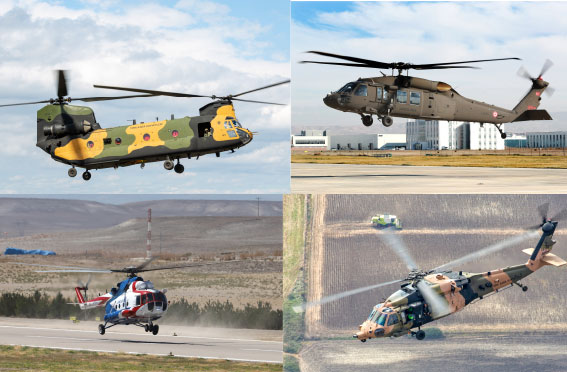
Türkiye's extensive and mountainous terrain creates a critical need for airborne troop operations to ensure rapid deployment of forces. As a result, the use of Heavy Lift Helicopters, which are renowned for their high carrying capacity, as well as Utility Helicopters, has become indispensable. The significance of this requirement is further heightened by the fact that counter-terrorism operations have been conducted in mountainous areas with limited accessibility for nearly 40 years. The Turkish Armed Forces faced a shortage prior to the inclusion of CH-47Fs in their inventory during the second half of the 2010s. The CH-47D helicopter from the US Army had to be deployed to rescue a crashed S70A helicopter. Similarly, providing logistical support to forward bases in mountainous areas or outposts with limited ground access proved to be a challenging task. Particularly for heavy transportation requirements for internal security or cross-border operations, materials like artillery had to be dismantled and transported in pieces using S70As. Although the inclusion of 19 Mi-17 helicopters procured from Russia in the Gendarmerie General Command's inventory by the end of 1995 partially mitigated this shortage, the demand for Heavy Lift Helicopters has consistently remained within the Turkish Armed Forces. With the introduction of TCG Anadolu to the Turkish Naval Forces, overseas force deployment becomes a significant aspect to consider. Helicopters will undoubtedly play a critical role in the force deployment operations conducted with TCG Anadolu. The absence of a Utility Helicopter within the Turkish Navy further emphasizes the urgency of this necessity. In surface operations, Heavy Class Helicopters, known for their multi-engines, long-range capabilities, and high carrying capacity, offer more versatility compared to Medium Class Utility Helicopters. Heavy Class Helicopters, which were previously regarded as a requirement only for the Land Forces Command, are now recognized as an essential need for the Naval Forces Command as well.
Heavy Lift Helicopter Procurement Projects
Türkiye's efforts to acquire heavy lift helicopters began in the late 1980s. A comprehensive report titled "Türkiye's Long-Term Military and Civil Helicopter Needs" in 1987 outlined the requirement of 720 helicopters of various types to fulfill the needs of the Turkish Armed Forces, public institutions, and civilian users. Among these needs, 41 helicopters were identified under the heavy lift helicopter category, consisting of 37 military helicopters and four civilian helicopters. Initially, priority was given to utility helicopters based on the report's requirements. Negotiations with Boeing for the procurement of four CH-47D Chinook helicopters commenced in 1994. However, the negotiations conducted without a formal tender drew criticism, which resulted in the decision to also request proposals from Sikorsky. The project was put on hold in 1995 due to a government crisis, and a formal tender was launched in 1996. The United States participated in the tender with the Boeing CH-47D and Sikorsky CH-53E models, while Russia offered the Mi-26T helicopter. In November of the same year, Lieutenant General Tuncer KILINÇ, the Undersecretary of the Ministry of National Defense at the time, announced that a long-term loan package of US$135 million would be utilized to purchase four CH-47D Chinook helicopters from Boeing. Unfortunately, this acquisition could not be completed due to the covert embargo imposed by the United States during that period.
In early 1997, a new tender was initiated for the procurement of 20 helicopters with a budget of US$500 million. All three candidate companies submitted their bids, but the tender was canceled in October of the same year. Another tender was launched in 1999, and after the evaluation process, a contract worth US$350 million was signed for the purchase of eight S-80E (CH-53E) helicopters on June 6, 2000, between Sikorsky's President, Dean BORGMAN, and Lieutenant General Şener ERUYGUR, the Undersecretary of the Ministry of National Defense. However, the project faced delays due to political issues in the United States, and it couldn't be realized because of the economic crisis in Türkiye in 2001. In April 2001, Sikorsky was informed of the project's cancellation.
On June 30, 2006, the Defense Industry Executive Committee decided to initiate a new heavy lift helicopter project for the Land Forces Command. On January 7, 2007, a Request for Information (RFI) was sent to Boeing (CH-47F), Sikorsky (CH-53E), and Mil (Mi-26T). After receiving the responses on January 15, an official Letter of Request (LoR) was sent to the US government in July of the same year, specifically for the procurement of 10 CH-47F Chinook helicopters manufactured by Boeing. This initiated the Foreign Military Sales (FMS) process.
The initial requirement for 10 units was subsequently expanded to 14 units, with 10 allocated for the Land Forces and 4 for the Special Forces. The Letter of Offer and Letter of Acceptance was signed by the Turkish and US governments on July 9, 2011. However, the quantity specified in the contract was later reduced from 14 to 6 helicopters, with 8 units as an option. Out of the final order, 5 helicopters were allocated for the Land Forces, and 1 for the Special Forces.
At the Defense Industry Executive Committee meeting on January 7, 2015, a decision was made to procure a second package of 6 CH-47Fs. However, the final purchase consisted of 5 CH-47Fs, with 1 helicopter included to compensate for the delay in Boeing's E-7T project. One helicopter was delivered to the Land Forces, while the remaining 4 were allocated to the Special Forces. The contract for these helicopters was signed between the US Army and Boeing on September 14, 2015. The initial batch of 6 helicopters was delivered in 2016, and the remaining 4 helicopters were delivered in 2019.
Domestically Produced Heavy Lift Helicopter on the Horizon
Heavy Lift Helicopters are one of the most important force multipliers of military forces with their high carrying capacity and long endurance capability. Therefore, they have been extensively utilized for various military purposes such as transportation, search and rescue, and troop transport, as well as civilian applications including evacuation and material transportation. However, meeting the demand for Heavy Lift Helicopters has been a longstanding challenge, as our country has struggled to fulfill this requirement in a timely and sufficient manner. Despite recognizing the need for Heavy Lift Helicopters long ago, it has taken a considerable amount of time to address this need, and unfortunately, the desired number of helicopters has not been achieved. Given the current economic and political circumstances, it is unlikely that this requirement can be promptly fulfilled through foreign acquisitions. Therefore, the most viable option available to us appears to be the development of medium and heavy-class helicopters domestically to meet this requirement.
The 10-ton T925 Utility Helicopter, currently under development by Turkish Aerospace, represents the sole option to fulfill the heavy lift helicopter requirement. T925 will share a common powerpack with the T929 ATAK-II helicopter and is expected to be equipped with TV3-117VMA engines manufactured by Ukraine Motor Sich. Incorporating modern avionics systems based on those used in the T625 GÖKBEY helicopter, the T925 aims to streamline the development and production process while providing ease of maintenance, repair, and overhaul for users. With an estimated take-off weight of 11 tons, the T925 will have the capacity to carry up to 22 personnel and accommodate large cargo, including cannons and military vehicles, in its ramped cargo compartment. The first flight of the T925 helicopter is planned for 2024, with delivery to relevant users scheduled for 2026.
Recently, it has been reported that the General Directorate of Forestry and Turkish Aerospace will enter into an agreement for the supply of 10 helicopters with a water carrying capacity of 4 tons. The total value of the contract is estimated to be US$208 million. According to the announcement, these helicopters will be based on the ATAK-II platform, indicating that they are likely to be the T925 helicopters. Therefore, the General Directorate of Forestry is expected to be the first customer to acquire the T925 helicopters.
Turkish Aerospace President and CEO Prof. Temel KOTİL made the following statement on A Haber "Gündem Özel" broadcast in February 2022: “The T925 helicopter is capable of landing on ships. It will also land on TCG Anadolu. Once integrated with TCG Anadolu, it is expected that the T925 will be utilized by all branches of the Turkish forces. To facilitate landing on the ship, the wings of the helicopter must be folded, enabling it to fit within the limited space available on the ship. The tail also needs to be folded, allowing for the use of ship’s elevator system.”
In an interview conducted in April 2021 and published in our 107th issue, Rear Admiral Alper YENİEL, Commander of Naval Air Command, stated the following: "The Medium Lift Helicopter Project and the Airborne Early Warning (AEW) Helicopter Project are progressing simultaneously. We plan to gradually deliver the first 4 out of a total of 26 Multi-Role Medium Lift Transport and AEW Helicopters under this project, starting from 2024 until 2030." By combining both statements, it can be inferred that the Turkish Navy is anticipated to be the second user of the T925.
T925 Gains Importance in Utility Helicopter Requirement
Under the Turkish Utility Helicopter Program (TUHP), which aims to meet the utility helicopter requirements of the Turkish Armed Forces and public institutions through licensed production in Türkiye, a contract was signed on February 21, 2014, between the Defense Industry Agency (formerly known as Undersecretariat for Defense Industries) and the main contractor Turkish Aerospace (TUSAŞ). The contract included the delivery of 109 T70 model helicopters, as well as the supply of spare parts, ground support equipment, technical documentation, and the provision of Depot Level Maintenance (DLM) capability (covering DLM spares, DLM ground support equipment, and DLM technical documentation). Under the TUHP, which came into effect on June 7, 2016, the delivery of T70 helicopters started on December 13, 2022. The initial delivery was made to the Gendarmerie General Command, followed by subsequent deliveries to the General Directorate of Forestry, the Land Forces Command, the Special Forces Command, and the Air Force Command on January 11, 2023. The remaining 12 units of the first package of 38 units, for which production approval has been received from the US government under TUHP, are planned to be produced in 2023 and 21 units in 2024, completing the production process of the first package. Regarding the second package of T70 Utility Helicopters, Sikorsky is currently engaged in negotiations with US authorities to obtain production approval. After 2024, if the required production approval cannot be obtained from the relevant authorities, there will still be a continued need for Utility Helicopters, primarily by the Land Forces Command and other users. Consequently, the production of the T925 becomes even more significant in fulfilling the Utility Helicopter supply requirements.
The long-standing need of the Coast Guard Command for long-range and high-capacity search and rescue helicopters can also be fulfilled through the marinized version of T925. Consequently, there will be a substantial demand for T925 in Türkiye, and the investment and R&D costs to be incurred will be covered. Given these requirements, it is recommended that Turkish Aerospace prioritize the T925 Heavy Lift Helicopter, which should enter the national inventory with greater urgency compared to its counterpart, the T929 ATAK II.
Turkish Aerospace has built upon its rotary wing expertise, initially starting with the assembly of COUGAR helicopters. This expertise further advanced with the production of the T129 ATAK, and the experience gained from these endeavors contributed to the design of the first indigenous helicopter, the T625 GÖKBEY. The successful completion of the T625, which is now ready for serial production and delivery, has provided valuable experience for the development of the T925 Heavy Lift Helicopter. The steady progress and transformation of defense industry endeavors into indigenous products are indeed significant accomplishments for our country. I hope that the T925 will further elevate this success to new heights