Türkiye Exports High-Tech Defence Products Even to NATO Countries
Turkish exporters continue to increase high technology products’ share in overall exports thanks to the country’s research and development (R&D) activities as well as government support. According to the provisional data, produced with the cooperation of the Turkish Statistical Institute and the Ministry of Trade, while the ratio of high-technology products in manufacturing industries exports was 3,4% during January 1st – December 31, 2022, it rose to 3,7% in January-May 2023 period. It was 2,9% during the same period last year. The high-technology products’ share in Türkiye’s overall exports rose to 4% in March 2023 and realized 3,6% in the first three months of 2023, from 2,8% during the same period last year according to the Turkish Statistical Institute’s data. Türkiye gives incentives and support, including tax and premium discounts, to companies active in producing high-technology and contributes to reducing imports.
Sectors with the highest value-added exports were it was, defence and aerospace industry, ready-to-wear and apparel, leather and leather products, tobacco and automotive sectors. In particular, the positive export performance of the defence and aerospace industry and ready-to-wear/apparel sectors made a great contribution to the export of Türkiye’s value-added and high-tech products. In 2022 while the export value per kilogram in the defence and aerospace sector reached over US$50, this value was around US$15 in ready-to-wear/apparel sector. In automotive sector, Türkiye’s largest export field, the value per kilogram was US$7.
In 2022, Turkish Defence & Aerospace Industry has achieved remarkable success by exporting 228 different types of products to 170 countries, realizing an annual revenue of US$ 12.2 Billion, reaching an all-time peak in defence exports with US$4.396 Billion worth of export sales, and setting new record R&D investments by making US$2,061 Billion investment, which represents an increase of 26% compared to the previous year and a 40-fold increase in R&D investments compared to 20 years ago. In 2023, Türkiye will spend TRY 4.289 Billion for R&D activities in defence field. According to the Defence and Aerospace Industry Exporters’ Association (SSI), during January 1st – December 31st, 2022 Turkish Defence& Aerospace Industry exports produced an added value of US$55.9 per kilogram, the highest figure among other sectors excluding the jewelry sector. As the Turkish Defence and Aerospace Industry’s value-added and branded exports increase, the value of Defence and aerospace products will increase even more. The affordability of made-in-Türkiye arms, flexibility of Türkiye’s arms exports policy, and the country’s willingness to run technology transfers for high-tech products remain Türkiye’s advantages compared with its Western competitors.
After investing billions of US Dollars in last 10 years for the development of a home-grown defence capability and to nurture a defence industry, efficient and technologically proficient to perform indigenous design and production of military equipment which would easily meet the specific requirements of the Turkish Armed Forces (TAF) and the Security Forces, SSB is now preparing to receive a recompense for its works in 2023, when the 100th anniversary of the Republic will be celebrated. For 2023, Turkish Defence Industry Agency (SSB) has set an export target of US$6 Billion. The export figures for the Turkish Defence& Aerospace Industry in May 2023, which were announced by the Turkish Exporters Assembly (TİM) in early June, further validate this anticipation.
According to the export data in May 2023, the Turkish Defence and Aerospace Industry achieved exports totaling US$554,396 Million. While there was increase of around 24% compared to the previous month's exports valued at US$418,133 Million and a 68,8% increase compared May 2022 (US$330,384 Million), the total export value for the first five months of the year has reached a new high of US$2,044,436 Billion, marking a 22,5% increase compared to the same period in the record-breaking year of 2022 (US$1,668,249 billion). The sector's performance for the first five months is as follows: US$280,685 Million in January, US$303,103 Million in February, US$505,979 Million in March, US$418,133 Million in April and US$554,396 Million in May. According to data released by the TIM, the total weight of products exported by the Turkish Defence & Aerospace Industry during January 1st – May 31st of 2023 was around 39,140 tons. So, the average price of Turkish Defence & Aerospace export products has reached to US$56,57 per kilogram during the first five months of 2023. The average price of Turkish export products was around US$1,44 per kilogram in 2022, US$1,2 per kg in 2021, US$1,32 per kilogram in 2018, US$1,28 per kilogram in 2017 and US$1,26 per kilogram in 2016 and the average price of defence exports was US$55,9 in 2022, US$48,4 in 2021, US$46,59 in 2018, US$39,71 in 2017 and US$27,72 in 2016. The per kilogram export value of ‘T129 ATAK Helicopter’, which is one of the high added value, indigenously developed platform solutions of the Turkish Defence & Aerospace Industry, is around US$10,000.
As one of the high-tech products of the Turkish Defence and Aerospace Industry, UCAVs have significant share in defence exports. In 2021, UAV/UCAV export revenue exceeded US$750 million and in 2002 it reached to US$1,015 Billion. As of June 2023, BAYKAR Technology has exported the BAYRAKTAR TB2 UCAVs to 30 countries (including NATO member countries Poland, Romania and Albania and signing a US$370 Million valued contract in June 2023 for the supply of 18 BAYRAKTAR TB2 UCAVs, 1,800 Smart Munitions and 3 Ground Control Stations, Kuwait becomes the latest customer), while the AKINCI UCAV has been exported to six countries. TUSAS, on the other hand, exported ANKA UCAVs to 6 countries and AKSUNGUR UCAVs to 2 countries and LENTATEK has exported KARAYEL-SU to 1 country so far.
With these sales during recent years Türkiye has become one of the world's leading players in the field of UAVs/UCAVs. International demand for Turkish UCAVs soared after they took active part in TAF operations and conflicts in Syria, Libya and Azerbaijan and interest in them increased further following their successful deployment by Armed Forces of Ukraine to thwart Russian forces. Moreover, UCAVs sales also helped Türkiye to improve its political ties with Turkic states such as Kazakhstan, Kyrgyzstan, Turkmenistan, and Azerbaijan, and even establish new ties with various other countries such as Poland, UAE, Burkina Faso, Angola, Chad, Nigeria and Tunisia.
In 2022, significant progress was made in a series of projects within the Turkish Defence and Aerospace Industry, and the targets were achieved to a large extent. Armed UAVs, naval platforms, land vehicles, missiles, and electronic warfare systems, which were designed and produced with domestic and national resources, entered service with the Turkish Armed Forces and the Security Forces, further strengthening their capabilities in the field and were successfully exported to friendly and allied countries. In this context, for example, the first T129B ATAK Helicopter, HÜRKUŞ-C Light Armed Reconnaissance/Attack Aircraft, and AKSUNGUR and BAYRAKTAR AKINCI UCAVs were exported, while delivery of the KAPLAN MT Medium Weight Tank to Indonesia was initiated. In addition, the first export contracts were signed for the KHAN Tactical Ballistic Missile System and the development of new medium and high-altitude air defence missiles based on the HISAR Series and SİPER Blok-0/I Air Defence Missiles for the TriSula Air Defence System.
The year 2023, when the 100th anniversary of the Republic will be celebrated, has so far witnessed the debuts of several high-tech made-in-Türkiye products such as; the KAAN Turkish Fighter (MMU/TF-X), HURJET Advanced Jet Trainer and Light Combat Aircraft, T625 GOKBEY Light Transport/Utility Helicopter, T929 ATAK-II Heavy-Class Attack Helicopter, TUSAS ANKA-III and BAYRAKTAR TB3 UCAVs, as well as first flight tests of Electronic Support Pod (EHPOD) and Electronic Warfare Pod (EHPOD) on F-16C Block 40 aircraft within the scope of EW Certification Test Campaign, the delivery of first two prototype F-16 Block 30TM aircraft (one in single seat and the other is in twin-seat configuration) upgraded under the OZGUR Avionics Modernization Program to the Turkish Air Force (TurAF), first firing tests of CAKIR Cruise Missile from AKINCI UCAV, KUZGUN-KY Missile from MARLIN Armed Unmanned Surface Vehicle (AUSV) and the deliveries of the first two new production ALTAY Main Battle Tanks to the Land Forces Command for testing purpose. Moroever, TCG Anadolu Multi-Purpose Amphibious Assault Ship (LHD)’s commissioning ceremony, TCG Istanbul Frigate (F-515)’s flag hoisting ceremony and first sea trials, and launching of Türkiye’s first sub-meter high-resolution earth observation satellite IMECE into space. All conducted during the first half of 2023 within the scope of indigenous defence and aerospace programs launched under the coordination of the Turkish Defence Industry Agency (SSB). In addition, the first firing test with the SIPER Block II Long Range Air and Missile System, the first live firing tests of ATMACA Anti-Ship Cruise Missile (ASCM) and SOM Air Launched Cruise Missile (ALCM) with the Kale Arge’s KTJ-3200 Turbojet Engine, and first firing test of the KARA ATMACA Surface-Surface Cruise Missile with Kale Arge’s KTJ-3700 Turbojet Engine will be held for the first time in 2023. Also, TCG Orucreis (F-245), the first ship modernized under the BARBAROS Mid-Life Upgrade (MLU) Project, and the TCG Pirireis (S- 330) Submarine, first of Type 214TN REIS Class Submarines, will be inducted into the Turkish Naval Forces inventory. Moreover, ASELSAN’s MURAD AESA Radar will be integrated into the AKINCI UCAV for the first time and will be tested during by the end of 2023.
UCAVs (ANKA-III and KIZILELMA)
Thanks to the SSB's foresight and timely efforts, Türkiye has become one of the few countries that grasped the importance of UAVs early on. Thanks to the sector companies that have successfully accomplished their tasks and responsibilities, the Turkish Defence & Aerospace Industry has reached the level where it can meet the UAV/UCAV needs of both the TAF and Security Forces, as well as friendly and allied countries, with high-tech, cost-effective and combat-proven solutions that meet NATO standards.
Within the scope of the ANKA-III Turkish Unmanned Combat Aircraft/Combat Unmanned Aerial System (abbreviated as TİSU/MİUS in Turkish), Program, which was carried out by Turkish Aerospace (TUSAS) via utilising own resources and with approximately 200 engineers, the first flight with a scale model was carried out in June 2022.
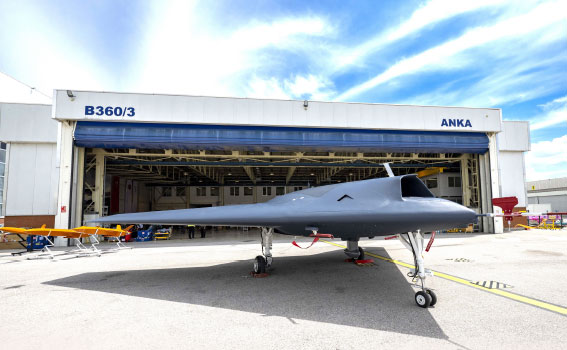
The name ANKA-III was announced to the public for the first time in December 2022 by Vice President Fuat OKTAY and the first full-scale prototype of ANKA-III TİUS/MİUS was publicly unveiled for the first time during the “Century of the Future Launching Ceremony” held on May 1, 2023 at TUSAS facilities in Kahramankazan, Ankara. The images of the first taxi test were shared with the public on April 25, 2023, high-speed taxi tests with ANKA-III commenced on May 2, 2023 and a test with 95 knot ground speed conducted on June 19. The first flight of the ANKA-III unmanned combat air vehicle (UCAV) was supposed to take place by the end of June 2023. Following the maiden flight, the maneuvering envelope will be expanded in subsequent flights according to a specific timeline, and weapon integration tests will be conducted within 2023. Meanwhile, TUSAS is nearing the completion of the production of the second ANKA-III prototype, for which part production and final assembly activities began in the past months. TUSAS will conduct the flight test program with these two ANKA-III prototypes, which are designed to serve as backups for each other and are identical to each other. This way, even if a technical issue arises in one of the aircraft, the flight test program can continue without interruption. Furthermore, while ground tests (during the weapon integration phase) are performed with one prototype, live-fire flight tests can be conducted with the other. This will accelerate the flight test program and ensure that ANKA-III is ready for delivery in 2024.
ANKA-III UCAV, which is an indicator of the production quality and engineering capability gained by TUSAS through its 5th Generation aircraft programs such as the F-35 JSF and KAAN Turkish Fighter, is built on the avionics architecture of ANKA and AKSUNGUR MALE UCAVs. Moreover, the existing ground systems used in the ANKA and AKSUNGUR Programs were used as a baseline in ANKA-III, and additional new software systems have been integrated into it. Consequently, ANKA-III UCAV can be controlled with the same ground stations as ANKA and AKSUNGUR, paving the way for the complementary use of these three systems.
With ANKA-III, the Turkish Aerospace Sector has designed the first-ever flying wing aircraft since 1948 and has brought it to the flight-testing phase. Having an extremely flat structure with no vertical tail or control surfaces, ANKA-III potentially has a low radar cross-section (RCS). The potential low radar cross-section due to the body design is supported by the complete composite construction, as well as the use of Radar Absorbent Materials (RAM) and RAM-coated special paint, ensuring ANKA-III's low Radar Cross-Section (RCS) values. Furthermore, the turbofan engine exhaust, which is currently exposed, will be enclosed within the fuselage in the future, and the hot air gases emitted from the exhaust will be combined with cold air from the air intake to suppress the infrared signature. This way, in addition to reducing the RCS, ANKA-III's infrared (IR) signature will also be reduced, making detection difficult with Infrared Search and Track (IRST) systems and thermal cameras.
Although aircraft with low RCS values have low visibility on radar, flying wing designs with 'stealth' characteristics lack traditional stabilizing surfaces and associated control surfaces, resulting in natural disadvantages such as instability and difficult controllability. However, with today's technology, a digital fly-by-wire flight control system, which is a computer-assisted system (the movement of control surfaces is handled through actuators with the help of a lever called a side-stick, there is no physical connection between the control surfaces and the side-stick lever), minimizes most of the aerodynamic disadvantages inherent in flying wing designs, allowing efficient and effective production of long-range bomber aircraft.
The algorithms used within the ANKA-III Program have been developed and tested on ANKA-III’s 200 kg scaled model demonstrator, which also has a flying wing design and made its first flight in June 2022. The scaled model took off and landed autonomously with the assistance of autopilot, without any human intervention, and autopilot tests and relevant software were carried out and developed using this scaled demonstrator. The autopilot tests conducted with the scaled model have established a level of confidence in the flight control system used in ANKA-III. Following the completion of tests with the scaled model, the production of the first ANKA-III prototype began in the second half of 2022 based on the lessons learned. TUSAS (Turkish Aerospace) also has conducted a series of wind tunnel tests for ANKA-III and has continued with flying wing (delta wing geometry) configuration based on the results.
Since its debut at at TUSAS facilities in Kahramankazan, Ankara on May 1, 2023, the jet powered ANKA-III UCAV, as the TUSAS’ flagship product of unmanned combat system, has been receiving high attention. With a length of around 9,5m, a wing span of around 12,5m, height of 2,8m, an empty weight of 3,500kg and MTOW of 6,500kg the ANKA-III UCAV, both in terms of appearance and concept, bears a resemblance to nEUROn UCAV, which Türkiye was interested in in the early 2000s. According to open sources the nEUROn has a total length of 9,44m, height of 3m, wingspan of 12,4m, an empty weight of 4,900kg and a maximum take-off weight of 7,000kg.
As a stealth, flying wing UCAV powered by a AI-322 series turbofan engine the ANKA-III is a high-altitude, long-range and high-speed UCAV capable of conducting deep-strike, long-range reconnaissance and patrol missions in hostile environments. ANKA-III is able to carry a payload of 1,200 kg (2x650kg maximum) in two internal weapon bays and a total of five external hardpoints (two on each wing and one underbelly). Each wing has two external hardpoints; the inner ones can carry 650kg, while the outer ones can carry 100kg. The internal weapon bays (IWBs) also have a capacity of 650kg each. The underbelly external hardpoint has a carrying capacity of 1,000kg. The IWBs and inner underwing stations can carry Mk-82 and Mk-83 series general-purpose or guided munitions. ANKA-III can carry SOM-J and Mk-84 smart or general-purpose munitions (up to 1,000kg weight) on the underbelly weapon station. The IWBs can hold a total of 8 TOLUN Guided Munitions (similar to Small Diameter Bomb/SDB) or KUZGUN Guided Munitions. Additionally, TUSAS' newly developed SUPER SIMSEK High-Speed Target Drone, expected to cunduct its first flight test in July 2023, can be carried on the underwing hardpoints (inner ones). The ANKA-III prototype debuted at the Century of the Future Launching Ceremony” held on May 1, 2023, featured SUPER SIMSEK mock-ups on the underwing hardpoints. It has a cruise speed of 250 knot (Mach 0.7) at an altitude of 30,000ft. The ANKA-III can reach a maximum altitude of 44,000ft (its service ceiling is 40.000ft) and cruise as fast as 425 knot at 30,000ft, with a maximum flight time of 10 hours, and an estimated combat radius of 2,000 km.
The single-engine ANKA-III UCAVs prototype, which have a maximum take-off weight of 6.5 tons, is powered by the AI-322 series low bypass turbofan engine produced by Ukrainian company Ivchenko Progress. The AI-322 Turbofan Engine has a length of 1,960mm, a width of 640mm (fan diameter 624mm), weighs 440kg, and features an axial compressor design. It consists of a two-stage fan at the front (rotating at low-pressure speed), followed by eight high-pressure compressor stages. Behind the combustion chamber, there is one high-pressure (HP) and one low-pressure (LP) turbine. The combustion chamber is located between the compressor and the turbine. The HP turbine drives the compressor, while the LP turbine drives the fan. The AI-322 Turbofan Engine produces a thrust of 2,500kgf (5,511lbf/24.5kN), whereas the AI-322-30 Turbofan Engine, weighing 534kg, has a thrust capacity of 3,000kgf (6,614lbf/29.4kN)
During the production phase, the ANKA-III UCAVs will be powered by the TF-6000 Turbofan Engine, which is currently under development by TEI using the company's own resources. TEI aims to start the final assembly of the first TF-6000 prototype in 2023. With a dry thrust of 6,000lb (2,721kgf/27kN), TF-6000 will be the largest domestically developed turbofan engine in Türkiye. TEI has designed the TF-6000 Turbofan Engine to be easily interchangeable with the AI-322 engine, using its own resources prior to the start of the ANKA-III program. This design allows for easy replacement of the TF-6000 engine with the AI-322 engine on both ANKA-III and KIZILELMA without significant technical difficulties in terms of mounting points, length, diameter, and other aspects.
The TF-6000, which is a military turbofan engine with a low bypass ratio and an axial compressor design similar to the AI-322, features a single shaft at the front and a two-stage axial fan (rotating at low-pressure speed). Behind the fan, there are six compressor stages. After the compressor stages, the combustion chamber begins. Immediately behind the combustion chamber, there are two turbine stages: a high-pressure (HP) turbine at the front and a low-pressure (LP) turbine at the rear. Compared to the AI-322, the TF-6000 has fewer compressor stages, making it lighter and providing higher thrust. It also incorporates more advanced technology. For example, both the fan and compressor stages in the TF-6000 are manufactured using "blisk" technology. This means that instead of manufacturing the blades separately and stacking them onto a disk, the disk and blades are produced as a single piece. Additionally, the turbine blades are manufactured using single-crystal casting technology to withstand high exhaust gas temperatures and operate at extremely high temperatures. TEI has utilized second-generation technology in the production of single-crystal blades, while ongoing research is being conducted on the production of third-generation single-crystal turbine blades.
ANKA-III Brief Information
The ANKA-III UCAV, which was developed as a Loyal Wingman that can perform joint missions with the KAAN Turkish Fighter, is made entirely of composite materials.
Although the first ANKA-III UCAV prototype has reserved space for internal weapon bays, they are not currently active.
The ANKA-III UCAV can carry a payload of 1,200kg.
ANKA-III is expected to be ready for delivery between 6 months to 1 year after the first flight test.
No weapon integration has been performed on the ANKA-III yet. Payload integration studies will commence on the ANKA-III prototype after the first flight.
The ANKA-III is capable of deploying all munitions that can be used by the ANKA and AKSUNGUR. Additionally, new munition and payload integrations will be carried out along with a targeting system for the ANKA-III UCAV.
The local content rate for the ANKA-III is very close to 100%, excluding the engine. The flight control computer, links, software, and all critical systems are domestically designed and produced.
The current ANKA-III prototype does not have RAM paint or coating. However, ANKA-III will include them when delivered to the Turkish Air Force (TurAF). TUSAŞ continues studies in this regard.
In the future, the ANKA-III will be equipped with the ASELSAN-produced AESA Radar, TOYGUN Electro-Optical Targeting System (TOYGUN EOTS), and Infrared Search and Track System (KARAT IRST). When stealth capability is not required, FLIR systems like CATS can be mounted on the ANKA-III. Since there is currently no new generation EOTS/IRST type targeting system in serial production that can be mounted on an Unmanned Aircraft such as ANKA-III, CATS can be considered as an intermediate solution for laser target designation.
The EOTS/IRST can be mounted to the right or left of the landing gear.
For the air-to-air role, the ASELSAN MURAD AESA Radar will be located in the nose of the ANKA-III, and space has been reserved for this purpose.
ANKA-III will also be integrated with air-to-air missiles to be used against opportunity targets (not for air-to-air dogfights).
The ANKA-III will primarily serve as a deep strike aircraft, making optimal use of the advantages of a flying wing design. Subsequently, configurations for air-to-air missions and Electronic Warfare/Electronic Support tasks will emerge. Sufficient volume/space has been allocated inside the fuselage for equipment dedicated to these missions.
The communication system on the ANKA-III is similar to that of the ANKA and AKSUNGUR. It includes a dual redundant Line-of-Sight (LoS) communication system and both wideband and narrowband satellite communication (SATCOM) systems. The narrowband SATCOM system enables voice and short message format data exchange, while the wideband SATCOM systems can be used for image and video sharing.
The first prototype of the ANKA-III is capable of retracting the landing gear (bays, doors, actuators, etc., are ready and installed), but the first flight will be conducted with the landing gear deployed due to safety regulations.
ANKA-III has a capability to perform both landing and take-off from TCG Anadolu LHD.
Anticipating significant demand for the ANKA-III after the first flight, TUSAŞ has prioritized equipping the ANKA-III with weapons and mission systems, considering the user's desire to see the ANKA-III on the field as soon as possible. In this regard, the most urgent requirement has been identified as the targeting pod.
In the future, it is expected that a larger-scale version of the ANKA-III will be developed, capable of carrying more weapons and payloads. Additionally, there is a possibility of a twin-engine version or a single-engine version with a more powerful TF engine being considered.
KIZILELMA Unmanned Fighter Aircraft
Designed, developed and produced by BAYKAR Technology, BAYRAKTAR KIZILELMA Unmanned Fighter Aircraft performed its maiden flight on December 14, 2022, at the Akıncı Flight Training and Test Center located at Corlu Airfield Command in Tekirdag, Türkiye. BAYKAR Technologies started KIZILELMA Program in 2000 by using its own resources and able to took KIZILELMA to the skies only 19 months after the completion of concept design thanks to the utilisation of the technical infrastructure and know-how gained at the AKINCI UCAV Program. Türkiye's first domestically designed and built jet-powered Unmanned Fighter Aircraft, BAYRAKTAR KIZILELMA, ushered a new era in Turkish aviation history with this historic first flight test lasting 18 minutes.
BAYRAKTAR KIZILELMA (tail number TC-OZB), the second production prototype powered by the Ivchenko Progress AI-25TLT turbofan engine, rolled out of the production line at Ozdemir Bayraktar National UAV R&D and Production Campus on November 14, 2022, and was then brought to the Akıncı Flight Training and Test Center in Corlu. As part of the ground tests, the first Engine Integration Test of KIZILELMA (Read Apple) with the Ivchenko Progress AI-25TLT turbofan engine was conducted on September 17, 2022 and the first automatic taxi and high-speed taxi tests were successfully performed on November 20, 2022. During its flight test campaign that launched in December 2022, KIZILELMA has carried out its 4th System Identification Fight test on April 16 and folded its landing gears for the first time. The 9th and 10th tests were conducted on April 24, 2023. During these flight tests KIZILEMA reached a speed of Mach 0.5. In the light of the feedback obtained from the flight tests, a number of improvements are made in the fuselage design of the aircraft. The BAYRAKTAR KIZILELMA was showcased at the TEKNOFFEST 2023 held in Istanbul from April 27 to May 1. The 11th (Medium Altitude System Identification Test) and 12th (High Altitude System Identification Test) flights tests with KIZILELMA performed on June 11 and June 15 respectively. According to current schedule BAYKAR Technology will start series production of KIZILELMA in 2024 and deliveries to the TurAF will be also commenced in 2024. TurAF is said to establish first Unmanned Fighter Aircraft Squadron with 36 KIZILELMAs. Take-off and landing tests of KIZILELMA onboard the TCG Anadolu LHD Ship is expected to take place in 2025.
As a jet-powered and delta-wing unmanned fighter aircraft BAYRAKTAR KIZILELMA has two vertical tails on its front fuselage, and two horizontal control surfaces (dihedral canard, thus expected to have aggressive maneuverability in air-to-air combat) on the air vents, It is believed that the aircraft's control surfaces are electromechanically controlled. According to an open-source review, KIZILELMA, whose X-Band RCS is measured as 0.24, has a body shaped in certain angles and forms to reduce the radar cross-section for stealth capability, and an internal weapon bay to carry precision-guided air-to-air and air-to-ground munitions. In addition, the hatches on the fuselage of the KIZILELMA are also manufactured in serrated structure in order to reduce the radar cross-section. In the final version, the fuselage is anticipated to be coated with special Radar Absorbent Material (RAM) and paint that absorb radar signals. BAYRAKTAR KIZILELMA, which is announced to be capable of landing and taking off on short-runway ships such as TCG Anadolu LHD Ship, is expected to be able to land on short-runway ships with the help of arresting gear (wire ropes and hooks). Additionally, it was revealed that KIZILELMA will have the ability to fight as a swarm UAV thanks to its smart UAV autonomy.
As previously mentioned, the AI-322F turbofan engines, which have a maximum thrust of 9,260 lb with afterburner and a maximum thrust of 5,500 lb without afterburner, have been selected for KIZILELMA, which will have a variety of engine options. The TF-6000 (6,000lb thrust) and its uprated version with afterburner the TF-10000 (10,000lb thrust) turbofan engines, which are currently developed by TEI, will also be used in KIZILELMA models.
According to information released to the public, BAYRAKTAR KIZILELMA will be produced in three different models. The first model is called KIZILELMA-A, and it will be able to fly at nearly supersonic speeds (Mach 0.6 - Mach 0.9, transonic) thanks to an Ivchenko Progress AI-25TLT TF engine with a thrust capacity of 3,800lb that was also utilized in the first flight test. The second model, KIZILELMA B, will be powered by an AI-322F turbofan engine, will have more ammo carrying capacity, and will be able to reach supersonic speeds (Mach 1,35, supersonic). The third model is the KIZILELMA-C, which will be capable of operating at supersonic speeds (Mach 1,35, supersonic) with two AI-322F TF engines, which will have larger in-fuselage weapon bay capacity and higher ammo carrying capacity.
The KIZILELMA-A version has a fuselage length of 14,7m, a height of 3,3m and a wingspan of 10m. With a maximum take-off weight of 6 tons and a maximum speed of Mach 0.6, KIZILELELMA-A will have an endurance of 5+ hours, a mission/combat radius of 500nm and an altitude of 35,000ft (45,000ft for B and C models). KIZILELELMA-A, which has autonomous take-off and landing capability thanks to its AI based Combat Auto Pilot, will feature payloads such as Electro-Optical Targeting System (EOTS/IR/LD/LRF) and Multi-Purpose ASELSAN MURAD AESA Radar, and can be controlled and commanded both in line of sight (LoS) and beyond line of sight (BLoS) thanks to its SATCOM communication capability. KIZILELMA-A, which has a total payload capacity of 1,500kg, including three hardpoints under each wing and an internal weapon bay, will be able to carry a wide range of indigenous air-to-air and air-to-ground munitions including; SOM-J, KUZGUN TJ/SS, CAKIR, GOKCE, GOZDE, TOLUN Miniature Bomb, Laser Guidance Kit (LGK)-82/84/84, LACIN, TEBER-81/82, LHGK-84, HGK-82/83/84, and IIR guided BOZDOGAN and RF guided GOKDOĞAN air-to-air missiles.
AUSVs (MIR, MARLIN & ULAQ)
Considered one of the trendsetter countries in the world in the field of UAVs, Türkiye is preparing to write a similar success story in Unmanned Surface Vehicles (USVs), with the technological infrastructure and know-how gained from UAV Projects. Türkiye continues its efforts under the coordination of the SSB with increasing intensity to meet the AUSV/USV requirements of both the TAF and Security Forces as well as friendly and allied countries in the near future. Successful Armed/Unmanned Surface Vehicle (AUSV/USV) Projects, which have been launched recently by different companies with the support of the SSB, will play an essential role in the success of Türkiye, which is taking firm steps towards becoming a game changer with indigenous A/USV solutions designed and equipped according to different needs, as in UAV/UCAVs. Having achieved great success in developing unmanned vehicles, the Turkish Defence & Aviation Industry aims to maintain this momentum and position Türkiye among the leading countries in the field of A/USVs with the cooperation between companies and under the coordination of the SSB.
Türkiye's first indigenous new generation Armed Unmanned Surface Vehicle (AUSV) was the ULAQ AUSV, developed by ARES Shipyard and METEKSAN DEFENCE, which was launched in February 2021. During the Sea Wolf 2021 Exercise in May, it fired two CİRİT Missiles against a target deployed 5km away. The serial production of ULAQ started in late 2021 after its design and equipment were updated under the tender requirements (the RFP was published in August 2021). ULAQ was followed by ASELSAN-SEFİNE Shipyard product MIR/MARLIN (NB57 ASW and RD09), YONCA-ONUK Shipyard and HAVELSAN’s SANCAR and DEARSAN’s SALVO A/USV solutions.
ULAQ AUSV Family
ULAQ is the name of the first indigenous next generation Armed Unmanned Surface Vehicle (AUSV) Family developed in Türkiye in cooperation with ARES Shipyard and METEKSAN DEFENCE, which includes different platform types, capabilities and functions. The name of the AUSV Family was derived from Turkish ULAK, a messenger, an envoy from ancient history with his extraordinary skills and extreme warriorship capabilities. ARES Shipyard is responsible for the design, construction, and outfitting activities of the vessel, while its partner METEKSAN DEFENCE performed the integration of remote command, autonomous algorithms, data link, and data transfer systems.
In 2018 Antalya-based ARES Shipyard and Ankara-based METEKSAN DEFENCE teamed up to manufacture Türkiye’s first indigenous AUSV and the ULAQ AUSV Project was officially initiated by the parties in the same year. The research and concept studies were published between 2018-2019. In 2019, the prototype production process started with national capabilities, and prototype design studies were completed in the first quarter of 2020. The production of the first prototype (Anti-Surface Warfare/ASUW configuration) started in June 2020 and the design studies of the prototype boat were finalized in August. On October 28, 2020 ULAQ was introduced at a joint press conference organized by Meteksan Defence and ARES Shipyard. Eventually, the first prototype vessel (ASuW version) was displayed in Antalya, Türkiye in December 2020 and launched on February 12, 2021 in Antalya.
The anti-surface warfare (ASuW) version of ULAQ AUSV, successfully completed missile firing trials during the Turkish Navy’s Sea Wolf 2021 Naval Exercise, the most comprehensive naval exercise in the history of the Turkish Republic. According to the video footage dated May 27, 2021, after the target was detected by sensors onboard the ULAQ, a pair of CIRIT Laser Guided Missiles were fired and scored a direct hit on the land target. Within the scope of the scheduled firing trials of the Sea Wolf 2021 Naval Exercise, ULAQ launched the CIRIT Missile with telemetry on May 26th and following the first successful launch test, the CIRIT Missile that was fitted with a live warhead was successfully launched and hit the target by the ULAQ AUSV on May 27th. During the live firing trial that was performed in the south of Antalya Bay within the scope of Sea Wolf 2021, the distance between the target and ULAQ was 5km and the speed of the ULAQ ASUW was 15kts. During the live firing trials the ASuW version of the ULAQ AUSV was activated and was directed from the Mobile Coastal Control Station (MCCS) and transferred to the firing area. The Turkish Naval Forces Command and Coast Guard Command platforms also accompanied the firing trials.
The anti-surface warfare (ASuW) version of the ULAQ AUSV was fitted with Tactical Missile Launching System armed with four laser-guided CIRIT Missiles in a four-cell CIRIT Smart Pod and two laser-guided long-range anti-tank guided missiles (L-UMTAS). After the live firing trials, the ASuW version completed the acceptance trials.
Following the ASuW version, which is the initial phase of the project, as per the Turkish Naval Forces (TNFC)’s requirement the development began on the Base/Harbor Defence Boat version for critical base/facility and port security missions in addition to reconnaissance and patrolling duties. The ARES Shipyard & METEKSAN DEFENCE Joint Venture introduced the new variant of the ULAQ Family in December 2021. The payload and armament of the new version differs from the first prototype (the ASuW version), which successfully completed port and sea trials as well as live missile firing in 2021. The electro-optic director on the Base/Harbor DefenceBoat version of the ULAQ ASUV is the SeaEye-KIRLANGIC Electro-Optical Reconnaissance and Surveillance System, which replaced TACFLIR/SEAFLIR onboard the ASuW version. The Tactical Missile Launching System, on the other hand, was replaced by a 12.7 mm stabilized remote weapon station (RWS). The RWS is designed to be flexible enough to be fitted with various stabilized weapons. When a 12.7 mm machine gun is fitted, a total of 500 rounds of ready-use ammunition are carried. When a 7.62 mm machine gun is fitted, a total of 1,000 rounds are carried. Compared to the ASuW version the Base/Harbor Defence Boat version of the ULAQ ASUV, that was based on the ARES-35 FPB Control Boat design developed for the Turkish Ministry of Interior-Coast Guard Command, also features a longer and larger (some 1m) hull and two diesel engines each driving a water jet. The ASuW variant has a single diesel engine driving a single propeller.
All sea testing with the 12.7 mm RWS were completed satisfactorily in December 2021. Following this stage, live-firing trials were performed in January 2022. In the joint press release issued on January 24, 2022, Utku ALANC, General Manager of ARES Shipyard, and Selçuk Kerem ALPARSLAN, President of METEKSAN DEFENCE, announced that all tests of ULAQ’s Base/Harbor Defence Boat version, including the firing tests with the 12.7 mm RWS, have been successfully completed.
Following the ASuW and Base/Harbor DefenceBoat versions ARES Shipyard & METEKSAN DEFENCE Joint Venture have started the serial production of ULAQ AUSVs for Anti-Submarine Warfare (ASW, to be fitted with the YAKAMOS-L Dipping Sonar, a towed active/passive sonar, telescopic sonar and a pair of ORKA Lightweight Torpedo Launchers), Electronic Warfare (fitted with MERTER Electronic Attack System, the ULAQ EW version was tested during TAF’s EW Exercise EHDEN 2022 conducted in Antalya in October 2022), Mine Counter Measures (MCMs), Intelligence Surveillance Reconnaissance (ISR) and Search & Rescue (SAR) as well as for firefighting (Fi-Fi) and humanitarian aid/evacuation versions, by benefiting from the know-how obtained from the first two vehicles. Meanwhile, TUMOSAN has been selected to develop and deliver national diesel engines for the ULAQ AUSV Family.
The ULAQ AUSV System consists of two major subsystems; the Surface Vehicle and the Mobile Coastal Control Station (MCCS/SAKI). The Surface Vehicle was built from advanced composites and has a range up to 800 km and can reach speeds of 130 km/h, with day & night vision capabilities, a secure communication infrastructure and is armed with either a Tactical Missile Launching System, a stabilized turret system, that can carry four UMTAS/L-UMTAS Missiles or eight CIRIT Missiles, or two UMTAS/L-UMTAS and four CIRIT Missiles, or with the 12,7 mm RWS. The new and improved version of the Surface Vehicle will be able to carry both the 12.7 mm Machine Gun and the Missile System at the same time. With a length of 11 m, a beam of 2.70 m, displacement of 6 tons and a payload capacity of up to 2 tons the ASuW variant of the Surface Vehicle has a unique telescopic mast to utilize the E/O System for 360 degree enhanced day & night vision capability as well as increased target acquisition and a designation range for laser guidance. With its modular structure, different payloads can be easily integrated to the Surface Vehicle. The CRPA GNNS Anti-Jam System is part of the ULAQ AUSV navigation system to obtain geographical information in case of a GNSS jamming attack. Class-B AISS Transponder, INS, Radar and O/B Sensor System whose are part of collision avoidance system of ULAQ AUSV, provide safe navigation with sense-and-avoid functions. The ULAQ AUSV is also equipped with passive and active stabilization systems and a damage-control system with self-righting capability.
The ULAQ AUSV can be operated from the Mobile Coastal Control Station (MCCS/SAKI) and headquarters or from sea platforms such as aircraft carriers or frigates. The Surface Vehicle can be operated and monitored from the MCCS. Considering its mobile and modular structure, the MCCS has full capability to be easily integrated into a land (C2 center, Shelter etc.) or a manned surface platform in accordance with the operational need. The MCCS has been designed to operate 24/7. It has life and system support equipment such as power distribution units, lighting and air-conditioning. The first version of the Mobile Coastal Control Station, called MCCS in short or SAKI, was designed as a minivan and features a single antenna dish, two control consoles (each has two displays) and was operated by two crew members (Captain and Gunner). While the management of the ULAQ is provided through the Captain’s console, the control and monitoring of the missile systems, which are located on the ULAQ as a payload, is provided via the Gunner console. Based on a minivan the first version of MCCS/SAKI was completed and launched for sea trials in January 2020. Whereas, the second version of the MCCS/SAKI is based on 6x6 tactical wheeled vehicle and features two generators and two antenna dishes for improved controlling performance and extended communication/control range. Thanks to its sheltered structure the new version of the MCCS/SAKI also provides the crew a more comfortable working environment. Providing bidirectional data transfer with the ULAQ through Line of Sight (LOS) and Beyond Line of Sight (BLOS-SATCOM) data links, the CCS has an instant communication feature with platforms and command control centers over KEMENT and TAFICS interfaces and has a network-enabled operational infrastructure. The Anti-Jamming GNSS AKSON C-Band Data Link, developed by METEKSAN DEFENCE for unmanned and manned reconnaissance and surveillance air platforms, with a data transmission range of more than 200 km (at Line-of-Sight/LoS), will enable joint operations with UAVs.
The ULAQ AUSV is not only a remotely controlled unmanned vehicle, but a state-of-the-art autonomous vessel with superior capabilities thanks to its artificial intelligence features. It has the capability to operate with other AUSVs with equal or different structure, and conduct joint operations with UAVs, UCAVs, TUAVs and manned aircraft. The state-of-the art communication systems developed for the ULAQ AUSV Family ensures secure, real-time and high-speed digital communication in tactical environment. Either LoS/BLoS Point-to-Point or Network Enabled Communication Systems are available for the ULAQ platforms depending on the operational requirements. With relay and handover capability of LoS Data Link System (C-Band and features >10 mbps data rate in realtime) and Vehicle to Vehicle (V2V) communication (S-Band V2V data Link System features >6 mbps in realtime) infrastructure ULAQ AUSV expands its effective operation area. Thanks to its BLoS (SATCOM, Ku-Band Data Link System features >6 mbps data rate in near realtime) communication capability ULAQ AUSV Family can be operated up to an 800 km range. The ULAQ AUSV communication infrastructure also includes KEMENT Tactical Data Link (TDL) which enables Network Enabled Capability (NEC) and Network-Enabled Weapon (NEW) among Command Control (C2) Systems, land, sea and air platforms, weapons (such as CAKIR Cruise Missile) and mission systems in the battlefield. As a last word, it is worth mentioning that the ULAQ has a flexible design which can be customized based on the end user’s requirements.
MIR USV and MARLIN AUSV
In 2021, ASELSAN and SEFINE Shipyard have started development of two new Unmanned Surface Vehicles featuring aluminum hulls. With the ceremony held at SEFİNE Shipyard on July 7, 2021, the block assembly activities of the Autonomous and Swarm Capable Armed Unmanned Anti-Surface Warfare (ASuW) Vehicle MARLIN, which was known as RD09 at that time, started, and the first steel cutting of the Autonomous and Swarm Capable Unmanned Anti-Submarine Warfare (ASW) Vehicle MIR, known as NB57, was carried out. SEFINE Shipyard unveiled its A/USV solutions for the first time during DIMDEX 2022 in March 2022 in Doha, Qatar.
MARLIN Armed Unmanned Surface Vehicles (AUSV), which can be used for the protection of critical bases and ports and perform reconnaissance, surveillance, and patrol missions, and MIR USV, which can detect submarines with its onboard sonar and engage submarines with light torpedoes and ASW rockets, have been designed and manufactured to operate and communicate with UAV/UCAVs and autonomous underwater vehicles (AUV). Both MIR USV and MARLIN AUSV can move to the operation area on their own from the port or can be transported by cargo planes, military ships, or by road and transferred to their mission location. In this context, for example, MIR USV or MARLIN AUSV can be one of the mission modules to be carried on TCG Derya DIMDEG, which can carry mission modules. Apart from TCG Derya, MIR USV and MARLIN AUSV can also be carried on BAYRAKTAR Class LST, TCG Anadolu LHD, and other ships providing logistic support, as well as surface vessels with helicopter pads can carry them in special containers and deploy them in the operation area. Both MIR USV and MARLIN AUSV can perform autonomously or with Remote Control together with other naval units and successfully conduct missions with Combat Management Systems (CMS) in an integrated manner.
Designed for anti-surface warfare, the RD09 MARLIN can transform from monohull to trimaran form with outrigger hulls (floats) attached to both sides of the hull and on which weapons can be placed. Thus, the payload capacity can be increased, allowing the integration of different weapons and systems on the boat. The RD09 Autonomous and Swarm Capable AUSV, which has two counter-rotating propellers driven by two diesel engines, has a length of 14.75 m, a width of 3.85 m, a draft of 0.85 m, and weighs between 21 to 26 tons depending on the payload and floats according to the product brochure. MARLIN/RD09, which is stated to be able to conduct missions in sea state 4 and navigate in sea state 5, has a cruising speed of 10 knots and a maximum speed of 36+ knots. MARLIN/RD09 is stated to have a cruising range of 700nm and can stay at sea for 7 days. On the product brochure of the scale model exhibited at DIMDEX 2022, it was written that the total length is 15m, the maximum speed is 32+ knots, the cruising range is 400nm, and it can operate in sea state 5. MARLIN got its name from a species of swordfish known to sailors as the 'ship-sinker' (because it can seriously damage a boat with its pointed nose).
The MIR/NB57 Autonomous and Swarm Capable Unmanned Anti-Submarine Warfare (ASW) Vehicle will be fitted with both the ARAS-2023 Diver Detection Sonar, ORKUN-2053 Dipping Sonar, and Sonobuoy Launchers, and it will be ready for delivery by the end of 2023. ARMELSAN’s ORKUN-2053 Dipping Sonar will be used in the towed configuration on the NB57/MIR ASW USV built by SEFINE Shipyard. Just as the ASW Helicopter must hover while performing sonar operations, the USV will dip the sonar at a fixed point and begin to listen if the presence of a submarine threat is suspected. If nothing is detected, it will collect the sonar and move to another location. Like the MARLIN AUSV, the NB57/MIR will also be able to carry different anti-surface/submarine warfare weapons and systems and undertake critical anti-surface and anti-submarine missions.
In June 2022, the 15m-long MIR USV was spotted at sea for the first time and operated together with the 7m long ALBATROS-S USVs as part of the Heterogeneous USV Swarm. Although MIR has an aluminum hull and superstructure, part of the mast is made of composite materials to allow RF signals to pass through and not create a blind sector for communication systems. The total weight of MIR İDA is stated as 21 tons, and it is underlined that it can carry a payload of 1/3 of its total weight. Thanks to its high fuel capacity, the MIR USV can stay at sea for an extended time (cruising range can be up to 800 nautical miles) and has flexible mission parameters. It can communicate with manned or unmanned platforms and cooperate with the allied command center.
Designed to operate in open seas, the MIR USV is the first USV produced for the Turkish Naval Forces for anti-submarine warfare purposes, and it can be used in many different types of naval warfare such as anti-surface warfare (ASuW), anti-submarine warfare (ASW), electronic warfare (EW), mine warfare, and asymmetric warfare. Designed for alternative weapon configurations that can provide high firepower, MIR USV is equipped with high-tech sensors such as navigational radar, ASELSAN SEA EYE KIRLANGIC Electro-optical reconnaissance & surveillance system, ASELSAN KARETTA Anti-Jamming GNSS (with anti-jamming and anti-spoofing features), ASELSAN ANS-510D Inertial Navigation System (INS), RF Communication, 4G/LTE Communication Unit (communication capability via GSM networks over 4G LTE), ASELSAN Ku-Band Satellite Communication System (SATCOM also has L-Band – Narrowband Satellite Communication System, it can transmit real-time video and images via SATCOM), Dipping Sonar (DS), Obstacle Avoidance Sonar, Single Beam Echosounder, Diver Detection Sonar and Automatic Identification System (AIS). The self-protection of the MIR USV is provided by the 12.7mm STAMP-2L Remote Controlled Weapon System. MIR USV will be able to operate within the borders of Blue Homeland without any communication interruption, thanks to its indigenous designed unique communication system that can function in the electronic jamming environment.
With a 15-meter-long aluminum hull design MARLIN/NB57 AUSV was first spotted in September 2022. On September 15, 2022, the Defence Industry Agency disclosed that MARLIN AUSV is the first USV with Electronic Warfare capability in the world (with ASELSAN ARES-2NC R-ES System and ASELSAN AREAS-2NC Compact R-EA System). MARLIN AUSV, which was tested with ASELSAN Electronic Warfare Systems in early September, participated in the REPMUS (September 12-22) and Dynamic Messenger (September 25-30, 2022) Exercises, respectively, in Portugal. The MARLIN AUSV was the only platform that sailed out to sea on a day when no one could go out due to harsh weather conditions. During the scenario, which required finding enemy submarines, the MARLIN AUSV was the only unmanned surface vehicle that succeeded in finding targets that simulated enemy submarines thanks to its onboard sonobuoy processor. While performing its task, MARLIN also demonstrated that it can jointly operate with manned Navy elements in an international event. MARLIN, which can undertake important roles such as Electronic Warfare, Anti-Submarine Warfare, and Amphibious Warfare, is the first unmanned surface vehicle to represent Türkiye in NATO Exercises of this size.
Designed to meet high speed, stability, and maneuverability requirements, MARLIN is equipped with ASELSAN's 12,7 mm remote-controlled weapon station, electro-optical reconnaissance & surveillance system, radar, anti-jamming GNSS, electronic warfare, and national software systems. MARLIN is also considered to herald a new era in naval warfare. In this context, the surface-to-surface, and surface-to-land versions of the KUZGUN-KY (Solid Propellant) missile developed by TUBITAK SAGE can also be fired from MARLIN. In this context, a strategic cooperation agreement for indigenous munition systems was signed between TUBITAK SAGE and SEFINE Shipyard in June 2022. The emblem on the MARLIN AUSV, which participated in the NATO Exercises, also included 2 KUZGUN-KY launchers, each with 4 cells, placed on the floats attached to both sides of the hull.
As a low-cost, new generation 100kg class missile with 180 mm diameter and less than 100kg weight, the KUZGUN-KY can accelerate very quickly thanks to its solid-propellant motor and is able to reach a speed of Mach 1.5 and ra range of 40 km. It can be used in the fire-and-forget mode on AUSV. The KUZGUN-KY, a member of the KUZGUN Guided Modular Munitions Family, will use a dual-mode seeker (will feature both Semi-Active Laser Seeker and IIR Seeker). However, there will also be a version of the KUZGUN-KY with a Millimeter Wave (MMW) Radar Seeker.
The KUZGUN-KY missile (without live warhead) was successfully test fired from MARLIN AUSV (unguided ballistic launch) in late March 2023. During the firing test, which was conducted in the Gulf of Saros and attended by the SSB and Turkish Naval Forces officials, the missile was remotely fired from the Mission Control Station located on land, according to video imagery shared by the SSB on March 28, 2023.
SANCAR AUSV
With developing technology, the frequency and variety of security threats have increased for global navies. Autonomous unmanned surface vehicles integrate modern technology into military units by sensing the environment using sensor systems, performing crucial tasks such as ISR (intelligence, surveillance, reconnaissance) and defense without personnel within the scope of digital battlefield requirements. In the upcoming period, armed unmanned surface vehicles will become an inevitable force multiplier for modern navies and especially in response to asymmetric threats. Addressing the needs of modern navies, HAVELSAN produced the SANCAR Armed Unmanned Surface (AUSV) Vehicle in cooperation with Yonca-Onuk Shipyard.
Since modular construction technology is used in the production of the SANCAR AUSV, additional payloads can be easily integrated into the platform to fulfill the expected duties while performing different tasks that may arise in the future. The sophisticated environment of the naval domain and the complexity of naval operations could be managed via tactical concepts of the autonomous vehicle.
The SANCAR AUSV has communication infrastructure without interruption, based on RF/GSM/SAT systems used all together. This enables it to perform operations on long distances effectively.
The SANCAR AUSV is the first unmanned system using ADVENT ROTA (ADVENT C4ISR System that was designed for unmanned systems, which has come to life in many elements of the Turkish and International Navies) as a mission system. The SANCAR AUSV can be controlled from a mobile Ground Control Station, which has an ADVENT C4ISR mission system in accordance with NATO Interoperability Standards. Thanks to this, it provides the ability to be used on other naval platforms using ADVENT. Thus, SANCAR can transfer duties between different ships, performing network-centric operations with manned/unmanned platforms as a team and offering easy adaptability for swarm operations. In this respect, the SANCAR AUSV has a technology infrastructure that surpasses its global competitors.
Developed to autonomously fulfill the duties of port/base protection, search/rescue, intelligence, reconnaissance, surveillance, patrol, surface warfare, and mine countermeasures, the SANCAR AUSV will minimize the risks for human life, and it will enable many tasks to be carried out more cost and time effectively with modular payloads. As such, it has become one of the most versatile platforms designed.
It is developed using autonomous systems technologies such as artificial intelligence and data fusion. It has a length of 12.73 meters, a width of 3.3 meters, and a displacement of 9 tons. The platform can reach over 40 knots and has a cruising range of over 740 kilometers.
The platform, which can operate in up to 4 sea states, also provides convenience in integrating weapon and electronic systems of different types and purposes, thanks to its modular structure. Considering the weapon systems, the SANCAR AUSV has a 12.7 mm stabilized gun turret, and its defense capabilities can be increased by integrating a tactical missile system. A Mini Ship Data Distribution System is also integrated into the platform. Another factor that makes the SANCAR AUSV different is the integration of a telescopic mast with a navigation radar camera with a collision avoidance system. This pole structure again increases the modular structure and provides flexibility in using new systems.
The SANCAR AUSV, a superior platform with many cutting-edge technologies, will prepare the world's navies for future operational environments.
EW Systems (EHPOD & EDPOD, AREAS-2N R-ET and NAZAR L-ET Systems)
In order to meet TurAF’s requirements projects on the development of the Electronic Warfare Pod (EHPOD) and a Tactical Electronic Support Pod (EDPOD) Systems for the F-16C/D aircraft in TurAF inventory have been launched by the Turkish Ministry of National Defence (MoND) and it is being executed through indigenous facilities under the coordination of TUBITAK in line with the signed contracts awarded on December 1, 2014 (EHPOD). According to the news appeared in the press in December 2014, the EHPOD’s cost per aircraft was projected as nearly US$ 2 million and the cost of the development and prototype production was estimated at the level of TRY 135 Million. Within the scope of the EHPOD Project, three EHPODs have been manufactured as series production prototypes. Both EHPOD and EDPOD use the outer geometry of the F-16’s 300-gallon centerline fuel tank.
Within the scope of the EHPOD and EDPOD Projects Critical Design Phase, prototype manufacturing and integration activities have been completed and first flight test of EHPOD on a F-16C was carried out in 2020 Q4. According to the TUBITAK 2020 Annual Report, EHPOD made its first flight with the F-16 Aircraft in 2020, and data were collected for the assessment of environmental impacts with a flight program that lasted approximately 10 hours. Meanwhile, the first flight test of EDPOD on a F-16C was conducted in 2021. In 2022 Qualification Tests with EHPOD and EDPOD were carried out on F-16C aircraft from 401st Test Squadron Command. As of April 2023, load certification tests with the pods have been completed and within the scope of EW Certification Test Campaign test flights of EHPOD and EHPOD on F-16C Block 40 aircraft have been conducted at the EHTES (EW Test and Training Range of TurAF in Konya) during the first half of 2023. According to the TUBITAK 2022 Annual Report, EHPOD On-board (F-16C) EMI/EMC and ESD Tests have been completed and reported and within the scope of the EHPOD and EDPOD Projects flight tests and related activities are planned to be completed in the first half of 2023.
TUBITAK UZAY is responsible for the structural design of the pods, cooling system design, aerodynamic design, power distribution unit design and design of the case, and the structural design of the EHPOD and EDPOD to be integrated on F-16C combat aircraft conducting supersonic flights have been carried out in line with military standards by TUBITAK UZAY. The outer shell geometry of the 4-meter long EHPOD is designed as similar as possible with the centreline fuel tank (300 gallon, 1.150 litres) of the F-16 aircraft, and aluminium alloys and composite materials (for a light weight and resilient product) are utilized in the production of the pods. Turbo compressor, exchanger, pump, accumulator, pipe system and unions/fittings were designed as part of the design of the 100% indigenous cooling system and the system’s performance under all flight conditions of F-16 was guaranteed.
Liquid cooling technology is used in the active heat control system of the EHPOD. The EHPOD with liquid and air cooling and natural heating during the flight receives the air as RAM Air through the air inlet near the front of the hull and spreads it within the pod through the turbo compressor. RAM Air Turbine (RAT) was not required in the EHPODs as the F-16C is able to supply the power required for the system. Instead of an Active Electronically Scanned Phased Arrayed (AESA) antenna technology, broad beamed multiple ‘horn’ antenna group was utilized in the EHPOD System. The main motive behind the design of this structure is ultimately achieving efficiency in jamming as this form of antenna acquires the broad beam capability that could best tolerate the direction faults likely to occur in all manoeuvre types of the F-16C Aircraft with high manoeuvre capability. Since EHPOD is a self-protection EW Pod instead of an Escort Jamming Pod, and its primary function is the self-protection of the carrier aircraft (F-16), the multiple ‘horn’ antenna group design is preferred as the most optimum and cost-effective solution.
Designed as an external pod featuring both passive detection (RWR) and jamming (ECM) capabilities EHPOD is integrated with the countermeasures dispenser system (CMDS) on the aircraft, and can operate stand alone in all flight profiles of the F-16 aircraft. The interface between EHPOD and the pilot is realized through the Pilot Imaging and Control Unit developed within the scope of the Project. EHPOD will conduct its task by utilising; the threat, ET technique and system parameters information defined in the Mission Data File.
The EHPOD Project is being funded by TUBITAK Support Program for the Research and Development Projects of the Public Institutions. TUBITAK BILGEM ILTAREN is the Project Manager; TUBITAK BILGEM BTE, TUBITAK UZAY and Havelsan EHSIM are the Project Coordinators. Environmental conditions verification and external load certification tests of the EHPOD were carried out by TUBITAK SAGE. Joint studies have been carried out with the 1st Air Maintenance Factory Directorate of the TurAF in defining the interface with the F-16 Aircraft and performing the aircraft integration.
The indigenously developed EHPOD System is a self-protection (Self-Defense) pod capable of listening, analysing and geolocating (Direction Finding/DF) RF emitters, and performing DRFM jamming, deception, and noise jamming. The EW Self-Protection Pods respond to different operational requirements compared to Escort Jamming or Stand-off Jamming (SOJ) systems, so their system requirements also differ. The EHPOD is a new generation electronic jammer pod system able to perform smart jamming through its internal DRFM (Digital RF Memory) active jamming technology, allowing EHPOD to apply modern coherent and non-coherent jamming/deception techniques against more than one threat radars simultaneously. On account of such capacities, EHPOD is also capable of eliminating the effectiveness of the threat radars both in search and track modes.
With its broadband, narrowband and wideband RWR (Radar Warning Receiver) sub-system, highly accurate geolocation capability (DF), high ERP (effective radiated power), DRFM-based broad beam jamming and deception/noise jamming capabilities optimized according to its design criteria set by the TurAF, multiple simultaneous engagement capability, high-performance heating/cooling system (Environmental Conditioning System [ECS]) enabling the system to operate in all flight profiles, advanced jamming techniques effective against all threat spectrums in line with the operational requirements and reprogramming feature through the Mission Data File developed with indigenous design, it is a system ranked among the top category of the EW Pods that exist in the inventories of the developed countries.
The EHPOD System is claimed to be able to provide ‘considerably more’ effective radiated power (ERP) than both the external EW Self-Protection Pods, such as the AN/ALQ-211(V)9 and EL/l-8225, and the internal EW Self-Protection Systems, such as AN/ALQ-211(V)4 AIDEWS and AN/ALQ-178(V)3 SPEWS-I, in the inventory of TurAF. EHPOD will be installed on the F-16C/D aircraft being modernized under the OZGUR Avionics Modernization Program.
Unveiled for the first time during IDEF ‘19 at TUBITAK booth, the EDPOD also features an outer shell similar to 300 gallon centerline fuel tank of F-16s. The EDPOD System will be contributing to the Electronic Order of Battle (EOB) through detecting and identifying the threat radars and utilizing their geographical position data. Tactical EDPOD System can detect the threat radars with its Wide-Band and Narrow-Band Receivers. After detection, the direction of arrival, frequency, pulse width, pulse amplitude, pulse repetition interval, antenna scanning and intrapulse modulation parameters of the threat radars are extracted. Geographical location of the threat radar is calculated by using the radar signal’s direction of arrival information. The EDPOD System records the threat radars' contact parameters, location information, Pulse Descriptor Word (PDW) values and raw Intermediate Frequency data for the post-mission analysis. It transmits the threat data it acquires to the EHPODs at the operation field and to the Ground Support System via the Link-16 datalink network. The EDPOD System enables the analysis of the recordings it makes through the software on the Ground Support System. As a result of the analysis, the EDPOD System will contribute to the updating of the National Joint EW Data Bank.
Developed by Aselsan the AREAS-2N is a solid-state, new generation Radar Electronic Attack (R-EA) System, first deployed on the TCG Anadolu (L-400) Multipurpose Amphibious Assault Ship (LHD). The AREAS-2N R-EA System on TCG Anadolu LHD features different antennas on the starboard and port sides and is coupled with ARES-2N(V)2 Radar ESM (R-ESM System), which features new generation wide-band receivers improving instantaneous band width and receiver parameters).
The AREAS-2N R-EA System incorporates narrowband and wideband digital receivers, active phased array antenna technology with solid-state power amplifier, AESA antenna arrays that able to generate RF energy (electronic attack waveform) in a very tight beam format (pencil beam) to attack the RF systems threating the ship, and Digital RF Memory (DRFM, for modern coherent threats) capability. Since the system can move and steer beams at computer speed at literally very small portions of seconds, and able to put multiple beams out simultaneously, AREAS-2N can engage multiple targets/threats at the same time. Thanks to its high-capacity DRFM and directional RF radiation capabilities, which enables deceptive and noise jamming techniques in a dynamic threat environment, the AREAS-2N can utilize both coherent and non-coherent modern jamming techniques against multiple hostile radars simultaneously. With these capabilities, it can effectively neutralize the search/track and illumination functions of hostile vessels. In the coherent jamming process, which involves radar-to-radar coordination, the digital DRFM captures the pulse of the threat radar, records it, and applies jamming/deception techniques to the recorded pulse before sending it back to the radar so it can be deceived and convinced that its own pulse is returning, thus being effectively jammed.
Indeed, AESA (Active Electronically Scanned Array) technology is essential for electronic attack capabilities on radar systems. The AESA Jammer is a crucial component, and the AESA antenna structure with electronic beam steering capability allows for simultaneous high Effective Radiated Power (ERP) attacks and jamming against RF threats coming from different directions and bands. The solid-state and AESA-based TX/RX modules are necessary for the antenna design to fulfill the requirements of jamming tasks with a high ERP value. The solid-state architecture not only allows higher Mean Time Between Failures (MTBF) performance than mechanical systems but also enables the production of the same ERP power in much lighter and more compact designs compared to older-generation Traveling Wave Tube (TWT)-based R-EA systems.
Electro-optical (EO) and Infrared (IR) guided missiles are becoming more and more severe threat to naval platforms, land based military facilities and civilian strategic facilities due to emerging technologies. Developed by Meteksan Defence in cooperation with Altınay Defence Technologies, to meet the Turkish Naval Forces (TNF) requirements under the contract awarded by the SSB on April 4, 2016, the NAZAR Laser Electronic Attack (L-EA) System is able to neutralize such threats and munitions without damaging critical facilities and naval platforms. The Critical Design Phase of the NAZAR Project was successfully completed in July 2019.
As the first output of the NAZAR Project, GABYA-LETS (Laser Electronic Attack System) was developed and integrated into the Gabya Class Frigate of the TNF, TCG Gokova (F-496) within the scope of the project and entered inventory on March 22, 2021. The GABYA-LETS, mounted on the MK-92 STIR radar on the TCG Gokova Frigate and performing successfully since then, was developed against guided munitions/missiles with EO seeker head operating in a certain band. GABYA-LETS was the first Laser ET System to enter TNF service.
Within the scope of the contract, Prime Contractor Meteksan Defence will also develop Land, Naval and Lite versions of the NAZAR Laser EA System and to deliver one prototype of each system to the TNF for testing purpose. But the ultimate goal is to use numerous NAZAR L-EA Systems both in critical facilities on land and on naval platforms. The production of the first land-based NAZAR Land System was completed in 2021 and following the Acceptance Tests the NAZAR Land L-EA System was inducted into the TNF service during 2022 Q4. The NAZAR Land L-EA System is deployed at one of TNF Naval Bases to enhance the existing air defence capability.
The NAZAR Land version can counter the seekers of EO and IR-guided missiles at five different wavelengths. Considering the size of the system NAZAR Naval would only be suitable for large and powerful naval platforms. That is why from the design stage, the NAZAR Naval System was planned to be used in TF-2000 Air Defence Warfare Destroyers. The NAZAR Lite version is planned to be launched in around mid-2023 and be completed in 2024. Both NAZAR Land and NAZAR Naval turrets feature 11 optical windows and operate in 5 different wavelengths. They can engage targets far beyond the effective range of CIWS in the TNF service. The Lite version will operate in two or three different wavelengths (depending customer decision) and will be lighter, so it can be installed on smaller surface platforms such as Fast Attack Crafts, Corvettes, or Frigates. NAZAR Laser EA System has its own tracking capability thanks to highly accurate LIDAR (Laser Imaging Detection and Ranging), a laser-based detection/tracking system on the turret. Thanks to its longer engagement range (10km+) compared to existing CIWS, NAZAR Laser EA System can be also effectively used in simultaneous, salvo or swarm attack scenarios. Because it can quickly deal with multiple threats by engaging in succession. After blinding the first threat, it can immediately engage the second.
The NAZAR is a Directed Infrared Countermeasure (DIRCM) System that can be used against new generation EO and IR/IIR guided missiles and contains a Thulium fiber laser with an output wavelength around 2µm. As a Laser Electronic Attack System NAZAR DIRCM is a lower-power (power consumption/requirement is less than 10kW) laser system designed to blind adversarial electro-optical and infrared sensors by projecting a dazzler laser beam at them. Within the scope of the project, the capacitor assembly required for the instantaneous energy that the Thulium laser system will need during firing and the 2-DOF Stabilized Platform have been developed and produced by Altınay.
MURAD AESA Fire Control Radar
Today’s battlespace becomes more challenging and dangerous day by day. Technology is rapidly becoming more sophisticated and so is the threat. To counter these high-tech threats, the world’s newest fighter aircraft and legacy fleets are being equipped with AESA radars. The greater bandwidth, speed, and agility of AESA radars enable fighter and legacy aircraft to detect, track, and identify a greaternumbers of air, ground and sea targets simultaneously, faster and at longer ranges and to operate in hostile electronic environments.
The Aselsan MURAD is an Active Electronically Scanned Array (AESA) fire control radar. Building on Aselsan’s 32-year legacy producing radars, it integrates within the F-16’s current structural, power and cooling constraints without Group A aircraft modification. Showcased for the first time with a mock-up during the IDEF ‘19 Exhibition at Aselsan booth, the MURAD AESA Fire Control Radar consists of Transmit/Receive and Signal Processing Unit (GASİB), Converter Unit, and Antenna Sub-systems. Aselsan is also developing the AESA Fire Control Radar for the KAAN Turkish Fighter (MMU/TF-X). However, the AESA Radar developed for the KAAN will have a different and highly advanced architecture called the Integrated RF System (abbreviated as BÜRFİS in Turkish). According to Aselsan Radar Roadmap the BÜRFİS will be ready for the tests in 2026.
The prototype of MURAD AESA Fire Control Radar, which is planned to be used both on the manned (F-16C/D Block 30TMs, being modernized under the OZGUR Project) and unmanned (including AKINCI, KIZILELMA and ANKA-III UCAVs) fighter aircraft, was debuted for the first time at an event held at Aselsan`s Ankara Golbası campus on November 10, 2022. MURAD AESA radar integration studies on the AKINCI UCAV started in late 2022.
The F-16 AESA Nose Radar Development Project Phase-I Protocol, signed between the SSB and ASELSAN on December 4, 2018, covered the development of an AESA Radar, its prototype production, factory tests and verification, as well as the preliminary studies necessary for its integration on the F-16 Block 30TM aircraft. In the second phase of the project, it is aimed to integrate the prototype radar on the F-16, to demonstrate and qualify its performance on the aircraft though a series of flight tests, and to start series production if the results are successful.
It is stated that the MURAD AESA Fire Control Radar, which will feature a total of 1,152 GaN based Transmit/Receive modules, will have at least matching even better performance to that of the AN/APG-83 SABR on F-16V Block 70 and it will go far beyond the AN/APG-68(V)9 Radar onbord the F-16C/Ds in the TurAF inventory in terms of target detection and tracking range performance. According to open sources, the GaAs-based AN/APG-83 SABR AESA Fire Control Radar has a maximum range of 296.3km (370.4km in another source) and can detect a warplane from 120km, lock it from 84km, and track more than 20 targets simultaneously (it can detect a target with a 1m2 RCS at a distance of 47nm, while the APG-68(V)9 radar can detect a target with same RCS from 38nm). Although there is no information about the number of T/R modules on SABR in open sources, there are 1,020 on its predecessor AN/APG-80 (F-16E/F).
Both the antenna element and the Signal Processing Unit (it is the system's brain and also controls the status of the radar) of the MURAD are liquid-cooled. Since the power amplifiers in radars generally work most efficiently between +40°C / +60°C, the liquid cooling system (which generally uses a water + glycol mixture or pure monoethylene + glycol) actually aims to keep the transistors at a certain temperature level. There is also an air-cooling system on the F-16. The cooling capacity of the F-16 is around 5.5kW in open sources. The closed-circuit liquid cooling system in the radar is used to remove the waste heat from both the antenna array and other radar units. According to Aselsan, MURAD will be an ITAR-Free and COTS (commercial off-the-shelf) product.
An Active Electronically Scanned Array (AESA) is a type of phased array radar in which each antenna element is connected to a small solid-state transmit/receive module (T/R) that performs the functions of a transmitter and receiver independently. Unlike conventional radars with mechanical steering, the AESA radar's computer-controlled array antenna can electronically steer multiple beams of radio waves to point in different directions without moving the antenna. AESA radars can also perform more than one task (such as air-to-air or air-to-ground) at the same time. Whereas, in a mechanically steered radars, the pilot needs to activate separate modes for air-to-air, air-to-ground, or air-to-surface missions. In this way, air-to-air and air-to-ground missions can be performed simultaneously while precisely tracking multiple targets. Furthermore, the coverage of the target search function can be set independently of the tracking function. AESA radars also offer high-precision multi-target tracking, precise detection and tracking of low-speed targets, advanced Electronic Protection/EP (higher resistance to jamming as multiple beams can be emitted at the same time), and high reliability, as well as increased range compared to mechanically steered conventional nose radars.
IMECE Earth Observation Satellite
The contract for the Earth Observation Satellite Development (IMECE) Project, which was funded by the TUBITAK 1007 Program, was signed on December 21, 2016, between the SSB, TUBITAK, and TUBITAK Space. With the project, it is aimed to ensure the continuity of the skills acquired with the GOKTURK Earth Observation Satellite Projects in the domestic space/satellite field, to provide space qualification for the satellite systems and subsystems to be developed and to reduce the dependency on foreign countries.
As Türkiye's first sub-meter high-resolution earth observation satellite designed and manufactured entirely by Turkish engineers (around 200 engineers took part in the Project) at TUBITAK Space, IMECE was successfully launched into space with Space X’s Falcon 9 rocket on April 15, 2023 from the Vandenberg Space Force Base in California, USA and placed in a Sun-Synchronous orbit at an altitude of 680km. The TUSAS Space Systems Assembly Integration and Test (AIT/USET) Center was utilised used for satellite ground tests before its shipment to the USA.
According to TUBITAK Space, the IMECE Satellite is able to collect its first image 48 hours after its launch and can capture high-resolution images from any location in the world without any geographical limitations. The design life of the İMECE Satellite, which can be used for civil and security purposes, including target detection and identification, natural disasters, mapping, and agricultural practices, is planned as 5 years. Featuring an indigenously developed and produced electric propulsion system for in-orbit maneuvering and station-keeping the IMECE Satellite is able to collect black-and-white images at an 99cm resolution and full-colour images at a 3.5m resolution. The satellite is intended to have high-speed data communication (DC) capable of downloading an approximately 1,000km image strip in one pass. Measuring 2 m long by 3,1 m wide and weighing about 700 kg IMECE Earth Observation Satellite can capture an area of 1,000 kilometres in length and 16.73 kilometres in width in a single shot and download the captured images to the ground station at a gross data rate of 320 megabytes per second.
The IMECE Satellite features a 100% local content in terms of engineering (in design and manufacturing) and over 60% in parts/hardware. TUBITAK Space carried out the design, analysis, manufacturing, and testing of the IMECE Satellite and 35 sub-systems (including the spare ones) deployed on it including the high-resolution electro-optical camera, the electric propulsion system (Hall Effect Thruster System), sun detector, star trackers, reaction wheel, global positioning system (GPS) receiver, magnetometer, X-band and S-band communication equipment and antennas, power regulation and distribution equipment, new generation onboard flight computer, flight software, compression and formatting unit, payload data storage, ground station antenna and ground station software. Türkiye has thus evolved into a country capable of designing and manufacturing all subsystems of the high-resolution earth observation satellite and ground station from the ground up.
With the launch of IMECE, Türkiye has also made its space history by launching for the first time an electro-optical satellite camera with a sub-meter resolution that was developed using only domestic and national resources. Designed, developed and produced by TUBITAK Space Optical Systems Research Laboratory (OPMER) the High-Resolution EO Satellite Camera is able to collect 70 cm resolution images at 540 km altitude orbit and according to TUBITAK it is also able to collect 50 cm resolution images at an altitude of 500 km with some design changes on the camera.
According to TUBITAK 2022 Annual Report, within the scope of the contract signed between TUBITAK Space and SUPARCO on January 26, 2022 under the IQBAL Project, a High-Resolution Satellite Camera with a resolution of ≤50 cm and Image Processing Software will be developed with the participation of SUPARCO personnel. In April 2023 TUBITAK President Prof. Dr. Hasan MANDAL disclosed that TUBITAK will supply high-resolution EO satellite cameras to a friendly country and added, “We are producing 2 IMECE cameras for a friendly and allied country. Again, we participated in the tender to produce a satellite for a friendly country. The preliminary stages are over, we are shortlisted.”
The IMECE satellite will be added to the to the TurAF Reconnaissance Satellite Command’s inventory after orbital tests are completed. On June 27, 2023 TUBITAK shared first high-resolution image (TOGG Technology Campus) captured by the IMECE Satellite at its social media account. IMECE Satellite can be controlled from a Satellite Ground Station of TurAF in Ahlatlibel, Ankara and by TUBITAK Space’s Satellite Ground Station





