“As the Ally with NATO’s Second Largest Army, Türkiye Has Always Placed NATO at the Core of Its Own Security — While Also Being at the Core of NATO’s Security!”
Defence Turkey: On February 18, 2025, the 73rd anniversary of Türkiye’s NATO membership was commemorated. To mark this occasion, various events were held by relevant officials and civil society organizations. Could we begin our discussion with an evaluation of Türkiye’s 73 years of NATO membership?
Lieutenant General Kemal TURAN: Established in 1949 by 12 countries to protect the peoples and territories of all Allied nations from threats, NATO has expanded its sphere of influence as a result of changes in the security environment. Today, it has evolved into an organization with 32 members and various partnership mechanisms across different regions of the world.
Since its founding, NATO has been an extremely effective organization in the context of international security and alliances, forming the foundation of Euro-Atlantic security. It has successfully adapted and transformed itself in response to global developments, remaining a highly effective institution to this day.
Looking at the 73 years of NATO-Türkiye relations, the Alliance has played a significant role in Türkiye’s defense and security. It has made substantial contributions to our goal of cooperation with Euro-Atlantic structures in many respects. Türkiye, as a strong Ally, has made and continues to make noteworthy contributions to NATO’s 360-degree security approach, its founding principles, and its values.
As the possessor of the Alliance’s second-largest army, Türkiye has always placed NATO at the core of its own security while simultaneously occupying a central role in NATO’s security. Türkiye is a country at the heart of NATO’s geopolitical future. In line with NATO’s 360-degree security concept and the fundamental principle of ensuring the Alliance’s collective defense, Türkiye attaches great importance to NATO’s critical role today and in the future. In this context:
With its comprehensive military capabilities, historical experience, and cultural ties, Türkiye continues to contribute to achieving the Alliance’s goals of global peace, stability, and security.
It fulfills its responsibilities in defending shared values with dedication.
It shares the burden and upholds all the values of the Alliance.
Additionally, Türkiye hosts several important NATO headquarters. The NATO Allied Land Command (LANDCOM), based in İzmir, is one of the leading headquarters in the Alliance’s command structure. Within NATO’s force structure, the NATO Rapid Deployable Corps (3rd Corps Command) is located in Istanbul, and the NATO AWACS Forward Operating Base is in Konya. The NATO Ballistic Missile Defense Early Warning Radar is located in Kürecik, Malatya.
Furthermore, Türkiye hosts NATO’s Center of Excellence for Counter-Terrorism in Ankara and the Center of Excellence for Maritime Security in Istanbul, both of which contribute to doctrine and concept development in their respective fields. The Partnership for Peace Training Center, one of the centers conducting training activities for NATO’s partner countries, is also located in Ankara and holds the distinction of being the Alliance’s first Partnership Training Center.
As you know, technological advancements, demographic pressures, climate change, terrorism, irregular migration, and pandemics are bringing new challenges. These developments inevitably affect our perspective on security and stability.
With this understanding, Türkiye fulfills its responsibilities as a reliable Ally in its region and beyond, going above and beyond what is expected. It takes initiative, particularly in addressing on-the-ground challenges, adopting a constructive and proactive policy that prioritizes the human dimension. From the Caucasus to the Balkans, from the Black Sea to the Mediterranean, and from the Middle East to Africa, Türkiye leads and contributes to all initiatives aimed at establishing stability.
Defence Turkey: How do you assess the current state of relations between NATO and Türkiye? What can be done to enhance the level of this cooperation? What is your outlook for the future?
Lieutenant General Kemal TURAN: In recent years, Türkiye has become a key actor in international relations and an indispensable part of diplomatic efforts to resolve disputes through the policies it has pursued. One of the most critical elements of our national power in implementing these policies is the Turkish Armed Forces (TAF).
As an effective and respected member of the Alliance and the possessor of its second-largest army, Türkiye fulfills its responsibilities in training, exercises, operations, and counter-terrorism with distinction. Our country is positioned as a frontline state on NATO’s southeastern flank. In other words, Türkiye’s borders are also NATO’s borders.
Given the current security environment, Türkiye is the Ally closest to the Russia-Ukraine, Israel-Gaza, and Israel-Iran conflicts. In the recent past, during the civil war in Syria and NATO’s presence in Libya, Türkiye has been a frontline state protecting and defending the Alliance’s borders against crises and threats. Consequently, Türkiye has been the Ally most affected by refugee inflows and has hosted the largest number of refugees.
Due to its geographical proximity to crisis zones, Türkiye, with its highly capable forces, well-trained and fully equipped personnel across its Land, Naval, and Air Forces, and extensive operational experience, is among the top contributors to NATO missions
In NATO, the only international security organization where all members have equal voting rights and veto power, Türkiye ranks eighth in contributions to the military budget and is among the top five countries in terms of force contributions, as well as participation in NATO operations, missions, and headquarters.
Türkiye’s defense spending as a percentage of GDP is 2.13%, a figure that it will continue to increase steadily. Approximately 35% of our defense expenditure is allocated to the procurement of major weapon systems. These figures indicate that the largest and most significant portion of our defense spending is dedicated to long-term investments in production, research and development, and procurement.
Through its indigenous and national weapon systems, Türkiye is increasingly enhancing the Alliance’s deterrence capabilities. There is no doubt that the Turkish Armed Forces will continue to achieve further successes by participating in the Alliance’s exercises, training, and missions with our nationally produced assets in the coming period.
As you know, we are going through a period of increasing risks and threats at both global and regional levels. Today, multinational defense and security organizations bear greater responsibilities than ever before. The fact that Finland, neutral since World War II for 75 years, and Sweden, neutral for approximately 200 years since 1812, have abandoned their long-standing neutrality policies to join NATO demonstrates that NATO still possesses significant deterrent power.
We believe that NATO, as the most successful alliance in history, remains vibrant and effective, as it has always been. Türkiye has always placed NATO at the core of its defense and security policy. We attach great importance to our position within NATO. Türkiye’s borders are also the borders of Europe and NATO. In the future, as today, we will continue to assume critical responsibilities as a reliable Ally in the face of new risks and threats confronting NATO.
Defence Turkey: As one of the key members of the Alliance, Türkiye has benefited from NATO’s collective defense arrangements while also contributing to NATO operations. From financial contributions to regional and global operations, Türkiye has always been one of NATO’s significant members. Can you provide information on Türkiye’s operational and military contributions to NATO’s regional and global operations over the past decade?
Lieutenant General Kemal TURAN: Over the past decade, Türkiye has made significant contributions to NATO’s regional and global security efforts through its comprehensive and active participation. These contributions have strengthened the Alliance’s deterrence and defense posture while playing a decisive role in crisis management and stability operations.
Strengthening the Eastern Flank and Baltic Air Policing Mission:
With the ongoing Russia-Ukraine war, tensions on NATO’s eastern flank have increased, making Türkiye’s presence there even more critical. Türkiye has supported NATO’s defense and deterrence posture on the eastern flank by contributing both military personnel and equipment to the Alliance’s Enhanced Vigilance Activity (EVA) efforts. In this context, Türkiye’s contributions to the NATO Forward Land Forces (FLF) in Hungary, Bulgaria, Slovakia, and Poland, as well as its participation in the Baltic Air Policing Mission on a rotational basis, are of great importance. Turkish Air Force (TurAF) F-16 fighter jets and support units have periodically undertaken missions to ensure the security of NATO airspace. Additionally, air policing missions have been conducted from Romania, and legal arrangements are nearing completion to enable cross-border air policing missions from Türkiye to Bulgaria. These contributions are not only a concrete demonstration of NATO’s collective defense commitment but also provide Turkish pilots and ground crews the opportunity to showcase their operational capabilities in challenging weather conditions and international cooperative environments. The mission has also enhanced mutual trust and interoperability among NATO Allies.
Crisis Management and Stability Operations: Kosovo, Afghanistan, and Iraq
Türkiye has directly contributed to regional and global stability through the roles it has undertaken in NATO’s crisis management operations:
Kosovo Force (KFOR): Since 1999, Türkiye has maintained a significant military presence within KFOR. Currently, approximately 400 personnel are deployed in Kosovo. Turkish Armed Forces personnel play an active role in maintaining a safe and secure environment in Kosovo and support efforts to reduce ethnic tensions. Beyond their military duties, Turkish units contribute to the restoration of schools, healthcare facilities, and infrastructure in the region while also implementing humanitarian aid and civil-military cooperation projects. These efforts demonstrate that Türkiye contributes to the region not only militarily but also in humanitarian and developmental capacities. Additionally, starting in October 2025, Türkiye will assume the KFOR command for the second time.
Afghanistan Resolute Support Mission (RSM): Türkiye played a critical role in NATO’s Resolute Support Mission in Afghanistan for many years. Notably, by taking responsibility for the operation of Kabul International Airport (KAIA), Türkiye provided vital support to NATO’s counter-terrorism efforts and the training and advising of Afghan security forces. Turkish military personnel conducted training, provided mentorship, and helped Afghanistan build the capacity to ensure its own security. These efforts clearly demonstrate that Türkiye takes responsibility not only for its own national security but also for global stability and counter-terrorism.
NATO Mission Iraq (NMI): Türkiye actively contributes to NATO’s Iraq Mission (NMI), launched in 2018. This mission aims to enhance the capacity of Iraqi security forces, providing military training and advisory support to enable the country to independently ensure its security. Türkiye deploys personnel with various areas of expertise to the NMI Headquarters in Baghdad, supporting the development of Iraqi security forces’ capabilities to combat terrorist organizations and strengthen the country’s stability. This contribution is of great importance for both Türkiye’s southern border security and regional stability. Reducing terrorist threats in Iraq also has direct positive impact on Türkiye’s national security.
Naval/Air Operations and Joint Exercises:
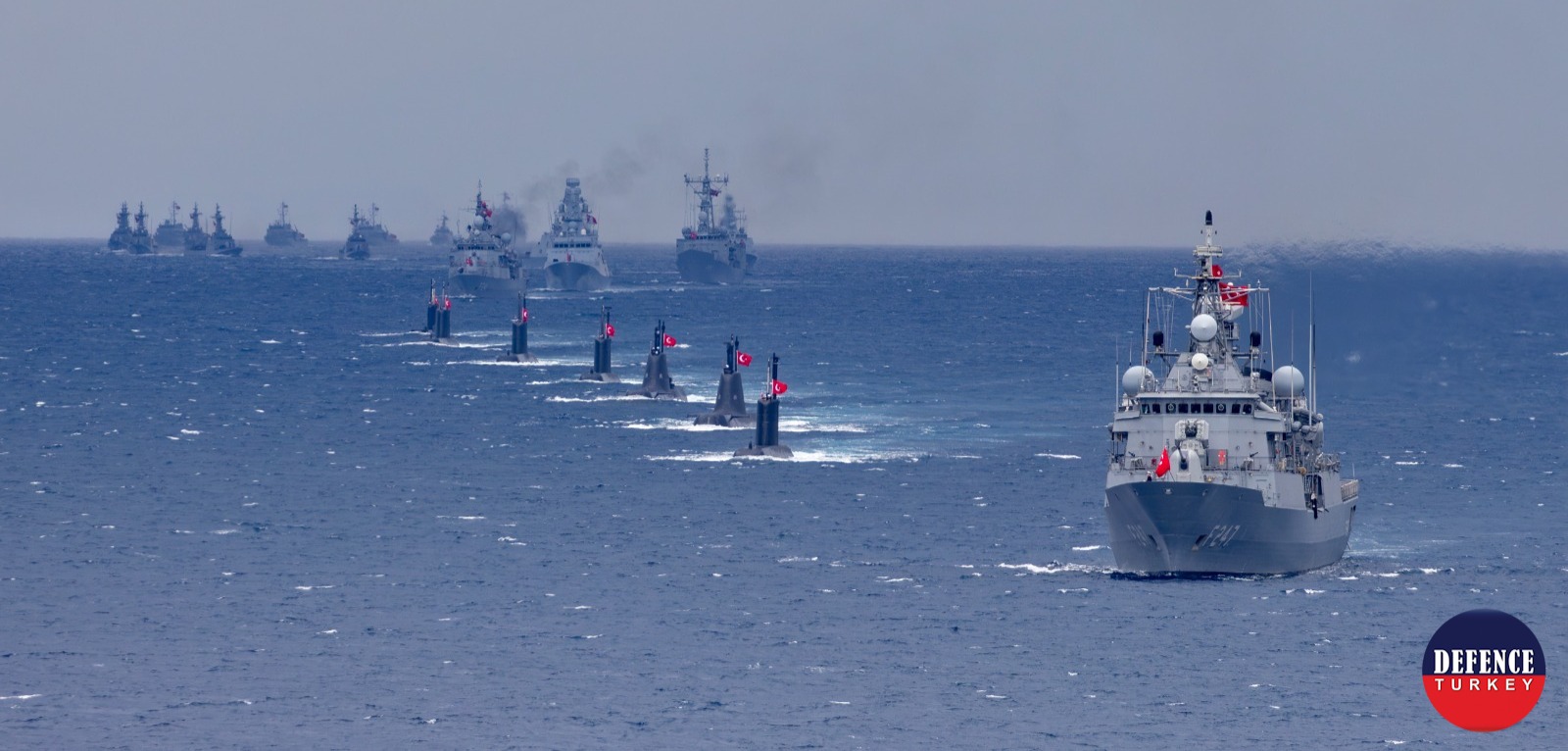
Turkish Naval Forces: With its surface, submarine, and air assets, the Turkish Naval Forces participate in NATO’s Standing Naval Forces and Operation Sea Guardian, as well in various exercises, contributing to NATO’s collective defense activities. They also support regional initiatives, particularly in surrounding seas, and the joint execution of NATO missions.
Turkish Air Force: Starting July 1, 2025, the Turkish Joint Force Air Component (TUR JFAC) in Eskişehir is planned to assume responsibility for managing the air operations of NATO’s Allied Reaction Force (ARF) for one year. Additionally, the Turkish Air Force provides Airborne Early Warning and Control (AEW&C) and Air-to-Air Refueling (AAR) support under NATO’s Enhanced Assurance Measures. By deploying to Allied countries for Enhanced Air Policing missions, Türkiye makes significant contributions to the Alliance’s defense and deterrence posture.
Collective Exercises: Türkiye consistently participates at a high level in NATO’s collective exercises, enhancing interoperability among Allies and strengthening the Alliance’s defense capabilities. These exercises reinforce NATO’s readiness for potential crises, underscore the commitment of members to one another, and develop the capacity for joint responses to new threats. Conducted with the participation of Land, Naval, and Air Forces, these exercises are designed to align with modern warfare scenarios, test plans and doctrines in the field, and keep NATO’s collective defense spirit alive.
Türkiye’s multifaceted contributions play a critical role in enhancing the Alliance’s adaptation and effectiveness against current and future security challenges. These efforts also reinforce Türkiye’s position and strategic importance within NATO.
Under the NATO Deterrence and Defense Concept for the Euro-Atlantic Region, Türkiye simultaneously commands two NATO Maritime Task Forces operating in the Mediterranean and the Black Sea. Additionally, Türkiye commands two of the four Standing Maritime Task Groups, which serve as NATO’s ready forces for crisis response or rapid intervention and supports these tasks with its combat units. Furthermore, Turkish Naval Forces (TNF) actively contribute to NATO’s maritime security operation, Operation Sea Guardian, which is supported by Türkiye’s Operation Mediterranean Shield, aimed at ensuring the safe navigation of ships in Türkiye’s maritime jurisdiction in the Eastern Mediterranean and preventing terrorism.
Defence Turkey: How is the financing of NATO’s activities provided? Can you inform us about how the financial contributions of countries are determined and in which areas they are used? Additionally, could you share your evaluations with our readers regarding the contribution rates of other countries and Türkiye within the framework of statistical data?
Lieutenant General Kemal TURAN: First, I would like to clarify that NATO does not have its own independent funding source; its needs are met through a resource pool established under the NATO Common Fund. The contribution rates to the NATO Common Fund are calculated using a formula accepted by NATO countries, taking into account each member country’s economic strength (Gross Domestic Product). These rates are periodically updated and submitted for approval by member countries in the relevant NATO committees.
As a result of this calculation, countries with larger economies contribute at higher rates. The only exception to this practice is a decision taken in 2019 whereby the United States (USA) contributes to the NATO Common Fund at the same level as the country with the second-highest contribution rate. Accordingly, both the USA and Germany contribute at a rate of 15.9%.
For 2025, the NATO Common Fund amounts to €4.579 Billion, comprising the Military Budget (€2.373 Billion), the Civil Budget (€483 Million), and the NATO Security Investment Program (€1.723 Billion). As can be understood, approximately €1.45 Billion, equivalent to one-third of the NATO Common Fund, is financed by the USA and Germany.
As for Türkiye, it contributes 4.59% to the NATO Common Fund, ranking 8th among 32 countries. This rate corresponds to a contribution of approximately €200 Million.
In general, the Military Budget covers the operational, maintenance, and sustainment expenses of units within NATO’s Command Structure. The Civil Budget funds the salaries and benefits of civilian personnel working at NATO Headquarters. The NATO Security Investment Program (NSIP) is used to develop NATO capabilities in areas such as critical infrastructure and facilities (e.g., naval and air bases), communication and information systems, command and control, space, intelligence, surveillance and reconnaissance, joint targeting, and decision-support software.
Approximately 65% of the NATO Common Fund is allocated to operations, personnel expenses, and sustainment and maintenance. The remaining 35% is spent on capability development activities under the NATO Security Investment Program. When comparing Türkiye’s contributions with the benefits it has gained through NATO Security Infrastructure Projects, it can be said that we are in a very favorable position. While statistics are constantly changing due to ongoing projects, I can state that, cumulatively, between 1952 and 2024, Türkiye has contributed approximately €606 Million to NATO while receiving around €4.69 Billion in resources. I would also like to emphasize that these funds are allocated to projects prepared by countries, supported by Strategic Commands, and approved by the relevant NATO committees.
Defence Turkey: Türkiye became a member of NATO on February 18, 1952. Since then, NATO has been a cornerstone of Türkiye’s defense and security policy. However, in recent years, there have been calls both among NATO member states and within Türkiye for the country to withdraw from or terminate its membership in NATO. It is evident that Türkiye’s withdrawal from NATO would entail significant strategic and economic costs. Could you provide an assessment of the strategic importance of NATO membership for Türkiye, particularly in military terms, and the potential consequences of Türkiye’s withdrawal from the Alliance?
Lieutenant General Kemal TURAN: First and foremost, I would like to emphasize that Türkiye is not a burden to NATO but an Ally that adds significant value, a fact recognized by the NATO Secretary General, all Allies, and their public opinions. This is clearly evident in the statements made by the NATO Secretary General and leading Allies in various settings.
Our cooperation since 1952 is built on a strong foundation and is not so fragile as to be shaken by such rhetoric. Articles IV (“Consultations”) and V (“Collective Defense”) of the founding Washington Treaty provide Türkiye with a valuable security guarantee. The Alliance, which we joined in 1952, is a significant international organization in which Türkiye holds full political control (veto power). Since its establishment, NATO has proven its success by preventing large-scale wars in the Euro-Atlantic region. It is also the only international security organization where all members have equal voting rights.
However, it is natural for 32 different countries to have varying threat perceptions, defense priorities, and foreign policy objectives. Emerging risks and threats exacerbate differences in national threat assessments. It should not be assumed that discussing these differences on international platforms undermines the Alliance’s relationships. As in the past, we have high expectations that the challenges we face will be resolved through dialogue channels and the spirit of alliance.
Notably, in response to adverse developments to our south, Spain’s PATRIOT battery has been deployed in Adana since 2015 to reinforce our existing air defense systems. As part of NATO’s Assurance Measures for Türkiye, a Polish maritime patrol aircraft has been stationed in our country since April 2021 to create a maritime picture addressing threats emanating from beyond our southern borders. Recently, this maritime patrol aircraft will be replaced by Poland’s BAYRAKTAR TB-2 UAVs. When this deployment takes place, our domestically produced defense industry products will be used for the first time by a NATO country in a NATO mission, marking a significant milestone in the progress of the Turkish Defense Industry.
Türkiye is a valuable member of NATO and one of its most significant contributors. As a NATO Ally since 1952, we take rightful pride in fulfilling all our commitments and responsibilities. We are not only a contributor but also an Ally that shapes NATO’s key decisions.
Defence Turkey: Türkiye’s contributions to NATO continue to be strategically valuable. Its extensive military capabilities, deployed from the Baltic to the Mediterranean and the Black Sea, play a critical role in deterrence. Additionally, the Turkish government’s decision to close the Turkish Straits to the Russian navy has been highly significant in limiting Russia’s capacity to attack Ukraine via the Black Sea. This has enabled Ukraine’s attacks to progressively weaken the Russian navy, altering the maritime security balance in this region. As a NATO member with critical military capabilities, what can you tell us about Türkiye’s support and contributions to Ukraine in its war with Russia?
Lieutenant General Kemal TURAN: Ukraine is both a close neighbor and a friendly country with which we share historical and cultural ties. As we have always stated, we do not recognize the illegal annexation of Crimea. Our support for Ukraine’s territorial integrity and sovereignty within its internationally recognized borders is unwavering. Since 2014, we have consistently demonstrated this support through both our words and actions. It is well known that, from the outset of the war, Türkiye has played a balancing role between Ukraine and Russia, exerting efforts to achieve a ceasefire, establish humanitarian corridors, reduce tensions, and find a diplomatic solution. In 2022, we brought both sides together in Istanbul.
Furthermore, since the beginning of the war, Türkiye has taken a leading role in minimizing the crises caused by the conflict, first in our region and then globally. The food crisis and mine threats resulting from the war have been addressed through Türkiye’s leadership and mediation. By facilitating the Grain Deal between the parties, we contributed to preventing a global food crisis. To ensure navigational safety in the Black Sea, Türkiye, Romania, and Bulgaria established the Mine Counter Measures Black Sea Task Group (MCM BLACKSEA) last year. Within this framework, 22 mines have been neutralized to date, and our search and sweep operations continue uninterrupted. The initiation of this effort, which has become the most effective measure for navigational safety, was made possible through the meticulous diplomacy conducted by our Ministry of National Defense (MoND). Our priority in the context of Black Sea security is to maintain the harmony, stability, and security we have achieved with our coastal Allies.
Since the start of the war, our careful, responsible, and impartial implementation of the Montreux Convention has protected the Black Sea from becoming a conflict zone and has highlighted Türkiye’s role in this regard. We continue to implement the Montreux Convention in this manner to prevent further escalation of tensions in the region. As long as the current situation persists, we will maintain the existing regulations regarding the passage of warships through the Turkish Straits. We believe this is extremely important for paving the way toward peace. Türkiye’s leading and guiding role, including in peace negotiations, is well known.
Today, Türkiye is a balancing regional power capable of engaging with both countries and contributing to peace on the ground. We hope for a ceasefire between the warring parties in the near future. We are ready to fulfill our responsibilities to ensure the continuation of a ceasefire or peace.
Defence Turkey: Since 1952, Türkiye, with the second-largest army in NATO, has remained an indispensable Ally, committed to NATO’s core missions with its critical military capabilities. However, some NATO member countries continue to impose covert and unofficial restrictions on Türkiye. How does NATO assess such practices that could affect the development of a member country’s defense capabilities?
Lieutenant General Kemal TURAN: NATO is an organization composed of the combined armies, personnel, and assets of its Allies. In other words, the stronger each Ally is, the stronger NATO is as a whole. As we consistently emphasize, “solidarity” and “trust” are fundamental to the Alliance, and Allies should support each other in addressing national security concerns and enhancing their defense and deterrence capacities.
Recent developments have once again underscored Türkiye’s importance in ensuring European security. Considering Türkiye’s defense industry infrastructure and capabilities, it is indispensable to the European security architecture. Despite facing numerous export restrictions, Türkiye meets all of NATO’s capability targets, consistently ranks among the top five of the 32 Allies in contributions to operations and missions and has achieved an 80% domestically produced defense industry. Such an Ally is undoubtedly valuable to all.
Aware that the defense industry is a dynamic field requiring constant innovation, Türkiye has worked tirelessly, steadily, and at a high tempo to solidify its position as a regional leader and a global influencer. This persistence has led to the gradual lifting of unfair export license restrictions imposed on our country for years, a success attributable to the Turkish Armed Forces and the domestic and national defense industry supporting it.
With over a thousand domestic defense industry projects and a project portfolio worth US$100 Billion, the domestically produced defense industry products developed under the leadership of our President have further enhanced the effectiveness of the Turkish Armed Forces. Significant strides have been made in reducing external dependency in the defense industry, with notable progress in the production of UAVs, combat aircraft, armored vehicles, submarines, missile systems, and other military equipment.
We observe that European Allies also attach importance to close contact and cooperation with Türkiye, as evidenced by the resumption of meetings and engagements that were not held in previous years. Cooperation in defense and the defense industry is developing with leading Allies such as Italy, Spain, Germany, and France. Notably, Germany has recently begun approving export applications for defense industry products that had been on hold for a long time.
Although some NATO members have, at times, individually displayed attitudes and behaviors toward Türkiye that are inconsistent with the spirit of the Alliance, our institutional alignment with NATO remains complete and robust. With all our contributions, investments, experience, and determination, our goal as a reliable Ally is to set aside issues of disagreement and work together for our shared values and interests in our region and worldwide.
Defence Turkey: Türkiye makes significant contributions to NATO-led missions and exercises. Are the expenses incurred from participation in NATO exercises, operations, and missions covered by the NATO budget, or are they financed by each country individually?
Lieutenant General Kemal TURAN: NATO, with its well-established institutional structure, operates according to agreed-upon procedures, from operational methods to financial and personnel matters. As you know, NATO does not have its own army. NATO’s forces consist of personnel and assets declared by Allies to the Alliance. In this context, some of the expenses for NATO operations and exercises are covered by the NATO Common Fund, while others are borne by the contributing country. The costs of personnel and assets allocated to NATO are covered by the respective countries. This is a general rule applied to all Allies. NATO, on the other hand, is responsible for the expenses of the operation’s headquarters. This principle is known in NATO as “Costs lie where they fall.” Additionally, the NATO Common Fund can be used to meet operational needs such as infrastructure, communication and information systems, and command and control systems for operations and missions like the Kosovo Force (KFOR) and the NATO Mission Iraq (NMI). For example, while the fuel costs of a unit participating in an operation are covered by the respective country, the construction costs of a fuel facility in the operational area can be financed through the NATO Common Fund.
In conclusion, there are defined roles and responsibilities for both countries and NATO in covering the costs of NATO operations and missions. These roles and responsibilities are determined during the planning processes of operations and missions and are implemented following approval by the relevant NATO committees. Additionally, costs covered by NATO are transparently tracked through annual Budget Planning and Reporting documents. The Allies’ task is to contribute to the Alliance’s overall defense and deterrence, elevating their own armies to the highest levels in the costly areas of training, interoperability, and combat readiness.
Defence Turkey: Considering the ongoing war in Ukraine and the changing stance of the TRUMP administration toward NATO, there is a growing belief that neither NATO nor the European Union can afford to overlook Türkiye’s strategic importance. Do you agree with this assessment?
Lieutenant General Kemal TURAN: As a country addressing the instabilities surrounding Europe, we understand Europe’s efforts to enhance its own security. However, the primary institution ensuring security in Europe is NATO. The EU can only play a supportive role to NATO.
As a member of NATO and the OSCE, and a candidate country for the EU, Türkiye, with its advancing defense industry, significant roles in resolving regional crises, and a strong military, is an integral part of the European security architecture.
For Türkiye, NATO remains central to the European security architecture. At the same time, EU membership continues to be a strategic goal. Türkiye and the EU share long-term strategic interests in areas such as defense and security, counter-terrorism, and preventing irregular migration.
In the current complex security environment, recognizing the value of each country’s capabilities, we emphasize to our counterparts that the EU’s initiatives in this field must be compatible with NATO, that non-EU NATO Allies should be informed, and that their participation in these initiatives should be facilitated.
In recent years, Türkiye has made significant strides in its defense industry, increasing its domestic production capacity and making substantial contributions to NATO’s military operations and defense capabilities. Technologies developed in areas such as unmanned aerial vehicles (UAVs), air defense systems, armored vehicles, munitions, and electronic warfare have proven themselves in combat and have been integrated into NATO’s modern warfare doctrines.
Our defense industry produces advanced weapons, vehicles, and equipment tailored to the conceptual needs of the Turkish Armed Forces. These systems, added to our inventory, are used with outstanding success in challenging operational conditions, showcasing the finest examples of the art of warfare.
Recent developments have once again highlighted Türkiye’s importance in ensuring European security. In a period of growing uncertainties and concerns in Europe’s security landscape, Türkiye’s full participation in the EU’s defense efforts is essential for Europe to become a global actor. In this context, considering Türkiye’s defense industry infrastructure and capabilities, Türkiye is indispensable to the European security architecture.
Türkiye is a country that identifies and implements its defense and security policies in a multifaceted manner in response to regional developments and is capable of taking necessary measures independently. I must particularly emphasize that Türkiye, now an indispensable member of international negotiation tables and security architectures, is recognized as a reliable supplier of defense products for numerous brotherly and friendly countries.
Defence Turkey: Türkiye, which possesses the second-largest military force in NATO and makes significant contributions to the common fund, has historically undertaken important roles such as the Chairmanship of the NATO Military Committee in 1960 and the NATO Assistant Secretary General position from 1969 to 1971. Can you provide information on the recent appointments of Turkish military or civilian personnel to senior positions within NATO? What efforts is Türkiye undertaking to secure a place in NATO’s senior leadership roles?
Lieutenant General Kemal TURAN: As you mentioned, we make significant contributions to NATO in various areas, one of the most important being our personnel support to NATO positions. Out of 10,501 international military positions, 551 are allocated to Türkiye, with a fill rate of 85%. Considering that the overall fill rate across NATO is 79%, it is evident that Türkiye supports NATO positions at a very high level.
Looking at senior positions held in recent years, Türkiye has served in the following roles: Director of the Logistics & Resources Division of the International Military Staff (IMS) Director of the IMS Cooperation and Security Division and Chief of Staff of the NATO Communications and Information Agency (NCIA). Additionally, in September 2025, Türkiye will assume the roles of Director of the IMS Cooperation and Security Division and Head of the Strategy and Policy Branch of the Joint Intelligence and Security Division (JISD).
These positions are at the general/admiral level and are critical senior elective roles within the headquarters responsible for the military secretariat of NATO. Candidates nominated by countries for these temporarily allocated positions are selected through voting in the Military Committee.
Regarding your second question, we are currently pursuing our candidacy for the NATO Assistant Secretary General position. Furthermore, the allocation process for general/admiral positions within NATO’s restructured Command Structure is ongoing. Türkiye is closely following the necessary efforts to ensure representation at the highest levels within the NATO Command Structure.
Defence Turkey: Following the upcoming Hague Summit, the 2026 NATO Summit will be held in Istanbul, Türkiye, from July 28 to 30, 2026. This will be the second time Türkiye hosts a NATO Summit, the first being in Istanbul in 2004. Some circles argue that Türkiye’s hosting of a NATO Summit for the second time underscores its central role within NATO, both geographically and politically. Could you share your personal assessment of the significance of this decision in terms of Türkiye’s geographical and political position within NATO and the opportunities it presents for Türkiye?
Lieutenant General Kemal TURAN: Located at the crossroads of the Black Sea, the Mediterranean, and the Middle East, serving as a bridge between Europe and Asia, Türkiye is a key transit point for energy resources from Central Asia and the Caspian to Europe. With its military capabilities, Türkiye is a significant power on NATO’s southeastern flank.
Türkiye is one of the countries providing the most tangible contributions to the Alliance’s collective defense and security posture, participating in NATO missions and operations such as Air Policing, Standing Maritime Groups, KFOR, and NMI, as well as contributing across all operational domains, including cyber and space.
During the Russia-Ukraine war, Türkiye’s steadfast support for Ukraine’s territorial integrity and sovereignty, combined with its multifaceted and balanced approach, has enabled it to provide tangible support to Ukraine, act as a mediator between Ukraine and Russia, lead the initiation and implementation of the Black Sea Grain Initiative, and host high-level peace talks.
In this context, Türkiye’s hosting of the 2026 NATO Summit is a clear indication of its indispensable geopolitical and political position and its vital role in the security of both NATO and Europe. Over the past twenty years since the 2004 NATO Leaders’ Summit in Istanbul, Türkiye has adapted swiftly to the rapidly changing security environment, earning recognition and appreciation for its solution-oriented approach to regional security and global peace and stability.
This summit will serve as an important platform for Türkiye to further strengthen its relations with Allies and NATO partners and solidify its position in the international system. Additionally, our geopolitical position will ensure that the summit focuses on maintaining stability in the Black Sea, the Caucasus, the Middle East, Africa, and the Mediterranean, as well as counter-terrorism efforts. The summit will also provide a significant opportunity to showcase the advanced level our defense industry has achieved in recent years.
Defence Turkey: Compared to other international organizations, NATO has maintained its importance since its establishment. What are the reasons behind NATO’s success? How does NATO ensure its organizational development and prepare for the future? What instruments does it possess in this regard?
Lieutenant General Kemal TURAN: The reasons behind NATO’s ability to consistently maintain its importance in the international system lie in its dynamic structure, which adapts to evolving threat environments, its intra-alliance solidarity, and its capacity for institutional transformation. NATO is not merely a military alliance but also a strategic security community that continuously redefines and transforms itself.
There is a profound quote from Atatürk that highlights the importance of shaping the future: “Nations that sleep either die or awaken as slaves.” NATO is an institution that places great emphasis on shaping the future, as ATATÜRK pointed out. In this context, the Allied Command Transformation (ACT), based in Norfolk, Virginia, plays a central role in developing concepts and doctrines that will shape the future operational environment and designs NATO’s future. While the Allied Command Operations, based in Mons, Belgium, focuses on NATO’s present—current operations and training—ACT operates like a think tank, planning NATO’s transformation.
Through its “Strategic Foresight” activities, ACT produces documents on the Future Operating Environment (FOE) and the Future Force Study (FFS), envisioning the operational environment NATO will face in the future. Subsequently, it outlines the force structure NATO will need to operate in that environment. Similarly, NATO tests the applicability of its developed concepts through “war games,” “simulations, modeling, and experiments.”
For many years, NATO’s successful conventional operations approach has primarily relied on the effective and coordinated use of forces in land, sea, and air domains. Over time, the evolving threat environment and technological advancements have necessitated the adoption of a joint operations concept, requiring the integrated use of different forces. However, recent conflicts have clearly demonstrated that the modern battlefield is not limited to physical domains alone. Cyberattacks, electromagnetic interference, the use of space-based capabilities, and information operations have made it essential to manage multi-layered threats simultaneously, beyond the traditional understanding of force employment.
To provide effective deterrence and defense in this multi-layered threat environment, NATO has prioritized the Multi-Domain Operations (MDO) Concept, which focuses on enabling NATO forces to operate simultaneously and in a synchronized manner across all operational domains. MDO encompasses the ability to conduct simultaneous and integrated activities in land, sea, air, cyber, and space domains. This concept allows NATO to go beyond its traditional operational approach, providing a holistic response to hybrid threats and high-tempo conflict scenarios. As part of the work on this concept, a conference was held in Türkiye in May 2025.
Designed to account for the orchestration, shaping, competition, and conflict dimensions across the breadth and depth of operational environments and non-military domains, the MDO Concept focuses not on the number of systems or platforms but on their interconnectivity and utilization. Therefore, it is anticipated that this concept will serve as a driving force for NATO’s training, education, exercises, war games, and dynamic structural development.
In today’s security environment, where realpolitik has regained prominence, Türkiye closely follows NATO’s transformation activities. Aware that the future battlefield will require the coordinated use of civilian and military capabilities, Türkiye continues its preparations accordingly. The success of MDO is believed to depend not only on advanced technological systems but also on the interoperability of forces, the speed of information sharing, and the enhancement of situational awareness among all stakeholders.
Defence Turkey: Türkiye’s success in unmanned aerial vehicle (UAV) systems in recent years has garnered significant international acclaim, positioning Türkiye as one of the world’s leading actors in this field. Naturally, this has also made Türkiye one of the few countries within NATO with significant influence in UAV and counter-UAV technologies and their use. In this context, is there a UAV initiative led by Türkiye within NATO? Have any concrete steps been taken to share our expertise and experience in this area with our Allies?
Lieutenant General Kemal TURAN: Türkiye’s proficiency and operational experience in UAV systems have placed us in a unique position within NATO. To solidify our leadership in this field and contribute to the development of our Allies’ capabilities, we have taken the lead in establishing a NATO Counter-Unmanned Aerial Systems Center of Excellence. Efforts to host this center are ongoing at full speed.
This center will serve as a platform for sharing Türkiye’s counter-UAV systems and extensive operational experience with all NATO Allies. It aims to develop new strategies for countering UAV threats, establish standards, and train the human resources needed for the future battlefield. This will also enhance interoperability within the Alliance.
The establishment of this center will significantly boost NATO’s ability to adapt to the new threat environment. UAVs are no longer a threat confined to specific regions; they have become a global challenge, evolving and transforming in all types of conflict environments. As witnessed in the Russia-Ukraine war, the attack and intelligence-gathering capabilities of these systems are rewriting warfare doctrines. Therefore, it is critical for Allies to act with a shared understanding against this threat. The center we are establishing will directly address this need.
By hosting this center, Türkiye will contribute not only to its own security but also to NATO’s collective defense. A “best practices pool” for counter-UAV measures will be created and continuously updated across the Alliance. Additionally, the research and development activities conducted at this center will pave the way for the emergence of next-generation counter-UAV systems and technologies.
Hosting this expertise will be a significant gain for our country. I would like to highlight that the center has the potential to serve as an important bridge between our innovative defense industry and our deep military expertise.
This initiative will not only reinforce Türkiye’s leadership in this field but also elevate the entire Alliance’s resilience against UAV threats to a higher level.
Defence Turkey: Is there anything you would like to add or a message you would like to convey to our readers?
Lieutenant General Kemal TURAN: To summarize, as the Ally with NATO’s second largest Army, Türkiye has always placed NATO at the core of its own security, while also being at the core of NATO’s security. Türkiye ranks eighth in contributions to the military budget and is consistently among the top five countries in force contributions, as well as participation in NATO operations, missions, and headquarters—sometimes even ranking second or third. Additionally, it hosts significant NATO headquarters and units.
The fragile states and evolving security environment in our region compel us to maintain a combat-ready and deterrent Armed Forces at all times. To shape regional developments in line with our national interests, we are mobilizing all our resources from Qatar to Somalia, Libya to Azerbaijan, Syria, and the Balkans.
Through our national defense industry mobilization, Türkiye has reached a position envied by countries worldwide. Our defense industry produces advanced weapons, vehicles, and equipment tailored to the needs of the Turkish Armed Forces (TAF), and these systems, once integrated into our inventory, are used with outstanding performance. Thanks to the synergy created by this collaboration, we are now able to produce 80% of the weapons, equipment, and ammunition we use. As our President has stated, “Nations that are not independent in defense cannot look to their future with confidence.”
In our determined struggle against risks and threats to security and stability, our primary aim is to act in solidarity and cooperation with our Allies. Similarly, we expect all our Allies to demonstrate solidarity, cooperation, and understanding in their actions and statements.
As it has done for the past 73 years, Türkiye will continue to fulfill all its responsibilities within NATO the community of shared values and remain firmly committed to the principle of “One for All, All for One”