Egypt Showcased Its Expanding Defense Industry at EDEX 2025

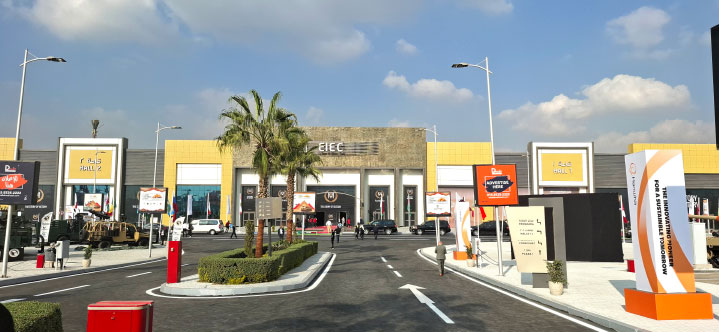
Held under the patronage of President Abdel Fattah El-SISI, President of the Arab Republic of Egypt and Supreme Commander of the Egyptian Armed Forces, the fourth edition of the Egypt Defense Expo (EDEX 2025) took place December 1-5, 2025 at the Al-Manara International Conference Center and the Egypt International Exhibition Center (EIEC) in New Cairo. On Monday, December 1, 2025, Abdel Fattah El-SISI, President of the Arab Republic of Egypt and Supreme Commander of the Egyptian Armed Forces, inaugurated the Egypt Defense Expo (EDEX 2025). The inauguration ceremony also witnessed the participation of Prime Minister Dr. Mostafa MADBOULY, Commander-in-Chief of the Armed Forces and Minister of Defense and Military Production Abdel Mageed SAQR, as well as several ministers and senior state officials.
EDEX 2025 brought together some 450 global defense companies, including 25 national pavilions, official delegations from over 100 countries, and more than 40,000 specialized visitors. According to the Egyptian Presidency, this level of international participation reflects global confidence in Egypt’s organizational capabilities, regional influence, and growing attractiveness as a hub for defense and tourism investment.
During the inauguration ceremony upon arrival, President SISI was welcomed by Prime Minister MADBOULY, Minister SAQR, and senior officials. A commemorative group photo with international guests preceded a multilingual musical performance titled ʿAla Ṭūl Mitgamaʿīn (“Always United”), which opened the ceremony. This was followed by a documentary on the K9A1 EGY self-propelled howitzer (SPH), one of the world’s most advanced artillery systems. The film highlighted Egypt’s official expression of interest in the system in February 2022 and its subsequent move to jointly manufacture the howitzer domestically to enhance the capabilities of the Egyptian Armed Forces.
Strategic Messages and Regional Context
In his address, Commander-in-Chief and Minister of Defense Abdel Mageed SAQR described EDEX as a “global platform” for advanced defense technologies amid “rapid regional and international transformations.” He stressed that military readiness has become an essential national duty in light of ongoing regional conflicts, including the crisis in Gaza. Saqr reiterated Egypt’s longstanding warnings about the risk of a wider regional conflict—warnings he said had proven “wise and prescient.”
He emphasized that Egypt’s expanding military capabilities represent “an investment in genuine peace,” reaffirming that the Armed Forces act as a rational force that “protects and does not threaten,” safeguarding both national sovereignty and regional stability. Saqr also linked Egypt’s ancient heritage with its modern ambitions, citing the inauguration of the Grand Egyptian Museum as a symbol of continuity between the nation’s past and its future aspirations.
Major Defense Unveilings: RADA 300, K9A1 EGY Battery, and New Unmanned Systems
At EDEX 2025 Defense Exhibition numerous new weapon systems were unveiled by Egyptian state-owned companies, while several privately owned Egyptian industrial players made their debut with large stands. These companies exhibited a wide range of products manufactured under agreements with foreign partners, alongside locally designed systems, with the objective of steadily increasing the share of indigenous designs.
Egypt showcased major advances in its expanding defense-industrial base at EDEX 2025. In this context, for example, the Egypt Ministry of Military Production unveiled the new “RADA 300” tracked multiple-launch rocket system (MLRS), capable of striking targets up to 300 km away—significantly enhancing Egypt’s long-range strike capabilities. China’s Norinco’s multiple rocket launcher system forms the basis of the new Egyptian RADA 300 MLRS.
Officials also presented the first batch of locally produced K9A1 EGY self-propelled howitzers (SHPs), built under a joint manufacturing agreement with South Korea. A complete K9A1 EGY SPH battery, which included six howitzers supported by K10 ammunition vehicles and the Egypt-specific K11 fire direction platform, appeared publicly (upon entering the exhibition area) for the first time during EDEX 2025. The Egyptian K9A1 EGY retains the core architecture of the South Korea’s Samsung Techwin, now operating under Hanwha Aerospace following corporate restructuring, K9 Thunder SPH, a 155 mm, 52 caliber tracked howitzer that carries 48 rounds and can deliver three shells in 15 seconds, six to eight rounds per minute in intense fire, then two to three for sustained missions. The system now incorporates 67% locally produced components, with the first operational battalion scheduled for delivery in early 2026. As part of its efforts to increase independence from foreign defense products, Egypt has also begun the domestic production of 155 mm artillery ammunition and an automated fire-control system.
In a major industrial milestone, the Ministry announced Egypt’s first-ever production of armored steel plates up to 30mm thick, doubling previous domestic capacity and advancing local manufacturing of armored vehicles and tanks. Other new platforms debuted included the fully Egyptian-made Sina 806 armored recovery vehicle and the Sakr 105 shoulder-fired thermobaric launcher.
Unmanned Systems were a key highlight of this year’s exhibition. The Arab Organization for Industrialization (AOI) and several private firms displayed new loitering munitions, tactical drones, FPV attack drones, and counter-drone systems. Key exhibits included Tornex’s Jabbar and Voltex loitering munitions, the lightweight FL350 reconnaissance drone, and the AOI’s HAMZA-1 (gasoline-powered version of BAHA) Autonomous Sub-Cloud UAV with vertical takeoff and landing (VTOL) capabilities and SCORPION 6x6 Wheeled Unmanned Ground Vehicle, developed in cooperation with HAVELSAN.
International Cooperation and Industrial Agreements
The opening day featured several strategic agreements. The AOI signed an MoU with China’s Norinco to localize defense system manufacturing in Egypt, bolstering technology transfer and domestic production.
Additionally, the AOI concluded seven agreements with the UAE’s Abu Dhabi Aviation Group covering joint manufacturing, maintenance, MRO cooperation, and logistics support across multiple AOI facilities. Another MoU with UAE–Chinese firm Al-Qalaa Red Flag aims to develop new production lines and expand export potential.
In the aerospace sector, the AOI announced the start of local production of Rafale fighter jet wing components, following Dassault Aviation’s approval of AOI factories as part of its global supply chain—an important step towards deepening Egypt’s aeronautics manufacturing capabilities.
Presidential Tour of National and International Pavilions
Following the inauguration ceremony, President SISI toured the exhibition halls, visiting the Egyptian pavilions of the Vehicle Administration, Engineering Industries Complex, Ministry of Military Production, Arab International Optronics Company, and the AOI. He also inspected the UAE and Jordanian pavilions, underscoring Egypt’s strengthening defense partnerships with regional allies.
A Growing Hub for Regional Defense
Organized by the Egyptian Armament Authority of the Ministry of Defense, EDEX is a biennial international defense exhibition showcasing advances in land, sea, and air military technologies. It is considered one of the leading defense platforms in Africa and the Middle East, drawing senior military leaders, policymakers, and major global and local defense companies.
Since its launch in 2018, EDEX has rapidly expanded into one of the region’s largest defense exhibitions. With record international participation and new milestones in domestic production, EDEX 2025 reinforces Egypt’s rising profile as a defense-industrial power and a central actor in Middle Eastern security cooperation. Today, the expo stands as a testament to Egypt’s increasingly advanced defense manufacturing and design capabilities, which have grown markedly since the first edition in 2018.
EDEX 2025 & Turkish Defense and Aerospace Industry Companies
According to the list of participating countries and companies published on the official website of EDEX 2025—an event assessed as enhancing Egypt’s diplomatic visibility in the international defense and security arena—Türkiye emerged as the largest participant, represented by 81 companies and organizations (including both the SSB and SSI). Egypt ranked second with 46 companies, followed by China in third place with 30 companies. The United States took fourth place with 23 companies, while the Republic of Korea ranked fifth with 20 companies.
The EDEX Exhibition, held for the fourth time this year from 1 to 4 December 2025, hosted numerous Turkish Defense & Aerospace Industry companies, including ASELSAN, ARES, ARMELSAN, DESAN, HAVELSAN, İŞBİR, REPKON, ROKETSAN, RST, SARSILMAZ, SDT, TİSAŞ, TUSAŞ, and ULAK Communications, among many others.
ASELSAN
ASELSAN, which established a representative office in Egypt’s capital, Cairo, under the name “ASELSAN Egypt” prior to the exhibition, officially inaugurated the office within the framework of EDEX 2025 Defense Exhibition. ASELSAN Egypt will serve the requirements of the Egyptian Armed Forces and other Egyptian clients directly.
During the exhibition, ASELSAN President and CEO Ahmet AKYOL officially announced the opening of a new representative office, ASELSAN Egypt, and signed preliminary agreements with local partners (such as AMSTONE and TORNEX) for joint production.
The establishment of ASELSAN Egypt will enable direct engagement with and service delivery to the Egyptian Armed Forces. Through the localization of production and support activities, ASELSAN aims to develop long-term collaborative projects that combine its world-class electronics expertise with regional operational requirements. These partnerships reflect a deepened commitment to the Middle East and North Africa, with a focus on sustainable growth through shared technology and industrial synergy. Marking this milestone, AKYOL stated: “I can now declare that Türkiye’s largest defense industry company has an active, on-the-ground presence in Egypt.”
At EDEX 2025, which is a key platform to develop joint projects with countries in the region, ASELSAN showcased its advanced defense technologies across air, land, and naval domains. ASELSAN, participating in the EDEX Exhibitions for the third time, presented visitors with a wide range of products spanning from communication and radar technologies to avionics solutions; from UAV and fighter aircraft payloads to electronic warfare systems; from naval systems to border and facility security solutions; and from air defense systems to mortar/artillery solutions and tank modernization capabilities. ASELSAN President and CEO AKYOL noted that the company received strong interest with its offerings from Middle Eastern and African countries at the event.
At EDEX 2025, Türkiye’s multi-layered integrated air defense system ÇELİKKUBBE (Steel Dome) attracted particular attention. ASELSAN hosted the Commander of the Egyptian Air Defense Forces, Lt. Gen. Yasser Al-TOUDI, at its stand during EDEX 2025. During the visit, ASELSAN’s ASELSAN President and CEO Ahmet AKYOL personally briefed the distinguished guest on the company’s cutting-edge defense solutions. The briefing highlighted ASELSAN’s recent achievements in the global defense sector, with a particular focus on next-generation air defense, radar, and electronic warfare systems. The CEO also provided an in-depth overview of the state-of-the-art ÇELİKKUBBE Integrated Air Defense System, underscoring its modular architecture, multi-layered defense capability, and operational effectiveness against a wide range of aerial threats.
ASELSAN introduced the ÇELİKKUBBE Integrated Air Defense System through a large-format poster displayed at its stand and showcased scale models of its products, including the ALP 110-G Multifunction AESA Surveillance Radar and the MURAD 110-A X-Band AESA Fire Control Radar for the manned and unmanned combat aircraft. The MURAD 110-A and ALP 110-G are export variants of the MURAD 100-A and ALP 110-G radars, which have already been inducted into service with the Turkish Armed Forces.
The MURAD 100-A X-Band AESA combat aircraft radar has been integrated into six different manned and unmanned aerial platforms, including the F-16, KIZILELMA UCAV, and AKINCI Armed UAV, for flight and live-fire testing. Using a MURAD 100-A AESA radar installed on an F-16 upgraded under the ÖZGÜR Avionics Modernization Program, the first GÖKDOĞAN BVR air-to-air missile firing test was conducted in the second half of October 2025. The first GÖKDOĞAN BVR missile firing test using the KIZILELMA UCAV took place on 29 November 2025. In both tests, the GÖKDOĞAN missile, guided by the MURAD 100-A AESA nose radar, successfully achieved a direct hit on the target. With this engagement, for the first time in the world, an unmanned combat aircraft successfully engaged and destroyed an aerial target using a beyond-visual-range (BVR) air-to-air missile, in which ASELSAN systems played a decisive role throughout the entire engagement chain.
The official delivery of the first ÇELİKKUBBE (Steel Dome) systems, with a total value exceeding USD 470 million and consisting of 47 vehicles, was carried out during a ceremony held on 28 August 2025 at ASELSAN’s Gölbaşı Technology Campus, attended by President Recep Tayyip ERDOĞAN.
The delivered ÇELİKKUBBE systems comprised:
One SİPER Block-I Long-Range Air Defense System along with 10 associated vehicles,
Three HİSAR-O/RF Medium-Range Air Defense Systems, consisting of 21 vehicles in total,
Seven PUHU and two REDET electronic warfare systems,
One KORKUT Command and Control Vehicle (KKA),
One KORKUT Weapon Sensor Vehicle (SSA),
One Fire Control Unit (AİÇ),
Two modernized 35 mm Oerlikon anti-aircraft guns,
One ALP-100G and one ALP-300G early warning radars.
As of January 2026, it is estimated that the Turkish Armed Forces have inducted into service:
At least 3 SİPER Block-I systems,
At least 20 KORKUT systems (each system comprises 1 KKA and 3 SSAs),
At least 2 HİSAR-A systems,
At least one autonomous HİSAR-A system,
At least 15 35 mm Oerlikon batteries (each consisting of two 35 mm Oerlikon guns, one Fire Control Unit, and one HİSAR-A missile launcher),
At least 7 HİSAR-O/RF systems.
On November 25, 2025 contracts valued at US$6.5 Billion in total were signed between the Secretariat of Defense Industries (SSB) and the relevant defense companies (including ASELSAN, ROKETSAN and HAVELSAN) to reinforce the ÇELİKKUBBE Integrated Air Defense System, marking one of the largest single investments ever made in Türkiye’s air and missile defense architecture. With new investments, ASELSAN has doubled the production rate of the ÇELİKKUBBE system, and with additional investments coming online in 2026, it aims to deliver more than 100 ÇELİKKUBBE components per year to the Turkish Armed Forces.
ASELSAN’s guidance kit family of products were also the focus at the EDEX 2025, particularly the KGK-84, a wing-assisted guidance kit for the Mk 84 2,000-lb (925 kg) general-purpose unguided free-fall bomb, which now enables engagement of targets at distances exceeding 100 km. The ASELSAN KGK-84 mock-up exhibited at the Egyptian stand during EDEX 2025 drew strong interest, highlighting the growing momentum of defense cooperation between the two nations. With its extended range and high-precision strike capability, the induction of the KGK-84 into Egypt’s inventory would represent a significant force multiplier, strengthening the operational effectiveness of regional air forces.
To counter GNSS jamming and spoofing challenges, the upgraded KGK-84 incorporates an 8-channel CRPA (Controlled Reception Pattern Antenna) GNSS antenna located at the rear of the bomb. Improvements were also made to the inertial navigation system (INS), with new algorithms enhancing its interaction with the wing kit, resulting in increased range and improved accuracy. The KGK-84 is mounted upside down on the aircraft pylon, with the wings folded beneath the bomb. The maximum range of over 100 km is achieved when the weapon is released from a fighter aircraft flying at 40,000 ft, while the minimum release altitude is 10,000 ft. Upon release, the bomb rotates 180 degrees around its longitudinal axis, deploys its wings, and proceeds along a guided glide path toward the target. Navigation is waypoint-based, and ASELSAN states a Circular Error Probable (CEP) of less than 10 metres. Designed to engage static targets, the KGK-84 allows the pilot to pre-select the desired impact angle to optimise target effects. ASELSAN is targeting nations with large stockpiles of Mk 84 free-fall bombs, with Egypt identified as a key potential customer. Meanwhile, ASELSAN successfully completed the first live-fire test of its KGK 84 munition in December 2025. The test demonstrated the system’s operational readiness and validated its performance under realistic mission conditions. During the live-fire test, KGK 84 was released from an TurAF F-16 Block 50 aircraft at an altitude of 37,000 feet and a speed of 0.87 Mach. The munition achieved a range exceeding 80 kilometers and accurately struck the designated coordinate target, meeting all defined performance criteria.
HAVELSAN
HAVELSAN showcased its multi-domain security and autonomous capabilities at EDEX 2025. The company presented its broad portfolio of solutions spanning land, air, naval, digital, and cyber security domains to regional partners. HAVELSAN’s presence at EDEX was shaped by models emphasizing sustainable partnerships, localization, technology sharing, and long-term capacity-building. In parallel with Egypt’s ongoing modernization efforts in defense and security, multi-layered security requirements were evaluated through this comprehensive approach. During the exhibition, HAVELSAN held various meetings with delegations from Egypt, African countries, and the Gulf region regarding its product portfolio and technological capabilities. During these meetings discussions focused on Egypt’s broad security architecture needs covering land, air, naval, and digital infrastructures. Operational requirements ranging from desert patrols to border management, coastal security, and critical infrastructure protection were assessed through HAVELSAN’s flexible, scalable, and adaptable solution framework.
Throughout the exhibition, HAVELSAN’s BAHA Sub-Cloud Autonomous UAV, BARKAN Autonomous UGV, SANCAR USV, and MATRA Digital Maritime Solution attracted significant interest from visitors. HAVELSAN also introduced next-generation unmanned systems developed under its local cooperation with the Arab Organization for Industrialization (AOI) to the international public for the first time at the AOI stand during the EDEX 2025 Defense Exhibition. At the exhibition, the HAMZA-1 (BAHA) Autonomous Sub-Cloud UAV with vertical takeoff and landing (VTOL) capabilities and the SCORPION (AQRAB) Unmanned Ground Vehicle (UGV) developed in a 6x6 configuration were displayed and attracted significant interest from visitors. Egyptian President Abdel Fattah El-Sisi also visited the stand and received briefings on the platforms. The HAMZA-1, produced in Türkiye in cooperation with AOI and tailored to local requirements, was exhibited at the AOI stand. The SCORPION 6x6 UGV, developed within the same partnership and produced in Egypt, stood out with its rugged structure designed for harsh environmental conditions and its integration with a remotely controlled weapon system.
In March 27, 2025 HAVELSAN has signed a strategic cooperation agreement with Kader Advanced Industrial Factory, affiliated with the Arab Organization for Industrialization (AOI) in Egypt. This agreement covers the joint production of unmanned ground vehicles (UGVs). Within the scope of this cooperation, the production of UGV systems—developed with Turkish engineering excellence—would be carried out at Kader’s facilities in Egypt, with technical support and licensing provided by HAVELSAN. On August 26, 2025 HAVELSAN also signed a strategic co-operation agreement with AOI for the joint production of BAHA fixed-wing vertical take-off and landing autonomous UAVs in line with Egypt's Vision 2030 plan for sustainable development. The electrically powered version of BAHA Sub-Cloud Autonomous UAV entered service with the Turkish Land Forces during early 2025. According to HAVELSAN, the electrically powered UAV has a maximum take-off weight of 28 kg with a 2 kg payload, a communications (data link) range of 50 km, an endurance of up to 2 hours and operating altitude of 8,000 ft.
The BAHA Sub-Cloud Autonomous UAV has been equipped with an electric motor in order to prevent its sound from being heard from the ground at mission altitude, due to the high terrain elevations in the areas where it operates in Türkiye. In this configuration, BAHA has an endurance of 2 hours. However, for the Egyptian Armed Forces, the use of a gasoline engine has been requested for several reasons: the average terrain elevation in Egypt is between 210 m and 250 m, the highest point, Mount Catherine, is only 2,629 m, eliminating the risk of the UAV’s noise being heard from the ground at mission altitude, and the requirement for longer endurance. In the gasoline-powered configuration, BAHA can remain airborne for up to 6 hours. The gasoline-powered version of BAHA is known in Türkiye as BOZBEY and is currently in service with AFAD. HAVELSAN offers four sub-cloud UAV solutions: BAHA, BOZBEY, POYRAZ, and BULUT.
The gasoline-powered version of BAHA, adapted to the requirements of the Egyptian Armed Forces and designated HAMZA-1, was brought from Türkiye to be displayed at the fair at the AOI stand. A final decision on the number of HAMZA-1 Sub-Cloud Autonomous UAVs to be produced in Egypt is expected to be made after the EDEX 2025 Exhibition. According to the information obtained, within the scope of local production, the composite airframe of HAMZA-1 will be manufactured in Egypt, and final integration will also be carried out locally. Other sub-components, such as the Ground Control Station and Data Link Antenna, will be manufactured at HAVELSAN facilities, where the software will be installed, and then shipped from Türkiye to Egypt. It is also planned to establish a new factory in Egypt for the production of the HAMZA-1 airframe.
The SCORPION (AQRAB) 6x6 Unmanned Ground Vehicle (UGV) prototype was produced in Egypt in a short period of time through the cooperation of HAVELSAN and AOI engineers and was completed in time for the EDEX 2025 Exhibition. The payload mounted on the vehicle, a 12.7 mm remote-controlled turret produced by UNIROBOTICS, was brought from Türkiye. First unveiled at EDEX 2025, the SCORPION 6x6 UGV attracted significant attention at the exhibition as it is the first Unmanned Ground Vehicle manufactured in Egypt. According to information obtained, SCORPION has been developed based on HAVELSAN’s five years of experience in the UGV domain. Although it may resemble the tracked BARKAN UGV at first glance, it is a fundamentally different platform with distinct architecture and capabilities. Therefore, describing SCORPION as a wheeled version of BARKAN would not be an accurate definition. The SCORPION is fully electrically powered, and due to desert operating conditions, an independent 6x6 wheeled configuration has been preferred. In addition to the UNIROBOTICS payload displayed on the vehicle at the exhibition, SCORPION 6x6 UGV can be equipped with various other mission payloads, including configurations for mine clearance and casualty evacuation. The SCORPION UGV will be produced locally in Egypt at an existing factory, with HAVELSAN’s support.
EHSİM
With a 28-year legacy, EHSİM Electronic Warfare Systems Engineering Inc. participated in the EDEX Exhibition for the first time, while also showcasing—again for the first time at an international defense exhibition—its indigenously developed, miniature electronic warfare solutions, including the Next Generation RF Active Expendable Decoy (SİS, Fog in English) and the Jammer Integrated Nullification Node (JINN). Focusing primarily on brand awareness and subsequently on product promotion, EHSİM took into consideration the fact that the Egyptian Air Force is the world’s fourth-largest operator of F-16 aircraft when participating in the exhibition.
With decades of experience in self-protection systems, EHSİM has developed the Next Generation RF Active Expendable Decoy (SİS) solution under the “Development of Expendable Electronic Warfare Decoy System Project”, which was initiated in 2013 as a TÜBİTAK SAVTAG Project by the Ministry of National Defense (MoND) R&D and Technology Directorate, aimed at countering RF-guided missile threats. The flight and firing tests of the Next Generation RF Active Expendable Decoy (SİS) have been successfully completed, and a serial production contract was signed in late 2024. Deliveries of SIS systems to the Turkish Air Force are planned to commence in January 2026.
The SIS, which can be loaded into the CMDS (Countermeasure Dispenser System) stations used on F-16 aircraft, will be compatible with F-16 aircraft modernized under the ÖZGÜR Avionics Modernization Program. As an indigenous electronic warfare self-protection system comparable to the AN/ALQ-260 BriteCloud (BC218 variant) developed by Selex ES (Leonardo), the EHSİM SİS is a NATO-compliant expendable electronic warfare equipment designed to be launched from airborne platforms against RF-guided semi-active and active missile threats. Once an incoming RF-guided missile threat is detected, the mission data file of the aircraft’s Electronic Warfare Self-Protection Suit activates a pre-loaded, threat-specific countermeasure algorithm. The SİS RF decoy, ejected from the CMDS, emits active RF signals, attracts the threat’s lock onto itself, deceives the missile seeker, and thus ensures the survivability of the protected platform. Capable of operating effectively across multiple frequency bands, the SİS expendable RF decoy features a sophisticated Digital Radio Frequency Memory (DRFM) architecture, which provides electronic warfare protection by modifying incoming radar signals to generate false targets, ensuring high frequency accuracy and signal sensitivity. Thanks to its DRFM-based architecture, once launched, the in-built thermal battery-powered SİS begins searching for and countering priority threats across customized frequency bands. Incoming radar pulses are received by the SİS, copied by its onboard computer, and retransmitted in a modified form to simulate a false target, thereby preventing the threat system from detecting the actual aircraft and causing the engagement to fail. With dimensions of 1 × 2 × 8 inches and a weight of less than 0.5 kg, the SİS can be deployed from standard square-format cartridge dispensers, such as the EHSİM CMDS or AN/ALE-47, without any additional integration work. Thanks to its stabilizing flaps, the SİS RF decoy achieves stable flight immediately after launch from the CMDS.
EHSİM’s JINN is a compact DRFM-based Stand-in Jamming System developed to disrupt and deceive enemy radar systems. With its compact, reliable, and versatile design, it is specifically optimized for threat environments requiring high-performance jamming. Stand-in jamming is an electronic warfare (EW) concept used to neutralize enemy radar or sensor systems by deploying low-observable platforms in close proximity to the threat area. Operating near hostile radars, a stand-in jammer delivers highly effective jamming with low power consumption. Compared to large-area EW platforms, it offers significant advantages such as energy efficiency and direct deception or obstruction of enemy sensors.
Integrated as a payload on a small UAV with an endurance of approximately 15 minutes, JINN was successfully tested against a Turkish Navy frigate during the EHDEN Exercise, conducted off the coast of Antalya in October 2025. As a DRFM-based Stand-in Jamming System, JINN must be deployed to a distance of approximately 1–1.5 km from the target in order to effectively neutralize (by jamming or deception) hostile radar or RF sensor systems.
Capable of operating across a wide frequency spectrum against various radar types, the JINN payload has a power consumption of less than 80 W. JINN can employ multiple countermeasure techniques against threat or enemy radar and RF sensor systems, including Deceptive Jamming, Barrage Jamming, Side Lobe Jamming, and Ghost Target Generation. Deceptive jamming is an electronic warfare technique that introduces false information into a radar’s perception of a target by manipulating range, velocity, and positional data. By altering these parameters, the radar is misled into tracking incorrect target characteristics, which can cause loss of track, misclassification, or ineffective engagement decisions. Barrage jamming works by overwhelming a radar receiver with noise across its operating bandwidth. By saturating the frequency range used by the radar, this technique reduces the signal-to-noise ratio and degrades the radar’s ability to detect, acquire, or track targets, effectively masking real objects within the noise environment. Side lobe jamming exploits the secondary radiation patterns, or side lobes, of a radar antenna. Even when the main beam is not directed toward the jammer, energy entering through the side lobes can be used to interfere with radar operation. This method allows effective jamming without the need to align precisely with the radar’s main lobe, thereby reducing detection risk for the jammer. Ghost target generation is a deception technique that creates multiple false echoes on radar displays. By replicating and modifying received radar signals, the system produces artificial targets that appear real to the radar operator or tracking algorithms. These ghost targets can confuse, distract, or overload radar systems, making it difficult to distinguish actual targets from false ones and reducing overall situational awareness.
ARMELSAN
ARMELSAN Defense Technologies, one of Türkiye’s leading defense technology companies, participated for the first time in EDEX 2025. Drawing on its experience gained from the Akkuyu Nuclear Power Plant Project—one of Türkiye’s most critical infrastructure projects currently under construction in Mersin—ARMELSAN aims to take part in the El-Dabaa Nuclear Power Plant Project in Egypt, which is being built by the Russian State Nuclear Energy Corporation Rosatom. Within this scope, ARMELSAN anticipates that the sale of its proven systems, including the ARAS-2023 Diver Detection Sonar and the KAŞİF Work-Class Remotely Operated Vehicle (ROV) Family, may come onto the agenda. At its stand, ARMELSAN has exhibited scaled models of the KAŞİF Work-Class ROV and the ARAS-2023 Diver Detection Sonar. The Akkuyu Nuclear Power Plant, scheduled to become operational in 2026, will be protected against underwater threats by the ARAS-2023 Diver Detection Sonar systems developed by ARMELSAN.
Egypt is currently the only country in Africa with an ongoing nuclear power plant construction project. The El-Dabaa Nuclear Power Plant, built by Rosatom and consisting of four VVER-1200 reactor units, will have a total installed capacity of 4,800 MW (4,8 GW) upon completion, making it Africa’s largest and most powerful nuclear power plant. The facility is expected to meet approximately 10% of Egypt’s total electricity demand.
The ARAS-2023 is a proven active sonar system capable of automatically detecting and tracking divers using open- and closed-circuit respiratory systems, as well as Diver Delivery Vehicles (DDVs). Designed, developed, and manufactured entirely in-house by ARMELSAN engineers, the ARAS-2023 is intended for the protection of critical facilities and maritime platforms. The system has already been awarded multiple contracts by national and international authorities within the scope of new shipbuilding and modernization programs.
ARES Shipyard
One of Türkiye’s leading shipyards, ARES Shipyard, introduced its in-house designed advanced maritime platforms at EDEX 2025 – Egypt Defense Expo through scale models displayed at its stand. The showcased projects included the ARES 35 KB, ARES 65 SAT, ARES 85 BOLD, ARES 150 BOLD, a catamaran-type support vessel used for personnel and cargo transportation, and the ULAQ 15 MPV. Manufactured using modern production methods and equipped with advanced technological infrastructure, these platforms offer high performance, durability, and modularity for a wide range of missions, including maritime security in territorial waters and exclusive economic zones, coastal security, search and rescue, intelligence, surveillance and reconnaissance (ISR), and naval defense operations.
Commenting on ARES Shipyard’s participation in EDEX 2025, ARES Shipyard CEO Oğuzhan Pehlivanlı stated:“EDEX 2025 is a significant platform where, as ARES Shipyard, we showcase our engineering strength, innovative vision, production quality, and capacity on a global scale. We are proud to represent Türkiye’s indigenous defense industry capabilities in the international arena.”
BAYCAN ELEKTRİK
Founded in 1967 in Istanbul as a 20-person workshop and starting operations as a certified supplier to Arçelik, BAYCAN ELEKTRİK relocated to Eskişehir in 1987. With the contribution of its experienced R&D and product development teams, the company offers its customers a wide range of services including design support, prototype production, and the assembly and testing of electrical, electronic, and plastic components, primarily focusing on cable harnessing.
In 2022, BAYCAN ELEKTRİK obtained the AS 9100 certification, becoming an approved supplier for the Aerospace and Defense Industry. Currently, under the same roof, the company serves three main sectors: White Goods, Automotive, and Defense & Aerospace. The core of BAYCAN ELEKTRİK’s services lies in cable harnessing. With 59 years of accumulated know-how in cabling — initially gained through its long-term collaboration with Arçelik — BAYCAN ELEKTRİK collaborates both with Turkish Technic and the Turkish Ministry of National Defense, sharing its cabling expertise with military factories such as the 1st Air Maintenance Factory Directorate.
BAYCAN ELEKTRİK employs approximately 1,000 people, with women comprising 75% of the workforce, highlighting the company’s strong commitment to female employment. Thanks to its defense and aerospace projects, the company has significantly increased its sales and continues to invest without interruption. After completing a new 13,500-square-meter factory investment in 2023, BAYCAN ELEKTRİK plans to officially establish its R&D department in the first quarter of 2026, focusing on investments in artificial intelligence, automation, and green transformation. The company also plans to move to its İmişehir campus, which has 20,000 square meters of covered space, in the second quarter of 2026. At this campus, BAYCAN ELEKTRİK will continue to expand capacity and invest in process engineering. As a highly dynamic company, BAYCAN ELEKTRİK is also preparing to open another factory with 20,000 square meters of space, with installation works currently underway.
All cable harnesses produced are fully customized according to customer requirements and compliant with AS 9100 standards. Manufactured to IPC Class-III standards, these harnesses are suitable not only for defense and aerospace projects but also for space applications. To this end, BAYCAN ELEKTRİK is engaged in discussions with domestic companies such as TUSAŞ, Delta V, and Fergani, which are active in space projects.
With a strategy to keep production in Türkiye, BAYCAN ELEKTRİK is planning export projects focused on cabling for defense and aerospace platforms, targeting countries such as Egypt — where it has a longstanding relationship via Arçelik — as well as Pakistan and Romania.
ANDAR Electromechanical Systems
Since 2012, ANDAR has been contributing to Türkiye’s technological infrastructure by providing indigenous and original electromechanical system solutions in critical defense and aerospace projects. At EDEX 2025, ANDAR participated alongside its sister company KALE JET MOTORLARI at the same booth. KALE Group, which includes KALE HAVACILIK, KALE JET MOTORLARI, and KALE PRATT & WHITNEY, has signed a Strategic Partnership agreement with ANDAR during IDEF ‘25 on July 24, 2025, aimed at enhancing their innovative and high-tech capabilities in electromechanical systems. Through this agreement, 51% of ANDAR’s shares were transferred to the KALE Group.
Starting as a start-up focused on electromechanical motion systems, ANDAR develops servo control systems at the actuator and electronic card levels for three distinct platform groups: Manned Air Vehicles (Fixed and Rotary Wing), Unmanned Air Vehicles (Fixed and Rotary Wing), and Smart/Guided Munitions. The company operates one of the most significant R&D centers in this field. ANDAR has an office at METU Technopolis in Ankara and a new two-story facility in OSTİM, which became operational at the beginning of 2024. While supplying major Turkish Defense & Aerospace companies such as ASELSAN, ROKETSAN, and TUSAŞ, ANDAR also provides high-quality solutions for innovative projects abroad.
In its two-story OSTİM facility in Ankara, ANDAR manufactures products in two categories:
System-level products requiring high precision compliant with aviation standards, such as servo actuators, and
Sub-components like brushless DC motors, gearboxes, and sensors that can also be sold separately.
ANDAR also possesses PCB assembly capabilities, producing up to 10,000 controllers per month. Operating a platform-specific development process, ANDAR manufactures 15,000 brushless DC motors annually for aviation projects, with plans to increase production to 30,000 units by 2026. Offering a wide range of solutions, from advanced flight control and auxiliary actuation systems for aircraft and helicopters to flight control surfaces and payload-specific controls for unmanned platforms, including two-axis pan-tilt and four-axis stabilization, ANDAR-branded products have demonstrated their reliability with over one million flight hours across more than 20 air platforms as of December 2025.
ANDAR boasts a product family capable of independently addressing all electromechanical subsystem solutions for smart and guided munitions. The company also supplies servo and electromechanical actuators for various UAV platforms, including ANKA, and supports major Turkish projects such as GÖKBEY, HÜRJET, HÜRKUŞ, ATAK, and KAAN (on the first prototype P0 that conducted two flights, TUSAŞ has partnered with a different firm for KAAN’s serial production). Internationally, ANDAR provides actuators for manned aircraft like the UAE’s Calidus Badr-250 (B-250) light attack aircraft, which recently achieved its first flight using ANDAR’s electromechanical actuators. At Dubai Airshow 2023, ANDAR signed a contract with Calidus for electromechanical servo actuators to be used in the B-250’s primary flight control systems. Additionally, ANDAR is developing solutions for the B-250’s autopilot system.
ANDAR is also collaborating with the French company Ascendance on the hybrid-electric Atea eVTOL aircraft, producing the electromechanical primary actuation system. As a flight-critical component that controls the aircraft’s main flight control surfaces, this system is essential (flight critical part) for safe operation. The Atea eVTOL seats four passengers plus one pilot, with a targeted range of 400 kilometers (approximately 250 miles) and a cruise speed of 200 km/h (125 mph). It can carry a payload of about 450 kg (990 pounds). Ascendance states that the Atea produces 75% less noise and 80% fewer carbon emissions compared to conventional helicopters. The first full-scale prototype assembly is expected by early 2026. The VTOL vehicle aims to reduce fuel consumption by 80% compared to comparable rotorcraft like the Airbus H130 and cut direct operating costs by 50%.
The GSE110 Miniature Servo Actuator, despite its compact 8 mm diameter, delivers high precision and dynamic performance. Capable of controlling three separate motors simultaneously, and equipped with an integrated control unit, it has become indispensable for compact defense platforms. Featuring an absolute rotary sensor for high-precision feedback, the GSE110 Miniature Servo Actuator exhibits fast response times suitable for platforms requiring rapid maneuvering and has demonstrated superior performance in tasks such as fin control in guided munitions and thrust vectoring in rocket systems.
Another flight critical solution in ANDAR’s product portfolio, the Four Fin Angle Control Actuator, comes with an integrated driver and control unit. Developed for four-surface guidance systems, this solution features a compact architecture. An absolute rotary sensor mounted on the output shaft provides high-precision feedback, enhancing the stability of the system. With its high-frequency response, the system delivers effective performance on platforms requiring rapid maneuvering and stands out as one of the rare solutions in its class that combines compactness, precision, and fast response time.
Featuring an absolute rotary sensor for high-precision feedback, ANDAR’s brushless DC motor family provides smooth, vibration-free, and precise motion even at low speeds thanks to their zero cogging torque feature. Their high power-to-weight ratio and energy efficiency enables maximum performance in compact systems, while overall system efficiency is significantly enhanced.
The SSA101 Spoiler Control System, developed for TUSAŞ’s HÜRKUŞ platform, consists of two linear actuators, a controller, and two sensors. It provides high response speed and precise control under dynamic flight conditions. Over time, the SSA101 system has been expanded to a more flexible and modular design, enabling integration with various aircraft. Versions developed for the European market have demonstrated international compliance capabilities.
ARMSOTO
Another Turkish Defense and Aerospace Industry company participating in EDEX 2025, ARMSOTO, was established in November 2022 with the aim of meeting the connector needs of the defense and aerospace industry. In a very short period of 8 months, the company completed all its preparations and started serial production on July 10, 2024. While cables and the required raw materials are procured from external suppliers, all stages—from R&D, CNC machining, surface coating and environmental testing, to prototype manufacturing, qualification, and serial production—are carried out in-house at its 5,000 m² enclosed production facility located in ASO 2nd Organized Industrial Zone, Sincan, Ankara.
Aiming to build a product portfolio comparable to major global connector manufacturers such as Amphenol, Glenair, and Nicomatic, ARMSOTO initially targets meeting the needs of the Turkish Defense and Aerospace Sector, and in the near future, those of users worldwide. In addition to the design and production of military-grade micro and miniature (nano) connectors, ARMSOTO also provides cable harness design and manufacturing support upon customer request. Currently, the company mainly focuses on cable harness design and production for aviation and space projects (manned aircraft, UAVs, missiles, etc.), and plans to expand into land platform cable harness solutions by the end of 2026.
During its establishment phase, ARMSOTO focused on Micro-D connector production, structuring its initial product range to cover 64 different Micro-D connectors, which represent the most commonly used types. Following the completion of R&D and qualification activities, serial production of Micro-D connectors began on July 10, 2023. The first Micro-D connectors off the production line were delivered to UNIROBOTICS for use in weapon turrets belonging to the TRAKON Remote Controlled Weapon System (RCWS) Family.
In 2024, the company intensified its R&D efforts for the serial production of Nano-D and MIL-DTL-38999 connectors. Today, ARMSOTO manufactures Micro-D and Nano-D connectors in compliance with MIL-DTL-83513 and MIL-DTL-32139 military standards. With a target annual production capacity of approximately 1 million connectors, ARMSOTO plans to first meet domestic market demand and subsequently focus on exports. With lead times ranging from 1 to 4 weeks, competitive supply pricing, and the capability to deliver fully customer-specific designs, ARMSOTO is strengthening its position in the domestic market competition day by day.
NAVİST
Another Turkish Defense and Aerospace Industry company exhibiting at EDEX 2025 is NAVİST, which was established in 2018 with entirely domestic capital. NAVİST is an engineering and manufacturing company that develops turnkey mechanical, thermal, hydraulic, and pneumatic subsystems and components for the defense and aerospace industries as well as for general industry.
NAVİST Engineering is also the official representative of SIEMENS engineering software in Türkiye. With the vision of becoming a single-source solution partner in the development of subsystems and critical components across various sectors, and of flawlessly fulfilling required quality processes, the company expanded into manufacturing. In 2022, it established NAVİST Makine ve Sistem Entegrasyon A.Ş. at the Dempa Industrial Site in Kazan, Ankara, thereby bringing CNC machining in-house.
Providing comprehensive services to its customers at every stage—from concept development to prototype validation—NAVİST has specialized in defense-industry-focused subsystem development and product engineering. As an engineering company, it serves three main sectors: Defense, Automotive, and Energy & Process Industries.
Transforming requirements into end products, NAVİST delivers innovative solutions for land, naval, and air platforms in the defense sector, fully compliant with military standards and operational requirements, with the aim of providing a competitive advantage to the defense industry. NAVİST carries out turnkey projects and has conducted various engineering projects with organizations such as ASELSAN, ROKETSAN, TEI, and TÜBİTAK MAM.
Participating in EDEX 2025 with a large booth (H4-D60), NAVİST highlighted its Thermal Management System for land vehicles and its Pod-Type Water Jet solution. The Thermal Management System controls the operating temperature of batteries and electronic devices in hybrid-driven land vehicles, providing heating and cooling when required. Cooling is achieved using a refrigerant fluid (Freon gas), while heating is provided by a 4 kW heater. This Thermal Management System was developed with national resources, in line with FNSS’s requirement to use a domestic solution instead of a foreign product for its hybrid land vehicle.
The Pod-Type Water Jet, available in open and closed configurations, is another project-based product developed for FNSS’s amphibious variant of a land vehicle. While vehicle-mounted tests of the open version have been completed, the newly developed Water Jet Pod has not yet been tested on a vehicle. This pod can also be used on naval platforms such as Unmanned Surface Vehices (İDA) and Armed Unmanned Surface Vehicles (SİDA)