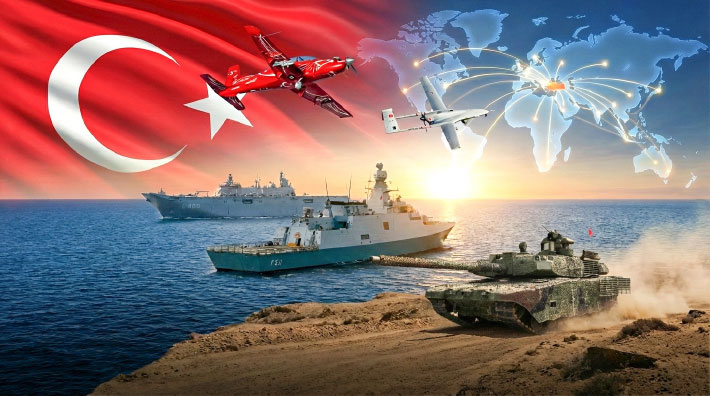
General Assessment of the Turkish Defense and Aerospace Industry in 2025 and Targets for 2026

Türkiye recorded a historic achievement in exports in 2025. According to data released by the Turkish Exporters Assembly (TİM), total exports increased by 4.5% compared to the previous year, reaching USD 273.4 billion and marking the highest level ever recorded. The decisive role played by the industrial sector in this growth was particularly noteworthy.
In 2025, the Turkish industrial sector achieved a record export volume of approximately USD 194.8 billion. While industrial exports increased by 6% on an annual basis, the sector’s share of total exports rose to 82%, up from 81.3% in 2024. Of the 15 sectors within the industrial ecosystem, six broke export records in 2025. Accordingly, the Automotive Sector reached USD 41.5 billion, the Electrical and Electronics Sector USD 17.7 billion, the Jewelry Sector USD 7.9 billion, the HVAC Industry USD 7.4 billion, Ship-Yacht and Services USD 2.2 billion, and the Defense and Aerospace Industry achieved an export volume of USD 10.54 billion.
A Historic Threshold Crossed in the Defense and Aerospace Industry
The rapid development demonstrated by the Turkish Defense and Aerospace Industry in recent years has enabled NATO-standard, cost-effective platforms, systems, and capabilities developed by Turkish companies to become increasingly sought after in international markets. In 2002, the sector consisted of 56 companies and 62 projects, with a foreign dependency level of approximately 80%. Today, the ecosystem has expanded to more than 3,500 companies and over 1,400 projects, achieving a local content rate of 82%. Total sector turnover increased from USD 1.1 billion in 2002 to USD 20.2 billion by the end of 2024. Defense and aerospace exports, which stood at only USD 248 million in the early 2000s, reached USD 7.154 billion in 2024 (USD 6.7 billion according to TİM data). Including products outside the main grouping, total export revenues of the Turkish Defense and Aerospace Industry reached USD 7.2621 billion in 2024.
The year 2025 marked a historic turning point for the Turkish Defense and Aerospace Industry. Export revenues increased by approximately 48.8% compared to the previous year, reaching USD 10.054 billion and surpassing the USD 10 billion threshold for the first time. Of this total, USD 9.87 billion consisted of goods exports, while USD 184 million stemmed from services exports. In addition, exports exceeding USD 2.5 billion were recorded in December 2025 alone, setting a new monthly record. This remarkable 48.8% growth rate in defense and aerospace exports further confirms Türkiye’s increasing visibility on a global scale in high-technology and strategic sectors.
According to the 2025 export data announced by TİM on 4 January 2026, the Turkish Defense and Aerospace Industry recorded exports of USD 385.096 million in January, USD 435.240 million in February, USD 883.951 million in March, USD 538.175 million in April, USD 741.066 million in May, USD 619.562 million in June, USD 981.433 million in July, USD 833.909 million in August, USD 572.823 million in September, USD 707.566 million in October, USD 746.448 million in November, and a record USD 2.571033 billion in December, bringing the total to USD 10.016302 billion. Monthly exports, which stood at USD 997.520 million in December 2024, increased by 157.7% year-on-year to reach USD 2.571033 billion in December 2025. Thanks to this record growth, the share of the Defense and Aerospace Industry in Türkiye’s total exports reached 11.1% in December 2025.
President of the Secretariat of Defense Industries, Haluk GÖRGÜN, stated that export growth was not limited solely to deliveries, noting that newly signed contracts increased by nearly 80%. According to Görgün, new contract volume, which stood at approximately USD 10 billion in 2024, rose to USD 17.8 billion in 2025, representing a growth of 78%. Highlighting that numerous Armed UAV contracts were signed with countries in the Gulf and Africa during 2025, GÖRGÜN shared the following regarding regional export distribution: “Among the top ten countries to which we exported most last year, four were European countries and one was the United States. In overall terms, approximately USD 5.6 billion (56% of the USD 10 billion total exports) was directed to the European Union, NATO countries, and the United States. Asia-Pacific, the Middle East, and Africa followed thereafter.” In terms of regional distribution, the Turkish Defense and Aerospace Industry exported USD 4.3 billion to Europe and USD 1.6 billion to the Middle East in 2025. The United States, the United Kingdom, and Slovakia emerged as the top export destinations. To address financing issues that will play a key role in further increasing export volumes, the Secretariat of Defense Industries (SSB) will implement the Government-to-Government Military Sales model starting in 2026. SSB completed the necessary legislative framework and institutional preparations for this model in 2025. Through this mechanism, a wide range of cooperation models, from state-company commercial contracts to full government-to-government sales, will be offered to international customers.
Meanwhile, the share of the Defense and Aerospace Industry in Türkiye’s total exports has continued to rise steadily in recent years, increasing from 1.7% (USD 4.4 billion) in 2022 to 3.6% as of 2025. With exports to 185 countries and product diversity across 230 categories, the Turkish Defense and Aerospace Industry has now established itself as a global player.
Speaking at the 2nd Defense Industry Talent Management Summit on 14 January 2026, Vice President Cevdet YILMAZ underlined that Türkiye has undergone a comprehensive transformation in its defense industry in recent years. He noted that the sector has evolved into a strong ecosystem comprising more than 3,500 companies, over 1,400 projects, nearly 100,000 direct employees, and a turnover exceeding USD 20 billion.
Export revenues of the Turkish Defense and Aerospace Industry are expected to surpass USD 11 billion in 2026. Export-related news reported in December 2025, and January 2026 has created a positive outlook regarding the achievement of this target. Under an agreement signed on 19 December 2025, ASELSAN will deliver an undisclosed number of ANTIDOT 2-U Radar Electronic Attack Pods and ANTIDOT 2-U/S Radar Electronic Support Pods, valued at USD 410 million, for use on BAYRAKTAR TB2 Armed UAVs operated by Poland. Deliveries are expected to be completed by 2035. In January 2026, ASELSAN also announced the signing of export contracts worth USD 171 million with Asia-Pacific customers for the direct sale of communication systems and payloads for Unmanned Surface Vehicles.
Additionally, ASELSAN signed a three-year framework agreement with the NATO Support and Procurement Agency (NSPA) in January 2026 for the delivery of Identification Friend or Foe (IFF) systems to be used in man-portable air defense systems. Under the agreement, ASELSAN will supply advanced IFF interrogator systems for MANPADS platforms in NATO inventories. With its long-standing experience in IFF technologies, ASELSAN stands out as one of the limited number of organizations worldwide capable of producing IFF systems compliant with Mode-5 standards.
Meanwhile, STM signed its first export contract to Europe in January 2026 for the rotary-wing loitering munition KARGU and the fixed-wing loitering munition ALPAGU, both of which are actively used by Turkish military and security forces. Under the agreement signed between STM and an EU and NATO member country, KARGU and ALPAGU will be integrated into land vehicles in line with local user requirements and operational doctrine. STM will provide not only platform deliveries but also battle management system software integrations tailored to the customer’s existing systems and operational concepts. With this project, the number of continents to which STM’s UAV systems have been exported increased to four, while the total number of customer countries reached 15.
TEI achieved the first major export success of 2026. Under an export order valued at USD 2.95 billion, the company will manufacture parts and provide maintenance, repair, and overhaul (MRO) services for GE Aerospace across 22 different civil and military aviation engine programs. Deliveries under this major contract are set to begin in 2026 and are expected to significantly increase the sector’s export value per kilogram. This landmark order also serves as strong confirmation of Türkiye’s position among the world’s leading centers for high value-added engine manufacturing technologies.
On January 30, 2026, during the 5th Global Strategies in Defense and Aerospace Industry Conference held in Antalya, awards were presented to the 2025 Export Champions of the Turkish Defense and Aerospace Industry. The companies announced and honored at the conference as the Turkish Defense and Aerospace Industry – 2025 Export Champions are:
ARCA Defense Industry Trade Inc.
BAYKAR Machinery Industry and Trade Inc.
TUSAŞ Turkish Aerospace Industries Inc. (TAI)
TEI-TUSAŞ Engine Industries Inc.
ROKETSAN Rocket Industries and Trade Inc.
ASELSAN Electronics Industry and Trade Inc.
Military Factory and Shipyard Management Inc. (ASFAT)
OTOKAR Automotive and Defense Industry Inc. (via RAM Foreign Trade Inc.)
SSTEK Defense Industry Technologies Inc.
ALP AVIATION Industry and Trade Inc.
2025 Turkish Defense and Aerospace Sector Export Champions by Product Category
The companies announced and awarded at the conference according to product categories are as follows:
Military Electronic Systems, Radars, and Simulators
ASELSAN
BOĞAZİÇİ DEFENSE Technologies Inc.
Naval Military Platforms
ASFAT (Military Factory and Shipyard Management Inc.)
HAVELSAN
METEKSAN Defense
AKANA Maritime Technologies (SME Category Winner)
Land Vehicles
OTOKAR Automotive and Defense Industry Inc.
NUROL MAKINA
BMC Automotive Industry
MENATEK Defense Technologies (SME Category Winner)
Aircraft, Engines, and Components
TUSAŞ – Turkish Aerospace Industries
TEI – TUSAŞ Engine Industries Inc.
ALP AVIATION
AKSA Advanced Composite Technologies (SME Category Winner)
Unmanned Aerial Vehicles (UAVs)
BAYKAR
TUSAŞ
STM
BMS Defense Technologies (SME Category Winner)
Rocket and Guided Missile Systems
ROKETSAN
SİNERJİ High Technology Inc. (SME Category Winner)
Weapon Systems and Ammunition
ARCA Defense Industry Trade Inc.
SAMSUN YURT SAVUNMA (SYS)
MKE Inc.
BAHTİYAR Hunting Equipment (SME Category Winner)
Global Position and Strategic Achievements
Türkiye has now risen to the position of a globally competitive and reliable supplier in the defense and aerospace domain. The procurement agreement signed with Spain for the HÜRJET Advanced Jet Trainer Aircraft, the KAAN Project and the sale of two İSTİF-class Frigates to Indonesia, the export of two Auxiliary Oiler Replenisher and Logistics Ships to Portugal, and the Offshore Patrol Vessel contract signed with Romania have all emerged as tangible indicators of this global expansion. With NATO-standard, cost-effective, indigenous and national products, the Turkish Defense and Aerospace Industry brand has today become a global symbol of quality and high technology.
Speaking at the Naval Platforms Commissioning and First Steel Cutting Ceremony held at Istanbul Naval Shipyard Command on 20 December 2025, President Recep Tayyip ERDOĞAN stated that Türkiye has risen to become the world’s 11th largest defense exporter, underlining that the target for 2028 is to reach USD 11 billion in defense and aerospace exports and to enter the world’s top 10 countries in the defense and aerospace sector.
The inclusion of ASELSAN, TUSAŞ, ROKETSAN, ASFAT, and MKE in the Defense News Global Top 100 list in 2025 confirmed the technological maturity and global competitiveness of the Turkish Defense and Aerospace Industry.
Indigenous Capability, Human Capital, and the 2026-2028 Outlook
According to data from the Ministry of Defense and Technology, the share of domestically produced systems in defense procurement has exceeded 80%, and Türkiye has become the manufacturer of two out of every three military unmanned aerial vehicles sold worldwide. Türkiye is also capable of designing and producing its own fifth-generation fighter aircraft, destroyers, submarines, and aircraft carriers; ranks among the ten countries worldwide that can design, build, and export modern frigate-class warships; and has made significant progress in critical technologies such as tactical ballistic missiles, long-range cruise missiles, and ballistic missile systems with ranges of up to 2,000 km.
Speaking at the 2nd Defense Industry Talent Management Summit on 14 January 2026, Minister of Industry and Technology Mehmet Fatih Kacır stated that the Ministry strongly supports investments and R&D projects carried out by public institutions, private sector initiatives, and universities in the defense industry, noting: “Over the past 23 years, we have provided incentives for 965 defense industry investments, paving the way for investments worth TRY 369 billion.” KACIR also noted that through TÜBİTAK scholarship and support programs, TRY 64 billion has been allocated to 2,142 defense industry projects and to 4,300 scientists and young researchers, and that innovative activities carried out across 79 R&D and Design Centers employing 23,700 personnel, as well as 340 startups operating in Technopark’s with 7,900 employees, are being actively supported.
Within the defense industry ecosystem, which provides direct employment to approximately 100,000 people, qualified human capital remains one of the top priorities. More than 42,000 personnel, most of whom are university graduates, are employed within companies of the Turkish Armed Forces Foundation (TSKGV), notably TUSAŞ, ASELSAN, ROKETSAN, TEI, HAVELSAN, ASPİLSAN, and İŞBİR. By the end of the 12th Development Plan period in 2028, total employment in the defense industry is targeted to reach 158,000 people. For 2028, targets have also been set at USD 26 billion in turnover and USD 11 billion in exports.
Firsts Achieved by the Turkish Defense and Aerospace Industry in 2025
• Within the framework of the Spanish Air and Space Force (SASF) Command’s “Advanced Jet Trainer Aircraft, Integrated Training System - Combat (ITS-C)” Program, a contract valued at EUR 2.6 billion was signed on 29 December 2025 for the production of 30 HÜRJET New Generation Advanced Jet Trainer (AJT) and Light Combat Aircraft (LCA) at TUSAŞ facilities, with deliveries scheduled for 2028-2029, and for the structural conversion of these aircraft by AIRBUS Spain in line with SASF requirements between 2031 and 2035. The conversion of the first two aircraft will be carried out at AIRBUS Spain’s facilities in Getafe, while the remaining 28 aircraft will be converted at the program’s Conversion Center to be established in Spain.
•ASFAT Inc. sold the HİSAR-class AKHİSAR Offshore Patrol Vessel to the Romanian Navy for EUR 223 million under a contract signed during a ceremony held on 3 December 2025 at the Romanian Ministry of Defense headquarters in Bucharest.
• A Sales Contract covering the sale of 48 KAAN National Combat Aircraft (MMU) to Indonesia over a 120-month (10-year) schedule was signed on 26 July during the IDEF ’25 Exhibition with the participation of the President of the Secretariat of Defense Industries, Prof. Dr. Haluk GÖRGÜN.
• An agreement covering the sale of two İSTİF-class Frigates to Indonesia was signed on 26 July 2025 at IDEF ’25 between TAIS Shipyards and the Indonesian Ministry of Defense. Under the agreement, the İZMİR (MİLGEM-6) and İÇEL (MİLGEM-8) Frigates will enter service with the Indonesian Navy following the completion of ongoing construction, outfitting, and testing activities. During DIMDEX 2026, on 19 January 2026, TAIS signed an agreement with Qatar-based Barzan Holding to secure financing for the sale of these two vessels, with a financial scale of approximately USD 1 billion.
• A contract was signed between the Secretariat of Defense Industries (SSB) and TUSAŞ for the procurement of an additional 57 T625 GÖKBEY Utility Helicopters.
•Contract Amendments for Range and Capability Enhancement and a separate contract for the Development of the Long-Range GÖKHAN National Ramjet Air-to-Air Missile were signed between TÜBİTAK SAGE and the Ministry of National Defense.
•A Memorandum of Understanding for the Development and Production Phase of the National Ramjet Air-to-Air Missile (GÖKHAN) Project was signed between TÜBİTAK SAGE, ASFAT, and MKE.
•The Contract Signing Ceremony for the Long-Range Ramjet Air-to-Air Missile (GÖKBORA) Development Project was held between SSB and ROKETSAN on 23 July 2025.
• A contract for the T70 Helicopter Simulator Project was signed between SSB and HAVELSAN on 24 July 2025.
• At IDEF ’25, “Cruise Missile Serial Production Engine Supply Contracts” were signed between ROKETSAN and KALE JET Engines on 25 July, with the participation of the President of the Secretariat of Defense Industries, Prof. Dr. Haluk GÖRGÜN. Under these contracts, KALE JET Engines will supply KTJ-3200A, KTJ-3200S, KTJ-3700, and KTJ-1750 turbojet engines for ROKETSAN’s SOM, ATMACA, KARA ATMACA, and ÇAKIR Cruise Missiles.
• KALE JET Engines carried out the first export of the KTJ-3200 Turbojet Engine to Brazil for use in an anti-ship cruise missile.
•The First STEEL DOME System Delivery Ceremony and the ASELSAN Oğulbey Facility Groundbreaking Ceremony were held in Ankara on 27 August 2025. Within the scope of the ceremony, a total of 47 vehicles entered the inventory of the Turkish Armed Forces, including 1x SİPER Block-I Long-Range Air Defense System with 10 associated vehicles, 3x HİSAR-O/RF Medium-Range Air Defense Systems consisting of a total of 21 vehicles, 7x PUHU and 2x REDET electronic warfare systems, 1x KORKUT Command and Control Vehicle, 1x KORKUT Weapon Sensor Vehicle, 1x Fire Control Unit, 2x modernized 35 mm Oerlikon anti-aircraft guns, and 1x ALP-100G radar and 1x ALP-300G early warning radar.
• Several contracts worth a total of USD 6.5 billion were signed on 25 November 2025 between the Secretariat of Defense Industries (SSB) and relevant defense companies, including ASELSAN, ROKETSAN, and HAVELSAN, to further expand and increase the number of STEEL DOME Integrated Air Defense Systems. Through new investments, ASELSAN and ROKETSAN aim to double the production rate of the STEEL DOME system, increase delivery speed starting from 2026, and deliver more than 100 STEEL DOME components annually to the Turkish Armed Forces.
•In February 2025, an agreement was signed between Indonesian company Republikorp and Turkish Unmanned Aerial Vehicle manufacturer BAYKAR for the sale of 60 BAYRAKTAR TB-3 and 9 AKINCI Armed UAVs to Indonesia. According to Anadolu Agency, the procurement agreement was signed by BAYKAR CEO Haluk BAYRAKTAR and Republikorp founder Norman JOESOEF shortly after President Recep Tayyip Erdoğan’s visit to Indonesia (11-12 February). Republikorp stated that a Joint Venture Company (JVC) focusing on the production, assembly, and maintenance of unmanned aerial vehicles will be established in Indonesia.
•On 16 February 2025, the GÖKSUR Guided Missile was successfully test-fired from TCG Beykoz Corvette.
• On 17 February 2025, a Malaman Smart Mine was deployed from the REİS-class submarine TCG Pirireis.
•During a live-fire test conducted in early March 2025 with the KARA ATMACA Extended-Range Cruise Missile developed by ROKETSAN for the Turkish Land Forces, KARA ATMACA achieved its longest-range and longest-duration flight, renewing its own record. Following a live-fire test conducted in the first half of January 2025, the President of the Secretariat of Defense Industries, Haluk GÖRGÜN, announced that the missile used the KALE JET Engines-produced KTJ-3700 Turbojet Engine and reached a range of 400 km. Accordingly, it is assessed that during the March 2025 firing test, again using the KTJ-3700 Turbojet Engine, KARA ATMACA exceeded a range of 400 km.
• The first live sea test-firing of the encapsulated ATMACA (AKATA), the submarine-launched variant of the ATMACA Anti-Ship Guided Missile developed by ROKETSAN with indigenous capabilities, was successfully conducted on 12 March 2025 from the TCG Preveze Submarine off the coast of Mersin. The encapsulated ATMACA used in the torpedo-tube launch was powered by the KALE JET Engines KTJ-3200 Turbojet Engine. During the second firing-test campaign conducted in mid-October 2025, successful engagements were achieved against both a moving sea target and a fixed land target using the encapsulated ATMACA missile, which can be launched from torpedo tubes at depths between 15 m and 60 m.
• Within the scope of the National Joint Cruise Missile (GEZGİN) Project, the first test launch with the encapsulated GEZGİN mass-equivalent prototype was conducted in May 2025 at Aksaz, utilizing the Submarine Test Infrastructure (DATA) designed and produced by TÜBİTAK SAGE. Integration efforts continue for the GEZGİN Guided Missile with the National Vertical Launch System (MİDLAS) Strike Configuration for surface combatants and the MİLDEN Vertical Launch System (Strategic MİDLAS).
•The MURAD 100-A X-Band (GaN) AESA fighter aircraft radar developed by ASELSAN with indigenous capabilities was integrated in 2025 into a total of six manned and unmanned air platforms, including the F-16, KIZILELMA Unmanned Combat Aerial Vehicle (UCAV), and AKINCI Armed UAV, for flight and live-fire testing.
•During a live-fire test conducted in the first half of October 2025 by TÜBİTAK SAGE, a SOM-J Anti-Ship Cruise Missile launched from an F-16C fighter aircraft of the 401st Test Squadron approached a fixed floating surface target at low altitude in a sea-skimming profile, executed evasive maneuvers, and achieved a direct hit.
• Using the MURAD 100-A AESA radar, which was integrated into an F-16 aircraft upgraded under the ÖZGÜR Avionics Modernization Program, the first live-fire test of the TÜBİTAK SAGE-developed GÖKDOĞAN Beyond Visual Range (BVR) air-to-air missile was successfully conducted in the second half of October 2025.
• The first GÖKDOĞAN BVR missile firing test using the KIZILELMA UCAV was conducted on 29 November 2025 over Sinop airspace, achieving a direct hit on the target aircraft (Banshee Jet 80). In both tests, the GÖKDOĞAN BVR missile guided by the MURAD 100-A AESA nose radar successfully destroyed the target with a direct hit. With this engagement, for the first time in the world, an unmanned combat aerial vehicle successfully engaged and destroyed an aerial target using a beyond-visual-range air-to-air missile. ASELSAN systems played a decisive role across the entire engagement chain in this historic achievement.
•As part of the “Tactical Wheeled Vehicle-Integrated Panter Howitzer Project,” deliveries of the T-155 8x8 Integrated Panter (formerly ARPAN) Self-Propelled Howitzers to the Turkish Land Forces started in November 2025. Under the project, carried out by the main contractor ASFAT (General Directorate of Military Factories) and ASELSAN, BMC, and MKE as subcontractors, a total of 41 T-155 8x8 Integrated Panter self-propelled howitzers will be delivered in batches during the initial phase. As of the end of 2025, five units had been delivered, with the remaining 36 units scheduled for completion by the end of 2026.
• The LEVENT Close-In Air Defense System developed by ROKETSAN achieved a direct hit against an aerial target during its first guided test firing conducted in a ground-based test configuration in November 2025.
• The autonomous firing test of the SİPER Block-I Long-Range Air and Missile Defense System was successfully completed in November 2025. The firing was conducted at the Sinop Test Center as part of acceptance tests during the delivery process of a completed SİPER Block-I battery.
• During the acceptance firing, HİSAR-A Low-Altitude Air Defense System, scored a direct hit against a target drone on 25 December 2025. This demonstrated that the first serial-production batch of the HİSAR-A System, equipped with the new-generation Missile Launch System and KİLİT32H IIR seeker, is ready to enter service with the Turkish Armed Forces. The Oerlikon air defense set entering Turkish Armed Forces inventory consists of two 35 mm Oerlikon guns, one Fire Control Unit, and one HİSAR-A Missile Launch System. Weighing 252 kg, the HİSAR-A missile has a speed of Mach 2.7 and can engage targets at ranges of up to 15 km and altitudes of up to 10 km.
• The ship-based HİSAR-D RF air defense missile developed by ROKETSAN achieved a direct hit on a low-altitude aerial target (Banshee Jet 80) during a land-based live-fire test conducted in November 2025 at the Sinop Test Center using a MİDLAS canister.
• During the test firing conducted by the Air Defense Command on 16 October 2025 at the Hisar Test Firing Range in Aksaray, HİSAR-O system successfully neutralized the target. According to information shared, the Banshee Jet 80 high-speed target aircraft was struck at a range of 18 km and an altitude of 7 km, with the missile exceeding Mach 1 at impact. Weighing 295 kg, the HİSAR-O/RF missile has a speed of Mach 3.5 and can engage targets at ranges of up to 25 km and altitudes of up to 10 km. In a firing test conducted with HİSAR-RF, a target at 5 km altitude was hit at a range of 40 km, with the missile speed exceeding Mach 1 at impact.
• A direct hit was achieved during a firing test conducted in the first half of December 2025 with the TAYFUN Ballistic Missile, for which ROKETSAN continues serial production and delivery activities.
• Türkiye Rail System Vehicles Industry Inc. (TÜRASAŞ) produced 100 Military Tank Transporter Wagons in 2025 under the Military Tank Transporter Wagon Project, completing its two-year production target within a single year. In total, TÜRASAŞ completed the production of 801 wagons of various types during the year, setting a record. Under the UAIS Special-Type Military Transporter Wagon Project, the aim is to ensure the rapid and planned rail transportation of military vehicles in the Turkish Land Forces inventory, such as ALTAY MBT T1 and T2, M60T, KORKUT, SAMUR, and KİRPİ, under all weather conditions to locations accessible by the railway network. As a result of these efforts, the UAIS-type Military Vehicle Transporter Wagon, with its tare weight reduced to 24.5 tons, has enabled the transportation of 78 out of 104 different military vehicles in the Turkish Armed Forces inventory.
ASELSAN’s 2025 “Z Report”: Selected Mentions
ASELSAN left its mark on 2025, its 50th anniversary year, with strong financial and technological performance. Some of the “firsts” highlighted in ASELSAN’s 2025 Z Report are as follows:
• The GÖKBERK Mobile Laser Weapon System proved its effectiveness against FPV, fixed-wing, and rotary-wing drones.
• The EJDERHA/AD 200 High-Power Electromagnetic (HPEM) Counter-UAV System successfully neutralized swarming drones during tests and moved into the production phase.
•The combat-proven KORKUT was successfully exported to multiple countries.
•While serial production deliveries continued for the GÖKDENİZ Close-In Air Defense System, new export contracts were also signed.
• The ALP 100-G and ALP 300-G Early Warning Radars were exported for the first time.
• The CENK Four-Dimensional Naval Search Radar was put into service not only in Türkiye but also in friendly and allied countries.
• The STR Weapon Detection Radar (Counter-Battery Radar) was exported.
• Development activities for the ALP-400G V/UHF Radar were initiated. The ALP-400G V/UHF Radar System, intended to provide radar coverage across a broad spectrum from low-altitude threats to high-altitude targets, is expected to fill an important gap in Türkiye’s air defense network with capabilities such as high-resolution target detection, multi-target tracking, and automatic classification.
• To enhance Türkiye’s airborne early warning capability, a contract for the development of an aircraft-integrated (manned/unmanned) Early Warning Radar (ALP-200A) was signed on 24 July 2025 at IDEF ’25. The L-Band Early Warning Radar (AEW Radar, ALP 200A) is planned to be integrated into both manned and unmanned aircraft.
•The first export contracts related to the SERDAR Coastal Surveillance Radar were signed in 2025.
•The ANTIDOT 2-U/EA Electronic Warfare System, for which flight tests were completed, became operational domestically and abroad.
• Serial production deliveries commenced for the ANTIDOT 2-U/ES Electronic Support System, whose development has been completed.
• Deliveries of the AKKOR Active Protection System continued in 2025.
• Very-long-range firings of TOLUN P, developed in three new variants (anti-personnel fragment, bunker-buster, and infrared seeker-IIR) were successfully conducted. Export activities for TOLUN P also continued. Integrated into the AKINCI, KIZILELMA, and ANKA-III unmanned aircraft platforms, TOLUN P became Türkiye’s first munition launched from an internal weapons bay of an aircraft.
• Domestic and international deliveries continued for the LGK-82, which was already integrated on AKINCI, ANKA III, and AKSUNGUR.
• In a firing test conducted from an F-16, the GÖZDE Guidance Kit struck a high-speed moving target with pinpoint accuracy.
• The first flight and firing test of KGK-84 Winged Guidance Kit was successfully conducted in December 2025.
• ASELFLIR-600 Electro-Optical Targeting System successfully completed full-performance test flights with the AKINCI Armed UAV. Production activities for serial deliveries of ASELFLIR-600, which has a visual detection range of up to 225 km, were initiated.
• The first S-70A Helicopter upgraded using ASELSAN’s next-generation aselMAS avionics suite entered the inventory of the Turkish Armed Forces (TAF).
• The ASELSAN-produced ANS 610-M Naval Inertial Navigation System entered the Turkish Naval Forces Command (TNFC) inventory for the first time.
•Under the BARBAROS Mid-Life Upgrade (MLU) Project, the world’s most comprehensive MEKO-class frigate modernization project carried out with ASELSAN as the prime contractor, the official acceptance of the first ship, TCG Oruçreis, by TNFC took place in early August 2025, while modernization activities on the second ship, TCG Salihreis, were initiated.
•The HÜRKUŞ-II New Generation Basic Trainer Aircraft conducted its first flight on 30 December 2024 with the ADEN Multi-Function Display Unit, designed with a domestic display. During the 20-minute flight, the aircraft reached 6,500 feet altitude and 140 knots.
•The first deliveries of ASELSAN’s KILAVUZ 40 Inertial Measurement Units, an essential component of the KAAN National Combat Aircraft, were completed in 2025.
• Syria became the first export customer of the ASELSAN-produced HTRS-100 Air Traffic Control Radar System. The HTRS-100 Air Traffic Control Radar System manufactured by ASELSAN will contribute to flight safety at Damascus International Airport. The Primary Surveillance Radar (PSR), one of the system’s components, provides clear and reliable target detection and tracking even in the most challenging environments thanks to superior and innovative clutter-suppression algorithms and target-tracking algorithms operating in the S-band. The Secondary Surveillance Radar enhances aircraft tracking capabilities through Identification Friend or Foe (IFF) interrogation and offers multi-interrogation mode support for versatile operations. The radar’s range can be set to 80 or 100 nautical miles (approximately 185 kilometers).
ROKETSAN General Manager İkinci Reviewed 2025 and Shared 2026 Targets
ROKETSAN General Manager Murat İkinci evaluated 2025 and shared the company’s targets for 2026 in an interview with Anadolu Agency in January 2026. Emphasizing that ROKETSAN is among the fastest-growing defense companies in the world, İkinci underlined that 2025 was an exceptionally successful year for the company, stating, “We closed 2025 with export revenues approaching USD 750 million.” Describing 2025 as a year in which many successful projects entered serial production, numerous tests were completed successfully, and final products emerged, İkinci said, “In 2025, we conducted more than 200 trials, tests, and new product activities across over 20 locations throughout Türkiye. In total, we carried out testing activities exceeding 800 days. Since multiple tests were conducted simultaneously at different locations, we were running four or five tests on the same day within a single year. We are talking about a year in which R&D activities were carried out for more than 200 products. Alongside this, many testing and development activities continued across the country.”
Defining 2025 as a year of both global and domestic growth and of introducing new products into service for ROKETSAN, İkinci also noted that it was a significant investment year for the company. He stated that new facilities, particularly production facilities, were commissioned in 2025, while important international investments were also undertaken, highlighting major investments in Azerbaijan and Indonesia.
Noting that new investments aimed at significantly increasing production capacity will begin to come online in 2026, İkinci shared the following information regarding upcoming activities: “2026 will be the year in which the work we have carried out in these areas bears fruit, transforms into products, and serial production begins. Among these, TAYFUN Block-4 is one of the most anticipated. We will hopefully share good news about it soon. Our air-to-air missile GÖKBORA and our 300 ER missile programs are progressing at full speed. We will be sharing new developments very shortly. At the same time, we are making intensive efforts to expand the production of hypersonic systems, as well as the SİPER, HİSAR, and SUNGUR air defense systems. Our pace will not slow down; on the contrary, it will accelerate further. 2026 will also be a year in which we witness many innovations in cruise missiles and other mini munitions.”
Stating that space technologies are currently among the company’s top investment areas and that two major space projects are underway, İkinci made the following assessment: “Development activities under the ŞİMŞEK Project is ongoing. 2025 has been a year in which we achieved very significant technological gains. We will reap the benefits of these in 2026 and 2027. We will continue our space activities in 2026 as well. Space programs are inherently long-term endeavors. The key objective here is to build an ecosystem, and one of the most important pillars of that ecosystem is ROKETSAN. ROKETSAN will continue to fulfil its responsibilities to the fullest extent.”
Export Value per Kilogram in the Defense and Aerospace Industry
Driven by strategic investments that enable the production of high value-added and high-technology products, the Turkish Defense and Aerospace Industry has steadily increased both its exports and its export value per kilogram in recent years.
While the sector’s total export revenues (including products outside the main grouping) amounted to USD 7.2621 billion in 2024, as stated earlier, export revenues increased by approximately 48.8% in 2025 to reach USD 10.054 billion. With the USD 10 billion threshold surpassed for the first time, the sector’s export value per kilogram also remained well above Türkiye’s overall average.
According to TİM records, the overall export unit value per kilogram, which stood at USD 1.48 in 2023, decreased to USD 1.42 in 2024. Although the Defense and Aerospace Sector was among the sectors with the highest export growth in 2024, a decline was observed in its export unit value. According to TİM data, the sector’s unit value decreased from USD 62.61 in 2023 to USD 57.84.
According to the “2025 Export Evaluation Report” prepared by the Ankara Chamber of Industry (ASO) and published in January 2026, Türkiye’s average export value per kilogram reached USD 1.57 in 2025, while in the Defense and Aerospace Sector, where high-technology product sales increased significantly, this figure rose 44-fold to USD 65. Comparing the periods 2015-2019 and 2020-2024, Türkiye’s arms exports increased by an impressive 103%, while arms imports decreased by 33% during the same period. This shift elevated Türkiye to the position of the world’s 11th largest arms supplier and served as concrete evidence of its strategic independence.
Meanwhile, according to the ASO report, the localization rate in the Defense and Aerospace Industry increased to 84%, confirming that the sector is not limited to final platform production alone but is supported by a broad-based supply ecosystem, which is considered the strongest guarantee for the sustainability of this ecosystem.
2026 Defense and Security Budget
As stated by Vice President Cevdet YILMAZ during the 2026 budget presentation, resources allocated to defense and security correspond to 11.4% of the central government budget. Including the appropriations allocated to defense and security units within the central government budget and the Defense Industry Support Fund (SSDF), a total of TRY 2.155 trillion has been allocated from the 2026 budget (TRY 1.202 trillion for defense expenditures and TRY 953 billion for internal security expenditures) to further develop the domestic and national capabilities of the defense industry. For 2025, this figure had reached TRY 1.6084 trillion, including SSDF resources and allocations from the Ministry of Treasury and Finance for the development of the Turkish Defense and Aerospace Industry. According to the Medium-Term Program published in 2025, the average USD/TRY exchange rate for 2026 is projected at 46.597. Accordingly, planned defense and security expenditures for 2026 correspond to approximately USD 25.80 billion for defense and USD 20.45 billion for security, totaling around USD 46.26 billion. From the 2026 Central Government Budget, TRY 822.93 billion has been allocated to the Ministry of National Defense and TRY 1.547 billion to the Secretariat of Defense Industries, while SSDF resources for 2026 are estimated at around TRY 333 billion. It should be recalled that NATO member states agreed at the Hague Summit to increase defense spending to 5% of GDP by 2035, with 3.5% allocated directly to defense and 1.5% to defense-related infrastructure such as cybersecurity and railways. To meet the 5% target, defense expenditures are expected to increase by 130% in stages by 2035, implying that Türkiye’s defense and security spending could exceed USD 80 billion by that year.
Turkish Defense and Aerospace Industry Targets for 2026
The 5th Global Strategies in the Defense Industry Conference, held in Antalya on 30–31 January 2026, hosted the “2025 Achievements and 2026 Targets Press Meeting” on its second day with the participation of the President of the Secretariat of Defense Industries, Haluk GÖRGÜN. During the meeting, the President of the Secretariat of Defense Industries, Haluk GÖRGÜN, provided a structured overview of the 2026 targets, outlining priorities and core capability domains as summarized below.
Institutional Development and Talent Management:
•Institutionalization of the National Competency Initiative within a sustainable framework
•Establishment of a sector-specific Sectoral Competency Network, including standards, measurement–evaluation, and development processes
•Continuous updating of the training portfolio through the Defense Industry Academy in line with field requirements, while accelerating access to and development of global talent
•Strengthening the Defense Industry Vocational School model to effectively address intermediate workforce needs
•Expanding the learning ecosystem by disseminating digital learning, career, and development platforms to a broader user base
•Transforming the Brainpower approach into a sustainable collaboration and co-production framework with talent abroad
Aviation Systems:
•Delivery of the first KIZILELMA Unmanned Combat Aircraft
•Signing of the KAAN Serial Production contract
•Initial delivery of TB3 Armed UAVs capable of shipborne take-off and landing
•First delivery of AI-enabled TB2T-AI Armed UAVs with enhanced payload capacity
• Integration of the TS1400 turboshaft engine into the GÖKBEY helicopter and completion of on-platform ground tests
•Commencement of HÜRKUŞ deliveries (22 platforms)
•Completion of the Preliminary Design Review (PDR) phase and signing of the Critical Design Review (CDR) contract under the National Combat Aircraft Indigenous Engine Development Project
Strategic Systems:
•High-volume deliveries under air defense and missile systems projects
•Initiation of the serial production process for the AKYA torpedo
•Integration of the ATMACA Weapon System capability into submarines
•Completion of MİDLAS integration on combat ships
•Signing of contracts for the indigenous development of artillery systems in various calibers subject to export licensing
•Signing of the GİZEM High-Power Laser Weapon System Project contract.
•Continuation of design activities under the BULUT Program and activation of cloud infrastructure at the first selected pilot center
System/Platform Capabilities and Integration:
•Launch of the GÖKBAĞI Project targeting low-earth-orbit satellites and a military 5G/6G communication infrastructure
•Commissioning of the helicopter-integrated Directional Infrared Counter Measures (DIRCM) system developed by ASELSAN
•Delivery of at least two additional ALP-100G and two ALP-300 early warning radars to ensure layered airspace coverage
•Delivery of the next-generation land-based electronic warfare system KORAL 200 into service
•Completion of ILGAR-2 deliveries combining electronic support and attack capabilities
•Production and delivery of 10 ALTAY tanks to the Turkish Land Forces Command in 2026 under the ALTAY Serial Production Project
•Delivery of 15 Medium-Class Unmanned Ground Vehicles in various configurations
•Commissioning of TCG Muratreis submarine and completion of TCG 18 Mart submarine modernization for the Turkish Naval Forces Command
•Delivery of the sixth MİLGEM ship, TCG İzmir (F-516), equipped with indigenous missiles, radars, and sensors
• Delivery of 4 LCTs (Landing Craft Tank) to the Turkish Naval Forces Command and 70 RHIB boats to the Turkish Land Forces Command for amphibious operations
•Demonstration of swarm capability at sea under the indigenous kamikaze unmanned surface vehicle development program
R&D Technology Management:
•Launch of the GÖKSANCAK and Yaman projects in autonomy technologies
•Signing projects for the development of a Superconducting Quantum Processing Unit (QPU) and the use of quantum magnetometers for GNSS-independent navigation and submarine detection
•Signing of the REKOR Project in synthetic biology and the KORKİLİT Project in fuse technologies
•Completion of validation activities for critical GÖKBEY components using indigenous prepreg systems and project acceptance under the KARTAL Project (Carbon/Glass Fiber Epoxy Prepreg)
Quality Testing and Certification Processes:
•650 test and acceptance activities across projects including KIZILELMA, MİLGEM-7, New Type Submarine, OPV, ÖZGÜR, HÜRKUŞ, GÖKBEY, ATAK, BATU, ATMACA, and SOM
•Conducting Design/Production Organization Approval audits for six projects including KAAN, Indigenous Engine, HÜRJET, Peace Eagle Modernization, Air SOJ (Stand-off Jammer), and F-16 ÖZGÜR
•Performing quality audits for seven projects, primarily Air SOJ, HÜRKUŞ, and HAVELSAN simulator programs
Industrialization Strategy and Sustainability:
•Organization of the Industrialization Workshop in the fourth quarter of 2026
•Provision of USD 25 million in credit support under the Defense Industry Investment and Development Support Program
•Evaluation of at least 300 companies under Industrial Competency Assessment and Support Project (EYDEP) in 2026
•Activation of the Financial Health Index and Early Warning System to monitor critical contractors and SMEs by the end of 2026
•Risk scoring via the Financial Resilience Index and assessment of financial support/rehabilitation mechanisms for high-risk companies
•Development of an innovation-based procurement guide for the defense industry and implementation in at least one pilot procurement program
•Establishment of a CRM/database infrastructure to strengthen institutional and sectoral interaction and enable effective management of customer relations, contacts, and collaboration opportunities
Conclusion
As of 2025, the Turkish Defense and Aerospace Industry has reached a new scale in terms of exports, technology, human capital, and global partnerships. With export volumes exceeding USD 10 billion, an expanding contract portfolio, and a high local content rate, the sector is advancing toward its 2026 and 2028 targets with strong momentum. Türkiye is no longer merely a regional player in defense and aerospace but has become a globally influential actor





