From KAAN to MILDEN A Look at Current Status of Indigenous Air & Naval Platform Programs
Investing heavily into the development of the local defense sector capabilities and encouraging the design and development of high-tech defense equipment since early 2000s, Türkiye has been recently transitioning from being a license producer to a technology owner and is now keen to export the fruits of its labors to become internationally competitive in the global defense market.
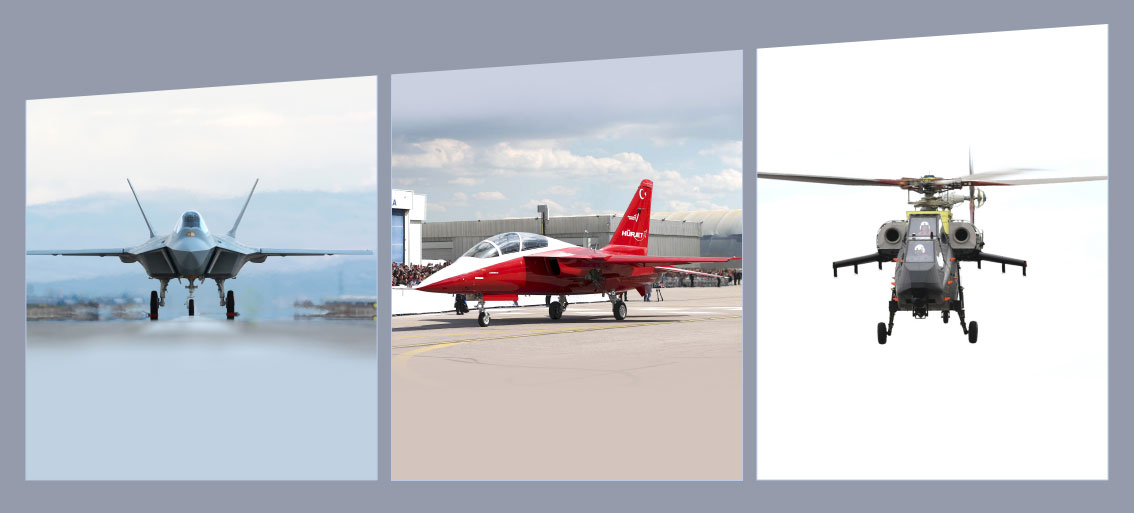
Although Turkish Aerospace Sector’s strength is still unable to rank among the first echelon, Türkiye is still insisting on developing more advanced next generation domestic manned and unmanned fixed wing and rotary wing aircraft. In this context, indigenously developed 5th Generation fighter jet KAAN Turkish Fighter (MMU/TF-X)’s first prototype GTU/P0 and twin-seat, single-engine supersonic new generation Advanced Jet Trainer (AJT) HURJET’s first prototype, dubbed P1, performed their first engine runs on February 12 and January 30, 2023 respectively and started their slow taxi tests on March 17 and March 18 respectively. HURJET P1 conducted its maiden flight on April 25, 2023 and as of June 10th a total of 10 test flights have been conducted during which HURJET accumulated a total of 6 hours and 16 minutes flight hours. KAAN MMU/TF-X is planned to perform its maiden flight by the end of 2023 (but according to sources first flight can be postponed to February or March 2024). However, contrary to Turkish Aerospace (TUSAS) President & CEO Prof. Dr. Temel KOTIL, Turkish Defense Industry Agency (SSB, formerly Presidency of Defense Industries) believed that the first flight shall take in late 2024 or in 2025. Meanwhile, the first prototype of indigenously designed and developed T929 ATAK-II Heavy-Class Attack Helicopter successfully conducted its first flight test on April 28, 2023, following ground tests. The helicopter was developed under the contract signed between the SSB and TUSAS on February 22, 2019.
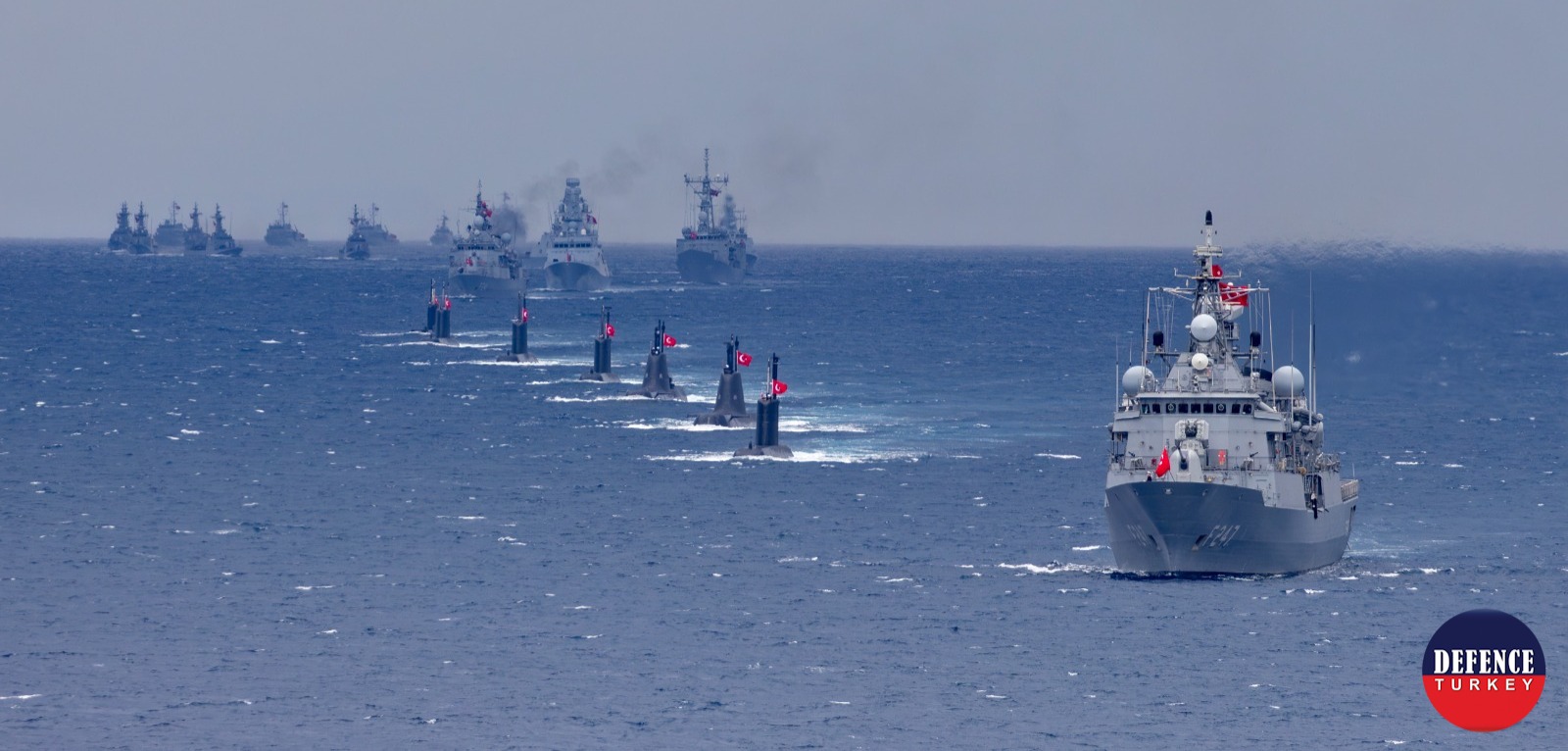
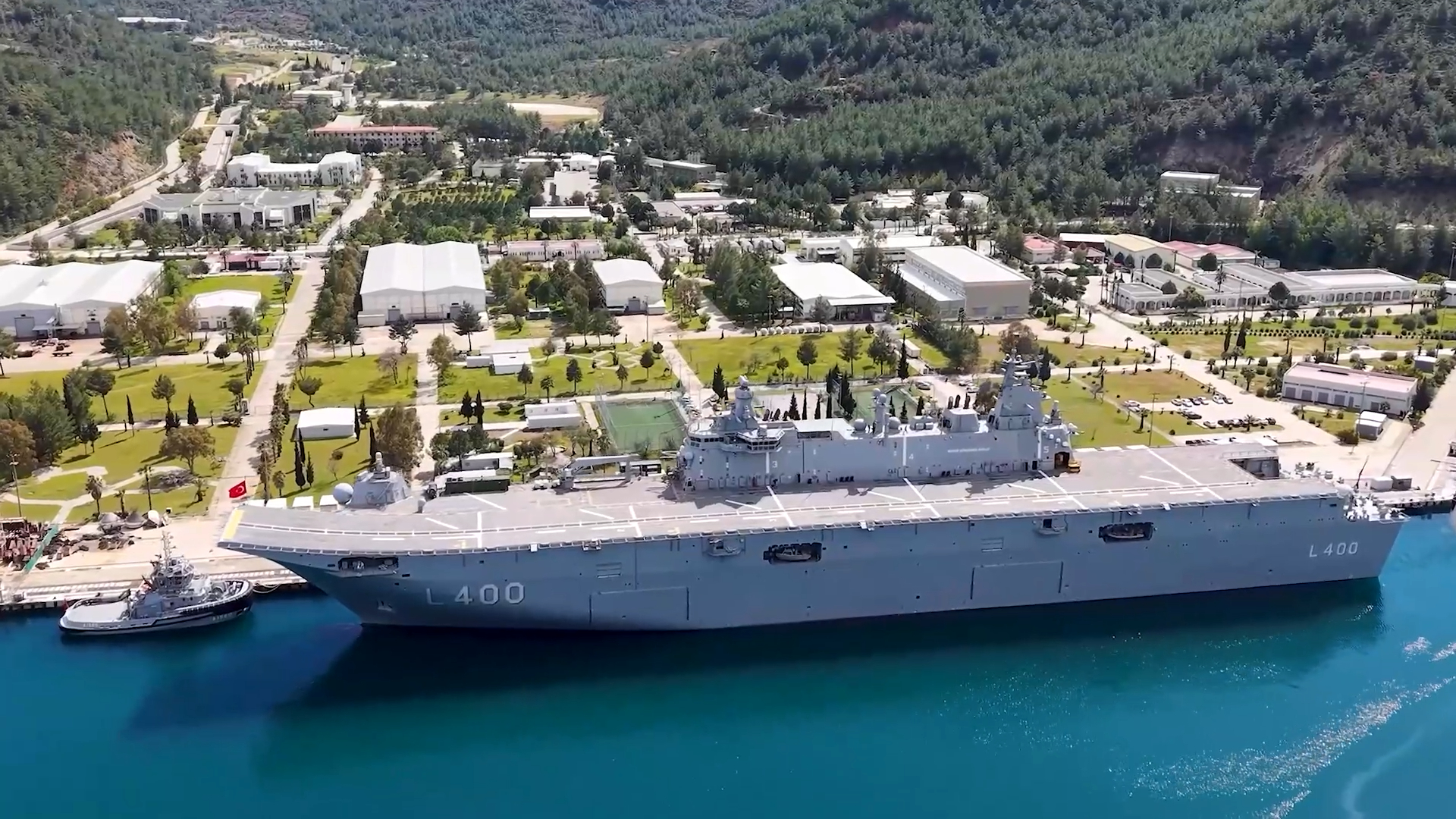
Türkiye also has a strong heritage of ship building that dates back to the Ottoman Empire and has already built capability for naval construction in state owned naval shipyards, starting in the 1970s. Having completed the local construction of 3 AY Class (Type 209/1200), 4 PREVEZE Class (Type 209/1400) and 4 GUR Class (Type 209/1400 Mod) diesel-electric submarines under the HDW license during 1981-2008, the Golcuk Naval Shipyard, is Türkiye’s only state-owned shipyard with the ability to construct submarines. Under the New Type Submarine Project (NTSP) valued at Euro 2,060 Billion a total of six REIS Class Type 214TN AIP Submarines are being constructed at Golcük Naval Shipyard, first of the Class TCG Pirireis is currently at Sea Acceptance Tests (SAT) Phase, that launched on December 6, 2022, and expected to be commissioned in September 2023. With MILDEN (short for Milli Denizaltı, which translates to ‘National Submarine’) Project, under which design studies launched on April 14, 2010, Turkish Defense & Aerospace Industry also gained submarine design capability. The Concept Design Phase of MILDEN was submitted to the Turkish Naval Forces Command (TNFC) on October 25, 2021 and approved by the TNFC in January 2022 from technical aspect. Within the scope of the MILDEN Program, that covers 6 submarines, the Preliminary Design Phase, in which the main and auxiliary systems are elaborated in detail, is currently ongoing. According to current Project schedule MILDEN’s pressure hull test construction will be started at Golcuk Naval Shipyard in 2023, the first welding of the MILDEN prototype is scheduled for early 2025 and construction, installation and trials will be completed by the end of 2031. As Türkiye’s first indigenous submarine MILDEN will be much larger, heavier and more capable than the current German-designed AY, PREVEZE, GUR and REIS Class Submarines constructed at the Golcuk Naval Shipyard under the German HDW license. Meanwhile, even though the SSB did not envisage the transition of submarine construction expertise into private sector shipyards, in June 2022 STM Savunma Teknolojileri ve Muhendislik A.Ş., one of the SSB’s affiliates and leading actors in Türkiye's defense industry initiative, declared that they have started test construction of STM500 Submarine’s pressure hull at a private sector shipyard (GURDESAN). Designed entirely by STM engineers using national resources, the small-sized STM500 Submarine is a shallow water diesel-electric attack submarine. The STM500 Submarine Project is currently at pressure hull test construction phase. This is the first time a private company in Türkiye is constructing the pressure hull of a military submarine.
KAAN MMU/TF-X 5th Generation National Combat Aircraft
In order to meet Turkish Air Force (TurAF) requirements beyond 2030s, the TF-X National Combat Aircraft (abbreviated as Milli Muharip Uçak/MMU in Turkish) Development Program was launched in accordance with Decision No 545 adopted at the Defense Industry Executive Committee (DIEC, the highest decision-making body on defense procurement in Türkiye) dated December 15, 2010. Featuring Low Observability and Super-cruise capabilities and to be equipped with domestically developed systems and sensors, the MMU/TF-X will be a 5th Generation indigenous air superiority fighter with secondary ground attack capability.
During the “Century of the Future Launching Ceremony” held on May 1, 2023 at TUSAS facilities in Kahramankazan, Ankara, and attended by President Recep Tayyip ERDOGAN, the indigenously designed and developed new generation manned and unmanned aircraft and helicopters including MMU/TF-X, HURJET, T925 ATAK-II, ANKA III, and T625 GOKBEY with its indigenous engine were unveiled to the Turkish nation and the world. During the ceremony President ERDOGAN announced that the MMU/TF-X, one of Türkiye's most significant programs, was named “KAAN”, which means “ruler”and “king of kings.” The first KAAN Turkish Fighter prototype dubbed ‘Development Test Aircraft’ (abbreviated as GTU/P0 in Turkish) was supposed to be unveiled to the Turkish public at the ceremony to be held on March 18, 2023, when the 108th anniversary of the Çanakkale Naval Victory is celebrated. However, according to TUSAS the ceremony has been postponed to May 1, 2023 due to the devastating earthquakes that occurred on February 6.
Designed to meet the operational requirements of the TurAF between 2030 and 2070, the KAAN Turkish Fighter, is a proposed single-seat, twin-engine all-weather multi-role fighter being developed by Prime Contractor Turkish Aerospace (TUSAS) with technological assistance from BAE Systems. KAAN will replace the F-4E 2020 Phantom IIs and F-16C/D Fighting Falcon combat aircraft currently in the service of the TurAF during the first quarter of the 2030s.
Türkiye is likely to procure some 150 to 200 KAAN (Prime Contractor TUSAS’ production goal is 400) in the long term to replace F-4E 2020s and F-16C/Ds. The KAAN MMU/TF-X Program has become even more important for Türkiye since the F-16C/D combat aircraft, which forms the backbone of TurAF’s airpower, will be deactivated from service starting from 2030 (Block 30TM and Block 40M versions) and deliveries of F-35As to the TurAF were halted (procurement of up to 110 aircraft were planned) by the US Government in July 2019.
The KAAN Turkish Fighter will have new generation features including; Low Observability, High Maneuverability (to be better than F-16C), Internal Weapon Bays (has both cheek and a large centerline/ventral internal weapons bays), External Weapon Carriage (for NATO and Indigenous weapons), Increased Situational Awareness, Interoperability with AEW&C aircraft, UCAVs and AARs, Super Cruise, Advanced Avionics for Sensor Fusion (5th Generation avionics suit) and Independent Operation Capability (no need for other A/C). The aircraft will be equipped with an indigenously developed gallium-nitride (GaN) Active Electronically Scanned Array (AESA) Radar, Integrated Processing Computer (Mission Computer), KARAT Infrared Search and Track (IRST) System (on top of the nose in front of the cockpit), Integrated EW Suit, as well as an TOYGUN Integrated Electro-Optical Targeting System (below the forward fuselage, which is abbreviated as BEOS in Turkish and will have a similar function as the Electro-Optical Targeting System [EOTS] on the F-35), TULGAR Helmet Mounted Sight System (HMDS, there is no HUD at the cockpit) and an Integrated Cockpit Display System (panoramic cockpit display) like that on the F-35 Lightning II aircraft. ASELSAN has been contracted to develop the indigenous AESA Radar, BEOS, IRST System, HMDS and EW Suit. Within the scope of the MMU/TF-X Program, ASELSAN also is developing the Integrated RF System (abbreviated as BÜRFİS in Turkish) for the KAAN Turkish Fighter. TUBITAK, on the other hand, has been contracted for the development of the Integrated Processing Unit (IPU, a mission computer and abbreviated as BÜİT in Turkish). TUBITAK BILGEM delivered the prototype of Integrated Processor Unit developed for the KAAN MMU/TF-X at the end of August 2022 as part of the Integrated Processor Unit Project. The Integrated Processor Unit (IPU) and Avionic Interface Unit (DCU) prototypes delivered to TUSAS will perform the Aircraft Management System and Mission Management System functions of the KAAN’s first prototype that dubbed ‘Development and Test Aircraft (GTU/P0)’, which is planned to perform its maiden flight by the end of 2023. 1 x IPU and 4 x DCUs will be used on the GTU/P0 prototype. This computer system, which will manage the aircraft systems by taking the pilot’s commands, provides information to the pilots via the Integrated Cockpit Display System and allows giving commands on the touchscreen. Several new technologies, such as the new multi-core version of the National Real-Time Operating System, Deterministic Network Technology, Avionic Digital Video Bus, and High-Speed Multi-Core (128x) Processors, are used on this prototype chassis. The IPU is a very important national technology for the KAAN, and TUBITAK BILGEM will deliver more advanced versions in near future. The KAAN Turkish Fighter will also feature the ASELSAN-YILDIRIM DIRCM System.
Within the course of the KAAN Program, new capabilities and equipment will be added to the aircraft under a “Block Development Approach”, and in each Block, the level of local content ratio will increase. The Block 0, Block 10 (2028) and most of the Block 20 (2030) aircraft will be powered by General Electric’s F110-GE-129E engines and starting from Block 30 the KAAN will gain true 5th Generation capabilities with indigenous 35,000lb class turbofan engines featuring stealthy exhaust nozzles for low-observability. With plans to perform its maiden flight in 2033 and to be inducted into TurAF service starting from 2035, the Block 30, 5th Generation multi-role model will have the capability to perform a full air-to-air and air-to-ground combat missions and to feature increased local content share thanks to indigenously developed turbofan engines, sub-systems and avionics. According to our sources the KAAN Turkish Fighter will gain Full Operational Capability (FOC) by 2040. The Block 0 aircraft (GTU/P0 prototype) is in 4th++ Generation configuration and the Block 10 prototypes, that are expected to feature 4.5th Generation Fighter performance (including AESA radar and will have better and superior capabilities in many aspects to F-16V Block 70s and Rafale F3Rs) and sensor fusion capability, will be in air superiority configuration. Even if everything goes as planned, it is not possible for the TurAF to declare an Initial Operational Capability (IOC) by mid 2030 with the first KAAN Block 10 Squadron.
By 2028, 8 MMU/TF-X prototypes will be manufactured. According to TUSAS President & CEO Prof. Dr. Temel KOTIL the first 7 MMU/TF-X aircraft will be powered by GE’s F110-GE-129E Turbofan Engines and starting from the 8th prototype (in 2028) the 35,000lb class indigenous turbofan engine will be used. KOTIL underlined that after testing 2 years indigenous engine will be started to be deployed onboard the series production KAAN aircraft in 2030. TUSAS applied to the US Government in 2019 (for 5 engines) in 2021 (for 5 engines) to procure a total of 10 engines in two separate batches for the KAAN prototypes. Meanwhile in June 2022, the SSB issued a Request for Proposal (RFP) for a new tender to select the Main Contractor Company for the KAAN Turkish Fighter Engine Development Project Phase-II, which constitutes the second phase in the development process of the new generation national turbofan engine that will power the National Combat Aircraft (TF-X). In addition to TRMotor Power Systems (TR-M) and TEI, which carried out Phase-I activities, and TAEC Uçak Motor Sanayi A.Ş., a Kale-Rolls-Royce Joint Venture also submitted its bid for the KAAN Turkish Fighter Engine Development Project Phase-II tender. It seems that TR-M and TEI in cooperation with Ivchenko Progress (Technical Support Provider) will develop indigenous TF engine for the KAAN.
Prototypes and first batches series production KAAN Turkish Fighters are to be powered by a pair of F110-GE-129E Turbofan Engines, each generating 29,500lb of thrust. The F110-GE-129E engines are expected to be used in GTU/P0, Block 10 aircraft (2028/2029) and most of the Block 20 (2030) aircraft and then switch to the indigenous 35,000lb turbofan engine from Block 30 onwards. While the first batch of 10 engines procured directly from GE, engines for the series production aircraft are expected to be assembled at TEI facilities in Eskisehir, Türkiye with a local content share of over 50% if an agreement can be reached with GE and the US Government. According to sources TUSAS has signed a contract with GE Aerospace for the supply of 80 F110-GE-129E engines. In May 2023 the then SSB Ismail DEMIR disclosed that around 40 KAAN aircraft will be delivered with F110-GE-129E engines.
TEI Chairman and CEO Mahmut AKSIT pointed out that the studies are continuing for the production of F110-GE-129E engines in Türkiye, which are planned to be used until the domestic engine with a capacity of 35,000lb is ready. “We are working on locally producing F110-GE-120 engines at our Eskişehir facilities by TEI. In this context, we are focusing on a business model with the platform manufacturer TUSAS and the main engine manufacturer GE that will keep domestic production at the maximum level.” 80 F110-GE-129E engines will be procured for the KAAN Block 10 and Block 20 aircraft and probably some 60 more F110-GE-129 engines will be procured under the Peace Onyx V Program, covering the procurement of 40 new-build F-16V Block 70 fighter jets and 79 upgrade kits for the modernization of 79 of the existing F-16C/D Block 50 and 50+ aircraft. Within the scope of the F110-GE-100 Turbofan Engine Production Project, which started with manufacturing only 12 parts under General Electric (GE) license, TEI carried out the final assembly and tests of 176 F110-GE-100 Engines in total and delivered them under the Peace Onyx-I (PO-I) Project. Within the scope of Peace Onyx-II Project (FMS/Foreign Military Sales Program), TEI carried out the final assembly and test activities of 95 F110-GE-129 IPE Engines for a total of 80 F-16C/D Block 50 Aircraft ordered in two separate batches (40+40) in March 1992 and delivered the 95th F110-GE-129 IPE Engine in April 1998. Thus, as part of the PO-I and PO-II Programs, TEI carried out the final assembly and tests of 271 engines in total (F110-GE-100 and F110-GE-129 IPE). Under the PO-IV, TEI carried out the assembly and tests of further 42 F110-GE-129B engines and completed the deliveries in December 2010. Therefore, TEI carried out manufacturing, final assembly, and test activities of 313 F110-GE-100, F110-GE-129 IPE, and F110-GE-129B Turbofan Engines in total between 1987 and 2010.
In his statement on December 8, 2022, CEO of TUSAS Temel KOTIL announced that starting from 2028/2029, TUSAS will begin the production of 24 KAAN Turkish Fighters per year (2 per month) under the Serial Production Phase. And on May 1, 2023 KOTIL disclosed that the deliveries of the first batch of 20 Block 10 KAAN aircraft will be started in 2028.
TUSAS performs the production and final assembly of KAAN Turkish Fighter prototypes at the MMU Assembly and Test Building Block A (MMU Hangar), the construction of which were completed in March 2022. It was stated that two KAAN Aircraft can be produced at the same time in Block A. TUSAS started the assembly of the first prototype of the MMU/TF-X at the MMU Hangar on April 30, 2022, and the Development Test Aircraft (abbreviated as GTU in Turkish and also called Prototype 0) was moved to the Final Assembly Line on November 21, 2022. TUSAS held a Defense Industry Press Conference at the Kahramankazan Campus on January 11, 2023 and unveiled the GTU/P0 prototype at the MMU Hangar to the defense and aerospace media representatives. Produced by TUSAS’ own resources KAAN GTU/P0 will be used in different tests throughout the program Until 2028, TUSAS will produce 7 more prototypes, which will be improved gradually and have additional equipment and capabilities apart from the GTU/P0 prototype. It is believed that there can be significant differences between the KAAN prototype aircraft and the final aircraft. It depends on the data to be obtained from the ground and flight tests as well as the wind tunnel tests. The Serial Production of KAAN Turkish Fighters, which is expected to start in 2028, will be carried out at a new facility, which is announced to be built right next to the MMU Assembly and Test Building, and where final assembly and production of 10 aircraft can be carried out at the same time.
Apart from the GTU/P0 prototype, TUSAS also produced the MMU/TF-X Full Length Structural Test Aircraft, which will be used in comprehensive static tests. Martin Baker’s ejection seats will be used in both the KAAN and HURJET Programs. Both the KAAN Turkish Fighter and HURJET cockpit/canopy frames were shipped to the Martin Baker facilities in 2022 for testing. The KAAN’s canopy (opens forward) is supplied by VOLO Composite, the main and nose landing gears (designed by TAAC but manufactured by Alp Aviation), landing gear control system, wheels and brakes and test systems by TAAC, Wide Area Display (touchscreen) by STG, the Mission Computer known as Integrated Processing Unit (IPU) and the Avionic Interface Unit (DCU) by TUBITAK BILGEM, Tires by Petlas, Power Distribution System by İŞBİR, Batteries by ASPILSAN, 122kW APU (Auxiliary Power Unit) and ATSS (Air Turbine Start System) by TRMotor. VOLO Composites also delivers structural composite parts, and TAAC provides flight control systems (actuators) for the KAAN.
TAAC, a TUSAS and ALTINAY Technology Group Joint Venture Company, is also producing an Iron Bird Test System for testing of the Flight Control System of the KAAN Turkish Fighter. The KAAN Turkish Fighter Iron Bird Test System, the most sophisticated aviation test system ever developed in Türkiye, is expected to be completed soon. The KAAN Turkish Fighter Full-Size Static Load Test Rig is being designed by TUSAS engineers and will be utilized in the comprehensive static testing that will be conducted with the KAAN Turkish Fighter Full-Size Structural Test Aircraft. Nearly 200 pistons are anticipated to be used in the KAAN Turkish Fighter Full-Size Static Load Test Rig, which is planned to be roughly twice as large as the HURJET Full-Size Static Load Test Rig. By the end of 2023, before the first flight, it will be decided from an engineering point of view whether static testing will be carried out and whether it is necessary (possibly component-based tests will be conducted), but it was noted that comprehensive tests will be conducted on the KAAN Turkish Fighter Full-Size Static Load Test Rig before the flight to be performed by the first production prototype in 2025.
The KAAN Turkish Fighter consists of over 20,000 parts. The materials used in the under structure of the MMU/TF-X Aircraft, which consists of 4 main components excluding the control surfaces, are as follows:
Forward Fuselage: 7050 T7451 (aluminum alloy commonly used in aviation).
Forward Center Fuselage: 7050 T7451. It is 5m wide, 4.2m long and 2.2m high, with a structural weight of 1.470kg.
Wing Module: Titanium. The Forward Center Fuselage of the MMU/TF-X Aircraft is manufactured vertically in one piece with wings and it weighs 2,125kg.
Aft Fuselage: Titanium. Its total weight is 3,945kg.
Uni-Directional (UD) epoxy resin-impregnated Carbon Prepreg composite material is used as the coating of the KAAN. The monolithic Air Intakes of the aircraft with S-Duct geometry are made of composite material by hand-laying. It starts from the forward fuselage and extends to the rear engine section. The S shape inlet will help reduce Infrared signature from frontal aspect since it can block the view of the engine fan stage.
The Horizontal Stabilizers of the aircraft, which is as big as the wing of an F-16, are 2.9m wide, 4.1m long, 0.4m high, and weigh 235kg. The titanium bulkhead of the aircraft has a width of 5.3m and height of 1.6m.
According to TUSAS data the KAAN is 21m long, 6m high, has a wingspan of 14m, a service ceiling of 55,000ft, a top speed of Mach 1.8, and can pull +9/-3.5G. However, according to the posters in the MMU/TF-X Hangar, the maximum speed of the aircraft is Mach 2, the maximum ceiling is 60,000ft, the service ceiling is 55,000ft, the maximum payload capacity is 20,000lb, the G limit is +9/-3G, and turn rate is 9G at Mach 0.9 and 15,000ft and 4G at Mach 0.9 and 30,000ft.
The Critical Design Review (CDR) Phase of the KAAN GTU/P0, which is expected to perform its maiden flight by the end of this year, is scheduled to be completed in September 2023. The Preliminary Design Review (PDR) Phase of the GTU/P0 prototype was completed in 2022. The PDR Phase of the first Block 10 (also known as Block 1) aircraft, which was normally planned to be delivered to the TurAF in 2030, but announced by KOTIL to be delivered in 2028, was expected to be completed by the end of January 2023. According to the information we received, the MMU/TF-X Block 10 PDR, submitted for approval in December 2022, was successfully completed during the second week of March. However, according to our sources the PDR Phase will be completed in stages and a series of revisions will be made in this process. In this context, another PDR meeting was held on April 1st. The CDR Phase of the first Block 10 type delivery aircraft, which is expected to make its first flight in 2025, is planned to be completed in October 2024. However, it is also said that this date can be brought forward to August 2024. With the completion of the PDR Phase of the First Delivery Aircraft (Block 10), the Preliminary Design Phase of the KAAN Turkish Fighter Program, with a budget of US$1.3 billion, the Implementation Schedule (To) of which started in September 2018, has also been officially completed.
Following the completion of the CDR process of the First Block 10 aircraft, the contracts for the Detailed Design and Qualification Phase (Phase-I Stage-II), which is planned to be completed by the last quarter of 2028, are expected to be signed during the DSEi 2023 Exhibition to be held in the UK in September between the SSB and TUSAS and between TUSAS and BAE Systems. It is estimated that the Detailed Design and Qualification Phase (Phase-I Stage-II) and IOC/FOC will cost approximately US$7.3 billion, while an additional US$14 billion will be required for the Serial Production of the 5th generation KAAN Turkish Fighter. Unit cost for a prototype aircraft is estimated at US$120 million, while Serial Production KAAN Turkish Fighter is estimated to cost US$80 to US$100 million.
Painted with a two-tone gray color the GTU/P0 prototype performed its first engine run-up test with F110-GE-129E Turbofan Engines on February 12, 2023 at the Outdoor Engine Test Field, next to the KAAN Turkish Fighter Assembly & Test Building. With this test ground trials have been launched. Appears to be equipped with an IRST sensor housed on top of the nose in front of the cockpit and BEOS sensor mounted underneath the aircraft’s nose in a position reminiscent of the F-35’s Electro-Optical Targeting System (EOTS), KAAN GTU/P0 protype conducted its first slow taxi test on March 17. During the taxi tests the aircraft moved under its own power, marking a successful integration of its General Electric F110 engines. With the start of slow taxi tests the KAAN Program has reached another milestone. Currently, work on the KAAN Turkish Fighter Program is focused on the first flight to be performed this year and the development of the flight control system that will serve on the GTU/P0 prototype during the maiden flight. However, it cannot be said that every team is focused on the first flight, for example, as of June 2023 production of the 2nd and 3rd prototypes has been launched and the work on the Block 10 configuration, which will be the first delivery aircraft, continues in parallel.
Celebrating its 50th anniversary this year, Türkiye’s leading aerospace company serving as the technology hub of the country and one of the top aerospace companies in the world, Turkish Aerospace (TUSAS), has invested US$150 million in new infrastructure and new facilities during last 5 years. In this regard, facilities such as the KAAN Turkish Fighter Engineering Center, KAAN Aerostructure Test Center (with an investment of TRY 220 million-US$ 11.5 million), HURJET Aerostructure Test Center, Composite Manufacturing Building, and auxiliary facilities (TRY 412 million- US$ 21,7 million) and Space Systems Engineering (USM) Center (TRY 31 million – US$1.6 million) were commissioned. The construction and equipping of the Subsonic Wind Tunnel Facility, Lightning Test Facility, Electromagnetic Compatibility and Electromagnetic Interference (EMC/EMI) Test Facility, and Near Field Radar Cross Section (RCS) Measurement Facility for the various test requirements were underway as of June 2023.
Knowing that it would not be possible to accelerate the KAAN and HURJET projects immediately just by increasing the number of personnel and engineers/technicians working under these two programs TUSAS took advantage of advanced computers, simulations, and test environments to accelerate KAAN Turkish Fighter and the HURJET Advanced Jet Trainer and Light Attack Aircraft Programs, which will give it a significant leap in terms of engineering, production infrastructure and turnover in the next 10 years.
In this context, to create the digital twin of KAAN, for the end-to-end design of the aircraft, TUSAS purchased special commercial off-the-shelf (no source code available) software programs, which are known as the ‘Digital Wind Tunnels’ and can provide CFD (Computational Fluid Dynamics) analyses (preliminary and detailed) of the aircraft with closest results to real-life wind tunnels, from Dassault Systèmes and Siemens. Thanks to special software used for Digital Twin Technology, such as Dassault 3DExperience PLM (Product Lifecycle Management), all designs and tests of KAAN in the development phase could be done in a simulated environment. In addition, a computer system with a total of 70,000 cores (1 x 50k and 2 x 10k cores) was purchased from abroad to run these special software programs. Thanks to this advanced computer system and special software, CFD analyses of KAAN could be verified down to the last detail in a simulated environment in a shorter time and with a higher level of detail and precision; thus, the development process was accelerated.
To quickly prepare the prototype aircraft, which was developed, verified, and produced with the Digital Twin Technology, for the flight tests, critical test environments such as the Full-Scale Structural Test Aircraft and Full-Scale Static Load Test Rig for use in comprehensive static tests of the airframe, Engineering Simulator with a 270-degree visual system to be used in virtual environment testing and evaluation of aircraft avionics, and the Iron Bird Test System, which will be used in the tests of all Flight Control System including actuators, landing gear, and hydraulic system, before the aircraft's first flight, were established with national means and put into use.
Additionally, the construction of KAAN’s new test environments, such as the Subsonic Wind Tunnel Facility, Lightning Test Facility, Electromagnetic Compatibility and Interference (EMC/EMI) Test Facility, and Near Field Radar Cross Section (RCS) Measurement Facility, are ongoing as of June 2023. Thanks to these technologies and new generation, modern test infrastructures, TUSAS was able to move the KAAN Turkish Fighter Program schedule forward 3 years, and thus the first flight date, which was initially determined as the last quarter of 2026, was updated as March 18, 2025, October 29, 2024, and finally the end of 2023.
HURJET New Generation AJT & LCA Development Project
The HURJET is a twin-seat, single-engine supersonic new generation Advanced Jet Trainer (AJT) and Light Combat Aircraft (LCA). It is being developed by TUSAS under a Protocol signed between TUSAS, the SSB and the TurAF on July 2, 2018. The initial studies for the “Advanced Jet Trainer & Light Attack Aircraft (HURJET) Project” were started in July 2017 and the Project was officially launched on August 14, 2017, as a company funded project (which was funded from TUSAS’ own resources) after receiving a green light to go ahead from the TUSAS Board.
The HURJET Project is aimed at the development of an indigenous new generation Advanced Jet Trainer (AJT), able to perform supersonic flight to replace the T-38M AJTs in the service of the TurAF in 2030s, and a Light Combat Aircraft (LCA) able to perform a Close Air Support (CAS) role to assist and release the load off the TurAF’s F-16C/Ds shoulders. The indigenous advanced jet trainer HURJET will be utilized to train and prepare pilots for the next generation MMU/TF-X aircraft in the 2030s, replacing the aging T-38M jet trainers in service with the TurAF. Currently the TurAF operates 68 T-38M Advanced Jet Trainers in Advanced Jet Training and Combat Readiness Transition Training at Çiğli Air Base (2nd Main Jet Base Command) in Izmir.
Parts production started in January 2021 within the scope of the HURJET Jet Trainer Development Project, which successfully completed the Concept Design Phase in April 2018, Preliminary Design in July 2019, and Critical Design in February 2021. At the end of 2020, the engine subcontract was signed with General Electric for the delivery of F404-GE-102 Turbofan Engines with a thrust capacity of 17,000lb. The necessary engine integration activities were expedited following the contract award. In 2022, detailed design and analysis activities were carried out and the engine-aircraft interfaces were made ready for engine integration and testing.
On January 12, 2022, at the Defense Industry Executive Committee Meeting, a decision was taken for Serial Production for HURJET, and in the first phase, orders were placed for the first batch of 4 aircraft (+12 options) for the TurAF. However, during Paris Air Show 2023 on June 22, TUSAS President & CEO Prof. Dr. Temel KOTIL disclosed that they have secured a contract for the deliveries of 2 prototypes + 16 HURJETS and according to this contract by the end of 2025 TUSAS will deliver 4 HURJETs to the TurAF and the deliveries of other 12 aircraft will be completed by the end of 2028. TUSAS believes that by mid 2030s they could sell 100 HURJETS to the TurAF and 300 HURJETS to the export customers.
As of August 2021, component-level assembly activities started in the HURJET Project, and the first forward fuselage of the aircraft (consisting of 350 parts) was rolled out of the production line to the final assembly line on June 11, 2022. Within the scope of HURJET New Generation AJT & LCA Development Project, TUSAS completed the production and final assembly of first flight prototype, dubbed P1, in 2022.
On December 26, 2022, the first F404-GE-102 Turbofan Engine to be installed on HURJET P1 successfully passed the first electrification test and was delivered in January 2023 (the first engine arrived during the second half of January and was installed on the P1). The engine delivery was supposed to start in November 2022; however, the delivery date was postponed to January 2023 due to a technical problem in the production of a critical subsystem (the APU) at GE Aerospace facilities. The engine’s assembly, integration, and testing activities were completed in five days.
Following the necessary controls, the first production prototype of the HURJET New Generation AJT & LCA, P1, has begun the ground testing phase in January 2023 ahead of a first flight, which was supposed to take place on March 18, 2023, the 108th anniversary of the Battle of Çanakkale (Gallipoli). Powered by a General Electric F404-GE-102 turbofan engine HURJET P1 performed its first engine run-up test successfully on January 30, 2023. Prior to the maiden flight, in order to to verify the engine integration, the engine start system, and control and warning systems have been tested at the ground tests. On March 18, 2023 the then President of Defense Industry Agency (SSB) Ismail DEMIR announced the start of slow taxi tests of the HURJET, uploading a video of the HÜRJET P1 prototype taxiing. TUSAS CEO KOTİL also uploaded a video showing the P1 prototype being towed out of its hangar, with the video showing the taxiing test from inside the prototype’s cockpit. In his statement to NTV on March 28, 2023, the SSB’s DEMIR disclosed that HÜRJET will be in the skies soon and added, “There will be several test flights. If the sound of jet planes is heard from here in the next 1 month, it is HÜRJET.” So, the maiden flight with HÜRJET P1 was expected to take place in late April or early May 2023. DEMİR also stated that they have a plan to produce 40 HÜRJETS in the first place. “We expect a large number of orders” DEMİR said. On April 25, 2023 HURJET P1 took-off at 07:35 am to perform its maiden flight, which lasted 26 minutes. According to TUSAS, during its successfully completed maiden flight HURJET P1 climbed to an altitude of 14.000ft and reached an air speed of 250 knots.
Within the scope of the project, three HURJETs and two mock-ups were produced, including the Static Test Aircraft (which was rolled out of the hangar on December 24, 2022, with a towing vehicle) being used in strength tests, the P1 prototype that performed the first flight, and the Fatigue Test Aircraft to be used in the Iron Bird Test System. In addition, an HURJET cockpit fuselage was shipped to the ejection seat manufacturer Martin Baker for canopy tests. The single-engine and According to TUSAS each HURJET consists around 8,000 parts and it is aimed to produce two HURJETs per month during the serial production phase. The HURJET AJT, the first of which is expected to be delivered to the TurAF in 2025, will be capable of performing tasks such as Combat Readiness Training, Air Patrol (Armed and Unarmed), and Aerobatic Demonstration. With a speed of Mach 1.4 and +8/-3G limits, HURJET will be able to operate at an altitude of up to 45,000ft and carry a payload of around 3,5 tons. With its advanced human-machine interface (HMI), digitally controlled flight system, and internal tactical and virtual training systems, HURJET will offer a new-generation aircraft flight experience.
Equipped with a 20”x8” high resolution large-area cockpit display (VSCF-LAD 208) delivered by STG, HURJET P1 is a prototype manufactured by TUSAS using its own resources. TUSAS has planned to produce four prototypes (P1, P2, P3 and P4) for flight tests under the HURJET New Generation AJT & LCA Development Project, a Static Test Aircraft (Full Size Structural Test Aircraft), and a HURJET fuselage for the Iron Bird Test System. In addition, an Engineering Development Simulator called “HÜRJET 270,” which has a 270-degree field-of-view visual system, has been produced to be utilized for tests in a virtual environment. The HÜRJET 270 Simulator contributes to improve the ergonomics of the HÜRJET design with the feedback received from test pilots, while also enabling data collection for the HÜRJET Training Simulator to be developed in the future. Following the production of four flight prototypes for the Trainer version, TUSAS plans to produce a new prototype for the Light Combat Aircraft (LCA) version. The final decision will be made after discussions with the Air Forces Command and the SSB. HÜRJET was first offered by TUSAS in the international tender held by the Malaysian Air Force in 2022 for its 18-aircraft Light Attack Aircraft requirement, however even it was shortlisted eventually it lost out to the KAI’s FA-50 in the tender.
HÜRJET Static Test Aircraft, which has the same configuration as the P1 prototype, is currently undergoing static strength tests on a specially constructed Full-Size Static Load Test Rig before the first flight. All types of aerodynamic loads that the aircraft may be exposed to during flight are being applied to the fuselage on the ground. In this way, the accuracy of the calculations made by TUSAS engineers will be verified before the flight. It is anticipated that the planned test campaign for HÜRJET will last three years.
The Iron Bird Test System (HÜRJET Iron Bird System Integration Test Rigwas developed by the engineers of TAAC for the HÜRJET Jet Trainer and Light Attack Aircraft. The Iron Bird Test System, HÜRJET 270 Simulator, Full-Size Static Load Test Rig, and Static Test Aircraft have been utilized to speed up the HÜRJET Project’s progress and thus the aircraft has been rapidly get ready for its first flight. While the avionics system tests of the aircraft can be performed on the HÜRJET 270 Simulator, all actuator, landing gear, and hydraulics tests of the aircraft are carried out on the Iron Bird Test System, and the static strength tests of the fuselage are carried out on the Full-Size Static Load Test Rig before the first flight.
In addition to the Full-Scale Static Testing, which tests the strength of critical points such as the connection points of the landing gear, the places where the wings are connected to the fuselage, and the connections of the engine, the HÜRJET Static Test Aircraft also undergoes nearly 50 different tests, ranging from bird strike tests to wing tests and rudder tests. The indigenously designed and manufactured HURJET Full Size Static Load Test Rig is currently the largest test rig in Türkiye in terms of piston capacity and size. The aircraft’s systems (electrical, avionics, hydraulic, propulsion, fuel, flight control system, air conditioning, and landing gear) will all go through ground testing prior to takeoff in addition to the structural and ground vibration tests that must be completed as part of the first flight permit.
Within the scope of flight test campaign HURJET P1 prototype performed its 9th and 10th test flights on June 8 and June 9 respectively. At its 9th test flight HURJET P1 folded its landing gears for the first time and at the 10th flight HÜRJET P1 flew two pilots on board (co-pilot was also on board) for the first time. Since the aircraft is in the landing and take-off mode when the landing gear is down, during the flights its maneuvering and performance was limited to that. But from now on the aircraft’s flight envelope will be extended, speed will be increased and the limits of the aircraft will be tested step by step. While the pilot will control the plane, co-pilot will follow how the aircraft performs at the edge. Thus, these two flights mark significant milestones for the HURJET Program. As of June 10, the HURJET P1 has accumulated a total of 6 hours and 16 minutes flight hours over 10 flights. The aircraft’s flight control system, air data system and aircraft system tests were conducted during these 10 flight tests. However, according to our sources during one of its test flights performed during the first half of June, HURJET P1 was forced to make an emergency landing after a bird struck one of the aircraft air intakes. Sources claim that the General Electric F404-GE-102 turbofan engine powering the HURJET P1 has suffered heavy damage (fan blades are said to damaged due to bird strike impact) from the bird strike. The engine is believed to be shipped back to the US for repair. At the moment I do not have any confirmed information about whether TUSAS has any other spare F404-GE-102 turbofan engine to continue HURJET flight test campaign, but since June 10, no information has been publicized by TUSAS about HURJET’s flight test campaign. During Paris Air Show 2023 on June 22, KOTIL disclosed that TUSAS has signed a contract with GE Aerospace for the supply of 100 F404-GE-102 turbofan engines under the HURJET Program.
T929 ATAK-II Heavy-Class Attack Helicopter Project
The first prototype (P0) of the TUSAS ATAK-II next-generation heavy-class attack helicopter flew for the first time on April 28, 2023, from the company’s plant in Kahramankazan, Ankara. The first flight lasted 10 minutes. The helicopter, formally designated as T929, was developed under the contract signed between the Defense Industry Agency (SSB) and Turkish Aerospace (TUSAS) on February 22, 2019. The T929 ATAK-II is a testament to the industrial experience that TUSAS has gained both through its joint venture with the Italian Leonardo Company for the T129A/B Attack Helicopter Project and the testing infrastructure and experience obtained from the T625 GOKBEY Turkish Light Utility Helicopter Program.
Under the T929 ATAK-II Heavy-Class Attack Helicopter Project, of which contract became effective in April 2019, the production of the first prototype (P0) began in the summer of 2022, and the final assembly activities were completed in February 2023. Following the completion of assembly activities, ground tests began for the T929 P0. On March 1, 2023, it successfully passed the First Power-On Test. It also successfully completed the first engine run test on April 23, 2023, during which both engines were tested separately. After approximately 15 hours of ground engine run tests, it met the runway for taxi tests on April 28 and took to the skies for the first time. The first flight of the ATAK-II Helicopter was originally planned took place on April 30, so the first flight actually took place two days earlier then the scheduled time.
Emphasizing that they conducted approximately 11.5 hours of tests according to the pre-flight test plan, TUSAS Chief Test Pilot Arif ATEŞ shared his thoughts on the helicopter's performance: "We maintained stability at an altitude of approximately 10-15 feet. Hovering is the most challenging because all controls need to work in harmony. We hovered quite stably at 15 feet, remarkably without vibrations. Contrary to its size and weight, the flight was very smooth. We decided that we could further increase the controls and flight profile. We flew left and right, back and forth. Honestly, once we took off, we didn't want to land..."
After the first flight, flight tests will continue throughout the year with the T929 P0 prototype. In this context, it has been announced that in the advanced stage of the flight test program, the flight envelope will first be expanded, followed by the integration of weapons and missiles. The T929 ATAK-II will continue its verification activities and have two separate variants for the Land Forces and Naval Forces. The Naval Forces version must have a 'navalized' fuselage, engine, and transmission (meaning reinforced against corrosive effects such as high humidity and salt in the marine environment). In fact, the helicopter's tail section and rotors also need to be foldable for easy transportation and to occupy less space on the ship's deck. TUSAS President & CEO Prof. Dr. Temel KOTIL announced that three T929 ATAK-II helicopters will be delivered to the Turkish Land Forces in 2025, and then two helicopters will be produced every month, making Türkiye one of the three countries in the world producing helicopters in this class.
Thanks to the testing infrastructure and experience obtained from the T625 GÖKBEY Helicopter Project, TUSAS has been able to implement the T929 ATAK-II Heavy-Class Attack Helicopter Program in a very short timeframe. As a result, for example, ground tests were completed very quickly. In fact, the first operational test of the transmission, which was designed and produced using domestic capabilities and integrated for the first time on the ATAK-II, was directly conducted on the T929 P0 prototype instead of a test bench.
After the “Century of the Future Launching Ceremony” held on May 1, 2023 at TUSAS facilities in Kahramankazan, Ankara, Mehmet DEMIROGLU, Executive VP of TUSAS Helicopters stated that TUSAS is about to complete the work on the P1, which is the second prototype of the T929, and that the P1 prototype will have slightly smaller dimensions and a slightly different nose design compared to the P0. Following the P1, production of the P2, which will be the third prototype for the Land Forces Command, will begin. According to DEMIROGLU, TUSAS will deliver 3 T929 ATAK-II helicopters to the Turkish Land Forces in 2025-2026. Production of the Naval Forces variant of the T929 is expected to start afterward, but according to DEMIROGLU, as of May 1, 2023, no contract has been signed for the Naval Forces variant yet.
However, according to the information I obtained from a source closely following the project, TUSAS has decided to temporarily pause/slow down the ATAK-II Program and to focus on the T925 General Purpose Helicopter. I believe that this decision is significantly influenced by the delay in the supply of TV3-117VMA-SBM1V-01T Turboshaft Engines from Ukraine and the contract signed between the General Directorate of Forestry (OGM) and the Defense Industry Agency (SSB) for 10 T925 Firefighting Helicopters. On May 3, 2023, a ceremony was held in Ankara at the General Directorate of Forestry Aviation Department facilities, with the participation of President ERDOGAN, on the occasion of the delivery of a new firefighting helicopter (2nd T70 with a 2.5-ton water-dropping capacity) and aircraft (4x Air Tractor with 3-tons water dropping capacity and King Air 350ER ISR Aircraft). At the ceremony, it was shared that a contract worth US$208 Million has been signed with TUSAS for the procurement of 10 T925 Helicopters with a 4-ton water-dropping capacity. In this context, the delivery of the multi-role 10-ton Class T925 Firefighting Helicopters is planned to begin in 2026. The T925 is a 10-ton Class General Purpose Helicopter being developed based on the ATAK-II infrastructure. With 11.5t MTOW, the T925 will have a length of 19.95m, height of 4.7m, overall height of 6.3m, width of 4.2m and main rotor diameter of 17.3m. TUSAS has debuted full-scale mock-up of its twin-engine T925 Multirole Utility Helicopter for the first time at Paris Air Show 2023. The debut of the T925 at the Paris Air Show 2023 is a testament to TUSAS’s dedication to innovation and development in the aerospace industry. TUSAS President & CEO Temel KOTIL had previously shared during a special program on A Haber TV Channel in February 2022 that the T925 General Purpose Helicopter, which will have a common powertrain with the T929 ATAK-II, is scheduled to make its first flight on March 18, 2024. A total of 14 TV3-117VMA-SBM1V-01T Turboshaft Engines were ordered from Motor-Sich of Ukraine to be delivered by 2025 (deliveries may be delayed to 2026 due to the war), so at least six additional engines will be required for the 10 T925 helicopters, excluding spares.
The Heavy-Class Attack Helicopter Project (ATAK-II) was initiated to meet Türkiye's future attack helicopter needs, utilizing the know-how and operational experience from the T129 ATAK and T625 GOKBEY Projects. The conceptual design work for the project began on August 14, 2017, and was first announced to the public by TUSAS President & CEO KOTIL on September 28, 2017. The first CGI images of ATAK-II were shared with the public by TUSAS in late October 2017.
Initially, ATAK-II was stated to have an empty weight of 6 tons and a maximum take-off weight of 8 tons. The Maximum Take-off Weight (MTOW) of the AW249 Attack Helicopter, which was developed by Leonardo Helicopters under a contract worth €487 million (US$515 million) signed with the Italian Army, was also stated as 8 tons. The AW249 prototype, powered by two 2,500 shp General Electric CT7-8E6 Turboshaft Engines, conducted its maiden flight test on August 12, 2022. However, during the contract signing ceremony on February 22, 2019, the MTOW of the ATAK-II Helicopter was updated to 10 tons. According to the contract, the first test flight was targeted to take place 5 years after the contract entered into force (T0+60 months). The contract became effective in April 2019 (T0 started), and the first flight test with the T929 ATAK-II prototype (P0) was successfully conducted on April 28, 2023, in accordance with the contract schedule.
The ATAK-II Project was initially planned to have an 8.5-year schedule (T0+102 months), with the aim of developing two separate configurations of 10-tonHeavy-Class Attack Helicopters (the maximum takeoff weight was later updated to 12 tons) for the Turkish Navy and Land Forces Commands. At the end of the project, three prototype helicopters, along with the Technical Data Package (TDP), are planned to be delivered to the Defense Industry Agency (SSB).
The main technical specifications of ATAK-II were provided during the contract signing ceremony as follows:
10-Ton class (MTOW 12 tons),
2 turbo-shaft engines,
6 under-wing stations in total,
Payload capacity of over 1,200 kilograms, excluding launchers,
Tandem cockpit,
4-axis autopilot,
Service ceiling of 20,000 feet (6,096 meters),
Maximum speed of 318 km/h (171.7 knots),
Operational capability: -40/+50 degrees Celsius,
Ballistic protection against 12.7mm bullets,
Laser-Based Helicopter Obstacle Detection System (HETS) and Target Detection Radar (MİLDAR)
High altitude and high-temperature (hot-and-high) operational capability,
Resistant to environmental conditions,
High forward speed,
Advanced electronic warfare and countermeasure systems,
30mm single-barrel automatic cannon, next-generation 2.75-inch rockets, long-range anti-tank missiles with different guidance systems, as well as air-to-air missile systems.
The mock-up of the 10-Ton Class ATAK-II Helicopter, with front-drive (concentric-shaft design) turboshaft engines, was exhibited at the IDEF '19 Fair for the first time. During the press conference held on May 2, 2019, as part of the fair, KOTIL stated that a new engine was needed for the ATAK-II Helicopter and that the helicopter would be equipped with two engines, each producing approximately 3,000 shp (shaft horsepower). KOTIL mentioned that although there is no project yet, this engine would also be domestically produced, but the prototype helicopters would fly with commercially available engines, similar to the GOKBEY T625. Meanwhile, in December 2019, TEI made a presentation to SSB about the TS3000 turboshaft engine. However, SSB did not show interest in this new engine at that time and did not allocate any fund for TEI to start this project. According to the information I obtained, the TS3000 was based on the experience and design of the TS1400 turboshaft engine, but it differed in having a 5-stage axial and 1-stage radial compressor. The TEI-TS1400 engine consists of 2 radial compressors, a reverse combustion chamber, a two-stage High-Pressure Turbine (HPT), and a two-stage Power Turbine (PT). TS3000 turboshaft engines, like the TS1400 and T700 engines (unlike the Turbomeca Makila engines of the Cougar Helicopters in service), transfer power output from the front of the engine. The transfer gearbox remains cold in front-drive turboshaft engines, allowing quick maintenance intervention when necessary. Additionally, this design enables the engine to be easily removed from the transmission. As a result, the preparation time for the helicopter for the next mission is significantly reduced in front-drive engines.
The search for a new engine for the 10-Ton Class ATAK-II Helicopter concluded in March 2021, and KOTIL announced that turboshaft engines manufactured by Motor-Sich would be used in the prototype helicopters. In June 2021, under the agreement signed between TUSAS and Motor-Sich, 14 TV3-117VMA-SBM1V-01T turboshaft engines (with a power output of 2,500hp [1,860kW] each) were ordered for use on 7 helicopters to be manufactured under the ATAK-II Project. The delivery of engines was scheduled to begin in September 2022 and be completed by 2025. However, due to the ongoing war that Russia launched against Ukraine on February 24, 2022, which continues as of today (June 2023), the delivery schedule was delayed. The first batch of two TV3-117VMA-SBM1V-01T turboshaft engines only reached TUSAS facilities on January 27, 2023. The integration of the engines into the T929 P0 prototype was carried out in March 2023, followed by the necessary preparations for ground tests.
Also, I have learned that Motor-Sich has already informed TUSAS that they would not be able to deliver further engines after fulfilling the contract for the 14 TV3-117VMA-SBM1V-01T turboshaft engines due to the ongoing war. As a result, alternative solutions have been sought until the delivery of the TEI-TS3000 engine begins. It is mentioned that different options have been considered, such as reusing the engines from the Gendarmerie General Command's Mi-17 helicopters (same family of engines) or co-manufacturing of TV3-117VMA-SBM1V-01T engines in Türkiye as part of the second phase of the agreement with Motor-Sich. In this context, TUSAS was going to collaborate with TEI for the production of Ukrainian engines in our country. Therefore, until the domestically developed TEI-TS3000 turboshaft engine is ready, it is planned to carry out the final assembly (with parts and components sent from Ukraine) and the production of certain parts in Türkiye. Meanwhile, in early May 2023, TEI's General Manager, Prof. Dr. Mahmut AKSIT, stated that they had not yet started the ATAK-II engine. He said, "Because our helicopter team is fully focused on the TEI-TS1400. The ATAK-II engine is currently of secondary priority." The rear-drive TV3-117VMA-SBM1V-01T engine features a torque shaft that passes through the exhaust of the engine. While this design allows for a relatively shorter motor shaft, it also leads to the critical component of the transmission operating in a hotter environment. Additionally, there are disadvantages, such as a long waiting time for the engine/exhaust to cool down when maintenance is required on the torque shaft. Based on the TV3-117VMA-SBM1V-01T turboshaft engine specifications, TUSAS engineers have updated the design of the T929 ATAK-II helicopter, and the first CGI images of the new design were shared with the public in May 2021. If the TEI-TS3000 engine to be developed for the T929 ATAK-II adopts a front-drive design like the one presented in December 2019 rather than a rear-drive design like the TV3-117VMA-SBM1V-01T, the helicopter would need to be revised to accommodate the new engine.
T929 ATAK-II Technical Specifications
Although it was announced on the day of the contract signing that the T929 ATAK-II Heavy-Class Attack Helicopter would have a maximum take-off weight of 10 tons, according to the latest statements by TUSAS, the design has slightly enlarged based on the requirements of the Turkish Armed Forces, and the maximum take-off weight of the helicopter has reached 11.5 tons. With this feature, ATAK-II has become the world's second-heaviest helicopter after the Mi-28NE Attack Helicopter developed by Russia.
According to data from Rosoboronexport, Mi-28NE Helicopter has a maximum take-off weight of 12,100kg, a payload capacity of 2,100kg, a service ceiling of 5,600m, and a maximum speed of 315km/h. With an empty weight of approximately 8,600kg, the Mi-28NE Helicopter has a length of 17.01m, a wingspan of 4.88m, and a height of 3.82m. The helicopter is powered by two VK-2500-02 turboshaft engines, each capable of generating 2,200shp. The newer Mi-28NM model is powered by two VK-2500P-01 engines (2,500shp) equipped with FADEC (Full Authority Digital Engine Control) system. According to open sources, the MTOW (Maximum Take-off Weight) value for the Boeing AH-64D/E Apache Attack helicopter is 10,432kg, while the Kamov Ka-50/52 helicopter has an MTOW value of 10,800kg. The AH-64D/E Heavy Attack Helicopter has a maximum speed of 158 knots (293km/h), a cruise speed of 143 knots (265km/h), a service ceiling of 20,000ft (6,096m, with minimum payload), an empty weight of 5,165kg (11.387lb), gross weight of 8 tons (17,650lb), and MTOW of 10,432kg (23,000lb).
According to TUSAS, the T929 ATAK-II Helicopter has a maximum service ceiling of 20,000ft (6,096m), a maximum cruising speed of 296km/h, a range of 556km, and an endurance of 2.5 hours. Although TUSAS didn't state the dimensions of ATAK-II, according to TUSAS Chief Test Pilot Arif ATEŞ, ATAK-II is the world's largest attack helicopter. In his statement to Anadolu Agency, ATEŞ said, 'Currently, we can say that it is the world's largest attack helicopter in terms of length. In his statement to Anadolu Agency in April, the Chief Engineer of the Heavy Class Attack Helicopter Project Mehmet YILMAZ shared the following information about the ATAK-II helicopter: "It is a top-level helicopter in its class, capable of carrying a payload of 1.5 tons, which is a significant advantage. The helicopter is equipped with a 30x113mm low-recoil automatic cannon at the front of the nose. Just above it, there is an electro-optical camera. Our pilots will be able to detect targets and engage them with the 30-millimeter cannon using the AVCI Helmet that we are familiar with from the T129 ATAK. We have increased the number of wing stations from 2 to 3. We now have a total of 6 stations, which means we can carry 6 separate launchers. We are closely collaborating with ROKETSAN. We will integrate indigenous munitions. Additionally, there will be some additional munitions in ATAK-II. We will also integrate air-to-air missiles, providing a significant capability boost. The speed of our helicopter is 175 knots, which is very high. Our pilots requested these maneuverability and speed capabilities, and we designed a product accordingly. The helicopter is designed to operate at 175 knots, enabling significant evasion and dive maneuvers. Likewise, we will equip this helicopter with all domestically developed avionics and electronic warfare equipment, including our indigenous and national equipment. The helicopter will have a complete electronic warfare suite for self-protection, including systems such as Missile Warning System, RF Jammer, and DIRCM. It will have advanced self-protection features, as well as weapons, an avionics suite, and communication capabilities. We sincerely thank everyone who has supported and contributed to the development of this helicopter. We did this work together, and we succeeded together. From now on, we will continue to add new capabilities step by step. We will qualify and deliver our helicopter to the Turkish Armed Forces."
To meet the future operational needs of the Turkish Land and Naval Forces Commands, the T929 ATAK-II will have a complex avionic architecture and mission systems. Therefore, it will be produced in blocks. This means that the initially delivered helicopters will enter service with certain features, and additional capabilities will be added to the helicopter, followed by the incorporation of new features. The T929 will include National Navigation Systems (VOR/IS/TACAN), National IFF, National Data Link, National MFD, a domestically designed and produced 30x113mm caliber automatic cannon, Integrated Electronic Warfare (EW) Suite including Directional Infrared Countermeasure (DIRCM) System, and the ASEFLIR-500 next-generation Electro-Optical (E/O) System. The T929 ATAK-II will have the METEKSAN DEFENSE product Millimeter Wave (MMW) MILDAR Fire Control Radar and modern munitions such as UMTAS-GM Missiles being developed by ROKETSAN. It will be capable of conducting Air-to-Ground/Air-to-Air, Armed Reconnaissance and Surveillance, Close Air Support, Armed Escort, and Joint Attack Operations. Featuring a 'Man-in-the-loop' capability and a hybrid (IR and high-resolution CCD daytime camera) seeker, the UMTAS-GM Missile will initially enter service with a range of 25 kilometers. New versions with 30-kilometer and 40-kilometer ranges will also be introduced in subsequent phases. The missile's data-link system allows for real-time control and guidance by the operator, providing enhanced precision and effectiveness in engagements.
T929 ATAK-II Project and Local Content Rate
TUSAS President & CEO Temel KOTIL stated that the transmission, fuel system, landing gear, main rotor, shaft, and blades of the T929 ATAK-II are domestically designed and produced by TUSAS. It was also decided to use a 30x113mm gun on the T929 ATAK-II Helicopter, and SSB released a document regarding this to the relevant companies.
In his statement to Anadolu Agency in April, the Chief Engineer of the Heavy Class Attack Helicopter Project, Mehmet YILMAZ, shared the following information about the T929 ATAK-II Project, in which approximately 1,500 personnel were involved in the development and production process: "From the design team to program management and production planning to production engineering, everyone has made significant contributions. We have a design team of approximately 500 people, each specialized in their respective areas. One team is responsible for the fuselage design, while another team handles the transmission, which is a highly specialized unit and controls the helicopter's power. The main rotor design is handled by yet another team, and we have a separate team for engine integration. We designed the landing gear ourselves and had it manufactured. Many of our subsystems are developed in collaboration with domestic subcontractors. We entrusted the design, production, testing, and installation of the fuel system to a domestic subcontractor. Similarly, we design and manufacture our own transmission, rotor, and specialized rotor blades. This technology, which started with ATAK and was further enhanced with GOKBEY, has reached its pinnacle with ATAK-II. We can proudly say that this product is entirely our own. There has been significant dedication and effort from the designers to the planners, manufacturers, and technicians. You can clearly see the fruits of this labor in the helicopter. Our team worked around the clock, following a three-shift basis. They dedicated themselves tirelessly, sometimes skipping meals and working without rest. With great dedication, we have collectively brought the product to its current state."
TUSAS outsourced subcontractors for US$156 Million under the ATAK-II Project. In this context, while the Tail Rotor Drive Shaft, Landing Gears Assembly and Main Rotor Shaft are manufactured by ALP AVIATION, the Center Fuselage of the T929 Helicopter is being produced by COSKUNOZ and delivered to TUSAS. TUSAS acquired helicopter blade production capability under the T129 ATAK Helicopter Program in 2012, and the first T129 ATAK Helicopter blade was produced on November 10, 2014. In addition to the T129, TUSAS also manufactures tail rotor and main rotor blades for the T929 ATAK-II, T625 GOKBEY, and T70 Helicopters.
MILDEN National Submarine Program
As one of the main combat units of the Turkish Naval Forces (TNF), the Submarine Fleet Command currently operates a total of 12 diesel-electric submarines: four AY Class (Type 209/1200, two of them modernized locally, fitted with MUREN AY Submarine Combat Management System and gained capability to fire both DM2A4 and AKYA National HWTs), four PREVEZE Class (Type 209/1400, undergoing both comprehensive MLU and CMS upgrades, the first submarine, TCG Preveze, fitted with MUREN-PREVEZE Integrated Combat Management System [CMS] and gained capability to fire both DM2A4 and AKYA National HWT was delivered to the TNFC in August 2022, TCG Sakarya first of class receiving both MLU and MUREN-PREVEZE CMS upgrade will be recommissioned in 2024), and four GUR Class (Type 209/1200 Mod, under the MUREN-GUR-AKYA Project contract awarded in 2022 three of them will gain AKYA National HWT firing capability). The Turkish Navy’s Submarine Fleet, always ready to duty with its 12 submarines, is a significant deterrent force in its region and around the world. During 2023-2027 a total of six REIS Class Type 214TN AIP Submarines, being constructed at the Golcuk Naval Shipyard, will be inducted into the Turkish Naval Forces service. TCG Pirireis (S-330), first submarine of the REIS Class was launched on March 22, 2021 and is expected to be commissioned in September 2023 following the completion of Sea Acceptance Tests (SAT) Phase, that launched on December 6, 2022.
In order to meet Turkish Naval Forces’ next generation attack submarine requirement, that will operate in the 2030s and beyond, through indigenously designed and constructed submarines, MILDEN (short for Milli Denizaltı, which translates to ‘National Submarine’) Project was launched and first design activities started on April 14, 2010. The MILDEN Program is coordinated by the Turkish Naval Research Center Command (ARMERKOM - TNRCC) since March 2012. Within the scope of the MILDEN Program, which will open a new page in the history of Turkish Submarine, the infrastructure established for the construction of REIS Class Submarines and the know-how developed during the NTSP will be utilized. Aiming to build and create a new class of attack submarine, the MILDEN Project represents an ambitious effort by the Turkish Defense & Aerospace Industry, which is also developing a suite of sonar, communications and sensor technologies as well as propulsion and armament systems that will be incorporated for the first time into the MILDEN Submarines. Thus, MILDEN promises to take Türkiye and local shipbuilding industry to the next level, joining the elite few which can design and build their own submarines.
On June 15-16, 2017, TNFC organized a National Submarine (MILDEN) Workshop at the Istanbul Naval Shipyard Command Design Project Office Directorate to inform local companies about the features of the platform and combat systems that the MILDEN Submarines should have within the framework of the requirements of the TNFC, and to inform local companies so that the aforementioned systems can be produced locally as much as possible. According to scale model and pictures of the MILDEN, that revealed at the Workshop, the MILDEN design would feature a teardrop shape two-deck hull design, a distinctive streamlined bow which resembles of Japan Maritime Self-Defense Force (JMSDF)’s SORYU Class Submarines, has two diving planes mounted on the sail (at the port and the starboard), “X” shaped stern combination diving planes and rudders and shrouded screw. The existing diesel-electric submarines in TNF Submarine Fleet are equipped with a cross-shaped rudder, which consisted of a vertical rudder for turning and a horizontal rudder for depth control.
According to Tukish MoND 2021 Annual Report the MILDEN Design Project Office, which plays an important role in the design and construction of national submarines, was established on April 19, 2019, and the new office building was opened on March 22, 2021 at Golcuk Naval Shipyard. As of August 2022, 28 personnel (23 engineers, 5 technical designers) were working in the MILDEN Design Project Office. The number of staff working in the Office will increase further in the later stages of the Project. As pointed out by MILDEN Design Project Office Platform Systems Chief Engineer Captain Izzet Emre AFACAN, Türkiye has gained the capability to design attack submarine for the first time with the MILDEN Project. The Concept Design of MILDEN, the volume and the shape of the submarine hull are most important in all phases of the Concept Design, that prepared by the MILDEN Design Project Office, was submitted to the Turkish Naval Forces Command (TNFC) on October 25, 2021 and approved by the TNFC in January 2022 from technical aspect. With this approval Conceptual Design Phase completed and Preliminary Design Phase started. According to MoND 2021 Annual Report, the protocol regarding the preparation of the design of MILDEN submarines was signed on December 22, 2021 between the General Directorate of Shipyards and ASFAT AŞ. Within the scope of the MILDEN Program, that covers the construction of 6 submarines, the Preliminary Design Phase, in which the main and auxiliary systems are elaborated in detail, is currently ongoing.
Speaking at the Docking Ceremony of HızırReis, the 2nd REIS Class Submarine, and the First Steel Cutting Ceremony of SelmanReis, the 6th and last submarine of its class, held on May 23, 2022 at Golcuk Naval Shipyard, President Recep Tayyip ERDOGAN also touched upon the National Submarine (MILDEN) Project in his speech, noting that the preparations for MILDEN are continuing at full speed, and said, “I hope we will start the construction of MILDEN in 2025 at Golcuk Naval Shipyard.” President ERDOGAN also emphasized that they will use the experience from the construction of the 6 REIS Class submarines in the MILDEN construction phase and said, “We are planning to deliver our National Submarine to our Naval Forces in 5-6 years.”
The MILDEN scale model, built in accordance with the Concept Design prepared by MILDEN Design Project Office and exhibited in the Office building, provides valuable insights into current design of the Submarine. According to new design, contrary to the one revealed at the MILDEN Workshop in June 2017, MILDEN features traditional cross-shaped rudder rather than X-form rudder preferred at the first design and does not have shrouded screw. The X-shaped diagonal control surfaces are believed to provide better stability, handling, stealth, and maintainability than traditional vertical and horizontal tail planes. The new design also retains the teardrop hull design and distinctive bow form of the previous design. The teardrop hull form reduces the hydrodynamic drag on the submarine when submerged and provides better underwater performance. It also allows the long side array sonar to be directly fixed to the pressure hull while making the boat hard to be detected by sonars. Yet, this hull form also decreases the sea-keeping capabilities and increases drag while surfaced.
The hull form of MILDEN will be made of high tensile steel and to be covered with an anechoic coating to reduce the reflection of acoustic waves. The REIS Class Type 214TN Submarines’ hulls are being constructed with the vertical construction method at the Golcuk Naval Shipyard. Since at that time Türkiye could not produce ferromagnetic HY-100 and HY-80 high yield stainless steel alloys, the REIS Class Type 214TN Submarines are being constructed with ballistic steel plates supplied from Austria. The hulls of MILDEN Submarines are planned to be built from locally produced high-yield stainless ballistic steels (HY-100 and HY-130) with high corrosion resistance. MILDEN Submarines feature eight 533mm torpedo tubes for AKYA National HWT, Sub-ATMACA ASCM and GEZGIN submarine-launched cruise missiles (SLCMs). The submarine will be equipped with indigenous navigation or surface search radar as well as the sonar suite, which will integrate low-frequency flank array, a bow-array, and towed array sonars.
MILDEN’s pressure hull test production phase (a Test Section is expected to be constructed) will be started at Golcuk Naval Shipyard in 2023 following the infrastructure improvement and design adaptation activities for MILDEN submarines. Regarding the MILDEN Project schedule MILDEN Design Project Office Platform Systems Chief Engineer Captain Izzet Emre AFACAN underlined that the first welding of the MILDEN prototype is scheduled for early 2025 and construction, installation and trials will be completed by the end of 2031. “MILDEN is designed as a diesel-electric submarine with a surface displacement of about 2,700 tons and a length of over 80 meters, and is powered by an air-independent propulsion (AIP) system. Compared to our current submarines, MILDEN will stay submerged longer, have a heavier weapons load and be able to operate at greater depths,” Capt. AFACAN said. Along with two diesel engines, MILDEN will be the first made-in-Türkiye submarine to be equipped with indigenously developed 300kW (400hp, 300kW net and approximately 360-370kW gross power generation is aimed) AIP System, featuring 6 PEM Fuel Cell modules each will be able to generate at least 60kW, at least one Methanol Reformer System, and Lithium-Ion Battery (LIB) sets, which are currently under development within the scope of the Submarine Propulsion System Components Development Project.
The AY Class Submarines (six of them constructed at HDW [3x] and Golcuk Naval Shipyard [3x] and inducted into TNF service during March 1976 and July 1990, 4 of them are currently in the service) in TNF Submarine Fleet will be replaced with MILDEN Submarines starting from late 2031, or early 2032