Past and Present of Turkish Army Aviation
The foundation of Turkish Army Aviation dates back to June 01, 1911, with the establishment of the "Tayyare Komisyonu" (Aviation Commission) within the General Staff of the Turkish Armed Forces and accelerated its development with the establishment of an "Air Group" under the Artillery branch named "Topçu Tayyareciliği" (Artillery Aviation) in Polatlı in 1948 by the Land Forces Command. In 1957, was renamed the "Kara Ordusu Havacılık Okulu" (Land Army Aviation School), the Army Aviation Branch was established in 1986, and The Army Aviation School, promoted to the Division level through a cadre change on June 11, 1997, was reorganized as the Army Aviation School and Training Center Command.
On August 15, 2003, the "Army Aviation School and Training Center Command" was reorganized under the name of the "Army Aviation Command" and directly attached to the Turkish Land Forces Command. In this context, the Army Aviation Regiments, which had previously operated under different Army Commands (1st, 2nd, 3rd, Aegean Army), were gathered under a separate aviation command. During this new restructuring, the "Army Aviation School Command," which was previously attached to the "Turkish Army Training and Doctrine Command (EDOK)," was also transferred to the Army Aviation Command in 2014. Since that day, all army aviation elements within the Turkish Land Forces Command have been conducting their training and operational activities under a single roof.
Initially born out of the need for tasks such as aerial reconnaissance of enemy lines and aerial coordination of artillery fire, today, Army Aviation provides the Turkish Land Forces with speed, flexibility, high firepower, uninterrupted logistic support, and Intelligence, Surveillance & Reconnaissance (ISR) capabilities through Unmanned Aerial Vehicle Systems (UAVs), fixed-wing and rotary-wing aircraft.
Air Assault Operations involve the use of helicopters to provide operational capability to ground combat forces. In the vast operational environment of modern warfare, Air Assault Operations, which are particularly important in deep operations, provide commanders with the ability to quickly intercept the enemy's maneuvers and rapidly conduct operations with initiative in every sector of the battlefield. Executed in accordance with the principles of depth, agility, firepower, and synchronization, Air Assault Operations can be conducted both day and night, providing commanders with great flexibility in achieving victory.
The Turkish Armed Forces (TAF) acquired its first rotary-wing capability with 5 H-19B helicopters in January 1958. By July 20, 1974, prior to the Cyprus Peace Operation, the TAF had reached a sufficient number of helicopters to transport an Airborne Brigade and an Infantry Battalion, along with all their equipment and personnel, from one location to another. As a result, the largest Air Assault Operation organized after the Vietnam War was successfully conducted by the 2nd Army Reinforced Army Aviation Regiment with 77 helicopters, transporting hundreds of sorties to Cyprus, 65 km away from Türkiye, without any losses.
Due to the significant emphasis on training, the TAF can conduct Air Assault Operations in all types of weather, day and night. With its current force structure, the Turkish Armed Forces can rapidly deploy a Corps and 5-6 Battalions, along with all their weapons and equipment, to distant targets (including beyond the borders of the country) through both night and day Air Assault Operations. A significant portion of the TAF's Rotary-Wing capability is provided by the Army Aviation Command, an integral and largest part of the Turkish Armed Forces.
The Army Aviation Command, with its firepower, agility, and speed, provides the unit commanders with the capability to swiftly concentrate combat power at a precise location and time, thereby changing the course of the battle. The main tasks of the Army Aviation Command include providing close air fire support to maneuver elements with attack helicopters, conducting reconnaissance, security, and air combat operations, as well as performing Air Assault Operations, command and control, search and rescue, air transportation of personnel, equipment, and supplies, medical evacuation, and logistical support activities with utility and heavy transport helicopters.
Given the rapid advancements in technology and the experiences from operations conducted in our immediate vicinity, the Land Forces play a crucial role in shaping operational doctrine. Divided into three categories based on time, space, and means, the implementation of this doctrine places significant responsibilities on the Army Aviation Command, considering its capabilities. In terms of time, the Army Aviation Command actively participates in peacetime operations (peacekeeping, crisis management, counterterrorism), wartime, and post-war operations. With its operational capability in the air and rear-near-deep regions, the Army Aviation Command has become an indispensable element of the battlefield and a force multiplier for the Turkish Land Forces Command in achieving victory.
In the first half of the 1990s, the Army Aviation Command introduced S-70 and AS-532 Utility Helicopters into its inventory, which played a significant role in personnel transport and the elimination of terrorist elements during Counterterrorism Operations (CTO). Additionally, during the same period, AH-1W and AH-1P Attack Helicopters were acquired, providing intensive support for CTO operations around the clock, day and night, under all weather conditions. In the late 1990s, the procurement of additional Utility and SAR/CSAR helicopters significantly increased the rotary-wing capability of the Army Aviation Command. With extensive flight experience using Night Vision Goggles (NVG), the pilots and flight crews of the Army Aviation Command take pride in being one of the first three forces in the world capable of conducting night operations in all aspects.
Furthermore, during the earthquakes centered in Kahramanmaraş in 2023, the Army Aviation units participated in search and rescue operations, transporting numerous materials and relief supplies from Ankara to the earthquake-affected areas by helicopters. They also actively participated in the evacuation of the injured to intact hospitals in the region. Helicopters stationed in the earthquake-affected areas transported supply materials to settlements that were inaccessible by land and conducted personnel evacuation missions.
Army Aviation Units and CLAW Operations in Northern Iraq
In line with Türkiye's legitimate right of self-defense arising from international law, CLAW Operations have been carried out in the north of Iraq since May 2019 against terrorist elements. As a result of these operations, a safe zone has been established along the approximately 300-kilometer Türkiye-Iraq border, extending from Sinat-Haftanin to Hakurk, with an average depth of 15 to 30 kilometers.
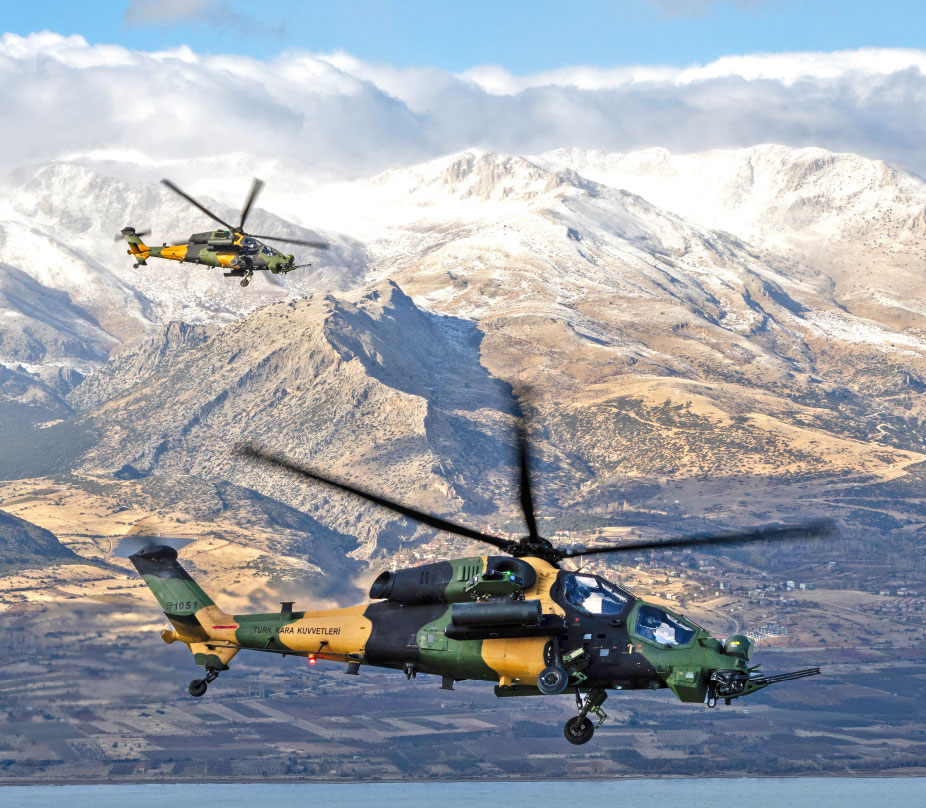
As part of CLAW Operations, both logistical support and Close Air Support (CAS) needs for the troops deployed 30-40 kilometers from our border in the north of Iraq are provided by the Army Aviation Units. For this purpose, helicopters are being operated at a very high pace by the Army Aviation units stationed in the east of Türkiye, and T129 ATAK Helicopters provide CAS to Utility and Cargo Helicopters involved in these missions.
CH-47F Chinook Heavy-Lift Helicopter.
In order to meet the needs of the Turkish Land Forces Command, 7 CH-47F Heavy-Lift Helicopters were procured and added to the inventory of the Army Aviation Command in 2016. The flight crew of CH-47F Helicopters consists of two pilots, two technicians, and one gunner. The CH-47F Chinook Heavy-Lift Helicopter can be armed with up to three 7.62mm machine guns or Mini Guns.
The Boeing CH-47F Chinook is a multi-purpose, twin-engine, tandem-rotor heavy-lift helicopter. With a maximum speed of 170 knots (315 km/h), it surpasses many contemporary utility and attack helicopters. It features a wide loading ramp at the rear of the fuselage and three external cargo hooks under the fuselage. The total length of the CH-47F Chinook is 30.18 m, the total height is 5.77 m, the rotor diameter is 18.29 m, and the distance between the two wheels is 6.86 m. The fuselage is 15.87 meters long and 3.78 meters wide. The maximum take-off weight (MTOW) of the helicopter is 22,680 kg. Each of the front and rear hooks can carry up to 7,727 kg, while the center hook can lift approximately 11,800 kg. The helicopter is powered by two Honeywell T55-L-714A turboshaft engines, each producing 3,529 kW (4,800 shp). Various payloads, such as light vehicles or artillery, can be carried on the three external cargo hooks of the helicopter.
The CH-47F has an endurance of 2 hours and 15 minutes in the air, but this can be extended up to 4.5 hours with three internal auxiliary fuel tanks installed in the cabin. During the 2023 Kahramanmaraş earthquakes, Turkish Army Aviation CH-47F Helicopters participated in search and rescue operations, transporting numerous materials and aid equipment from Ankara to the earthquake-stricken areas. Additionally, they played a significant role in transporting tents and essential supplies to the earthquake victims in the region.
CH-47F Chinook and Aerial Firefighting
The Army Aviation Command's CH-47F Chinook Helicopters, which significantly enhance the Turkish Armed Forces' capability to transfer forces from one point to another by air, can also be utilized in firefighting missions. Training has been conducted for this purpose.
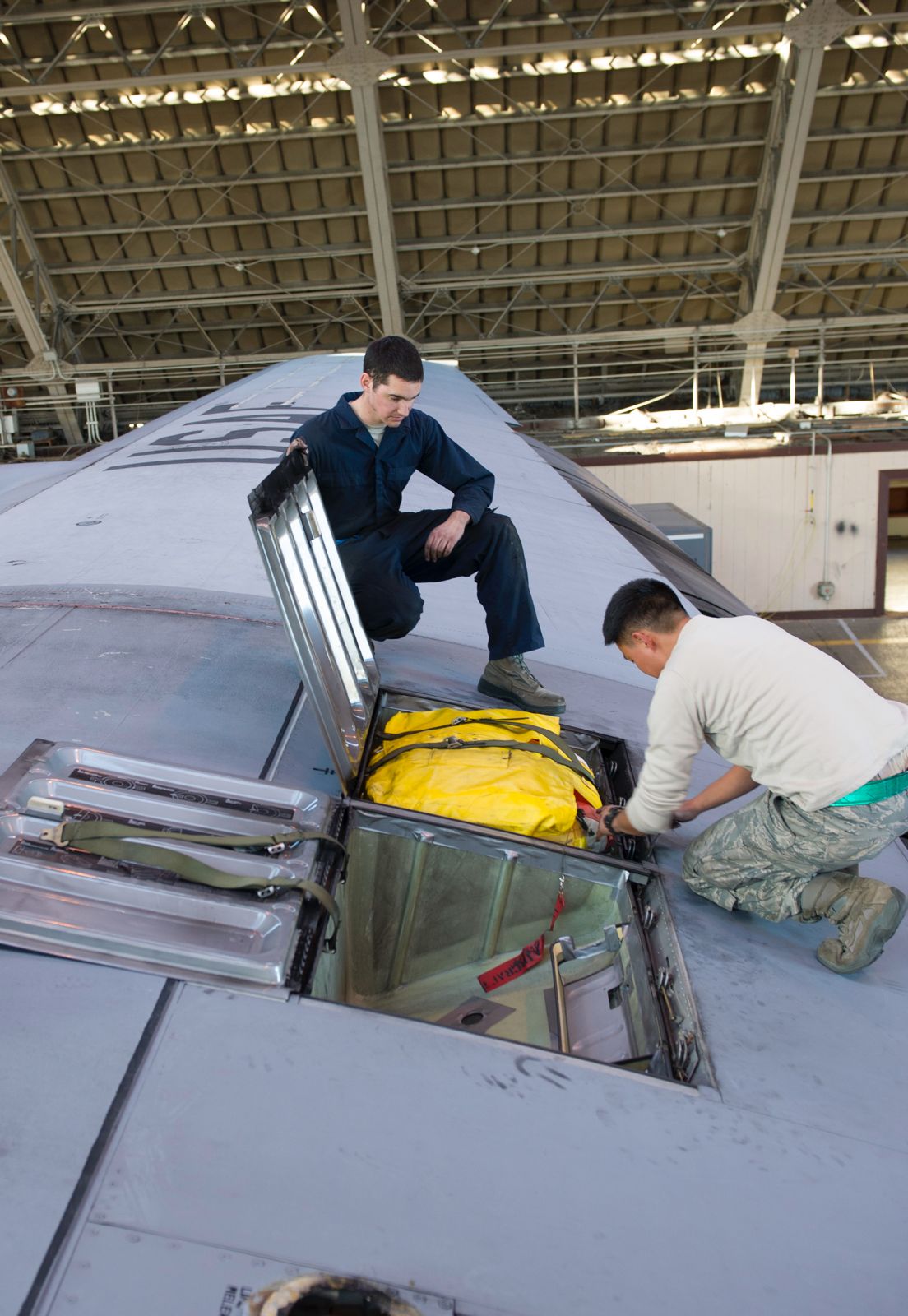
On November 17, 2023, as Defence Turkey Magazine, we had the opportunity to observe a training flight from start to finish by boarding a CH-47F Chinook Helicopter equipped with a firefighting kit. After taking off from Güvercinlik Airfield, we first proceeded to Temelli Training Auxiliary Airfield (Martyr Army Pilot Lieutenant Gürcan ULUCAN), where we witnessed the technicians securely attaching the firefighting kit, carried in a special compartment inside the cabin to the main cargo hook under the fuselage using a rope. We then took off with the Chinook and proceeded in a controlled manner to a nearby water source where the Bambi Bucket was filled with water. Subsequently, we proceeded to a simulated fire zone and dropped the water. After successfully completing the mission, we returned to Temelli Training Auxiliary Airfield, where the firefighting kit was securely placed back into its compartment and returned to the cabin. The training flight concluded when the CH-47F Chinook landed back at Güvercinlik Airfield.
The firefighting kit consists of a power source, battery, Bambi Bucket, rope, and a control lever for opening and closing the valve. While pulling water from the water source, both mechanical and electrical systems must be ready for emergency release situations. Upon the pilot's command, the Bambi Bucket is submerged in the water. Once the desired amount of water is collected, the helicopter performs a vertical ascent and assumes a flight-ready position. Meanwhile, the fire zone is described to the flight technician by the pilots inside the cabin. When the flight pattern is established, the first pilot informs the flight technician of the remaining distance to the drop point, such as 150m or 100m. Upon arrival at the fire zone, the flight technician directs the other technician responsible for controlling the Bambi Bucket, and when the release command is given, the second technician activates the lever to open the valve. At this point, the valve opens, and the water from the Bambi Bucket begins to discharge onto the fire zone. Once the water has been fully dropped, the flight technician informs the pilot, who then executes an avoidance maneuver.
In firefighting missions, the CH-47F Chinook carries 3 to 4 technicians in the cabin. The number of personnel can be increased or decreased depending on the nature of the flight. To ensure maximum safety during flight with the Bambi Bucket suspended under the fuselage, a minimum of three technicians are required: one observer technician, one controlling technician, and another technician flying in the left gunner position on the helicopter.
Army Aviation and Simulator Training
One of the factors directly affecting success on the battlefield is the effective use of existing weapons, vehicles, and equipment. This can only be achieved through good training. Simulators, which allow the creation of a synthetic environment closely resembling reality by using virtual reality technology, have become an indispensable training support tool for modern armies and are widely used today in the training of personnel who will operate advanced combat weapons, vehicles, and equipment.
Especially for expensive and complex combat weapons and vehicles such as aircraft, ships, tanks, and helicopters, simulators allow many training exercises that are nearly impossible or dangerous to perform in conventional training (such as landing a helicopter with an engine failure) to be conducted safely and cost-effectively. They also enable training to be conducted as closely as possible to reality regardless of weather, time, and environmental conditions.
Flight Simulators provide cost savings, continuity, efficiency, safety, and convenience in flight training by ensuring the appropriate use of flight instruments and navigation devices in a realistic environment and teaching flight procedures in the most economical and safe manner.
Recognizing the importance of simulators in the training of helicopter pilots as early as the 1980s, the Turkish Land Forces Command identified the need for a UH-1H Flight Simulator for the training of flight personnel who would operate UH-1H Utility Helicopters, which formed the backbone of rotary-wing capabilities at that time, and established a UH-1H Simulator Center within the Army Aviation School Command in 1990.
Emergency situations that may occur in UH-1 Helicopters can be simulated in simulators. UH-1H Flight Training Simulators have also been used for many years in the training of pilots from friendly and allied countries. For example, Jordanian Army pilots have been trained with simulators at the Army Aviation School Command since 2001.
In addition to the S-70 and AS-532 Helicopter simulators at the Simulator and Advanced Flight Training Command established in 2008, a Full Mission Simulator (FMS) for the T129 ATAK and two Partial Mission Simulators (PMS) for the T129 ATAK (one for the pilot and one for the gunner), entered service in 2019. Procurement efforts for FMS for the CH-47F Heavy-Lift Helicopters are also ongoing.
Since the simulators at the Helicopter Training Simulator Center operate in an integrated manner, they can conduct tactical flights together in a virtual environment when necessary. These simulator flights are managed from the Tactical Command Center, which is located at the Helicopter Training Simulator Center.
As part of the Isparta Army Aviation School Simulator Center Project (KAHOSIM), flight and training simulators such as Full Mission Simulators, Partial Mission Simulators, and Cockpit Procedures Trainer will be established for aircraft and helicopters entering or already in the inventory of the Army Aviation Command and Army Aviation School Command.
At the Helicopter Training Simulator Center, Cougar pilots also receive the S-70 Transition Course. If necessary, the AS-532 Transition Course is also provided to S-70 pilots or vice versa to enable personnel to be used more effectively. During our visit to the Helicopter Training Simulator Center, both the S-70 Helicopter Pilot Transition Course and the AS-532 Helicopter Pilot Transition Course were being conducted. This allows pilots to serve on both AS-532 and S-70 Helicopters